All posts by islam

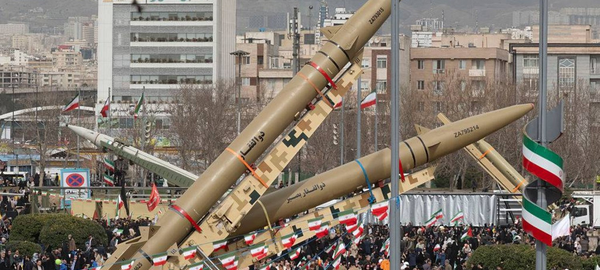
One enemy misstep after truce, we strike where you say: IRGC commander to people

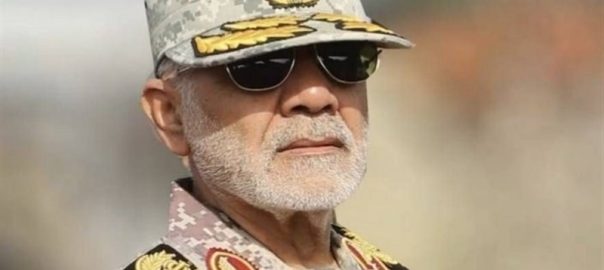
If the enemy oversteps and commits any act of aggression against the Islamic Republic of Iran after the ceasefire, the Islamic Revolution Guards Corps (IRGC) will target wherever the people want them to, the IRGC aerospace commander said on Tuesday.

Brigadier General Seyyed Majid Mousavi made the remarks in a message addressed to the people of Iran who have filled the streets and city squares for over 50 days in support of the armed forces during the third imposed war.

The IRGC aerospace commander expressed deep gratitude to the Iranian people for maintaining their presence on the streets throughout this period.

“Your children stood by the missile launchers for forty nights and days, exposing the arrogance of the global powers. And during the period of military silence (ceasefire), they remained vigilant, hands on the trigger, ready to defend this ancient land and its millennia-old civilization,” he said in the message that was played in all city squares.

He assured people that the IRGC forces are fully ready to defend the country from any potential aggression from the enemy.

“Today, we have come to you to declare our pledge: If after the ceasefire the enemy oversteps and commits any aggression against this soil, this time our target will be wherever you direct us,” General Mousavi said.

He also issued a clear warning to regional countries against collaborating with the enemy/

“Let the southern neighbors know: if their land and resources are used by America to attack the Iranian nation, they must bid farewell to oil production in the West Asia region.”

The two-week ceasefire is coming to an end on Tuesday night amid a stalemate over the next round of talks, with US President Donald Trump unilaterally announcing its extension.

Iran hasn’t yet responded to Trump’s announcement, but it has warned that the illegal naval blockade must be lifted immediately by the US.

The war of aggression against the Islamic Republic was launched by the US-Israeli coalition on February, which came to a halt 40 days later after the US agreed to Iran’s 10-point proposal, which was supposed to form the basis for the permanent end to the war.

However, the American side has continuously breached the ceasefire.

Press TV

Iran Definitely Not to Be in Pakistan on Wednesday, But Why?

TEHRAN (Tasnim) – According to information obtained by Tasnim, Iran’s decision not to be in Pakistan on Wednesday has been finalized.

According to the information obtained by Tasnim reporter, despite all rumors released by the media and American officials, the Iranian negotiating team has informed the American side through a Pakistani mediator that it will not be in Islamabad, Pakistan on Wednesday, for various reasons and there is currently no prospect for participating in the negotiations.

Relevant sources believe that the reason for the absence of the Iranian negotiators in Pakistan is that after Pakistan entered into mediation and the request made by the American side for a ceasefire, Iran accepted this ceasefire and the subsequent negotiations in a bid to end the war based on the 10-point framework it had presented and which was accepted by the United States.

Pakistan also specifically announced the acceptance of this framework by the Americans. But immediately after that, the American side started breaching commitments in the following days.

The American side, in a complete violation of its commitments, refused to force Israelis into a ceasefire in Lebanon and the move created serious obstacles in the negotiations for several days.

Also, in the very first round of negotiations in Islamabad, the Americans made many excessive demands that were in fact violations of those initial frameworks for talks, and this issue completely led to a deadlock in the first round of negotiations.

Despite its failure in the battlefield, the United States thought that it could compensate for the failure in the war by making excessive demands in the negotiations.

However, a few days after the Islamabad negotiations, the United States was forced to implement the ceasefire in Lebanon due to Iran’s clear threat to conduct missile attacks on Israel.

After those developments, Iranian Foreign Minister Abbas Araqchi announced that Iran would also open the Strait of Hormuz to commercial ships based on the initial framework of the ceasefire and within the framework of that initial agreed framework.

However, the Iranian move was immediately followed by hostile action by the Americans in keeping the naval blockade on Iran.

In the messages exchanged over the past few days, the Americans did not back down from their excessive demands and those demands were against the rights of the Iranian people, and no meaningful progress was made in the messages exchanged between the two sides.

For that reason, Iran finally announced today that in such conditions, Tehran considers attending the talks (in Pakistan) “a waste of time” because the US is hindering any proper agreement. Therefore, “Iran will not join the American show.”

The decision has also been announced today through the Pakistanis and Iran will not be present in Pakistan Wednesday in an effort to fully protect the rights of its people.

Tasnim News Agency

Iran Readies New Surprises for Possible Restart of War

TEHRAN (Tasnim) – Evidence indicates that Iran has prepared new surprises for a possible restart of the US-Israeli war of aggression.

Information obtained by Tasnim suggests that, with the ceasefire period nearing its final hours and considering that the US’ excessive demands and the announcement of a naval blockade against Iran have prevented the formation of renewed negotiations, Iran is fully prepared for the possibility of war resuming and has also arranged new surprises for a potential new round of conflict.

Over the past two weeks, Iran has consistently considered the likelihood of war to be high and, on that basis, has carried out certain military redeployments and prepared a new list of targets for this purpose.

Accordingly, Iran is ready to create another hell for the Americans and Israelis from the very first moments of any potential war.

Tasnim News Agency

Araqchi Outlines Main Obstacles to Iran-US Talks

TEHRAN (Tasnim) – Iran’s foreign minister described provocative actions and continued US ceasefire violations—particularly threats against Iranian commercial vessels—as well as contradictory positions and threatening rhetoric, as major obstacles to the continuation of the diplomatic process.

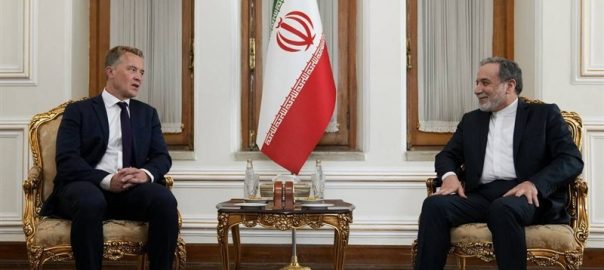
In a telephone conversation on Monday, Iranian Foreign Minister Abbas Araqchi and his Pakistani counterpart Muhammad Ishaq Dar talked about the regional developments and the ceasefire agreement that has put a halt to the US-Israeli war of aggression against Iran, while emphasizing continued consultations to support peace and stability in the region.

Araqchi expressed appreciation for Pakistan’s good offices and mediation in the ceasefire-related negotiations.

He described provocative actions and the continued violations of the ceasefire by the United States—particularly threats against and interference with Iranian commercial vessels—as well as contradictory positions and threatening rhetoric against Iran, as a major obstacle to the continuation of the diplomatic process.

Araqchi added that the Islamic Republic of Iran will make its decision on how to proceed with the talks, taking all aspects into consideration.

Both foreign ministers stressed the importance of continued consultations to help strengthen peace and stability in the region.

Tasnim News Agency

No Iranian delegation in Islamabad, says report as Tehran rejects talks under threats

No Iranian delegation has arrived in Islamabad for talks with the United States, says a report, as senior Iranian officials declared they will not engage in talks “under the shadow of threats” following renewed American aggression at sea.

Contrary to numerous international and regional media reports suggesting an Iranian delegation was set to arrive for talks, IRIB News Agency reported on Tuesday that “to date, no delegation from Iran has gone to Islamabad, Pakistan; neither a main nor a subsidiary delegation; neither primary nor secondary.”

The report dismissed speculation about scheduled meetings, stating that news circulated since Saturday about the “departure” or “arrival” of an Iranian team, or even specific meeting times, was entirely without basis.

This firm stance follows blatant breaches of a two-week-old ceasefire by Washington. Iranian officials have maintained a consistent position since Sunday evening, asserting that the “continuation of talks depends on a change in American behavior and positions.”

Adding his voice to the resolute message, Iranian Parliament Speaker and lead negotiator Mohammad Baqer Qalibaf said on Monday that the US President was attempting to force Tehran into submission. “Trump, by imposing a blockade and violating the ceasefire, wants – in his own delusion – to turn the negotiating table into a table of surrender or to justify renewed warmongering,” he said in a post on X.

The speaker made Tehran’s position unequivocal. “We do not accept negotiations under the shadow of threats,” he said, warning, “Over the past two weeks, we have prepared ourselves to reveal new cards on the battlefield.”

The uncertainty shrouding the next round of talks escalated after the US Navy targeted an Iranian merchant vessel in the Sea of Oman on Sunday. Iran’s military condemned the incident as a “criminal operation” and “maritime piracy,” reiterating that its response posture remains active.

The backdrop to these renewed tensions is a 40-day US-Israeli war of aggression that began on February 28 with the assassination of high-level Iranian figures and civilians. After 40 days of criminal aggression, the US agreed to a ten-point proposal from Iran, leading to trilateral talks mediated by Pakistan.

While Iran subsequently opened the Strait of Hormuz to commercial traffic, it was forced to close the chokepoint again on Sunday after the US maintained its naval blockade in breach of the deal.

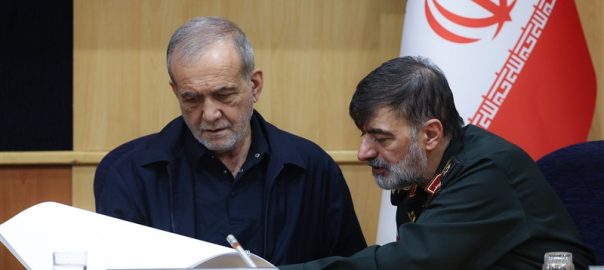
President Masoud Pezeshkian on Monday dismissed the American ultimatums as “pressure tactics,” insisting Iran will not submit to coercion.

This came as President Trump issued a direct threat on his social media pages, stating, “We’re offering a very fair and reasonable deal, and I hope they take it because, if they don’t, the United States is going to knock out every single power plant, and every single bridge, in Iran.”

The ongoing US blockade is also reportedly frustrating the mediation efforts. According to reports, Pakistani army chief Asim Munir conveyed to President Trump that the continued naval blockade of Iranian ports was hampering Islamabad’s ability to facilitate a permanent end to the war.

Press TV

Iran: US not serious about talks, will face decisive response if it repeats past mistakes

The Iranian Foreign Ministry says the United States is not serious about negotiations with Iran, asserting that Washington will face the Islamic Republic’s decisive retaliation if it repeats its past mistakes concerning the country.

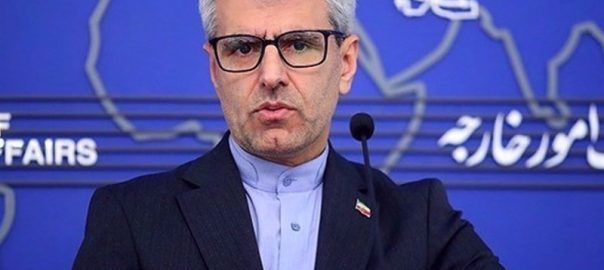
Spokesman Esmail Baghaei made the remarks at a press conference on Monday, citing contradictions between Washington’s words and actions as a case in point regarding the latter’s indecisive attitude towards the issue of the talks.

“[Their] words and actions are not consistent, and Iran will make the appropriate decision with careful consideration of its interests and national priorities,” he stated.

The remarks came after the United States said it would continue blockading Iran’s ports and vessels, despite the announcement of a two-week lull in aggression targeting the Islamic Republic by President Donald Trump on April 7.

Iran subsequently declared the strategic Strait of Hormuz closed to all traffic in retaliation, citing the continuation of the blockade as a violation of ceasefire conditions.

The Islamic Republic has vowed to retain the closure while the blockade is still in place. It has also refused to join any fresh talks with the American side unless a framework of understanding is reached between the two sides.

“From the early days of the ceasefire, we were faced with the US’s bad faith, contradictory statements, followed by a naval blockade,” Baghaei said.

He also referred to a recent American attack on an Iranian vessel that was faced with a decisive response on the part of the Islamic Republic, forcing US troops in the Sea of Oman to retreat. The spokesman identified the attack as “a violation of maritime agreements and an act of aggression.”

The official additionally pointed out continuation of the Israeli regime’s violations against Lebanon, despite the Islamic Republic’s insistence on cessation of aggression on all fronts as an indivisible part of any ceasefire.

Referring to the Israeli regime’s rehashing its claim of acting in “self-defense” to try to justify its violations, Baghaei said, “This is another example where the other side shifts the blame and conceals its own shortcomings.”

Concerning the likelihood of further talks with the American side, the official said no decision had been made yet regarding the next round.

Iran, he added, could not forget the costly experience of Washington’s previous breaches of its promises.

“So, we remain vigilant against the enemy’s schemes, and this is the duty of the negotiating team and all Iranian institutions,” the spokesman asserted.

Baghaei, meanwhile, underlined that the US has repeatedly tested Iran before by reneging on its pledges and facing decisive backlash from the Islamic Republic, saying Washington would face the same experience upon repeating its past mistakes.

“The US insists on repeating its mistakes, and it will receive a response similar to the past.”

‘Iran needs to be more cautious than wartime’

In light of the absence of all trust between the two sides, Iran is “not optimistic” about the talks, rather adopting a “realistic” attitude towards the matter, the official noted.

He again urged vigilance in the face of the enemy’s schemes, and said Iran had to exercise even more caution under the current circumstances than it would during wartime.

He identified the Islamic Republic’s priority as the pursuit of its national interests, stressing that the country does not recognize any deadlines or ultimatums in pursuing those interests.

‘US positions remain unreasonable’

The spokesman said the US continues to insist on its “unreasonable and unrealistic positions.”

Baghaei, however, reiterated Iran’s positions, saying transfer of enriched uranium outside the Islamic Republic has never been an option for the country, dismissing American officials’ remarks in this regard as mere claims and ideas pursued by Washington.

Iran, he added, would not put its defense capabilities, including missile power, up for negotiation either.

Press TV

Iran: The rising global power

LONDON – The escalating and reckless threat to annihilate a civilization as historic as Persia’s openly acknowledges that Donald Trump has utterly failed to achieve his objectives, despite employing every means at his disposal.

The catastrophic failure of the Isfahan operation proved to be the final breaking point. In this climate of fevered delusion, Iran’s proposals were accepted as a foundation for a potential agreement—a move born of sheer desperation after exhausting every possible means to achieve their desired ends.

The final attempt—a ground invasion—was trialed in Isfahan, with shocking results, including the destruction of aircraft. When combined with the repeated, unmet objectives of seizing highly enriched nuclear material, dismantling the missile arsenal, and confronting so-called “proxy” forces along with their support and funding, the outcome was total failure. It was at this juncture that despair peaked.

This culminated in the realization that reaching an agreement—and dealing with the new balance of power that actually exists on the ground—was the only viable path forward. These are the forces that now dictate reality. The U.S. and the Israeli occupation entity exhausted every available tool and achieved nothing. They belatedly grasped the irreversible stage reached by Iran and its allies—a sober acknowledgment that Iran is not Venezuela, that it cannot be cowed by threats, and that it is a nation that would choose death over surrender.
The conclusion has been reached that a return to war is not feasible, given the inability to define attainable objectives. Even if no agreement is reached by April 21, renewed conflict remains unlikely—a scenario that carries major repercussions for the American presence in the region. Having set out to confront Iran, the U.S. now finds itself a hostage within reach of Iranian influence at any moment.

This reality also poses a critical challenge for the states on the southern shores of the Persian Gulf. They now face a decisive moment in determining their future direction: whether to undergo internal changes that threaten their traditional structures, or to align themselves with the new regional reality.

Allies will also have a major share in this outcome. In Lebanon, after witnessing the military capability of Hezbollah, that entered the war as a unified front in support of Iran, it became clear that these so-called “proxies” cannot be defeated. Despite overwhelming force and destruction, they were neither eliminated, not even in small Gaza, let alone Lebanon. Failure occurred across all fronts, reshaping the region. This will leave unanswered questions for the Israeli occupation entity, that will ultimately lead to the decline of its role.

When Hezbollah is perceived as having successfully prevented the enemy from achieving any of its objectives—and is backed by Iran with all available means—the confrontation escalates from a local and regional conflict to one of international scope. Its inclusion in any agreement thus becomes a non-negotiable condition. This presents a rare model of allied relations that strategically encircles the Israeli occupation entity.

When Iran’s victory empowers its allies as a decisive factor, it prevents the isolation of any single front. The result is a comprehensive victory across all theaters: Gaza, Lebanon, Iraq, and Yemen—each reinforcing the others from a position of strength.

This dynamic may also precipitate a reduction in the direct American military presence in the region. The U.S. may seek to secure its relations with these emergent, powerful actors without relying on a direct military footprint—a presence that has proven incapable of protecting the region, or even the Persian Gulf states it was meant to defend.

The strategic setback will have wide-ranging repercussions. Iran’s control over the Strait of Hormuz has become a decisive instrument that halted the war, given its profound impact on the global economy and on the United States itself. Consequently, when objectives are reduced to merely securing an agreement over the Strait—an issue that was not even contested before the conflict—it underscores the failure of the entire campaign and the collapse of major American threats.

Al Jazeera columnist Andrew Mitrovica says, “Analysts now warn that the war meant to weaken Tehran may leave it stronger.  Andrew Mitrovica says Iran is winning because it adapts.

“Iran does not need air superiority to impose pressure. It needs endurance. Its ‘mosaic’ strategy — layers of command and decentralized power — means leaders can be killed, but the system survives. It turns vulnerability into resilience. It turns time into a weapon,” he notes.

Robert Pape, professor of political science at the University of Chicago, also wrote an article in the New York Times on April 6 headlined “The war is turning Iran into a major world power”.

The Israel-U.S. war against Iran began on Feb. 28.

“Iran is far stronger than it was just 40 days ago. It is in control of 20% of the world’s oil. It is now an emerging fourth center of power. … The United States is on one side, and the rivals are China, Russia and now Iran,” Pape argues, adding, “If Iranian control over the strait persists for months or years, as I believe it may, it will drastically reshape the global order to the detriment of the United States.”

This outcome alone will significantly strengthen Iran’s position and enhance its global image, now thrust into the spotlight. Iran’s true reality has been laid bare—countering long-standing efforts to distort it—while the once-flawless image of the Israeli occupation entity has been tarnished worldwide. These shifts will lead to major, unpredictable consequences.

This conflict may rank among the most consequential in recent history, one from which Iran has emerged with minimal damage relative to the substantial strategic gains it has secured. Above all, it has been transformed into a major, rising global power.

Tehran Times

Makan: Lost at School

TEHRAN – Among the children massacred by a US missile attack on Shajareh Tayyebeh elementary school in Minab, southern Iran, was a 7-year-old boy named Makan Nasiri.

The US Tomahawk missiles left nothing of his small, fragile body. His parents are left to wait for a son who will never return, with only a wrinkled blue sweater and a pair of cream-colored sneakers to hold; a devastating testament to the reality of a war of aggression – a reality known only to those who must bear its cost.

The deadly US strike on Shajareh Tayyebeh elementary school on the first day of the imposed war, February 28, is known as the most heinous massacre of innocent children in the world, killing at least 168 school children, mainly girls aged between 7 and 12. Large parts of the school building were destroyed while classes were underway.

Subsequent to the tragic event, most children’s bodies, with some being torn into pieces, were recovered and buried, all except for that of Makan.

 Just a single sneakers, an empty grave

Makan: Lost at School

A symbolic grave has been created for Makan as nothing from his body has left.

His crushed blood-stained blue sweater, and a single cream-colored sneakers are the things found over the past forty-six days; no other single thing was remained of him. All his belongings are placed within a small glass box in a mosque in his neighborhood.

Among the hundreds of graves of the Minab elementary school’s victims, there lies an empty grave, created in honor of Makan, who was declared missing as his body was not found after a 46-day search under the school’s rubble.

It was 11:16 in the morning. Asieh Rahinejad, Makan’s mom, was doing household chores, when the phone rang. Makan’s teacher, Ms. Mandana Salari, was on the phone. She asked Asieh to pick Makan up from school immediately, as the enemies attacked the school.

Asieh, totally unaware of the earlier attack in Tehran on the same day, called the school bus driver. The man who happened to be near the school promised to go there at once.

She was still holding the phone when she heard a terrible explosion. The school was bombed severely. Asieh, along with her husband, who was home on that day, rushed to school.

School reduced to rubble

Makan’s parents got off the car and ran towards the school. The bombs had already levelled the school buildings. There was total chaos. There were people everywhere. Makan’s mom was wondering what to do, and where to go to look for his son.

“As we arrived at school, many were under the rubble, but no single child stayed alive. We stayed there from 11.30 a.m. till 2.30 a.m. The lifeless bodies were pulled out of rubble. Few were suffocated to death. Most were dismembered. In the first 38 days, we went to forensic medicine department every day to identify the martyred students, but we couldn’t find Makan.

Makan: Lost at School

A single sneakers and a blood-stained sweater are the only thingsfound from Makan

We took DNA test to help find the body of our son. There were only his books and notebooks. No piece of his body, no bag, and not even his shoes were found. On the 38th day, my brother found a single sneaker that belonged to my dear son.”

On February 28, the day that the school was targeted, Hamzeh Rahinejad, Makan’s uncle, went to school. The air was filled with smoke, dust, and the smell of burning bodies.

“Since the very beginning of the incident till 5 a.m., along with many others who were helping to locate the lost loved children, I was searching to find something from Makan.

 The worst atrocities of war

As we removed pieces of rocks, we could only find small pieces of torn hands, legs, and heads of the innocent kids. It was like a nightmare, the worst atrocities of the war. I cannot put it in words. It was even more saddening than the martyrdom of Imam Hussein (AS) and his loyal companions in the battle of Karbala. I think it was much worse.

From the second day into school bombardment, we formed a 20-member team of uncles and their children to look for Makan. We even searched the jungle in the vicinity of the school. I carried a gauze bandage and a plastic bag with me, and take any piece of flesh or finger found under the rubble.

Makan, like his other family members, had a birthmark on his body, something like a mole that would get more colored in winter. Now, I was searching for such a thing, but he seemed to be vanished.

Till the 38th day of our search, we were hopeful that we could find him alive. That day, I went back to the scene. About a 100 meter away from the destroyed buildings, there among the trees of a garden, I found some bags and shoes, put them all inside a box and took it to my sister’s house.

The house was full of people. I asked Asieh if any of those things belonged to Makan. The sight of a cream sneaker made her faint. It was like a doomsday scenario, the major calamity of the brutally targeted elementary school.”

In reaction to Makan’s tragic martyrdom, government spokesperson, Fatemeh Mohajerani, wrote on her X account that “His name was Makan. He was 7. All that remains is a blood-stained sweater and a single shoe. The strike on a school in Minab is not a mistake—it is a clear violation of human rights and children’s rights. No justification can restore a child’s life. Silence is complicit.”

Take revenge for our children  

Now, Makan has a symbolic grave in Minab’s martyred graveyard, a memorial in Mahdieh mosque in his family’s neighborhood, and a memorial in Khomeinishahr, his father’s birth place, where, according to Makan’s uncle, a street is going to be named after him.

Asieh goes to the mosque, where Makan’s mementos are put into a glass box. She also visits his empty grave from time to time and cries over his missing beloved son.

Addressing the first memorial ceremony of Minab’s martyred students in Isfahan province, Asieh said: “I was terrified by the idea of having to place Makan in the grave, I couldn’t stand that. I prayed to God for help, and it may explain why we couldn’t find him.”

Speaking on behalf of parents of the 168 martyred students, she just said one sentence, “We want them to take revenge for our children’s massacre.”

Global condemnation

The scale of the tragedy has shocked the international community and sparked widespread condemnation. National and international organizations as well as domestic and foreign officials have forcefully condemned the strike.

“The Minab school incident has no comparison with any other incident,” said the head of the Iranian Red Crescent Society. “Even in Gaza,” Pirhossein Kolivand added, there had not been such a high number of students killed simultaneously. He also called the attack “a unique and bitter incident.”

The United Nations cultural and education agency, UNESCO, condemned the strike, saying in a statement on social media on Sunday: “The killing of pupils in a place dedicated to learning constitutes a grave violation of the protection afforded to schools under international humanitarian law.”

 International law is clear on protecting civilians

International law is clear on the protection of civilians and educational institutions during armed conflict. Intentionally attacking a school, hospital, or other civilian infrastructure is a war crime, and indiscriminate strikes also violate the law.

Even if schools are used for military purposes, the law requires armed parties to take all feasible precautions to avoid or minimize harm to civilians, as emphasized by the International Committee of the Red Cross (ICRC). These rules are codified in the Geneva Conventions and customary international humanitarian law, which explicitly prohibit targeting civilians and civilian infrastructure.

Nobel Peace Prize winner Malala Yousafzai, who has campaigned for the right of young girls to go to school, condemned the Minab attack on social media: “They were girls who went to school to learn, with hopes and dreams for their future. Today, their lives were brutally cut short.

I am heartbroken and appalled by the US and Israeli strikes on Iran, including reports that a girls’ school in southern Iran was hit, resulting in the injury and death of many girls. The killing of civilians, especially children, is unconscionable, and I condemn it unequivocally.

Makan: Lost at School

Makan is seen in his classroom in an undated photo.

My heart is with the children, families, and communities affected by escalation across the region. I stand firmly against violence and the targeting of schools and civilians. I call for the escalation of violence across the region to end. Justice and accountability must follow. All states and parties must uphold their obligations under international law to protect civilians and safeguard schools.”

The killing of students in Minab resonates against a backdrop of repeated attacks on schools in conflict zones globally. Israel, in particular, has carried out strikes on schools in Gaza during the Gaza war, which started in October 2023.

Reports from international human rights organizations documented multiple incidents in which schools sheltering civilians were hit, leaving children and families exposed to severe harm. These attacks have consistently drawn condemnation from the United Nations, NGOs, and legal experts, as attacks on schools constitute violations of international law and fundamental human rights.

Humanitarian commentators and analysts outside Iran have highlighted the school strike as emblematic of the severe civilian toll in the conflict, reiterating the urgent need for accountability, adherence to humanitarian norms, and the protection of children in conflict zones.

They emphasize that such attacks not only violate international law but also erode the moral and legal frameworks that safeguard civilian life worldwide.

Legal experts note that the attack on Shajareh Tayyebah elementary school violates numerous provisions of international humanitarian law. The Fourth Geneva Convention protects civilians in times of war, and the Additional Protocols explicitly safeguard schools as civilian objects.

The United Nations Security Council, through multiple resolutions, has reaffirmed that attacks on schools and children are unacceptable under any circumstances, urging member states to enforce protections rigorously.

Tehran Times

Araghchi: We are firmly determined to increase engagement with Iran’s armed forces

Iran’s Foreign Minister emphasized his strong determination to continue interaction, synergy, and cooperation with Iran’s armed forces.

According to Pars Today, Iran’s Foreign Minister Seyed Abbas Araghchi wrote in a message marking Army Day of the Islamic Republic of Iran:

“The country’s security and strength arise from firm determination, pure intentions, and the perseverance of brave men who have carried out the defense of the borders and the protection of national interests in the most worthy manner.”

He added:

“Undoubtedly, the current strength of the Islamic Republic of Iran on the international stage, and the achievements of the diplomatic apparatus in safeguarding the country’s interests, are indebted to the tireless efforts and sacrifices of the devoted armed forces.”

In the message, Araghchi also honored the bravery and sacrifices of the Islamic Republic of Iran Army in confronting aggressor enemies during various periods, especially in recent decisive battles, and stressed his firm determination to continue interaction, synergy, and cooperation with the armed forces of the Islamic Republic of Iran.

Pars Today

SNSC: Iran to Maintain Control over Hormuz Strait until War Ends

TEHRAN (Tasnim) – The Supreme National Security Council (SNSC) of Iran stressed that Tehran will continue strict monitoring and control over the Strait of Hormuz until the US-Israeli war of aggression fully ends and lasting peace is achieved.

The secretariat of the SNSC announced in a statement on Saturday that following the failure of the aggressor parties on the battlefield and subsequent requests from the United States for negotiations, Iran agreed—through mediation by Pakistan—to hold talks aimed at ending the conflict based on a proposed framework.

It noted that the Iranian delegation engaged in lengthy negotiations, during which it firmly presented the country’s positions despite deep distrust of the United States. According to the statement, the talks ultimately failed because the opposing side introduced additional demands that Iran rejected, insisting it would not compromise on its core positions. The continuation of negotiations was therefore postponed until the other side aligns its stance with battlefield realities, it added.

The statement also said that new proposals have recently been received through Pakistani mediation and are currently under review, with no response issued yet.

It emphasized that Iran’s negotiating team will not concede on national interests and will continue to defend the rights and sacrifices of the Iranian people.

“One of the essential preconditions for Iran’s acceptance of a temporary ceasefire was the cessation of fire on all fronts, including Lebanon. But the Zionist regime violated this from the outset with brutal attacks on Lebanon and heroic Hezbollah,” it added.

The statement added that with Iran’s insistence, the Zionist regime accepted a ceasefire in Lebanon, and it was agreed that if the ceasefire is respected on all fronts by the enemy, the Strait of Hormuz would be temporarily and conditionally opened only for commercial vessels—not military ships or non-military vessels of hostile countries—under the control and authorization of Iran’s Armed Forces and along routes designated by Iran.

Given that the majority of logistical support for US military bases in the Persian Gulf is provided through vessel traffic via the Strait of Hormuz, which constitutes a threat to Iran’s national security and the region, Iran emphasized that it is determined to enforce supervision and control over transit through the Strait until the definitive end of the war and the establishment of lasting peace, the SNSC underlined.

It explained that such control is exercised through obtaining complete information from passing vessels, issuing transit certificates in accordance with regulations announced by the Islamic Republic of Iran, in line with wartime conditions, and the payment of relevant fees for services related to security, safety, and environmental protection, as well as movement along routes designated by Iran.

The statement further stressed that as long as the enemy seeks to disrupt vessel traffic or impose measures such as a maritime blockade, the Islamic Republic of Iran will consider it a violation of the ceasefire and will prevent even the limited and conditional opening of the Strait of Hormuz.

The secretariat finally recalled the recommendations of Leader of the Islamic Revolution Ayatollah Seyed Mojtaba Khamenei, emphasizing that for the full consolidation of battlefield achievements and success in diplomacy, the continued presence of the Iranian people in public spaces, full vigilance on all fronts, and the preservation of national unity by officials, media, and social and political activists remain essential.

Tasnim News Agency