All posts by islam

Army Day: Leader hails Iran’s army for courageously defending country from aggressors

In a message on Saturday marking Army Day, Leader of the Islamic Revolution Ayatollah Seyyed Mojtaba Khamenei hailed the country’s army for courageously defending the nation in the recent imposed war, just as it did in previous imposed wars.

He said the army of the Islamic Republic of Iran has been “courageously defending the land, water, and the flag to which it belongs” in the face of the US-Israeli war of aggression.

“With its strong divine and popular support, and in dense and solid ranks, shoulder to shoulder with other warriors of the armed forces, it has confronted two armies at the forefront of disbelief and arrogance, making their weakness and humiliation evident in the eyes of the world,” read the message issued on the occasion of Farvardin 29, which marks the formal establishment of the Islamic Republic of Iran Army.

The Leader of the Islamic Revolution, who is also the chief commander of the armed forces, emphasized that just as Iranian army drones strike like lightning against American and Zionist criminals, its brave naval force stands ready to make enemies taste the bitterness of new defeats.

The message, issued on the day named in honor of the army by the late founder of the Islamic Republic, Imam Khomeini, congratulated all army personnel, their families, and the Iranian nation.

Ayatollah Mojtaba Khamenei described the victory of the Islamic Revolution as a turning point in the army’s history, marking the end of an era of weakness that had been imposed by enemies and internal traitors.

He noted that after the 1979 Islamic Revolution, the army left the orbit of the tyrannical Pahlavi system and found its rightful place in the warm embrace of the Iranian people.

The Leader further stated that the 29th of Farvardin coincides with the birth anniversary of the martyred Leader of the Islamic Revolution, Ayatollah Seyyed Ali Khamenei, who worked tirelessly from the first decade of the revolution to preserve the army against ominous calls for its dissolution and to enhance its capabilities across various domains.

He stressed that the army’s progress must be pursued with doubled effort and that necessary measures for its advancement will be issued in the near future.

The Leader also paid tribute to generations of heroic commanders who led the Iranian army over the past five decades, many of whom attained martyrdom.

Among those he mentioned were revered commanders Qarani, Fallahi, Namjou, Fakouri, Babaei, Setari, Ardestani, Sayyad Shirazi, as well as recent martyrs Seyyed Abdolrahim Mousavi and Aziz Nasirzadeh, both of whom were martyred in the 40-day imposed war.

During the recent 40-day war of aggression imposed by the US-Israeli coalition, the Iranian army defended the country with all its might, carrying out numerous successful retaliatory operations against enemy installations across the region.

The synergy and seamless coordination between the army and the Islamic Revolution Guards Corps enabled the Iranian armed forces to inflict heavy blows on the enemy.

Press TV

Iranian calligrapher restores Holy Qurans burned in recent unrests

TEHRAN – Iranian calligrapher Mojtaba Sadeqi has dedicated himself to restoring copies of the Holy Quran that were burned during the early January riots.

Working within the Art Tent in Tehran’s Haft-e Tir Square, Sadeqi is breathing new life into sacred pages that were damaged when rioters set fire to a mosque during the recent unrests. The project, which involves meticulous reconstruction of charred text, represents a unique and emotionally charged challenge for the artist.

“Following the news of a mosque being set ablaze by rioters in January, images of burned Qurans were released. It was then that the idea of restoring and reviving these Holy Books came to my mind,” Sadeqi said, Mehr reported on Friday.

Traditionally, when a Quran is severely damaged, its pages are committed to flowing water or buried out of respect. However, Sadeqi sought a different path: “I realized I could keep these burned pages alive by rewriting the lost verses.”

Sadeqi first mounts the damaged pages onto a durable backing. He then identifies the specific script used—most notably the Uthman Taha and Naskh styles—and painstakingly rewrites the missing words and letters to match the original calligraphy.

The artist revealed that he received seven Qurans from a single desecrated mosque, with approximately 30 to 40 percent of their content destroyed by fire. He emphasized that those who target houses of worship are not mere political protesters but are, in truth, “enemies of God.”

“Reviving and preserving these Qurans is a debt I owe to my faith,” the master calligrapher stated. “I am determined to bring this task to a worthy conclusion.”

So far, Sadeqi has restored more than 20 charred fragments. He noted that the Art Tent provides a peaceful environment where he works for long hours daily, drawing significant interest from citizens who view his restoration work as a powerful piece of spiritual art.

Upon completion of the project, the artist hopes to hold an exhibition to display these restored miracles of calligraphy.

The Art Tent, which remains open to the public daily, focuses on producing artworks that embody the spirit of heroism, sacrifice, and the culture of resistance. Participants are engaged in various creative mediums to showcase the nation’s enduring resilience.

Tehran Times

Singer Mohsen Chavoshi emerges as Islamic Revolution Artist of the Year

TEHRAN – Renowned Iranian pop singer and composer Mohsen Chavoshi was named the Islamic Revolution Artist of the Year for 1404 (2025-2026) during the closing ceremony of the 12th edition of the Islamic Revolution Art Week held on Thursday evening.

The ceremony, which took place at Tehran’s Valiasr Square, was attended by cultural officials including Hojjatoleslam Mohammad Qomi, head of Iran’s Islamic Ideology Dissemination Organization, and Mohammad-Mehdi Dadman, Head of the Art Bureau. The event served as a major cultural gathering for artists, officials, and citizens alike.

Chavoshi received the prestigious title primarily for his acclaimed tracks “Alaj” and “Hasbi Allah,” which have resonated deeply with the public during the period of the US-Israeli war imposed on the country. He was selected from a shortlist that included notable figures such as painter and journalist Seyyed Ali Mirfattah, filmmaker Sirous Moqaddam, and theater director Maryam Shabani.

During the announcement, host Najmeddin Shariati emphasized the grassroots nature of the selection, noting that the crowd had been chanting Chavoshi’s name throughout the evening. “This choice is entirely popular,” Shariati told the audience. “With great honor and respect for your voices, we name Mohsen Chavoshi as the Islamic Artist of the Year.”

The program featured some street performances. The event also paid tribute to the Martyr Leader, Ayatollah Seyyed Ali Khamenei, through music and media packages centered on the themes of martyrdom and resistance.

A particularly moving moment occurred when children and teenagers in the audience raised placards inscribed with lyrics from Chavoshi’s “Hasbi Allah” and “Alaj.” The ceremony concluded with a mass sing-along of “Alaj,” as thousands of citizens joined their voices in a display of national unity.

Earlier in March, Chavoshi released “Hasbi Allah” (God is sufficient for me), to mark the martyrdom anniversary of Imam Ali (AS), the first Imam of the Shia.

In a note accompanying his latest release, Chavoshi reflects on recent social unrest and external pressures, defining his stance as being “in the middle”—a space dedicated to the common people and national logic over foreign-led narratives. Expressing disillusionment with voices from beyond the borders, he criticized the psychological onslaught of foreign media, arguing that such relentless influence could incite subversion in even the most prosperous nations.

While expressing heartbreak for all victims of recent events and foreign aggression, Chavoshi emphasized his refusal to align with those seeking foreign intervention or insulting religious sanctities. He reaffirmed his commitment to the Islamic Republic over the uncertainty of foreign-backed agendas, concluding that he chooses to stand with the ordinary citizens, the schools, and the struggling households of his own country.

“Hasbi Allah” is the latest addition to Chavoshi’s repertoire of religious and devotional works, which includes notable tracks such as “Ya Mowla,” “Adl-e Movassaq,” and “Asadullah,” all dedicated to the virtues of Imam Ali (AS).

The art week is organized by the Art Bureau of the Islamic Ideology Dissemination Organization every year to commemorate the martyrdom anniversary of documentarian Morteza Avini.

Art exhibitions and workshops, and theatrical musical performances are organized during this week.

Avini was martyred by a landmine in 1993 during his last trip to the former Iran-Iraq war zone in southwestern Iran while making the documentary “A City in the Sky” about the fall of Khorramshahr and the liberation of the southwestern Iranian city during the Iran-Iraq war.

He became famous for “The Narration of Triumph” and was called “the master of martyred writers” by his colleagues and war veterans due to the fervent narrations he wrote for his documentaries.

Avini has been commemorated by various Iranian personalities and organizations on different occasions.

Tehran Times

Trump’s blockade forged in the ashes of strategic failure

TEHRAN – President Donald Trump’s decision to impose a naval blockade on Iranian ports in an effort to force Tehran to reopen the strategic Strait of Hormuz has drawn fierce criticism at home and abroad, with many warning it risks igniting a broader regional crisis and destabilizing the global economy.

The blockade began at 14:00 GMT on Monday, and the US military announced it had initiated operations targeting all maritime traffic entering and exiting Iranian ports. Trump warned that any ships attempting to break the blockade would be “immediately eliminated.”

The move followed weekend talks in Islamabad between Iran and the United States, which ended without an agreement in the wake of a two-week ceasefire mediated by Pakistan. That ceasefire, announced on April 8, halted the joint US-Israeli war on Iran that began on February 28. Iran also stopped retaliatory operations against Israel and American bases in the Persian Gulf region.

Shortly after the war began, Iran effectively asserted control over the Strait of Hormuz, one of the world’s most critical energy chokepoints. Prior to the conflict, nearly 20 percent of global oil and liquefied natural gas (LNG) supplies transited through the strait.

After the Pakistan-brokered ceasefire took effect, Tehran confirmed it would allow shipping to pass through the waterway during the two-week truce, helping ease market panic that had sent oil and gas prices soaring.

‘Illegal act of aggression’

Iran has denounced the US move to blockade the country’s ports. Iran’s Ambassador to the United Nations, Amir Saeid Iravani, condemned the blockade as a flagrant violation of Iran’s sovereignty and territorial integrity, calling it an illegal act of aggression that threatens regional and international peace.

In an official letter addressed to UN Secretary-General António Guterres and the President of the Security Council, Iravani described the naval blockade as “a gross violation of the sovereignty and territorial integrity of the Islamic Republic of Iran.”

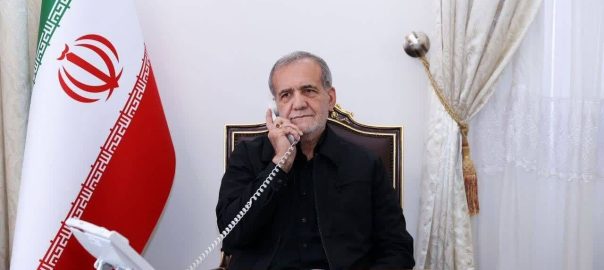
Iranian President Masoud Pezeshkian warned that any threat to the security of the Strait of Hormuz would have large-scale consequences for global trade. In a phone call with French President Emmanuel Macron, Pezeshkian cautioned that US attempts to block maritime access to Iranian ports would jeopardize not only regional stability but also international commerce.

Foreign Ministry spokesman Esmaeil Baghaei sharply criticized Washington’s move in a post on X, asking: “Can an illegal ‘war of choice’ be won through a ‘revenge of choice’ against the global economy? Is it ever worthwhile to cut off one’s nose to spite one’s face?”

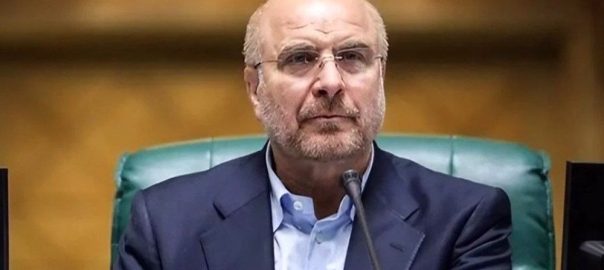
Parliament Speaker Mohammad Baqer Qalibaf, who led the Islamabad talks, also reacted forcefully. “If they fight, we will fight; if they come with logic, we will deal with logic,” he wrote.
Qalibaf posted a map of Washington-area gasoline prices on social media with the comment: “Enjoy the current pump figures. With the so-called ‘blockade’. Soon you’ll be nostalgic for $4–$5 gas.”

No transit for enemy vessels 

In a statement issued Monday, Iran’s military warned that any threat to its ports would trigger a broader regional response, declaring that no port in the Persian Gulf or the Sea of Oman would remain secure if Iranian facilities were targeted.

Spokesman for the Armed Forces Lieutenant Colonel Ebrahim Zolfaqari said security in the two strategic waterways must apply to all or to none. He emphasized that defending national rights, including sovereignty over territorial waters, is a lawful obligation.

“Enemy-affiliated vessels do not and will not have the right to pass through the Strait of Hormuz,” he said, adding that other vessels would be allowed to transit in accordance with Iranian regulations.

The Islamic Revolution Guards Corps (IRGC) warned earlier that any military vessel attempting to transit the strait would be considered in violation of the ceasefire and would receive a firm and decisive response.

Prior to the ceasefire, Iran had announced that vessels affiliated to the US, Israel and countries involved in the war on Iran would not be permitted to transit through the Strait of Hormuz. But it allowed ships operated by other nations to transit through coordination with Iran.

International alarm mounts

China voiced opposition to the US naval blockade, warning that it would intensify tensions and undermine an already fragile ceasefire. At a regular press briefing, Foreign Ministry spokesperson Guo Jiakun said expanding military deployments and carrying out blockade operations would escalate contradictions rather than resolve them.

Russia also expressed concern, with officials cautioning that interference with free navigation in international waterways could have unpredictable consequences for global stability.

European diplomatic sources indicated unease as well, stressing the importance of maintaining maritime security and preventing further escalation in a region vital to global energy supplies.

Energy analysts warn that insurance premiums for tankers operating in the area are likely to surge, making global banks increasingly cautious. The tanker market could fragment into separate risk tiers, further complicating energy flows and increasing costs for consumers worldwide.

A risky gamble 

Trump’s blockade decision appears to follow mounting strategic setbacks. The 40-day war failed to achieve its declared objectives of compelling Iran to capitulate or fundamentally altering its regional posture. Instead, Tehran demonstrated its capacity to influence one of the world’s most sensitive maritime chokepoints.

The failure of the Islamabad talks further exposed Washington’s inability to translate military pressure into diplomatic gains. Having failed to secure concessions on the battlefield or at the negotiating table, the United States now appears to be escalating economic and maritime pressure in an attempt to regain leverage.

However, such actions risk undermining the already fragile ceasefire and further jeopardizing freedom of navigation in the Strait of Hormuz. By targeting a corridor through which a fifth of global energy supplies pass, Washington is effectively weaponizing the global economy — a move critics describe as dangerous and irresponsible.

Rather than isolating Iran, the blockade may accelerate global backlash, deepen divisions among major powers, and drive energy-importing nations to seek alternatives to US-dominated financial and security structures.

If the objective is to pressure Tehran into submission, the strategy may prove counterproductive. Iran has shown it is prepared to respond asymmetrically and regionally. Meanwhile, rising fuel prices, surging insurance costs, and financial market volatility could impose tangible costs on American consumers and US allies alike.

In the end, the blockade of Hormuz may come to symbolize not strength, but strategic frustration — a high-risk gamble born out of failure in both war and diplomacy, with consequences that could reverberate far beyond the Persian Gulf.

Tehran Times

Araqchi Blames US Excessive Demands for Failed Deal Opportunity

TEHRAN (Tasnim) – Iranian Foreign Minister Abbas Araqchi attributed the failure to reach an agreement in the recent Pakistani-mediated talks between Iran and the US to Washington’s excessive demands and flip-flop.

In a telephone conversation, Araqchi briefed his French counterpart Jean-Noël Barrot on the intensive Iran-US negotiations held on the weekend in Islamabad.

“The Islamic Republic of Iran, despite having absolute distrust of the American side, entered the negotiations with a responsible approach and good faith. Although progress was made in the negotiation process on many issues, the American side’s excessive demands and constant changes in their requirements prevented reaching an agreement,” the Iranian foreign minister explained.

For his part, the top French diplomat stressed his country’s position in support of a diplomatic approach to end the war, expressing hope that continued dialogue would lead to a final agreement.

On February 28, following the assassination of late Leader of the Islamic Revolution Ayatollah Seyed Ali Khamenei and several military commanders, the US and Israel initiated a sweeping military campaign against Iran. In response, the Iranian Armed Forces executed a series of counterattacks over a span of 40 days, targeting American and Israeli military installations in the region and demonstrating their combat capabilities. Contrary to the expectations of a swift victory, the Iranian retaliations caused considerable damage to US and Israeli assets, prolonging the conflict and escalating tensions in the region.

In an attempt to ease hostilities, a two-week ceasefire was brokered on April 8, allowing for mediated negotiations to take place in Islamabad. Iran presented a ten-point plan during these discussions, which called for the withdrawal of US troops, the lifting of sanctions, and control over the key Strait of Hormuz. Despite engaging in 21 hours of intense talks with US negotiators in Pakistan, the Iranian delegation returned to Tehran without reaching an agreement, citing a lack of trust and the US’ political flip-flop.

Tasnim News Agency

Iran Urges Collective Action to Ensure Regional Security without US Interference

TEHRAN (Tasnim) – The foreign minister of Iran stressed the need for all regional countries to join hands to protect peace and stability in the region and block the US’ destructive interference.

In a telephone conversation on Monday, Abbas Araqchi and his Omani counterpart Sayyid Badr bin Hamad Al-Busaidi discussed the latest regional developments, a ceasefire in the US-Israeli aggression against Iran, and negotiations between Iran and the United States to end the war in the region.

Praising Oman for its responsible and principled stance on regional developments, particularly on the US-Israeli military aggression against Iran, Araqchi emphasized Iran’s commitment to preserving regional peace and stability through cooperation and participation of all regional countries, away from destructive US interference.

For his part, the Omani foreign minister welcomed Iran’s responsible approach in accepting the continuation of the ceasefire and entering the diplomatic process, expressing hope that peace and stability would return to the region as soon as possible.

On February 28, following the assassination of late Leader of the Islamic Revolution Ayatollah Seyed Ali Khamenei and several military commanders, the US and Israel initiated a sweeping military campaign against Iran. In response, the Iranian Armed Forces executed a series of counterattacks over a span of 40 days, targeting American and Israeli military installations in the region and demonstrating their combat capabilities. Contrary to the expectations of a swift victory, the Iranian retaliations caused considerable damage to US and Israeli assets, prolonging the conflict and escalating tensions in the region.

In an attempt to ease hostilities, a two-week ceasefire was brokered on April 8, allowing for mediated negotiations to take place in Islamabad. Iran presented a ten-point plan during these discussions, which called for the withdrawal of US troops, the lifting of sanctions, and control over the key Strait of Hormuz. Despite engaging in 21 hours of intense talks with US negotiators in Pakistan, the Iranian delegation returned to Tehran without reaching an agreement, citing a lack of trust and the US’ political flip-flop.

Tasnim News Agency

US, Israel to Leave Region Empty-Handed: IRGC Quds Force Chief

TEHRAN (Tasnim) – The commander of the IRGC Quds Force said the United States and the Zionist regime will have to leave the region without any achievements.

“The integrated front of resistance has a powerful and effective presence throughout the region and is waiting for the enemies of humanity,” Brigadier General Esmaeil Qaani said in a social network post.

“The US and the Zionist regime should remember how they fled empty-handed from the heroic Yemen, Bab-el-Mandeb, and the Red Sea,” he added.

“Now, they will also leave the region without any achievements,” the IRGC general stated.

His comments came after US President Donald Trump said the US Navy would start blockading the Strait of Hormuz and would also interdict every vessel in international waters that had paid a toll to Iran.

But CENTCOM said this would only target ships going to or from Iranian ports. CENTCOM also said that international vessels not going to or from Iran would have freedom of navigation to transit the strait.

The US military said it will begin blockading Iranian ports on Monday at 14:00 GMT.

Tasnim News Agency

Trump to Lose Bab al-Mandab in Case of Any Move against Strait of Hormuz: Source

TEHRAN (Tasnim) – The US President Donald Trump will lose Bab al-Mandab Strait if he takes any action against the Strait of Hormuz, an informed source told Tasnim.

Speaking to Tasnim about Trump’s recent remarks about the naval blockade of Iran and the restriction of ship traffic through the Strait of Hormuz, an informed source said, “Trump’s threats of this kind are no longer effective and credible, and if these threats were effective, Trump would not have been desperate to reach a ceasefire in the war.”

“Such stances will not improve the process of resolving problems and Trump should fear not to lose Bab al-Mandab strait by engaging in these foolish threats,” the source said, reiterating that such remarks will pose more costly challenges for energy transport and global trade in the region.

The statement came after US President Donald Trump on Sunday claimed that the US Navy would “immediately” begin a blockade of ships entering or leaving the Strait of Hormuz.

Iran has full control over the strategic strait that was responsible for 20% of global oil shipping before US-Israeli war against the country.

Tasnim News Agency

Martyr Leader’s lifelong devotion to books, reading

TEHRAN – Every year in mid-spring, the Martyr Leader of the Islamic Revolution Ayatollah Seyyed Ali Khamenei visited the Tehran International Book Fair (TIBF) as one of his prominent characteristics was his fondness for books and reading.

During his visits to various booths at the TIBF, the Martyr Leader addressed the most important issues in the publishing sector and expressed his concerns about books: from the challenge of sourcing and the high price of paper to the high cost of books and the necessity of protecting publishers’ rights against smuggling, ISNA reported.

Regarding books, he had said: “One should pay attention to books. One of the worst forms of indolence is laziness in reading books. The issue of books is important, and the country’s cultural development always needs books. A book is the most enduring work of art”.

Recounting the memories of his esteemed father, the Martyr Leader had said: “My father was always awake when we were asleep, and whenever we woke up, he was awake and busy reading… He was passionate about reading”.

The Minister of Culture and Islamic Guidance Seyyed Abbas Salehi has also recounted a memory of the Leader: “In 1978, following the attack by the Pahlavi regime on Imam Reza (AS) Hospital in Mashhad, a 14-day sit-in was organized by the Leader and the city’s scholars. It was said that during this time, the Leader was among the only scholars who had brought books with them and would read when he wasn’t speaking or in a meeting”.

The Leader of the Islamic Revolution was martyred during US-Israeli airstrikes that targeted his office in central Tehran on February 28, when an imposed war by the American-Zionist regimes against Iran started.

For 40 days, the aggressors martyred about 3,000 people including several officials and military commanders as well as numerous civilians, among them many women and children.

Ayatollah Khamenei was elected as Iran’s Leader in June 1989, following the passing of the Founder of the Islamic Republic, Imam Ruhollah Khomeini.

He was interested in poetry and literature. He was also fond of novel and short story. He read the world’s most well-known novels and short stories. He was also a literary critic and was in contact with many of the writers and intellectuals of his time.

The Martyr Leader attended many literary associations with the participation of great poets. He was not only a critic in poetry but also composed poems in the recent years. He also studied history books and had a good knowledge of modern history.

Ayatollah Khamenei started his research and writings when he was a theology student. He wrote and translated some books before the 1979 Islamic Revolution. Some of his books and researches are: “General Outlines of Islamic Thought in the Quran”, “Patiance”, and “A Report about Historical Past and Present Condition of the Qom Seminary”.

He also translated books entitled “Imam Hassan Peace: History’s Most Magnificent Heroic Flexibility” written by Sheikh Rezi Al-e Yassin; and “Muslims in India’s Freedom Movement” written by Abdul Man’am al-Nemer.

This year’s edition of the Tehran International Book Fair was scheduled to be held from May 13 to 23; however, due to the current circumstances, it may be postponed.

*** Photo: Ayatollah Seyyed Ali Khamenei visits the Tehran International Book Fair in May 2016.

Tehran Times

Betrayed at the table, unbroken in spirit: Iran’s path to dignified peace with US

ISLAMABAD- As a Wall Street banker with more than thirty years observing the turbulent waters of Iran-U.S. relations—from the transformative 1979 Islamic Revolution that reshaped the Middle East to the high-stakes Islamabad talks unfolding even as I write these words in April 2026—I have witnessed cycles of hope and betrayal that few other relationships can match.

Twice in recent memory, while genuine negotiations were actively progressing, American military force struck Iranian territory. In June 2025, during the first round of Omani-mediated talks that had shown cautious progress, the United States launched devastating airstrikes under Operation Midnight Hammer, targeting the Fordow and Natanz nuclear facilities, and the Isfahan nuclear technology center with bunker-buster bombs and Tomahawk missiles.

Then, in early 2026, even as indirect discussions continued in Geneva and other venues, further U.S.-Israeli operations escalated tensions dramatically. Iranian diplomats and officials rightly described these actions as unprovoked betrayals of the negotiating spirit. We were seated at the table in good faith, exchanging proposals through mediators, yet Washington chose the language of force.

The message sent to every Iranian family in Tehran, Tabriz, or Shiraz—and to our vast, people across Europe, North America, and beyond—was crystal clear: America’s commitments, even amid dialogue, remain fragile and untrustworthy. Yet Iran persists in these Islamabad talks not out of weakness, but from the deep well of resilience that has defined our nation since the Revolution. We choose principled engagement because true strength lies in defending sovereignty while extending a hand for mutual respect.

The historical ledger since 1979 reveals a pattern of American pressure met by Iranian endurance. Following the hostage crisis, the Carter administration froze billions in Iranian assets—funds earned from the sweat of our people and belonging rightfully to them. Sanctions accumulated through the 1980s and 1990s, intensified under successive U.S. administrations with oil embargoes and extraterritorial measures that targeted third-country businesses. The 2015 Joint Comprehensive Plan of Action (JCPOA) offered a brief window of relief: Iran curtailed aspects of its peaceful nuclear program in exchange for sanctions lifting, verified by the International Atomic Energy Agency (IAEA). Economic indicators improved noticeably—GDP growth accelerated, inflation eased somewhat, and ordinary citizens glimpsed a more stable future.

But in 2018, the Trump administration unilaterally withdrew, reimposing “maximum pressure” sanctions that strangled trade, medicine imports, and civilian aviation spares. Partial unfreezes, such as the 2023 Qatar-held funds tied to a prisoner swap, were later clawed back. This cycle of broken promises has exacted a heavy human toll: families struggling with inflated prices, hospitals facing shortages, and industries starved of technology. Yet Iran’s “economy of resistance”—built on domestic innovation, strategic partnerships with Russia, China, and regional allies—has weathered the storm, proving that no external pressure can break a nation rooted in self-reliance and revolutionary ideals.

Today, amid the Islamabad negotiations—mediated by Pakistan and involving senior figures like Iran’s Foreign Minister Abbas Araghchi and U.S. envoys including Steve Witkoff and Jared Kushner—signals emerge of possible movement on frozen assets. Iranian sources indicate Washington may agree to unfreeze approximately $6 billion held in Qatari banks and other overseas accounts, funds originating from oil revenues blocked since 2018. For Iran, this is not benevolence; it is elementary justice long denied.

These resources can swiftly address pressing needs: reconstructing infrastructure damaged in recent conflicts, upgrading power generation to ease summer blackouts, bolstering healthcare systems strained by years of sanctions, and injecting liquidity into small and medium enterprises that employ millions. The benefits would ripple outward—stabilizing the rial, creating jobs for youth, and allowing our scientists and engineers to focus on advancement rather than circumvention. For the Iranian diaspora, many of whom maintain deep emotional and cultural ties despite living abroad, such relief would mean renewed confidence in investing back home or supporting family without the shadow of financial isolation.

From America’s perspective, honoring asset release and pursuing a durable accord serves practical self-interest. Perpetual confrontation has cost Washington trillions in Middle East entanglements, with little to show beyond instability. A negotiated settlement promises lower global oil price volatility—critical for American consumers and industries—safer passage through the Strait of Hormuz, through which a significant portion of the world’s energy flows, and reduced exposure of U.S. forces to regional risks. No more American lives needlessly placed in harm’s way for policies that have repeatedly failed to deliver regime change or submission. Instead, Washington could redirect resources toward domestic priorities, rebuilding credibility eroded by policy flip-flops that have alienated even traditional allies.

Practical outcomes hinge on realism and reciprocity. Any lasting agreement must incorporate phased, verifiable sanctions relief synchronized with IAEA-monitored steps on Iran’s peaceful nuclear program. Iran has consistently affirmed its commitment: no pursuit of nuclear weapons, full adherence to non-proliferation norms, yet insistence on its inalienable right to enrichment for energy and medical isotopes under international safeguards. Explicit, legally binding guarantees against future unprovoked military strikes—whether direct U.S. operations or enabled proxies—are non-negotiable. Broader regional de-escalation should address proxy dynamics without demanding Iran abandon its legitimate defensive posture or role as a stabilizing force in West Asia. Iran’s negotiating team, drawing on decades of diplomatic experience and intimate knowledge of red lines rooted in national dignity, enters these talks from a position of strength. America’s side, often blending political appointees with business-oriented figures, must recognize that bullying tactics or last-minute betrayals will only prolong mistrust.

Confidence-building measures could accelerate progress. Immediate unfreezing of assets within weeks, paired with reciprocal de-escalation such as eased restrictions on humanitarian trade, would demonstrate seriousness. A structured timeline—perhaps 45-90 days for initial sanctions relief in exchange for enhanced but non-intrusive IAEA access—provides measurable milestones. Mechanisms to prevent sabotage by third parties, including clear communication channels and dispute resolution forums, are essential. Regionally, understandings that secure shipping lanes while respecting sovereign rights could reduce flashpoints in the Persian Gulf and beyond.

The dividends of peace extend far beyond governments. For Iran and its resilient people, success means economic revival: reintegration into global markets, access to advanced technology for sustainable development, modernization of infrastructure, and a brighter horizon for the next generation. Families in Isfahan or Mashhad would witness stabilized prices, improved education and healthcare, and the dignity that comes from a sovereign nation treated as an equal. Our diaspora communities—doctors, engineers, entrepreneurs thriving abroad—could channel expertise and capital more freely, strengthening bonds rather than nursing grievances born of isolation.
For ordinary Americans, the gains are equally tangible: avoidance of another trillion-dollar quagmire, predictable energy costs that ease inflation pressures at the pump and in factories, and restoration of diplomatic credibility after years of unilateralism that isolated Washington on the world stage.

Iran has never sought domination or endless conflict. The 1979 Revolution was fundamentally about independence, justice, and resistance to external interference. We have defended our borders and principles with resolve, yet repeatedly extended olive branches when respect was offered. Practical suggestions for both sides are straightforward and grounded in mutual benefit. First, treat negotiations as sovereign-to-sovereign dialogue, not zero-sum games. Second, prioritize verifiable, irreversible sanctions relief over vague promises. Third, incorporate sunset clauses with review mechanisms to build long-term confidence rather than perpetual suspicion. Fourth, address humanitarian dimensions explicitly—ensuring medicine, food, and civilian aviation spares flow without hindrance. Fifth, foster parallel economic tracks, perhaps through third-party guarantees involving China, Russia, or European actors, to insulate any deal from future U.S. domestic politics.

As these Islamabad talks unfold—potentially extending over critical days with trilateral elements involving Pakistani mediation—the world watches. Iran stands ready: resilient after decades of pressure, prepared to defend its core interests, yet open to a dignified peace that heals wounds and charts a stable regional future. If America finally learns from past betrayals and honors its undertakings, both nations and their peoples emerge as winners. No victors imposing terms, no vanquished submitting—simply two proud civilizations choosing dialogue over drones, cooperation over confrontation. The choice, ultimately, rests with Washington. Iran, true to its revolutionary spirit and historical depth, awaits with cautious hope, unwavering dignity, and the quiet confidence that justice and resilience will prevail.

(This article was written before the talks between Iran and the U.S. in Pakistan ended inconclusively due to excessive demands from the American side)

Mir Mohammad Alikhan is First Muslim Wall Street Investment Bank Founder. Author of 6 books and Ex-Federal Advisor to Pakistan

Tehran Times