All posts by islam

US Says Iran Players Welcome at 2026 World Cup

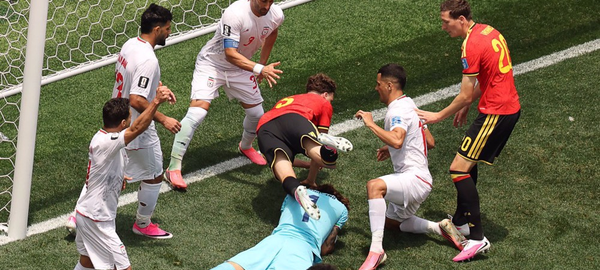
TEHRAN (Tasnim) – Iranian footballers will be welcome at this year’s World Cup, US secretary of state Marco Rubio said, distancing the US government from a proposal that Italy could take their place in the tournament.

Speaking to reporters in the Oval Office, Rubio denied that the government had asked the Iranian team not to come to the World Cup.

No one “from the US has told them they can’t come,” Rubio said of Iran’s World Cup participation, The Guardian Reported.

Rubio was responding to a reported proposal from Italy-born US special envoy Paolo Zampolli, who told the Financial Times he had floated the idea of Italy taking Iran’s World Cup place to US president Donald Trump and football’s world governing body FIFA. The proposal was dismissed out of hand by the Italian government and sports officials earlier on Thursday.

Rubio said the proposal did not reflect the US government’s position. “I don’t know where that’s coming from, other than speculation that Iran may decide not to come, and Italy would fill their spot,” Rubio said. “But that’s if they decide not to come on their own, it’s because they decided not to come.”

Zampolli told the FT on Wednesday it would be a “dream” to see Italy at the finals in the United States, Mexico and Canada despite the fact they lost in a qualification playoff last month.  However, Italy’s sports minister Andrea Abodi said on Thursday that a reinstatement of Italy “first, is not possible; second, is not appropriate, you qualify on the pitch”.

The Iranian embassy to Rome responded saying that the suggestion showed US “moral bankruptcy” and that Italy did not need “political privileges” to demonstrate its football greatness.

Tasnim News Agency

Ganjali Khan Complex: A Magnificent Blend of Architecture, History in Iran’s Kerman

TEHRAN (Tasnim) – The Ganjali Khan Complex is located downtown in Iran’s southern city of Kerman beside the Kerman Grand Bazaar.

Ganjali Khan was one of the famous governors of Shah Abbas era who ruled over Kerman from 1005 until 1034 and established numerous monuments and buildings and attempted to the prosperity of the area.

Some of the public buildings that have remained from his time include Ganjali Khan Complex in Kerman and Zeinoding Caravanserai (Ganjali Khan Caravanserai) on Yazd-Kerman Road, Khan Pool on Kerman-Mashhad Road and some aqueducts in Kerman City.

These buildings were irreparably damaged during Aqa Mohammad Khan attacks. The area of Ganjali Khan Complex is 11,000 square meters and it includes a square, bazaar, bath, school, mosque, inn, bank and citren. Ganjali Khan Bazaars are located in three sides of the square and coppersmith bazaar forms the major bazaar order.

The architect of the complex was Master Sultan Mohammad Architect Yazdi and its founder was Ganjali Khan, the governor of Kerman during 1005-1029 hijri. There are four mosques at four sides of the square, three of which are remaining and the most elegant mosque is in the eastern side of the inn which is considered a museum of decorative arts. Ganjali Khan Complex was recorded in the list of Ian’s national monuments on 26th of Ordibehesht 1347 with registration number 829.

Source: Travital.com

Tasnim News Agency

‘Quranic Leader’ Exhibition Held at Imam Reza Shrine in Mashhad

TEHRAN (Tasnim) – An exhibition titled “Quranic Leader” has been held at the holy shrine of Imam Reza (AS) in Iran’s northeastern city of Mashhad to commemorate the memory of martyred Leader of the Islamic Revolution Ayatollah Seyed Ali Khamenei and highlight his Quranic activities.

Astan Quds Razavi announced that, on the occasion of the Ten-Day Karamat celebrations and ahead of the auspicious birth anniversary of Imam Reza (AS), the exhibition titled “Quranic Leader” has been held at the holy shrine in Mashhad.

The exhibition aims to introduce the Quranic activities of late Leader of the Islamic Revolution Ayatollah Seyed Ali Khamenei, while honoring his memory.

The exhibition is accompanied by artistic service desks and is open to visitors on April 23-30, operating daily from 9:00 am to 8:00 pm at the Imam Reza (AS) Shrine.

The Ten-Day Karamat (generosity) refers to the first ten days of the month of Dhu al-Qa’dah. It begins with the birth anniversary of Hazrat Fatimah Masoumeh (SA) and concludes with the birth anniversary of Imam Reza (AS).

Tasnim News Agency

US Warned of Iran’s Severe Response to Piracy

TEHRAN (Tasnim) – The Khatam al-Anbia Central Headquarters of Iran warned that continued acts of blockade and maritime piracy by the United States will trigger a strong response from the Iranian Armed Forces.

In a statement released on Saturday, the Khatam al-Anbia Central Headquarters stressed that if the US aggressive military continues naval blockade, banditry, and piracy in the region, it will face a response from Iran’s powerful Armed Forces.

The statement said the US should be aware that the Armed Forces of the Islamic Republic of Iran possess greater might and readiness than before to defend the country’s sovereignty, territory, and national interests. It added that the US military had already experienced part of Iran’s offensive capabilities during the “third imposed war”.

The headquarters further stated that Iranian forces remain prepared and determined to monitor the behavior and movements of their enemies in the region, while continuing to manage and control the strategic Strait of Hormuz.

It warned that in the event of renewed aggression by the US and the Zionist regime, they would face even heavier losses.

On February 28, the United States and the Israeli regime launched an unprovoked war of aggression against Iran, during which then Leader of the Islamic Revolution Ayatollah Seyed Ali Khamenei and several senior military officials were martyred.

Iranian Armed Forces responded with weeks of missile and drone strikes targeting American and Israeli military positions in the occupied territories and the Persian Gulf region, inflicting heavy damages in 100 waves of counterattacks over a period of 40 days.

A Pakistani-mediated ceasefire lasting two weeks was reached on April 8, paving the way for talks in Islamabad. During those negotiations, Iran put forward a ten-point proposal that included the withdrawal of US forces and the removal of sanctions.

However, after 21 hours of negotiations on April 11 and 12, the sides failed to reach a deal, with Iranian representatives pointing to deep mistrust regarding Washington’s willingness to honor its commitments.

Iran has made clear that any return to ceasefire negotiations depends on the lifting of the US naval blockade. Officials have argued that the continued blockade constitutes a violation of the truce.

Tasnim News Agency

Iran’s legal legitimacy in controlling the Strait of Hormuz

TEHRAN, Apr. 23 (MNA) – Iran’s control of Hormuz isn’t defiance—it’s law. Bound by 1958 innocent passage rules, not 1982 transit rights, Tehran holds legal ground even Washington can’t challenge.

Since the 15th century, when the importance of navigation for the colonization of African and American countries increased, Spain and Portugal, as major navigators, divided the seas between themselves, and by order of Pope Alexander VI in 1493, other states could not use the sea without the permission of Spain and Portugal. This development was protested by countries around the world, and an issue called the “Principle of Freedom of the Seas” entered international law. With the collapse of the Spanish and Portuguese empires from the 16th century onwards, two rules for ships passing through the straits were raised in international law under the titles of “innocent passage” and “transit passage”. This note briefly examines the two aforementioned rules and Iran’s position, as well as the legal legitimacy of controlling the Strait of Hormuz.

1. In 1947, two years after the formation of the United Nations, the International Law Commission in this organization prepared a draft of the Law of the Sea, which became the basis of the 1958 Geneva Conference. One of the resolutions of this conference, namely the rule of “innocent passage”, was a new concept in the United Nations Convention on the Law of the Sea and allowed ships to pass through the territorial waters of a country, subject to certain restrictions. In Article 19 of this convention, the definition of the rule of “innocent passage” states that passage is innocent if it does not prejudice the peace, good order, or security of the coastal State. Such passage shall be carried out in accordance with the terms of this Convention and other international law. The 1958 Convention also emphasized that coastal states have the right to exercise sovereignty over straits, but do not have the right to suspend (completely block) the passage of other countries. Article 16 of the 1958 Convention also states that innocent passage is achieved when ships are moving solely for the purpose of passing through the territorial sea without stopping and are not engaged in activities such as military threat, intelligence gathering, aircraft flying from ships, intentional pollution, fishing, or disruption of coastal installations. According to the “innocent passage” rule, submarines are not allowed to move underwater, ships must carry their own flag, military vessels are not allowed to pass, and any destructive action against the environment is prohibited. The Iranian government, during the Pahlavi and Islamic Republic periods, was subject to the “innocent passage” law based on the 1958 Convention and signed the 1958 Convention with some reservations. Although the obligation to implement all the provisions of this convention was not ratified by the parliament, Iran has been adhering to the “innocent passage” regime since then.

2. In 1982, due to the independence of the new states and their membership in the United Nations, and due to the recognition of mineral resources, especially oil, on the seabed, the need to combat environmental pollution, and of course the aspirations of the great powers to freely enjoy the benefits of the sea, a comprehensive convention on the basic rules of the law of the sea was proposed and adopted by the United Nations. Although the rule of “innocent passage” was confirmed in this convention, its articles 34-45 introduced a new regime called “transit passage”. According to Article 38 of this convention, in straits that connect two parts of the high seas or the exclusive economic zone, all ships and aircraft have the right of continuous, expeditious, and unimpeded passage. Article 26 of the convention also explicitly states: “No charges may be imposed on foreign ships for the sole purpose of passing through the territorial sea, except for specific services rendered to that ship.” This convention allowed all countries, especially hegemonic powers, to pass through the straits without any restrictions.

The Islamic Republic of Iran signed the Convention on the Law of the Sea on December 10, 1982, but at the same time, issued an interpretative declaration and made reservations to this law. Subsequently, Iran’s commitment to the provisions of the 1982 law was not ratified by the Islamic Consultative Assembly (Parliament), and since then, Iran has not followed the “transit passage” rule and continues to apply the “innocent passage” regime based on the 1958 Geneva Convention in the Strait of Hormuz. Commitment to a convention in the Iranian legal system, according to Article 9 of the Civil Code, occurs when the parliament ratifies it. It is worth noting that the United States and the UAE also consider the implementation of the 1982 Convention to be against their interests and do not consider themselves obligated to implement it, while they have the right to transit through all straits without regard to the rights of coastal states and expect Iran to implement it. In addition, because the United States is not a party to the 1982 Convention, ships and aircraft from this country and other non-member countries are not subject to the right of “transit passage,” and Iran can oppose the passage of American ships and aircraft.

3. In times of war and self-defense, the conditions are different, and the provisions of the International Institute’s “San Remo Humanitarian Law-1994” booklet allow countries to impose further restrictions to ensure security in the straits. This institute is an independent, non-profit, and humanitarian association that was founded in 1970 in San Remo, Italy, to promote international humanitarian law. Accordingly, countries that control the straits, including Iran, can inspect, target, or condition the passage of enemy ships within the framework of self-defense. Therefore, Iran’s recent actions, including the selective stopping of tankers and control of passage during wartime, have legal logic. The provisions of the 1982 Convention also have their own unique rules for wartime conditions and approve the actions of countries such as Iran. In addition, during wartime, citing Article 51 of the United Nations Charter, Iran can impose restrictions to ensure its security in the Strait of Hormuz.

4. According to Article 26 of the Convention on the Law of the Sea, no fees may be charged for the passage of ships. However, for the performance of maritime services such as pilotage or navigation, surveillance and management of maritime traffic, rescue of a ship or property in danger at sea, and ensuring the security of ships in time of war, the collection of “service fees” is permitted. For example, in straits controlled by Turkey, such as the Bosphorus, charging ships with service fees is enforced as an accepted practice, and in the same way, Iran can also earn financial income.

Consequently, according to international rules, Iran is not required to apply “transit passage” and can control the Strait of Hormuz to prevent any damage by adhering to the “innocent passage” regime. In domestic law, Iran’s commitment to the legal regime of “innocent passage” is also stipulated in Article 5 of the Law of the Maritime Zones of the Islamic Republic of Iran in the Persian Gulf and the Sea of Oman. Also, in times of war and self-defense, there is a set of domestic requirements and instructions that all ships and vessels are obliged to observe. Within this framework, Iran can receive “service fees” and not tolls in return for providing services such as ensuring safety, security, and environmental protection. Considering the above, all of Iran’s current measures to control the Strait of Hormuz have legal legitimacy and are defensible in international forums and international courts of justice.

MNA

Sheikh Baha’i: Prominent scholar of Safavid era

TEHRAN, Apr. 23 (MNA) – Commemorations of Sheikh Baha’i underscore his role in Safavid Iran, where he combined scientific inquiry, religious scholarship, and public service, leaving a lasting imprint on culture, architecture, and governance in Iran.

Iran commemorates Sheikh Baha’i on April 23rd every year for his contributions as a scholar who integrated scientific knowledge with religious thought, shaping intellectual and practical life in the Safavid era. His legacy, marked annually on his birth anniversary, reflects a synthesis of science, faith, and social responsibility that influenced multiple fields.

Born in 955 AH in Jabal Amel in present-day Lebanon, he migrated with his family to Iran during the Safavid period, arriving in Qazvin at the age of 13.

Sheikh Baha’i played a pivotal role during the Safavid era as Iran consolidated political and religious unity, acting as a key intellectual force behind efforts to align governance with both religious doctrine and administrative order. His influence extended beyond scholarship, positioning him within the state structure as a figure shaping institutional coherence.

Known formally as Baha al-Din al-Amili, he combined expertise across disciplines including architecture, mathematics, astronomy and jurisprudence, while also engaging directly with governance. His migration from Jabal Amel to Iran during the reign of Shah Tahmasb reflected a broader transfer of Shiite scholarly networks into the Safavid state, where religious authority was becoming institutionalized. This trajectory informed his approach to governance, emphasizing the preservation of religious doctrine through engagement with political authority.

Operating within this framework, Sheikh Baha’i accepted the position of Sheikh al-Islam in Isfahan, the highest judicial and religious office of the time, while maintaining a degree of intellectual independence. His writings and literary works included critiques of corruption among officials, reflecting a dual approach of participation in governance alongside internal criticism. His engagement with rulers such as Shah Abbas was framed in terms of maintaining social order and facilitating religious expansion rather than personal gain.

His role extended into public life and urban policy, with accounts linking him to infrastructure and welfare-oriented initiatives, including water distribution systems and public amenities in Isfahan. These activities reflected a broader emphasis on social welfare and equitable resource management within the Safavid capital. Historical records also indicate his involvement in diplomatic correspondence, where his scholarly standing contributed to managing relations with regional powers, including the Ottoman Empire and European states.

Within the broader Safavid context, Sheikh Baha’i’s work intersected with efforts to stabilize governance structures and reinforce judicial authority in a period marked by sectarian tensions and state-building. His legacy is associated with institutional consolidation in Isfahan and the integration of religious scholarship into state administration during a formative phase of Iran’s early modern political order.

MNA

Trump always backs down: What is behind ceasefire extension?

TEHRAN, Apr. 23 (MNA) – Trump treats foreign policy as theater. But when the curtain rises on real costs, the bluff collapses. Iran knows the script very well.

Donald Trump’s recent handling of the ceasefire with Iran is not a one-off decision or a simple reaction to an unexpected development. It is the latest manifestation of a deeply embedded pattern in his approach to complex international crises. The sequence is by now familiar: a period of maximalist threats and sharp deadlines, followed by a last-minute retreat when the cost of action becomes tangible. The unilateral extension of the two-week truce with Iran offers a clear window into this recurring cycle.

In the days leading up to the deadline, President Trump employed characteristically forceful rhetoric, repeatedly signaling that the ceasefire would not be extended. His administration sought to create a psychological vise, coupling verbal ultimatums with the continuation of a maritime blockade. The strategic logic appeared straightforward: present Tehran with a choice between capitulating to Washington’s terms for talks in Islamabad or facing a sharp escalation of the crisis. The blockade was intended as the lever to make negotiation under pressure unavoidable.

This calculation, however, collided with an established Iranian strategic doctrine. Tehran’s position was unequivocal: no dialogue of any kind would commence so long as the maritime blockade remained in effect. This is not a tactical whim but a core principle of Iran’s statecraft—a rejection of negotiation under duress. By drawing this clear red line, Iran effectively neutralized the leverage Washington believed it held. The attempt to force a conversation through the barrel of a gun had reached an impasse.

It was at this juncture that the familiar Trump pattern reasserted itself. As the two-week ceasefire window closed, the U.S. president faced a stark binary choice of his own making: follow through on the threat and accept the unpredictable costs of a broader military escalation, or step back from his own declared position. The outcome was the latter—a quiet, unilateral extension of the truce. This is the essence of the dynamic captured in the phrase “Trump Always Chickens Out.” This phrase describes a pattern of behavior that has been repeated at several different points: announcing tough positions, creating high expectations, and finally backing down in the face of real costs.

To understand this recurring retreat, one must examine Trump’s conception of foreign policy. In this view, politics is less a layered, multi-variable process and more a stage for performance. The threat itself, the setting of the deadline, and the use of uncompromising language are often perceived as ends in themselves—displays of strength that require no follow-through to be considered successful. But this performative approach inevitably falters when it meets reality. Unlike other actors who may bend under psychological or economic strain, Iran has cultivated a deterrent posture over recent years that drastically raises the cost of impulsive military action. This deterrence is not solely a function of military hardware; it is a composite of regional influence, energy infrastructure, and a demonstrated willingness to absorb pressure.

A threat is only as credible as the will to execute it. When that will is absent, the threat transforms from an asset into a liability. Each unenforced ultimatum erodes the credibility of the next, emboldening the other side to resist with greater confidence. The ceasefire episode illustrates this erosion precisely. By backing away from his own rhetoric, Trump signaled that in the equation of “power projection” versus “cost absorption,” the latter still carries the greater weight. He is willing to push up to the edge of the cliff, but not to step off it.

Some observers might counter that this behavior constitutes a form of strategic ambiguity or a calculated negotiation tactic—a way to keep adversaries off balance without committing to a catastrophic path. It is true that avoiding a major war is a rational outcome. However, the pattern carries significant long-term consequences that transcend the immediate relief of a de-escalation. First, the repetitive cycle of threat and retreat systematically erodes U.S. diplomatic credibility. In international relations, credibility is a tangible currency; once it is devalued, adversaries recalibrate their risk calculus accordingly.

Second, this dynamic reinforces the strategy of resistance within Iran. When Tehran observes that steadfastness in the face of pressure consistently yields a Washington backtrack, it validates the approach and strengthens the internal consensus for continuing it. A feedback loop is created: the more Washington bluffs, the more confident Tehran becomes in calling that bluff. Third, this pattern is closely watched by other global actors, who may conclude that U.S. brinkmanship is more about domestic political theater than a genuine readiness for conflict.

The recent ceasefire extension was not merely a scheduling adjustment. It was a reaffirmation of a behavioral trend that has defined Trump’s handling of high-stakes confrontations. The gap between the theater of threats and the acceptance of real-world costs remains wide, and so long as that gap persists, the cycle of backing down is likely to repeat itself.

MNA

One enemy misstep after truce, we strike where you say: IRGC commander to people

If the enemy oversteps and commits any act of aggression against the Islamic Republic of Iran after the ceasefire, the Islamic Revolution Guards Corps (IRGC) will target wherever the people want them to, the IRGC aerospace commander said on Tuesday.

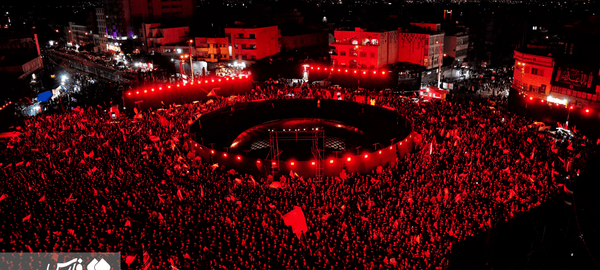
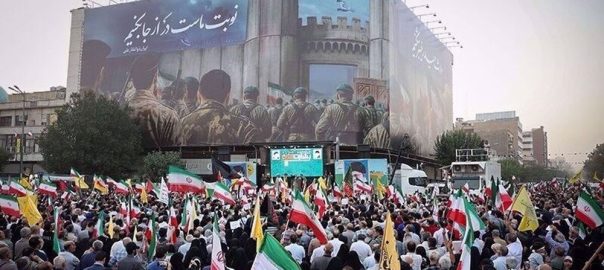
Brigadier General Seyyed Majid Mousavi made the remarks in a message addressed to the people of Iran who have filled the streets and city squares for over 50 days in support of the armed forces during the third imposed war.

The IRGC aerospace commander expressed deep gratitude to the Iranian people for maintaining their presence on the streets throughout this period.

“Your children stood by the missile launchers for forty nights and days, exposing the arrogance of the global powers. And during the period of military silence (ceasefire), they remained vigilant, hands on the trigger, ready to defend this ancient land and its millennia-old civilization,” he said in the message that was played in all city squares.

He assured people that the IRGC forces are fully ready to defend the country from any potential aggression from the enemy.

“Today, we have come to you to declare our pledge: If after the ceasefire the enemy oversteps and commits any aggression against this soil, this time our target will be wherever you direct us,” General Mousavi said.

He also issued a clear warning to regional countries against collaborating with the enemy/

“Let the southern neighbors know: if their land and resources are used by America to attack the Iranian nation, they must bid farewell to oil production in the West Asia region.”

The two-week ceasefire is coming to an end on Tuesday night amid a stalemate over the next round of talks, with US President Donald Trump unilaterally announcing its extension.

Iran hasn’t yet responded to Trump’s announcement, but it has warned that the illegal naval blockade must be lifted immediately by the US.

The war of aggression against the Islamic Republic was launched by the US-Israeli coalition on February, which came to a halt 40 days later after the US agreed to Iran’s 10-point proposal, which was supposed to form the basis for the permanent end to the war.

However, the American side has continuously breached the ceasefire.

Press TV

Iran Definitely Not to Be in Pakistan on Wednesday, But Why?

TEHRAN (Tasnim) – According to information obtained by Tasnim, Iran’s decision not to be in Pakistan on Wednesday has been finalized.

According to the information obtained by Tasnim reporter, despite all rumors released by the media and American officials, the Iranian negotiating team has informed the American side through a Pakistani mediator that it will not be in Islamabad, Pakistan on Wednesday, for various reasons and there is currently no prospect for participating in the negotiations.

Relevant sources believe that the reason for the absence of the Iranian negotiators in Pakistan is that after Pakistan entered into mediation and the request made by the American side for a ceasefire, Iran accepted this ceasefire and the subsequent negotiations in a bid to end the war based on the 10-point framework it had presented and which was accepted by the United States.

Pakistan also specifically announced the acceptance of this framework by the Americans. But immediately after that, the American side started breaching commitments in the following days.

The American side, in a complete violation of its commitments, refused to force Israelis into a ceasefire in Lebanon and the move created serious obstacles in the negotiations for several days.

Also, in the very first round of negotiations in Islamabad, the Americans made many excessive demands that were in fact violations of those initial frameworks for talks, and this issue completely led to a deadlock in the first round of negotiations.

Despite its failure in the battlefield, the United States thought that it could compensate for the failure in the war by making excessive demands in the negotiations.

However, a few days after the Islamabad negotiations, the United States was forced to implement the ceasefire in Lebanon due to Iran’s clear threat to conduct missile attacks on Israel.

After those developments, Iranian Foreign Minister Abbas Araqchi announced that Iran would also open the Strait of Hormuz to commercial ships based on the initial framework of the ceasefire and within the framework of that initial agreed framework.

However, the Iranian move was immediately followed by hostile action by the Americans in keeping the naval blockade on Iran.

In the messages exchanged over the past few days, the Americans did not back down from their excessive demands and those demands were against the rights of the Iranian people, and no meaningful progress was made in the messages exchanged between the two sides.

For that reason, Iran finally announced today that in such conditions, Tehran considers attending the talks (in Pakistan) “a waste of time” because the US is hindering any proper agreement. Therefore, “Iran will not join the American show.”

The decision has also been announced today through the Pakistanis and Iran will not be present in Pakistan Wednesday in an effort to fully protect the rights of its people.

Tasnim News Agency

Iran Readies New Surprises for Possible Restart of War

TEHRAN (Tasnim) – Evidence indicates that Iran has prepared new surprises for a possible restart of the US-Israeli war of aggression.

Information obtained by Tasnim suggests that, with the ceasefire period nearing its final hours and considering that the US’ excessive demands and the announcement of a naval blockade against Iran have prevented the formation of renewed negotiations, Iran is fully prepared for the possibility of war resuming and has also arranged new surprises for a potential new round of conflict.

Over the past two weeks, Iran has consistently considered the likelihood of war to be high and, on that basis, has carried out certain military redeployments and prepared a new list of targets for this purpose.

Accordingly, Iran is ready to create another hell for the Americans and Israelis from the very first moments of any potential war.

Tasnim News Agency