All posts by islam

Iran crowned AFC Beach Soccer Asian Cup champions

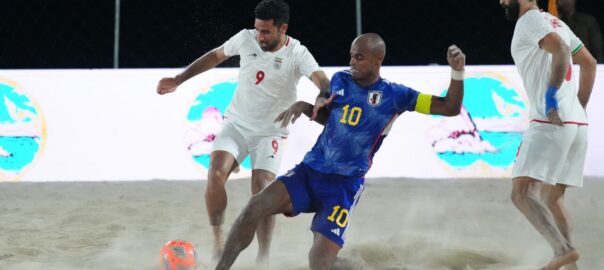
Iran defeated Japan 6-0 in the AFC Beach Soccer Asian Cup Thailand 2023 final on Sunday. The win at the Jomtien Beach Arena saw Iran draw level with Japan on three titles each, with both teams now casting their eyes on preparing for the FIFA Beach Soccer World UAE 2023 in November.

Ali Mirshekari (two goals), Movahed Mohammadpour, Moslem Mesigar, Mohammadali Mokhtari and Kosuke Matsuda (own goal) scored for Iran.

Oman defeated the UAE 4-2 to win the bronze medal.

Team Melli defeated Malaysia 14-5, Uzbekistan 11-2, the UAE 7-2 and Bahrain 10-0 and Oman 6-3 on their way to the final.

Mesigar was selected the Most Valuable Player of the 2023 AFC Beach Soccer Asian Cup. /T.T/

“Graveyard” wins award at Hong Kong festival

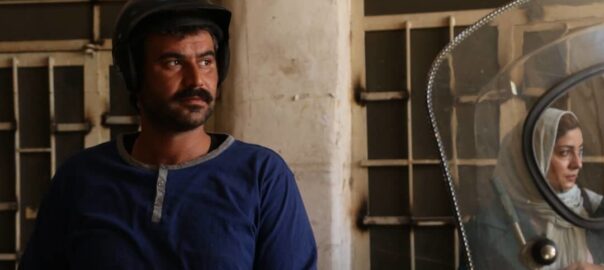
“Graveyard” by Iranian director Ali Darai has won an award at the 28th IFVA Awards in Hong Kong. The short film was one of the three films honored in the Asian New Force Category.

The film tells the story of a young mother who has lost her baby due to negligence. Furthermore, since the presence of the father is required to obtain burial permission in Iran, the young mother is striving to find her missing husband and, with the passage of time, she becomes more involved in a plethora of serious issues.

The Incubator for Film and Visual Media in Asia Awards, formerly the Hong Kong Independent Short Film and Video Awards, is organized annually by the Hong Kong Arts Centre.

“Grey Solar Game”, a drama by Indian director Seemonta Halder also was awarded in the Asian New Force Category.

This is a story of three siblings. Changing times change situations, and, along with that, change people, in ways which might not always be for the better. The siblings are plunged into one such time in which living, rather than accepting change, marks catastrophe.

The Chinese drama “I Have No Legs, and I Must Run”, winner of the BFI London Film Festival 2022 Short Film Award, won an award in this section.

Directed by Yue Li, the film is about a major athlete with an injury and a talented new recruit raises the specter of jealousy.

“As I Imagine My Body Moving” by Elysa Wendi from Hong Kong received the gold medal of the festival, the organizers announced last week.

The follows a former dancer encountering a sudden health issue. She unveiled a deeper scar that was concealed inside her for over 20 years. The film explores the notion of kinesthetic separation between the body and its stream of consciousness, sometimes dislocation, or disconnection. Her immobilized body-bearing illnesses somehow is wandering in distorted time and space. The depersonalization is perhaps a detachment one could have learned about one’s body and its autonomy.

The silver medal went to “Lucky Cat” by Yeung Kwong-Chung from Hong Kong.

Fut, a parking attendant who believes in gods and Buddha, meets a mute one day during worship who reveals a secret to him. From that day onwards, Fut gets very lucky and wins a windfall. Meanwhile, massage girl Fei Fei and her friend Mei want to blackmail Fatty, a lustful taxi driver… /T.T/

Iranian Nowruz celebrated in Dhaka

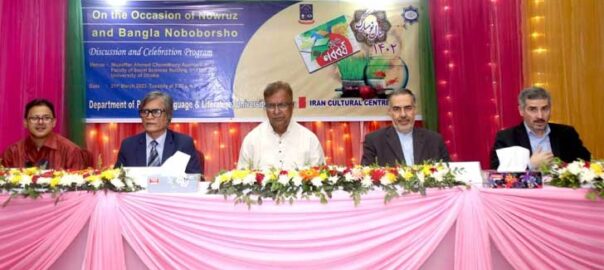
On the occasion of Nowruz (Persian New Year) and Bangla Noboborsho Cultural Centre, Embassy of the Islamic Republic of Iran and Department of Persian Language and Literature, University of Dhaka jointly organized a discussion and celebration program at Muzaffar Ahmed Chowdhury Auditorium, Faculty of Social Sciences Building, University of Dhaka at 3.30 p.m. on Tuesday, 21st March, 2023.

Mr. KM Khalid MP, Honorable State Minister, Ministry of Cultural Affairs, Government of the People’s Republic of Bangladesh was present as Chief Guest.

H.E. Mr. Mansour Chavoshi, Ambassador of the Islamic Republic of Iran in Bangladesh and Professor Dr. Muhammad Samad, Honorable Pro-Vice Chancellor (Administration), University of Dhaka were present as special guests.

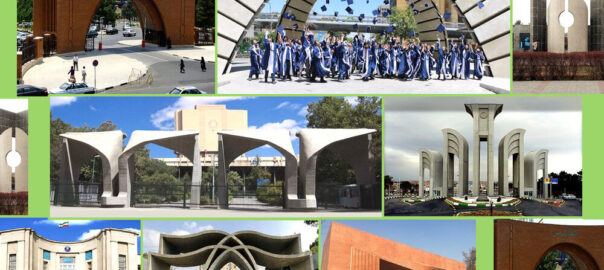
Iranian universities in Webometrics world ranking 2023

The Webometrics Ranking of World Universities 2023 has ranked 457 Iranian institutions among around 32,000 top universities across the world.

The University of Tehran tops the list of Iranian universities included in this ranking, followed by Tehran University of Medical Sciences, Shahid Beheshti University of Medical Sciences, Sharif University of Technology, Amirkabir University of Technology, Tabriz University of Medical Sciences, Iran University of Science and Technology, Iran University of Medical Sciences, Isfahan University of Medical Sciences, and Mashhad University of Medical Sciences.

The University of Tehran has improved its ranking from 308 in 2022 to 295 in 2023.

Harvard University, Stanford University, and Massachusetts Institute of Technology are the top three ranking universities worldwide in Webometrics.

Also known as Ranking Web of Universities, the Webometrics Ranking of World Universities is a ranking system for the world’s universities based on a composite indicator that takes into account both the volume of the Web content (number of web pages and files) and the visibility and impact of these web publications according to the number of external inlinks (site citations) they received.

The original aim of the Ranking is to promote academic web presence, supporting the Open Access initiatives for increasing significantly the transfer of scientific and cultural knowledge generated by the universities to the whole Society. In order to achieve this objective, the publication of rankings is one of the most powerful and successful tools for starting and consolidating the processes of change in academia, increasing the scholars’ commitment, and setting up badly needed long-term strategies

The objective is not to evaluate websites, their design or usability, or the popularity of their contents according to the number of visits or visitors.

Web indicators are considered proxies in the correct, comprehensive, deep evaluation of the university’s global performance, taking into account its activities and outputs and their relevance and impact.

Launched in 2004, the ranking is updated every January and July.

The 2023 ranking of the Times Higher Education has placed a number of Iranian universities among its top institutes in terms of education.

Kurdistan University of Medical Sciences comes first among the Iranian universities with a rank in the range of 351–400.

Islamic Azad University, Najafabad Branch, comes next with a rank in the range of 501–600.

Azarbaijan Shahid Madani University, Iran University of Medical Sciences, University of Kashan, University of Kurdistan, University of Mohaghegh Ardabili, University of Tabriz, and The University of Tehran are in the range of 601–800.

The Times Higher Education World University Rankings 2023 include 1,799 universities across 104 countries and regions, making them the largest and most diverse university rankings to date.

The University of Oxford tops the ranking for the seventh consecutive year. Harvard University remains in second place, but the University of Cambridge jumps from joint fifth last year to joint third.

A total of 63 universities from Iran have been listed in the Islamic World University Rankings 2022 announced by the Islamic World Science Citation Center (ISC), compared with 51 universities in 2021.

In the 2022 ISC ranking, there were 347 universities from 28 Islamic countries, where Turkey with 90 universities, and Iran with 63 universities had the largest number, IRNA reported.

ISC is the third internationally accredited citation center established in Iran based on a resolution adopted in 2008 by the 4th Meeting of the Islamic Ministers of Higher Education (ICMHESR) in Baku, the capital of the Republic of Azerbaijan, to index, evaluate and publish scientific productions in Islamic countries.

In the ISC 2022 world ranking, there are 2,422 universities from 111 countries and 6 continents, of which the Islamic Republic of Iran has 63 universities.

The University of Tehran and the Tehran University of Medical Sciences are in the first place (401-450), Shahid Beheshti University of Medical Sciences, Sharif University of Technology, Iran University of Medical Sciences, and Tarbiat Modares University are in second place (601-700).

The Amir Kabir University of Technology and Mashhad University of Medical Sciences are in third place (701-800). /T.T/

Iran building paper-making factory in Venezuela

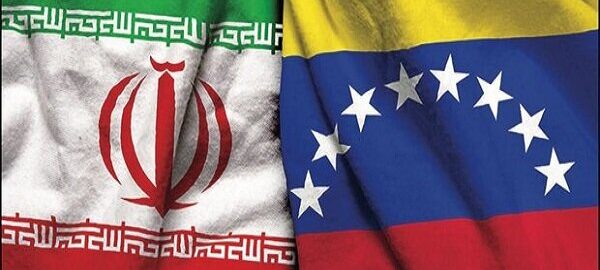
The Iranian culture minister reported of the joint construction of a paper factory in Venezuela, holding cultural weeks and the establishment of a joint educational working group to combat media terrorism with Caracas.

Mohammad Mahdi Esmaeili, Iran’s Minister of Culture and Islamic Guidance made the announcement on the sidelines of a cabinet meeting while talking to reporters at the presidential compound on Wednesday.

He pointed to the achievements of his recent trip to Venezuela, saying, “On this trip… the main goals were the preparations for signing two cultural and media-related memoranda with Venezuelan counterparts.”

“The joint construction of a paper factory in Venezuela, the establishment of cultural weeks and a joint educational working group to combat media terrorism are among the most important provisions of these memorandums,” the Iranian minister said. /MNA/

Happy Noruz: a celebration for 300 million people

On March 21, over 300 million people worldwide start celebrating Noruz – an ancient festival that marks the Persian New Year and the official beginning of spring.

Noruz, which means “new day”, is a universal celebration of new beginnings: wishing prosperity and welcoming the future, and escaping from the past.

You may compare it to Christmas celebrations. However, there is much more to it than that; family gatherings, street performances, fire festivities, and delicious Persian dishes, to name a few.

The millennia-old festivity is primarily observed in Iran, Afghanistan, Turkey, the Kurdish regions of Iraq as well as in those countries, where there are significant diaspora populations of Parsis, including India. It is celebrated by tens of U.S. communities as well.

From a wider perspective, it is celebrated in many regions from the Balkans to the Black Sea Basin and from Central Asia to the Middle East.

On the request of nations like Iran, Afghanistan, Albania, India, Kazakhstan, Turkey, and Turkmenistan, March 21 was formally recognized by the UN in 2010 as International Noruz Day.

As mentioned by the United Nations, Noruz “promotes values of peace and solidarity between generations and within families as well as reconciliation and neighborliness, thus contributing to cultural diversity and friendship among peoples and different communities.” That’s why families use this time to deep clean their homes and closets and buy fresh clothing.

Traditionally, Iranians decorate a Noruz table with — among other things — goldfish, wheat grass, candles, and mirrors. In fact, the “Haft-Seen” table, embraces seven symbolic items starting with the Farsi letter “S.” The colorful items include herbs, dried nuts and fruits, wheat grass, and vinegar, all of which stand for different hopes for the new year, such as health, wealth and lavishness.

The Holy Quran or poetry books are frequently placed on the table to represent education and enlightenment, and a goldfish is frequently placed there for good luck.

Happy Noruz: a celebration for 300 million people

It is not a coincidence that Noruz begins at the spring equinox when the sun crosses the equator and day and night are of equal length. The Iranian calendar is a solar calendar, which means that it uses astronomical observations to determine time-based on Earth’s rotation around the sun. As a result, the natural phenomenon of the vernal equinox always ushers in the new year.

It’s possible to think of Amoo Noruz as a version of Santa Claus while Haji Firooz, who is depicted with blackface, pops up on the streets to bring good wishes.Along with sparkling homes and new clothes, many people socialize with neighbors and friends, eat together, and throw events. The two-week celebration is filled with parties, craft-making, street performances, public rituals, and lots of food.

People go outside thirteen days after Noruz and plunge the wheat grass they’ve been cultivating and using to adorn Haft-Seen tables into moving water. The custom is upheld on the 13th day following the start of the new year, a day that is typically associated with bad luck. Communities throw out wheatgrass, which is said to absorb all evil forces from home to ensure good fortune for the coming year.

Iranians also have the legends of Amoo Noruz and Haji Firooz, whose characters can be traced back hundreds of years.

It’s possible to think of Amoo Noruz as a version of Santa Claus while Haji Firooz, who is depicted with blackface, pops up on the streets to bring good wishes.

On the last Wednesday of the year, many people hold a time-honored tradition, named Chaharshanbe Soori (or, “Red Wednesday”), to jump over bonfires to mark the final few days of the old year, singing traditional songs and repeating the phrase, “Give me your beautiful red color and take back my sickly pallor!”

Children run through the alleyways, loudly banging on pots and knocking on doors while pleading for candy or cash. It resembles Halloween in some ways.

Narratives say that fire represents a sign of light and good as people make wishes for happiness, health, and goodness for the new year.

This year — which in the Persian calendar is the year 1402 — will ring on March 21, 2023, at 12:54:27 p.m. in Iran. / T.T/


Needlework export could generate revenue more than oil, expert says

The currency earnings of needlework could be greater than those of oil, a handicrafts expert has said. If Iranian needlework is taken into consideration, needlework could generate more currency earnings than oil, IRNA quoted Maryam Sammak as saying on Sunday.

With the help of exhibitions held throughout the year in different countries, it is possible to have a high share in global markets in this field, she added.

Depending on the needs of the countries, artists should be supported and their works exposed to sale in these exhibitions, she noted.

Europeans prefer delicate works such as silk embroidery and net embroidery, while Arab countries prefer glitzy artworks, therefore, the works should be displayed according to the needs of the country and region, she mentioned.

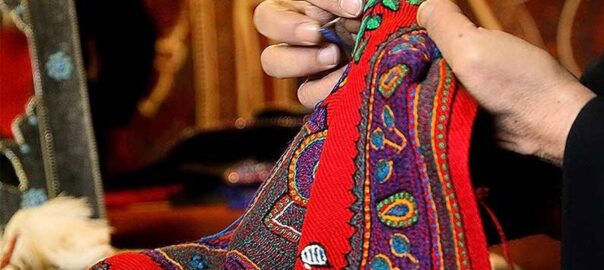
Needlework (Souzan-douzi in Persian) is a very common occupation among people of some Iranian provinces. It is the art of drawing images on plain fabrics by sewing delicate stitches using a needle and colorful yarns. They are mainly used to embellish women’s clothes; however, such works are applied to decorate bracelets, necklaces, bags, and scarves.

The value of Iran’s handicrafts exports stood at $400 million during the first ten months of the current Iranian calendar year 1401 (Mar. 21, 2022– Jan. 20, 2023).

The Islamic Republic exported some $320 million worth of handicrafts during the past Iranian year (1400).

According to the Ministry of Cultural Heritage, Tourism and Handicrafts, Iran has the most cities and towns registered with the World Crafts Council (WCC), followed by China with seven, Chile with four, and India with three designated ones.

The WCC-Asia-Pacific Region designated Shiraz, Malayer, Zanjan, and the village of Qasemabad in January 2020, bringing the total number of craft cities and towns in Iran from 10 to 14. Shiraz has been dubbed “the world city of [various] handicrafts.”

Malayer became a center for woodcarving and carved wood furniture on a global scale. The designation “world city of filigree” was given to Zanjan. The village of Qasemabad, which is renowned throughout the country for its traditional costumes, was also promoted to a major handicrafts center on an international scale.

Iraq, Afghanistan, Germany, the United States, and the coastal states of the Persian Gulf are among the countries that traditionally import ceramics, porcelain, hand-woven clothing, personal jewelry, and semi-precious stones from Iran./ T.T/

Iran opens trade center, permanent exhibition in Kabul

Iran’s trade center and permanent exhibition of Iranian products was inaugurated in Kabul on Sunday, the Iranian Embassy in Afghanistan announced.

In a tweet, the embassy mentioned the purpose of opening this center is to take a fundamental step in the development of trade relations between the two countries of Iran and Afghanistan.

The embassy added that this center will be a place for Afghan businessmen to familiarize themselves with Iranian products.

The development of exports to Afghanistan with the establishment of a permanent trade center for Iranian goods in Kabul is the beginning of a new chapter in the economic relations between the two countries.

On January 31, Iran’s Trade Promotion Organization (TPO) held a conference on Iran-Afghanistan business opportunities, during which the capacities of trade with Afghanistan were introduced and some solutions were proposed to resolve the problems created by the government change in Afghanistan.

Speaking at this event, Deputy Industry, Mining, and Trade Minister Mohammad Mousavi said the trade between Iran and Afghanistan has reached $1.5 billion in the first nine months of the current Iranian calendar year (March 21- December 21, 2022).

The official expressed hope that Opening trade centers in Afghanistan would increase the level of trade between the two neighbors.

Mousavi further invited the businessmen of the two countries, especially the Iranian industrialists, to take part in Afghanistan’s infrastructure projects.

Iran exported 4.187 million tons of commodities worth $1.839 billion to Afghanistan in the previous Iranian calendar year 1400 (ended on March 20, 2022) to register a 20-percent decline in terms of value compared to the preceding year.

The weight of the exported goods also decreased by 40 percent year on year. /T.T/

Low-income families provided with apartments

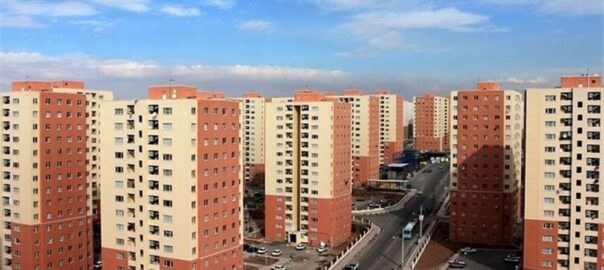
In a ceremony on Sunday, a total of 23,000 apartments were delivered to low-income families across the country. The Imam Khomeini Relief Foundation has constructed the apartments. President Ebrahim Raisi handed over three apartments, IRNA reported.

A total of 25 trillion rials (nearly $50 million) has been proposed to provide housing for the underprivileged in the budget bill for the next [Iranian calendar] year (starting March 21), Morteza Bakhtiari, head of the Foundation said in August 2022.

The Foundation also plans to build 360,000 houses over the next four years.

The project will start next year and 90,000 houses will be built for the deprived annually, 60,000 of which will be built in cities and 30,000 in villages.

A memorandum of understanding has been signed with the Mostazafan Foundation and Housing Foundation regarding the construction of 10,000 housing units in villages and cities with less than 25,000 populations.

Another memorandum of understanding has been inked with the Basij and Housing Foundation to build 40,000 houses. / T.T/