All posts by islam

‘Sona’ to vie at Media Film Festival in US

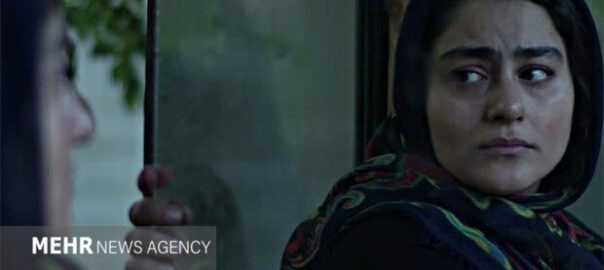
Directed by Iranian filmmaker Zahra Torkamanlou, the short film “Sona” is set to compete at the 15th Media Film Festival in the United States.

“On the verge of turning forty, how should Sona face the problem of her loneliness?,” the synopsis of Torkamalou’s short film reads.

Fariba Sohrabi, Narjes Delaram, Samaneh Babazadeh, Hesam Kazemi, and Hamed Ghaffarpour are among the cast of Sona.

The Media Film Festival is a vibrant community forum for film lovers, dedicated to providing excellent film experiences for audiences and filmmakers alike. The Media Film Festival celebrates and promotes quality independent films to build a greater appreciation of artists and filmmakers.

The Media Arts Council (MAC) of Media, Pennsylvania, held its first Film Festival in February 2008. Since then, it’s been honored to host hundreds of short films across nearly every conceivable genre. /MNA/

Iran runner-up at Junior Kabaddi World C’ships 2023

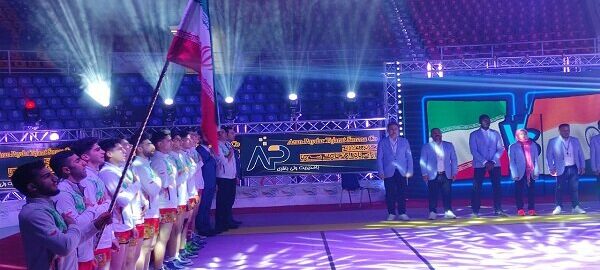
Iran became the vice-champion of the Junior Kabaddi World Championships 2023. India could defeat Iran 41-33 in the final match in Urmia. Iran progressed to the finals after beating Chinese Taipei, Uganda, Bangladesh, and Nepal.

The 2nd edition of the tournament began on 28th February in Urmia, in northwest Iran, and wrapped up on 4th March 2023.

The tournament was organized and held in Iran for the second successive time with the host winning the inaugural edition. /MNA/

Ins and outs of Persian Carpet

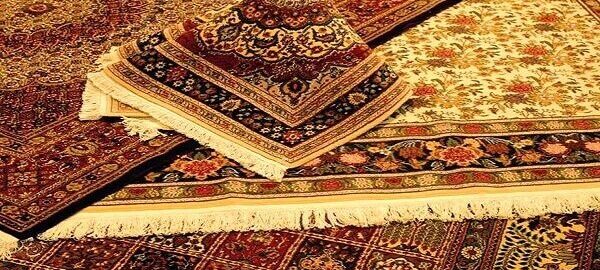
When it comes to high-quality carpets in the world, the name Persian Carpet stands out. Carpet is considered one of the top Persian souvenirs to take home while paying a visit to Iran.

In the 17th century, some seventy Dutch artists included representations of Persian carpets in their paintings, mainly types originating in northwestern Persia, iranicaonline reported on the history of carpets in the world.

Persia has been renowned for its dyes for many centuries; in 987/1579, for example, an Englishman was sent to learn the secrets of dyeing wool and silk in the Persian manner, the encyclopedia added.

Ins and outs of Persian Carpet

The most common design format in Persian carpets is a central field, known as ‘matn’ in Farsi, enclosed by a border, known as ‘hashiyeh’ in Farsi, of patterned stripes alternating with narrow bands of solid colors, the source further noted.

Medallion, ‘toranj’ in Farsi, cartouche, arabesque, bota (lit. ‘bush, shrub’), palmette (gol-e eslimi lit. ‘patterned’ or ‘arabesque flower’), and rosette are among the motifs which are common in both the fields and borders of Persian carpets.

Herati (lit. ‘from Herat’), Minakhani (literal meaning unknown, possibly derived from a proper name), reciprocal-trefoil, S-stem, and Shah-Abbasi (lit. ‘of Shah ʿAbbas’) are among the most frequent patterns on Persian carpets.

The two basic types of knots found in Persian carpets are the symmetrical and the asymmetrical both of which may be open either to the right or, more commonly, to the left.

In earlier carpet literature the symmetrical knot was generally called the Turkish or Ghiordes knot: among Persians in the trade the technique of knotting carpets in this fashion is commonly known as ‘torkibaf’. The corresponding terms for the asymmetrical knot are Persian or Senna and ‘farsibaf’.

Ins and outs of Persian Carpet

The loom (dastgah, lit. “equipment,” dar, lit. “pole”) is the frame upon which carpets are woven.

In Iran, looms may be set up either horizontally or vertically. The ends of horizontal looms (‘ru-zamini’ in Farsi) are usually pegged to the ground, and sometimes the sides are also supported. They can be quickly dismantled and easily transported and are thus favored by nomadic peoples. More commonly used is the vertical (‘divari’ in Frasi) loom, the upper and lower beams of which are either linked by two upright poles or posts or are fitted into holes in the side walls of the workroom (kargah in Farsi).

Features of carpets in Kerman

Ins and outs of Persian Carpet

The distinctive rugs called vase carpets (because of the flower vases in their designs) are generally thought to be from Kerman, Britannica reported.

Kerman carpet has been the origin since the 16th century of highly sophisticated carpets in well-organized designs. To this city is now generally attributed a wide variety of 16th- and 17th-century carpets, including vase carpets; rugs with rows of shrubs; arabesque carpets; the finest of the garden carpets; and, on the basis of constructional similarities, a group of medallion carpets with animals, according to the encyclopedia.

All of these had asymmetrical knotting on cotton warps, with stiff, heavy woolen wefts pulled straight and silk or cotton wefts between left relatively slack. The result is a “double-warped” carpet, the warps of one level lying almost directly behind their neighbors. The color schemes are among the richest and most varied found in Persian carpets, the source added.

A revival of carpet weaving became noticeable toward the end of the 19th century, and Kerman rapidly developed into one of the most important carpet industries in Iran.

Traditional skills of carpet weaving in Fars

Ins and outs of Persian Carpet

‘Traditional skills of carpet weaving in Fars’ was inscribed on the Representative List of the Intangible Cultural Heritage of Humanity in 2010.

Iranians enjoy a global reputation in carpet weaving, and the carpet weavers of Fars, located in the southwest of Iran, are among the most prominent.

Wool for the carpets is shorn by local men in spring or autumn. The men then construct the carpet loom while the women convert the wool into yarn on spinning wheels.

The colors used are mainly natural: reds, blues, browns, and whites produced from dyestuffs including madder, indigo, lettuce leaf, walnut skin, cherry stem, and pomegranate skin.

The women are responsible for the design, color selection, and weaving, and bring scenes of their nomadic lives to the carpet. They weave without any cartoon (design) – no weaver can weave two carpets of the same design. Colored yarn is tied to the wool web to create the carpet.

To finish, the sides are sewn, extra wool is burned away to make the designs vivid, and the carpet is given a final cleaning. All these skills are transferred orally and by example.

Mothers train their daughters to use the materials, tools, and skills, while fathers train their sons in shearing wool and making looms.

Carpet weaving in Kashan

Ins and outs of Persian Carpet

According to Britannica, costly silk carpets with figure motifs (such as the silk hunting carpet in Vienna’s Austrian Museum of Applied Art) were probably woven in Kashan, Iran’s silk center.

‘Traditional skills of carpet weaving in Kashan’ was inscribed on the Representative List of the Intangible Cultural Heritage of Humanity in 2010.

Ins and outs of Persian Carpet

Carpet Museum of Iran

The Carpet Museum of Iran was opened in Tehran on February 11th, 1978. The museum is considered an excellent source of research about carpets for all culture and art lovers. In this interesting museum, you will see loads of different types of Persian Carpets. Look at the pattern, each one is telling you its very own unique story in the shape of knots, treads, and colors.

Tabriz Carpet Museum

Tabriz which is located in northwest Iran was declared a world craft city of carpet weaving by the World Craft in 2016.

Construction of a carpet museum in Tabriz is complete by 70 percent, according to the provincial tourism chief.

The museum is estimated to be inaugurated by 2025, Ahmad Hamzehzadeh added in mid-January. /MNA/

Reported by Tohid Mahmoudpour

‘Camel and Miller’ to vie at French film festival

Directed by Abdollah Alimorad, the animation collection titled “Camel and Miller” is scheduled to be screened at the 2023 Vesoul International Film Festival of Asian Cinema in France.

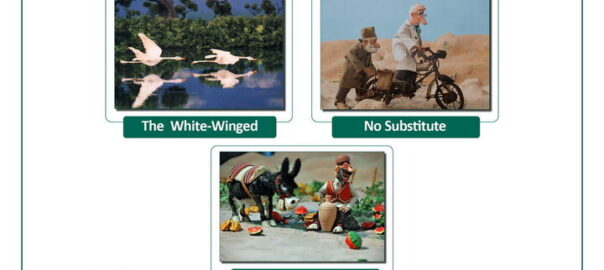
The “Camel and Miller” animation collection consists of 3 animations named “The White-Winged”, “No Substitute”, and “The Farmer and The Robot”.

These three works are produced with the theme of “Nature, Environment and Animals” and are about the relationship between technology, development, and pollution of the earth.

The 2023 Vesoul International Film Festival of Asian Cinema kicked off on Tue, Feb 28, 2023, and will end on Tue, Mar 7, 2023. /MNA/

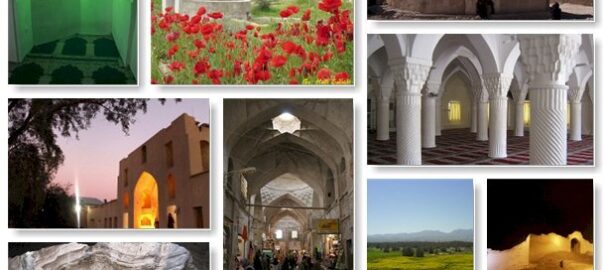
Bafq potential gateway for desert tourism

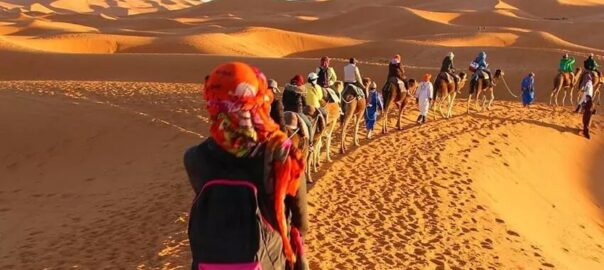
The oasis city of Bafaq has a high capacity to become a hub for desert tourism in Iran. “Covering more than 1,000 ha in area, Bafq desert holds the great capacity to become a hub for desert tourism in Iran,” Bafq’s tourism chief said on Saturday.

Usually, the picturesque desert of Bafaq welcomes more than 300,000 tourists during [the two-week] Noruz (Iranian New Year) holidays, Leyli Ranjbar said.

The number of people visiting the Bafaq desert is expected to increase by more than 10% this year due to the lifting of the coronavirus restrictions, the official said.

Even on winter days, when the weather is mostly mild in this region, the desert landscape can provide unique memories for nature lovers and holidaymakers, she explained.

Bafq desert, also known as Kavir-e Dar Anjir, is a desert near Bafq county, Yazd province. It is seventy-five-kilometer long and twenty-kilometer wide, spanning one hundred and fifty square kilometers.

Argillaceous minerals and salt marsh make up sixty percent of the soil in this desert. In fact, the south and northwest of this desert are covered in argillaceous mineral lands.

Though deserts can be some of the most discouraging places for travel. However, there is a growing number of people across the globe flocking to arid regions for hiking, camping, rock climbing, and natural photography.

Those looking for a change of pace have increasingly turned to desert tourism over the years. Unexpectedly, the desert is a great place to defrost and soak up the sun during the chilly winter months.

Iran offers some of the best places for desert travel, and the most popular destinations include, Dasht-e kavir, Maranjab Desert, Rig-e Jenn (“Dune of the Jinn”), and Shahdad Desert.

Some say the cold season doesn’t feel or appear to be present during the winter. Moreover, the splendor and beauty of uninhabited deserts are unmatched anywhere else on Earth. /T.T/


Iran exporting helicopter pieces to friendly, allied states

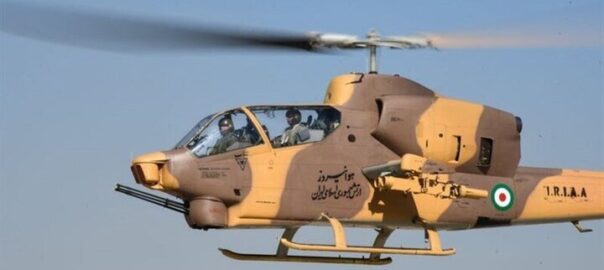
Saying that Iran overcame the sanctions successfully, the Head of the Iran Aviation Industries Organization (IAIO) said that Iran exports the required pieces for producing helicopters to other friendly and allied countries.

Speaking in an interview with Mehr News Agency, Second Brigadier General Afshin Khajeh Fard said that Iran enjoys one of the most diverse helicopter fleets in the world, having a variety of eastern, western, and European helicopters.

Saying that Iran is not dependent on foreign countries in this field, Khajeh Fard noted, “Fortunately, we have overcome the sanctions and today we also export and provide engineering services to other friendly and allied countries.”

“For many years, Iran Aviation Industries Organization, in cooperation with knowledge-based companies, has been able to produce the required pieces equal to global standards for producing all kinds of helicopters,” he added. /MNA/

Iranian reciter Amir-Hossein Rahmati tops at Intl. Quran Competition in Tehran

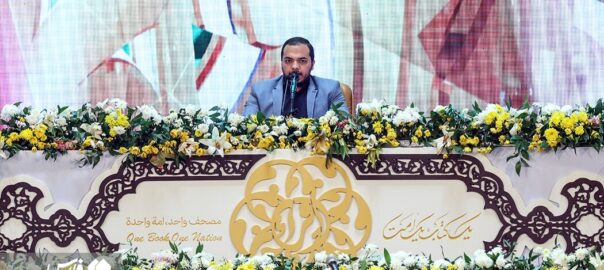
Iranian reciter Amir-Hossein Rahmati has won first prize at the 39th edition of Iran’s International Quran Competition. He received his prize from President Ebrahim Raisi during the closing ceremony of the competition on Wednesday evening at Tehran’s Islamic Summit Conference Hall.

Seyyed Amir Hashemi from Afghanistan was selected as runner-up and Abdullah Fikri from Indonesia won third prize in the reciting section.

Rahmati has been awarded in several other international and Iranian competitions.

He won the first prize at the 6th International Quran Competition for School Students in 2019. He also took first place at the 44th edition of Iran’s Nationwide Quran Competition in 2021.

Mohammad-Javad Javari from Iran took first place in the tarteel competition of the 39th International Quran Competition.

Mohammad Yar from Kyrgyzstan and Ismail Hamdan from Lebanon won the runner-up prize and third prize in this section respectively.

First prize in the memorizing category was also given to Iranian reciter Sina Tabbakhi. The runner-up and third prizes went to Abd al-Alim Abd al-Rahim from Kenya and Sheikh Mahmud Hassan from Bangladesh.

In the women’s memorizing competition, first prize was given to Amina Ibrahim from Ghana. Hajar Mehralian from Iran and Nasrin Khalidi from Algeria won second and third prizes.

First prize in the women’s tarteel competition was given to Fahimeh Asgharzadeh from Iran.

Layla Afara from Lebanon and Amaneh Shirzad from Afghanistan won second and third prizes.

In order to support the local currency, he noted that the winners will be awarded cash in rials, the standard unit of money in Iran.

Top winners in different categories are awarded 1.5 billion rials (over $2,800 based on Iran’s free-market exchange rate: $1 = 530,000 rials).

Runners-up received cash prizes of 1.2 billion rials and third-place winners were awarded cash prizes of 900 million rials.

Fifty-two reciters and memorizers from across the world participated in the competition, which ran with the motto “One Book, One Ummah” for four days. /T.T/

Iran’s annual export to India rises 60%

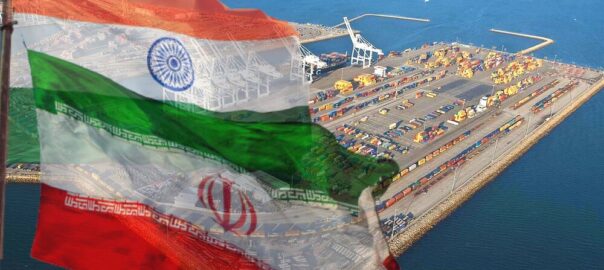
The value of Iran’s export to India increased by 60 percent in 2022 as compared to the preceding year, according to the data released by the Indian Ministry of Commerce and Industry.

The Indian ministry put the worth of Iran’s exports to India at $653 million in 2022, while the figure was $409 million in 2021, IRNA reported.

As reported, petroleum products have been the major goods imported by India from Iran in the said months.

According to the mentioned data, the value of trade between Iran and India reached $2.5 billion in 2022, rising 48 percent from $1.693 billion in 2021.

During January-December 2022, India’s export to Iran also increased by 44 percent to stand at $1.847 billion, while the figure was $1.284 billion in 2021.

Rice was India’s major product exported to Iran in the said period during which the country shipped $1.098 billion worth of rice to the Islamic Republic.

In late May 2022, the Iranian ambassador to India said that Iran and India are trying to diversify the channels of payments to expand bilateral trade.

In an exclusive interview with Financial Express Online, Ali Chegeni said, “We are trying to diversify the channels of payments and accordingly wish to extend and expand an already existing mechanism in order to cover all of the goods and services including all of the non-oil goods and to achieve this”.

During the past two years, because of Covid restrictions, we pursue the issue via virtual dialogues and currently, our officials are following the matter through the exchange of delegations, the envoy stated at the time.

“We want to develop our economic and trade relations beyond energy and petrochemical products. because, due to the complementarity of Iran and India’s economies, an extensive range of non-oil trade exists between the two sides including trade on goods and services, investment, tourism, education, and … which may pave the way for multiplying our economic relations ten times more than current relations in mid and long terms”, Chegeni said. /T.T/

Quake inflicts no harm to historical sites in Fars

A medium-sized 5.3 magnitude earthquake that struck southern province of Fars on Wednesday morning caused no damage to historical sites across the province, the provincial tourism chief has said.

Based on field visits conducted by the cultural heritage experts, no serious damage to historical relics and monuments has been reported so far, Seyyed Moayyed Mohsen-Nejad explained.

However, experts are on standby to inspect the possible harms to historical sites and aging structures of the province, he added.

Iran sits on top of major tectonic plates and experiences frequent seismic activity. A 7.3-magnitude quake in the western province of Kermanshah killed 620 people in November 2017.

In 2003, a 6.6-magnitude quake destroyed the ancient mud-brick city of Bam in the southeast Kerman province, killing at least 31,000 people.

Iran’s deadliest was a 7.4-magnitude quake in 1990 that killed 40,000 people, injured 300,000 others, and left half a million homeless across the northern town of Rudbar.

The ancient region of Fars, also spelled Pars, or Persis, was the heart of the Achaemenian Empire (ca. 550–330 BC), which was founded by Cyrus the Great and had its capital at Pasargadae. Darius I the Great moved the capital to nearby Persepolis in the late 6th or early 5th century BC.

Its capital city, Shiraz, is home to some of the country’s most magnificent buildings and sights. Increasingly, it draws more and more foreign and domestic sightseers flocking into this provincial capital which was the literary capital of Persia during the Zand dynasty from 1751 to 1794. /T.T/

Export of agricultural products to China rises 5 folds

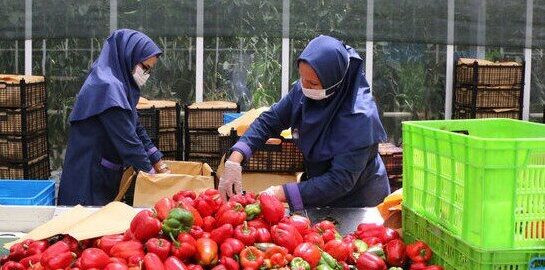
Iranian Agriculture Minister Javad Sadati-Nejad said the export of agricultural products to China has increased by fivefold in the first 10 months of the current Iranian calendar year (March 21, 2022-January 20, 2023), as compared to the previous year’s same period, IRNA reported on Wednesday.

Sadati-Nejad, who accompanied President Raisi on his recent visit to China, said earlier that the Chinese president is interested in Iranian agricultural, food, and dairy products, and such products can conquer China’s one-billion markets more than ever.

Speaking to IRNA on February 15, the minister referred to signing a number of cooperation documents in the agriculture field with China, adding, “Today three agriculture documents were signed with China, two of which is about exporting Iranian dairy products to China and one is on exporting apples to that country.” /T.T/