All posts by islam

Iranian capital getting ready to host new year travelers

Tehran municipality has formulated several plans and programs to make the Iranian capital ready to host new year travelers during the Noruz holidays.

For the new Iranian year 1401 (starting on March 21), various programs have been set up to promote Tehran tourism, an official with Tehran Municipality said on Friday.

The city will be equipped with tourist buses with the presence of tour guides, particularly in areas with tourist centers, and free tours will be offered, ILNA quoted Mehrshad Kazemi as saying.

Most of the recreational, historical and cultural centers and museums are scheduled to be open to the public during the holidays, he mentioned.

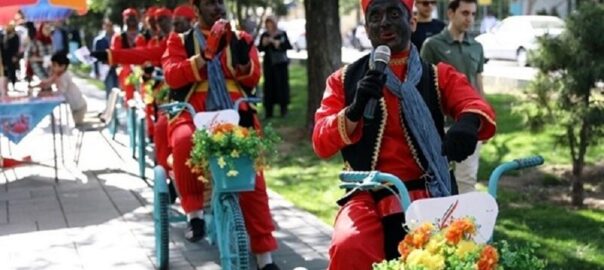
Meanwhile, carnivals featuring fictional figures from Iranian folklore, such as Uncle Noruz, the herald of spring, and his companion Haji Firuz, will be held and traditional rituals will be performed throughout the city, he added.

He also noted that in collaboration with Kordestan province, some 300 Kurdish daf players will perform on Tabiat Bridge in the heart of the capital.

Milad Tower will also host an ethnic exhibition, and Iranian tribes will set up booths in different parts of Tehran with ethnic products, he mentioned.

It is not the first year that Tehran offers special programs for Noruz travelers, as attempts had been made in previous years to position Tehran as a tourist destination, but the outbreak of the coronavirus and restrictions on travel in the past two years thwarted efforts, he concluded.

Back in January, the deputy tourism minister announced that the Iranian government should get fully prepared for a surge and potential tsunami of tourism when COVID-restrictions are over.

“Despite not knowing how the coronavirus outbreak will evolve in the future, we ought to plan on hosting tourists during the upcoming holidays of Noruz (Iranian new year).”

Travel and tourism will increase as vaccination becomes a priority around the world and lifestyles align, the official added.

Hugging the lower slopes of the magnificent, snowcapped Alborz Mountains, Tehran is much more than a chaotic jumble of concrete and crazy traffic blanketed by a miasma of air pollution. This is the nation’s dynamic beating heart and the place to get a handle on modern Iran and what its future will likely be.

The metropolis has many to offer its visitors including Golestan Palace, Grand Bazaar, Treasury of National Jewels, National Museum of Iran, Glass & Ceramic Museum, Masoudieh Palace, Sarkis Cathedral, Tehran Museum of Contemporary Art, Carpet Museum of Iran, to name a few.

The first time Tehran is mentioned in historical accounts is in an 11th-century chronicle in which it is described as a small village north of Ray. It became the capital city of the Seljuk Empire in the 11th century but later declined with factional strife between different neighborhoods and the Mongol invasion of 1220./T.T/
Muscat to host Iranian film festival

The Omani capital city of Muscat will be playing host to an Iranian film festival from March 7 to 9. A lineup of five films, including “The Maritime Silk Road” directed by Mohammad Bozorgnia and “Copper and Gold” by Homayun As’adian, will be screened during the festival, which will be held at the Oman Film Society.

“The Maritime Silk Road” is about Soleiman Siraf, a man who, according to historical documents, was the first sailor to cross the Indian Ocean to China. His route was later called the Maritime Silk Road and many merchants took that route to ship their merchandise to China.

“Copper and Gold” follows Seyyed Reza, a mullah in training struggling to take care of his ailing wife Zahra and their children.

The film puts a human face on an Iranian Muslim cleric with its unusual tale of a man forced to become a better husband and father. Seyyed Reza has just moved with his family to Tehran to study and he relies on his wife to look after everything else. Their lives change dramatically when his wife, Zahra, is diagnosed with a progressive disease that results in paralysis.

“A Five Star” by Mahshid Afshar, “So Close, So Far” by Reza Mirkarimi and “A Cradle for the Mother” by Panahbarkhoda Rezai will also be screened during the festival, which will be held with contributions from the Embassy of Iran in Muscat.

“A Five Star” tells the story of Maryam, a shy, reserved young woman who takes a position as a cleaner at an upscale hotel in order to provide financial aid to her mother. As she begins her employment in this new environment, she soon comes to realize that every aspect of her work is rife with politics and hidden agendas. The other cleaners are desperate to keep their own jobs and the management is unforgiving of even the smallest errors. With no other option, Maryam must learn to adapt to this environment, but will her naivety lead her into trouble?

In “So Close, So Far”, Dr. Alam, a high-profile specialist in neurology and a successful surgeon, is drowning in his professional and social work to the extent that he has totally forgotten about his son Saman. Samantha, the beautiful nights of the desert with its star-filled sky, attracts Saman to itself and the young boy falls in love with the night sky and observation of the stars. Due to an event the doctor leaves his profession and work behind, and goes throughout the desert to find his son.

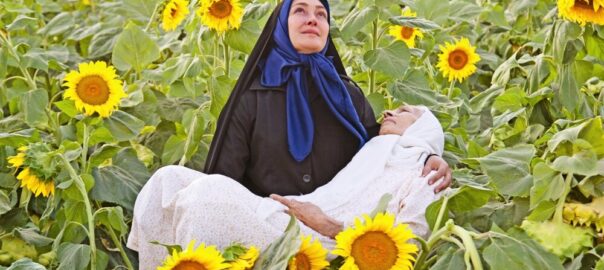
“A Cradle for the Mother” is about Narges, a young woman who has studied literature in Moscow and now is back in Iran. But once again she decides to go back to Russia for teaching the new Muslim students there. /T.T/

Fajr Festival of Visual Arts wraps up honoring top works

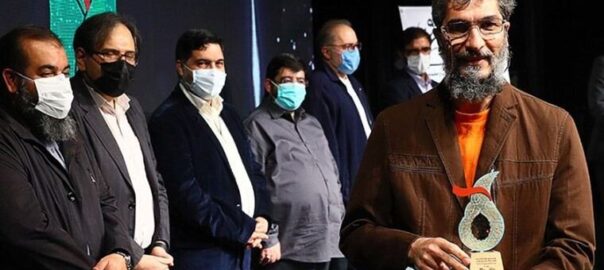
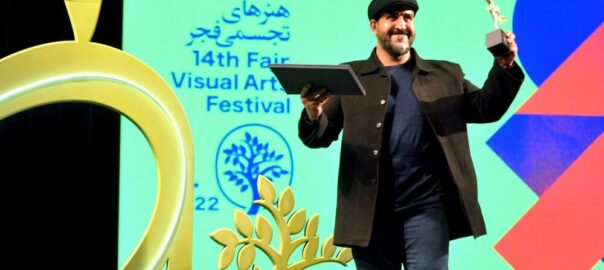
The 14th Fajr Festival of Visual Arts ended on Friday with the honoring of the top works in ten categories.

Winners received their awards in a closing ceremony held at Tehran’s Vahdat Hall.

The Golden Tooba for best painting was awarded to Paria Malmir, while Hadi Faqihi received the award in the Persian painting (miniature) category.

Ehsan Cheraghi Iranshahi was named the best cartoonist of the festival and Nasrin Shapuri Azari was picked as best sculptor.

The Golden Tooba in the graphic design category was shared by Mohammadreza Chitsaz, Mikail Barati and Sadeq Ili.

Saber Qazi won the award for best photographer and Elaheh Abdollahzadeh was the winner of the new arts section.

The award in the ceramics category went to Mohammadreza Ravandeh and Maryam Sadat Siadat was named best illustrator.

Mohammad Fateh Natanzi won the best calligrapher award.

Speaking during the closing ceremony, Minister of Culture and Islamic Guidance Mohammad-Mehdi Esmaeili praised the organizers for holding the festival’s exhibitions for the first time across the country.

“One of the advantages of this year’s festival was organizing its provincial exhibits, which represented the government’s cultural justice,” he said.

He asked the organizers to give more attention to this aspect of the festival in the upcoming editions.

“We saw a younger generation of artists beside the veteran artists in this edition of the festival, and if the festival seeks a stronger educational policy we can see a great number of promising young artists in the future,” Esmaeili said.

He stressed the need for more attention to the art market and called it an absolute necessity for strengthening art diplomacy.

“We have comprehensive plans to develop the country’s art market and will take great steps in this direction in the near future, because we know that we attract a large number of people with the language of art,” he noted.

President Ebrahim Raisi also showed his positive attitude towards art by visiting “Mirror on the Mirror”, an exhibition of the 14th Fajr Festival of Visual Arts organized at the Tehran Museum of Contemporary Art.

He also emphasized the necessity for developing the art market to improve artists’ standard of living, and asked the culture ministry to provide the necessary facilities to offer artworks in an appropriate way. /T.T/

Iranian-made vaccine against Omicron begins clinical trial

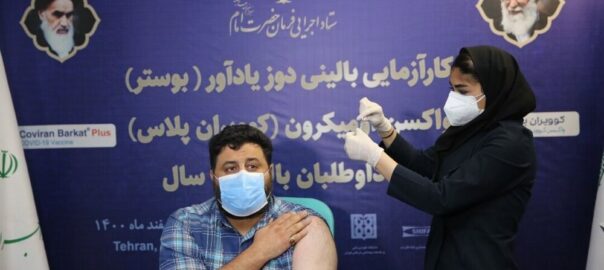
COVIRAN plus, the first homegrown vaccine against Omicron strain, started the human trial by being injected into 210 volunteers, Minoo Mohraz, a member of the National Scientific Committee of COVID-19, has stated.

In this study, three groups of 70 people will be vaccinated, she said, adding that COVIRAN Plus will be administrated to 140 volunteers who have received their first two doses of COVIRAN or Sinopharm, and 70 people will be injected with the COVIRAN vaccine.

The results will be handed over to the Ministry of Health by the next two weeks, she noted.

“Like all other vaccine manufacturing companies around the world, COVIRAN started development to be effective against the new variant and it led to the production of COVIRAN plus so that some 60 million doses of the COVIRAN have so far been produced.”

Made by researchers at the Headquarters for Executing the Order of the Imam, COVIRAN Barkat was unveiled on December 29, 2020, and received the license for public use on June 14.

COVIRAN is the first vaccine in West Asia that is in the process of global registration.

Iran is the sixth country in the world and the first country in West Asia to gain the ability to produce the Coronavirus vaccine.

More effective than world-known vaccines

According to a new study, the effectiveness of the Iranian-made COVIRAN Barkat vaccine in fighting the coronavirus has been more than foreign rivals, namely Sinopharm, AstraZeneca, and Sputnik.

The study was performed on 1.8 million people in Fars province from the beginning of the vaccination process till October 2021, which considered four vaccines of Sinopharm, AstraZeneca, COVIRAN, and Sputnik.

COVIRAN vaccine was 87 percent effective in protecting against coronavirus infection and 86 percent effective against Covid-related hospitalization, compared with 84 percent and 82 percent, respectively for AstraZeneca; Sinopharm came in third with 80 percent and 72 percent, respectively. /T.T/

Movies from Iran scoop awards at Khamrubu Intl. Short Film Festival

Iranian movies have won awards in various categories of the Khamrubu International Short Film Festival in India. The festival took place in Guwahati, Assam, on February 26 and 27.

“The Hand” by Parviz Rajai was selected as best film in the short drama section.

In this film, an azure grain departs from a rock because of a mine explosion, and hits a young poet in the woods due to the intensity of the blast. The young poet picks up the grain and takes it with him. In the middle of the way, the grain falls out. The poet keeps going on his way without noticing. In time, the azure grain faces different events.

“Aphasia” by Saeid Alinejad also received an honorable mention in this category.

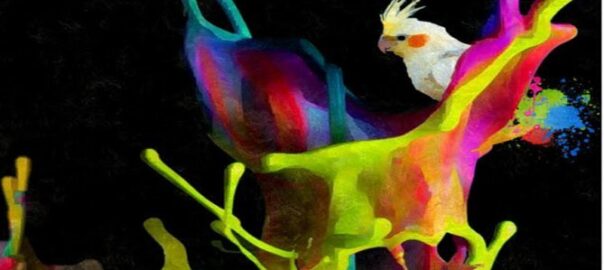
“Dancing with Rainbow” directed by Hassan Mokhtari won first runner-up award in the documentary competition, while “Hargila” by Gerrit Vyn from the United States was named best documentary.

The documentary is about a girl who embellishes her hometown Mianeh in East Azarbaijan with her murals.

In the animation competition, “The Sun” by Omid Seifi also received first runner-up prize.

The story of the movie is set in a dirty city where people are suffering. A child is born. He who has lost his mother is alone in the city when a child feels lonely and scared. A butterfly takes him somewhere. The child sees that the sun is imprisoned in a cage in a dark room. The child releases the sun and the sun illuminates the city and removes sorrow from the people.

“The Statue” by Mohsen Salehifard won the critics award in this section.

The animation follows a sculptor who engages with the clay of his sculpture and shapes it.

Roya won the award for best female child artist for “Aphasia”, while Emad Najmabadi won the named best male child artist for his role “Aparat”.

“Aparat” also brought Erfan Ehteshami the award for best cinematographer, and Mohammad-Javad Belqadr won the award for best editor for his collaboration in “Victim”. /T.T/

“Concerns of the Hedge” tops at Sarv Theater Awards

The cast and crew of the play “Concerns of the Hedge” were at their happiest on Monday during the second edition of the Sarv Theater Awards after winning prizes in several categories, including best director and actor.

The Association of Revolution and Sacred Defense Theater and the Revayat Cultural Foundation launched the awards in 2020 to honor theatrical works on revolution and resistance and stage artists working on these subjects.

Mehrdad Rayani-Makhsus was chosen as best director for the teleplay, which tells a story from the 1980-1988 Iran-Iraq war, which is called “Sacred Defense” in Iran.

After accepting his award at the Mehr Hall of the Art Bureau of the Islamic Ideology Dissemination Organization, Rayani-Makhsus said that he has been under a storm of criticism following his return from England in 2014.

“Over the past eight years, I have staged fives plays, four of which have been about the Sacred Defense,” he stated.

“Many people asked me why I had left Iran and many others asked me why I returned. I was hurt by swords of criticism over these years and go walking in the mountains to heal my wounds. I want to say that I am staying here and will never go anywhere else,” he added

In “Concerns of the Hedge”, an Iranian commander captures a member of the Mojahedin-e Khalq Organization (MKO), a few days before the launch of the counter-offensive Operation Mersad against the MKO militants, who, with the help of Saddam Hussein, carried out an attack in the summer of 1988 to capture the western Iranian city of Kermanshah. The member reveals useful information about the attack.

Jahangir Almasi received the Sarv Award for best actor, while Anahita Javaherchi won the award for best set designer for the play.

“Concerns of the Hedge” also brought Mahmud Noruzi the best cameraman award.

Bijan Samsami was given the best TV director award for “Concerns of the Hedge” and “Silence”.

The award for best playwright also went to Rayani-Makhsus for “Silence” directed by Nima Dehqan.

The jury gave its special award to “What Journeys We’ve Gone on” by Saber Mohammadi.

The jury didn’t choose a winner in the best actress category, while Mohaddeseh Rezai was awarded an honorable mention for her role in “Killing the Nightmares”. /T.T/

Iranian photographers honored at intl. photography festivals

Iranian photographers Ahmad Khatiri and Ali Kianjam were awarded in two separate photography exhibitions in Japan and India.

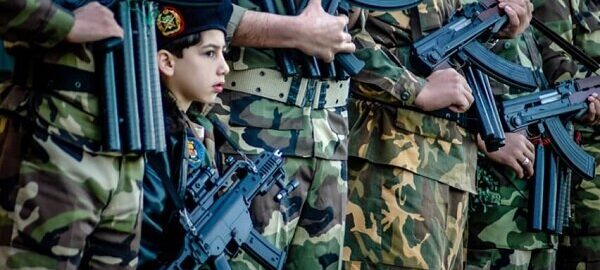
Ahmad Khatiri received an award for his work “Alone” from the Japanese Asahi Shimbun photographic salon.

The photo is taken of a boy clad in a military uniform among a number of Iranian servicemen.

“Alone” has previously received the GPU White Ribbon J1 – FIAP blue ribbon J3 at the Vernon-Normandy Photograph Exhibition in France.

Khatiri has participated in numerous photography competitions around the globe and won prizes in some of them.

Iman Yadmellat and Mohammad Esteki also were admired in an Indian photo festival.

In these two festivals, which were held under the auspices of the International Federation of Photographic Art (FIAP) and PSA, works of the Focus Photo Club (FIAP representative in Iran) members including Mohammad Esteki, Iman Yadmalt, Omidreza Pournabi, Kiarang Alaei, Mir Ali Parandak, Arlen Keshishian, Atieh Niknam and Frank Sajjadi Hazaveh were also accepted.

Fédération Internationale de l’Art Photographique, or FIAP, is an international organization of national associations of photography. As of 2021 91 national associations are members, comprising over one million individual photographers. /MNA/

Iran to set up 4 new knowledge-based export centers overseas

The Manager of the Iranian Innovation and Prosperity Fund revealed that the country will launch four new knowledge-based exports centers in foreign countries.

Speaking in an interview with IRNA on Monday, Marzieh Shaverdi said that the Fund will set up four new knowledge-based companies’s exports bases in the countries including Kyrgyzstan, Bosnia and Herzegovina, United Arab Emirates (UAE) and Oman.

She went on to say that the Fund set up permanent exhibitions or bases in foreign countries in the current Iranian calendar year in 1400 (started March 21, 2021) to help knowledge-based companies enter international markets.

In this regard, Iran’s Innovation and Prosperity Fund has launched exports bases in the Iraqi city of Karbala and Armenia with the participation of 20 and six knowledge-based firms respectively, Shaverdi added.

Between 300 and 400 knowledge-based companies have enjoyed the capability of exporting their products, she said.

These competent knowledge-based companies are busy active in the fields of exporting medical, agricultural and advanced equipment and machinery as well as bio- and nanotechnology equipment, she added. / MNA/

Narges Abyar receives special award from Turkish festival

Narges Abyar received the special award of the successful director from the 5th International Woman Filmmakers Festival in Turkey.

The special award for the successful director at the 5th International Woman Filmmakers Festival was awarded to Narges Abyar, for her film “Ablagh”.

Narges Abyar, Iranian film director, author and screenwriter, is best known for directing Track 143, Breath, and When the Moon Was Full.

Attended by the Iranian director, a specialized workshop session was held.

Some of her works are also set to be screened at the festival.

The theme of the 5th International Woman Filmmakers Festival which will take place between February 27th and March 8th 2022 in Izmir is set as ‘Boundaries’. /MNA/