All posts by islam

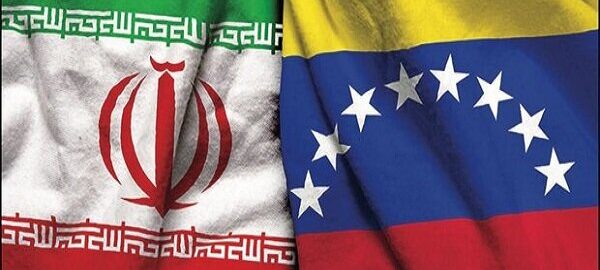
Iran building paper-making factory in Venezuela

The Iranian culture minister reported of the joint construction of a paper factory in Venezuela, holding cultural weeks and the establishment of a joint educational working group to combat media terrorism with Caracas.

Mohammad Mahdi Esmaeili, Iran’s Minister of Culture and Islamic Guidance made the announcement on the sidelines of a cabinet meeting while talking to reporters at the presidential compound on Wednesday.

He pointed to the achievements of his recent trip to Venezuela, saying, “On this trip… the main goals were the preparations for signing two cultural and media-related memoranda with Venezuelan counterparts.”

“The joint construction of a paper factory in Venezuela, the establishment of cultural weeks and a joint educational working group to combat media terrorism are among the most important provisions of these memorandums,” the Iranian minister said. /MNA/

Happy Noruz: a celebration for 300 million people

On March 21, over 300 million people worldwide start celebrating Noruz – an ancient festival that marks the Persian New Year and the official beginning of spring.

Noruz, which means “new day”, is a universal celebration of new beginnings: wishing prosperity and welcoming the future, and escaping from the past.

You may compare it to Christmas celebrations. However, there is much more to it than that; family gatherings, street performances, fire festivities, and delicious Persian dishes, to name a few.

The millennia-old festivity is primarily observed in Iran, Afghanistan, Turkey, the Kurdish regions of Iraq as well as in those countries, where there are significant diaspora populations of Parsis, including India. It is celebrated by tens of U.S. communities as well.

From a wider perspective, it is celebrated in many regions from the Balkans to the Black Sea Basin and from Central Asia to the Middle East.

On the request of nations like Iran, Afghanistan, Albania, India, Kazakhstan, Turkey, and Turkmenistan, March 21 was formally recognized by the UN in 2010 as International Noruz Day.

As mentioned by the United Nations, Noruz “promotes values of peace and solidarity between generations and within families as well as reconciliation and neighborliness, thus contributing to cultural diversity and friendship among peoples and different communities.” That’s why families use this time to deep clean their homes and closets and buy fresh clothing.

Traditionally, Iranians decorate a Noruz table with — among other things — goldfish, wheat grass, candles, and mirrors. In fact, the “Haft-Seen” table, embraces seven symbolic items starting with the Farsi letter “S.” The colorful items include herbs, dried nuts and fruits, wheat grass, and vinegar, all of which stand for different hopes for the new year, such as health, wealth and lavishness.

The Holy Quran or poetry books are frequently placed on the table to represent education and enlightenment, and a goldfish is frequently placed there for good luck.

Happy Noruz: a celebration for 300 million people

It is not a coincidence that Noruz begins at the spring equinox when the sun crosses the equator and day and night are of equal length. The Iranian calendar is a solar calendar, which means that it uses astronomical observations to determine time-based on Earth’s rotation around the sun. As a result, the natural phenomenon of the vernal equinox always ushers in the new year.

It’s possible to think of Amoo Noruz as a version of Santa Claus while Haji Firooz, who is depicted with blackface, pops up on the streets to bring good wishes.Along with sparkling homes and new clothes, many people socialize with neighbors and friends, eat together, and throw events. The two-week celebration is filled with parties, craft-making, street performances, public rituals, and lots of food.

People go outside thirteen days after Noruz and plunge the wheat grass they’ve been cultivating and using to adorn Haft-Seen tables into moving water. The custom is upheld on the 13th day following the start of the new year, a day that is typically associated with bad luck. Communities throw out wheatgrass, which is said to absorb all evil forces from home to ensure good fortune for the coming year.

Iranians also have the legends of Amoo Noruz and Haji Firooz, whose characters can be traced back hundreds of years.

It’s possible to think of Amoo Noruz as a version of Santa Claus while Haji Firooz, who is depicted with blackface, pops up on the streets to bring good wishes.

On the last Wednesday of the year, many people hold a time-honored tradition, named Chaharshanbe Soori (or, “Red Wednesday”), to jump over bonfires to mark the final few days of the old year, singing traditional songs and repeating the phrase, “Give me your beautiful red color and take back my sickly pallor!”

Children run through the alleyways, loudly banging on pots and knocking on doors while pleading for candy or cash. It resembles Halloween in some ways.

Narratives say that fire represents a sign of light and good as people make wishes for happiness, health, and goodness for the new year.

This year — which in the Persian calendar is the year 1402 — will ring on March 21, 2023, at 12:54:27 p.m. in Iran. / T.T/

Needlework export could generate revenue more than oil, expert says

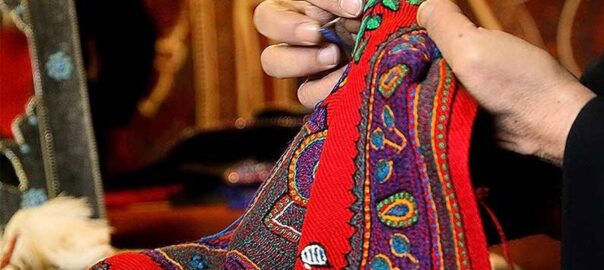
The currency earnings of needlework could be greater than those of oil, a handicrafts expert has said. If Iranian needlework is taken into consideration, needlework could generate more currency earnings than oil, IRNA quoted Maryam Sammak as saying on Sunday.

With the help of exhibitions held throughout the year in different countries, it is possible to have a high share in global markets in this field, she added.

Depending on the needs of the countries, artists should be supported and their works exposed to sale in these exhibitions, she noted.

Europeans prefer delicate works such as silk embroidery and net embroidery, while Arab countries prefer glitzy artworks, therefore, the works should be displayed according to the needs of the country and region, she mentioned.

Needlework (Souzan-douzi in Persian) is a very common occupation among people of some Iranian provinces. It is the art of drawing images on plain fabrics by sewing delicate stitches using a needle and colorful yarns. They are mainly used to embellish women’s clothes; however, such works are applied to decorate bracelets, necklaces, bags, and scarves.

The value of Iran’s handicrafts exports stood at $400 million during the first ten months of the current Iranian calendar year 1401 (Mar. 21, 2022– Jan. 20, 2023).

The Islamic Republic exported some $320 million worth of handicrafts during the past Iranian year (1400).

According to the Ministry of Cultural Heritage, Tourism and Handicrafts, Iran has the most cities and towns registered with the World Crafts Council (WCC), followed by China with seven, Chile with four, and India with three designated ones.

The WCC-Asia-Pacific Region designated Shiraz, Malayer, Zanjan, and the village of Qasemabad in January 2020, bringing the total number of craft cities and towns in Iran from 10 to 14. Shiraz has been dubbed “the world city of [various] handicrafts.”

Malayer became a center for woodcarving and carved wood furniture on a global scale. The designation “world city of filigree” was given to Zanjan. The village of Qasemabad, which is renowned throughout the country for its traditional costumes, was also promoted to a major handicrafts center on an international scale.

Iraq, Afghanistan, Germany, the United States, and the coastal states of the Persian Gulf are among the countries that traditionally import ceramics, porcelain, hand-woven clothing, personal jewelry, and semi-precious stones from Iran./ T.T/

Iran opens trade center, permanent exhibition in Kabul

Iran’s trade center and permanent exhibition of Iranian products was inaugurated in Kabul on Sunday, the Iranian Embassy in Afghanistan announced.

In a tweet, the embassy mentioned the purpose of opening this center is to take a fundamental step in the development of trade relations between the two countries of Iran and Afghanistan.

The embassy added that this center will be a place for Afghan businessmen to familiarize themselves with Iranian products.

The development of exports to Afghanistan with the establishment of a permanent trade center for Iranian goods in Kabul is the beginning of a new chapter in the economic relations between the two countries.

On January 31, Iran’s Trade Promotion Organization (TPO) held a conference on Iran-Afghanistan business opportunities, during which the capacities of trade with Afghanistan were introduced and some solutions were proposed to resolve the problems created by the government change in Afghanistan.

Speaking at this event, Deputy Industry, Mining, and Trade Minister Mohammad Mousavi said the trade between Iran and Afghanistan has reached $1.5 billion in the first nine months of the current Iranian calendar year (March 21- December 21, 2022).

The official expressed hope that Opening trade centers in Afghanistan would increase the level of trade between the two neighbors.

Mousavi further invited the businessmen of the two countries, especially the Iranian industrialists, to take part in Afghanistan’s infrastructure projects.

Iran exported 4.187 million tons of commodities worth $1.839 billion to Afghanistan in the previous Iranian calendar year 1400 (ended on March 20, 2022) to register a 20-percent decline in terms of value compared to the preceding year.

The weight of the exported goods also decreased by 40 percent year on year. /T.T/

Low-income families provided with apartments

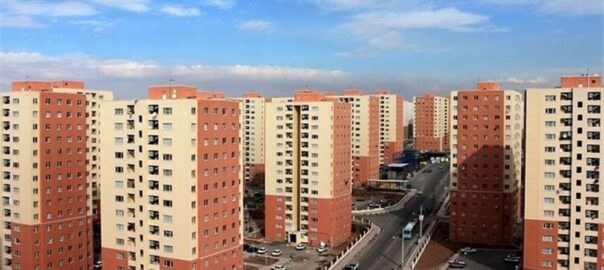
In a ceremony on Sunday, a total of 23,000 apartments were delivered to low-income families across the country. The Imam Khomeini Relief Foundation has constructed the apartments. President Ebrahim Raisi handed over three apartments, IRNA reported.

A total of 25 trillion rials (nearly $50 million) has been proposed to provide housing for the underprivileged in the budget bill for the next [Iranian calendar] year (starting March 21), Morteza Bakhtiari, head of the Foundation said in August 2022.

The Foundation also plans to build 360,000 houses over the next four years.

The project will start next year and 90,000 houses will be built for the deprived annually, 60,000 of which will be built in cities and 30,000 in villages.

A memorandum of understanding has been signed with the Mostazafan Foundation and Housing Foundation regarding the construction of 10,000 housing units in villages and cities with less than 25,000 populations.

Another memorandum of understanding has been inked with the Basij and Housing Foundation to build 40,000 houses. / T.T/

‘Sona’ to vie at Media Film Festival in US

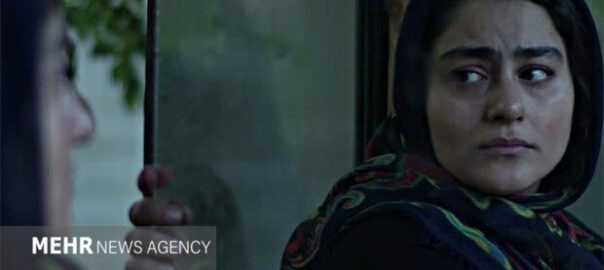
Directed by Iranian filmmaker Zahra Torkamanlou, the short film “Sona” is set to compete at the 15th Media Film Festival in the United States.

“On the verge of turning forty, how should Sona face the problem of her loneliness?,” the synopsis of Torkamalou’s short film reads.

Fariba Sohrabi, Narjes Delaram, Samaneh Babazadeh, Hesam Kazemi, and Hamed Ghaffarpour are among the cast of Sona.

The Media Film Festival is a vibrant community forum for film lovers, dedicated to providing excellent film experiences for audiences and filmmakers alike. The Media Film Festival celebrates and promotes quality independent films to build a greater appreciation of artists and filmmakers.

The Media Arts Council (MAC) of Media, Pennsylvania, held its first Film Festival in February 2008. Since then, it’s been honored to host hundreds of short films across nearly every conceivable genre. /MNA/

Iran runner-up at Junior Kabaddi World C’ships 2023

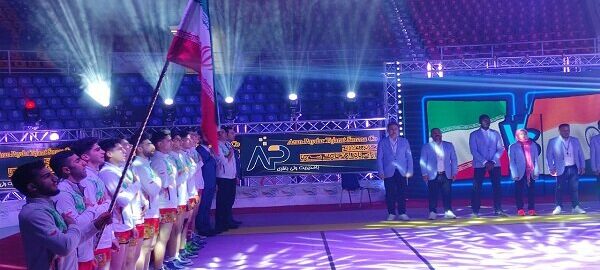
Iran became the vice-champion of the Junior Kabaddi World Championships 2023. India could defeat Iran 41-33 in the final match in Urmia. Iran progressed to the finals after beating Chinese Taipei, Uganda, Bangladesh, and Nepal.

The 2nd edition of the tournament began on 28th February in Urmia, in northwest Iran, and wrapped up on 4th March 2023.

The tournament was organized and held in Iran for the second successive time with the host winning the inaugural edition. /MNA/

Ins and outs of Persian Carpet

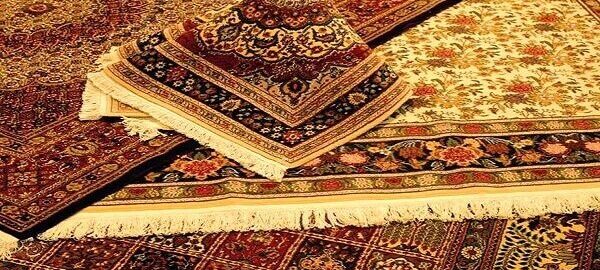
When it comes to high-quality carpets in the world, the name Persian Carpet stands out. Carpet is considered one of the top Persian souvenirs to take home while paying a visit to Iran.

In the 17th century, some seventy Dutch artists included representations of Persian carpets in their paintings, mainly types originating in northwestern Persia, iranicaonline reported on the history of carpets in the world.

Persia has been renowned for its dyes for many centuries; in 987/1579, for example, an Englishman was sent to learn the secrets of dyeing wool and silk in the Persian manner, the encyclopedia added.

Ins and outs of Persian Carpet

The most common design format in Persian carpets is a central field, known as ‘matn’ in Farsi, enclosed by a border, known as ‘hashiyeh’ in Farsi, of patterned stripes alternating with narrow bands of solid colors, the source further noted.

Medallion, ‘toranj’ in Farsi, cartouche, arabesque, bota (lit. ‘bush, shrub’), palmette (gol-e eslimi lit. ‘patterned’ or ‘arabesque flower’), and rosette are among the motifs which are common in both the fields and borders of Persian carpets.

Herati (lit. ‘from Herat’), Minakhani (literal meaning unknown, possibly derived from a proper name), reciprocal-trefoil, S-stem, and Shah-Abbasi (lit. ‘of Shah ʿAbbas’) are among the most frequent patterns on Persian carpets.

The two basic types of knots found in Persian carpets are the symmetrical and the asymmetrical both of which may be open either to the right or, more commonly, to the left.

In earlier carpet literature the symmetrical knot was generally called the Turkish or Ghiordes knot: among Persians in the trade the technique of knotting carpets in this fashion is commonly known as ‘torkibaf’. The corresponding terms for the asymmetrical knot are Persian or Senna and ‘farsibaf’.

Ins and outs of Persian Carpet

The loom (dastgah, lit. “equipment,” dar, lit. “pole”) is the frame upon which carpets are woven.

In Iran, looms may be set up either horizontally or vertically. The ends of horizontal looms (‘ru-zamini’ in Farsi) are usually pegged to the ground, and sometimes the sides are also supported. They can be quickly dismantled and easily transported and are thus favored by nomadic peoples. More commonly used is the vertical (‘divari’ in Frasi) loom, the upper and lower beams of which are either linked by two upright poles or posts or are fitted into holes in the side walls of the workroom (kargah in Farsi).

Features of carpets in Kerman

Ins and outs of Persian Carpet

The distinctive rugs called vase carpets (because of the flower vases in their designs) are generally thought to be from Kerman, Britannica reported.

Kerman carpet has been the origin since the 16th century of highly sophisticated carpets in well-organized designs. To this city is now generally attributed a wide variety of 16th- and 17th-century carpets, including vase carpets; rugs with rows of shrubs; arabesque carpets; the finest of the garden carpets; and, on the basis of constructional similarities, a group of medallion carpets with animals, according to the encyclopedia.

All of these had asymmetrical knotting on cotton warps, with stiff, heavy woolen wefts pulled straight and silk or cotton wefts between left relatively slack. The result is a “double-warped” carpet, the warps of one level lying almost directly behind their neighbors. The color schemes are among the richest and most varied found in Persian carpets, the source added.

A revival of carpet weaving became noticeable toward the end of the 19th century, and Kerman rapidly developed into one of the most important carpet industries in Iran.

Traditional skills of carpet weaving in Fars

Ins and outs of Persian Carpet

‘Traditional skills of carpet weaving in Fars’ was inscribed on the Representative List of the Intangible Cultural Heritage of Humanity in 2010.

Iranians enjoy a global reputation in carpet weaving, and the carpet weavers of Fars, located in the southwest of Iran, are among the most prominent.

Wool for the carpets is shorn by local men in spring or autumn. The men then construct the carpet loom while the women convert the wool into yarn on spinning wheels.

The colors used are mainly natural: reds, blues, browns, and whites produced from dyestuffs including madder, indigo, lettuce leaf, walnut skin, cherry stem, and pomegranate skin.

The women are responsible for the design, color selection, and weaving, and bring scenes of their nomadic lives to the carpet. They weave without any cartoon (design) – no weaver can weave two carpets of the same design. Colored yarn is tied to the wool web to create the carpet.

To finish, the sides are sewn, extra wool is burned away to make the designs vivid, and the carpet is given a final cleaning. All these skills are transferred orally and by example.

Mothers train their daughters to use the materials, tools, and skills, while fathers train their sons in shearing wool and making looms.

Carpet weaving in Kashan

Ins and outs of Persian Carpet

According to Britannica, costly silk carpets with figure motifs (such as the silk hunting carpet in Vienna’s Austrian Museum of Applied Art) were probably woven in Kashan, Iran’s silk center.

‘Traditional skills of carpet weaving in Kashan’ was inscribed on the Representative List of the Intangible Cultural Heritage of Humanity in 2010.

Ins and outs of Persian Carpet

Carpet Museum of Iran

The Carpet Museum of Iran was opened in Tehran on February 11th, 1978. The museum is considered an excellent source of research about carpets for all culture and art lovers. In this interesting museum, you will see loads of different types of Persian Carpets. Look at the pattern, each one is telling you its very own unique story in the shape of knots, treads, and colors.

Tabriz Carpet Museum

Tabriz which is located in northwest Iran was declared a world craft city of carpet weaving by the World Craft in 2016.

Construction of a carpet museum in Tabriz is complete by 70 percent, according to the provincial tourism chief.

The museum is estimated to be inaugurated by 2025, Ahmad Hamzehzadeh added in mid-January. /MNA/

Reported by Tohid Mahmoudpour

‘Camel and Miller’ to vie at French film festival

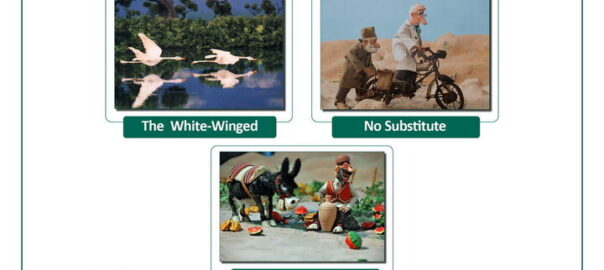
Directed by Abdollah Alimorad, the animation collection titled “Camel and Miller” is scheduled to be screened at the 2023 Vesoul International Film Festival of Asian Cinema in France.

The “Camel and Miller” animation collection consists of 3 animations named “The White-Winged”, “No Substitute”, and “The Farmer and The Robot”.

These three works are produced with the theme of “Nature, Environment and Animals” and are about the relationship between technology, development, and pollution of the earth.

The 2023 Vesoul International Film Festival of Asian Cinema kicked off on Tue, Feb 28, 2023, and will end on Tue, Mar 7, 2023. /MNA/

Bafq potential gateway for desert tourism

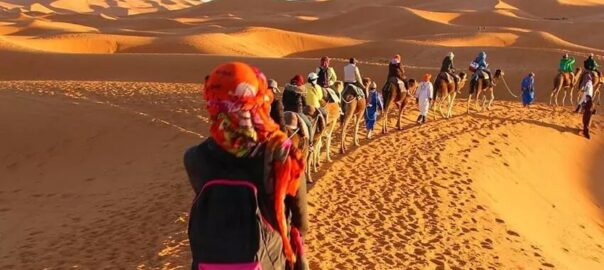
The oasis city of Bafaq has a high capacity to become a hub for desert tourism in Iran. “Covering more than 1,000 ha in area, Bafq desert holds the great capacity to become a hub for desert tourism in Iran,” Bafq’s tourism chief said on Saturday.

Usually, the picturesque desert of Bafaq welcomes more than 300,000 tourists during [the two-week] Noruz (Iranian New Year) holidays, Leyli Ranjbar said.

The number of people visiting the Bafaq desert is expected to increase by more than 10% this year due to the lifting of the coronavirus restrictions, the official said.

Even on winter days, when the weather is mostly mild in this region, the desert landscape can provide unique memories for nature lovers and holidaymakers, she explained.

Bafq desert, also known as Kavir-e Dar Anjir, is a desert near Bafq county, Yazd province. It is seventy-five-kilometer long and twenty-kilometer wide, spanning one hundred and fifty square kilometers.

Argillaceous minerals and salt marsh make up sixty percent of the soil in this desert. In fact, the south and northwest of this desert are covered in argillaceous mineral lands.

Though deserts can be some of the most discouraging places for travel. However, there is a growing number of people across the globe flocking to arid regions for hiking, camping, rock climbing, and natural photography.

Those looking for a change of pace have increasingly turned to desert tourism over the years. Unexpectedly, the desert is a great place to defrost and soak up the sun during the chilly winter months.

Iran offers some of the best places for desert travel, and the most popular destinations include, Dasht-e kavir, Maranjab Desert, Rig-e Jenn (“Dune of the Jinn”), and Shahdad Desert.

Some say the cold season doesn’t feel or appear to be present during the winter. Moreover, the splendor and beauty of uninhabited deserts are unmatched anywhere else on Earth. /T.T/