All posts by islam

Annual honey exports rise 20% despite policy hurdles

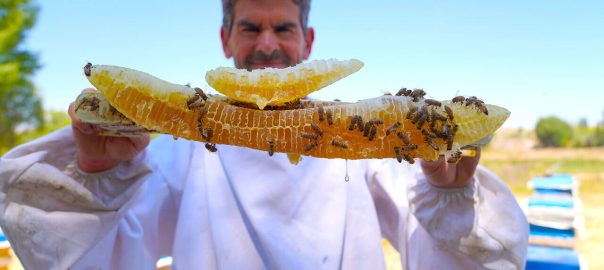
Iran’s honey exports grew by 20 percent in the previous Iranian year (ended on March 20), according to the official in charge of the country’s beekeeping development plan. However, industry leaders warn that policy-related export barriers continue to threaten the sector’s survival.

Hossein Akbarpour, who leads Iran’s national beekeeping development project, said on Tuesday that honey exports reached 1,873 tons in the past year.

He added that beekeeping plays a significant role in economic growth given the health-oriented nature of its products.

“Iran currently ranks fourth in the world in honey production,” he said, citing global annual production at about 2.13 million tons, while Iran’s share stands at 128,000 tons, based on the most recent national survey.

According to Akbarpour, Iran’s beekeeping industry generates nearly 90 times more benefit for the agricultural sector than its direct inputs. Honey exports in 2023 stood at roughly 1,504 tons.

He estimated the country’s honey export potential at a minimum of 5,000 tons annually, with plans to achieve a consistent 20 percent year-on-year growth rate.

As part of Iran’s Seventh National Development Plan, 47 new production chains in the beekeeping sector are to be launched across provinces, tailored to local capacities and consumption, Akbarpour said.

Currently, the average honey yield per modern hive in Iran is about 12 kilograms. The total capital invested in Iran’s beekeeping industry is valued at 960 trillion rials (around $1.92 billion), broken down into $660 million for production, $740 million for bee colonies, and $520 million for equipment.

Akbarpour also warned of threats facing the sector, including land-use changes, chemical pesticides in agriculture, and environmental degradation caused by climate change and rangeland destruction.

Export policy threatens industry viability, say beekeepers

In a separate interview, Abdolreza Bigonah, head of Iran’s Association of Beekeepers and Honey Producers, said that export restrictions remain the biggest challenge for producers and threaten the entire industry’s future.

“Due to export hurdles and the mandatory repatriation of foreign currency earnings at state-set exchange rates, honey exports have dropped below 1,000 tons,” he told IRNA in Ardebil.

“As someone who used to export honey, I’ve stopped doing so for five years and have even cut back production, he complained.

Bigonah emphasized that without exports to absorb surplus domestic production, prices will stagnate in the local market, ultimately dismantling the industry and costing Iran its reputation in global honey markets.

He put Iran’s honey output last year at 127,700 tons, with domestic consumption at about 65,000 tons. The remainder must be exported to maintain industry sustainability, he added.

Bigonah warned that the continuation of current policies could doom Iran’s beekeeping industry. “Packaging, retail, and beekeepers’ livelihoods are all tied to production. The only way out is to ease export regulations.”

He recalled that prior to 2018, agricultural exports — including honey — were exempt from taxes and currency repatriation requirements. But following changes in foreign currency laws that year, exporters have been required to sell their foreign currency proceeds at the government’s “NIMA” exchange rate, which he said is economically unviable. / T.T/
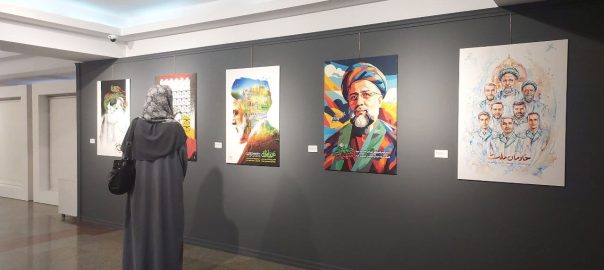

“Servants of the Nation” exhibition inaugurated in Tehran

An exhibition of poster and typography on the occasion of the first anniversary of the martyrdom of President Ebrahim Raisi and his companions was inaugurated at the Aali Gallery of Tehran’s Art Bureau on Tuesday.

Entitled “Servants of the Nation”, the exhibit displays works by a number of Iranian artists including Behnam Shirmohammadi, Hassan Jafarinia, Mehdi Qanavati, Seyyed Mohammadreza Miri, Sadeq Sanei, Leila Teimourinajd and Marzieh Ranjbar among others.

The exhibition is a result of a nationwide campaign called “Revolutionary Poster Movement” which was launched last year to pay tribute to the martyrs. Many artists have contributed to this initiative.

President Ebrahim Raisi was returning from a ceremony to officially open a new dam on the border between Iran and Azerbaijan on May 19, 2024 when his helicopter crashed in Varzaqan, northwestern Iran.

The tragic incident claimed the lives of not only the President but also Foreign Minister Hossein Amirabdollahian, former governor of East Azarbaijan Province Malek Rahmati, and former Friday prayer leader of Tabriz Ayatollah Mohammad Ali Ale-Hashem and several high-ranking provincial officials, who were among those on board.

The accident was caused by dense fog that severely limited visibility in the region, leading to a fatal crash. The incident shocked the nation and resulted in the loss of several key figures who played significant roles in Iran’s political and religious spheres.

The loss of life has sent a wave of grief across Iran, with many government officials and ordinary citizens alike paying tribute to the victims of the crash.      / T.T/

Persian medicine to help improve infertility treatment

Over 32 specialized medical centers are benefitting from Persian medicine across the country to increase the chance of infertility treatment, Nafiseh Hosseini-Yekta, the director of the health ministry’s Persian medicine office, has said.

Gynaecologists, urologists, genetic experts, and Persian medicine experts are examining and treating infertility cases in these centers. This interdisciplinary collaboration has brought about a significant transformation in the quality of medical services, ILNA quoted Hosseini-Yekta as saying. The official made the remarks on the occasion of the national population week (May 14 to 20).

Adhering to the principles of Persian medicine can increase the success rate of assisted reproductive methods such as IVF by up to 30 percent and significantly reduce pregnancy complications, the official added.

Following a scientific, systematic approach, the Health Ministry is implementing comprehensive programs for the integration of Persian medicine capacities into the healthcare system to treat infertility and address many other challenges, she added.

In Persian medicine, each person is assessed based on their unique temperament, receiving a specific treatment and prevention program that best fits their physical, psychological, and even geographical conditions. This personalized approach can dramatically increase the effectiveness of treatments, she further noted.

Persian medicine highlights prevention over treatment, it believes reproductive health should be maintained from early childhood. “Many infertility problems result from an unhealthy lifestyle. So, we’re planning to develop educational programs for families and schools,” she said.

Integration of Persian medicine into healthcare system

In December 2024, Hosseini-Yekta said, “The integration of Persian medicine into the healthcare system will not only help to improve health indicators but also have a significant impact on the economy of the country’s healthcare system,” the health ministry’s website reported.

“Iran has the capacity to become one of the pioneers in providing traditional and complementary medicine services in the world.

The integration of Persian medicine in the healthcare system can be a turning point in the global application of the knowledge,” the official noted.

In July 2024, the health ministry held a workshop on principles and basic concepts of Persian medicine in accordance with the objective of integrating Persian medicine into the country’s healthcare system.

The two-day event aimed to promote the experts’ knowledge in Persian medicine, particularly in healthy lifestyle, as well as raise their awareness of the rules, guidelines, and national policy documents, the health ministry’s website reported.

During the workshop, prominent professors in Persian medicine discussed various topics including temperament, four senses of humor: phlegm (Balgham), blood (Dam), yellow bile (Safra’), and black bile (Sauda’), lifestyle measures, widely-used medicinal plants, and drug interactions.

Currently, nine faculties of Persian medicine enroll students in the country’s universities, she added.

Training Persian medicine experts has always been at the top of the Persian medicine office’s agenda. Therefore, different skill courses have been developed and held under the supervision of the health ministry.

Around 500 Persian medicine experts are providing health and medical treatment services across the country. More than 1,000 general practitioners who have passed the Persian medicine courses approved by the health ministry are also offering services.

National population week

Being marked from May 14 to 20 under the theme ‘children, life assets’, the days of the national population week have been named as follows: Wednesday, May 14, ‘Father, mother, good sense of life’; Thursday, May 15, ‘Motherhood, elixir of youth’; Friday, May 16, ‘Desiring a child’; Saturday, May 17, ‘My lonely child’; Sunday, May 18, ‘I want to stay alive’; Monday, May 19, ‘My life in old age’; Tuesday, May 20, ‘Child-friendly society.’

T.T/

Iran’s annual oil exports hit $67b, highest in a decade: CBI

Iran exported $67 billion worth of oil in the Iranian calendar year 1403 (ended on March, 20, 2025), marking its highest oil revenue in the past decade, according to estimates by the Central Bank of Iran (CBI).

Data released by the CBI shows Iran’s oil exports have fluctuated significantly in recent years. In 1399 (March 2020–March 2021), exports had dropped to $23 billion amid intensified U.S. sanctions. Since then, Iran’s oil revenues have steadily climbed:

1400 (March 2021–March 2022): $38 billion
1401 (March 2022–March 2023): $55 billion
1402 (March 2023–March 2024): $56 billion
1403 (March 2024–March 2025): $67 billion
The latest figure represents a sharp rebound and underscores Iran’s increased crude shipments despite ongoing international restrictions.

Iran’s oil production has been on an upward trend in recent months despite U.S. sanctions and geopolitical pressures. The country managed to increase its output steadily throughout 2024, adding more than 370,000 bpd compared to the previous year. The rise in production has been supported by the government’s efforts to boost investment in upstream projects and secure alternative trade routes for its crude exports.

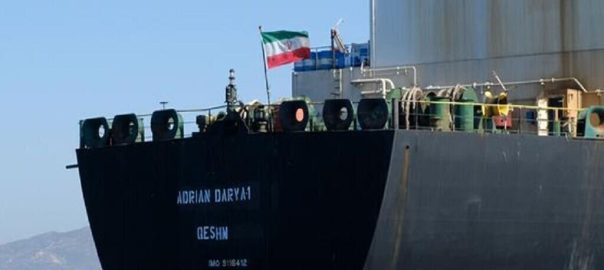
In addition to increasing output, Iran has been working to expand its oil sales, particularly to Asian markets, where demand remains strong. China continues to be a key buyer of Iranian crude, while other regional customers have also shown interest in maintaining supplies despite Western pressure.

The resilience of Iran’s oil industry has been evident even in the face of tightening restrictions. The country has utilized a mix of official and unofficial channels to sustain its exports, ensuring that oil revenue remains a crucial source of foreign exchange for the economy./ T.T/

Over 7 mln foreign tourists visited Iran last year: official

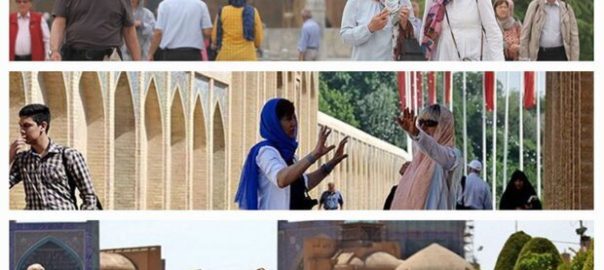
Deputy Minister of Cultural Heritage, Tourism and Handicrafts has said that 7.3 million foreign tourists visited Iran last year (March 21, 2024 to March 20, 2025).

Anoushirvan Mohseni Bandpey made the remarks on Wednesday speaking to Iranian media, noting that number of foreign tourists that visited Iran in 2024 compared to the year before, 2023.

He put the number of foreign tourists visited the country in 2024 at 6,382,755.

Over 4.230 million foreign tourists visited the country in 2023, he added.  MA/

Three space bases to be launched by yearend: Iran’s ICT min.

Iran’s minister of information and communications technology (ICT) has said that three equipped space bases would be launched in the country by the end of the current Iranian calendar year (started March 21, 2025).

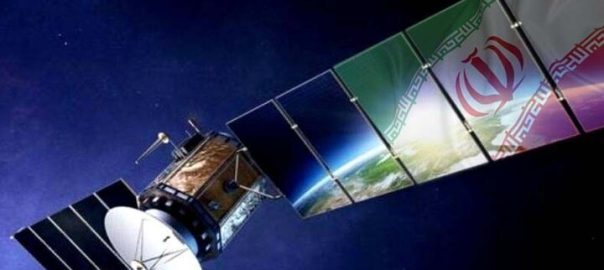
Speaking on the occasion of “World Telecommunication and Information Society Day” on Saturday, Sattar Hashemi stated that developing satellites and launching giant projects, including Chabahar, Salmas and Chenaran satellite bases, would be commissioned before the termination of the current Iranian calendar year.

He added that these satellite bases will be launched in the presence of Iranian President Masoud Pezeshkian.

MNA

Archaeological survey reveals evidence of Paleolithic human presence in Kerman plain

An archaeological team has uncovered evidence of continuous human presence in the central plains of Kerman, southern Iran, stretching from the Paleolithic period to modern times.

Amin Mahani, head of the archaeological team and director of the Goharriz Qanat World Heritage Site, announced that the first season of archaeological surveys in the Mahan district of Kerman has revealed significant findings, including traces of prehistoric human occupation.

The project, conducted under the Research Institute of Cultural Heritage and Tourism, focused on identifying archaeological sites, historical areas, and ancient settlements in the Mahan region. The findings demonstrate a sequential timeline of human settlement from the Paleolithic era through to the present, offering valuable insights into the evolution of human habitation in the area.

In addition to mapping ancient sites, the survey also examined the influence of underground water resources, particularly qanats, on the patterns of human settlement. Special attention was given to the development of qanats and other water management structures, which have played a critical role in the region’s historical habitation and agriculture.

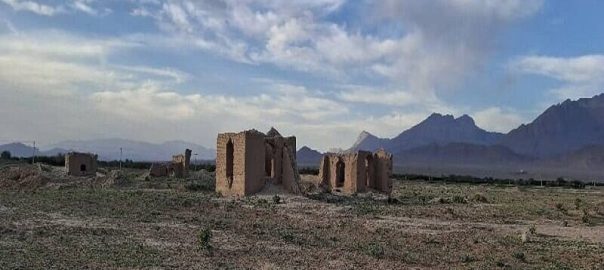
Situated between the towering peaks of Polvar and Jopar, both exceeding 4,000 meters, the Mahan plain lies about 35 kilometers southeast of Kerman city. Historically, Mahan served as a cultural crossroads connecting the civilizations of Lut Shahdad, the Bardasir plain, northern Kerman, Bam, and Jiroft. Archaeological evidence from the region reflects the rise and fall of several ancient civilizations in southeastern Iran.

Mahani also highlighted the region’s dual historical settlement patterns, with both nomadic and sedentary populations exploiting its favorable climate and abundant water resources. This strategic location fostered the growth of local cultures while exposing them to external influences over the centuries.

Among the key findings of the survey were Paleolithic-era sites, evidence of Chalcolithic (Copper Age) metallurgical activities, including metal smelting and casting technologies, as well as a variety of water management structures. The team also identified nomadic encampments and ancient rock-cut dwellings, shedding light on the diverse settlement strategies employed by past populations.

/T.T/

Ali Yazdani becomes first Iranian to win an ITF singles title

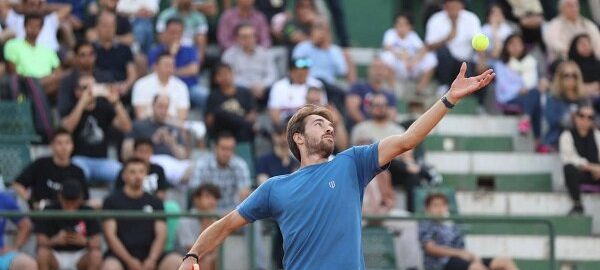
Ali Yazdani made history, becoming the first Iranian to win an ITF singles title at M15 Tehran and inspiring a new generation of tennis players in his country on a bright Sunday afternoon at Tehran’s Enghelab Sports Complex.

Yazdani, 21, the world No. 1507, defeated top-seeded Indian Karan Singh – ranked over 1000 spots above him at No. 475, 6-4 6-3 for a historic triumph.

His win ended a years-long drought for Iranian tennis on the international stage. Until now, no Iranian had managed to win a singles title on the ITF World Tennis Tour despite several near misses. Veterans like Anoosha Shahgholi and Hamidreza Nadaf had reached the semi-finals, while Shahin Khaledan came closest in 2018, finishing runner-up in an ITF final in Georgia.

The atmosphere at Enghelab was electric. An unusually large crowd had gathered for a tournament at this level, underscoring the emotional weight of the moment and the significance of Yazdani’s run for Iranian tennis.

Despite the weight of expectation on his shoulders, Yazdani remained composed throughout the final and credited the home crowd for playing a vital role in his performance, itftennis.com reported.

“I have to sincerely thank the wonderful people of my country,” he said. “Without their presence and support, this victory would not have been possible. I dedicate this win to the kind people of Iran. The energy I received from the crowd was incredible – I can only say thank you.”

He also credited his father, who introduced him to sport and stood by him throughout the ups and downs.

“I want to thank my father, who taught me how to play tennis. He always believed in me – sometimes more than I believed in myself. Every time I felt tired or discouraged, he guided me back on track, all the way to today.”

MNA

Isfahan named Asian Capital of Tourism for 2025

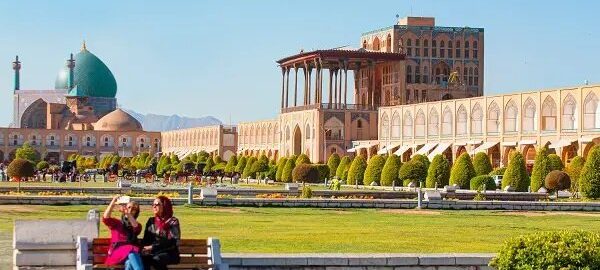
The historic city of Isfahan has been officially designated as the Asian Capital of Tourism for 2025 by the Asian Mayors Forum (AMF), in recognition of its rich cultural heritage, vibrant tourism offerings, and active engagement in international urban cooperation.

The announcement was made during a formal ceremony held on Sunday at the historic Bagh-e Zereshk mansion in Isfahan. The event was attended by a number of local officials, international guests, and members of the Asian Mayors Forum. During the ceremony, a commemorative statue marking Isfahan’s new title was presented to the city’s mayor.

Ali Qasemzadeh, Mayor of Isfahan, emphasized the city’s unique historical and urban fabric in his remarks. “Out of Isfahan’s 24,000-hectare area, 1,600 hectares consist of historical texture dating back to the Buyid, Seljuk, and Safavid periods,” he said.

“In addition to its monuments, Isfahan possesses a living historical environment that sets it apart as a prime destination for urban tourism.”

Qasemzadeh also noted that contemporary tourism extends beyond visits to monuments. “Tourism today includes diverse sectors, and we must adapt to play an active role across all of them,” he added.

Elsewhere in his remarks, the mayor highlighted several international events hosted by Isfahan, such as international film and painting festivals dedicated to children and young adults, describing them as key assets in expanding the city’s global tourism profile.

Hamidreza Gholamzadeh, Secretary of the Asian Mayors Forum, also spoke at the event, noting that the forum now includes more than 120 member cities. He praised the active cooperation between the AMF and Isfahan’s municipality over the past three years, which has led to significant progress in various fields.

The ancient city of Isfahan, which serves as the provincial capital as well, is situated at the crossroads of Iran’s north-south and east-west trade routes. It reached its zenith between the 9th and 18th centuries. During the Safavid era, it became Iran’s capital under Shah Abbas the Great.

Isfahan was once a crossroads of international trade and diplomacy in Iran and now it is one of Iran’s top tourist destinations for good reasons. It is filled with many architectural wonders, such as unmatched Islamic buildings, bazaars, museums, Persian gardens, and tree-lined boulevards. It’s a city for walking, getting lost in its mazing bazaars, dozing in beautiful gardens, and meeting people.

The Persian proverb “Isfahan nesf-e-jahan ast” (Isfahan is half the world) reflects the city’s cultural and historical prominence. / T.T/


Iran ranks 4th in 2025 international IQ test

A global study involving over 1.3 million participants has found that Iran ranks fourth in average IQ, placing it among the world’s most intelligent nations, behind only China, South Korea, and Japan.

Iran ranks fourth globally in intelligence with an impressive average IQ of 106.3, according to the latest update from the International IQ Test on January 1, 2025.

The findings from a study involving over 1.3 million participants indicate that Iran demonstrates strong cognitive performance, outpacing both Western and regional competitors. In this study, China, South Korea, and Japan hold the top three positions, with average IQ scores of 107.19, 106.43, and 106.4, respectively.

Experts attribute Iran’s high ranking to its robust education system, a bilingual population, improved healthcare, and better nutrition. Additionally, the study highlights the global Flynn Effect, which shows that IQ scores increase by an average of 2.31 points per decade. This trend suggests that there are worldwide advancements in education and living standards.

East Asia leads the rankings, while Europe and North America are around average. In contrast, Sub-Saharan Africa and Latin America often lag behind, likely due to health and economic challenges.

The International IQ test is inspired by Raven’s Matrices (developed by psychologist John Carlyle Raven in 1936). For each question, the candidate must complete a series using logic. This method measures the ability to reason, understand complexity, and recognize and reproduce patterns.

This technique allows for fair IQ assessment across different countries and languages, making it a good choice for an international IQ test.

MNA/