All posts by islam

Iran’s H1 gas condensate exports up 25% y/y

Half-yearly gas condensate exports from Iran’s South Pars gas field rose by 25 percent compared to the same period last year, Shana quoted a gas official as saying on Saturday.

According to Masoud Hassani, the managing director of South Pars Gas Complex (SPGC), during the first six months of the current Iranian calendar year (March 20-September 21) the company has exported 76 million barrels of gas condensate to the world markets.

The official noted that during the mentioned period, SPGC has sent 1.35 million tons of liquefied petroleum gas (LPG) to other countries as well.

According to Iran’s custom administration, during the first six months of the current Iranian calendar year gas condensate was reported to be the main non-oil export product with a total value of $3.496 billion.

South Pars field, which Iran shares with Qatar in the Persian Gulf, is estimated to contain a significant amount of natural gas and condensate, accounting for about eight percent of the world’s reserves.

The huge offshore field covers an area of 9,700 square kilometers, 3,700 square kilometers of which are in Iran’s territorial waters in the Persian Gulf. The remaining 6,000 square kilometers are situated in Qatar’s territorial waters. / Tehran times /

Iran JCPOA commitments carried out to the letter: IAEA

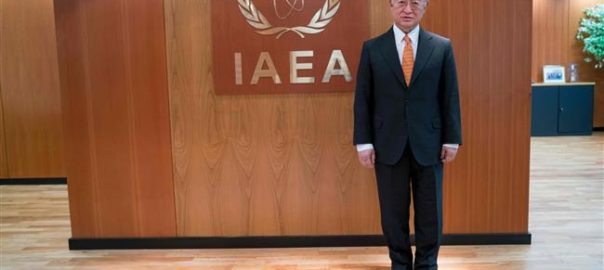
The head of the International Atomic Energy Agency (IAEA) says that Iran has carried out its commitments to the historic nuclear deal known as the Joint Comprehensive Plan of Action

“I can certify that Tehran respects its commitments to the letter. The Iranians are doing what they promised the international community,” said IAEA Director-General Yukiya Amano during an interview with the French daily Le Monde on Saturday.

The July 2015 Joint Comprehensive Plan of Action (JCPOA), struck between Iran and Britain, China, France, Germany, Russia and the United States, envisaged Tehran scaling back its nuclear program in return for the lifting of all nuclear-related sanctions on the Islamic Republic.

“The deal is being implemented since January without any particular problem,” he noted. “There was a small incident in February: the stock of heavy water very slightly exceeded the limit set — 130 tones. But we immediately signaled that to Iran which took all the necessary measures.”

In September, the IAEA once again confirmed Iran’s commitment to the landmark nuclear agreement, with Amano at the time noting that the agency would continue evaluating the absence of undeclared nuclear material and activities in Iran.

In a quarterly report on Iran on September 8, Iran’s commitment to the nuclear agreement was confirmed by the IAEA which is tasked with overseeing the implementation of the JCPOA.

Since January, the IAEA has released regular reports confirming the peaceful nature of Iran’s nuclear activities and Tehran’s commitment to the agreement. / press tv /

“Red Peace” wins award at Cyprus film festival

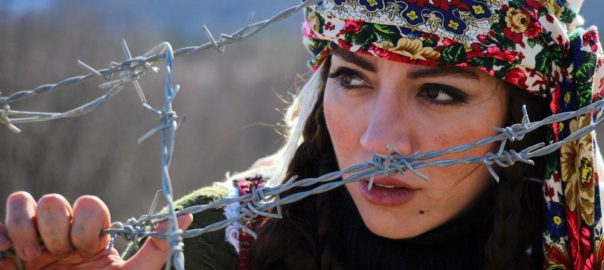
Iranian director Rahim Toofan’s short film “Red Peace” received the Golden Aphrodite Award for best director in the veteran’s short film category of the Cyprus International Film Festival (CYIFF), which was held in Paphos, Cyprus from September 14 to 25.

The film tells the story of Syrian war refugees who take advantage of a Turkish border guard’s love for a Syrian girl and as they meet, the refugees safely cross the border.

The girl finds out about her family’s secret business of ?facilitating the passage of refugees and is caught in a dilemma of love or treachery. / Tehran times /

Iran to produce 3 types of missiles by yearend: Defense minister

Iran’s defense chief says the Islamic Republic is set to unveil three new types of missiles in the coming months, adding that state-of-the-art ballistic missile Zolfaqar has been put on the production line.

Brigadier General Hossein Dehqan made the announcement at a plenary session of the parliament (Majlis) on Sunday.

Iran is observing the Sacred Defense Week, which marks the 36th anniversary of the eight-year Iraqi war against the country.

“We will begin manufacturing three fundamental products in the area of missile [development] by the end of the year,” said the Iranian minister, stressing that the latest defense achievements will greatly promote the country’s defense might.

“These three missiles include Qadir, Sejil (solid-fuel long-range models) as well as high-precision Khorramshahr,” he added.

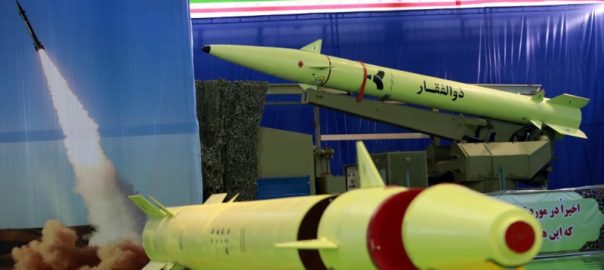
He further announced that Iran has now launched the production line of precision-guided solid-fuel anti-radar jamming missile Zolfaqar.

Zolfaghar, with a range of 750 kilometers, is a multiple reentry vehicle (MRV) missile capable of carrying several warheads.

It is the latest generation of Iran’s long-range missiles and can carry out precision strikes against targets on the ground and airport tarmacs.

The missile was unveiled during a recent large-scale naval parade in Iran’s port city of Bandar Abbas.

Iran is now capable of designing and producing missiles with any range as well as any level of precision and destructive power when it comes to cruise types and the ones using solid or liquid fuel, he added.

In the future, Iran will develop ground-to-ground ballistic missiles that can hit maritime targets far away, Dehqan pointed out.

“In the area of missile defense, we know no limits to our might, and that is why we will continue to boost our defense power as scheduled,” Dehqan said.

He said Iran is the only country that enjoys peace and stability in a region severely troubled by violence, adding that the Islamic Republic is the standard-bearer of the fight against terror and leaves no stone unturned to restore calm to the region.

In recent years, Iran has made major breakthroughs in its defense sector and attained self-sufficiency in producing important military equipment and systems.

Iran has also conducted military drills to enhance the defense capabilities of its armed forces and to test modern military tactics and state-of-the-art army equipment.

The Islamic Republic maintains that its military might poses no threat to other countries, stating that its defense doctrine is merely based on deterrence. / press tv /

Italy’s ‘Euro’ warship docks in southern Iran to boost friendly military ties

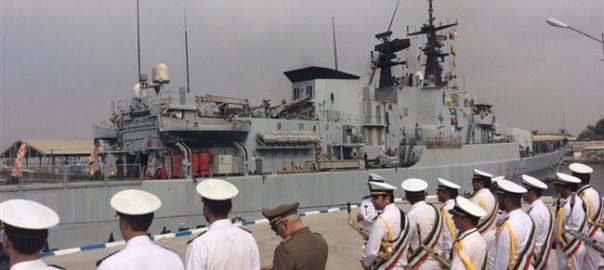
An Italian Navy frigate has docked at Iran’s southern port city of Bandar Abbas in line with the two countries’ plan to boost friendly military relations.

The warship, dubbed Euro, arrived in Bandar Abbas, the capital of Hormozgan Province, on Saturday for a four-day stay.

In a meeting with Italy’s ambassador to Tehran, Mauro Conciatori, and the country’s military attaché, Commander of Iran’s First Naval Zone Admiral Hossein Azad said the Italian frigate has been dispatched to the Islamic Republic with the purpose of improving political, cultural and military relations.

“Given the international nature of naval forces in all countries across the world, naval units comprising warships and air [force] units are dispatched to other countries each year in the form of a fleet,” the Iranian commander added.

He noted that such visits are aimed at enhancing international maritime interactions and conducting joint naval maneuvers between two or more countries.

Iran’s Navy has also an active presence in the international scene by holding naval meetings and making various voyages while hosting the warships of different countries every year, the commander said.

He added that the enemy has always sought to undermine Iran and spread Iranophobia; however, different countries dispatch their military and naval forces to Iran and participate in joint projects as the high level of security in the Islamic Republic has been proved to neighboring and regional countries and the entire world.

Meanwhile, the Italian Navy said the frigate was part of a mission by the European Union to fight piracy.

It added that the visit comes as part of the resumption of “historic and excellent relations” between the Iranian and Italian navies.

In recent years, the Iranian Navy has increased its presence in international waters to protect naval routes and provide security for merchant vessels and tankers.

In line with international efforts against piracy, the Iranian Navy has been also conducting patrols in the Gulf of Aden since November 2008 in order to safeguard merchant containers and oil tankers owned or leased by Iran or other countries.

Iran’s Navy has managed to foil several attacks on both Iranian and foreign tanker ships during its missions in international waters. / press tv /

Iranian shot putter claims bronze at 2016 Paralympics

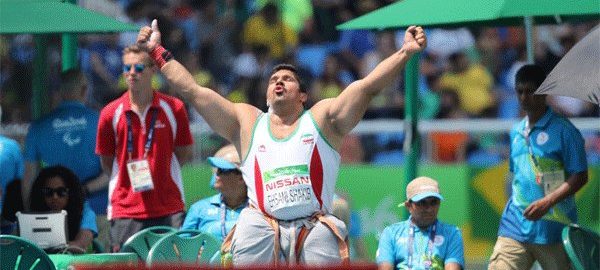
Iran’s shot putter Javid Ehsan Shakib seized a bronze medal in the F57 event with a throw of 14.13m on Saturday.

Guoshan Wu claimed gold with a throw of 14.42m while Janusz Rokicki came second to win the silver with 14.26m.

This was Iran’s 22nd medal in 2016 Paralympic games. Iranian delegation has claimed 22 medals so far in the competition, seven gold, 8 silver and 7 bronze medals.

China is on top of the medal count table with 237 medals: 105 golds, 81 silvers and 51 bronzes. Great Britain, Ukraine and USA stand second to fourth respectively.

Iran has participated at the 2016 Summer Paralympics with 111 athletes in 12 sports.

The Iranian delegation finished in 11th place in the previous edition, winning 10 gold medals, seven silvers and seven bronze medals. / Tehran times /

Iran marks Sacred Defense Week with military parades

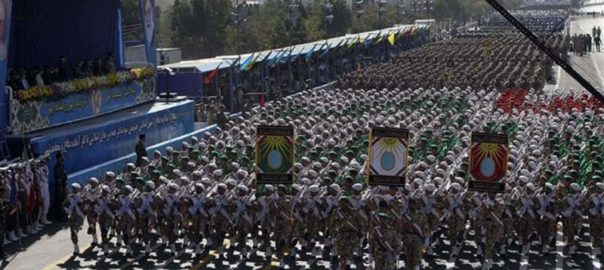
Various divisions of Iran’s Armed Forces are holding annual military parades on the first day of the Sacred Defense Week, which marks the 36th anniversary of the eight-year Iraqi war on Iran.

The parade in Tehran, held in an area near the mausoleum of Imam Khomeini, features military units from the Army, the Islamic Revolution Guards Corps (IRGC) as well as the Police Force.

Similar rallies were also held in other Iranian provinces to commemorate the occasion.

During the parade in southern Tehran, Iranian Armed Forces showcased their latest achievements in the area of defense, including various missile defense systems.

Among the military equipment showcased during the event was the S-300 missile defense system as well the domestically-built Emad ballistic missile successfully test-fired in October.

Units of the Army’s ground forces also put on display a series of defense hardware, including a new generation of the Zolfaghar battle tanks, the Fajr rocket-launching vehicles and the Kia’an 120mm self-propelled guns.

Meanwhile, Iran’s southern waters near the port city of Bandar Abbas have also been the scene of another large-scale naval parade featuring 500 vessels, submarines, fighter jets and helicopters.

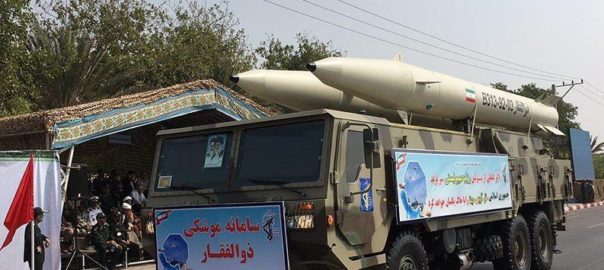
During a military parade by ground forces in Bandar Abbas, Iran’s state-of-the-art Zolfaghar missile defense system was unveiled.

Zolfaghar is a multiple reentry vehicle (MRV) missile capable of carrying several warheads.

It is the latest generation of Iran’s long-range missiles and can carry out precision-strikes against targets on the ground and airport tarmacs.

In late September 1980, the regime of slain Iraqi dictator Saddam Hussein launched a war against Iran. Iran holds a military parade every year to honor the martyrs of the eight-year war imposed by the former regime in Baghdad.

Head of the Chiefs of Staff of the Iranian Armed Forces Major General Mohammad Hossein Baqeri has delivered a speech at the event in place of President Hassan Rouhani, who is currently in New York to attend the 71st Session of the UN General Assembly.

‘Enemies cannot catch Iran off-guard’

In his address, Major General Baqeri said the Sacred Defense Week is a reminder of the Iranian nation’s bravery in the face of an enemy that failed to achieve its goals in a war that it waged 36 years ago with the backing of Western and Eastern powers.

Enemies masterminded the eight-year offensive against Iran to bring the country to its knees, but that turned into a “strategic opportunity” for the nation and the establishment to display their capabilities in defending their independence and the ideals of the 1979 Islamic Revolution.

“During the Sacred Defense, our soldiers learned how to stand on their own feet under sanctions,” said the senior commander, adding that “the preparedness of Iran’s Armed Forces is currently at a satisfactory level.”

He further said the strategies and defense plans of Iran’s Armed Forces have been designed in compliance with the country’s internal and external security as well as its ability to give a timely response to enemy threats.

Major General Baqeri further said Iran’s military achievements are aimed at strengthening its defense might, adding that the country’s “military tests and maneuvers will continue as scheduled, and will not be suspended or postponed under any circumstances.”

Iranian Armed Forces are “closely and precisely monitoring all enemy’s moves in the region,” said the senior military official, emphasizing that the country is “capable of foiling the attempts of regional and extra-regional enemies.”

He said enemies fear Iran’s defense power and “that is why they seek to pile pressure on the resistance front by purchasing large amounts of weapons as well as training and supporting terrorists.”

The ultimate goal of the United States, the Zionist regime and their supporters in launching proxy wars “is to destroy the infrastructure of Muslim states,” he stated.

The senior commander described Iranians as a “peace-seeking” nation, saying the Islamic Republic has never initiated any war against any country throughout its history.

Armed Forces, ‘Iran’s iron fist against enemies’

Addressing the event in Bandar Abbas, IRGC Commander Major General Mohammad Ali Jafari advised the Americans against wasting their people’s resources on boosting their “mischievous presence” in the Persian Gulf.

Jafari said the Armed Forces will be “the Iranian nation’s iron fist in the face of enemies,” adding, “This is our home, and we are highly sensitive vis-à-vis the enemies wandering around our home.”

The senior commander slammed the United States for its “unprofessional conduct” in the region, saying the Americans’ “unbalanced behavior and lack of intelligence command” come at considerable cost to the US and other states.

The Islamic Republic has proved to be qualified for controlling and protecting the security of this sensitive and strategic region, said Jafari, stressing that the Iranian Armed Forces are doing their best to boost their capabilities. / Press tv /

Iran unveils new long-range ballistic missile with raining warhead

Iran unveiled on Wednesday in an annual parade its newest ballistic missile called Zolfaqar.

The unveiling comes on the first day of the Sacred Defense Week to mark the anniversary of Iraq’s eight-year war on Iran (1980-1988).

Equipped with a raining warhead, the precision-guided missile can target airstrips, scattered strongholds, etc.

According to Commander of the IRGC’s Aerospace Division Brigadier General Amir Ali Hajizadeh, yhe missile has a range of around 750 KM. / Tehran times /

Tourism sector to create 130,000 jobs by March 2017: labor minister

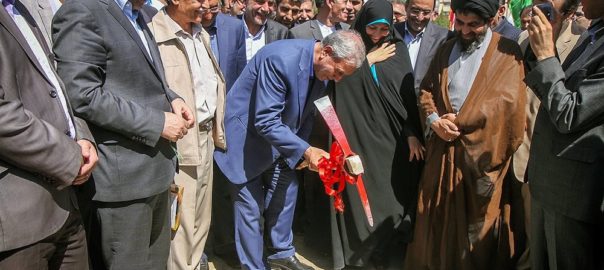
Iran plans to generate about 130,000 jobs and career opportunities for its booming tourism industry throughout the rest of the country’s calendar year (March 20, 2017), Labor and Social Welfare Minister Ali Rabiei said on Thursday.

Rabiei made the remarks on the sidelines of a ceremony for breaking the ground on the first five-star Halal hotel in the country, set to be constructed in the historical city of Isfahan within three years.

“Empowering the tourism industry will lay the ground for improving the economy and also creating jobs in the country,” he added.

Earlier in August, the director of Iran’s Cultural Heritage, Tourism, and Handicrafts Organization, Masoud Soltanifar, announced that the country has the capacity to be a major destination for Muslim tourists and a center for the Halal tourism industry.

The official considered Muslims from across the globe as a pillar of strength for developing the industry.

A subcategory of traveling, Halal tourism is geared toward the specific needs of Muslim individuals who seek to abide by the Islamic rules. / Tehran times /

Iran to become strategic metal producer

Iran’s first titanium production plant will be up and running in the next six months, the manager of the Kahnuj titanium pilot project says.

The plant with a capacity to produce 2 tonnes of titanium pigments per day is at the phase of equipment installation in Kahnuj in southeastern Kerman province, Morad Ali Manzari-Tavakolli was quoted as saying.

The project includes setting up two units with a capacity to produce 130,000 tonnes of titanium dioxide concentrate and 70,000 tonnes of titanium dioxide slag per year, he said.

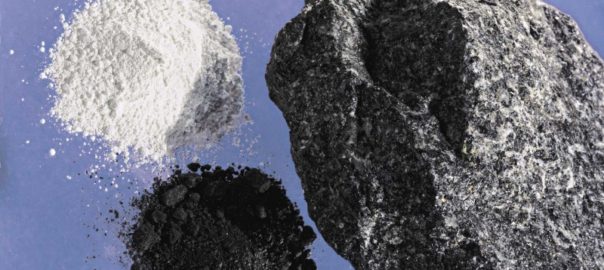
Titanium dioxide is mainly used to produce titanium pigment, the most commonly used white pigment. It is used to add capacity to paper, paints and plastics.

Kahnuj is carried out jointly by Iran’s state-owned mines and metal holding company IMIDRO and Armenia’s EcoAtom in a scheme worth 2.04 million euros.

The “industrial” implementation of the Kahnuj titanium scheme is projected to cost $161 million which will come from selling so-called participation papers, Manzari-Tavakoli said.

The Kahnuj prospect is estimated to hold definite reserves of 150 million tones or probable deposits of some 400 million tonnes.

The operation of the Kahnuj plant will put Iran among an elite club of the few countries which produce titanium – a metal used in a range of high-tech manufacturing from military aircraft to artificial limbs. The country is currently a net importer of the material.

The main producers of titanium are China, Japan, Ukraine, Russia, Kazakhstan and the US.

Titanium is the strategic metal of the century, named after the powerful Titan gods in Greek mythology. Because of its strength, light weight and corrosion resistance, the metal is highly prized in aircraft manufacturing, with further applications in military, aerospace, marine industries, dental implants and industrial processes.

Iran’s other known titanium reserves are based in Anzali Lagoon in the Caspian Sea, which have attracted the attention of Japanese developers, according to Iranian media reports.

The Fanuj mine in Iran’s Sistan-Baluchestan is another base where a cluster of 30 deposits are each able to yield 1 million tonnes of titanium ore per year, according to head of the board of directors of Makran Steel Jamshid Jahanbakhsh Tehrani.

Iran needs more than $4.2 billion of investment over the next five years to bring the Fanuj prospect fully online, he said last December.

Mining investment

Iran’s potential for profit goes far beyond oil and gas, the reserves of which are the world’s largest combined. It possesses 7% of the world’s total mineral reserves worth about $700 billion but officials say this figure could rise to $1.4 trillion with new discoveries.

The country has more than 3,000 active mines — mostly privately owned — that contain copper, iron ore and heavy rare earth elements, according to the website mining.com.

The mining sector, however, is underdeveloped and accounts for less than one percent of the country’s gross domestic product (GDP).

After the lifting of sanctions, officials have unveiled plans for $29 billion of mining investment, about $15 billion of which is about to come from outside the country, for a number of projects ranging from steel to aluminum, copper, gold, rare earth elements and coal.

In February, Deputy Mine, Industry and Trade Minister Mehdi Karbasian said Iran’s mining sector had more than $10 billion of investment pledges by the Europeans and Chinese under its belt.

Italy’s Danieli signed a joint venture and agreed orders worth about 5.7 billion euros during President Hassan Rouhani’s tour of Europe then.

The Chinese are about to invest as much as 4 billion euros in Iran’s mining and mineral industry. A French aluminum company also signed a deal to invest in Iran when Rouhani visited Paris. / Press tv /