All posts by islam

Iranian competitors win four medals at Karate World Championships

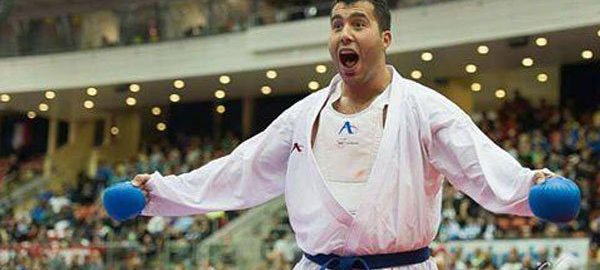
Four Iranian competitors won medals at the 2016 Karate World Championships on Saturday. Sajad Ganjzadeh took the gold medal after beating Moroccan Achraf Ouchen in the Men’s over 84kg individual kumite.

“I am happy to win gold since the competition has brought a number of the best karatekas together. My only goal was to win the gold medal and I am very happy my silver medal in the previous edition has been upgraded to gold,” Ganjzadeh said.

Croat Andjelo Kvesic and Herolind Nishevci from Kosovo won the bronze medal.

Furthermore, Zabiollah Poorshab in the Men’s under 84kg individual kumite, Aliasghar Asiabari in the Men’s under 75kg individual kumite and Hamideh Abbasli in the Women’s over 68kg individual kumite also claimed three bronze medals in the event.

Over 2,000 participants from 135 countries are competing at the 23rd edition of the Karate World Championships in the Austrian city of Linz. / Tehran times /

Iran Honey Exports

West Azarbaijan Province exports 1,500 tons of honey worth $6 million to Turkey, Iraq, Azerbaijan Republic, China, Kuwait, the UAE and East Asian countries annually, says the head of the northwestern province’s Agricultural Jihad Organization, Esmaeil Karimzadeh. “West Azarbaijan is home to one million traditional and modern beehives that produce over 18,000 tons or up to 27% of all the honey made in Iran,” he added. Karimzadeh noted that modern beehive yields around 21.1 kg of honey compared to 5.7 kg produced from traditional beehives, Otaghnews.com reported. / Financial tribune /

Marriage Loans Hit Record in Iran

In the first seven months of the fiscal year (March 20-October 22), Iranian banks allocated more than 38.5 trillion rials ($1.2 billion) in Qarzol-Hasana (interest-free microcredit) marriage loans to 440,300 applicants. “This volume of loan has been unprecedented in previous years and shows how committed banks and the Central Bank of Iran are in supporting matrimony for the youth,” reports the official website of the CBI. According to the system that registers statistics pertaining to this category of microcredit, from the time the system was founded in 2009 until October 22 of the current year, more than 242 trillion rials ($7.6 billion) in loans have been given to 8.03 million applicants. / Financial tribune /

First five-star luxurious train launched between Qom and Mashhad

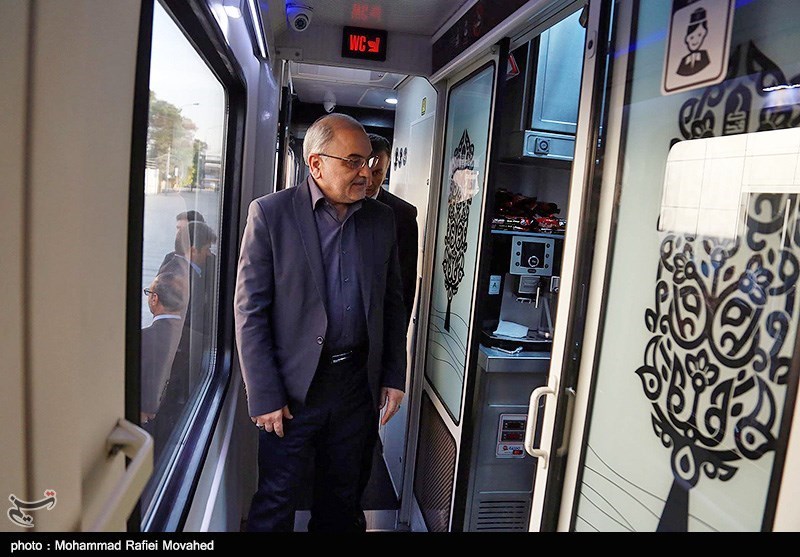
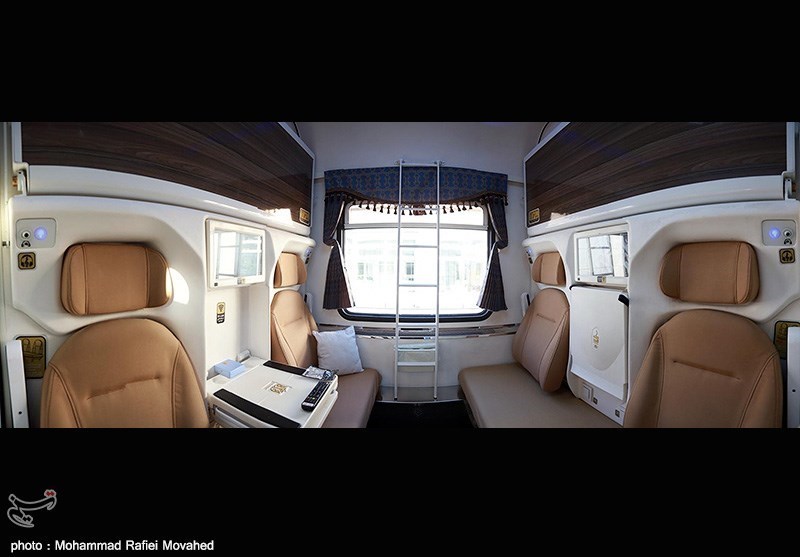
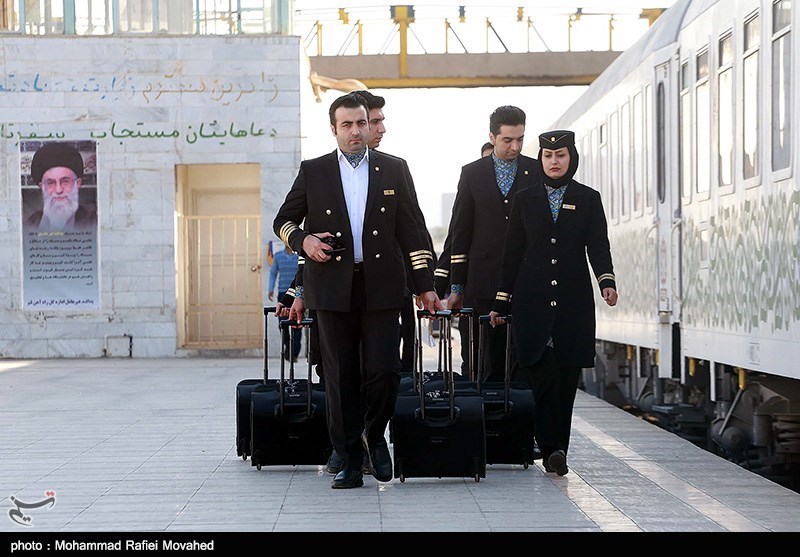
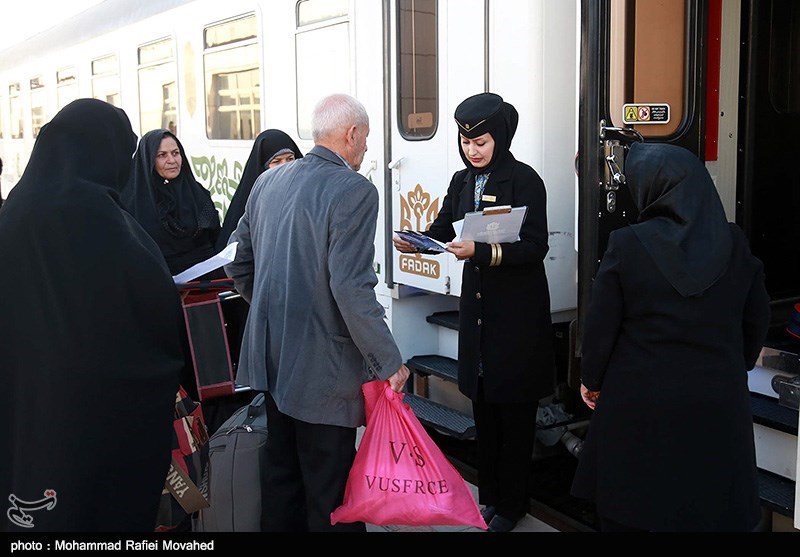
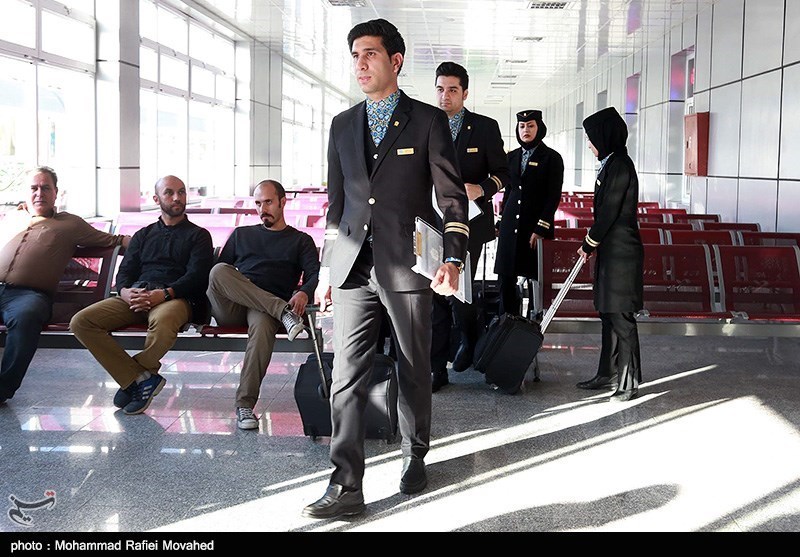
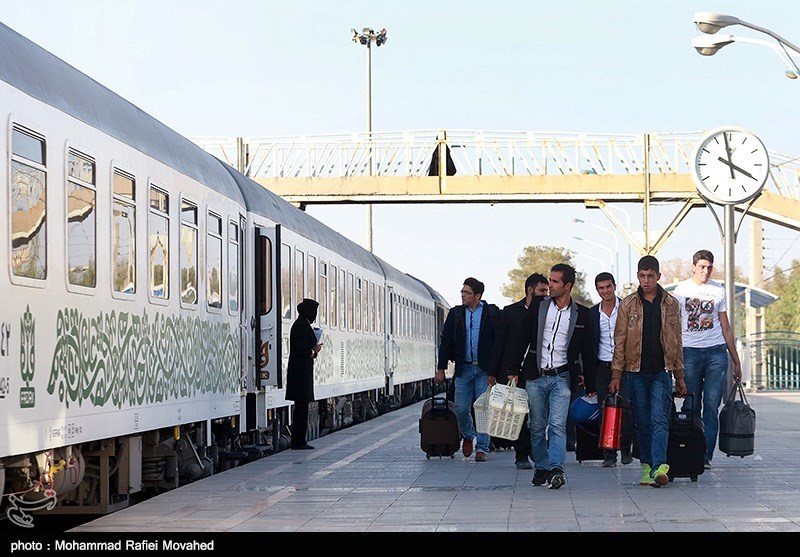
Iran’s railway has launched a new luxurious five-star train, called ‘Fadak’, between Qom and Mashhad, the most important pilgrimage centers in the country.

The ‘fadak’ train is the first luxurious passenger train running from Qom to Mashhad and vice versa. The train operates each day between two cities, taking about 7 hours.

The facilities and services of this new Iranian-made train are designed to be luxurious.

Qom is the second holiest city in Iran after Mashhad.  Its main attraction is the impressive Holy Shrine where Fatima, Imam Reza’s sister, is buried./realiran.org/

7-3

9-3

3-3

5-3

6-3

4-3

Filmmaker Nasser Taqvai honored for lifetime achievements

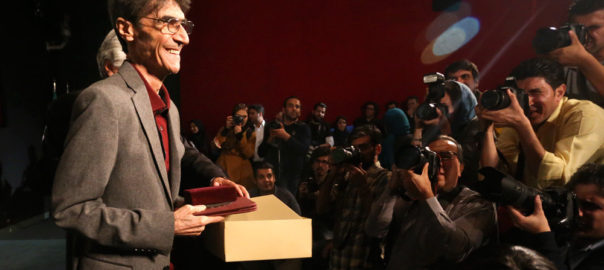
Filmmaker Nasser Taqvai, famous for his TV series “My Uncle Napoleon” (1976), was honored for his lifetime achievements during a ceremony held in the Film Museum of Iran on Saturday.

The ceremony was followed by screening Taqvai’s short film “Greek Ship” (1998) and two documentaries “Tazieh” and “Last Rehearsal” both produced in 2004, Persian media reported on Sunday.

Taqvai directed the two documentaries, which were submitted to UNESCO along with Iran’s documents about the Iranian passion play tazieh that was registered on the UNESCO List of the Intangible Cultural Heritage of Humanity in 2010.

A number of veteran cineastes and theatrical figures including Bahman Farmanara, Behzad Farahani, Habib Rezai, Atefeh Razavi and Pari Saberi attended the ceremony.

Speaking at the ceremony, Taqvai said that among all arts, writing is the art most dependent on man.

“Many works might be ruined and destroyed, but there is art that will remain, and for me cinema is such an art,” he said.

Taqvai, whose “Captain Khorshid” (1987) was also a big hit, continued, “The past teaches us more compared with the future, since the future has not arrived yet.”

He added, “Even if we do not like one work by a filmmaker, when we see it is being threatened, we need to take action and defend that work, and nobody should decide on behalf of someone else.”

Next, several music videos by famous cineastes were screened for the audience.

Asghar Farhadi’s video message submitted from Spain, where he is making his new production, was shown to the participants where he talked about his interest in Taqvai and his works.

“Talking about you is both easy and hard. It is easy because one can easily name the number of films you have made and hard since you have a special character and you are like nobody else,” he added.

“Among the filmmakers who are working today compared to the ones who worked over past decades, we can hardly find one who is both able to make films and is also knowledgeable in other fields, and Mr. Taqvai is one of those few,” he added.

The ceremony concluded with a presentation of a portion of the screenplay of the film “Captain Khorshid” that was written by Taqvai and apparently lost, but film producer Harun Yashayai owned part of it and had donated it to the Film Museum of Iran. / Tehran times /

11 Iranian universities on world’s top 1,000 list

11 Iranian educational institutions are ranked among the best global universities by the U.S. News & World Report, a multi-platform publisher of news and information providing authoritative rankings of best colleges, best graduate schools and best hospitals.

These institutions from the U.S. and around 60 other countries have been ranked based on 12 indicators that measure their academic research performance and their global and regional reputations.

Sharif University of Technology, University of Tehran, Isfahan University of Technology, Amirkabir University of Technology, Islamic Azad University of Karaj, Iran University of Science and Technology, Tehran University of Medical Sciences, Tarbiat Modarres University, University of Tabriz, Ferdowsi University of Mashhad, and Shahid Beheshti University of Medical Sciences are respectively the top 11 Iranian universities ranked among world’s top 1,000 universities in the U.S. News 2017 university ranking.

The number of the Iranian universities have increased by three since last year as University of Tabriz, Ferdowsi University of Mashhad, and Shahid Beheshti University of Medical Sciences are listed among the top universities for the first time this year, head of Islamic World Science Citation Center (ISC) said.

Coming in 435th last year, Sharif University has managed to improve its previous ranking by securing the 405th place among world’s top universities in U.S. News 2017 ranking, IRNA news agency quoted Mohammad-Javad Dehqani as saying.

Moreover Islamic Azad University of Karaj which came in 629th has made a remarkable improvement as it held the 736th place last year, Dehqani added.

Iran has also succeeded in keeping the second place regarding the number of the top universities in the region after Turkey, Dehqani highlighted.

According to the U.S. News website Harvard University, Massachusetts Institute of Technology, and Stanford University are the world’s top universities.

/ Tehran times /

Iran, German bank resume oil trade cooperation

Iran and Germany’s Deutsche Bank have resumed cooperation in oil trade, announced deputy oil minister for international affairs.

Referring to insufficient cooperation between Iran and major European banks, particularly regarding oil deals, in the post-JCPOA era, Amir Hossein Zamani-Nia, added, “However, unlike the past, when collaborations were limited to small European banks, prominent banks are boosting their ties with Iran,” Mehr News Agency reported.

“Transactions with Deutsche Bank of Germany were resumed a few days ago for a number of oil deals,” said the official asserting that several other major European banks will reinvigorate ties with Iran in coming days.

Referring to the talks with giant oil companies over new oil partnerships with Iran under IPCs (Iran Petroleum Contracts), Zamaninia said, “Although negotiations are underway, a number of firms are still harboring doubts about launching cooperation with Iran within the framework of the new model of Iranian oil contracts.”

“Talks are underway to present IPCs to foreign companies, European firms in particular,” the official noted, adding remarkable progress have been made in negotiations with major European companies, the outcomes of which will be announced within a few weeks.

Deutsche Bank had officially suspended its banking activities in Iran in 2006, especially in the field trading crude and oil products. / Iran daily /

Iran loses to India in the Kabaddi World Cup final

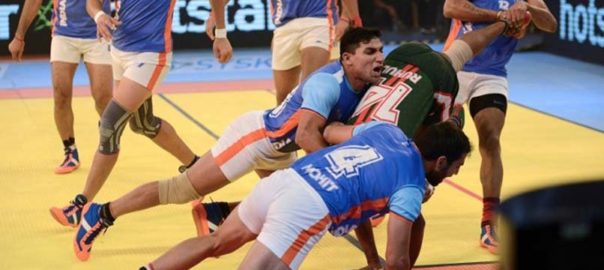
Iran finished in second place after losing to powerhouse India 38-29 in the Kabaddi World Cup final on Saturday.

Seven-time defending champions Indians proved their supremacy after trailing 12-18 at the half-time in Ahmedabad, India.

Star raider Ajay Thakur emerged as the key player for the team as he guided team to this scintillating win with his crucial 12 points. Although Iranian skipper Meraj Sheykh gave a tough fight with his 5 points, but couldn’t take his team to be at the winning side.

Speaking after the victory, Ajay declared, “India is always number one in kabaddi.” He added, “This is the most wonderful moment of my career.”  / Tehran times /

Increased engagements to benefit both Dhaka, Tehran

Iranian envoy S Javad Mazloumi tells The Independent

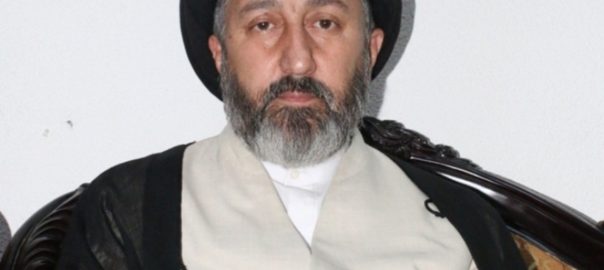
HUMAYUN KABIR BHUIYAN: There should be more understanding as well as engagements between the peoples of Bangladesh and Iran in the interest of both the nations, which share many things in common especially religion and culture, according to S Javad Mazloumi, an envoy of the Iranian government.

In an exclusive interview with The Independent at the residence of the Iranian ambassador’s residence in Gulshan on October 22, he lamented that peoples of both the nations know much less about each other than they should. “We need to introduce Iran in Bangladesh in much better manner. Same applies to Bangladesh. This will help both the countries in many ways,” said Mazloumi, who also works as a representative of Iran’s Supreme Leader Ayatollah Ali Khamenei.

“We have many things in common espe cially in terms of religion, culture and civilisation. And, Persian language and literature are very familiar in Bangladesh,” he said, adding, “We have a very good cooperation in these sectors, but this could be much better.”

The Iranian envoy also talked about trade and investment, cooperation in education through exchange programmes and good practices, bilateral, social, regional and international cooperation, economic cooperation, connectivity and Bangladesh’s relations with Saudi Arabia, an adversary of Iran.

To a question, he said that Iranian people know little about Bangladesh and if Bangladesh can be made familiar with the Iranians, Bangladesh could be a place for Iranian investors in the changed situation after the lifting of international sanctions against Tehran.

Mazloumi described the political relations with Bangladesh as very good, saying that there is no contentious issue between the two countries.

He also laid emphasis on introducing direct air link between Bangladesh and Iran to increase people-to-people contacts.

Expressing a little disappointment over the current state of exchange in education sector, the envoy said that currently less than 100 Bangladeshi students study in different universities in Iran while only five Iranian students study in Bangladesh.

“This figure can be much higher,” he added, hinting that Iran is ready to offer more scholarships for the Bangladeshi students, but Bangladesh will have to reciprocate in some way. Mazloumi placed great emphasis on regular visits of scholars from both the countries along with political leaderships.

“We and Bangladesh both belong to the Muslim ummah. There is scope of better cooperation in social sector through exchange of better practices,” he said.

As there is no sanction against Iran, there is potential for increased and substantive cooperation in trade, commerce and economy.

The representative of the Iranian supreme leader was full of praise for Bangladesh for peaceful coexistence of all sectarians in Bangladesh, including the Shia community.

“I did not come across a single Bangladeshi with unfavourable views about Iran. Same thing is true in case of Iranian people towards Bangladesh. I have seen a desire among the peoples of the two countries to construct a cultural bridge,” he said. He expressed optimism that the future of the relationship between Dhaka and Tehran is good.

When asked if Dhaka’s relations and deep engagements with Iran’s adversary Saudi Arabia troubles Tehran, the envoy replied, “No. Every country has the right to engage with any country that will serve its purpose. We respect every country’s decision to engage with other countries.”

Mazloumi also said that Tehran has no objection to Dhaka’s joining in Saudi-led coalition against terrorism and violent extremism and support for the Saudi-led military campaign in Yemen. However, he added that Tehran believes that it is up to the people of Yemen to take decision about their affairs. / The Independent /

No country can set conditions for ‘independent’ Iran: Zarif

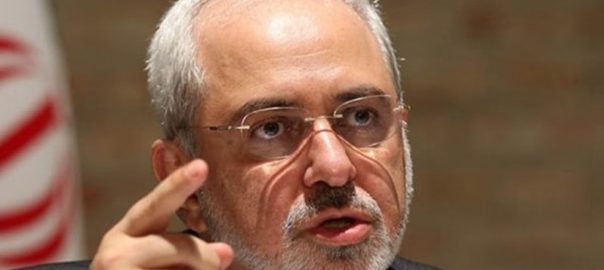
Iranian Foreign Minister Mohammad Javad Zarif says no foreign state can impose conditions on an “independent” country like Iran.

“No one can set conditions for Iran and Iran is an independent country,” Zarif told reporters on Saturday.

He made the remarks in response to an earlier demand by German Economy Minister and Vice Chancellor Sigmar Gabriel who told online weekly magazine Der Spiegel on Friday that Iran could have normal and friendly relations with Germany “only when it accepted Israel’s right to exist.”

Gabriel plans to visit Iran at the head of a large delegation of business executives to discuss possible business deals after last year’s historic nuclear agreement, known as the Joint Comprehensive Plan of Action (JCPOA), between Tehran and the P5+1 group of countries.

As part of the deal, Iran has agreed to limit certain aspects of its nuclear program in exchange for the removal of all nuclear-related sanctions against the Islamic Republic.

Zarif dismissed the German official’s call and said, “Our policies are clear and [officials of] different countries travel to Iran in the knowledge that that the country’s policies are constructive.”

“Our country is the main country fighting against terrorism in the region,” the top Iranian diplomat said.

He added that Iran has been resisting foreign bullying over the past 37 years “while it is a peace-seeking country.”

“Iran is a country that has stood up to Daesh and terrorism; therefore, having relations with Iran should be an honor for all,” Zarif said.

Iran’s Foreign Ministry spokesman Bahram Qassemi also on Saturday rejected Germany’s demand and emphasized that Tehran would never drop support for the Palestinians.

“Ties between the Islamic Republic of Iran and Germany are based on mutual respect and interests, and no precondition would be acceptable in this regard,” Qassemi said.

The Iranian spokesperson added, “The Islamic Republic considers defending the rights of the people of Palestine to be a fixed plank of its foreign policy and will never and under no circumstances forsake the Palestinian cause.”

Germany had been Iran’s biggest European trading partner for decades before a series of sanctions were tightened against the Islamic Republic under the pretext of its nuclear program.

Almost immediately after the conclusion of the deal, the German government sent Gabriel to Tehran at the head of a major delegation to discuss post-sanctions business opportunities in the Islamic Republic. / Press tv /