All posts by islam

Iran’s Ghasemi new gold medalist of 2012 Olympics

Iranian freestyle wrestler Komeil Ghasemi has been awarded gold medal of the 2012 Olympic Games in London.

Iran’s Komeil Ghasemi and Russia’s Bilyal Makhov had initially both been awarded gold in the 120kg at London 2012 by the IOC in July but United World Wrestling has confirmed Ghasemi as the sole gold medalist.

Makhov – himself provisionally suspended following a positive drugs test – received the silver.

Uzbekistan’s Davit Modzmanashvili has been banned for six years after he was stripped of his Olympic wrestling silver medal for doping following the re-analysis of his sample from London 2012.

The Georgian, who switched allegiance to Uzbekistan in 2017 and won a bronze medal for the country at the 2018 Asian Games in Jakarta and Palembang, was beaten in the 120kg final at London 2012 by Uzbekistan’s Artur Taymazov.

Taymazov was also caught up in the IOC’s re-tests and has been stripped of gold medals he won in the same category at Beijing 2008 and London 2012 for doping.

The IOC Disciplinary Commission (DC) rendered its decision against Taymazov who failed a reanalysis of his anti-doping test at the 2012 Olympic Games in London. Taymazov tested positive for the prohibited substance dehydrochlormethyltestosterone (oral turinabol).

The Uzbek wrestler had earned a gold medal in freestyle wrestling at 120kg and his removal will re-shuffle the order of medalists at the 2012 London Games. Ghasemi will become the new gold medalist, Makhov remains silver, and Tervel Dlagnev (USA) and Daulet Shabanbay (KAZ) will be the newest bronze medalists./T.T/

Iran, Russia to hold first joint sociology conference

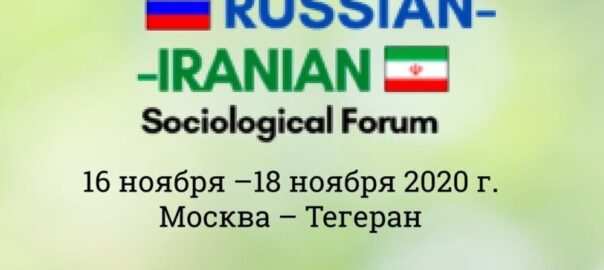
The first joint Iran-Russia Sociology Forum will be held online in Moscow on November 16-18, IRNA reported.

Organized by the Russian Academy of Sciences, the conference aims to exchange views and discuss the social, economic, and demographic dimensions of the two countries’ development in the context of global challenges (including the coronavirus epidemic).

On the first day, at the opening ceremony of the forum, Nahal Naficie, commissioner of the International Cooperation of the Iranian Sociological Association, will make a short speech.

The first social atlas of Iran and Russia will also be unveiled at the conference.

The officials and representatives of the two countries will participate in the event and make speeches.

/T.T?

Agricultural exports increase 13.8%

The value of Iran’s agricultural products export has risen 13.8 percent during the first seven months of the current Iranian calendar year (March 20-October 21), compared to the same period of time in the past year, according to an official with the Islamic Republic of Iran Customs Administration (IRICA).

Mehrdad Jamal Orounaqi, the IRICA deputy head for technical and customs affairs, put the value of exported products at $3.1 billion in the seven-month period of the present year, ISNA reported.

The official said the weight of agricultural products exported in the mentioned period has risen 26.7 percent to stand at 4.537 million tons.

According to Orounaqi, 3.599 million tons of agricultural products worth $2.7 billion had been exported during the first seven months of the previous year.

Iran exported over $5.8 billion worth of agricultural and foodstuff products in the previous Iranian calendar year (ended on March 19), Head of Agriculture Ministry’s Planning and Economic Affairs Department Shahrokh Shajari has announced.

According to the official, about 7.104 million tons of such products worth $5.821 billion were exported to foreign destinations last year.

In the mentioned period, over 6.941 million tons of agricultural and foodstuff products worth $6.392 billion were also imported into the country, according to Shajari.

Watermelons, apples, tomatoes, potatoes, onions, and shallots were the top five exported products in the previous year in terms of weight, while in terms of value, pistachios, apples, tomatoes, pistachio kernels, and watermelons were the five major exported items.

Shajari further pointed to the major imported items in terms of weight, saying, corn, barley, soybean meal, soybean, and untreated sugar were the top five imported items, while in terms of value livestock corn, rice, barley, and soybeans were the top imported products. /Tehran/

1,550 educational, welfare projects to be inaugurated

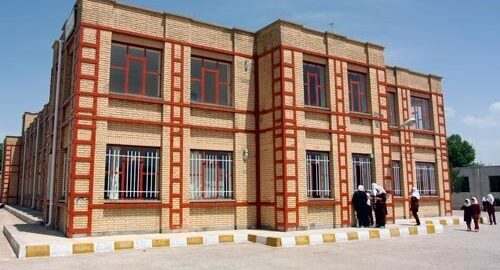
President Hassan Rouhani will officially inaugurate some 1,550 educational, training, and welfare projects across the country on Thursday via video conferencing, ISNA reported on Wednesday.

The projects include 1,422 educational places with 8,051 classrooms, 124 training centers, and 4 welfare centers, measuring a total of 1.1 million square meters.

A sum of 360 trillion rials (nearly $8.5 billion at the official rate of 42,000 rials) have been spent in this regard, the report added, highlighting that about 70 percent of the funds have been provided by the school renovation organization and the rest by school-building benefactors.

Mehrollah Rakhshanimehr, director of the Organization for Development, Renovation and Equipping, said in August that some 30 percent of the country’s schools have been constructed by school-building benefactors; there are 450 school-building charities in Iran.

In line with the education reform plan, people who have a popular reputation are being invited as ambassadors to attract public participation for school construction even by buying a brick.

Iran has many school-building benefactors amounting to 650,000 people inside and 1,000 people outside the country.

There are some 107,000 schools nationwide with 530,000 classes, 160,000 of which are dilapidated, not meeting safety standards. Some 30 percent of the schools nationwide are old, of which some 12 percent must be completely rebuilt and 18 percent must be retrofitted.

The organization for renovation, development, and equipment of schools started operating in the Iranian calendar year 1396 (March 2017- March 2018), which received a budget of 8.5 trillion rials (about $200 million). /T.T/

Iranian professor receives COMSTECH 2019 award

Sajjad Jafari, a faculty member of the Amirkabir University of Technology, has won the COMSTECH 2019 award in Mathematics.

COMSTECH is the Ministerial Standing Committee on Scientific and Technological Cooperation of the Organization of Islamic Cooperation.

Jafari was born in 1983. He received his BSc, MSc, and Ph.D. degrees in biomedical engineering in 2005, 2008, 2013 from the biomedical engineering department, Amirkabir University of Technology. He is currently an assistant professor there (since 2013).

His research interests include nonlinear and chaotic systems and signals, and mathematical biology. Also, he also works on complex networks and collective behaviors in them, such as synchronization, Chimera states, and spiral waves.

He serves as editor in the International Journal of Bifurcation and Chaos, International Journal of Electronics and Communications, and Radioengineering. He has been one of the highly cited researchers in 2019 and 2020 according to Clarivate Analytics.

COMSTECH was established in January 1981, to increase the capability of the Muslim countries in science and technology.

The COMSTECH Executive Committee decided in its 15th meeting in 1996 to institute awards to recognize outstanding research work carried out by scientists who are citizens of and working in, OIC member states. Each award carries a certificate, shield of honor, and cash prize.

These awards are given in four basic sciences; Biology and Chemistry alternating biennially with Mathematics and Physics. Each award carries a cash prize of $5,000. /T.T/

12 groups endeavor to develop COVID-19 vaccine

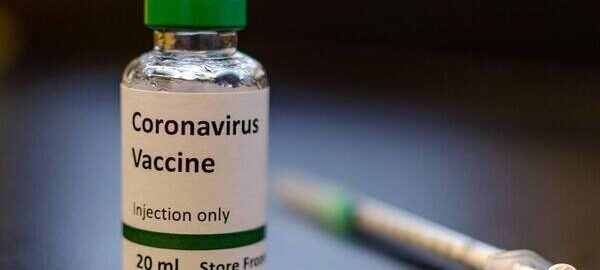
In Iran, 12 groups are making efforts to develop coronavirus vaccine, three of which have passed the animal testing, Iraj Harirchi, the deputy minister of health, has announced.

“Currently, some 25,000 diagnostic tests are performed daily, which is expected to reach 100,000” he stated, IRIB reported on Tuesday.

Harirchi added that 30 percent of COVID-19 cases in the country are caused by small gatherings and celebrations.

Last week, Health Minister Saeed Namaki expressed hope that the country will introduce the home-grown COVID-19 vaccine by the end of the current Iranian calendar year (March 19, 2021).

Due to the high prevalence of the disease, the National Headquarters for Coronavirus Control has approved to impose strict restrictions for 10 days as of Wednesday in 46 cities that have the highest rate of COVID-19 infection in the country.

Officials at the Medical Council have written a letter to President Hassan Rouhani that the deplorable condition of the pandemic in the country, and rising number of mortalities and new cases, requires a more serious review of the management methods of this crisis.

COVID-19 cases at a record high

In a press briefing on Tuesday, Health Ministry spokesperson Sima-Sadat Lari confirmed 8,932 new cases of COVID-19 infection, raising the total number of infections to 637,712. She added that 495,473 patients have so far recovered, but 5,378 still remain in critical conditions of the disease.

During the past 24 hours, coronavirus daily deaths and new cases hit the record high, as 422 patients have lost their lives, bringing the total number of deaths to 36,160, she added.

Lari noted that so far 5,036,633 COVID-19 tests have been conducted across the country.

She said the high-risk “red” zones include provinces of Tehran, Isfahan, Qom, East Azarbaijan, South Khorasan, Semnan, Qazvin, Lorestan, Ardebil, Khuzestan, Kermanshah, Kohgiluyeh-Boyerahmad, Gilan, Bushehr, Zanjan, Ilam, Khorasan Razavi, Mazandaran, Chaharmahal-Bakhtiari, Alborz, West Azarbaijan, Markazi, Kerman, North Khorasan, Hamedan, Yazd, and Kordestan.

The provinces of Hormozgan, Fars, and Golestan and Sistan-Baluchestan are also on alert. T.T/

Resistance filmfest receives over 3000 submissions from 135 countries

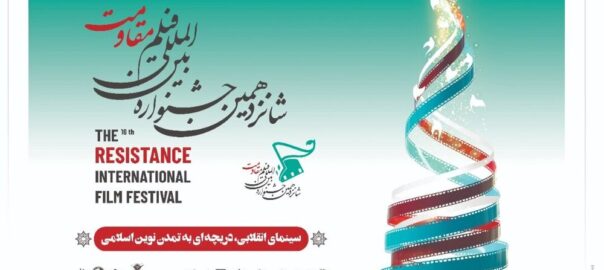
The organizers of the 16th Resistance International Film Festival has received over 3000 submissions from 135 countries in the main competition category.

India stands on the top with about 700 films, next comes the United States with 242, Turkey with 209, Brazil with 193, Spain with 168, England with 127 and Italy with 117.

A lineup of Iranian and international movies including features, documentaries, short films, animations and music videos will be competing in the main category.

The festival has been organized in two stages, the first of which took place during the Sacred Defense Week from September 21 to 28, and the second part will be held from November 21 to 27 to celebrate the anniversary of Basij Day, which falls on November 25.

In addition, the organizers will honor the most influential film with a grand prize.

“The festival has consisted of several sections, some of which were held during the Sacred Defense Week in September. The selected works of the sections, in addition to the best of the coming sections, will be competing in the ‘Film in Its Absolute Meaning’ category, and the winner will be receiving the grand prize,” director of the new section Nasser Bakideh has said.

Earlier, the organizers announced that the best screen and TV adaptions of books on the 1980-1988 Iran-Iraq war, which is known as Sacred Defense in Iran, will be honored in a new special section this year.

Adaptions of books on the Islamic Revolution, resistance and regional issues, and Islamic awakening will also be accessed in this section named “Narration of the Pen Section”.

A short, a feature-length movie and a telefilm will be honored in this section.

Screenwriters from across the world whose screenplays have not been made into films are invited to attend the festival in the three languages of Persian, English and Arabic.

The festival will review films on Commander Qassem Soleimani’s role in awakening people of the region and the world in a special section.

Interested filmmakers are asked to submit their films on the main characteristic of the martyr as the symbol of resistance, highlighting the bravery of the commander, and the soldiers without borders as the main themes of the section named “Prominent Resistance Martyr Section”.

The oppression of the people in the region, their resistance, and the role of Soleimani in their awareness are also highlighted in the section, which is due to be held internationally.

The Association of the Revolution and Sacred Defense Theater organizes the festival every year in collaboration with several other institutions. /T.T/


819 idle industrial units revived in 7 months

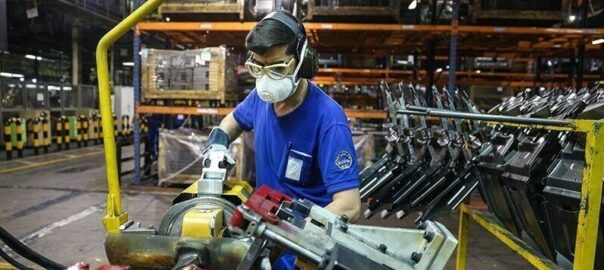
The acting head of Iran Small Industries and Industrial Parks Organization (ISIPO) announced that 819 idle industrial units have been revived in the country during the first seven months of the current Iranian calendar year (March 20-October 21).

Asghar Mosaheb said that reviving the mentioned units has created jobs for 14,458 persons.

The official also announced that ISIPO plans to revive 2,000 idle industrial units throughout the country by the end of the current Iranian year (March 19, 2021).

He said the targeted figure for the mentioned seven-month period was 1,500 units, but the figure was increased in line with the objectives of “Surge in Production”, which is the motto of this year.

Preventing from the inactive status of the industrial units is another major plan of ISIPO, the official reiterated and mentioned lack of liquidity, problems in terms of supplying raw materials and machinery, and absence of market as the main reasons making the units inactive.

ISIPO’s Previous Head Mohsen Salehinia has said that providing liquidity is the main issue for many of the country’s production units, so based on the arrangements made, these units can receive part of their needed liquidity through bank facilities.

“Currently, the share of the country’s production and industrial units in receiving bank facilities is about 31 percent and it is necessary to allocate a larger share of banking facilities to the country’s production and industry,” he added.

Given the position of production in the country’s economy and employment, and the fact that production units are facing lack of liquidity to supply raw materials and equipment, it is necessary to increase their share of bank facilities up to at least 40 percent, Salehinia stressed.

He further said: “Despite all the limitations, we are currently witnessing an increase in production in some units, for example those active in the field of home appliances; also, according to the plans made and by solving the problems in the way of the production and industrial units, we will realize the motto of “Surge in Production” by the end of this year.”

Strengthening domestic production to achieve self-reliance is the most important program that Iran is following up in its industry sector in a bid to nullify the effects of the U.S. sanctions on its economy.

To this end, the current Iranian calendar year has been named the year of “Surge in Production”, and all governmental bodies as well as the private sector are moving in line with the materialization of this motto.

Regarding its significant role in the realization of the mentioned goal, the Industry, Mining and Trade Ministry has already defined its main programs for supporting the domestic production in the current year.

The ministry’s seven main axes of the surge in production are going to be pursued under 40 major programs.

In this regard, the development of industrial parks and supporting the units located in these areas is one of the major programs underway by the ministry.

While this program is being seriously pursued, the lack of necessary infrastructure in the industrial parks is impeding their development, therefore, the creation of needed infrastructure in the industrial parks has been put on the agenda. /MNA/

133 countries in intl. sections of Resistance film fest.

Head of the Public Relations and Information Centre of the 16th Resistance International Film Festival, Seyyed Ahad Mikaeilzadeh, said so far over 133 countries have participated in the international section of the event.

“Amid the spread of Coronavirus and the imposed sanctions against Iran, so far 4,151 films from 133 countries have been submitted to the secretariat of the festival,” he said.
Mikaeilzadeh reiterated that the festival has played an active role in informing the event in other countries.

He added that due to the spread of the Covid-19 we had no choice but to hold the festival in the online format.

Mikaeilzadeh noted that holding the festival in an online format is considered as an opportunity to utilize the current limitation to hold the event in a proper manner.

Mikaeilzadeh said the last deadline for submitting the works to the second part of this cinematic event is October 21, 2020.

He added that some 200 international works are vying in different sections of the festival, adding that the sections including “Resistance Prominent Martyr”, “Narrations of Pen” and “Health Defenders” were warmly welcomed in the festival.

He said the festival has been designed in the way that the jury members could reach the works in online format and the films would be displayed via IRIB and several platforms.

Mikaeilzadeh said due to the spread of Coronavirus the cultural transactions have become limited temporarily, but undoubtedly the good works would be reflected and seen in the world.

The second part of the festival is covering “Main Competition”, “Resistance Prominent Martyr – Special Section”, “Best Film Competition in Absolute Sense” and” Narrations of Pen – Scriptwriting Competition.

Presided by Mahdi Azimi Mirabadi, the second section of the festival will be held from 21-27 November 2020.

MNA/

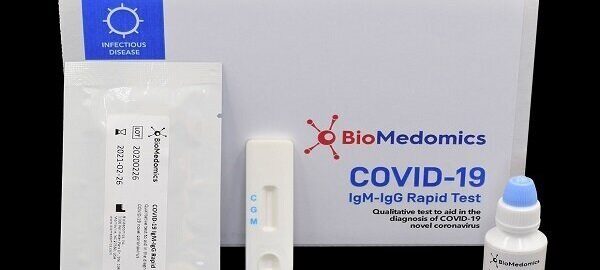
Iran to produce COVID-19 rapid antigen diagnostic test kits

CEO of a domestic knowledge-based company said that coronavirus antigen rapid test kits will be produced at the company by the next month.

Speaking in an interview with Mehr news agency on Sat., Dr. Vahid Younesi Chief Executive of a knowledge-based company producing COVID-19 rapid test kits reiterated that coronavirus rapid diagnostic kits based on antigen is one of the kits that will be produced at this company.

Once the license is obtained, these kits (coronavirus rapid antigen diagnostic test kits) will be produced, he added.

These coronavirus rapid tests are not for personal use, rather, these kits can be used mainly in health centers, health houses and hospitals, he said, reiterating, “Personal user cannot use diagnostic tests and must be used in relevant centers.”

Elsewhere in his remarks, he drew a comparison between Iranian and Chinese coronavirus rapid diagnostic test kits and added, “Chinese-made COVID-19 rapid test kits are not worth diagnosing since these kits are based on antibody but Iranian-made coronavirus diagnostic test kits are based on ‘antigen’ that is able to diagnose the disease in the shortest time possible.”

He once again pointed out that these kits will be produced latest by next month which are able to diagnose the coronavirus disease within 15 minutes.

Dr. Younesi pointed to the production capacity of coronavirus rapid test kits at his company and added, “This company is able to produce between 2 and 3 million COVID-19 rapid test kits in each month which can meet the domestic needs to these kits.”  / MNA/