All posts by islam

33rd ICFF award winners announced

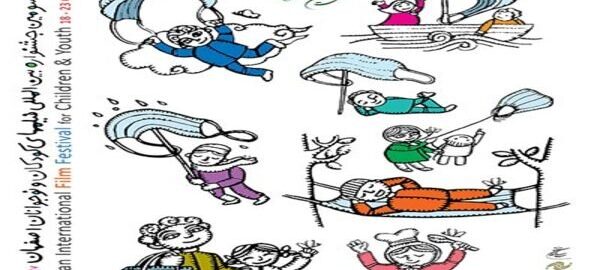
The Winners of the 33rd International Film Festival for Children and Youth in different sections were announced and awarded in a ceremony held at Tehran’s Book Garden.

According to the 33rd ICFF Public Relations Office, the winners of the 33rd International Film Festival for Children and Youth in different sections were announced and awarded in a ceremony held at Tehran’s Book Garden.

International Section Awards:

CIFEJ Special Award, received by Ralf Kukula and Matthias Bruhn for “Fritzi (A Revolutionary Tale)”

Golden Butterfly and Diploma of Honor in Animated Short Film Section, received by Maryam Kashkoulinia for “The Eleventh Step”

Golden Butterfly and Diploma of Honor in Short Fiction Film Section, received by Abdenoure Ziane for “Summer Fasting”

Golden Butterfly and Diploma of Honor in Technical Achievement Section, received by Abbas Askari for “Loopetou”

Golden Butterfly and Diploma of Honor for Best Acting, received by Rouhollah Zamani for his role in “The Sun”

Golden Butterfly and Diploma of Honor for Best Screenplay, received by Arvind Sivakumaran and Vijay K. Patel from India for writing “The Other Side of the River”

Golden Butterfly and Diploma of Honor for Best Directing, received by Majid Majidi for “The Sun”

Golden Butterfly and Diploma of Honor for Best Picture, received by Majid Majidi and Amir Banan for “The Sun”

Special Jury Award, received by Fereydoun Najafi for “Wolf Cubs of Apple Valley”

Special Young Jury Award, received by Ralf Kukula and Matthias Bruhn for “Fritzi (A Revolutionary Tale)”

Special Awards:

UNICEF Section Award, to “After the Incident” directed by Pouria Heidari and produced by Shahab Hosseini

Corona-Narrative Section Special Award, to Mohammad MehdiFekrian for the great care he showed regarding healthcare workers and heroes and for directing the short “The Last Visit”

Special Director’s Award, to Roghayyeh Tavakkoli for paying attention to resistance culture and her tangible interpretation of that in the film “Mehran”

Special Director’s Award, to “Loopetou” producer, Mohammad-Hossein Sadeghi for being innovative in business and boosting the motion picture industry

Zaven Ghokasian Section:

Zaven Ghokasian Award went to Majid Majidi for “The Sun”

Web Series Section:

Diploma of Honor to Ali Derakhshi for the series “COVID-19”

Behnam Mohammadi Award:

Golden Butterfly, received by “Mehran” director, RoghayyehTavakkoli, for her appreciative look at Iranian soldiers’ sacrifices throughout the Imposed War

National Section Awards:

Golden Butterfly for Best Animated Short Film, to MaryamKashkoulinia for “The Eleventh Step”

Golden Butterfly for Best Short Fiction Film, to Reza Nejati fordirecting “The Driver”

Golden Butterfly for Best Feature Film, to Mohammad Salehinejad for directing “Cocoon and Butterfly”

Golden Butterfly for Best Technical / Artistic Achievement, to Keivan Moghaddam for the Scenic Design of “The Sun”

Golden Butterfly for Best Acting, to Mohammadreza Alivar for his role in “Wolf Cubs of Apple Valley”

Golden Butterfly for Best Screenplay, to Fereydoun Najafi for writing “Wolf Cubs of Apple Valley”

Golden Butterfly for Best Directing, to Majid Majidi for “The Sun”

Golden Butterfly for Best Picture, received by Majid Barzegar(producer) for “Wolf Cubs of Apple Valley”

Special Jury Award, to Mahin Javaherian for directing “Ba’le”

Special Young Jury Award, to Nadereh Torkamani for “The Playful” /MNA/

Asbads, the windy pride of Nashtifan

In the tiny village of Nashtifan in northeastern Iran, one may feel an ancient magic inherited from preceding generations, a traditional technique to harness the wind power.

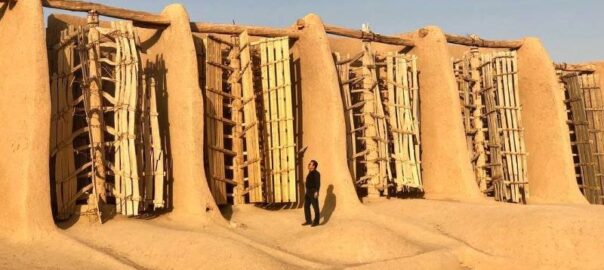
Made of clay, wood, and straw, the windmills, locally known as “Asbads”, are perched on a cliff overlooking the village, milling grain for an estimated 1,000 years there. They also bear testimony to the human being’s adaption with nature by transforming environmental obstacles into opportunities.

The windy pride of Nashtifan, the structures are doted on by an amiable custodian named Ali Mohammad Etebari, who estimates that parts of the earthen windmills are 1,000 years old.

“If I don’t look after them, the youngsters will come and spoil it and break everything,” Etebari said in an interview with the International Wood Culture Society in 2015.

Honored as a Living Human Treasure, Etebari has dedicated his life to keep the windmills spinning by the hard work of daily inspections and maintenance.

“I was a driver and I’ve been looking after this for the last 28 years,” he said.

“It’s the pure, clean air that makes the windmills rotate—the life-giving air that everyone can breathe.”

Asbad development took place due to strong and continuous 120-day winds, which annually sweeps through the east and southeast of the Iranian Plateau from late May to late September.

UNESCO says Asbad is a smart technique to grind grains, a technique which goes back to ancient times when the people living in the eastern parts of Iran, in an attempt to adapt themselves to nature and transform environmental obstacles into opportunities, managed to invent it.

Meanwhile, the Encyclopedia Britannica says the earliest known references to windmills are to a Persian millwright in 644 CE and windmills in Seistan [Sistan], Iran, in 915 CE.

In the early second millennium, some Eastern and Western states acquired the technology of making mills from Persia, though the prototype design constantly underwent amendments in the course of time.

The Ministry of Cultural Heritage, Tourism and Handicrafts has almost completed preparations for a chain of ancient vertical-axis windmills for possibly becoming a UNESCO World Heritage. Such vertical-axis windmills can also be found in Sistan-Baluchestan and South Khorasan provinces.

The sad part of the story is an unclear future for the windmills. Without due attention, the Asbads may fall into disrepair, maybe due to different beliefs and tastes of the younger generation. / T.T/

National Day of Hafez Shirazi

This year October 11 is honored as Hafez Day in Iran to commemorate Shams al-Din Mohammad Hafez-e Shirazi, better known as ‘Hafez’, the 14th-century lyric poet of Persian classical literature.

Shams al-Din Mohammad was born sometime between the years 1310-1337, in Shiraz, in Fars province, the city which is known as the city of love, poetry, and civilization.

He memorized the Holy Quran by listening to his father’s recitations at an early age, thus he is called ‘Hafez’ (which literally means ‘one who has memorized’ [the Holy Quran]).

Hafez is regarded as the most influential Persian poets of all time. It can be said that he is one of the most beloved poets among Persians.

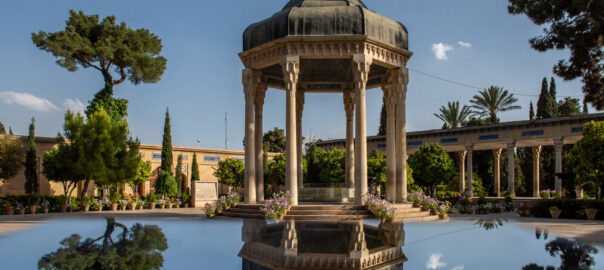
The Tomb of Hafez, commonly known as Hāfezieh

The great poet is primarily remembered for his lyrical poetry written in ghazals, a difficult and uniquely Persian verse-form. Prior to Hafez, ghazals were primarily used to write songs celebrating earthly pleasure. He revolutionized the form by utilizing the stock symbol of pleasure as a metaphor for spiritual experience. In so doing, Hafez elevated his short, simple verses to the level of high art. A devoted Sufi, Hafez’s poetry advocated abandoning all restraints and preconceptions so as to come into direct contact with the spiritual realm.

His poems use love as a metaphor for the kind of transcendental passion felt by the devout in search of the divine.

There is no definitive version of his collected works (or divan); editions vary from 573 to 994 poems. However, since the 1940s a sustained attempt has been made by some Iranian scholars to authenticate Hafez’s works and remove errors introduced by later copyists and censors.

Here is this first Ghazal of Hafez’s Divan as translated by Ali Salami in his book titled ‘The Selected Poems of Hafiz’ published in 2016:

As a result of his mystical and profoundly transcendent subject-matter, Hafez has become an inspiration for poets of all cultures. In Iran, even though his works are nearly 700 years old, Hafez continues to be immensely popular.

Iranian families usually have a Divan of Hafez in their house, and when they get together during the Nowruz (New Year) or Yalda night, they open the Divan to a random page and read the poem on it, which they believe to be an indication of things that will happen in the future.

The world-renowned vocalist Sharam Nazeri performing Hafez’s poem in his concert in Paris.

Many Iranian composers have composed pieces inspired by or based upon Hafez’s poems. Among Iranian singers, the late maestro Mohammad-Reza Shajarian, vocalist Sharam Nazeri, and the late singer Iraj Bastami performed one of his famous poems with music by Parviz Meshkatian.

Hafez’s poems have been translated into different languages and his art of poetry has been appreciated by many knowledgeable figures.

Hafez’s poems were translated into English by William Jones in 1771 and they influenced Western writers and philosophers such as Ralph Waldo Emerson and Goethe.

Ralph Waldo Emerson, one of America’s best-known and best-loved 19th-century figures, translated some 700 lines of Persian poetry, nearly half of them from the work of the Sufi poet, Hafez. Emerson discovered a close affinity between the views of the Sufi poets of Iran and his own thinking. Comparing Hafiz with some leading Western poets, Emerson pointed out Hafiz’s more mystical attitude towards nature. He wrote: “Hafiz is the prince of Persian poets, and in his extraordinary gift adds to some o the attributes of Pindar, Ansacreon, Horace, and Burns the insight of a mystic, that sometimes affords a deeper glance at Nature than belongs to either of those bards. He accounts for all topics with an easy audacity.”

The German poet and philosopher, Johann Wolfgang von Goethe (1749–1832), came across a translation of Hafez when he was about 65 years old. He wouldn’t have written the prestigious West-Eastern Divan without being inspired by Hafez.

Some assert that Hafez “remains the most untranslatable of all Persian poets because the meaning of his verses is so perfectly molded with the formal expression of the Persian language with its particular prosody, symbolic imagery, and music that it is hardly possible to disentangle the meaning in order to express it in another language and medium.”

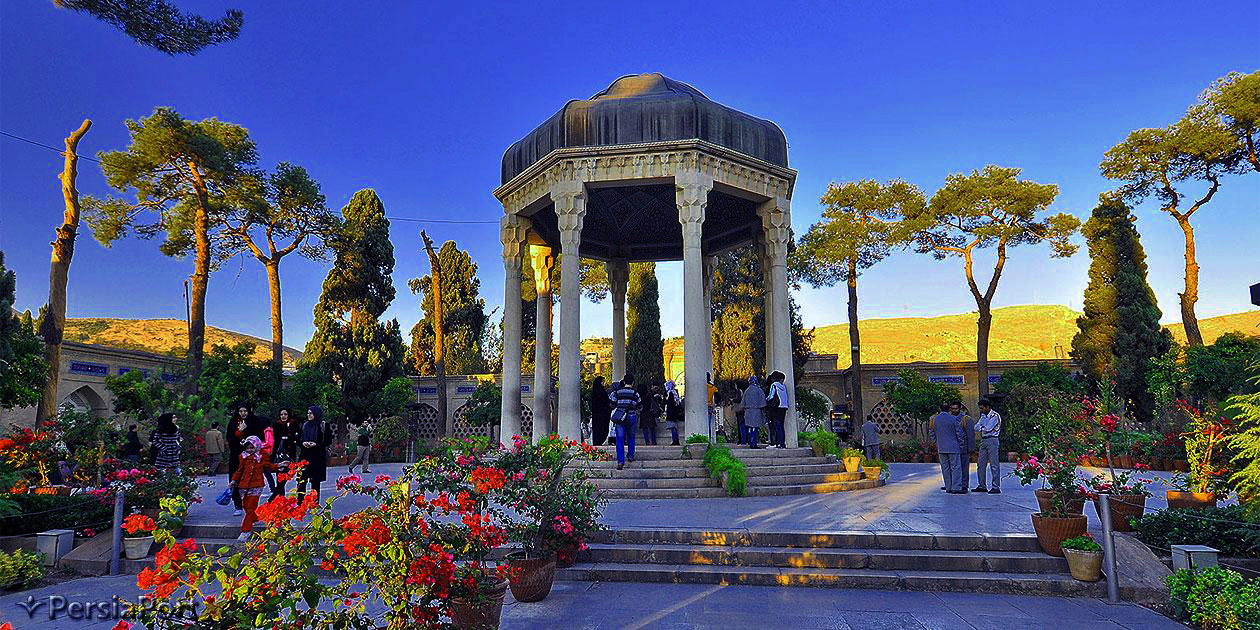
Hafez died in 1390 at the age of 69. Twenty years after his death, a tomb, the Hafezieh, was erected to honor Hafez in the Musalla Gardens in Shiraz. The current mausoleum was designed by André Godard, a French archeologist, and architect, in the late 1930s, and the tomb is raised up on a dais amidst rose gardens, water channels, and orange trees.

His tomb has remained a popular tourist destination, with millions of Persians and other visitors making the pilgrimage to Hafez’s tomb each year.

This year under the pandemic, the commemoration ceremony of Hafez will be held online. On the occasion of the Hafez Day, Hassan Bolkhari, the director of the Iranian Society of Cultural Works and Luminaries, will be making a speech about the popular Persian poet in an online program, which will be available on the Instagram page of the society. / MNA /

Reported by Haniyeh Sadat Jafariyeh


Leader mourns Arbaeen in person

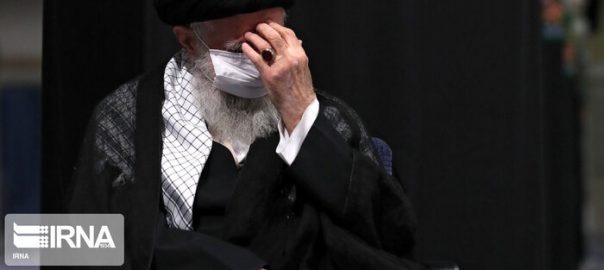
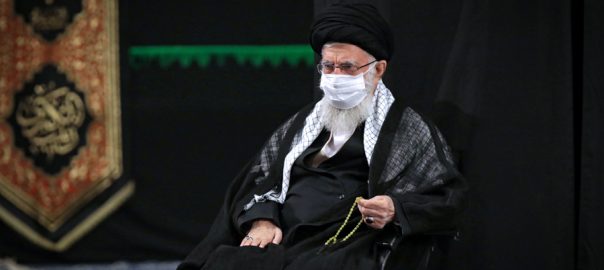
Supreme Leader of the Islamic Revolution Ayatollah Seyyed Ali Khamenei attended Imam Khomeini Mosque on Thursday to mourn Arbaeen in person avoiding public reception.

The ceremony is being held without crowd and under the health protocols set by national anti-coronavirus headquarters.

Arbaeen marks the 40th day after the martyrdom anniversary of Imam Hussein (AS), the third Imam of Prophet Mohammad (PBUH) Infallible Household.

The Arbaeen procession is one of the largest religious ceremony being held in Iraq every year, but, Iranian Government called it off this year due to the pandemic which has killed over one million people worldwide since its outbreak in December, 2019. IRNA

Owj releases package of docs on Arbaeen pilgrimage

The Owj Arts and Media Organization, a major institution that produces revolutionary works in art and cinema, has released a package of its documentaries on the annual pilgrimage of Arbaeen in Iraq.

Iranians and Shia Muslims from other countries embark on a journey to the Iraqi city of Karbala to observe the day of Arbaeen at the holy shrines of Imam Hussein (AS), the third Imam of the Shia, and his brother, Hazrat Abbas (AS).

However, the borders are closed this year due to the spike in coronavirus, and the Arbaeen ritual will be held only with Iraqi nationals at home.

Arbaeen marks the end of the 40-day mourning period following the martyrdom of the Imam and his loyal companions on Ashura.

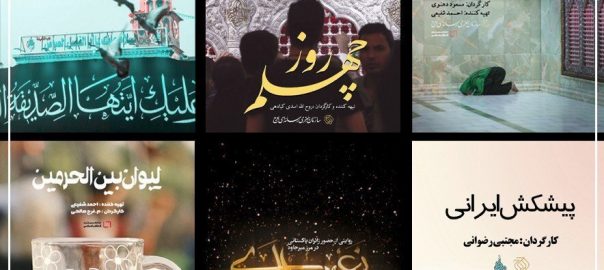
The package includes “Guest”, “Iranian Gift”, “Glass of Bain ul-Harmain”, “Fortieth Day”, “From Caracas to Karbala” and “A Heidari Yell”.

“Guest” by Masud Dehnavi poetically narrates the arrival of the Iranian pilgrims to the city of Mehran on the western Iranian border in Ilam Province and how they prepare to begin their marching towards the city of Karbala in Iraq where the holy shrines of Imam Hussein (AS), the third Imam of the Shia, and his brother, Hazrat Abbas (AS), are located.

Director Mojtaba Rezvani depicts the group of Khariolahbab in his documentary “Iranian Gift” where the group sings Arabic songs throughout the way from Najaf to Karbala for the Iraqi pilgrims.

The documentary “Glass of Bain ul-Harmain” by Faraj Salehi narrates the story of a glass, which likes to be used by the pilgrims for drinking water, but one day it is broken, and then several events happen to the glass.

“Fortieth Day” by Ruhollah Asadi narrates the memoirs of those from Latin America who have returned from the annual pilgrimage to Iraq.

Also directed by Asadi, “From Caracas to Karbala” narrates the story of a Venezuelan diplomat who attends the pilgrimage in Iraq and talks about his experiences.

“A Heidari Yell” by Ali Momeni shows a group of Pakistani pilgrims who go through hardship to arrive at the Iran-Iraq border in Mirjaveh, Sistan Baluchestan Province, and then walk towards Karbala. It depicts the love of the pilgrims and the efforts made by the Iranians who serve these pilgrims at the borders.

Iraq will not allow foreign pilgrims to visit the country for the Arbaeen ceremony due to the coronavirus pandemic. This year Arbaeen falls on October 8./T.T/

Ayatollah Khamenei to attend Arbaeen mourning ceremonies on Thursday

Concurrent with Arbaeen ceremonies, which marks forty days after Imam Hussein (PBUH) and his true companions were martyred in Kabala Battlefield, Leader of Islamic Revolution will attend Arbaeen mourning ceremonies on Oct. 8.

This year, Arbaeen mourning ceremonies will be held without participation of people due to the spread of coronavirus, COVID-19, in accordance with the guidelines as instructed by the National Coronavirus Combat and Prevention Headquarters.

Arbaeen mourning ceremonies will be held in the presence of Leader of the Islamic Revolution Ayatollah Seyyed Ali Khamenei which will start at 10:00 am on Thursday Oct. 08.

It should be noted that Arbaeen mourning ceremonies will be broadcast live from IRIB TV Network Channels and social media networks. Enthusiasts can also log on the website of the Leader at the following address: KHAMENEI.IR to watch the ceremonies live./ ABNA/

Iran, Azerbaijan keen on boosting agricultural coop.

Referring to the several meetings between Iran and Azerbaijan presidents, Azeri Minister expressed hope that the strategic cooperation between these two neighbors expand in the agricultural fields.

A videoconference held between Iranian Minister of Agriculture Kazem Khavazi and Inam Karimov the Minister of Agriculture of the Republic of Azerbaijan.

In this meeting, Khavazi expressed Iran’s readiness to expand cooperation with Azerbaijan, in scientific fields as well as the fields of greenhouse crop development, introducing various cultivars, especially rice and cotton, embryo transfer and genetic material especially cattle and buffalo embryos, breeding measures in the field of cereals, and sericulture.

Inam Karimov, also, for his part hailed the strategic relations of Iran and Azerbaijan in terms of having common borders and noted that agriculture is one of the fields in countries’ strategic relations.

Stating that the presidents of Iran and Azerbaijan have met each other 13 times so far, he expressed hope that the agricultural cooperation between these two neighbors continues.

Pointing out that Azerbaijan and Iran have some cooperation in the field of agricultural equipment, he said, “I hope that in the near future Iranian companies and Iranian production equipment enter the Azerbaijani markets.”

According to Karimov, agricultural products like fruits, summer vegetables are the most traded products of the two countries.

MNA/

Relief foundation generates 70% more jobs year on year

Imam Khomeini Relief Foundation created 53,000 jobs for the deprived over the first six months of this year (March 21-September 22), showing more than 70 percent rise compared to the same period last year.

In the first six months of last year, about 30,000 job opportunities were opened up, Hojjatollah Abdolmaleki, deputy head of the Foundation stated.

He went on to explain that 11,000 job opportunities have been opened with the cooperation of employers who benefited from relief foundation incentive packages such as loans and employer insurance payment.

Some 41,000 job opportunities have been created through the implementation of business plans and self-employment projects, he noted, adding, some of these projects have been created under the guidance of career leaders who are professional entrepreneurs of the country.

In addition to job generation and financial empowerment of the deprived, other services such as building or buying houses, cultural services, medical services, and other facilities are provided, for example, in the field of treatment, more than 80,000 patients of incurable diseases are currently under the Foundation’s coverage.

T.T/

Iran marks National Day of Rumi, greatest mystical poet

Mehr 8 in the Iranian calendar corresponding with September 29 this year is considered a significant cultural event for Iranians to commemorate the prominent Iranian poet Jalal ad-Din Muhammad Rumi who is known to everyone.

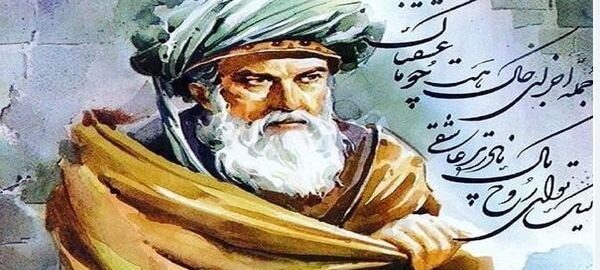
The land of Iran is the cradle of countless famous people and poets; one of the most famous Iranian poets is Jalāl ad-Dīn Muhammad Balkhī, who is known as Mawlānā, Mawlawī and more popularly simply as Rumi.

He is widely known by the sobriquet Mawlānā/Molānā in Iran and popularly known as Mevlânâ in Turkey. Mawlānā is a term of Arabic origin, meaning “our master”, is also frequently used for him.
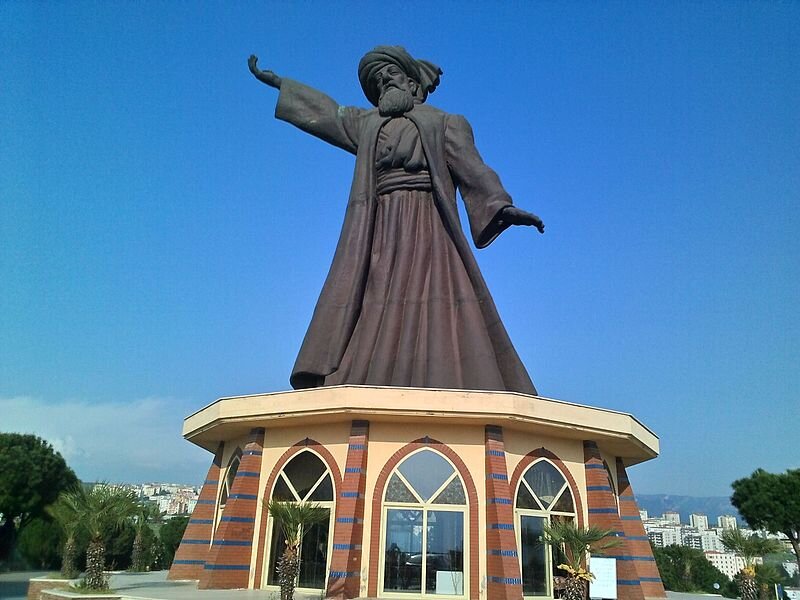

23 meters high statue of Rumi in Buca, İzmir, Turkey

Rumi was born to native Persian-speaking parents on the Eastern shores of the then Persian Empire on September 30, 1207, in the city of Balkh which is now part of Afghanistan and finally settled in the town of Konya, in what is now Turkey.

Rumi’s life story is full of intrigue and high drama mixed with intense creative outbursts. Rumi was a charming, wealthy nobleman, a genius theologian, law professor and a brilliant but sober scholar, who in his late thirties met a wandering and holy man by the name of Shams on November 30, 1244 in the streets of Konya.
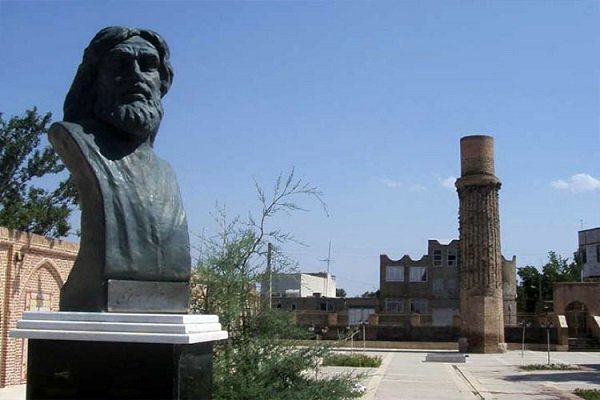

Tomb of Shams Tabrizi, Khoy, West Azerbaijan province, Iran

For months the two mystics lived closely together, and Rumi neglected his disciples and family so that his scandalized entourage forced Shams to leave the town in February 1246. Rumi was heartbroken, and his eldest son, Sulṭan Walad, eventually brought Shams back from Syria. The family, however, could not tolerate the close relation of Rumi with Shams, and one night in 1247 Shams disappeared forever. In the 20th century it was established that Shams was indeed murdered, not without the knowledge of Rumi’s sons, who hurriedly buried him close to a well that is still extant in Konya.

After Shams was extinguished, Rumi fell into a deep state of grief and gradually out of that pain outpoured nearly 70,000 verses of poetry almost all in Persian that are collected in two epic books. These thousands of poems, which include about 2,000 in quatrains, are collected in two epic books. The first collection is devoted to his mentor Shams named, Divan-e Shams-e Tabrizi. It took him 15 years to complete this collection.

After the first collection, he devotes the last ten years of his life to creating Masnavi Ma’navi. A work filled with anecdotes, life lessons, moral stories, stories from all three Abrahamic religions, and popular topics of the day.

Rumi and Shams stayed together for a short time, about 2 years in total, but the impact of their meeting left an everlasting impression on Rumi and his work. In Rumi’s own words, after meeting Shams he was transformed from a bookish, sober scholar to an impassioned seeker of universal truth and love. Rumi was totally his own man. An utterly brilliant artist and a true genius that after the death of his mentor Shams became unstoppable.

Due to the fact that Rumi recited poetry for about 25 years and 70,000 verses, he has covered every morsel of emotion, thought, idea and topic. Therefore, he can’t be pinned in one statement. His work has an all-embracing universality. A call from an independent soul yearning for true freedom from dogma and hypocrisy.
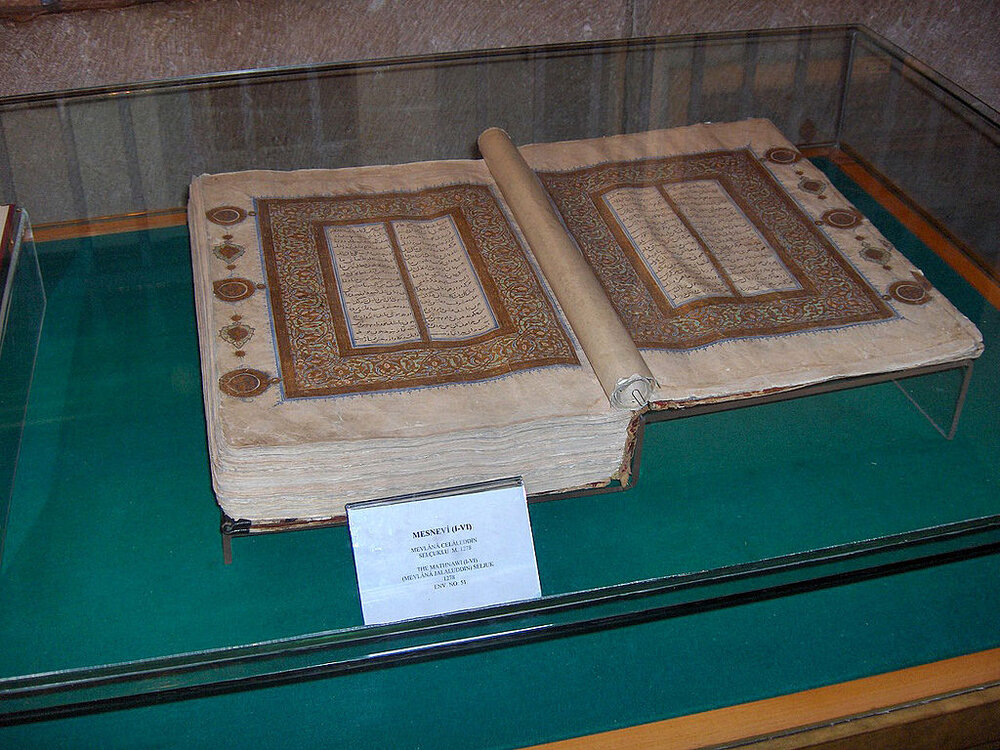

Manuscript of Masnavi Ma’navi at Mevlana Museum, Konya, Turkey

Rumi also had three prose works. The prose works are divided into The Discourses, The Letters, and the Seven Sermons.

Fihi Ma Fihi provides a record of seventy-one talks and lectures given by Rumi on various occasions to his disciples. It was compiled from the notes of his various disciples, so Rumi did not author the work directly.

Majāles-e Sab’a contains seven Persian sermons (as the name implies) or lectures given in seven different assemblies. The sermons themselves give a commentary on the deeper meaning of Qur’an and Hadith. The sermons also include quotations from poems of Sana’i, ‘Attar, and other poets, including Rumi himself.

Makatib is the collection of letters written in Persian by Rumi to his disciples, family members, and men of state and of influence. The letters testify that Rumi kept very busy helping family members and administering a community of disciples that had grown up around them.
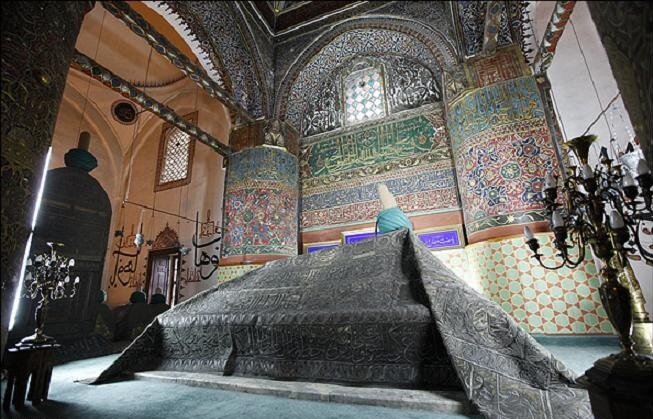

Tomb of Rumi, Konya, Turkey

Rumi believed passionately in the use of music, poetry and dance as a path for reaching God. For Rumi, music helped devotees to focus their whole being on the divine and to do this so intensely that the soul was both destroyed and resurrected. Rumi encouraged Sama, listening to music and turning or doing the sacred dance. In the Mevlevi tradition, sama represents a mystical journey of spiritual ascent through mind and love to the Perfect One. In this journey, the seeker symbolically turns towards the truth, grows through love, abandons the ego, finds the truth and arrives at the Perfect. The seeker then returns from this spiritual journey, with greater maturity, to love and to be of service to the whole of creation without discrimination with regard to beliefs, races, classes and nations.

He died on 17 December 1273 in Konya. His death was mourned by the diverse community of Konya. Rumi’s body was interred beside that of his father, and a splendid shrine, the Green Tomb was erected over his place of burial. Upon his death, his followers and his son Sultan Walad founded the Mevlevi Order, also known as the Order of the Whirling Dervishes, famous for the Sufi dance known as the Sama ceremony.
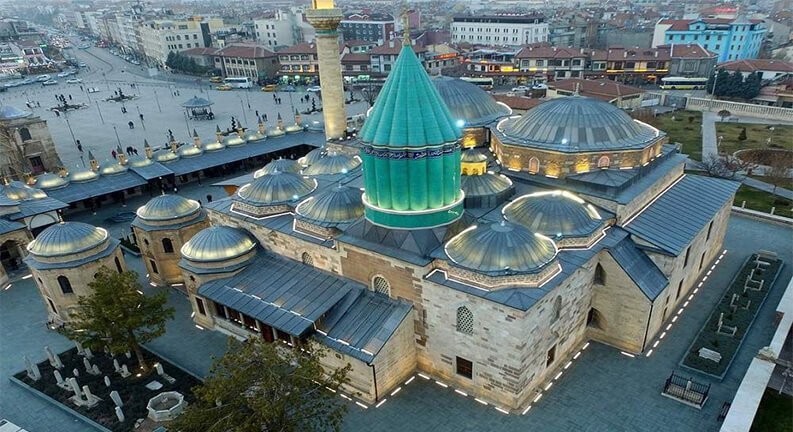

Shrine of Rumi, Konya, Turkey

Georgian Queen Gürcü Hatun was a close friend of Rumi. She was the one who sponsored the construction of his tomb in Konya. The 13th century Mevlâna Mausoleum, with its mosque, schools and living quarters for dervishes, remains a destination of pilgrimage to this day.

Rumi is also timeless and placeless. The world has embraced Rumi not because of where he was born or where he grew up or what religion he belonged to but because of what he represents.

By the end of the 20th century, his popularity had become a global phenomenon, with his poetry achieving a wide circulation in Western Europe and the United States.
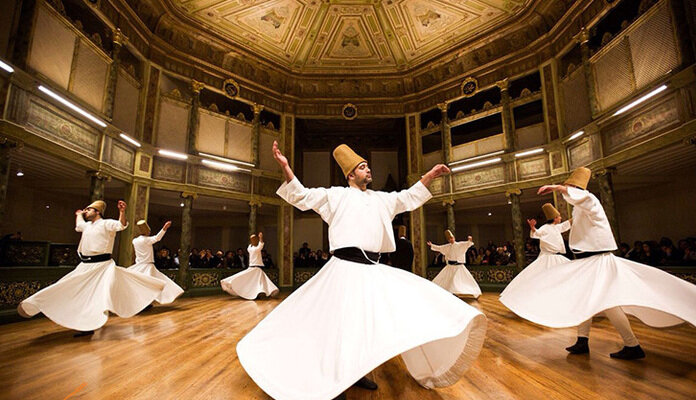

Sama ceremony in Konya, Turkey

December 17 is the day of Rumi’s death. In Konya, a special commemoration ceremony for Rumi is held every year from December 7th to 17th.

In a ceremony known as Sama, dancers wear long white robes with full skirts. On the dancers’ heads sit tall conical felt hats. The dancers, who fast for many hours before the ceremony, start to turn in rhythmic patterns, using the left foot to propel their bodies around the right foot with their eyes open, but unfocused. This is sought through abandoning one’s nafs, ego or personal desires, by listening to the music, focusing on God, and spinning one’s body in repetitive circles, which has been seen as a symbolic imitation of planets in the Solar System orbiting the sun.

In Iran, the 7th day of Mehr and the 8th day of Mehr – the eights month on the Iranian calendar, which fell on September 28 and 29 this year – have been designated as the National Day of Shams Tabrizi and National Day of Rumi respectively to commemorate these two great poets and figures of Iran and the world.

Here are some lines from his poem ‘Listen to the reed’, translated by Reynold A. Nicholson, 1926:

“Listen to the reed how it tells a tale,
complaining of separations.
Saying, “Ever since I was parted from the reed-bed,
my lament hath caused man and woman to moan.
I want a bosom torn by severance,
that I may unfold (to such a one) the pain of love-desire.
Every one who is left far from his source
wishes back the time when he was united with it.
In every company I uttered my wailful notes,
I consorted with the unhappy and with them that rejoice.
Every one became my friend from his own opinion;
none sought out my secrets from within me.
My secret is not far from my plaint,
but ear and eye lack the light (whereby it should be apprehended).
Body is not veiled from soul, nor soul from body,
yet none is permitted to see the soul.
This noise of the reed is fire, it is not wind:
whoso hath not this fire, may he be naught!
‘Tis the fire of Love that is in the reed,
’tis the fervour of Love that is in the wine.” / MNA/


By: Zahra Mirzafarjouyan

Women’s car rally to commemorate Sacred Defense, National Tourism weeks

A number of female drivers will take part in a vintage car rally on Wednesday to commemorate Sacred Defense Week as well as National Tourism Week.

Organized by the Touring & Automobile Club of the Islamic Republic of Iran (TACI), the two-day rally will be held between Tehran and the northern village of Namak Abrud, Mazandaran province.

Strict health protocols and social distancing will be observed during the rally.

Every year, the Sacred Defense Week, which marks the beginning of the 1980-88 Iran–Iraq war is commemorated through several programs in Iran.

The Iraqi army invaded Iran on September 22, 1980, nearly 19 months after the Islamic Revolution, setting the stage for eight years of war.

The war drew to a close in August 1988. The United Nations declared Iraq as the initiator of the conflict.

In Iran, Sacred Defense Week is commemorated every year from September 21st.

National Tourism Week, which begins on World Tourism Day on September 27 every year, aims at promoting and developing Iran’s tourism capacities. t.t/