All posts by islam

Iranian film ‘Warehouse’ wins at Brazil’s GIMFA

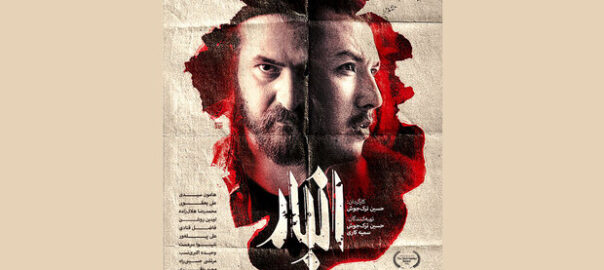
Iranian short film ‘Warehouse’ has won the Best Short Film and the Best Actor Awards at Gralha International Monthly Film Awards in Brazil.

Iranian short film ‘Warehouse’, directed by Hossein Torkjoosh, has won the Best Short Film and the Best Actor Awards at Gralha International Monthly Film Awards (GIMFA) in Brazil.

The short film has vied for awards in nine sections of the event, which was held online on November 30.

The storyline of Warehouse happens in the social sphere and with the focus on an incident in a paper waste warehouse. With the entrance of the police and consequent series of judgments, the story will be entangled with some challenges.

Warehouse experienced its first international participation in the Nukhu Award 2020, which was held online in New York City on October 10. / MNA/

Non-oil trade exceeds $44b in 8 months

The value of Iran’s non-oil trade during the first eight months of the current Iranian calendar year (March 20-November 20) reached $44.6 billion, according to Head of the Islamic Republic of Iran Customs Administration (IRICA) Mehdi Mirashrafi.

In the mentioned eight months, Iran imported $23.1 billion worth of goods, while the exports stood at $21.5 billion, IRIB reported.

The total volume of traded goods was estimated at about 97.7 million tons, of which over 75 million tons were related to exports and about 21.8 million tons were imported goods.

According to Mirashrafi, the imports in the said period declined one percent and 18 percent in terms of weight and value, respectively.

The exports also experienced a fall of 14 percent and 19 percent in terms of weight and value, respectively.

Noting the downward trend of the country’s foreign trade is ending and the trade is getting back to normal, the official said: “As we announced in previous months, fortunately, the downward trend of our country’s exports is approaching normal conditions month by month, and we hope to have better conditions in terms of exports by the end of the year.”

Iran’s top five non-oil export destinations during this period were Iraq with over $5.3 billion worth of exports, China with the same amount, the United Arab Emirates (UAE) with over $2.7 billion, and Turkey with $1.6 billion as well as Afghanistan with $1.5 billion.

According to the IRICA head, the top five sources of imports during this period were China with $6 billion, the UAE with $5.4 billion, Turkey with $2.6 billion, India with $1.4 billion, and Germany with $1.1 billion worth of imports.

Most of the imported goods into the country in the mentioned time span were basic goods or raw materials, Mirashrafi stressed.

Also in the said period, 4,471,000 tons of goods were transited through Iran to the neighboring countries, showing a decrease of 15 percent compared to the same period last year.

Like all other countries around the world, Iran’s trade with its foreign partners has been affected by the coronavirus pandemic, however, the situation is getting back to normal and the country’s trade borders are opening one by one. /T.T/

Culturally-rich Fars province takes step to boost agritourism

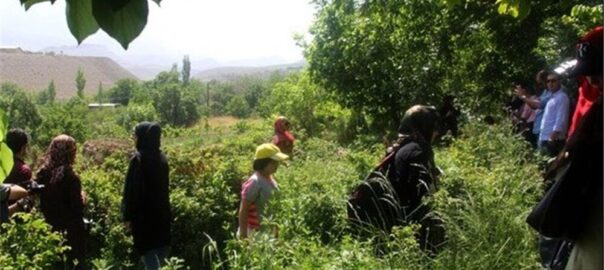
Iran’s Fars province, globally renowned for its vibrant cultural, historical, and archaeological gems such as Persepolis and Pasargadae, aims to jump-start agritourism as it is home to vast changing natural landscapes as well.

The provincial tourism department has issued two commercial activity licenses for two separate farms within a month letting those establishing agritourism-related businesses; a move that raises hopes for greater usage of the natural landscapes to develop rural tourism.

One of the licenses was issued to Delaram farm, situated in Kharameh country, some 75 km east of Shiraz, and the other to a farm located in Mohr county some 330 km southward of the capital city, according to the provincial tourism department.

The first farm is regarded as an exemplary place for the breeding of French dairy goats with a capacity of one thousand animals. And the second embraces various agricultural lands and greenhouses including ones for growing colored peppers, which are exported to Russia. Lemons, grapefruit, tangerines, and several flowers are also being produced on the farm.

Agritourism, a relatively new branch of the travel industry in which tourists stay with local people in rural areas abroad, is widely deemed as a means to materialize the national goal of ‘Surge in Production’.

Today, agritourism is regarded as a stimulus to the imbalanced economy of agriculture sectors and the tendency for emotional and nostalgic roots of the modern world citizens and due to factors such as visitor participation in farm activities, direct purchase of products, spending a night at a farm, curiosity and learning about the farm and agriculture products has been able to create a wide target population.

Farm/ranch recreation refers to activities conducted on private agricultural lands, which might include fee-hunting and fishing, overnight stays, educational activities, etc. This category of tourism is a subset of a larger industry known as agritourism. Agritourism is “a commercial enterprise at a working farm, ranch, or agricultural plant conducted for the enjoyment of visitors that generates supplemental income for the owner.”

Agritourism and nature-tourism enterprises might include Outdoor recreation (fishing, hunting, wildlife study, horseback riding), educational experiences (cannery tours, cooking classes, or tea or coffee tasting), entertainment (harvest festivals or barn dances), hospitality services (farm stays, guided tours, or outfitter services), and on-farm direct sales (u-pick operations or roadside stands).

Agritourism is a subset of a larger industry called rural tourism that includes resorts, off-site farmers’ markets, non-profit agricultural tours, and other leisure and hospitality businesses that attract visitors to the countryside.

Rural Tourism, however, differs from agritourism in two ways. First, rural tourism enterprises do not necessarily occur on a farm or ranch, or at an agricultural plant, they do not generate supplemental income for the agricultural enterprise.

To cite an example, we could refer to saffron farms in northeast Iran that are going to fame as a new destination for agritourism. Iranian Saffron is known as the “red gold”, saffron is a magical ingredient in Persian culture, from aromatic foods and colorful desserts, to the physical and spiritual medicine.

The ancient region of Fars, also spelled Pars, or Persis, was the heart of the Achaemenian Empire (550–330 BC), which was founded by Cyrus the Great and had its capital at Pasargadae. Darius I the Great moved the capital to nearby Persepolis in the late 6th or early 5th century BC.

The capital city of Shiraz is home to some of the country’s most magnificent buildings and sights. Increasingly, it draws more and more foreign and domestic sightseers flocking into this provincial capital which was the literary capital of Persia during the Zand dynasty from 1751 to 1794. / T.T/

Annual automobile exports exceed $5.7m

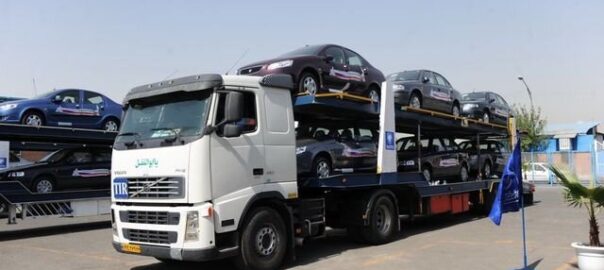
Iran exported 1,300 automobiles valued at $5,722,007 in the previous Iranian calendar year (ended on March 19), the spokesman of the Islamic Republic of Iran Customs Administration (IRICA) said.

The destinations for the mentioned products were nine countries namely Hong Kong, Taiwan, Syria, UAE, Spain, China, Iraq, and Turkey, according to Ruhollah Latifi.

He pointed out that Iraq with $3,122,900, Azerbaijan with $1,159,400, Syria with $981,825 of imports were the top three destinations for Iranian cars.

Hong Kong with $116,862, Spain with $96,362, Taiwan with $79,521, China with $36,600, Turkey with $7,000, and the UAE with $4,662 were other buyers of the mentioned products from Iran, Latifi added.

Car manufacturing in Iran rose 23.4 percent during the first six months of the current Iranian calendar year (March 20-September 21), compared to the same period of time in the past year, the data released by the Ministry of Industry, Mining, and Trade showed.

During this period, 425,925 passenger cars were produced in the country, registering a growth of 21.9 percent compared to the first six months of the previous year.

The production of trucks reached 39,519 units in the said time span, which has increased by 40.4 percent compared to the last year’s same period. T.T/

Maranjab: Combination of desert, nature and history

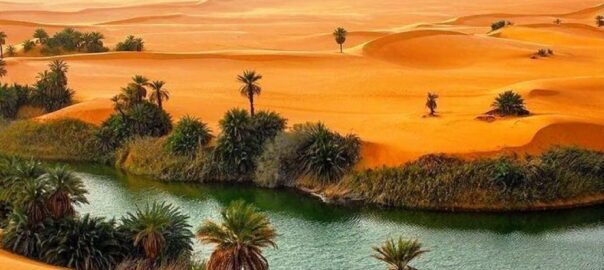
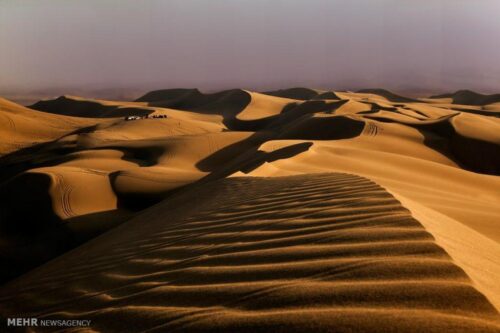
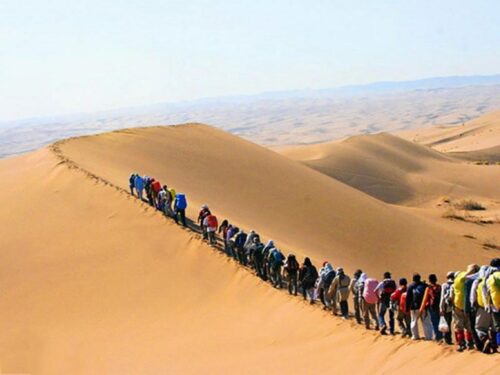
In addition to beaches, jungles, mountains and green areas, there are multiple and beautiful deserts in central parts of Iran. Beautiful Maranjab Desert is one of the most popular deserts of Iran that attracts many tourists from Iran and other countries every year.

This desert that is one of the best places for off-roads trips is located in the north of Aran and Bidgol city of Isfahan province. It is lead to salt lake from the north, Band-e Rig and Desert National Park from east, Masileh Desert, Hoz-e sultan and Moreh Lakes from west and eventually Aran and Bidgol from the south.

Average height of Desert is about 850 meters up to sea. The bulk of Desert is covered with sandy hills and Sabulous. Its vegetation consists mostly of Halophyte plants such as Tamarisk tree, Haloxylon, Zygophyllum.

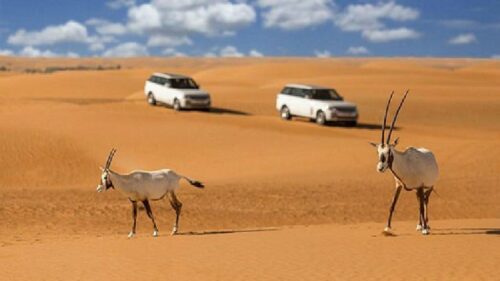
Some of the animals of this areas are wolf, heyena, Rüppell’s fox, Sand cat, Monitor lizard, Chameleons, types of lizard, Snake, Scorpion, See-see partridge, eagle and falcon.

High dunes, endless plains of desert, siah kouh (black mountain), beautiful sunrise and sunset, haloxylon jungles, salt lakes and super beautiful sky are main attractions of the desert. You can get to the heaven and touch the stars.

Salt lake

But salt lake of this area is counted one of the best attractions of this desert that with 647 square meters is located in 35 km far from the city. This lake is like the form of a triangle that its head is to north. Its base is about 65 km and height is about 60 km. Depth of it is variable from 5 to 54 meters.

In the rainfall month, depth of lake is about 2cm, but after sun radiation, quickly evaporates.

Jazireye sargardani

In the north east and middle of the lake, there is a low height mountain that is like the island and is surrounded with white crust of salt, that’s name is Jazireye sargardani. Because of rainfall, only one or two moth of year this lake is visible and in the remaining days of the year turns to salt marsh

Caravanserai

There is an ancient historical place in this desert, that’s name is Maranjab Caravanserai. History of that dated back to 350 years ago and safavid period. This Caravanserai with about 3500 Square meters area has 29 rooms. Despite the salt lake near of it, it has fresh water Qanat and very large pool. This karvasarei was built in Silk Road and connected khorasan, Isafahan and ray cities to each other.

To get this desert you should go to Kashan city. Go to Aran and bidgol city after kashan. In Imamzadeh Helal Ali holy shrine you ask people the route of desert.

Best time to visit of this desert is last days of autumn and before and after the early days of spring. There are rooms in karvansaraei to rest and there is possibility of using tent.

Some notes

– Don’t go this desert alone

– Have enough water and foods, compass, GPS and detailed maps of area with yourself

– Use local guides of area

– Notify others of you way before trip

– Don’t go out of road

– Protect the environment like your home. / T.T/

Supreme Leader orders to punish terror crime perpetrators

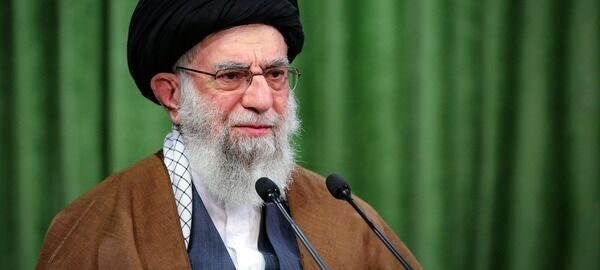
Imam Khamenei, the Supreme Leader of the Islamic Revolution, issued a message following the assassination of the Nuclear, Defense Scientist, Martyr Dr. Mohsen Fakhrizadeh. The following is the full text of his message:

In the Name of Allah, the Beneficent, the Merciful

One of our country’s eminent scientists in the nuclear and defense fields – Dr. Mohsen Fakhrizadeh – has been martyred by brutal mercenaries. With his great, enduring scientific efforts, he sacrificed his life on the path of God and the lofty status of martyrdom is his divine reward.

All relevant administrators must seriously place two crucial matters on their agendas: First to investigate this crime and firmly prosecute its perpetrators and its commanders, second to continue the martyr’s scientific and technological efforts in all the sectors where he was active.

I offer my condolences for this loss and my congratulations on his martyrdom to his respected family, the scientific community of the country as well as his colleagues and students in various sectors, and I ask God to elevate his rank.

Sayyid Ali Khamenei
November 28, 2020


FIBA Asia Cup qualifiers: Iran defeats Saudi Arabia

Iran’s national basketball team gained a 71-64 win over Saudi Arabia on matchday three of the 2021 FIBA Asia Cup qualifiers.

Iran gained its third consecutive win in the event to continue its lead over Group E of the event. The qualifiers are being held in Qatar’s Doha.

Behnam Yakhchali was named the match’s best scorer with 27 points.

The Iranian team will take on Syria on November 30.

The team defeated Qatar and Syria in Tehran in the first window of the event in late February.

Iran sits atop of the group with six points, followed by Saudi Arabia (four points), Syria (three points), and Qatar (two points).

Only 16 out of 24 teams participating in the qualifiers will win quota to the 2021 Asia Cup. The top two teams of each group secure direct qualification while six third-placed teams will compete in a separate competition to win the remaining four places. /MNA/

Underway tourism projects to create over 580,000 job opportunities

A total of 587,000 job opportunities will be generated by implementing over 2,400 tourism-related projects across the country.

Costing 1,370 trillion rials (around $32 billion at the official rate of 42,000 rials), these projects create job opportunities for 475,000 people during their implementation and for 112,000 people once they come on stream, IRNA quoted Mohammad Khayyatian, an official with the tourism ministry as saying on Tuesday.

Although the tourism sector has taken a major hit from the impact of coronavirus, it is expected to get back on the right track as soon as the coronavirus crisis comes to an end, the official added.

In late October, Cultural Heritage, Tourism, and Handicrafts Minister Ali-Asghar Mounesan warned that Iran’s cultural heritage and tourism will be in a critical situation if the crises caused by the outbreak of the coronavirus continue.

In August, Mounesan said that Iran’s tourism has suffered a loss of 12 trillion rials (some $2.85 billion) since the outbreak of the coronavirus pandemic.

“The tourism industry of the country was growing and progressing well but unfortunately, it has faced the coronavirus outbreak, which brought the industry into a standstill.”

Referring to the investment in the tourism sector he added that this volume of investment indicates that investors recognize the growing tourism sector as a new economy in the country and have high hopes for it.

“Many tourism projects have been completed, or are being implemented, showing that a very good capacity has been created in the field of tourism in the country and [this trend] should not be stopped,” he explained.

In late August, the tourism minister said the coronavirus pandemic should not bring traveling to a complete standstill. “Corona is a fact, but can the virus stop tourism? Certainly not. For us, the coronavirus is a new experience in dealing with crises that teaches tourism experts around the world how to deal with such a disaster, and thankfully governments are turning this into an opportunity for better planning.”

The government has allocated a 750-trillion-rial (about $18 billion) package to help low-income households and small- and medium-sized enterprises suffered by the coronavirus concerns.

However, in October, deputy tourism chief Vali Teymouri said that a new support package to pay loans to businesses affected by the coronavirus pandemic was approved by Iran’s National Headquarters for Coronavirus Control.

He also announced that depending on the type and activity of the businesses, they could benefit from at least 160 million rials (some $3,800) to nine billion rials (some $214,000) of bank loans with a 12-percent interest rate.

The loans will be allocated to tourist guides, travel agencies, tourism transport companies, tourism educational institutions, eco-lodges and traditional accommodations, hotels, apartment hotels, motels, and guesthouses as well as traditional accommodation centers, tourism complexes, and recreational centers, the official explained.

In September, Teymouri said that around 1.3 million tourism workers in the country are facing problems due to the coronavirus crisis.

Optimistic forecasts, however, expect Iran to achieve a tourism boom after coronavirus contained, believing its impact would be temporary and short-lived for a country that ranked the third fastest-growing tourism destination in 2019.

The latest available data show eight million tourists visited the Islamic Republic during the first ten months of the past Iranian calendar year (started March 21, 2019). /T.T/

Palestine, main issue of Intl. Resistance Film Fest.

In the “Festivals Festival” section of the 16th International Resistance Film Festival was a section dedicated to reviewing movies produced over the past 40 years on the Islamic Revolution.

Due to the normalization of ties among the Zionist regime of Israel and some certain Arab countries, the 16th edition of the festival pays due attention to the issue of Palestine.

“The Survivor”, by late Iranian director Seifollah Daad’s 1995 drama on the Palestine issue, was named the best film at the Resistance International Film Festival.
The films including “The Glass Agency” by Ebrahim Hatamikia, “From Karkheh to Rhein” by Ebrahim Hatamikia, “Standing in the Dust” by Mohammad Hossein Mahdavian, “The Survivor” by Seifollah Dad, “The Guardian” by Ebrahim Hatamikia, “The_Fateful Day” by Shahram Assadi, “Journey to Chazabeh” by Rasoul Molaqolipour, “Track 123” by Narges Abyar, “The Earth Child” by Mohhamd Ali Basheh Ahanar, ‘Villa Dwellers’ by Monir Gheydi, “Kimia” by Ahmad-Reza Darvish, “Hoor on Fire” by Azizollah Hamidnejad competed in this section of the festival.

One of the main characteristics of Survivor was the resistance against the Zionist regime, social relations, and friendship.
This film also portrayed love and devotion to the homeland.

Dr. Saeid, his wife (Latifah), and their infant (Farhan) were living in Haifa in 1948. Dr. Saeid saw Shamoon, his Jewish childhood neighbor, and playmate, while Shamoon tried to bomb in a train and he informed police about the incident. Shamoon who empowered in Haifa decided to revenge on Dr. Saeid by trying to make him leave the city. Dr. Saeid’s defied Shamoon but his Mother (Safieh) came to Haifa to persuade him to leave the city.

Lastly, Dr. Saeid persuaded to leave the city with his family, but on their last day in Haifa, Israeli forces invade the city, and Dr. Saeid and his wife were killed. Farhan, who was the only survivor, remained alone in their home for three days. A Jewish family settled in their home and undertook Farhan’s guardian. Safieh entered the house as the nanny to release a survivor from the Jewish family. Although she did not deny her descent, she used a fake identity and denounced Farhan’s parents to leave him alone in the home and evade their life. Safieh’s husband who was involving an armed fight against Israeli forces planned to bomb a train carried mostly Jewish people and troops. Safieh consented to help them by carrying the luggage containing bombs onboard. Shamoon, Farhan, and his Jewish guardians were among the passengers. As soon as Safieh’s real identity revealed, Safieh leaped from the train to the ground. Although she injured critically the survivor remained healthy. In the last scene, the explosion Flash was visible while Safieh whispered Quran and hugged the survivor.

Presided by Mahdi Azimi Mirabadi, the second section of the festival will be held from 21-27 November 2020.

MNA/