All posts by islam

Iranian university students runner-up at IMC 2020

The students of Tabriz University won a gold and a silver medal, ranking the second team at the 27th International Mathematics Competition for University Students (IMC 2020), held virtually on July 25-30.

The two-member mathematics team of Tabriz University consisting of Arman Shirdel, a student of Statistics, and Erfan Masoumi, a student of Computer Science, won a gold and a silver medal and got the second position at the IMC 2020.

The competition was held with the participation of 546 students in 96 teams from different universities of the world.

The IMC Competition is one of the most prestigious international maths competitions at the student level, with teams from the world’s top universities competing every year at the IMC Institute of University College London.

The IMC began in 1994 in Plovdiv, Bulgaria, with 49 participants, mostly from Bulgaria, and was hosted by Plovdiv University “Paisii Hilendarski”.

Next year’s competition is organized by University College London and will be hosted by the American University in Bulgaria, which will take place in Blagoevgrad, Bulgaria, in July or August. /T.T/


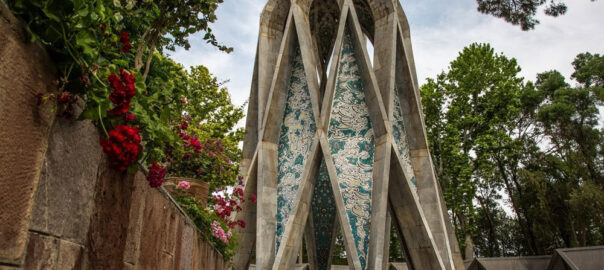
Omar Khayyam’s mausoleum undergoes restoration work

A rehabilitation project has recently been commenced on the mausoleum of Omar Khayyam (1048-1131), who was a legendry Persian mathematician, astronomer, and poet.

A budget of four billion rials (about $95,000 at the official rate of 42,000 rials) has been allocated to the project, Neyshabur’s tourism chief Mohammad-Esmaeil Etemadi Moqaddam said on Thursday.

The project aims to repair the stones and the mausoleum’s foundation, which is worn and cracked due to the time passing, temperature, and climate change, the official added.

Located in the northeastern city of Neyshabur, the mausoleum was built in 1962 by the prominent Iranian architect Hushang Seyhun. It was made a National Cultural Heritage in 1975.

The 12th-century Persian mathematician, astronomer, and poet Omar Khayyam Neyshaburi received a good education in the sciences and philosophy in his homeland Neyshsbur before traveling Samarkand (now in Uzbekistan), where he completed his algebra treatise, on which his mathematical reputation principally rests.

He made such a name for himself that the Seljuk sultan Malik Shah invited him to Isfahan to undertake the astronomical observations necessary for the calendar’s reform. To accomplish this, an observatory was built there, and a new calendar was produced, known as the Jalali calendar.

Philosophy, jurisprudence, history, mathematics, medicine, and astronomy are among the subjects mastered by this brilliant man.

Khayyam is chiefly known to English-speaking readers through a translation of a collection of his quatrains in the Rubaiyat of Omar Khayyam by the English writer Edward FitzGerald.

Located on the Silk Road, Neyshabur is one of the ancient Iran cities, which houses several religious, historical, and cultural monuments. / T.T/


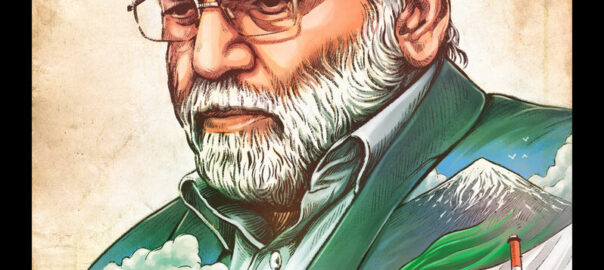
Art Bureau to produce teleplays on nuclear scientist Mohsen Fakhrizadeh

The Art Bureau’s Center for Dramatic Arts plans to produce several short teleplays on nuclear scientist Mohsen Fakhrizadeh, who was assassinated in a terrorist attack on Friday.

The plan has been adopted to help introduce the top scientist, the director of the center, Kurosh Zarei told the Persian service of MNA on Wednesday.

“We believe producing plays on those personalities who have been assassinated is our duty and the center has taken its first step almost seventh months ago,” Zarei said.

He added that the bureau organized a committee soon after the assassination of Fakhrizadeh to produce works of music, plays, short films and visual arts about the martyrs who have been assassinated.

“There is still not enough information about the life and character of Martyr Fakhrizadeh because of his position and we cannot produce long plays, and we are waiting to collect more complete information,” he added.

“We will be negotiating with the Islamic Republic of Iran Broadcasting (IRIB) to broadcast the teleplays, or else we will stream them on different platforms,” he noted.

“This will be a tribute to the martyr before we can collect more information. According to some friends of the martyr, Fakhrizadeh was an art aficionado and used to attend poetry nights of the bureau for several years, while he used to hold poetry nights,” he concluded.

The Art Bureau has also launched a website to promote artworks on Fakhrizadeh.

The website features posters, poems and other artworks on Fakhrizadeh. The art bureau has also asked artists to send their artworks for publication on the website that can be found at www.shahidfakhrizadeh.com.

Iran has blamed Israel for the assassination and vowed to respond firmly at the right time.

Israeli Prime Minister Benjamin Netanyahu had mentioned Fakhrizadeh in a 2018 presentation on the alleged atomic archive of Iran that Israel claims it stole from a warehouse in southern Tehran.

Netanyahu said at the time that he identified Fakhrizadeh as the head scientist in Iran’s nuclear program, and asked people to “remember that name.”/T.T/

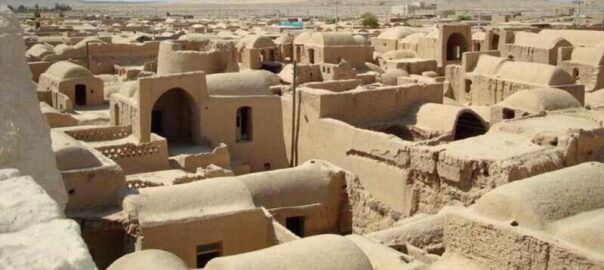
Seb Castle reigns magnificent again

Seb Castle reigns magnificent again over an ancient Iranian village it is named after. The castle, which is one of the biggest in the country, has recently undergone a round of reinforcement and restoration works, Abarkuh tourism chief announced on Wednesday.

Located in Abarkuh county of Yazd province, the mudbrick monument dates back to the Safavid era (1501–1736).

Abarkuh is famed for being home to a 4000-year-old cypress, which is inscribed on the National Heritage List. Venetian merchant and explorer Marco Polo described the tree as one of the most stunning cypress trees he had ever seen in Iran. / T.T/

Wrestling teams invited to Henri Deglane Grand Prix

Iranian freestyle and Greco-Roman wrestling teams have been invited to the 47th edition of the Grand Prix de France Henri Deglane.

The tournament will be held in Nice, France from Jan. 15 to 17.

The French Wrestling Federation has invited the Iranian teams to participant in the event which will be held in 10 weight classes.

The tournament is named after Deglane, who won Olympic gold for France in the heavyweight category at their home Paris Games in 1924. Deglane also won world and European titles and died at the age of 73 in 1975./ MNA/

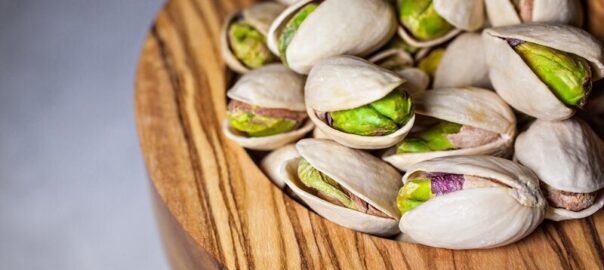
Pistachio exports up 131% in 8 months yr/yr

Iran exported 110,000 tons of pistachio during the first eight months of the current Iranian calendar year (March 20-November 20), registering a 131-percent increase year on year, the spokesman of the Islamic Republic of Iran Customs Administration (IRICA) said.

Ruhollah Latifi put the value of the pistachio exports in the mentioned period at $676 million, 82.5 percent more than the figure for the previous year’s same time span.

According to the IRICA data, 47,000 tons of pistachios worth $371 million were exported from Iran in the first eight months of the previous year (March 21-November 21, 2019).

A total of 97 million tons of goods worth more than $44 billion have been traded between Iran and other countries in the said eight months, of which more than 75 million tons worth $21.5 billion were exported goods.

Iranian exports in the mentioned period have decreased by 14 percent in terms of weight, and 19 percent in terms of value compared to the same period of the previous year.

Earlier in August, Iran’s Trade Promotion Organization (TPO) held a pistachio export desk meeting to investigate the challenges and barriers in the way of the country’s pistachio exports.

Addressing the meeting, TPO Head Hamid Zadboum put emphasis on the significant status of pistachio in Iran’s export basket as the top agricultural export item and said that a national view toward removing the pistachio export barriers should be adopted.

As announced by Iran’s Pistachio Association, the country has exported 35,000 tons of pistachio during the first four months of the current Iranian calendar year (March 20-July 21).

In early September, the Chairman of Iran Dried Fruit Exporters Association (IDFEA) said the country’s pistachio production is expected to increase by up to 55,000 tons in the current Iranian calendar year (ends on March 20, 2021) compared to the previous year.

“This year’s production is going to be better than last year and the output is expected to reach at least 200,000 to 230,000 tons from the last year’s 175,000 tons,” Mohammad-Hassan Shams Fard said. /T.T/

5th-century church being restored in northwestern Iran

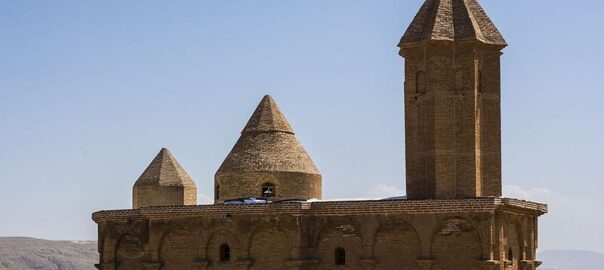
The ancient Saint John Church has undergone some rehabilitation works in the village of Sohrol, near Shabestar city in East Azarbaijan province, the deputy provincial tourism chief has announced.

The restoration involves the reinforcement of the main structure, filling small cracks, as well as erecting retaining walls for stabilizing soil from a potential landslide, Alireza Quchi said on Sunday.

Also known as Sohraqeh Church, the Armenian Catholic church was built in circa 5th century, but it was rebuilt on the older church foundation in 1840 by Samson Makintsev, a Russian general in the service of Iran during the Qajar era.

The historical monument was inscribed on the National Heritage list in 1968.

Iran is home to several ancient and historical churches. Christians, Jews, and Zoroastrians are the most significant religious minorities in the country with Christians constituting the bulk.

Iranian Azerbaijan was a center of several ancient civilizations. It formed part of Urartu and later of Media. In the 4th century BC, it was conquered by Alexander the Great and was named Atropatene after one of Alexander’s generals, Atropates, who established a small kingdom there. The area returned to Persian (Iranian) rule under the Sasanians in the 3rd century CE.

The provincial capital Tabriz embraces several historical and religious sites, including the Jameh Mosque of Tabriz and Arg of Tabriz, and UNESCO-registered Tabriz Historic Bazaar Complex to name a few. The city became the capital of the Mongol Il-Khan Mahmud Gazan (1295–1304) and his successor. Timur (Tamerlane), a Turkic conqueror, took it in 1392. Some decades later the Kara Koyunlu Turkmen made it their capital, it was when the famous Blue Mosque was built in Tabriz.

Tabriz retained its administrative status under the Safavid dynasty until 1548 when Shah Tahmasp I relocated his capital westward to Qazvin. During the next two centuries, Tabriz changed hands several times between Persia and the Ottoman Empire. During World War I, the city was temporarily occupied by Turkish and then Soviet troops. /T.T/

Iran leading the world in ‘science diplomacy’

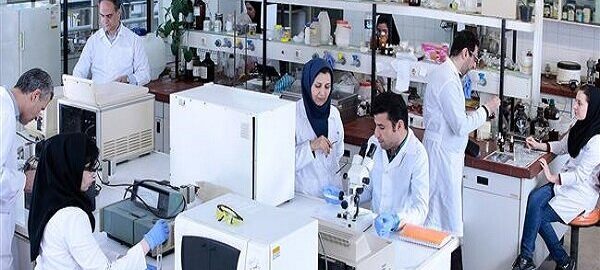
The rate of scientific contributions of Iranian researchers to the world increased from 17 percent in 2011 to 31 percent in 2020, becoming the world’s leading country in science diplomacy with 14 percent growth, according to scientific studies and analyses extracted from the Scopus International Citation Database.

Launched in 2004, Scopus is the largest abstract and citation database of peer-reviewed literature: scientific journals, books, and conference proceedings. Delivering a comprehensive overview of the world’s research output in the fields of science, technology, medicine, social sciences, and arts and humanities, Scopus features smart tools to track, analyze and visualize research.

The development of international scientific partnerships and diplomacy is one of the main policies of Iran, which is also emphasized by the country’s higher education system, Mohammad Javad Dehghani, head of the Islamic World Science Citation Center (ISC), said.

“One of the most important indicators of scientific participation is the share of the latest joint international scientific findings in the total scientific publications of the country,” he noted.

In 2016, the share of articles with international participation in total science production of the country was 20 percent, which reached 22-24-27-31 over the past 4 years, respectively, he stated.

After Iran, Poland, the United Kingdom, and Taiwan each had the highest growth in science diplomacy with 6 percent,” he said, adding, among Islamic countries, Malaysia had the highest growth after Iran, which was 5 percent.

The share of articles with international participation has accelerated from the total number of articles produced in all subject areas. But comparing 2019 with 2018, the fields of humanities and basic sciences have had the highest growth rate, he explained.

Dehghani went on to note that in 2019, about 30 percent of the scientific publications in the field of basic sciences with the participation of international researchers held the highest share among other fields.

After that, the articles of two fields of technology, engineering, and agricultural sciences are in the next position with 29 percent publications, then comes social science and medical science, he concluded.

Iranian universities on world ranking lists

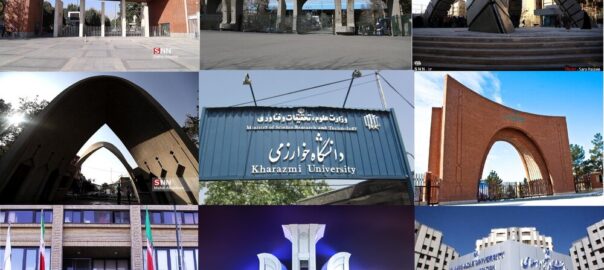
Most recently, the Islamic World Science Citation Database (ISC) published the results of the ISC World University Rankings 2019, according to which 35 Iranian universities were listed among the world’s top 2,000 in various subjects.

Also, forty-three Iranian universities were placed in the Islamic World University Rankings 2019 announced by the ISC.

With a scientific growth rate of 10.4 percent in 2019, Iran ranked second among the top 25 countries in the world, next to China with a growth rate of 12.9 percent, according to the Web of Science website.

In 2000, Iran’s share of scientific productivity was about 0.1 percent, which reached about 2 percent with a 20-fold increase in both Scopus and WoS citation databases.

According to statistics released by the International Web of Science Database, Iran’s citation rank has always been on the rise over the last eight years, from 24 in 2012 to 16 in 2019.

Iran ranks first in terms of the number of universities in the region and among Islamic countries, according to Shanghai Ranking’s Academic Ranking of World Universities (ARWU) 2020.

Two Iranian universities have been ranked among the top 100 universities in Asia, according to Webometrics Ranking of World Universities for July 2020.

Moreover, 7 Iranian universities have been listed among the best 1000 worldwide; including, Tehran University of Medical Sciences, Shahid Beheshti University of Medical Sciences, Sharif University of Technology, Tarbiat Modares University, Ferdowsi University of Mashhad, Isfahan University of Technology, Iran University of Science and Technology, came in 539th, 656th, 826th, 908th, 915th, 916th places, respectively, according to Webometrics Ranking of World Universities.

In June, THE Asia University Rankings 2020 ranked five Iranian universities among the top 100 universities worldwide.

The Center for Science and Technology Studies Leiden Ranking has placed 36 Iranian universities in the list of over 1,000 major universities worldwide in 2020 compared with 26 universities in 2019.

Also, five Iranian universities have been placed among the world’s top 1,000 universities announced by the prestigious Quacquarelli Symonds (QS) World University Rankings 2021. /T.T/

Enemies unable to stop Iran’s scientific progress: Advisor

Advisor to Vice President for Science and Technology Affairs said that enemies of the country cannot stop scientific progress and development of the Islamic Republic of Iran.

Speaking in an interview with IRNA on Tue., Parviz Karami reiterated, “Our enemies themselves know that they cannot stop the path of scientific growth and development of the country, because, Iranian scientists have trained students who will continue their path in their absence.”

While commemorating the name and memory of Iran’s prominent nuclear and defense scientist martyr Mohsen Fakhrizadeh, Karami added, “Although lack of Iranian prominent scientists like martyrs Fakhrizadeh, Ahmadi Roshan, Tehrani Moghadam, Shahriari, etc., who were the symbol of resistance, science and technology, is a great loss for us and noble nation of Islamic Iran, enemies should know that not only scientific growth of the country will not stop, but also it will continue with more strength.”

Enemies have left no stone unturned to stop the scientific progress of the country but all their malicious objectives have been foiled relying upon the talented youth and scientists of the country, the advisor emphasized.

Mohsen Fakhrizadeh was targeted on Friday in a multi-pronged attack involving at least one explosion and small fire by a number of assailants in Absard city of Damavand County, Tehran province. MNA/

Foreign investment in Aras Free Zone rises 78% in H1

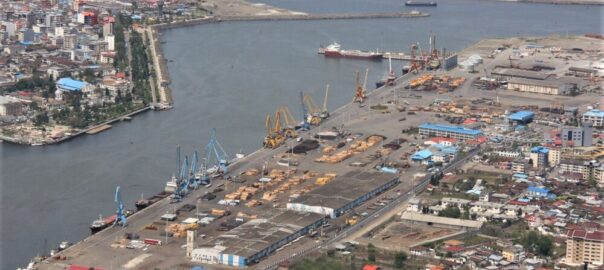
Foreign investment attracted in Aras Free Trade-Industrial Zone (AFZ) in Iran’s northwestern province of East Azarbaijan has risen 78 percent during the first half of the current Iranian calendar year (March 20-October 21), compared to the first half of the past year, according to a provincial official.

Safar Shasfand, the deputy head of Aras Free Zone Organization’s for investment and economic affairs, announced that the zone attracted $25 million of foreign investment in the six-month period of this year, while the figure was $14 million in the same time span of the past year.

The official said that domestic investment has also risen 81 percent to 21.892 trillion rials (about $521.2 million) in the zone during the first half of the present year, from 18.102 trillion rials (about $431 million) in the first half of the previous year.

Reiterating that Aras Free Zone has been successful in attracting investment, and has a better performance in this due compared to the other free zones of the country, Shasfand said that the result is obvious in job creation and promotion of exports from the zone.

He further announced that 16 projects with the investment making of 8.97 trillion rials (about $231.5 million) will be inaugurated in the zone in the eleventh month of Bahman (January 20-Februaray 18, 2021), creating direct jobs for 405 persons.

The official has previously announced that AFZ exported commodities valued at $240 million to 10 countries during the first six months of the current year.

He mentioned dried fruits and nuts, plastic products, steel ingots, and production lines machinery as the main exported products and Azerbaijan, Turkey, Iraq, Kazakhstan, Afghanistan, United Arab Emirates, Armenia, Czech Republic, and Uzbekistan as the export destinations during the mentioned period of time.

Aras Free Trade-Industrial Zone is located in the northwest of Iran at the border point with neighboring Armenia, Azerbaijan and the Nakhchivan Autonomous Republic.

The establishment of free trade zones in Iran dates back to the Iranian calendar year 1368 (March 1989- March 1990) following the fall in the country’s oil income in the preceding year which prompted the government to promote non-oil exports.

The first two free trade zones of Iran were established in the south of the country. The first one was Kish Free Trade Zone established in 1368 on Kish Island in the Persian Gulf and the second one was Qeshm Free Trade Zone established the year after on Qeshm Island in the Strait of Hormuz.

Some five other free trade zones have been also established in the country since then, including Chabahar in southeastern Sistan-Baluchestan Province, Arvand in southwestern Khuzestan Province, Anzali in northern Gilan Province, Aras in East-Azarbaijan Province and Maku in West-Azarbaijan Province, both in the northwest of the country.

Considering the important role that the free trade zones play in promoting the country’s export and employment, Iran is seriously pursuing the development of its existing zones and establishment of new zones as well.

More development measures in this field have been taking since the U.S. re-imposition of sanctions on the Iranian economy in November 2018, as Iran is reducing its dependence on the oil income while elevating its domestic production and non-oil exports.

Although the sanctions have disrupted Iran’s economic activities, they could not impede the development of Iranian free zones; in fact, the development of these zones has been even accelerated.

Many strides made for increasing activities in the free zones have played a significant part in boosting the country’s non-oil exports and brought prosperity in the other economic sectors. / T.T/