All posts by islam

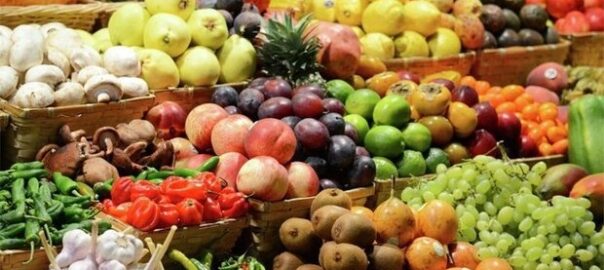
Agricultural, foodstuff exports exceed $3.8b in 9 months

Iran exported 6.263 million tons of agricultural and foodstuff products worth $3.878 billion in the first nine months of the current Iranian calendar year (March 21-December 21, 2021), Deputy Agriculture Minister Mohammad Ghorbani said.

According to Ghorbani, Iranian farmers exported 795,000 tons of watermelon, 617,000 tons of fresh or chilled tomatoes, 598,000 tons of fresh apples, 528,000 tons of fresh or chilled potatoes, and 284,000 tons of onions, shallots, and garlic in the mentioned period, IRIB reported.

The above-mentioned products were the top exported items during the mentioned nine months in terms of weight, the official said.

He also noted that in terms of value, pistachio, tomatoes, watermelons, dates, and apples were the top exported items, respectively.

In the mentioned period, over 23.411 million tons of agricultural and foodstuff products were also imported into the country, Ghorbani noted.

The five major imported items in the said time span in terms of weight were livestock corn with 6.893 million tons of imports, wheat with 5.28 million tons, barley with 2.678 million tons, soybean meal with 1.971 million tons, and soybean with 1.823 million tons of imports.

The country’s livestock and poultry sectors exported 443,000 tons of products worth $406 million during the said period, while fishery export stood at 88,000 tons worth $159 million, export from the agricultural sector was $4.11 million tons worth $1.409 billion, and orchards exported 1.707 million tons of products worth $1.877 billion.

The total value of Iran’s non-oil trade rose 38 percent during the first nine months of the current year as compared to the same period of time in the past year, the head of the Islamic Republic of Iran Customs Administration (IRICA) has announced.

Alireza Moghadasi said that Iran has traded over 122.5 million tons of non-oil products worth $72.1 billion with other countries in the mentioned period.

According to Moghadasi, the weight of trade in the mentioned period also grew by 11 percent in comparison to the figure for the previous fiscal year.

The official put the nine-month non-oil exports at 92.3 million tons valued at $35.1 billion, with a 40-percent rise in value and eight percent growth in weight. /T.T/

Elaheh Nobakht, Negin Ahmadi on panels of Dhaka film festival

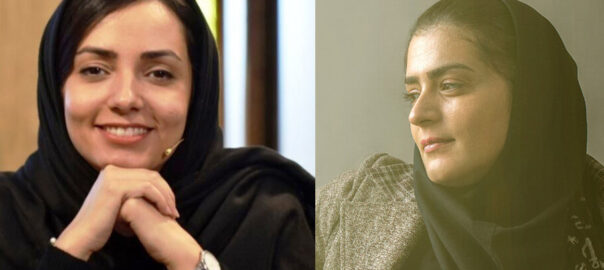
Iranian filmmakers Elaheh Nobakht and Negin Ahmadi are on the juries of the 20th Dhaka International Film Festival, which is currently underway in the Bangladeshi capital.

Nobakht is on the panel for the Women Filmmakers competition, which also features Turkish broadcaster Oya Dogan, Bulgarian filmmaker Yana Lekarska and Bangladeshi documentarian Mehzad Ghalib.

Nobakht, who is also the CEO of ELI Image, an international production and distribution film company, has been a jury member of various international film festivals such as the Religion Today Film Festival in Italy, International Oriental Film Festival of Geneva in Switzerland, Beirut International Women Film Festival in Lebanon and Mena International Film Festival in the Netherland.

Her documentary “Beloved” was screened at numerous international events, including IDFA and Berlinale, and took first place among the top five mid-length films selected by audience votes at the Hot Docs festival in Toronto, Canada 2019.

The Iranian movies “Lady of the City” by Maryam Bahrololumi, “Here Yet Absent” Fariba Chupannejad, “Maryam’s House” by Mahbub Molai and “Atabai” by Niki Karimi are competing in this section.

Ahmadi is in the Interfaith Jury for the Spiritual Films Section. Belarussian film expert Igor Soukmanov, Indian scriptwriter and director Rajni Basumatary, and Bangladeshi actor and filmmaker Nader Chowdhury are accompanying Ahmadi on the jury.

Ahmadi is the director of the acclaimed documentaries “Connie Bell”, “Shirin Days”, “Zhivai” and “Zahra Goli” on the environment and social issues.

“Dream about Sohrab” by Ali Qavitan, “Holy Bread” by Rahim Zabihi, “The Last Breath” by Faraz Fadaian, “Anahid” by Hamidreza Alipur, “Grandmother” Fardin Ansarinejad and “Nahid” Samad Alizadeh have been selected to be screened in this section.

Over 20 movies by other Iranian filmmakers are also competing in the other sections of the festival.

In the Asian Film Competition, five films, including the acclaimed dramas “Walnut Tree” by Mohammad-Hossein Mahdavian and “Botox” by Kaveh Mazaheri, will be screened at the festival, which will run until January 23.

“Fathers” by Salem Salavati, “A Bumpy Story” by Kamal Tabrizi, and “On the Zero Line”, a co-production of Iran, Singapore and Japan directed by Mehrdad Ghaffarzadeh and Yoshimasa Jimbo, will also be screened in this category. /T.T/

Annual sale of nano products to reach $727m

Revenue from nanotechnology products will reach up to 200 trillion rials (nearly $727 million) by the end of the current [Iranian calendar] year (March 21), anticipated Saeed Sarkar secretary of the Nanotechnology Innovation Council.

He made the remarks during the opening ceremony of the nanotechnology achievements exhibition held on Monday at Tehran Permanent International Fairground, IRNA reported.

Over the past 20 years, 850 nano products have entered the market from 25 industrial sectors, showing that the industries have accepted that nanotechnology has developed the market, he stated.

Around 450 knowledge-based companies are working to manufacture 850 nanotech products. In 2006, nanotechnology export was worth $62 million, and we predicted that nanotech exports would reach $1 billion in 2025, but unfortunately, sanctions, currency transfers, and the coronavirus pandemic affect the amount, he lamented.

Last [Iranian calendar] year, the sale of nano goods amounted to 115 trillion rials (about $460 million), so we hope to exceed 200 trillion rials (nearly $727 million) by the next two months.

“New technological products can lead to the creation of specialized employment. If we invest in technology, we will no longer face the migration of elites.

What has happened in the field of knowledge-based is only 10 percent of the country’s capabilities, and if we invest in young people, we will have a prosperous economy,” he highlighted.

Around 450 knowledge-based companies are currently working to use nanotechnology for manufacturing more than 850 products.

Nanotech progress in Iran

Iran has been introduced as the 4th leading country in the world in the field of nanotechnology, publishing 11,546 scientific articles in 2020.

The country held a 6 percent share of the world’s total nanotechnology articles, according to StatNano’s monthly evaluation accomplished in WoS databases.

Iran has been introduced as the 4th leading country in the world in the field of nanotechnology. Iran ranked 43rd among the 100 most vibrant clusters of science and technology (S&T) worldwide for the third consecutive year, according to the Global Innovation Index (GII) 2020 report.

The country experienced a three-level improvement compared to 2019.

Sourena Sattari, vice president for science and technology, said that Iran is playing the leading role in the region in the fields of fintech, ICT, stem cell, aerospace, and is unrivaled in artificial intelligence.

Iran has created centers in six Asian countries for exporting nanotechnology products, including China, India, Indonesia, Syria, Turkey, and Iraq.

Nanotechnology’s trend of development is growing in Iran, as the number of nanoproducts and equipment developed in the previous Iranian calendar year (ended March 20, 2021) increased to 750, compared with 647 a year before.

Some 223 product manufacturing companies and 59 equipment manufacturing companies are active in the field of nanotechnology and by the end of last year, which developed a total of 750 products and equipment. / T.T/


The Blessed Necklace

Hazrat Fatima (S.A.) was born in the fifth year of Muhammad’s Prophethood (S.A.W.). Her father was the Holy Prophet Muhammad (S.A.W.) and her mother was Khadija. (Khadija was the first woman to become Muslim, and she truly believed in God and His Prophet. She was loyal and rich, and spent all her wealth for the progress of Islam.)

The Holy Prophet Muhammad (S.A.W.) loved his daughter, Fatima, very much and used to say about her, “Fatima is part of my body. Whoever troubles her troubles me, and whoever makes her happy makes me happy.” At the beginning of her youth, Fatima married Ali.

She was the ideal lady of Islam and excelled all ladies in worship, manners, and morals. For her husband, she was the best wife and for her children, she was the best mother.

She did the housework and took great pains and troubles upon herself to maintain and prepare the necessities of life.

She never made undeserving demands on her husband, Ali, nor caused him any hardship. Ali used to say, “By God, I never did anything in all my life which made Fatima unhappy or angry, and Fatima, too, never did anything which made me unhappy or angry.”

Fatima had two sons, Hasan and Husain, and two daughters, Zainab and UmmeKulthum. The descendants of the Prophet are from the children of Holy Fatima. Our eleven Holy Imams are descendants of the lady Fatima (S.A.).

Fatima loved her children very much. She cultured them with Islamic morals, manners, and etiquette and brought up her children to be the best. Fatima-peace be upon her soul-passed away on the 3rd of the month of Jamadi al-Thani, at the age of 18. Her body was entrusted to the earth in Medina, but the whereabouts of her grave is not known.

A pale and dusty old man came into the mosque. He was clad in rags. He went to the Prophet and in three short sentences explained his circumstances: “Oh Prophet of God, I am hungry, give me food. I have no clothes, give me clothes. I am without means, help me!” The Prophet (pbuh) told him: “I have nothing in hand. Go to my daughter’s house. She will help you.”

The house of Fatima was near and one of the Prophet’s companions led the old man to it. The old man knocked at the door.

Who is it? Asked Fatima and the old man said: “I am a hungry person, I have no clothes, and I am without means, be kind and generous to me, God will be kind and generous to you.

Fatima took from her neck the necklace given to her by her cousin and gave it to the old man saying. “Sell this necklace and spend the money. I hope that in the future you will be free of need.” The poor man returned happily. The Prophet was still in the mosque. The old man showed the necklace and said, “Oh Prophet, your daughter, Fatima, gave me her necklace to sell.”

One of the Prophet’s companions, Ammar ibn Yasir, heard what the old man said and asked him what price he wanted. The old man said that he would sell it for enough food to satisfy his hunger, enough clothes to clothe his body, and enough money to get home. Ammar said, “I buy this necklace from you, “for a meal of bread and meat, “clothes of Yemenite cloth, “a four-footer to take you home”, and, in addition, eight dinars of gold and 200 dirhams of silver.”

Ammar then took the old man home and paid him the price of the necklace.

The old man ate the food, put on the clothes, and went on his way satisfied and happy. Then Ammar put perfume on the necklace, wrapped it up in a piece of cloth, and ordered his slave, “Go to the Prophet of God and tell him that I have given you and this necklace to him.”

The slave went to the Prophet and delivered Ammar’s message.

The Holy Prophet looked at the necklace and said: “And I have given you and the necklace to my daughter.”

The slave went to Holy Fatima and told her what the Prophet had said and presented the necklace. Fatima thanked him and said: “And I have freed you in the path of God. You are not a slave anymore!” That man, the slave, became very happy and with joy and surprise said, “What a blessed necklace! It satisfied hunger, clothed the body, bestowed means in place of helplessness, mounted the walker, freed the slave, and finally returned to its owner!”

The Holy Prophet of Islam and his followers strove hard to combat slavery and were continually freeing slaves, whatever the price. Thus, in Islam, the freeing of slaves has been counted amongst the highest acts of worship, and, in some circumstances, is even considered obligatory.

‘Eclipse’ honored as best film at Minimalen Short FilmFest.

Iranian short film ‘Eclipse’ directed by Raha Amirfazli managed to receive an honorary diploma for the best film at the 34th edition of the Minimalen Short Film Festival in Norway.

Directed by Raha Amirfazli, Alireza Ghasemi, ‘Eclipse’ received an honorary diploma for the best film at Minimalen Short Film Festival which was held from January 11 to 16, 2022.

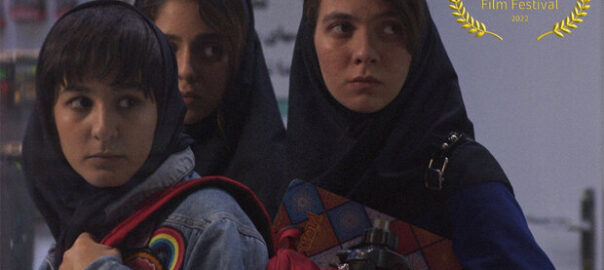
The synopsis of ‘Eclipse’ reads, “Saaghi and her two friends have come to the largest park in Tehran to take pictures of the one-in-a-century total eclipse announced later in the afternoon. Mischievous and rebellious, they steal a camera stand, lie to their parents and discuss boys as well as an upcoming party. Their wanderings lead them to a remote part of the park. As the sun disappears, Saaghi sees something that should have stayed hidden.”

The cast includes Faraz Modiri, Payman Naimi, Anita Bagheri, Paniz Esmaili, Khorshid Cheraghipour.

The short film has previously taken part at the 30th edition of the Côté Court Festival in France, the Figari Film Fest in Italy, the 43rd Outdoor Short Film Festival of Grenoble in France, and LA Shorts International Film Festival.

It was also selected as a nominee for the best short film in Show Me Shorts Film Festival in New Zealand and screened at the 34th Foyle Film Festival 2021 in Ireland.

Minimalen is an annual, independent short film event, covering new productions from Norway, Scandinavia, and the rest of the world, as well as retrospectives. Based in the attractive old town of Trondheim, Norway, Minimalen came to life in 1988.

Over five days each spring, Minimalen screens approx. 250 shorts, roughly divided into two sections: New Norwegian, Nordic and International shorts in five competitions, and retrospectives and focus programs. The Nordic section offers a convenient way for foreigners to be updated on the state of shorts in the whole region. /MNA/


Iran start 2022 Asian Handball Championship on high

Iran defeated Australia 32-10 in Group B of the 2022 Asian Men’s Handball Championship on Tuesday. Iran are to face India on Wednesday and meet Saudi Arabia a day later.

The top two in each group progress to the a second round, which determine the semi-finalists. Competition started on Jan. 18 and will run until Jan. 31.

All the matches are set to take place at the Ministry of Sports Hall in Dammam, Saudi Arabia.

The top five teams from the Championship will directly qualify for the 2023 World Men’s Handball Championship, to be held jointly by Poland and Sweden.

Saudi Arabia was awarded the tournament after the Championship was moved in September by the Asian Handball Federation due to the spread of COVID-19 in the initial host country, Iran. /T.T/

Fatima is Fatima!

By: Dr. Ali Shariati

Fatima lived like this and died like this. After her death, she began a new life in history. Fatima appears as a halo in the visages of all of the oppressed that later become the multitudes of Islam. All of the usurped, extorted, oppressed, sufferers; all of those whose rights have been destroyed and sacrificed by pressure and have been deceived: had the name of Fatima as their slogan.

The memory of Fatima grew with the love, emotions and wonderful faith of the men and women, who throughout the history of Islam, fought for freedom and justice. Throughout the centuries they were nourished under the merciless and bloody lashes of the Caliphates. Their cries and anger grew and overflowed from their wounded hearts.

This is why in the history of all Muslim nations and among the deprived masses of the Islamic community, Fatima is the source of the inspiration for freedom, the desire of that which is a right, the seekers of justice, the resisters of oppression, cruelty, crime and discrimination.

It is most difficult to speak about the personality of Fatima. Fatima is the woman that Islam wants a woman to be. The concept of her visage is painted by the Prophet himself. He melted her and made her pure in the fire of difficulties, poverty, resistance, deep understanding and the wonder of humanity.

She is a symbol in all the various dimensions of being a woman.

The symbol of a daughter when facing her father.

The symbol of a wife when facing her husband.

The symbol of a mother when facing her children.

The symbol of a responsible, fighting woman when facing her time and the fate of her society.

She herself is an Imam, a guide, that is, an outstanding example of someone to follow, an ideal type of woman and one who bears witness to any woman who wishes to become herself’ through her own choice.

She answers the question of how to be a woman with her wonderful childhood, her constant struggling and resisting on two fronts, inside and out, in the home of her father, in the home of her husband, in her society, in her thoughts and behavior and in her life.

I do not know what to say. I have said a great deal. Still much remains unsaid.

In the expression of all of the amazing aspects of the great spirit of Fatima, that which causes the most wonder in me, is this that Fatima is the traveling companion, steps in the same steps,

flies together with the great spirit of Ali, through the ascension of humanity towards completeness and the stages of the descent of the spirit and the psyche.

She was not just a wife to Ali. Ali looked upon her as a friend, a friend who was familiar with his pains and his great wishes. She was his endless refuge, the one who listened to his secrets. She was the only companion of his loneliness. This is why Ali looked at her with another look and also at her children.

After Fatima, Ali took other wives and he had children from them. But from the beginning, he separates the children who were from Fatima from his other children. The latter are called “Bani Ali”, (that is, sons of Ali) and the former, “Bani Fatima” (the children of Fatima).

Isn’t it strange! When face to face with their father, and he, Ali, the children are related to Fatima. And we saw that the Prophet also saw her with different eyes. From among all of his daughters he would only discipline Fatima. He only relies upon her. From an early age, she accepted the great invitation.

I do not know what to say about her. How to say it? I wanted to imitate the French writer who was speaking one day in a conference about the Virgin Mary. He said, ‘For 1700 years all of the speakers have spoken of Mary. For 1700 years, ail philosophers and thinkers of various nations of the East and West have spoken of the values of Mary. For 1700 years, the poets of the world have expressed all of their creative efforts and power in their praise of Mary. For 1700 years, all of the painters and artists have created wonderful works of art showing the visage and states of Mary. But the totality of all that has been said, thought and the efforts of all the artist throughout all of these many centuries were not able to sufficiently describe the greatness of Mary as these words, “Mary was the mother of Jesus Christ”.

And I wanted to begin in this manner with Fatima. I got stuck. I wished to say, “Fatima is the daughter of the great Khadijah.” I sensed it is not Fatima. I wished to say, “Fatima is the daughter of Muhammad (S).” I sensed it is not Fatima. I wished to say, “Fatima is the wife of Ali (as).” I sensed it is not Fatima. I wished to say, “Fatima is the mother of Hasan and Husain.” I sensed it is not Fatima. I wished to say, “Fatima is the mother of Zaynab.” I still sensed it is not Fatima.

No, these are all true and none of them are Fatima.

Thus, Fatima is Fatima!

Hazrat Fatima (S.A.) Is The RoleModel for Women Throughout History and for All

Reviewing the personality of Hazrat Fatima Zahra (s.a.) from the viewpoint of Imam Khomeini (r.a.) and Ayatullah al-Uzma Khamenei:

In the history of Islam, for every group or stratum of society, there is a suitable rolemodel who is guiding light for salvation and on the path to perfection. The rolemodel for women, as declared by Allah (s.w.t.) and His Prophet (s.a.w.) is Hazrat Fatima-Zahra (s.a.). As rightly stated by the noble Prophet (s.a.w.): “Fatima is the best of all women of the world (SayyidatuNesae Al-‘Alameen), and a rolemodel for all Muslim women.”

Referring to this, Imam Khomeini (r.a.) said: “The history of Islam is witness to the immense respect that the Prophet (s.a.w.) had for Hazrat Zahra (s.a.) which also powerfully reflects on the importance of women in society. If they are not superior to men, they are definitely not any inferior.”

At a time when people buried their daughters alive, with the birth of Hazrat Fatima-Zahra (s.a.), Allah (s.w.t.) revealed the Chapters of Kawthar, Qadr, and Dahr to praise her auspicious birth. By kissing Hazrat Fatima’s (s.a.) hand and by praising her virtues, the Prophet of Islam (s.a.w.) firmly established the value of women in the Islamic society. ThisFatima (s.a.) is the rolemodel of all women of the world, her greatness is not limited to any particular time period or location. As stated by the Prophet of Islam (s.a.w.), Fatima (s.a.) is the best woman ever, from the beginning of time, up to its end.

Emphasizing on this point, Ayatollah Khamenei has said: “Hazrat Fatima (s.a.) is the rolemodel for women throughout history and for all generations, past, present and future. The Divine aspect of human beings is perfectly manifested in her.”

If we study the history of mankind, we find that certain people have been looked upon as exemplars for certain qualities that they have perfected. But Hazrat Fatima-Zahra (s.a.) is a role model for everyone, in all aspects, be it ethics, spirituality, or Gnosticism. The level of her knowledge was so high that even the angels descended upon her. From the spiritual aspect, too, she was very detached from worldly distractions and was praised by Allah (s.w.t.) and His Prophet (s.a.w.). She prayed a lot and used to tremble and shed tears of awe and love during her worship.

Referring to the qualities of Hazrat Fatima (s.a.), Ayatollah Khamenei says: “A multi-dimensional human being, a brave warrior in the way of Islam, a knowledgeable lady who at the same time played her role as a housewife and affectionate wife and mother, to perfection – such was Hazrat Fatima-Zahra (s.a.). Her life was very simple, and she had very frugal needs or expectations.”

Addressing the women of the world, Ayatollah Khamenei said: “Hazrat Fatima-Zahra (s.a.) was the best exemplar for all women and Muslims should learn from her.”

Hazrat Zahra (s.a.) proved that like men, a woman, too, can reach the most sublime levels of ethics and worship on the mystical path.

Ayatollah Khamenei says: “The very existence of Hazrat Zahra (s.a.), along with her skills of eloquence, her political and social expertise, and powerful foresight, demonstrates how a Muslim woman can attain high spiritual and mystical positions at a young age.”

With a rolemodel such as this great personality, Muslim women should never feel weak or helpless but should in fact gather more awareness about the high status that Islam grants to a woman. A study of the life of this great lady would clearly show us that the path to ascension is wide open for every woman.

In fact, it is Hazrat Fatima-Zahra (s.a.) who has already trodden that path and is a guide for other women to follow. Elaborating on this point, Ayatollah Khamenei says: “Hazrat Fatima was like a bright light in the lives of Prophet Muhammad (s.a.w.) and Imam Ali (a.s.). Thus it is natural that taking her as a rolemodel would be very beneficial for Muslim women.”

Declaring the Birthday of Hazrat Zahra (s.a.) as “Woman’s Day”, Imam Khomeini (r.a.) has said: “This day is like the day of the revival of real womanhood and the day of foundation-building for the important and respectable role, woman play in the society.” Elsewhere, addressing groups of women he said: “If you don’t learn from her asceticism, piety, modesty, and other virtues, you have not even understood the true essence of womanhood.”

The Status of Hazrat Fatima Zahra (s.a.)

Hazrat Fatima (s.a.) was a very knowledgeable person, a fact that was acknowledged by friends and foes alike. In fact, from time to time, she would make herself available for people who needed answers or clarifications on difficult and complicated issues. Her sermons, poems, and sayings are evidence of her intellectual, strength of character, and nobility of mind. She was an embodiment of all virtues of womanhood. She was an exemplary daughter, a loving and supportive wife, a caring mother, and a powerful and aware member of society.

In spite of all these feminine qualities, Hazrat Fatima (s.a.) was also a very courageous lady who accompanied the noble Prophet (s.a.w.) in thirty wars. She was also well-aware of her rights and whenever necessary stood up for them, instead of suffering like a helpless victim. These qualities are also well-reflected in the lives of her great children Imam Hassan (a.s.) and Imam Hussein (a.s.), and Hazrat Zainab (s.a.) and Umme – Kulthum (s.a.) who are also well-known for their piety, goodness, courage, and generosity.

Hazrat Fatima (s.a.) inherited genius, wisdom, determination, willpower, piety, patience, knowledge, and nobility from her illustrious father, both in words and deeds. Her generosity and compassion for the poor was such that no destitute or beggar ever returned from her door unattended.

Thus, we can see how, in a short span of her life, this grand lady demonstrated how a woman can play different roles powerfully, and positively influence the course of history by her social contribution.

Let us conclude this discussion with a saying from Imam Khomeini (r.a.): “We must all try to follow in the footsteps of Hazrat Fatima (s.a.) and should try to learn from her piety and knowledge, especially since Allah (s.w.t.) has not limited knowledge to only a few but has made it available for all seekers. Also, each and every individual can attain to high degrees of piety, a quality that is again not limited to the elite.”

 

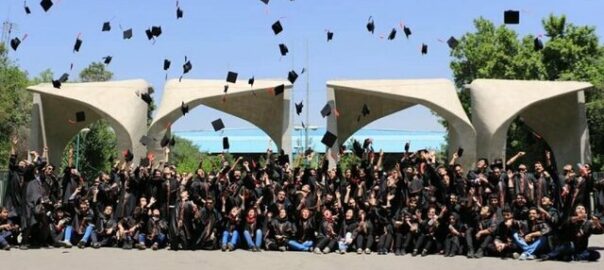
59 Iranian universities among world’s top for academic quality

A total of 59 Iranian universities are listed among the top 3,000 institutions in the world in terms of academic quality, according to the 2021-2022 report released by University Ranking by Academic Performance (URAP).

The URAP ranking system’s focus is on academic quality. URAP has gathered data about 3,000 Higher Education Institutes (HEI) in an effort to rank these organizations by their academic performance based on several indicators, including article, citation, total document, article impact total, citation impact total, and international collaboration.

Data for 3,000 HEIs have been processed and the top 2,500 of them are scored. Thus, URAP covers approximately 12% of all HEIs in the world, which makes it one of the most comprehensive university ranking systems in the world.

Three Iranian institutions are ranked below 500, namely, the University of Tehran, Tehran University of Medical Sciences, and Tarbiat Modares University.

Harvard University tops the list, followed by the University of Toronto, University College London, Stanford University.

Previously, in the 2020-2021 report of this ranking system, 56 Iranian universities were included.

Iranian universities among world’s top ones

Most recently, a total of 51 universities from Iran have been listed in the Islamic World University Rankings 2021 announced by the Islamic World Science Citation Center (ISC).

Also, fifteen universities from Iran have been listed among the best institutions worldwide, by the U.S. News and World Report Best Global Universities rankings 2022.

The Quacquarelli Symonds (QS) Graduate Employability Rankings 2022 list has been released, which included three Iranian universities out of a total of 550 institutes worldwide that highlighted graduate employment processes.

Meanwhile, 41 Iranian universities in engineering sciences and 12 universities in computer sciences have made a place among the top 1,188 universities in the world with the announcement of Higher Education World University Rankings 2022 by subject.

It also has introduced 59 Iranian universities among the top institutions in World University Rankings 2022.

The THE Education Young University Rankings 2021 listed 26 Iranian institutions among the world’s best universities that are 50 years old or younger.

Moreover, 34 Iranian universities and institutions were listed among the top 1,000 in the world, according to Shanghai Ranking’s Academic Ranking of World Universities (ARWU) 2021. /T.T/


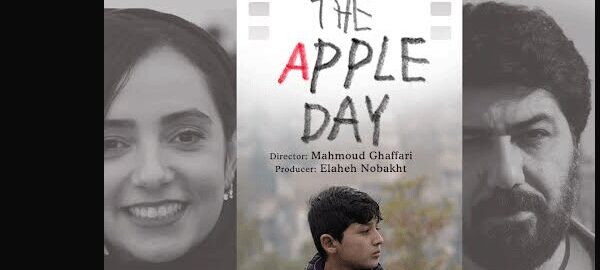
“The Apple Day” to vie at Berlin Intl. Film Festival

The Iranian film “The Apple Day” directed by Mahmoud Ghaffari has entered the 72nd annual Berlin International Film Festival.

Directed by Mahmoud Ghaffari and produced by Elaheh Nobakht, “The Apple Day” in its first debut will compete at the 72nd round of the Berlin International Film Festival.

“The Apple Day” is the story of an Iranian family who despite all difficulties and troubles stand by each other romantically and help each other to grow and live a happy life.

The Iranian film will compete in the Generation section of the 72nd annual Berlin International Film Festival, usually called the Berlinale. The festival will take place from 10 to 20 February 2022. /MNA/