All posts by islam

Iran, Qatar to develop scientific co-op

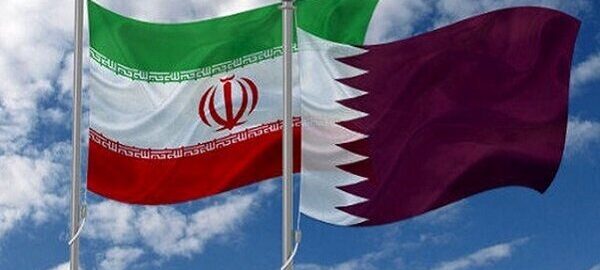
Iran’s Ministry of Science and Qatar’s Ministry of Education and Higher Education inked a memorandum of understanding (MOU) to expand scientific cooperation, IRNA reported on Sunday.

Respect for equality and common interests of the two countries have been declared as basic principles of the MOU with the observance of intellectual property laws, Hossein Salar-Amoli, head of the international scientific cooperation center of the Ministry of Science, said.

According to the cooperation agreement, the two countries support the creation of rules for the admission of university degrees and the exchange of certificates issued by scientific institutions.

“Supporting the exchange of scientific resources and documents related to the civilization, culture, and art of the two countries to be reflected in the educational books is one of the areas of scientific and cultural cooperation between Iran and Qatar.

Iran’s scientific diplomacy has reached up to 34 percent since 2021, the highest level in the past 20 years. Moreover, advanced educational programs, management of scientific research in the university community, teaching, and supervising student research are the priorities of the two countries for joint academic cooperation.

Exchanging faculty members and researchers, exchanging scientific and research information, holding seminars and scientific conferences, holding joint educational workshops, admitting undergraduate students in universities of both sides, and offering postgraduate study opportunities for faculty members are other important points.

Iran supports the development of Arabic in its education system and Qatar supports the development of Persian language in its education system,” he explained.

Iran’s science diplomacy at highest level in 20 years

Data from the Scopus International Citation Database show that Iran’s scientific diplomacy has reached more than 34 percent since the beginning of 2021, the highest level in the past 20 years.

Science diplomacy is the use of scientific collaborations among nations to address common problems and to build constructive international partnerships. It is a form of new diplomacy and has become an umbrella term to describe a number of formal or informal technical, research-based, academic, or engineering exchanges, within the general field of international relations.

Comparing the rate of 2020 with 2019, Iran with a growth of 12.5 percent and with a slight difference with India has gained second place in the world in terms of the growth of world science diplomacy, Mohammad Javad Dehghani, head of the Islamic World Science Citation Center (ISC), said.

In 2011, the share of Iranian articles with international participation was about 16.5 percent, which increased to 19.7 percent in 2016 and gradually in the following years, so that in 2020 and 2021, reached up to 30.5 and 34.2 percent, respectively, he added.

The share of Iranian articles with international participation has had significant growth of 209 percent during an eight-year period (2013-2020), becoming the Islamic world’s leading country in science diplomacy, according to the Scopus International Citation Database. /T.T/
 

Iranian researcher wins Humboldt Prize

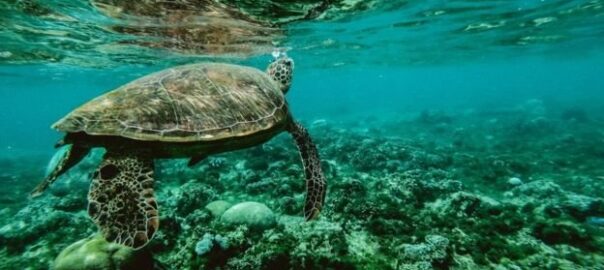
Iranian researcher, Farzaneh Momtazi, has received the internationally renowned Humboldt Research Award, ISNA reported on Sunday.

Every year, the Alexander von Humboldt Foundation grants up to 100 Humboldt Research Awards to leading researchers of all disciplines from abroad in recognition of their academic record to date.

The award amount is €60,000. Award winners are also invited to conduct a research project of their choice at a research institution in Germany in cooperation with specialist colleagues.

Momtazi is a researcher of the National Institute of Oceanography and Atmospheric Sciences, who received a one-year scholarship from the Alexander von Humboldt Foundation in the field of “The effect of climate change on the distribution of amphibians in the Persian Gulf”.

So far, young researchers as well as many experienced scientists from Iran have been able to obtain this valuable research grant, but this is the first time that a researcher in the field of zoology and marine sciences has won this award. /T.T/

Iran to face Kazakhstan at Asian Women’s Junior Handball Championship opener

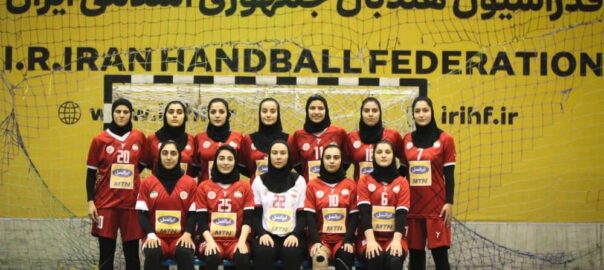
Iran will play Kazakhstan in their opening match of the 2022 Asian Women’s Junior Handball Championship on Tuesday.

The Championship will be 16th edition of the championship scheduled to be held from Mar. 7 to 14 in Almaty, Kazakhstan under the aegis of Asian Handball Federation.

Kazakhstan, Iran, Uzbekistan, India and Thailand will compete in the edition.

It will be the fifth time in history that the championship will be organized by the Kazakhstan Handball Federation.

It also acts as the qualification tournament for the 2022 Women’s Junior World Handball Championship, with top two teams from the championship directly qualifying for the event to be held in Slovenia.

Previously, the championship was supposed to be held in Uzbekistan, but in December 2021, AHF decided to move the event to Kazakhstan due to unavoidable circumstances. /T.T/

Director Farnush Samadi on jury of Beirut Intl. Women’s Film Festival

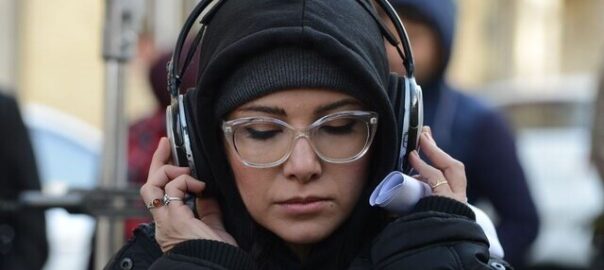
Iranian director Farnush Samadi is on a jury of the Beirut International Women’s Film Festival opened on Sunday in the Lebanese capital.

Art director Claudine Kamar and her Lebanese fellow filmmaker Cynthia Sawma are in company with Samadi in the short documentary and animation jury.

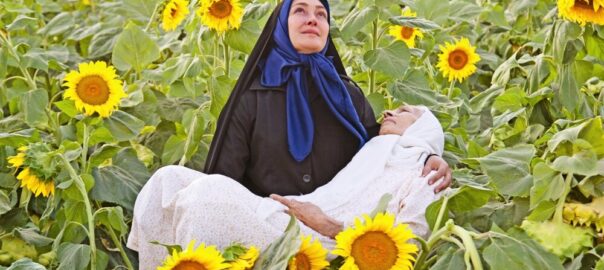
“Up to the Sea, She Weaves a Dream” produced at the Documentary and Experimental Film Center is the sole movie competing in the animation category.

Directed by Maryam Khalilzadeh, the film shows that in any war, there is always a soldier who is lost and there are the women who are waiting for him to return. The dreams these women weave carry them to the farthest seas. Knowing there is no return, they weave and weave to treat the wounds of war.

Samadi is most famous for her short “Gaze”, which was acclaimed at several international events. Her debut feature “180º Rule” won the awards for best feature film and best ensemble cast at the Beirut International Women’s Film Festival this year.

She was also a member of the Meeting Point jury at the SEMINCI – Valladolid International Film Festival 2021 in Spain and the jury of the Same Boat Short Film Competition at the International Migration Film Festival in Turkey in 2020.

Two Iranian films, including the acclaimed drama “Bandar Band”, are also competing in the Beirut International Women Film Festival running until March 11.

Directed by Manijeh Hekmat, the film is about some Iranian women singers who are going to enter an unofficial competition in a coffee shop in Tehran.

Pregnant Mahla along with the other members of Bandar Band, her husband and one of their closest friends, start their journey to Tehran from a southern province just when they have lost all they had in a flood.

They still keep their hopes alive, although every road they take leads to a dead-end in a flood-stricken land. They intend to go to Tehran, but they wonder if it is just another turn around a vicious circle.

The Beirut festival is also screening “Barter” by Iranian filmmakers Ziba Karamali and Emad Arad in the short fiction films competition.

The short drama is about Parsa, a 13-year-old boy who is trying to hide a secret from his father. The film depicts a dramatic situation in a family, and how people change when their interests are at stake. /T.T/

China’s purchase of Iranian oil more than before sanctions

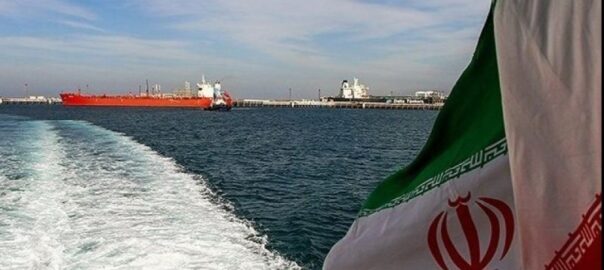
China’s purchases of Iranian oil have risen to record levels in recent months, exceeding a 2017 peak when the trade was not subject to U.S. sanctions, tanker tracking data showed, Reuters reported on Tuesday.

Chinese imports exceeded 700,000 barrels per day (bpd) for January, according to estimates of three tanker trackers, surpassing the 623,000 bpd peak recorded by Chinese customs in 2017 before former U.S. President Donald Trump reimposed sanctions in 2018 on Iranian oil exports.

One tracker estimated imports amounted to 780,000 bpd in November-December on average.

The ramping up of the purchases by the world’s top oil importer comes amid talks between Tehran and world powers to revive a 2015 nuclear deal that will lift U.S. sanctions on Iranian oil exports. The talks have intensified in recent weeks.

A return of Iranian oil will ease tight global supplies and cool crude prices that have touched $100 a barrel following Russia’s invasion of Ukraine.

Iran is expected to have a strong comeback to the global market in case the nuclear deal is revived and the U.S. sanctions on the country are lifted, Bloomberg reported on February 25.

According to the report, considering the capacity of Iran’s offshore oil storages, the Islamic Republic will be able to inject millions of barrels of oil into the market as soon as the sanctions are lifted, without the need for boosting the current level of production.

Asian countries including South Korea are likely to be among the first in line to ship in Iranian cargoes.

Bloomberg puts the estimation of the crude oil stored at Iranian stationary tankers at 65 to 80 million barrels, citing the data intelligence firm Kpler.

About four-fifths of the stored crude is condensate, a super-light oil that’s a by-product of natural gas extraction. The overall Iranian volume is higher if crude that’s already in transit is included, the report said. /T.T/

2022 WCQ: Iran to play Lebanon in Mashhad

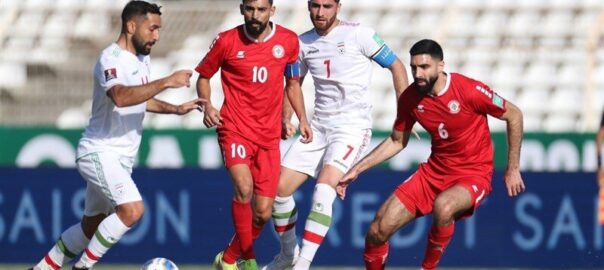
Iran national football team will host Lebanon in Mashhad in the 2022 FIFA World Cup qualifier.

The match has been scheduled for Mar. 29 and the Iranian football federation has announced that they will host the Lebanese team in Mashhad’s Imam Reza Stadium.

Iran lead Group A with 22 points. Dragan Skocic’s men have already booked their place in the 2022 FIFA World Cup as the first Asian team.

Iran earned a late 2-1 win over Lebanon in Sidon on Nov. 11. Iran will participate in the FIFA World Cup for the sixth time. /T.T/

Iranian capital getting ready to host new year travelers

Tehran municipality has formulated several plans and programs to make the Iranian capital ready to host new year travelers during the Noruz holidays.

For the new Iranian year 1401 (starting on March 21), various programs have been set up to promote Tehran tourism, an official with Tehran Municipality said on Friday.

The city will be equipped with tourist buses with the presence of tour guides, particularly in areas with tourist centers, and free tours will be offered, ILNA quoted Mehrshad Kazemi as saying.

Most of the recreational, historical and cultural centers and museums are scheduled to be open to the public during the holidays, he mentioned.

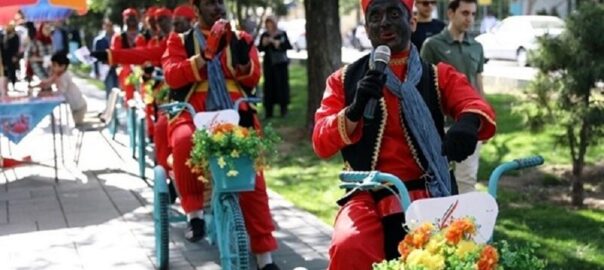
Meanwhile, carnivals featuring fictional figures from Iranian folklore, such as Uncle Noruz, the herald of spring, and his companion Haji Firuz, will be held and traditional rituals will be performed throughout the city, he added.

He also noted that in collaboration with Kordestan province, some 300 Kurdish daf players will perform on Tabiat Bridge in the heart of the capital.

Milad Tower will also host an ethnic exhibition, and Iranian tribes will set up booths in different parts of Tehran with ethnic products, he mentioned.

It is not the first year that Tehran offers special programs for Noruz travelers, as attempts had been made in previous years to position Tehran as a tourist destination, but the outbreak of the coronavirus and restrictions on travel in the past two years thwarted efforts, he concluded.

Back in January, the deputy tourism minister announced that the Iranian government should get fully prepared for a surge and potential tsunami of tourism when COVID-restrictions are over.

“Despite not knowing how the coronavirus outbreak will evolve in the future, we ought to plan on hosting tourists during the upcoming holidays of Noruz (Iranian new year).”

Travel and tourism will increase as vaccination becomes a priority around the world and lifestyles align, the official added.

Hugging the lower slopes of the magnificent, snowcapped Alborz Mountains, Tehran is much more than a chaotic jumble of concrete and crazy traffic blanketed by a miasma of air pollution. This is the nation’s dynamic beating heart and the place to get a handle on modern Iran and what its future will likely be.

The metropolis has many to offer its visitors including Golestan Palace, Grand Bazaar, Treasury of National Jewels, National Museum of Iran, Glass & Ceramic Museum, Masoudieh Palace, Sarkis Cathedral, Tehran Museum of Contemporary Art, Carpet Museum of Iran, to name a few.

The first time Tehran is mentioned in historical accounts is in an 11th-century chronicle in which it is described as a small village north of Ray. It became the capital city of the Seljuk Empire in the 11th century but later declined with factional strife between different neighborhoods and the Mongol invasion of 1220./T.T/

Muscat to host Iranian film festival

The Omani capital city of Muscat will be playing host to an Iranian film festival from March 7 to 9. A lineup of five films, including “The Maritime Silk Road” directed by Mohammad Bozorgnia and “Copper and Gold” by Homayun As’adian, will be screened during the festival, which will be held at the Oman Film Society.

“The Maritime Silk Road” is about Soleiman Siraf, a man who, according to historical documents, was the first sailor to cross the Indian Ocean to China. His route was later called the Maritime Silk Road and many merchants took that route to ship their merchandise to China.

“Copper and Gold” follows Seyyed Reza, a mullah in training struggling to take care of his ailing wife Zahra and their children.

The film puts a human face on an Iranian Muslim cleric with its unusual tale of a man forced to become a better husband and father. Seyyed Reza has just moved with his family to Tehran to study and he relies on his wife to look after everything else. Their lives change dramatically when his wife, Zahra, is diagnosed with a progressive disease that results in paralysis.

“A Five Star” by Mahshid Afshar, “So Close, So Far” by Reza Mirkarimi and “A Cradle for the Mother” by Panahbarkhoda Rezai will also be screened during the festival, which will be held with contributions from the Embassy of Iran in Muscat.

“A Five Star” tells the story of Maryam, a shy, reserved young woman who takes a position as a cleaner at an upscale hotel in order to provide financial aid to her mother. As she begins her employment in this new environment, she soon comes to realize that every aspect of her work is rife with politics and hidden agendas. The other cleaners are desperate to keep their own jobs and the management is unforgiving of even the smallest errors. With no other option, Maryam must learn to adapt to this environment, but will her naivety lead her into trouble?

In “So Close, So Far”, Dr. Alam, a high-profile specialist in neurology and a successful surgeon, is drowning in his professional and social work to the extent that he has totally forgotten about his son Saman. Samantha, the beautiful nights of the desert with its star-filled sky, attracts Saman to itself and the young boy falls in love with the night sky and observation of the stars. Due to an event the doctor leaves his profession and work behind, and goes throughout the desert to find his son.

“A Cradle for the Mother” is about Narges, a young woman who has studied literature in Moscow and now is back in Iran. But once again she decides to go back to Russia for teaching the new Muslim students there. /T.T/

Fajr Festival of Visual Arts wraps up honoring top works

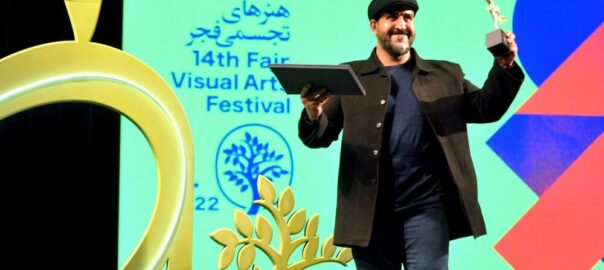
The 14th Fajr Festival of Visual Arts ended on Friday with the honoring of the top works in ten categories.

Winners received their awards in a closing ceremony held at Tehran’s Vahdat Hall.

The Golden Tooba for best painting was awarded to Paria Malmir, while Hadi Faqihi received the award in the Persian painting (miniature) category.

Ehsan Cheraghi Iranshahi was named the best cartoonist of the festival and Nasrin Shapuri Azari was picked as best sculptor.

The Golden Tooba in the graphic design category was shared by Mohammadreza Chitsaz, Mikail Barati and Sadeq Ili.

Saber Qazi won the award for best photographer and Elaheh Abdollahzadeh was the winner of the new arts section.

The award in the ceramics category went to Mohammadreza Ravandeh and Maryam Sadat Siadat was named best illustrator.

Mohammad Fateh Natanzi won the best calligrapher award.

Speaking during the closing ceremony, Minister of Culture and Islamic Guidance Mohammad-Mehdi Esmaeili praised the organizers for holding the festival’s exhibitions for the first time across the country.

“One of the advantages of this year’s festival was organizing its provincial exhibits, which represented the government’s cultural justice,” he said.

He asked the organizers to give more attention to this aspect of the festival in the upcoming editions.

“We saw a younger generation of artists beside the veteran artists in this edition of the festival, and if the festival seeks a stronger educational policy we can see a great number of promising young artists in the future,” Esmaeili said.

He stressed the need for more attention to the art market and called it an absolute necessity for strengthening art diplomacy.

“We have comprehensive plans to develop the country’s art market and will take great steps in this direction in the near future, because we know that we attract a large number of people with the language of art,” he noted.

President Ebrahim Raisi also showed his positive attitude towards art by visiting “Mirror on the Mirror”, an exhibition of the 14th Fajr Festival of Visual Arts organized at the Tehran Museum of Contemporary Art.

He also emphasized the necessity for developing the art market to improve artists’ standard of living, and asked the culture ministry to provide the necessary facilities to offer artworks in an appropriate way. /T.T/

Iranian-made vaccine against Omicron begins clinical trial

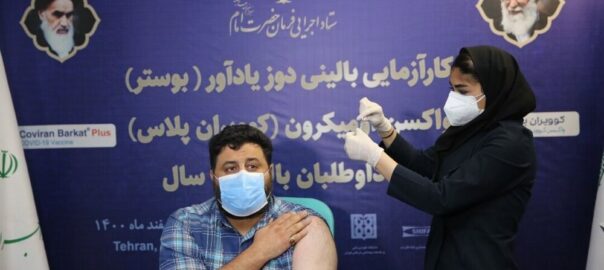
COVIRAN plus, the first homegrown vaccine against Omicron strain, started the human trial by being injected into 210 volunteers, Minoo Mohraz, a member of the National Scientific Committee of COVID-19, has stated.

In this study, three groups of 70 people will be vaccinated, she said, adding that COVIRAN Plus will be administrated to 140 volunteers who have received their first two doses of COVIRAN or Sinopharm, and 70 people will be injected with the COVIRAN vaccine.

The results will be handed over to the Ministry of Health by the next two weeks, she noted.

“Like all other vaccine manufacturing companies around the world, COVIRAN started development to be effective against the new variant and it led to the production of COVIRAN plus so that some 60 million doses of the COVIRAN have so far been produced.”

Made by researchers at the Headquarters for Executing the Order of the Imam, COVIRAN Barkat was unveiled on December 29, 2020, and received the license for public use on June 14.

COVIRAN is the first vaccine in West Asia that is in the process of global registration.

Iran is the sixth country in the world and the first country in West Asia to gain the ability to produce the Coronavirus vaccine.

More effective than world-known vaccines

According to a new study, the effectiveness of the Iranian-made COVIRAN Barkat vaccine in fighting the coronavirus has been more than foreign rivals, namely Sinopharm, AstraZeneca, and Sputnik.

The study was performed on 1.8 million people in Fars province from the beginning of the vaccination process till October 2021, which considered four vaccines of Sinopharm, AstraZeneca, COVIRAN, and Sputnik.

COVIRAN vaccine was 87 percent effective in protecting against coronavirus infection and 86 percent effective against Covid-related hospitalization, compared with 84 percent and 82 percent, respectively for AstraZeneca; Sinopharm came in third with 80 percent and 72 percent, respectively. /T.T/