All posts by islam

Busan International Short FilmFest. to host ‘Adjustment’

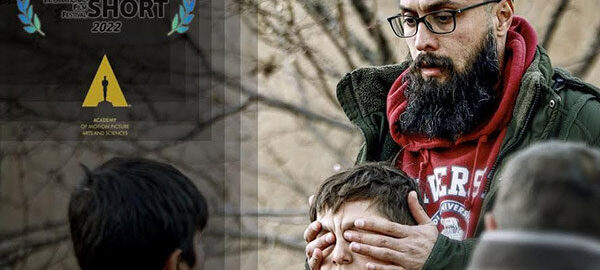
Iranian short film “Adjustment”, by Mehrdad Hassani is scheduled to take part in the 39th Busan International Short Film Festival 2022 in South Korea.

Directed by Mehrdad Hassani and produced by Hassan Mohammadi, the Iranian short film “Adjustment”, will take part in the 39th Busan International Short Film Festival.

The festival will take place from April 27th until May 2nd, 2022 hosted by Busan, South Korea.

The film is about a child called “Shahrukh” who tries to adapt himself to the truth within him.

The Busan International Short Film Festival (BISFF) has been the hub of East Asian short films since 1980, introducing different short films around the world.

The festival aims to discover and introduce distinctive short films to the whole world. Busan Festival is approved by the world’s prestigious film academies. This year, 2,548 films from 111 countries were registered in the International section of the festival. /MNA/

$185m allotted to provide housing for the deprived

A total of 50 trillion rials (nearly $185 million) has been proposed to provide housing for the deprived in the budget bill for the next [Iranian calendar] year (starting March 21), member of the Majlis (Iranian Parliament) has said.

The amount of 400 trillion rials (nearly $1.5 billion) from the oil revenues has been predicted for the implementation of the “housing plan”, IRNA quoted Rahim Zareh as saying on Saturday.

The construction of 90,000 housing units has been entrusted to the Imam Khomeini Relief Foundation under the “housing plan”, he added.

President Ebrahim Raisi submitted the administration’s draft of the national budget bill for the next Iranian calendar year 1401, to the Majlis on December 12. The proposed budget amounted to about 36.31 quadrillion rials (about $123 billion).

Supplying basic goods, treatment, and medical equipment; securing livelihood; supporting production and employment; promoting and supporting non-oil exports and knowledge-based companies are the focal points of the bill.

The Imam Khomeini Relief Foundation has constructed 6,576 housing units and delivered them to financially-struggling rural residents over the first six months of the current [Iranian calendar] year (March 21-September 23, 2021).

The Foundation also plans to build 360,000 housing units over the next four years.

The project will start next year and 90,000 houses will be built for the deprived annually, 60,000 of which will be built in cities and 30,000 in villages. /T.T/

Chaharmahal-Bakhtiari wetlands hosting 80 species of birds

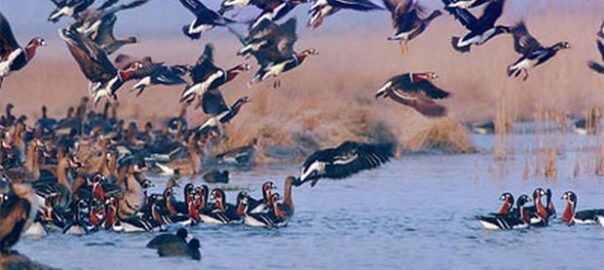
Some 80 species of migratory birds have come to winter in wetlands of the southwestern Chaharmahal-Bakhtiari province, Shahram Ahmadi, the provincial department of environment chief, has stated.

Currently, about 90,000 aquatic bird species are inhabiting in Choghakhor, Gandoman, Solqan, and Aliabad wetlands, he said.

According to Ahmadi, about 140,000 birds migrated to Chaharmahal-Bakhtiari wetlands this year, and with the freezing of Gandoman and Choghakhor wetlands, more than 50,000 moved to the southern regions of the country and the shores of the Persian Gulf.

These birds are from the family of storks, white and brown herons, ducks, Eurasian teal, egrets, flamingos, Grebes, coots, Bitterns, northern lapwing, gulls, and terns, he explained, IRIB reported on Saturday.

Gandoman wetland, stretching to 1,070 hectares, is located in Borujen county. It is one of Iran’s top five birdwatching sites and the country’s most important permanent habitat for migratory birds.

Located in Chaharmahal-Bakhtiari province, Choghakhor wetland is flowing on 1687 hectares, being designated as a hunting restricted area. It is also a birdwatching site that supports more than 47 bird species, with breeding populations of migratory birds such as the Northern Pintail (Anas acuta).

It supports more than 1 percent of the population of Gadwall (Anas strepera) and harbors threatened species such as the endangered White-headed Duck (Oxyura leucocephala) and the vulnerable Eastern Imperial Eagle (Aquila heliaca).

Unique birdwatching sites in Iran

Iran is decorated with impressive wetlands that hold a great share of aquatic and bird species and wildlife. Anzali wetland, Qeshm Island, Urmia Lake, and Miankaleh Peninsula are among the most important locations for bird watching in Iran.

Miankaleh International Wetland in Mazandaran, called the birdwatching paradise of Iran, stretches to a total area of 68,000 hectares, which is home to at least 130 species of migratory species with a population of 1.5 million.

Being an impressive bird-watching destination, the wetland displays a variety of bird species such as otters, all kinds of fish-eating ducks (common goldeneye and Mergus), pelicans, flamingos, and cormorants, common pheasants, partridges, mute swan, tundra swan, and coots. Ashuradeh was introduced and registered as one of the world’s first biosphere zones in 1975.

Gomishan wetland in Golestan province is home to over 20,000 water birds, and more than 20 species of birds, which supports three IUCN Red List vulnerable species of waterbirds, i.e., Pelecanus Crispus, Aythya nyroca, and Vanellus gregarious, as well as the vulnerable mammal Phoca (Pusa) caspica; it is also an important staging area for the fish subspecies Rutilus rutilus caspicas.

Located at the foot of the Zagros mountains in north-western Iran, Zarivar is a freshwater wetland hosting over 74 bird species, which is designated as a Ramsar Site.

The site provides a suitable breeding and resting place for birds and other wetland animals, and due to the relatively extensive reed beds, it is an important overwintering site for northern migratory birds. / T.T/

Iran ready to transfer technical knowledge to Africa: Raeisi

The Iranian president Ebrahim Raeisi said Tuesday that Tehran seeks to expand its relations with the African countries, expressing Tehran’s readiness to transfer technical knowledge to African countries.

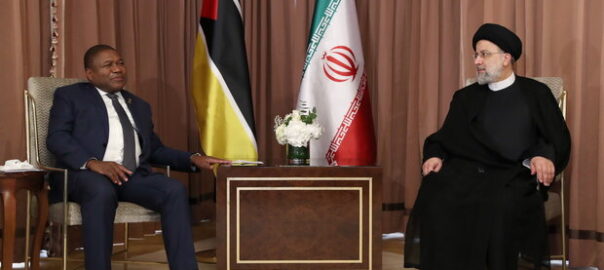
In a meeting with the President of Mozambique Filipe Nyusi on Tuesday afternoon on the sidelines of the 6th GECF Summit in Doha, Ayatollah Seyyed Ebrahim Raeisi expressed his satisfaction with his remarks on the successful results of his country’s development programs and said, “In the view of the Islamic Republic of Iran, African countries are lands full of talents and rich resources, which have unfortunately been plundered by Western countries for the past few centuries.”

Pointing out that the Islamic Republic of Iran has always believed that African countries have hard-working people and significant reserves and their people are talented for growth and development, Raeisi added, “The 13th Administration is ready to expand trade and economic cooperation with African countries, especially Mozambique, and the transfer of experience and technical knowledge to these countries.”

After the victory of the Islamic Revolution, we have always had good relations with African countries, he said, adding, “I urge the Minister of Foreign Affairs to prepare the ground for holding the joint economic cooperation commission as soon as possible so that the process of the development of interaction between the two countries can be accelerated.”

“Western countries want Africa for themselves, but we want you for yourself,” the Iranian president said, adding, “Western countries and world’s hegemonic powers are only seeking to misuse the resources of African countries. If this is not the case, what other meaning and reason could the Zionist Regime’s attempt to join the African Union have?”

Stating that Westerners and Americans pursued only their own interests and did not take steps to develop those countries wherever they went, he said, “The rise of insecurity and the activities of terrorist groups in recent years in some African countries has roots in Western and American meddling. The confession of former US officials to the formation of ISIL by this country is proof of this claim.”

At the meeting, the President of Mozambique Filipe Nyusi expressed his country’s interest in deepening relations with the Islamic Republic of Iran, saying, “We have a lot of natural resources that we can use for the benefit of the Mozambican people and for development with the help of the technical capabilities of Iranian experts,” said Mozambican President.

The President of Mozambique stated that one of the serious problems in the development of his country is the spread of insecurity and terrorism, which is mainly directed and controlled from outside the borders of this country. /MNA/


200-million-year-old coral reefs transported to Iran museum

Collections of 200-million-year-old coral reefs and Bivalvia species have been transferred to the geological museum of Tabas Geopark, a local tourism official has announced.

A new fossil site within the geopark has recently revealed corals and Bivalvia species dating back to 205 to 220 million years ago, CHTN quoted Gholam-Hossein Shoeibi as saying on Tuesday.

A team of experts visited the southern areas of the Geopark recently and found these fossils, which are extremely rare and valuable, the official added.

The Tabas Earth Heritage Museum, which houses 600 specimens of various types of rocks, minerals, and fossils, has attracted many people interested in the topic, he noted.

Covering an area of 200 square meters, the museum displays minerals, stones, and fossils from all over the world, he mentioned.

Sprawled in the eastern province of South Khorasan, Tabas Geopark includes some 50 geo-sites, a variety of scenic landscapes, and untouched terrains with the mysterious Kal-e Jeni (canyon of Jinn) located in Azmighan village, amongst them.

Tabas Geopark, which is situated in a vast county of the same name, has enormous potential to be registered as “the biggest” geopark in the West Asia region.

In recent years, Iran has sought UNESCO recognition for the geopark as one of the UNESCO Global Geoparks (UGGp).

A geopark is a unified area that advances the protection and use of geological heritage in a sustainable way and promotes the economic well-being of the people who live there. A UNESCO definition of the global geopark is a unified area with a geological heritage of international significance. Geoparks use that heritage to promote awareness of key issues facing society in the context of our dynamic planet.

Geoparks usually promote awareness of geological hazards, including volcanoes, earthquakes, and tsunamis and many help prepare disaster mitigation strategies with local communities. Geoparks embody records of past climate changes and are indicators of current climate changes as well. /T.T/


Iran’s women move one place up FIBA ranking

Iran’s women’s basketball team moved up one place at the latest FIBA World Ranking.Iran have moved up one place to 77th.

While the top four teams remain unchanged, with the U.S. still having the No. 1 spot, followed by Spain, Australia and Canada, Belgium have leapfrogged France into the No.5 position on the strength of resounding victories over Puerto Rico and Russia in the World Cup Qualifying Tournament in Washington.

In the current system of ranking, all games matter.

The French dropped a place to No. 6 after suffering defeats in two of their games at the World Cup Qualifying Tournament in Belgrade. /T.T/

Iran’s exports to Russia rise 60%

Iran’s exports to Russia have increased 60 percent since the beginning of the current Iranian calendar year (March 21, 2021) so far, the chairman of the Iran-Russia Joint Chamber of Commerce announced.

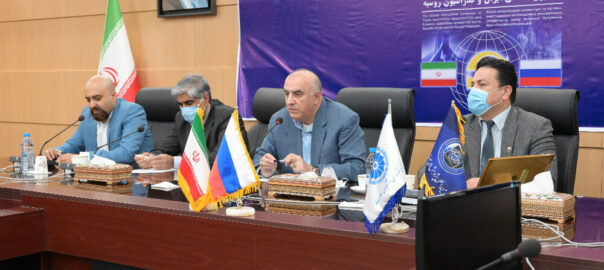
Hadi Tizhoosh Taban made the remarks in an Iran-Russia trade conference held at Tehran Permanent International Fairgrounds on Tuesday.

Organized by the International Institute of Iran Industries Research (MPSIran), the event was attended by senior officials from both sides including Tizhoosh Taban and the MPSIran Managing Director Sina Sanjari.

Speaking in the meeting, Tizhoosh Taban underlined the significance of holding mutual business conferences between the two countries, saying: “Holding such conferences will result in the discussion of various aspects of trade in other countries, especially in Russia, from different angles.”

He added that in order to develop foreign trade, a roadmap should be drawn, saying: “To develop exports, infrastructure such as logistics should be provided, this capacity exists on the border of Astrakhan with Iran, so since [the Iranian calendar year] 1396 (ended in March 2018), an Iranian trade center was founded in the city of Astrakhan.”

This center can provide the necessary ground for expanding economic relations between the two countries and strengthen the presence of Iranian exporters in Russia, Tizhoosh Taban said.

Further in the event, Sanjari, as the secretary of the conference, spoke about logistical, industrial, and political advantages of the two countries which have resulted in the growth of economic relations and the upward trend of mutual trade.

Elsewhere in the conference, Ahmad Asl Rokanabadi, an advisor to the Iranian Parliament, also announced the establishment of foreign trade centers in other countries and said that the parliament and the Trade Promotion Organization (TPO) have discussed and finalized the plan for establishing 195 trade centers in destination markets.

Referring to the development of petrochemical exports, Roknabadi said: “According to available statistics, Russia has raw materials for the production of petrochemical products, but its demand is always higher than production. Therefore, the country imports $30 billion worth of petrochemical products annually, and to make the most of this opportunity incentives should be provided for investors in this field.” /T.T/

Iranian short film to be screened at US Cinequest Film Fest.

Directed by Abbas Ghazali, the Iranian short film “Smile of the Mask” is scheduled to be screened at the US Cinequest Film Festival.

Being Ghazali’s third short film, Smile of the Mask is about the bitter social issue of acid spraying and the smiles hidden behind the victim’s masks.

The Cinequest Film & Creativity Festival is an annual independent film festival held each March in San Jose, California and Redwood City, California. The international festival combines the cinematic arts with Silicon Valley’s innovation. /MNA/

Iran marks National Day of Nasir al-Din Tusi

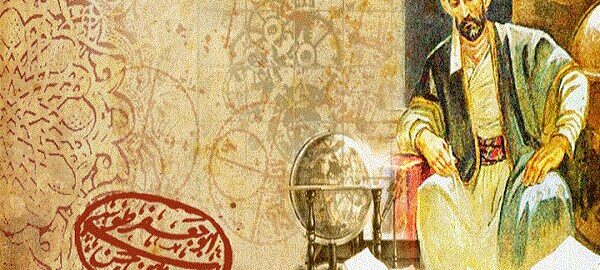
Today is the National Commemoration Day of the outstanding Iranian philosopher, scientist, and mathematician Nasir al-Din Tusi.

Tusi was born in Tus in 1201 and died in Baghdad in 1274. Very little is known about his childhood and early education, apart from what he writes in his autobiography, Contemplation and Action (Sayr wa suluk).

As a young boy, Nasir al-Din was encouraged by his father to study all “the branches of knowledge and to listen to the opinions of the followers of various sects and doctrines”; as such, Tusi travelled widely to study with teachers of his choice.

Tusi studied mathematics with Kamal al-Diin Hasib about whom we have no authentic knowledge. In Nishabur he met Farid al-Din ‘Attar, the legendary Sufi master who was later killed in the hand of Mongol invaders and attended the lectures of Qutb al-Din Misri and Farid al-Din Damad. In Mawsil he studied mathematics and astronomy with Kamal al-Din Yunus (d. 1242).

At the age of twenty-two or a while later, Tusi joined the court of Nasir al-Din Muhtashim, the Ismaili governor of Quhistan, Northeast Iran, where he was accepted into the Ismaili community as a novice.

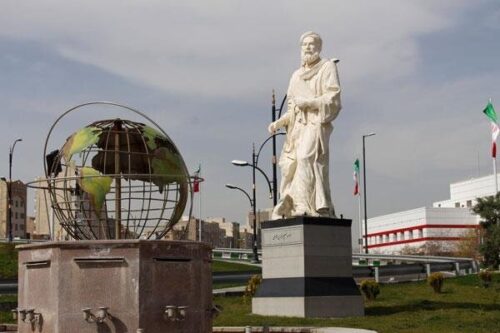
Nasir al-Din Tusi statue in Tabriz, East Azarbaijan, Iran

A sign of close personal relationship with Muhtashim’s family is to be seen in the dedication of a number of his scholarly works such as Akhlaq-i Nasiri and Akhlaq-i Muhtashimi to Nasir al-Din himself and Risala-yi Mu‘iniyya to his son Mu‘in al-Din.

Around 1236, he was in Alamut, the centre of Nizari Ismaili government. In Alamut, apart from teaching, editing, dictating and compiling scholarly works, Tusi climbed the ranks of the Ismaili da‘wat ascending to the position of chief missionary.

Through constant visits with scholars and tireless correspondence, Tusi kept his contact with the academic world outside Ismaili circles and was addressed as ‘the scholar’ from a very early period in his life.

The Mongol invasion and the turmoil it caused in the eastern Islamic territories hardly left the life of any of its citizens untouched. With the fall of Alamut in 1256 CE, Tusi became an advisor to the Mongol ruler Hulegu and was later made a wazir and placed in charge of waqf (religious endowments).

Among the major events of Tusi’s sojourn with the Mongols was the building of an observatory in Azerbaijan at Maragha under his direction, where the most renowned scientists of the time, including astronomers from China, participated in research and scientific observations. In 1274 CE, Tusi left Maragha with a group of his students for Baghdad, where he died in the same year.


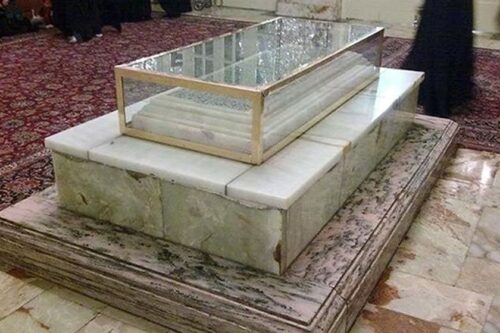
Tomb of Nasir al-Din al-Tusi in Kadhimiya, Iraq

Nasir al-Din al-Tusi’s contribution to the post-13th century intellectual history of Islam is monumental, and many of his works became the standard in a variety of disciplines up to modern times. Among his works on astronomy is al-Tadhkira fi ‘ilm al-hay’a (‘Memoir on the Science of Astronomy’), in which Tusi attempts to give a coherent and unified account of astronomy that would be useful both for students of the subject as well as non-specialists. The Tadhkira is modeled after one of Tusi’s Persian works, the Risalah-i Mu‘iniyya, which he wrote during the early period of his residence at the Ismaili stronghold in Quhistan.

The ensemble of Tusi’s writings amounts to approximately 165 titles on a wide variety of subjects. Some of them are simply a page or even half a page, but the majority with few exceptions, are well prepared scholarly works on astronomy, ethics, history, jurisprudence, logic, mathematics, medicine, philosophy, theology, poetry and the popular sciences. Tusi’s fame in his own lifetime guaranteed the survival of almost all of his scholarly output. The adverse effect of his fame is also the attribution of a number of works that neither match his style nor have the quality of his writings.

The 5th day of Esfand, the twelfth month on the Iranian calendar, which fell on February 24, has been designated as Engineer’s Day in Iran to commemorate Nasir al-Din Tusi, the most celebrated scholar of the 13th century. /MNA/

Iranian films line up for Bengaluru festival

Eight Iranian movies will be competing in the 13th Bengaluru International Film Festival opening on March 3 in the Indian city of Bengaluru.

“A Hero”, “180°Rule” and “Fathers” will be screened in the Cinema of the World category, while “Absence”, “Careless Crime”, “Killer Spider”, “The Alien” and “Two Dogs” will be showcased in the Asian Cinema competition.

“A Hero”, a co-production between Iran and France directed by two-time Oscar-winning director Asghar Farhadi, won the Grand Prix (ex aequo) at Cannes 2021.

It follows Rahim, who is in prison because he was unable to pay a debt. During a two-day leave of absence from prison, he attempts to have his creditor withdraw his complaint over part of the sum owed. But things don’t go as planned.

Directed by Farnush Samadi, “180°Rule” tells the story of a school teacher from Tehran, who is preparing to attend a wedding in northern Iran. When her husband suddenly forbids her to go, she makes a choice that will place her on a painful path to atonement.

“Fathers” by Salem Salavati depicts that the confrontation of two different generations can lead to some problems, however, the film shows that an incident brings two generations together.

“Absence” has been directed by Ali Mosaffa, producer of “180°Rule”.

The film is about an Iranian man who visits Prague to investigate his father’s youth in the city. He finds himself in the shoes of a third man who is almost dead and happens to be of Iranian origin. The film shows how the heavy security atmosphere coming after the 1953 military coup in Iran forced some to flee the country to seek asylum in Eastern Europe.

“Careless Crime”, winner of the Premio Bisato d’Oro for Best Original Screenplay at the Venice Film Festival, has been directed by Shahram Mokri.

It shows that protestors forty years ago, during the uprising to overthrow the Shah’s regime in Iran, set fire to movie theaters as a way of showing opposition to Western culture. Forty years have passed and, in contemporary Iran, four individuals also decide to burn down a cinema. Their intended target is a theater showing a film about an unearthed, unexploded missile.

Ebrahim Irajzad has directed “Killer Spider” based on a true story that occurred over ten years ago in the northeastern Iranian city of Mashhad.

Saeid is a forty-year-old mason, severe and fanatical in his religious beliefs. One day his wife is accosted by a driver who assumes she is a prostitute. Seething with rage, Saeid seeks revenge.

Directed by Nader Saeivar, “The Alien” follows two mysterious strangers in a car. They begin to park daily in an otherwise ordinary Iranian neighborhood and are suspected to be national security, which unleashes a wave of paranoia and distrust among the neighbors, as each one feels they have reasons to be watched. The neighbors collectively suspect, however, that the main target for the surveillance is Bakhtiar, a Kurdish teacher, a newcomer and a foreigner, and attempt to pressure him into giving himself up or leave the neighborhood.

“Two Dogs” directed by Amir Azizi is about Iman and Sajjad, two young men who are struggling with problems typical for 30-year-olds in contemporary Iran: unemployment, depression and lack of self-confidence. Iman is translating Franz Kafka’s “Investigations of a Dog” into Farsi and works as a cab driver, too. His passengers are similar to the characters of Kafka’s story. Sajjad, Iman’s best friend, is very inhibited because of the way he looks and is trying to obtain enough money for surgery. They both have dogs that look very similar to their owners. The dogs, not always welcomed by the families, make the men feel less lonely living in traditional Iranian society.

The Bengaluru International Film Festival will run until March 10. /T.T/