All posts by islam

Iran’s car production up 9.8% in 2.5 months

Iranian carmakers manufactured 233,118 vehicles in the first 2.5 months of the current Iranian calendar year (March 21-June 5) with 9.8 percent rise compared to the same period of time in the previous year, according to Amir-Hossein Qanati, the spokesman of Iran’s Auto Policy-Making Council.

Qanati put the number of vehicles manufactured during the first 2.5 months of the past year at 212,355, Tasnim news agency reported on Friday.

He also said that 220,716 passenger cars have been manufactured in the first 2.5 months of this year, showing 13.2 percent growth from 195,074 passenger cars manufactured in the same time span last year.

Iran manufactured 1.3 million cars in the past calendar year (ended on March 20, 2017) and targets to push the figure up to 1.5 million cars by the end of this year, Mehr news agency reported in early April, quoting Deputy Industry Minister Mansour Moazzami.

Producing more than one million of automobiles in 2016, Iran could rank first among the world countries regarding the growth in its car production, according to the report released by Organisation Internationale des Constructeurs d’Automobiles, commonly abbreviated OICA, (translated in English as the International Organization of Motor Vehicle Manufacturers) in early March 2017. / Tehran times /

Iran’s ‘Retouch’ grabs two Krakow Film Festival awards

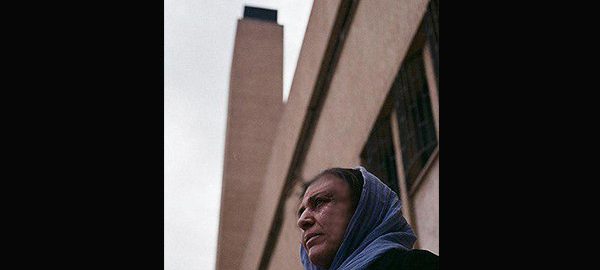
Iranian short film ‘Retouch’ won two awards at the 57th Krakow Film Festival in Poland and was named for the second time to attend Academy Awards.

Directed by Kaveh Mazaheri, the flick won the Silver Dragon for the director of the best short fiction film at the Polish festival.

The film received the award for a poignant portrait of a woman who has to face the choice between life and death, freedom and captivity in the world where no rights exist.

Meanwhile, the panel of jury for the International Federation of Film Societies (FICC), which included Samiran Biswas (India), Eva Campos Suárez (Spain), Sylwia Hamerska (Poland), decided to grant the Don Quixote Award to Mazaheri’s ‘Retouch’ and the Special Mention to the film ‘The Origin of Trouble’ directed by Tessa Louise Pope (The Netherlands).

The Golden Horn for the director of the best film went to Pero Kvesić for ‘Dum Spiro Spero’ (Croatia), while the Silver Horn for the director of the best medium-length documentary film was presented to Audrius Stonys for ‘The Woman and the Glacier’ (joint Lithuania-Estonia production).

Golden Dragon for the director of the best film went to Matteo Gariglio for the film ‘En La Boca’ (Switzerland, Argentina).

The Iranian film was selected as the Best Narrative Short at the 16th Tribeca Film Festival in New York City and was named for participation in the Academy Awards. This is the second time that Mazaheri’s film has been introduced to Oscars.

‘Retouch’ won Crystal Simorgh for Best Short Film at Fajr Film Festival as well as grabbing the best short title from Iran Cinema Celebration.

Krakow Film Festival is one of the oldest in Europe dedicated to documentary, animated and short feature films. Its core consists of four competitions of equal rank: Documentary film competition, short film competition, national competition and music documentary film competition DocFilmMusic.

This year, about 1,800 short feature films, 500 documentary films and 300 animated films were submitted to the competition. In the competition, 32 films were shown, including five from Poland.

The 57th Krakow Film Festival was held from May 28 through June 4 in Krakow, Poland.

/ Iran daily /

Discussion on ‘Imam Khomeini (R.A.) in Dhaka

On the occasion of the 28th Demise Anniversary of Hazrat Imam Khomeini (R.), Iran Cultural Centre, Dhaka organized a discussion meeting on ‘Imam Khomeini (R.A.): Harbinger of Unity, Peace & Dialogue’ at BMA auditorium (15/2 Topkhana Road), Dhaka on 2nd June, 2017, Friday at 4.00 p.m.

H.E. Mr. H.T. Imam, Advisor to the Honourable Prime Minister for Political Affairs, Govt. of the People’s Republic of Bangladesh was present as Chief Guest.

H.E. Dr. Abbas Vaezi Dehnavi, Ambassador of the Islamic Republic of Iran in Bangladesh and Professor Dr. Mohammed Solaiman, Vice Chancellor, University of Information Technology & Sciences (UITS) was present as special guests.

Professor Dr. Mohammad Siddiqur Rahman Khan, Dept. of Islamic History & Culture, University of Dhaka presented the keynote paper.

Eminent researcher Dr. Mawlana Muhammad Isa Shahedi discussed on this occasion.

Dr. Syed Muhammad Emdad Uddin, Khatib, Dhaka University Central Mosque will presided over the program.

Persian Leopard covered by insurance policy

An insurance company has provided an insurance policy to cover Persian Leopard in coordination with Department of Environment.

Ali Teimouri, Director-General of Department of Environment’s Protection and Hunting and Fishing Management Office told reporters on Wednesday that Persian Leopard (panthera pardus ciscaucasica or panthera pardus saxicolor) had been covered by an insurance scheme provided by a Mellat Bank-affiliated insurance company, Bimeh-e-Ma.

“The decision is part of attempts to improve the conditions for endangered species and as an action of priority in national protection scheme of Persian Leopard; the insurance policy is the product of months of hectic work of examination of different insurance schemes which was finalized later today (Wednesday),” he told reporters.

“The articles of the policy included damage sustained by the livestock in leopard’s habitat (sheep, goat, horse, mole and donkey, camel, and shepherd’s dog) or damage on human by possible leopard attack; it also covers damage sustained by road accidents with leopard, poisonous food leopard eats, drought, flooding, wildfire, and other cases (other than age-related death),” he detailed. “A unique feature of insurance policy is that it covers two species of wildlife (leopards and wolf) in the policy which will drastically effect the payment of damage amounted.”

“This is a highly laudable action which the insurance company has voluntarily been involved in; the responsibility still lies with the general public to initiate proper actions of other sort to protect country’s natural national resources,” he asserted. / Meher news /

Tomato Exports Earned $9.5m in 1 Month

More than 43,600 tons of tomatoes worth 355 billion rials (over $9.5 million) were exported in the first month of the current Iranian year (started March 21), figures released by the Islamic Republic of Iran Customs Administration show.

The main export destinations for Iranian tomatoes over the period were Afghanistan, Iraq, the UAE, Russia, Turkmenistan, Azerbaijan, Pakistan, Ukraine and Kazakhstan, Young Journalists Club reported.

/ Financial tribune /

Iran’s “Animal” wins award at Cannes Cinéfondation

Iranian short film “Animal” co-directed by Bahram and Bahman Ark won the second prize of the 20th Cinéfondation Selection at the 70th Cannes Film Festival, the organizers announced on Saturday.

The film tells the story of a man who attempts to cross a frontier disguised as a ram.

“Paul Is Here” by Valentina Maurel from Belgium won the first prize, while “Two Youths Died” by Tommaso Usberti from France received the third prize.

Winning films will be screened at the Cinema du Pantheon in Paris on Tuesday.

In addition, all the films in the Cinéfondation Selection will be shown at the Cinematheque Francaise on Wednesday and Thursday.

A parallel section to the official selection of the Cannes Film Festival, the Cinéfondation selects fifteen to twenty short and medium-length films presented by film school students from all over the world each year. / Tehran times /

Seminar explores influence of Persian on Nazrul

An international seminar on the influence of Persian language and literature on Kazi Nazrul Islam was held at RC Majumder Arts Auditorium, University of Dhaka (DU) on Wednesday.

Abu Rayhan Biruni Foundation (ARBF), Dhaka organized the seminar commemorating the 118th birth anniversary of Kazi Nazrul Islam, the national poet of Bangladesh.

The seminar titled ‘The First International Seminar on the Influence of Persian Language and Literature on Kazi Nazrul Islam: Special Reference to Hakim Umar Khayyam’ was followed by a colourful cultural session, including singing songs and ghazals of Nazrul and recitation from his poems.

Iranian Ambassador in Dhaka Dr. Abbas Vaezi Dehnavi was present at the seminar as chief guest while Professor Abul Kasem Fazlul Haq of the Department of Bengali and Professor Dr. Kulsoom Abul Bashar Mazumdar of the Department of Persian Language and Literature at DU were present as special guests.

Professor Shamim Banu, Institute of Modern Languages, DU; Dr. Abu Musa Mohammad Arif Billah, Department of Persian Language and Literature, DU and Professor Ahmed Kabir, Department of Bengali, DU presented keynote speeches on the topic while Mohammad Ahsanul Hadi, Assistant Professor, Department of Persian Language and Literature, DU delivered the summary of three papers sent by Iranian professors.

Sayeed Ahmed Anis, son of Munir Uddin Yusuf, the translator of the Shahnamah of Firdausi; Shanaz Arfeen, writer and a researcher of Persian Literature; A M M Farhad, AMD of Social Islami Bank Limited, also vice-chair, ARBF, and a writer, and Asad Chowdhury, a major poet of Bangladesh, also took part in the discussion.

The seminar was presided over by Dr. Abu Musa Mohammad Arif Billah, chairman of ARBF.

Iran’s Hossein Alizadeh wins Asia World Music Award

Iranian tar virtuoso Hossein Alizadeh won the Asia World Music Award, the Persian service of IRNA reported on Thursday.

The award is presented biennially by the World Music Center Foundation in Seoul and Alizadeh earned the accolade on December 26, 2016.

Iranian Ambassador Hassan Taherian received the award on behalf of Alizadeh from the foundation’s director, Kang Sun-dae, on Thursday. It is a plaque and a cash prize of $10,000.

In a letter published on Thursday, Alizadeh expressed his thanks to the organizers of the award, which was presented for the first time in 2014 to the French-born Chinese American cellist Yo-Yo Ma.

Alizadeh has collaborated with numerous top Iranian and world musicians, including his fellow Iranian legendary vocalist Mohammadreza Shajarian and Armenia’s Djivan Gasparyan.

A recording of a concert by Alizadeh and Gasparyan in Tehran titled “Endless Vision: Persian and Armenian Songs” was one of five Grammy Award nominees for “Best Traditional World Music Album” in 2007.

In 2014, Alizadeh declined to accept the Chevalier of the Legion of Honor award, the highest decoration awarded by the French government, stating that he doesn’t need decorations and that he derives satisfaction from his good name.  / Tehran times /

Two Iranian films scoop awards at India’s 16IFF

Iranian short films ‘The Guy Came on Horseback’ and ‘Born in Mordad’ won awards at the 2nd Sixteen International Film Festival (16IFF) in the Indian city of Jaipur.

According to jiffindia.org, as many as 23 films from 12 countries in 13 languages were screened at the Sixteen International Film Festivals (16IFF) organized by Jaipur International Film Festival-JIFF at Golcha Cinema from May 17 to 21, 2017.

The festival is based on 16 subjects: Democracy, politics, corruption, horror films, romantic films, women films, children films, animations, ad films, among others.

‘The Guy Came on Horseback’ by Iranian filmmaker Hossein Rabiei-Dastjerdi won the Best Love and Romantic Short Film award while ‘Born in Mordad’ by Farzad Rahmani won the Best Women and Children Short Film award at the festival.

The first edition of 16IFF granted awards to five Iranian films including ‘The Return’ by Mohammed Amin Hamedani, ‘The Heritage’ by Abbas Khosrojerdi and Manizheh Seraj, ‘Shakhovan’ by Mahtab Sedaqat, ‘Confined Space’ by Siamak Ahmadi, and ‘Seven Stanza’ Mojgan Nikravesh. / Iran daily /

Funds to Restore Iranian Heritage Sites Abroad

The restoration of historical sites and buildings in other countries whose history is linked to Iran had been suspended for long due to a lack of funds

A budget of 90 billion rials ($2.4 million) has been earmarked in the current fiscal year (started March 21) for the restoration of historical sites abroad with ties to Iran, such as Armenia and Tanzania, announced a top official at Iran’s Cultural Heritage, Handicrafts and Tourism Organization.

“A fund for [restoration of sites abroad] has been made available for the first time save for last year’s budget to restore Imam Khomeini’s house in Najaf, Iraq,” said Mohammad Hassan Talebian, cultural heritage deputy at the ICHHTO, IRNA reported.

Restoration of historical sites and buildings in other countries whose history is linked with Iran had been suspended for long due to a lack of funds.

Iran had signed numerous memoranda of understanding with countries hosting historical Iranian structures, which would allow the organization to commission their restoration using Iranian experts. But the ICHHTO was unable to kick-start the projects for the governments did not finance the schemes.

The restoration of Blue Mosque in Armenia, for instance, was stuck in the feasibility assessment phase.  Located in the Armenian capital Yerevan, the Blue Mosque dates back to the 18th century. It seems, however, that Iran has scraped $2.4 million out of its own coffers to restore Iranian heritage sites in other countries.

There are a number of Iran-linked sites spread across the world. Humayun’s Tomb in Delhi, India, is the first Persian Garden in the Indian subcontinent. The tomb was designed by Mirak Mirza Ghiyas, a Persian architect.

Kizimkazi Mosque situated on the southern tip of the island of Zanzibar in Tanzania was built in 1107 by settlers from Shiraz.  Kidichi Persian Baths in Zanzibar were constructed by Sultan Seyyed Saeid in 1850 for his Persian wife. The Hamamni Persian Baths are also historical buildings in Zanzibar built between 1870 and 1888. They are referred to as “Persian” because they were built by Shirazi architects.

There are also Persian baths in Tbilisi, Georgia.

Taq Kasra, located near the modern town of Salman Pak, Iraq, is the remains of a Sassanid-era monument, which is sometimes called the Archway of Ctesiphon. It is the only visible remaining structure of the ancient city of Ctesiphon.

Iraq also houses the burial place of Amir Kabir, the wise prime minister who served Qajar ruler Nassereddin Shah from 1848 until his death in 1852. He has been buried in the courtyard of Imam Hussein’s (PBUH) Shrine in Karbala. / Financial Tribune /