All posts by islam

‘Servant’ wins Best Animation at Silver Scream fest

Short animated piece ‘Servant’ directed by Farnoosh Abedi won Best Short Animation award at the 2017 Silver Scream Festival in California, US.

According to the director, Farnoosh Abedi, ‘The Servant’ narrates the familiar story of a master and his servant, the story of a writer’s encounter with a gigantic insect: a cockroach. The cockroach becomes a servant but gradually begins to realize that it deserves better conditions, so it tries to turn the table and change the game in its own favor. The man, however, attempts to preserve the current situation but soon realizes that the game has no rules.

Silver Scream Fest is dedicated to showcasing graphic novels as well as films and animation that center around monsters and sci-fi genre. The second edition of the festival was held on 26-28 May 2017 at the Sheraton in Dallas, Texas, United States.

‘Servant’ has previously won a number of international awards including best short animation award for February at London Independent Film Festival. / Meher news /

Iran’s Dates Earn $300 million p.a.

About 10,000 tons of dates worth close to $40 million are exported from Iran’s southern Hormozgan Province every year, an official with Hormozgan Agricultural Jihad Organization said.

“Close to 140,000 tons of the product are produced from 37,000 hectares of date plantations in Hormozgan,” Hassan Hosseini was also quoted as saying by IRNA. Iran is the world’s second biggest producer of dates and the biggest exporter of the crop. Production stood at close to 1.2 million tons in the last Iranian year that ended on March 20, 2017. About 20% of overall production, worth around $300 million, were exported to Europe, North America, the Far East and Russia. / Financial tribune /

Iran’s 1st Wheat Export

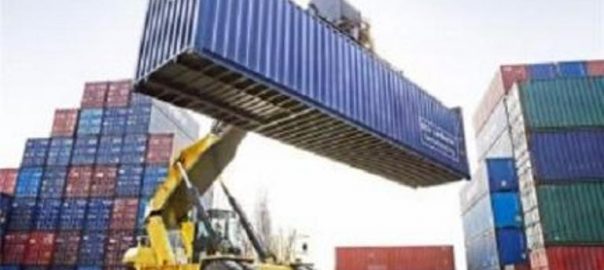
With a shipment of 29,630 tons from Imam Khomeini Port in the city of Mahshahr in the southern Khuzestan Province to Oman, Iran exported its first wheat consignment on Monday.

“The shipment is part of the 2 million tons of surplus wheat that was produced last year. Back then, the government aimed to export this surplus and the very first shipment headed to the neighboring Oman at around 11 a.m. on June 12. Proper marketing was done in Oman and plans are underway to do the same in Turkey as well as European countries,” Mohammad Reza Zarei, the head of Food Bulk Carriage Affairs Office at the Bulk and General Cargo Carriage Company affiliated to the Islamic Republic of Iran Shipping Lines, told Financial Tribune.

A few months ago, Sa’dollah Abdollahi, managing director of Khouzestan Ports and Maritime Organization, said the government planned to export between 800,000 tons and 1.5 million tons of wheat from Imam Khomeini Port in the current Iranian year that started on March 21.

Iran also exported 200,000 tons of wheat flour this year for the first time to regional countries and Europe.

A record high of 14 million tons of wheat were domestically produced last year, more than 11.76 million tons of which worth over $4 billion were purchased by the government from local farmers at guaranteed prices. This helped Iran achieve self-sufficiency in wheat production for the first time in about a decade.

A ceremony attended by President Hassan Rouhani was held last December to celebrate this bumper wheat harvest and self-sufficiency in the production of the crop.

Hassan Abbasi Maroufan, Government Trading Corporation of Iran’s commercial affairs deputy, announced that so far, more than 3 million tons of the staple grain worth 36 trillion rials (close to $964 million) have been purchased from local farmers from 20 provinces by GTC.

The southern Khuzestan Province, with more than 1.63 million tons, tops the list of provinces from where purchases have been made. It was followed by Golestan, Fars, Kerman and Ilam with 458,000 tons, 325,000 tons, 177,000 tons and 172,000 tons of purchases respectively.

According to the head of Plant Protection Organization of Iran, wheat production is estimated to decline by 6-7% this year.

“This will be a result of the decrease in precipitation as well as the sunn pest that has infested some rain-fed farms,” Mohammad Ali Baghestani was quoted as saying by Mehr News Agency.

Baghestani added that despite this decrease in production, hopes are high about attaining wheat self-sufficiency as in the previous year.

GTC is a government-owned company specializing in the purchase, import and distribution of essential foodstuff. It is the lever for enforcing market controls.

The company is also in charge of maintaining a supply of wheat, rice, cooking oil and meat, as the country’s strategic reserve of essential commodities. / Financial tribune /

Iran qualify for 2018 World Cup after beating Uzbekistan

Iran defeated Uzbekistan 2-0 to advance to successive FIFA World Cups for the first time in their history. After Brazil, who have become the first team to qualify for the 2018 World Cup, Iran are the second team book a place in the prestigious event.

Sardar Azmoun gave the lead Team Melli in the 23rd minute after he beat an offside trap following a counter-attack.

Just three minutes into the second half, Iran striker Mehdi Taremi was brought down in the area but captain Masoud Shojaei failed to convert his penalty.

With two minutes remaining, Taremi, who had scored against Qatar and China, scored his third successive goal.

Sardar Azmoun was named the Man of the Match at the end of the game.

He received a yellow card and missed the next match against South Korea.

Unbeaten in eight qualifying games, Iran have been in dominant form in Group A, having yet to concede a goal on the Road to Russia.

The win means Portuguese coach Carlos Queiroz’s Iran team will finish in the top two places in Group A of Asia’s final round of qualifying. Uzbekistan are eight points adrift of the leaders in third place and have only two games remaining.

The top two teams in each of Asia’s two qualifying groups advance automatically to the finals while the teams in third place go through a series of playoffs. / Tehran times /

$2.3m Worth of Pineapple Imported in 1 Month

More than 2,860 tons of pineapple worth over 86 billion rials ($2.3 million) were imported in the first month of the current Iranian year (March 21-April 20), the Islamic Republic of Iran Customs Administration reported.

Philippines, the UAE, Thailand and Malaysia were the main countries from where the imports were made, Young Journalists Club reported.

Iranian fruit import regulations only allow the entry of tropical fruit, such as pineapple and mango.  / Financial tribune /

Roya Nonahali wins acting award at US Festigious Intl. Filmfest.

Iranian actress Roya Nonahali received an acting award at American Festigious International Film Festival for her role in the short film ‘Highlight’, directed by Shahrzad Dadgar.

The short film Highlight in its international debut won the acting prize of Festigious festival as “an inspiring woman in the film”.

The competitive Festigious Festival is a monthly event held with support of the IMDB website in Los Angeles.

Highlight stars Roya Nonahali, Nasim Adabi, Sanaz Mesbah, Rabe’e Madani, Shafagh Shokri and Behnaz Jafari. / Meher news /

Iran defeat Argentina in FIVB Volleyball World League

Mohammadjavad Manavinezhad came in as a sub for Iran and lived up to the expectations coach Igor Kolakovic had from him. The fans in Tehran were also pleased with the home squad’s 3-2 (29-27, 25-20, 20-25, 23-25, 15-11) victory over Argentina in a 2017 FIVB Volleyball World League clash.

Manavinezhad was on fire stringing up 26 points to become the best scorer of the match. His teammate Milad Ebadipour Ghara H. also impressed with 22 points on his tally, as many as Cristian Poglajen scored for Argentina (including four aces).

This was Iran’s third victory over Argentina in three matches played in the history of the World League. All three of them finished after five sets of play.

The opening set started with the teams going point for point with Argentina winning a long rally to reach 8-6. Argentina increased the gap to 16-12 by the second technical time-out. With two substitutions putting Manavi and Farhad Salafzoon into play, Iran soon managed to decrease the margin to 18-19. The error of Alexis Gonzalez made it a 21-21 tie, accompanying the excitement of the home crowd. A very long challenge asked by the Iranian team gave a long halt to the match as the referees were sceptical over a very critical point, which later was accepted. The rally went point for point with no team willing to give away an inch. Nicolas Bruno shone in attack for Argentina while Manavi did great in reception. Finally, he led his team to a 29-27 win in the set.

Iran started the second set in much brighter fashion and led by 8-6 at the first technical time-out, then building a four-point lead at 19-15 and comfortably closing out the set at 25-20.

The astonishing services of Poglajen continued as Argentina led by 16-13. The South Americans further silenced the fans breaking away with a 22-17 advantage. With the excellent pairing of Sebastian Sole and Santiago Darraidou, Argentina closed the set at 25-20.

In the fourth set, Iran revived their hopes as they took an 8-5 lead at the first technical time out. The Argentineans kept their cool in a crucial moment to come back to a 10-10 tie, before storming 20-17 ahead with successive successful attempts by Pablo Crer at the net. The home crowd raised the roof as Argentina reached the set point at 24-22, hoping the help their own recover, but the set was sealed at 25-23 Argentina’s way.

The fight continued in the tie-break. Iran started well taking a 7-3 lead and continued to control their nerves better as they finished the set at 15-11 and rejoiced with the victory. / Tehran times  /

Punishment for Forest Arsonists

Those who intentionally start wildfires will serve between three- and five-year prison terms, while those who carelessly cause fire in forests and other protected areas will be imprisoned for between three months and three years, the director of Hunting and Fishing Office at the Department of Environment said.

“The sentences are based on the Islamic Penal Code,” Ali Teymouri was also quoted as saying by IRIB News.

Every year, particularly in summer, wildfires wreak havoc on forests and protected areas, of which the latter is managed by DOE. However, Teymouri said the department’s preemptive measures are paying off.

“In 2014-15, around 6,700 hectares of protected areas under DOE’s management were burnt, but the figure dropped by 70% in 2016-17 to 2,200 hectares,” he said.

DOE’s measures, such as forming rapid response teams in every province, equipping park rangers with fire extinguishers and installing monitoring systems, seem to have helped reduce the damage caused by forest fires.

Teymouri pointed to stationing helicopters in 14 provinces, which has significantly reduced firefighters’ response time and accelerated the process of putting out wildfires.

“In some provinces, firefighting forces can arrive at inaccessible regions within 15 minutes, which is a record for the department,” he said.

Fire sensors have also been installed in strategic locations in certain woodlands with good results, hence more sensors will be installed in the forests of Golestan, Fars, Lorestan and Ilam provinces to ensure early detection of fires and help prevent their spread.

Outlining future measures, the official mentioned holding maneuvers in high-risk regions, including Alborz as well northern and western provinces, raising public awareness, promoting correct ways of setting up camp fires and extinguishing it, and installing more warning signs in vulnerable areas, as efforts helping prevent disaster.

Iran’s arid climate and topography, together with human carelessness, have made the country highly prone to wildfires.

According to forestry officials, 95% of all wildfires in Iran are manmade, 30% of which are intentional. On average, forest fires inflict losses worth about 3.2 trillion rials ($85.3 million). / Tehran times/

Iran Bread Consumption Six Times Global Average

Iranians are the second biggest consumers of bread in the world with a per capita of 160 kilograms per person, which is six times higher than the global average.

According to a report newly published by Financial Tribune’s sister publication Donya-e-Eqtesad, Turks consume the most bread with a per capita of 199 kg annually. In France and Germany, per capita bread consumption is 56 kg and 70 kg respectively. The annual bread production in Iran stands at 15 million tons.

In the large-scale bread industry, most of the work is handled by machines. However, traditional bread in Iran is baked manually in traditional ovens.

Industrial bread bakeries have a 20% share in the total bread production in Iran while the rest belongs to traditional bread bakers. When it comes to consumer market, industrial breads account for as little as 12% of the consumer market.

Only 2% of the total flour share allocated for all bakeries belong to industrial bakeries while the remaining 98% pertain to traditional bakers.

Currently, 80% of the flour distributed across the country are subsidized and the rest is supplied at market rates. / Financial tribunr /

Iranian films on peace to screen in Hiroshima, Tokyo

A number of Iranian movies will go on screen in Hiroshima and Tokyo, on the sidelines of the Hiroshima Peace Memorial Ceremony.

The ceremony is held annually on August 6 to commemorate the anniversary of the tragedy of the U.S. atomic attack on the Japanese city.

The films will be screened in Hiroshima on August 6 and 7, and later Tokyo will be the host on August 8 and 9, Iran’s Cultural Office in Tokyo announced in a press release published on Friday.

“Mazar-i-Sharif” (Abdolhassan Barzideh), “Muhammad (S), the Messenger of God” (Majid Majidi), “Taj Mahal” (Danesh Eqbashavi) and “Lizard” (Kamal Tabrizi) are among the movies to be screened.

“Liard” actor Parviz Parastui is also expected to attend the program.

Shizuko Tsuya, the head of MOCT Association of Hiroshima, has called the screening program a good opportunity to introduce Iranian movies to the interested Japanese fans.

Tsuya, who founded MOCT in 1994 to provide medical services overseas, also believes that the program can help put a spotlight on Iranian victims of several violent attacks in which Iraq used chemical weapons during the 1980-1988 Iran-Iraq war. / Tehran times /