All posts by islam

36 Iranians among top 1% cited medical researchers: Thomson Reuters

Among top one percent most quoted medical researchers worldwide are 36 Iranian scientists, according to a January report by the official website of Essential Science Indicators (ESI) of Thomson Reuters, IRNA reported on Saturday.

Thomson Reuters regularly provides an updated list of the most leading researchers in the world based on the last 10 years of their academic career.

Based on the repot, the Iranian scientists quoted most in descending order are:

19 from Tehran University of medical Sciences, 4 from Isfahan University of Medical Sciences, 3 from Tabriz University of Medical Sciences, 2 from Shahid Beheshti University of Medical Sciences, 2 from Shiraz University of Medical Sciences, 2 from Mashhad University of Medical Sciences, 1 from Tehran’s Baqiyatallah University of Medical Sciences, 1 from Iran University of Medical Sciences, and last but not least 1 from Zanjan University of Medical Sciences.

For the first time, Shahin Akhoundzadeh and Ali Reza Esteqamati both from Tehran University of medical Sciences, Parvin Mir Miran from Shahid Beheshti University of Medical Sciences and Maziar Moradi Lakeh from Iran university of Medical Sciences were included in the above list.

ESI is a resource that enables researchers to conduct ongoing, quantitative analyses of research performance and track trends in science. ESI covers 10 million articles in 22 fields of research and is updated every two months./ Tehran times /

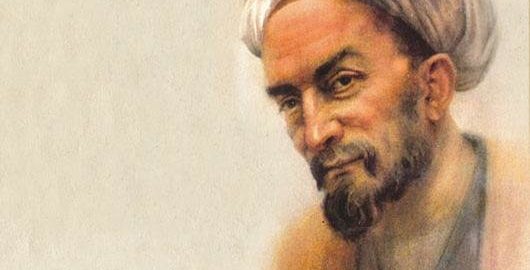
Tehran meeting to discuss Persian translation of Sadi’s Gulistan

A new Persian translation of Sadi’s Gulistan (The Rose Garden) into a rhythmic version will be reviewed in a meeting at Tehran’s Melal cultural center on July 22.

Iranian scholar and translator Abdolmahmud Rezvani is will talk about the process of his works and how he has managed to translate the works into poetry.

Sheikh Muslih od-Din Sadi Shirazi (C. 1213-1291) is one of the greatest figures of classical Persian literature famous worldwide for his Gulistan and Bustan (The Orchard).

/ Tehran times /

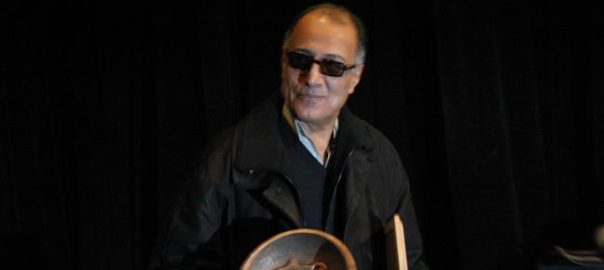
Condolences pour in over award-winning Iran film director

Iranian President Hassan Rouhani and top officials have expressed their condolences over the sad demise of internationally-acclaimed Iranian film director Abbas Kiarostami.

President Rouhani said on his Twitter page on Tuesday that Kiarostami’s “distinct and deep view to life and his invitation of humans to peace and friendship will be a lasting achievement” in cinema.

Kiarostami died on Monday in France where he had been receiving treatment for cancer. The 76-year-old award-winning scholar succumbed to a stroke in Paris few days after leaving Tehran.

Iranian Foreign Minister Mohammad Javad Zarif also said on his Twitter page that Iran has lost “a towering figure” in international cinema and expressed hope that the Almighty would receive him “in his infinite mercy.”

In the post, Zarif addressed the director as “ostad,” a term of respect used to refer to prominent artists.

Iranian Culture Minister Ali Jannati also expressed his condolences over Kiarostami’s demise, saying he gave a new meaning to cinema by creating innovative, exquisite and modern works.

In March 2016, Kiarostami was diagnosed with gastrointestinal cancer, following which he underwent a series of operations.

Kiarostami wrote and directed dozens of films over a career spanning more than four decades. In 1997, his film “Taste of Cherry” won the the prestigious Palme d’Or at the Cannes film festival.

In his late years, Kiarostami started to travel the world, making “Certified Copy” in Italy and “Like Someone in Love” in Japan.

Referring to his travels, he said he was attempting to make a narrative about “universal characters that can be accessible to everyone.” / press tv/

Over 3,300 transplants carried out in Iran last calendar year

More than 3,300 transplants were performed in Iran over the last Iranian calendar year (March 21, 2015- March 19, 2016), the director for transplant management department of Health Ministry has said.

“Iran is in quite a good situation regarding the transplants surgeries,” Mohammad Kazemeini told ISNA news agency.

Some 2,500 of the surgeries are pertaining to kidney transplants, Kazemeini said, adding, 716 liver and 102 heart transplant surgeries were performed over the same period.

57 percent of kidney donors were brain dead, he noted, “We are planning on increasing the number of the transplants from the brain dead patients as in addition to kidney we can procure other organs as well.”

Last year some 800 patients were diagnosed with brain death and they donated 2,300 organs of which 1,400 were kidneys, he added.

Currently, he said, there exist 29 kidney transplant centers as well as seven centers for liver, eight for heart and two for lung transplant.

He further mentioned the considerable costs of transplant surgeries including the equipment, the treatment process and the medications which are mostly provided by the government.

Inquired about insurance companies’ share in transplant surgeries Kazemeini noted that these companies only offer coverage for kidney transplants and that the rest of the transplant surgeries are covered by the Health Ministry. / Tehran times /

Swap fizzy drinks for herbal juice in Ramadan, says nutritionist

A nutritionist at Iran’s Food and Drug Administration (FDA) has recommended Muslims observing the ritual of fasting to substitute herbal juice or herbal teas for soda pops.

In a report published by IRNA Sunday, Shahrzad Behrouzi said that in the scorching hot days of summer season when your body perspires heavily, it is best that devout Muslims drink concentrated herbal juice like chicory and fumaria for Iftar to lessen the sense of thirst and dehydration.

Adding the recommended amount of concentrated herbal juice to water, Behrouzi stressed, make sure the herbal juice is produced by reliable companies.

Rose water and concentrated form of mint, musk willow, and chicory juice are very popular in Iran, as they come from medicinal plants and have medicinal properties, she noted.  /Tehran times /

Iran’s 2-month agricultural exports climb 22.5% yr/yr

Iran’s exports of agricultural products stood at 955,000 tons during the first two months of the current Iranian calendar year (March 20-May 20, 2016), registering an increase of 22.5 percent compared with the same time in previous year, Tasnim news agency reported on Saturday.


The exported agricultural products were at the value of $802 million, which also shows a hike of 4.59 percent, compared to the same period in the preceding year.

In terms of value, the exported amount stands for 13.91 percent and in terms of weight constitutes 6.2 percent of the total exports of Iran’s non-oil products in these two months.

Apples, tomatoes, potatoes, onions, yoghurt, tomato paste, milk, and cream were among the exported agro products in the said time.

Iran’s non-oil exports value with a 20 percent increase is planned to reach over $50 billion by the end of the current Iranian calendar year (March 20, 2017), IRIB quoted Industry, Mining and Trade Minister Mohammadreza Nematzadeh as saying on May 30.

It is predicted that by the end of the current calendar year, the value of exports in industry, mining and trade sphere will reach $38 billion and the figure for the agricultural products and gas condensate will stand at $5 billion and $7 billion, respectively, the minister added.

/ Tehran times /

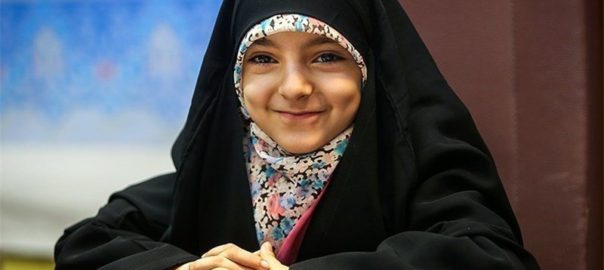
Ten-year-old Quran phenom’s recitation appears on DVD

DVDs containing recitation of the Holy Quran by Hannaeh Khalafi, a 10-year-old memorizer of the entire Quran, was unveiled during a ceremony at the 24th International Holy Quran Exhibition on Friday.

The ceremony took place in the presence of Minister of Culture and Islamic Guidance Ali Jannati where Hannaneh recited several verses from the Surah of Nur (the 24th surah of the Holy Quran), Persian media have reported.

A short film on the different processes of preparing and recording the collection was screened for the participants at the ceremony.

Expert on the Holy Quran recitation Mohammad-Hossein Sabazali who has collaborated in preparing the collection, called Hannaneh a genius who has been invited to different countries to perform.

Sabzali said that the visual section of the collection is also being prepared and will be released soon.

He asked the minister to prepare and donate copies of this collection to young reciters.

The Holy Quran is comprised of 114 surahs (chapter), and is divided into 30 sections, each of which is called a joz.

Quran exhibit is currently underway at Tehran’s Imam Khomeini Mosalla and will be running until June 28.

/ Tehran times/

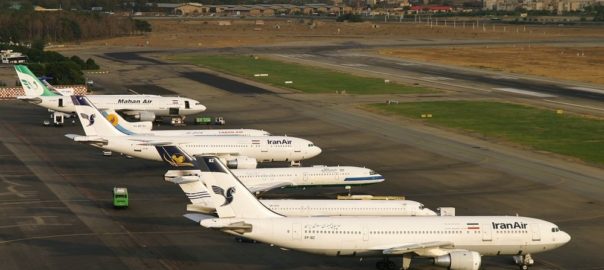
Iran needs 551 airplanes by next 9 years: minister

Iran’s air fleet needs 551 new airplanes by the Iranian calendar year 1404 (March 2025- March 2026), transport minister Abbas Akhoundi announced on Wednesday.


As IRNA quoted him, the Iranian air fleet includes 266 airplanes, 100 of which are grounded due to their old age.

“The average age of in-service airplanes in Iran is around 23 years and they should go out of service within a year according to international standards,” he added.

Following Iran’s nuclear deal with the world’s major powers and lifting of sanctions against the country, the Islamic Republic made renovation of its ageing air fleet one of its top priorities.

The first deal after the nuclear accord was signed in January with Airbus. The Iranian flag carrier, Iran Air, agreed to buy 118 jets worth $27 billion from Airbus.

Akhoundi announced on Tuesday that the agreement on purchasing Airbus planes will be concluded within the next three or four weeks.

Also, Boeing Co. said Tuesday it signed an agreement with Iran Air “expressing the airline’s intent” to buy its aircraft, marking the first major deal with an American company in the Islamic Republic following its landmark nuclear deal.

The Chicago-based manufacturer issued a statement to The Associated Press saying that it signed the agreement “under authorizations from the U.S. government following a determination that Iran had met its obligations under the nuclear accord reached last summer.” / Tehran times /

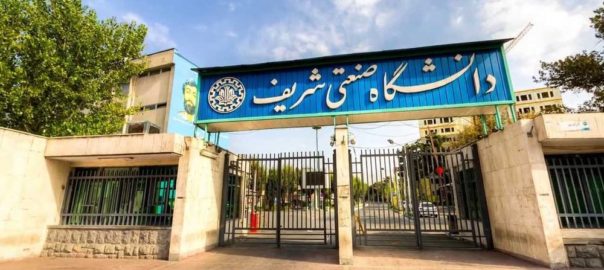
8 Iranian universities among top 200 Asian universities

Eight Iranian universities are among the top 200 universities in Asia, according to Times Higher Education’s 2016 ranking.

Sharif University of Technology, Iran University of Science and Technology, Isfahan University of Technology, and Amirkabir University of Technology are the Iranian universities are among the top 100 universities, Khabaronline reported.

Tehran University of Medical Sciences, Khaje Nasir Toosi University of Technology, University of Tehran, and Shahid Beheshti University are the universities the lower half of the table respectively.

Singapore leads the way in Times Higher Education’s 2016 ranking of the premier universities in Asia and is home to the best two universities in the continent for the first time, while China and Japan have the highest density of top institutions in the region each with 39 universities.

Taiwan and South Korea each with 24 universities, India with 16, Turkey with 11, Thailand with 7, Hong Kong each with 6, Malaysia with 4, Saudi Arabia with 3, Jordan, UAE, Pakistan, and Singapore each with 2, and finally Lebanon, Qatar, Oman, Bangladesh, Macao, and Indonesia each with 1 university are of the countries represented themselves in the Asia University Rankings.

The Times Higher Education World University Rankings are the only global performance tables that judge research-intensive universities across all their core missions: teaching, research, knowledge transfer and international outlook.

The Asia University Rankings use the same carefully calibrated performance indicators to provide the most comprehensive and balanced comparisons, trusted by students, academics, university leaders, industry and governments, but the weightings are specially recalibrated, based on feedback, to reflect the priorities of Asian institutions.

Teaching (the learning environment) with 25 percent, research (volume, income and reputation) with 30 percent, citations (research influence) with 30 percent, international outlook (staff, students and research) and industry income (knowledge transfer) each with 7.5 percent are the five performance indicators used to rank the universities.

/ Tehran times /

Single Digit Inflation After 26 Years

Headline inflation fell below 10% for the rolling year ending June 20, as the Central Bank of Iran’s monetary policy stance bore fruit.

Reducing inflation has been a primary goal of the government of President Hassan Rouhani whose efforts are paying off. The president now has a second feather to sport on his hat—the first was striking a historic deal with world powers over Tehran’s nuclear program.

This is the first time in 26 years that average inflation has fallen to a single digit, according to sources in the CBI. The last time was in 1990, when Iran was emerging from the carnage of the Iraq-imposed war.         


Urban consumer price index fell to 9.5% for the period, the latest report by the Statistical Center of Iran shows. Inflation in rural parts had already fallen below the 10% mark.

The CBI has yet to release its own report for the period, which may or may not confirm the SCI report. Statistics from the two organizations happen to deviate from each other up to two percentage points.

The government’s efforts to get its finances in order and the CBI’s monetary policy have been instrumental in curbing inflationary pressures. But some economists say near zero global inflation, coupled with recession in the Iranian economy that has hammered consumer spending, are the main reasons for the drop in CPI.

  Slow Recovery

Rouhani inherited a country in crisis. The economy was tanking while inflation was unchecked.

In the Iranian year ending March 20, 2014, when Rouhani took office, inflation was over 34% and the economy shrank nearly 6%. The rial had already lost 70% of its value during the currency crisis in the past two years, central bank data show.

Today, the rial is 10% stronger, while inflation is falling to historically low levels and growth is returning. Following the economic recovery experienced in 2014, the Iranian economy is estimated to have advanced at an annual growth rate of only 0.5% during the 2015 Iranian year, according to the World Bank.

However, recovery has been slower than expected.

“This performance came in spite of the signing of the Joint Comprehensive Plan of Action in July 2015 and the significant economic prospects it offered,” the World Bank reports.

Iranian banks have been ill-prepared for reconnecting with their global peers. Most are in a dire financial situation, with enough overdue debt to put their solvency in doubt.

Moreover, they have yet to get up to speed on international regulations and business practices.

On the other side of the isle, European and Asian banks remain reluctant to do business with such partners, given their fear of punishment from the US Office of Foreign Assets Control for breaking remaining US sanctions on grounds unrelated to Iran’s nuclear program.

Large swaths of the economy are in the hands of quasi-state organizations. Due to complex ownership structures, it is hard to determine whether you are violating sanctions when doing business. So, most Europeans are avoiding all the trouble for now.

A chain of expensive lawsuits into European banks in the past five years against sanctions violators has put them on guard.


/financialtribune.com/