All posts by islam

“The Bodyguard” secures three awards at Vienna film festival

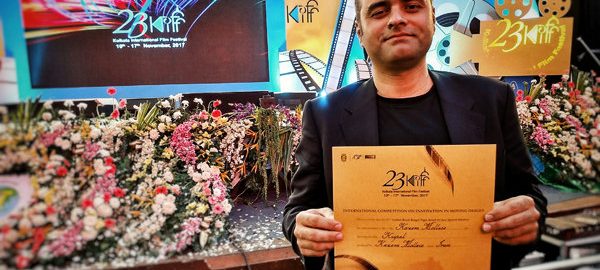
Iranian director Ebrahim Hatamikia’s political drama “The Bodyguard” won three awards at the Vienna Independent Film Festival, the organizers announced on Friday.

The films brought Hatamikia the awards for best director and best art direction and its star Babak Hamidian received the award for best supporting actor during the closing ceremony of the event.

The film tells the story of a middle-aged bodyguard who protects a politician from a suicide bomber, and then begins to question his dedication to his job.

The grand prix of the event went to “Million Loves in Me” directed by Sampson Yuen from Hong Kong, while “Platonov” by German director Andreas Morell was named best film.

John Yiu was crowned best actor for his role in “Million Loves in Me”, which also won the award for best original screenplay by Yiu, Tiong Wooi Lim and Jeremy Tan.

“Forgiveness” by Lebanese director Rima Irani won the best short film award and “Chasing Stars” directed by Markus Eichenberger from Switzerland and “The Writer with No Hands” by British filmmaker William Westaway shared the award for best documentary film.

/ Tehran times /

UWW accepts Iran’s proposal for Muslim women’s singlet

Iran’s Wrestling Federation says that the United World Wrestling (UWW) has accepted its proposal to allow the women wrestlers to participate in the competition with Islamic dress code.

Iran offered the suggestion in December last year in the center of United World Wrestling Committee of Associated Styles in Istanbul, Turkey.

According to media reports, Iran is set to host a three-a-side women wrestling tournament with Iranian and foreign countries.

The International Basketball Federation (FIBA) has already agreed a new rule to come into force in October this year that will allow players to wear a headgear that minimizes the risk of injury and is the same color as a team’s kit. / Tehran times /

Iran Hub of World’s Most Expensive Spice

Saffron is the world’s most expensive spice, used to give a golden yellow color to food and its distinct flavor.

A National Geographic report surveyed the crocus fields of Iran, where more than 90% of the world’s saffron are produced.

Saffron is known as the most valuable plant in the world and has been growing in Iran for thousands of years. It stems from Iran’s history. Before it’s bottled and sold in western grocery stores, saffron begins its life cycle in the Middle East as a delicate purple flower.

The sweetly floral substance is derived from the crocus flower’s dried stamen and the flower only blooms for about a week every year. But harvesting these pollen-producing parts is neither easy, nor cheap for farmers. It takes them 40 hours to handpick enough stamens to produce a single pound of saffron, and a football field’s worth of flowers to boot. For this reason, pound for pound, saffron is more expensive than gold.

Knowledge and experience about saffron have been developed and passed from generation to generation. Since saffron does not need too much water to grow, it suits Iran’s climate.

Iran is currently the biggest producer of this delicacy in the world. Its production of 360 tons of dry saffron per year has accorded the country more than 90% share of the global production.

FAO’s representative recently acknowledged that Iranian saffron is undoubtedly the best in the world.

Saffron is used in traditional medicine for improving the cardiovascular system and creating joy. It has been found to help fight cancer, improve memory and impart many other medical benefit.

It is interesting to know that 170,000 flowers weigh 100 kilograms, from which only 1 kilogram of dry saffron can be produced.

“More than 172 tons of saffron worth $246.7 million were exported from Iran to 47 countries, including the US, in the last Iranian year that ended March 20, 2017, up 32.3% in weight compared to the previous year,” said the chairman of Iran’s National Saffron Center, Gholamreza Miri, who expects exports to see a further 20% rise this year.

Last year, the area under saffron cultivation increased from 88,000 to 95,000 hectares.

Close to 95% of Iranian saffron are produced in the two provinces of South Khorasan and Khorasan Razavi both in the country’s northeast. / Financial tribune /

Artist’s Inner World on Display at Azad Art Gallery

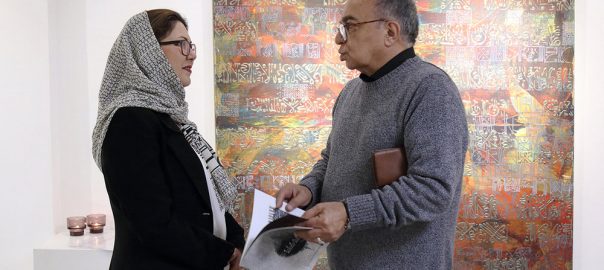
‘What’s in Your Head?’ is the name of a solo exhibit by Iranian painter, video artist, filmmaker and photographer Samira Eskandarfar which is currently underway at Azad Art Gallery in Tehran.

“Most of the time I know what’s in my head. I look at them, sort them out and organize them. But sometimes I don’t know what’s going on in my head or what exactly is in there. I like it when it happens,” Eskandarfar, 37, said in an introduction to her exhibit, according to galleryinfo.ir.

“It was at such wonderful times that I created the drawings. I put the soft and slippery tip of the marker on the glossy surface of the cardboard and let it slide, freely and quickly. I did it when I had no idea what was in my head,” she said.

“I let it happen. I let all those unknown things on my mind to slide on the cardboard to see what’s going on in my head,” Eskandari added.

The exhibition features a collection of drawings and paintings through which visitors may be able to watch the inner processes of the artist’s mind.

‘What’s in Your Head’ will run through July 25. Visiting hours are from 4-8 pm. Azad Art Gallery is located at No. 5, Salmas Sq., Golha Sq., Fatemi St.

Born in Tehran, Eskandarfar, 37, started painting in 1998 and since 2003 she has held 17 solo exhibitions and made 16 short films and video arts.

She has participated in over hundred group exhibitions and screening events worldwide. Her works are focused on human relations and inner worlds. Portrait is her special interest. /  Financial tribune /

Sepehri artwork breaks record at Tehran Auction

An untitled work from Sohrab Sepehri’s Tree Trunk series sold for 31 billion rials (over $800,000) at the Tehran Auction Friday evening, breaking a record at the annual sale of national contemporary art.

A selection from the series that sold for 30 billion rials last year held the record at the auction.

“Poet and Cage”, a bronze sculpture by Parviz Tanavoli, fetched 25 billion rials (over $650,000), was the second most expensive item sold at the auction, which was held at the Parsian Azadi Hotel Friday evening.

Auctioneer Hossein Pakdel takes bid for the sale of “Poet and Cage”, a bronze sculpture by Parviz Tanavoli, during the Tehran Auction at the Parsian Azadi Hotel on July 7, 2017. The piece fetched over $650,000, was the second most expensive item sold at the auction. (Honaronline/Mojtaba Arabzadeh)

The third most expensive items sold at the auction were “Blind Eagle”, a painting by Bahman Mohasses, and another painting from Sepehri’s Tree Trunk collection. The works each were sold at 12 billion rials (over $310,000).

Seventy-two works went under the hammer at this year’s auction that broke the records of previous editions by grossing over 261 billion rials (about $6.9 million). Only a miniature painting by Javad Rostam Shirazi with an estimate of 600 to 800 million rials failed to find a buyer. The art sale grossed 253 billion rials last year.

The Ministry of Culture and Islamic Guidance purchased an untitled painting by Behjat Sadr and “The Royal Lodge” by Kamalolmolk to showcase at the Tehran Museum of Contemporary Art (TMCA), Deputy Culture Minister for Artistic Affairs Ali Moradkhani announced at the auction.

The Tehran Auction was established by former TMCA director Alireza Sami-Azar who is also the director the art sale.

Photo: Auctioneer Hossein Pakdel conducts an auction of contemporary Iranian art during the Tehran Auction at the Parsian Azadi Hotel on July 7, 2017 as employees hold a painting from Sohrab Sepehri’s Tree Trunk series that was the first top seller, fetching over $800,000. / Tehran times /

Yazd inscribed as UNESCO heritage site

United Nations Educational, Scientific and Cultural Organization (UNESCO) has added the historical texture of Yazd in central Iran to its list of world heritage sites.

The site was inscribed on the world heritage list during the 41st session of UNSCO’s World Heritage Committee in Krakow, Poland, on Sunday, July 9, ifpnews.com wrote.

The historical structure of Yazd is a collection of public-religious architecture with a very large scope comprising of Islamic architectural elements extending over different periods of history in harmonious combination with climatic conditions.

Iran nominated Arasbaran Protected Zone in East Azarbaijan Province and the historical city of Yazd for 2017 UNESCO World Cultural Heritage listing.

Mohammad Hassan Talebian, the deputy head of Iran’s Cultural Heritage, Handicrafts and Tourism Organization, said earlier: “While Arasbaran Protected Zone is Iran’s second natural heritage site to be proposed for UNESCO registration, Yazd is the first city in Iran to be nominated for registration as a world heritage site.”

He pointed out, “Yazd is one of the most important desert cities of Iran. The city bears distinct signs of innovation and creativity, a majority of which were promoted between the 10th and 20th centuries CE.

“The old texture of Yazd is in a better shape than other historical cities of Iran.”

Yazd is Iran’s largest adobe city and its monuments boast high architectural values.

“The cultural outlook of Yazd is yet to be modernized and as a result the majority of the monuments including mosques, minarets, houses and cisterns perfectly mirror ancient Islamic-Iranian architecture,” he said.

The official said Yazd became a settlement with the establishment of cisterns.

“One can see diverse eco-friendly architectural styles in Yazd, as if the ancient habitats were aware of the principles of sustainable development. Ancient residents of the city tried to apply wind, soil, and water energies in a way not to damage the environment,” he said.

Yazd has been a manifestation of the brightest cultural heritage and ancient civilization throughout history with human settlement dating back to the third millennium BCE.

Tribes, who migrated from Balkh to Pars, called this land ‘Yazdan’ during the Pishdadi era. The most important early settlements in Yazd include Mehrpadin (Mehriz), Fahrashan or Pahreh (Fahraj), Khormish and Adar (Ardakan), Aqda and Eshkezar.

Yazd is the first adobe city in the world and is the second historical city after Venice, Italy.

Yazd is known as the city of wind towers. In fact, wind towers improve ventilation. They can be seen in residential units and ancient houses.

Yazd’s historical monuments include Yazd Jame’ Mosque, Seyyed Rokneddin Mausoleum,  Amir Chaqmaq Complex, Lariha House, Alexander Prison, Narin Castle, Chak Temple and Water Museum.

In addition, 77 localities of Yazd known as ‘Yazd Historical Texture’ were registered as No. 15,000 on the National Heritage List in 2005.

Gharbal Biz (Mehriz), Tamehr (near Taft) and Masih (Harat) are among the important springs of Yazd.

The protected zones in Yazd are among the other attractions of the province.

Taft is the hub of pomegranate and silkworm in Yazd Province. Its pomegranates are exported. Peaches are also a famous agro product in Taft.

Also, Taft’s water has been well known throughout the history of the province.  An alley in Yazd is known as ‘Ab-e Taft’, which indicates the vivacity of Taft.

Due to certain climatic and economic conditions as well as its remoteness, the inhabitants of Yazd have been involved in making handicrafts. Yazd handicrafts have attracted the attention of artisans and art-lovers across the country since olden times. / Iran daily /

Haddadi clinches gold at Asian Athletics Championship

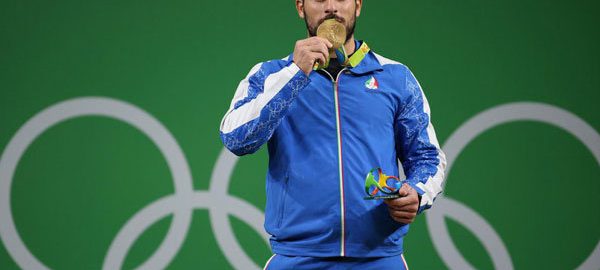
Iranian discus thrower managed to claim his sixth Asian title by landing first at 2017 Asian Athletics Championship underway in India.

With a season’s best 64.54 meters, Ehsan Haddadi won the gold while Malaysia’s Irfan Muhammad settled for the silver (60.96m).

The bronze medal of the discus throw event went to Vikas Gowda of host India who managed 60.81 meters.

Iran’s three-time Asian Games gold medalist was competing at the 2017 Asian Athletics Championships which is the 22nd edition of the Asian Athletics Championships.

It is being held from 6 July to 9 July 2017 at the Kalinga Stadium in Bhubaneswar of India which is giving host to around 800 athletes from 45 countries. / Meher news /

Plan to Increase Greenhouse Cultivation Area

The government plans to increase the area under greenhouse cultivation in Iran to 48,000 hectares within the next 10 years, a deputy agriculture minister said.

“Around 16,760 hectares of the total sum are planned to be constructed by the end of the sixth five-year development plan (March 2022). At present, greenhouse area across the country amounts to 11,200 hectares,” Mohammad Ali Tahmasebi was also quoted as saying by ILNA. / Financial tribune /

Iran’s auto sector to rise GDP share by 70%

The share of Iran’s auto industry in the country’s gross domestic product (GDP) is projected to rise by 70 percent in the current Iranian calendar year 1396 (March 2017-March 2018) compared to four years ago.

Based on a strategic plan drawn out by the industry ministry, the automotive sector’s added value share of GDP will grow from 1.8 percent in Iranian calendar year 1392 to 3 percent in the current year, ISNA reported on Wednesday.

As predicted in the ministry’s plan, Iran is to improve its car and auto-part industry via improving both quality and quantity of the products.

Iran manufactured 1.3 million cars in the past calendar year and targets to push the figure up to 1.5 million cars by the end of this year, Mehr news agency reported in early April, quoting Deputy Industry Minister Mansour Moazzami.

By producing more than one million automobiles in 2016, Iran could rank first in the world regarding output growth, according to a report released in March 2017 by the International Organization of Motor Vehicle Manufacturers. /  Tehran times /

Iran’s 2016 oil exports up over 77%: OPEC

Iran’s oil exports in 2016 reached 1.921 million barrels per day (bpd), a 77.6 percent rise compared to 2015, according to OPEC’s latest Annual Statistical Bulletin report.

The country’s crude exports stood at 1.081 million bpd in 2015 which indicates that the 2016 figure is 840,000 bpd more than that of the 2015 average. In the meantime, Iran boosted exports of oil products by 74.5 percent to 897,900 bpd year on year.

The country sent 514,300 bpd of oil products to its target markets in 2015.In 2015, Iran exported 1.423 million bpd of oil to its Asian buyers compared to 969,700 bpd in 2015.

Meanwhile, 497,300 barrels of oil was sent to the European markets on a daily basis while the figure was 111,400 bpd in 2015.

Iran was exempted from OPEC agreement to reduce output by 1.2 million bpd that began this year, as Tehran needs to regain the market share it lost under Western sanctions over its nuclear program.

The country is planning to increase its production to five million bpd by 2021.

/ Tehran times /