All posts by islam

Iran’s Tabriz celebrates recognition as tourism capital of Muslim world

Iran has inaugurated the biggest tourism event of Muslim states in the northwestern Iranian city of Tabriz to mark the recognition of the city as the tourism capital of the Islamic World in 2018.

On Tuesday, Iranian President Hassan Rouhani inaugurated the Tabriz tourism gala, where dozens of representatives from several Muslim countries, including ministers and diplomats, participated.

A key location on the Silk Road and a gateway to Europe and East Asia, the Azeri-speaking city was named as the 2018 tourism capital of Islamic countries by the Organization of Islamic Cooperation (OIC) during its meeting in Niger’s capital city of Niamey.

In its candidacy for the title, Tabriz received 90 percent of the votes cast by the 57-member Muslim body to win the title.

The OIC first recognized Jerusalem al-Quds as the tourism capital of the Muslim world in 2015. The Turkish city of Konya and the Holy city of Medina were recognized as the next tourism capitals in 2016 and 2017, respectively.

Once a center of culture and Islamic civilization and the seat of many diplomatic, political and international missions, Tabriz seeks to restore its historic glory as the new tourism capital.

Numerous cultural and artistic events as well as street festivals are underway across Tabriz in celebration of the occasion. The city has also offered special discounts on hotels, museums, historic sites and handicrafts for visitors.

Tabriz is fabled to have been the historical site of the Garden of Eden. It is one of the most ancient and largest cities in Iran, with a history of some 4,000 years.

According to the 13th century travelogue of Venetian merchant and adventurer Marco Polo, Tabriz attracted merchandise from India and Iraq, the Persian Gulf and many other places. At the time, it was the capital of the Persian Empire which stretched from Egypt to Central Asia and from the Indian Ocean to Armenia.

When Persia opened up to the West at the end of the 19th century, Tabriz became a European foothold as industry grew, making it Iran’s economic capital. The carpet, textile, footwear, cement and food processing industries that are still the key components of the city’s economy have roots in this period.

The city was also one of the first to embrace modernization and many of the new developments in Iran’s history used to happen in Tabriz, such as the print shop, public cinema, theater, municipality, kindergarten, school for the deaf and the dumb, modern school, newspaper and firefighting service.

Modern Tabriz has lost its position as Iran’s second city and economic hub, but it is still the largest metropolitan area in the northwest. The city is also a major heavy industry center for automobiles, machine tools, refineries, petrochemicals, pharmaceutical products, leather goods and carpets.

This pivot to industry has had its downsides, where tourism has been neglected overall. Tabriz gets very little of the limelight in Iran’s promotion of its splendid ancient heritage in places such as Isfahan, Shiraz, Yazd and Mashhad.

The development tempo in Tabriz is underlined by the new high-rises which dot its skyline to the accompaniment of new highways, parks and bridges being built and old buildings given a face-lift.

Since then, the city has paved many of its old alleys and streets anew and repaired its historical sites to be named Iran’s cleanest city for several years in a row.

Tabriz also carries a number of unofficial attributes such as the city of firsts because of its perceived pioneering role in Iran’s modernization, the city without beggars and homeless and the chocolate capital of Iran.

Local confectionery, dried nuts and traditional Tabrizi cuisine are recognized throughout Iran as some of the best.

Shirin Asal, Aysuda, Aydin, Shoniz, Anata, Baraka and Chichak are some of the household names in Iran and the country’s best gourmet chocolate brands. Their specialties include qurabiya, Tabrizi lovuez, riss, nougat, tasbihi, latifeh, Ahari, lovadieh, and lokum.

The city is further famous for its handicrafts, including hand-woven rugs and jewelry. Tabriz rugs are distinguished by their excellent weave and adherence to the classical traditions of antique Persian rug design.

While many of the city’s ancient monuments have been lost through repeated earthquakes, the remaining historical buildings are impressive in their kind.

Foremost is the world’s largest covered bazaar in the world, a fifteenth-century complex of interconnected brick structures and enclosed spaces for different functions, which is one of Iran’s UNESCO World Heritage Sites.

Others include a huge fourteenth-century brick edifice that is the only remnant of a once mighty citadel, as well as the famous Blue Mosque, named for the vivid blue tiles that decorate its walls.

Tabriz has also a number of hillside gardens and parks popular for weekend getaways. Its museums exhibit finds dating as far back as 4,000 years ago. There is also a graveyard belonging to some 400 classical and contemporary poets, mystics and other notable people.

Churches in the city attest to its place as a boiling cauldron of races, religions and nationalities. The city currently has a visible Armenian minority who follow Christianity. It also had a small Jewish community, but most of them have moved to Tehran.

Near Tabriz, the village of Kandovan attracts many visitors who travel to see manmade cliff dwellings excavated inside volcanic rocks, which are still inhabited.

The Arasbaran or Qaradaq gorge of majestic forests is a UNESCO Biosphere reserve which Iran has applied for promotion to the National Park status. It is home to about 350 species of birds, mammals, reptiles and fish as well as many exotic plants and wild trees.

/ Press tv /
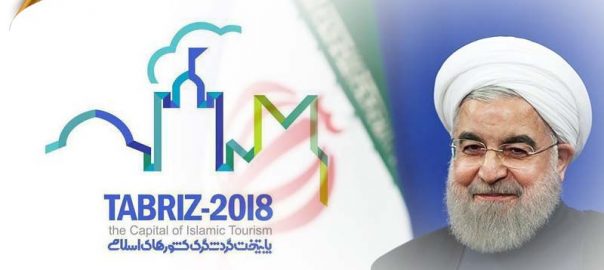
President Rouhani inaugurates Tabriz 2018

The international ceremony to mark choosing Tabriz as the Islamic World tourism capital called ‘Tabriz 2018’ started with the attendance of Iranian President Hassan Rouhani on Wednesday.

Tourism ministers and ambassadors of Azerbaijan, Turkey, Afghanistan, Iraq, Armenia, Bangladesh, Uzbekistan, Switzerland, Norway, Turkmenistan, Bulgaria, Tajikistan and Belarus have been invited to the event, Head of Foreign Ministry Office in East Azarbaijan, Esmaeel Ragheb earlier told the Islamic Republic News Agency (IRNA) on Wednesday.

Mayors of Istanbul, Kazan and Baku who have sisterhood agreements with Tabriz also participated in the event, he said. Some cabinet ministers also attended Tabriz 2018.

Tabriz, the third largest city in Iran, has a special place in the history and economy of the country. The city has been chosen by the Organization of Islamic Cooperation (OIC) as tourism capital of the Islamic World in 2018. / irna/

Bright Prospects for Iran’s Ecotourism

The government’s focus on the development of ecotourism, especially in rural areas, is a reliable means of creating a stable source of income for locals and preventing heterogeneous construction.

Based on the directives of the budget law regarding the creation of sustainable employment and support for development in rural and nomadic areas, low-interest loans (up to 6%) are being offered by the National Development Fund of Iran to those eager to establish ecolodges throughout the country, IRNA reported.

Ecotourism is defined by the International Ecotourism Society as responsible travel to natural areas that conserves the environment and improves the welfare of local people.

It is intended as a low-impact and often small-scale alternative to standard commercial mass tourism and its purpose is to preserve natural areas and environment and improve the well-being of the local people. / Financial tribune /

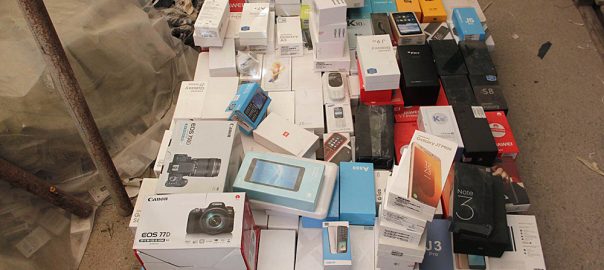
Iran Government Revenue From Cellphone Imports Almost Triples

During the year ending in March 2017, the value of imported handsets into the country was $119 million, which reached $3.23 billion in the next year; the increase translates into a 172% jump in government revenue—from $21.4 million to $58.3 million After the implementation of the Registry Scheme, smuggled phones were cut off from the country’s network. Statistics show that so far, a total of 210,773 phones have been disconnected.

As part of the President Hassan Rouhani administration’s push to curb mobile phone’s smuggling, the Registry Scheme went into full swing as of April 21. Following the move, government revenue from customs duty and imports tax levied on cellphones hiked 2.7 times.

During the year ending in March 2017, the value of imported handsets into the country was 5 trillion rials ($119 million), which reached 136 trillion rials ($3.23 billion) in the next year; the increase translates into a 172% jump in government revenue—from 900 billion rials ($21.4 million) to 2.45 trillion rials ($58.3 million).

The numbers were reported by Hamidreza Dehqaninia, the ICT head at the Headquarters to Combat Smuggling of Goods and Foreign Exchange, in an interview with Students News Network.

Aimed at reining in cellphone smuggling, the ICT Ministry, Islamic Republic of Iran Customs Administration, Communications Regulatory Authority and the Industries Ministry introduced the Cellphone Registry Scheme that bars local operators from offering services to contraband phones. / Financial tribune /

Iran crowned World Super 6 champion

Iran national sitting volleyball team overpowered Russia in straight sets (25-21, 25-23, 28-26) in the World Super 6 on Tuesday.

Team Melli lifted the trophy at the Sadra Sport Complex in the northwestern Iranian city of Tabriz with six victories.

Iranian Minister of Sports and Youth Affairs Masoud Soltanifar attended the match.

Iran started the event with a 3-0 win over Russia and beat Bosnia and Herzegovina 3-2 in their second match. Iran also defeated Ukraine, Germany and the U.S. in straight sets.

Six of the world’s best male sitting volleyball national teams participate at the Super 6 from April 19 to 24.

It was the second edition of the international competition, which only included women’s teams last year and saw Russia taking gold in Hangzhou, China.

The event featured reigning world champions Bosnia and Herzegovina, Paralympic gold medalists Iran, world No.6 Germany, No.9 Russia, No.5 Ukraine and the U.S.

/ Tehran times /

Iranian movies nominated for Beijing Fest. best film award

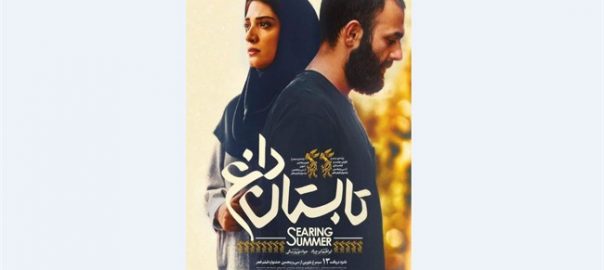
Two Iranian Films ‘Searing Summer’ by Ebrahim Irajzad and ‘Untaken Paths’ by Tahmineh Milani have been nominated for the Best Film Award (Tiantan Award) at the 8th Beijing International Film Festival.

Iranian movies nominated for Beijing Fest. best film award

The two Iranian films were nominated along with two Chinese films for the best film award of the festival which began on April 15 and will continue until April 22 in the Chinese capital Beijing.

‘Searing Summer’ narrates the story of a married woman called Nasrin who wants to get a divorce but knows she will not be able to get custody of her six-year-old daughter in the case. Without her husband’s knowledge, she moves to another part of town with her daughter.

When her husband catches up with her, their lives take an unexpected turn.

Milani’s film is about a young girl, Mali, who meets Sia and starts secret relations with him. Soon Mali’s family finds out about their relationship. According to the cultural rules, the only way she can continue her relationship with Sia, is for them to get married.

Despite the disapproval of Mali’s family, things take a quick turn. Sia, incapable of managing his new life, starts practicing his father’s methods of turning to physical violence. Now Mali, who has lost her self-confidence and personality as well as her family’s support, becomes more and more depressed as each day passes.

In the 7th edition of the festival, Iranian actress Golab Adineh won Best Actress award for her inspiring role in the Iranian film ‘Abji’. / Irna /

Iranian orchestras to perform in Russia during 2018 World Cup

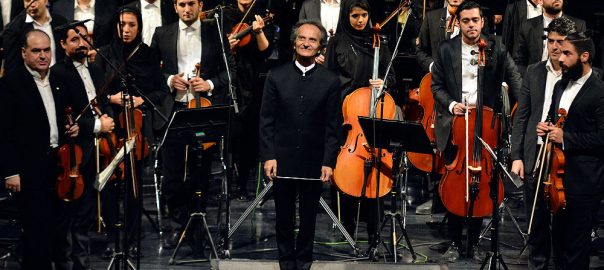
The Tehran Symphony Orchestra and National Orchestra will perform several concerts in honor of Team Melli, Iran’s national football team, in Russian during the FIFA World Cup soccer tournament.

Two songs have specifically been composed for the performances, which will be held in Moscow, Saint Petersburg and Kazan, Ali-Akbar Safipur, the director of the Rudaki Foundation that is the main organizer of the concerts said during a press conference on Monday.

The lyrics for one of the songs has been composed by Ehsan Afshari while Babak Zarrin has put it to music. Vocalist Salar Aqili is scheduled to perform the song along with the Tehran Symphony Orchestra.

The other song is from poet Saed Baqeri and Shahrdad Rohani, the conductor of the Tehran Symphony Orchestra, has set it to music. Vocalist Alireza Qorbani will sing the piece.

Safipur said that Fereidun Shahbazian, the conductor of the National Orchestra, is also composing music for a poem by Abdoljabbar Kakai, which will also be performed in Russia. The singer of the piece will be announced later.

Earlier last week, former Tehran Symphony Orchestra conductor Ali Rahbari who has worked with over 100 European orchestras criticized the decision to perform the concerts in Russia.

He described the decision as taking coal to Newcastle and said that the performance would not get any public welcome in the country, which is home to numerous professional orchestras.

Rahbari also called the musical program costly for Iran and asked the Culture Ministry to stop it as the country is suffering a deep recession. / Tehran times /

Iran take three titles at World Taekwondo Junior Championships

After winning a gold medal by Hossein Lotfi on opening day of 2018 World Taekwondo Junior Championships in Tunisia, Iran’s Amir Valipour and Amir Sina Bakhtiari also claimed two more gold medals on Tuesday.

The nation triumphed in the men’s under-51 kg and the men’s under-55kg at La Salle Couverte in Hammamet

Valipour seized the gold in the lighter category as he beat Azerbaijan’s Khanoghlan Karimov in the final.

Bronze medals were shared by Po-Kai Lai of Chinese Tapei and Ulugbek Rashitov of Uzbekistan.

Bakhitari then won at under-55kg by beating Jose Luis Acuna of Argentina in the final.

Georgy Popov of Russia and Mahamadou Amadou of Niger won the bronze medals.

On Monday, Lotfi had defeated Uzbekistan’s Amirbek Turaev in the final of men’s under-45kg class, with bronzes going to India’s Kanha Mainali and South Korea’s Lee Jang-Hoe.

In the women’s under-42kg, Mobina Kalivand of Iran had claimed a bronze medal. / Tehran times /

American director Oliver Stone to attend Fajr filmfest

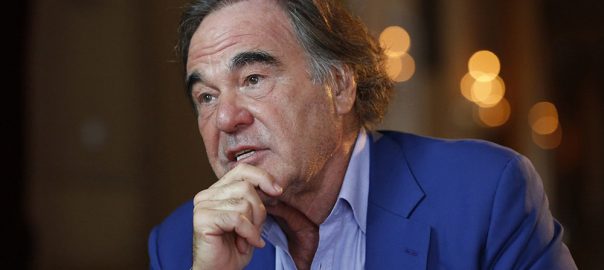
Oscar-winning American filmmaker Oliver Stone will be attending the 36th Fajr International Film Festival, the secretary of the festival, Reza Mirkarimi, announced in a press conference on Wednesday.

Stone won an Academy Award for Best Adapted Screenplay as the writer of “Midnight Express”. He has also made “Comandante”, a 2002 political documentary film, in which he interviews Cuban leader Fidel Castro on a diverse range of topics. He is also the director of the epic four-episode documentary “The Putin Interviews” that was produced about on Russian leader Vladimir Putin from 2015 to 2017.

Many other distinguished cineastes have also been invited to attend the Fajr festival.

“As announced before, Italian musician Nicola Piovani, Palestinian director Rashid Masharawi, and German cinematographer and producer Thomas Mauch are also among the festival guests this year,” Mirkarimi said.

Elsewhere he remarked that “finding friends for the cinema of Iran” is the main goal of the festival.

“Discovering the family and religion-themed movies of the world cinema is another goal of the festival,” Mirkarimi added.

He further noted that the representatives of the FIAPF – International Federation of Film Producers Associations visited the festival last year to evaluate its international ranking.

“They told us the festival is considered to be one of the 15 most important festivals in the world. However, the representatives will be coming to the event this year to evaluate the event,” he stated.

The FIAPF based in Paris is an organization composed of 36 member associations from 30 of the leading audiovisual production countries. It is in charge of regulating international film festivals.

The juries of various categories of the Fajr festival were also announced at the press conference.

The jury members of the Cinema Salvation, the official competition section of the festival, are Polish director Joanna Kos-Krauze, Macedonian director Milcho Manchevski, Greek filmmaker Dimitri Athanitis, Indian director and producer Adoor Gopalakrishnan, and Italian producer Giovanni Spagnoletti.

Cinematographer Mahmud Kalari and actress Merila Zarei are the two Iranian members of the jury.

Fifteen movies from Iran and other countries will compete in this category.

Among the films are “A Phone Call to Father” by Seric Aprymov from Kazakhstan, “Little Tito and the Aliens” by Paola Livia Randi from Italy, “Little White Lie” by Tomas Alzamora from Chile, “Night Accident” by Temirbek Birnazarov from Kyrgyzstan, “Beyond the Clouds” by Majid Majidi from India and “The Silent Revolution” by Lars Kraume from Germany.

Pat Collins’ “Song of Granite” from Ireland and Canada, Hanna Slak’s “The Miner” from Croatia and Slovenia, Milko Lazarov’s “Aga” from Germany, France, and Bulgaria, Semih Kaplanoglu’s “Grain” from Turkey, Germany, France, Sweden, and Qatar, and Alexey German’s “Dovlatov” from Russia, Poland, and Serbia will also be screened in the section.

The Iranian films competing in this section are “Forty-Seven” co-directed by Ahmad Otraqchi and Alireza Ataollah Tabrizi, “Hattrick” by Ramtin Lavvafi, and “The Lost Strait” by Bahram Tavakkoli. / Tehran times /

FIFF36 announces jury panels for all sections

The juries for the Cinema Salvation, Eastern Vista, Interfaith, and NETPAC of the 36th edition of Fajr International Film Festival have been revealed.

Cinema Salvation – International Competition Jury:

Joanna Kos-Krauze, one of the most important directors in contemporary Polish cinema.

Milcho Manchevski, a Macedonian film director. Manchevski’s acclaimed Before the Rain (1994) is considered “one of the greatest debut feature films in the history of cinema” (Annette Insdorf) and “one of the most important films of the decade” (Ann Kibbey).

Dimitri Athanitis, is a film director born in Athens, where he studied cinema and architecture. His last film Invisible (2016) gained 14 Awards, screening at more than 40 festivals.

Adoor Gopalakrishnan, one of the leading luminaries of the New Indian Cinema, Adoor Gopalakrishnan has written and directed twelve feature films.

Giovanni Spagnoletti studied in Rome and at the Freie Universität in Berlin and received a degree in German studies at the Roman University La Sapienza with the maximum grade.

Mahmoud Kalari, born on April 31, 1951, in Tehran, Iran. After completing photography in New York and Sigma Photo News Agency, he held his first photo exhibition titled Visit From People Around Us at Tehran University in 1976.

Merila Zarei, Iranian actress and a graduate of Azad University of Tehran, she became interested in cinema through Ezatollah Entezami’ sacting courses.

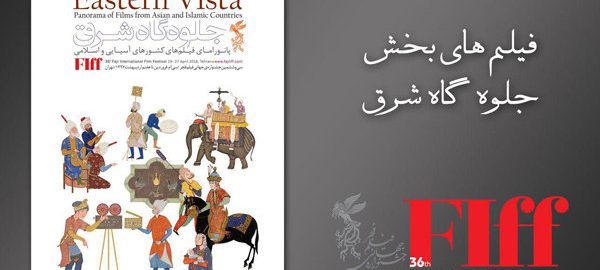
Eastern Vista – Panorama of Films from Asian and Islamic Countries – Jury:

Salome Demuria (Georgia), Suhan Pansha (Malaysia), Ahmet Boyagioglu (Turkey), Ammar Jamal (Iraq), Farhad Aslani (Iran)

Interfaith Competition Jury:

Valérie De Marnhac (France), Thomas Kroll (Germany), Mohammad-Reza Zaeri (Iran)

NETPAC Jury:

Andreas Ungerbock (Austria), Raman Chawla (India), Habib Ahmadzadeh (Iran)

For all Festival goers who are already planning their visit, check screening time and other information at www.fajriff.com. For more infomation on the jury panels check here.

Presided over by Iranian film writer and director Reza Mirkarimi, the 36th edition of Fajr International Film Festival will be held in Tehran on April 19-27. / Meher news /