All posts by islam

Persian ranks 15th in scientific journals publication

According to Scopus, the publication of scientific journals in Persian has increased forty-fold in the last 20 years, giving Persian language a ranking of 15th in the world in terms of quantity of scientific production.

The announcement was made by Mohammad Javad Dehghani, President of Islamic World Science Citation Center (ISC), on the sidelines of the 13th International Conference for the Promotion of Persian Language and Literature currently underway in Shiraz.

According to the Scopus, the largest abstract and citation database of peer-reviewed literature, the publication of scientific journals in Persian from 1997 to the end of 2017 has increased by forty times, which has improved the global ranking of Persian language in terms of quantity of scientific production from 30th to 15th place. / MNA /

Iran’s flower, ornamental plants market on rise

Iran’s balance of trades for flower and ornamental plants in the past Iranian year (ended on March 20) remained positive amounting to some $11 million, which is expected to observe a significant growth this year, a senior official at the Ministry of Agriculture said.

According to the head of the Ministry of Agriculture’s Greenhouse, Medicinal Plants and Edible Mushroom Affairs Bureau, Gholamreza Taqavi, the country’s exports of flower plants, seedlings and bulbs amounted to $25 million last year, while the imports the floral products stood at around $14 million.

Taqavi noted that the recent fluctuations in the currency market and the huge gap between the prices of the domestically-produced and imported flowers have heated the domestic flower market.

Noting that domestic market needs some 4 million cut flowers in a year, he added “previously, we needed to import some 60 million floral plants, seedlings, bulbs, but the number has been halved due to the increase in domestic production.”

According to the official, over 2.5 billion cut flowers were harvested in the country in the first half of the current year (through Sep. 22).

Over 6,599 hectares of land are under the cultivation of ornamental plants and flowers in Iran, some 2,400 hectares of which belong to greenhouse cultivation while the remaining pertain to outdoor cultivation.

Noting that Iran ranks second globally in the expansion of greenhouse area, said plans are on the agenda to increase the share of Iranian green products in the foreign markets vial facilitating and outsourcing the exports. Iran is home to hardly 0.3% of the world’s greenhouses. / MNA/

Chinese increase in Iran oil imports could offset impact of US sanctions: Novak

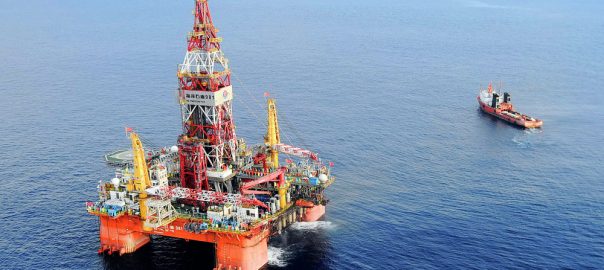
China’s possible decision to increase its imports of Iranian oil could offset the negative impact of US sanctions on Iran’s oil industry, Russian Energy Minister Alexander Novak said on Thursday.
Chinese increase in Iran oil imports could offset impact of US sanctions: Novak
‘We do not fully understand how the consumers from the Asia-Pacific region will react, and whether China will increase its imports [of Iranian oil]. There will be no change [on the market] if the flow of Iranian oil is redirected. There are a lot of uncertainties that we do not fully understand today,’ Novak said on the sidelines of the Russian Energy Week, Sputnik reported.

Novak pointed out that the move would affect Chinese-US trade relations, triggering another stage of trade war between Beijing and Washington.

‘These volumes are insignificant for the Chinese economy, so if there is a decision [to stop importing US oil], the People’s Republic of China will be able to shift to other sources without any problems,’ the Russian minister added.

Media reported on Wednesday citing the president of China Merchants Energy Shipping Co (CMES) that shipments of US crude oil to China had been stopped amid the escalating China-US trade war.

Iran’s envoy to the Organization of the Petroleum Exporting Countries (OPEC) Hossein Kazempour Ardabili said in late September that other OPEC members will be unable to compensate for missing Iranian oil supplies on the market after US sanctions against Tehran go into force.

The United States started reimposing sanctions on Iran after withdrawing from the Iran nuclear deal in May. In early August, Washington imposed the first package of sanctions targeting Iran’s purchase of US dollar banknotes, trade in gold and other metals as well as transactions involving its national currency.

The second package is set to be introduced in early November and hit Iran’s energy sector and oil exports, among other things. /IRNA /

Women para-shooters gain two gold medals

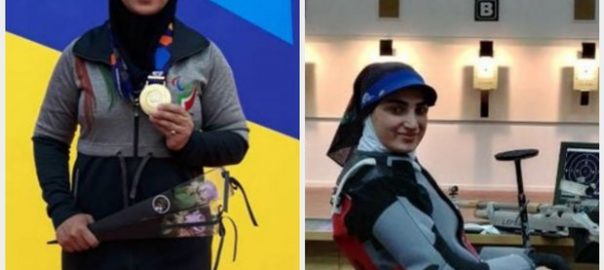
Iranian women para-shooters gained two gold medals on Monday in the 2018 Asian Para Games.

In mixed 50m free pistol class of P4, 2016 Rio Paralympics gold medalist Sareh Javanmardi snatched the gold medal ahead of his two Indian men rivals Manish Narwal and Singhraj Singhraj.

Also, in women’s 10m air rifle standing class of R2, Iran’s Roghayeh Shojaei scored a high of 247 points and won the gold medal. Two Chinese representatives stood next with 246.1 and 224.9 points. This was the first participation of 30-year-old Shojaie in Asian Para Games.

2018 Asian Para Games kicked off on Saturday in Jakarta and will continue through October 13. Some 2,831 athletes from 43 countries have participated in the event. A total of 209 athletes, consisting of 137 men and 73 women, represent Iran in the 2018 Asian Para Games in 13 sports.

Gaining a total of 11 medals, including 4 gold, 1 silver, and 6 bronze, Iran currently ranks fifth in the medal tally. China, Japan, South Korea, and Uzbekistan have the top rankings./ MNA/

Iran ranks 12th in global egg production

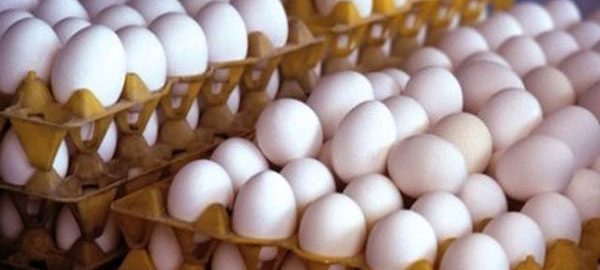
A deputy agriculture minister said Iran is placed in the 12th rank of the global egg production, calling for provision of the grounds to facilitate exports.

According to Deputy Agriculture Minister Morteza Rezaei, the country’s egg production will amount to 500,000 tons in the current fiscal year (ends on March 20, 2019).

The figure indicates that the per capita egg production stands at 6.25 kilograms in the country, with a population of over 80 million.

This is while, he added, each Iranian consumes 185 to 198 eggs or per year, which is below the average for many other countries and brings a surplus in the domestic market.

The official stressed the need to take effective measures including better quality and health supervision so as to enhance the exports of the surplus eggs, because it is inevitable and highly important to have a bigger share in international markets.

According to him, Iran is among the main suppliers of egg in the region and many countries choose Iranian egg.

According to Farzad Talakesh, s the secretary-general of Iran’s Association of Producers of Egg-Laying Hen, Iran’s egg exports boomed in the fiscal 2015-16 when the country exported some 95,000 tons of eggs to Afghanistan, Iraq and Oman, registering a 52,000-ton increase year-on-year. However, the figure dwindled to 40,000 a year later.

Other measures such as tax exemption or providing export incentives can also help exporters gain a considerable share in the regional markets. / MNA /

Iranian knowledge-based firms to enter Ugandan agriculture sector

A Memorandum of Understanding (MoU) has been signed between the Vice-Presidency for Science and Technology and Iran-Uganda Holding with the aim of boosting Iranian knowledge-based companies’ footprint in the African country’s agricultural sector.

The MoU was inked by Mostafa Ghanei, Vice Presidency’s director of biotechnology development department, and Seyed Mohammad Ali Mousavi, the representative of the holding.

As per the agreement, the Vice Presidency will be obliged to help Iranian companies in different aspects including mainating activity in Uganda’s agriculture sector through provision of appropriate farmlands, facilitating the exports of knowledge-based firms’ services to the African country, transfering technology on biotechnological agriculture, and conducting comprehensive studies about agricultural status and conditions in Africa, particularly Uganda.

The MoU is valid for a period of three year, and will be renewed in case of consent. / MNA/

IRIB launches music video festival to celebrate 40 years of Islamic Revolution

Islamic Republic of Iran Broadcasting (IRIB) has launched a festival for music videos to celebrate the 40th anniversary of the 1979 Islamic Revolution, the IRIB Music and Poetry Office announced on Monday.

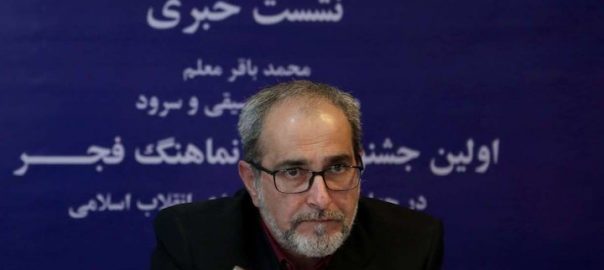
Speaking at a press conference, the director of the office, Mohammad-Baqer Mo’allem, said that the event has been named “The Fajr National and International Music Video Festival”.

“Integrating music with imagery deepens its effects and this is the main reason for making a music video,” Mo’allem stated.

He said that the music video has turned into an artistic means to promote an issue and build a culture in the world, and added, “Unfortunately, the music video has not received the necessary attention in our country.”

He said the festival has been established to introduce young promising artists in the fields of music and imagery.

The festival, which is scheduled to be held during February 2019, has been organized to celebrate the anniversary of the 1979 Islamic Revolution.

“Revolutionary Thinking”, “The Cultural Impacts of the Islamic Revolution on the World”, “Neo-Colonialism” and “Resistance” are the main themes of the international competition.

Photo: IRIB Music and Poetry Office director Mohammad-Baqer Mo’allem attends a press conference on October 1, 2018 to elaborate on the Fajr National and International Music Video Festival. / Tehran times /


Iran’s Noncommunicable Diseases Committee receives UNIATF award

The UN Interagency Task Force on the Prevention and Control of Non-Communicable Diseases (UNIATF) award went to the Noncommunicable Diseases (NCDs) Committee of Iran’s Ministry of Health for making an outstanding contribution to NCD prevention and control.

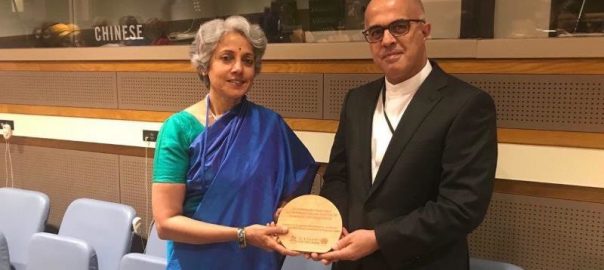
Deputy Director General of Programmes at the World Health Organization (WHO), Somia Swaminatan, has granted the award to the representative of the Non-Communicable Diseases Committee during the “Friends of the Task Force” meeting on the sidelines of the third High-level Meeting on NCDs at the United Nations General Assembly in New York on September 27, 2018, IRNA news agency reported on Tuesday.

UNIATF at its 10th meeting in Vienna in February 2018 initiated the UNIATF award to recognize those making an outstanding contribution to NCD prevention and control.

The UNIATF awards are issued to individuals or groups of individuals for achievements in the area of multisector action in the prevention and control of NCDs for getting countries on the right trajectories in achieving NCD-related Sustainable Development Goals (SDGs).

Due to the efforts made over the past 40 to 50 years on improvement of the quality of fresh water, roads, education, electricity and health services, Iran is among the countries where trachoma is eradicated.In line with WHO’s activities to combat NCDs, in 2015, a committee has been stablished in Iran called National Non-Communicable Disease Committee at the Ministry of Health headed by the Health Minister, Hassan Qazizadeh Hashemi. There are six subcommittees affiliated with this committee responsible for controlling cancer, cardiovascular diseases, metabolic disorders, air pollution and inter-sectoral collaboration, traffic injuries, and a subcommittee for monitoring and evaluating whole action plan for the NCDs in Iran.

The national plan to combat NCDs was endorsed by President Hassan Rouhani, Parliament Speaker Ali Larijani, the then Director-General of WHO Margaret Chan Fung Fu-Chun and WHO Regional Director for the Eastern Mediterranean Ala Alwan, which was also appreciated by other countries due to not being limited to one ministry and sector but to other sectors as well.

Iranian health Minister Hassan Qazizadeh Hashemi has stated that while some 80 percent of deaths in the world are related to NCDs, the measures taken by Iran to reduce the burden of cancer, heart and lung diseases, and diabetes have been taken worldwide.

Hashemi went on to say that “we hope that the action plans can be also applied into practice by the public because prevention of these diseases first and foremost depends on a person’s will, and then the administration and the parliament should also play their part.”
Moreover, an important measure Iran has taken on the eradication of trachoma (the leading infectious cause of blindness), has also been endorsed by the WHO, he further highlighted.

According to the WHO trachoma is a disease of the eye caused by infection with the bacterium Chlamydia trachomatis. It is known to be a public health problem in 41 countries, and is responsible for the blindness or visual impairment of about 1.9 million people. In 2016, 190.2 million people lived in trachoma endemic areas and were at risk of trachoma blindness.

“Due to the efforts made over the past 40 to 50 years on improvement of the quality of fresh water, roads, education, electricity and health services, Iran is among the countries where trachoma is eradicated,” he concluded. / Tehran times /


Iran, Turkey draw roadmap for agriculture cooperation

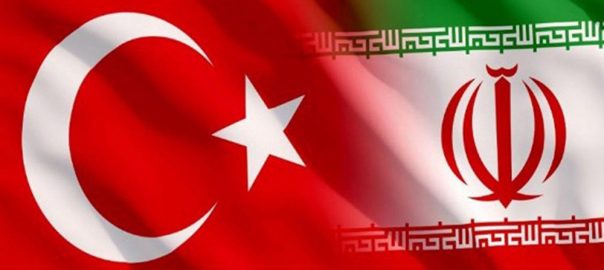
Iranian ministry of agriculture and Turkey’s ministry of agriculture and forestry inked three memorandums of understanding (MOUs) on Wednesday for cooperation in various fields, IRNA reported.

Covering different areas including veterinary, beekeeping and forestry, the agreements were signed during the seventh meeting of the Strategic Committee for Agricultural Cooperation between the two countries in Tehran.

Iran’s Agriculture Minister Mahmoud Hojjati and his Turkish counterpart Bekir Pakdemirli were also present in the meeting.

Speaking in the meeting, Hojjati noted that [with this agreements] “the roadmap for agricultural cooperation between the two countries has been drawn” and the two sides can collaborate in various areas including controlling livestock diseases such as foot-and-mouth disease and avian influenza.

The Iranian official also expressed his ministry’s interest in preferential trade with the Turkish side.

Hojjati also called for further cooperation with Turkey on the production, marketing and sale of medicinal herbs and the development of forests.

According to Iran’s embassy in Turkey, the two countries’ trade in the first half of 2018 was near $5.2 billion of which $3.8 billion was related to Iran’s exports to Turkey and $1.4 billion was the share of Turkey’s exports to Iran.

The two countries have it on agenda to increase the level of mutual trade to $30 billion in the near future./ Tehran times /

Foreign tourists visiting Iran up 51% in Sep.

The head of Iran’s Cultural Heritage, Handicrafts and Tourism Organization (ICHHTO) says the number of foreign tourists visiting the country surged 51% in the first six months of the current fiscal year (started on March 21) in comparison with similar period last year.

According to Ali Asghar Mounesan, the surge comes despite the decline in the number of inbound tourists in first six months of the past year.

Data released by ICHHTO, shows that 2,619,310 foreign tourists entered the country in the first half of last year, down from 2,701,859 the year before.

However, last year’s collective number of tourists shows a slight growth. A total of 5,113,524 foreign tourists traveled to Iran in the last Iranian year, showing a 4.33% increase year on year.

Implicating the depreciation of the rial’s value to dollar, the official noted that Iran has become a considerably cheap destination for foreign visitors.

Therefore, the growth in tourism is expected to rise through the current year, Mounesan added. / MNA /