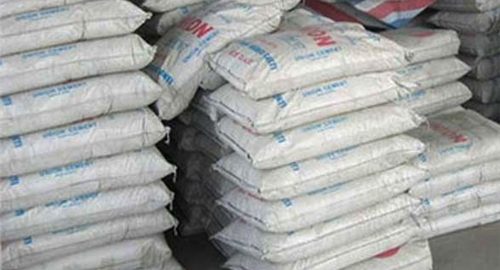
MNA – In its latest statistics, Islamic Republic of Iran Customs Administration (IRICA) reported that 4,407,695 tons of cement, valued at over $159.3 million, were exported in the first three months of current Iranian calendar year (March 21-June 21).
The figures show one percent decline as compared to the same period last year, but no difference in terms of weight.
Meanwhile, 12,786 tons of cement was imported in the same period, showing a considerable 106 percent growth as compared to the last year’s corresponding period.
IRICA also put the cement import value in the first quarter of the current year (March 21-June 21) at $8.3 million, showing a 131 percent hike as compared to the same period last year.
Other reports showed that over 55,192,200 tons of cement was produced in the country in the last Iranian calendar year (ended March 20, 2018).
Moreover, 58,110,200 tons of clinker was produced last year, showing one percent increase as compared to the last year’s corresponding period. / The Iran project /
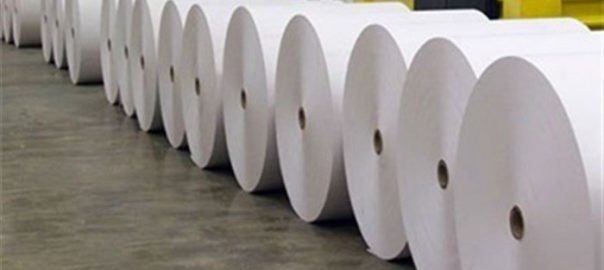
The First International Specialized Exhibition of Paper, Cardboard Cellulose Products and Related Machinery (PCCM 1397) became operational on Wednesday at the Tehran Permanent International Fairground, IRIB reported.
The opening ceremony was attended by Iranian officials from the Ministry of Industry, the parliament, and related unions, the report said.
Besides Iranian companies, some from Russia, China, India and Turkey are showcasing their latest products in this sector and sharing their experiences with their Iranian counterparts. The event will wrap up on July 4. / Tehran times /
Iranian actress Maral Farjad has won an award at US’ Love International Film Festival for her supporting role in ‘Immortality’ directed by Mehdi Fard Ghaderi.
In a ceremony held in Los Angeles last night, Iranian actress Maral Farjad won the Best Actress in a Supporting Role award while competing with Meagan English (‘In the Wake of Ire’) and Jackie Nova (‘Art of Deception’).
‘Immortality’ is Fard Ghaderi’s debut feature that displays events occurring in a rainy night on a train. The film is the story of six different families each in a different compartment, told through a nonlinear passage of time.
Love International Film Festival, held annually in Los Angeles, is dedicated to showcasing films with a theme on “family values, love, peace, acceptance, tolerance, friendship and introducing intercultural values.”
‘Immortality’ as well as ‘Temporary License’ by Iranian filmmaker Afshin Hashemi had also received nominations for the Best Feature Film award and Best Screenplay at the American festival.
The 2018 Love International Film Festival was held on 24-27 July in Beverly Hills, Los Angeles, US. / Mehr news /
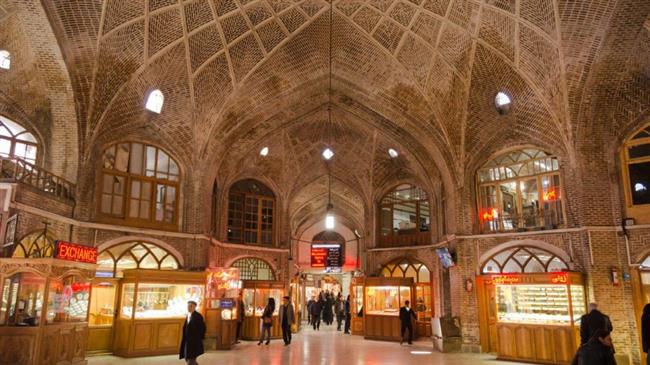
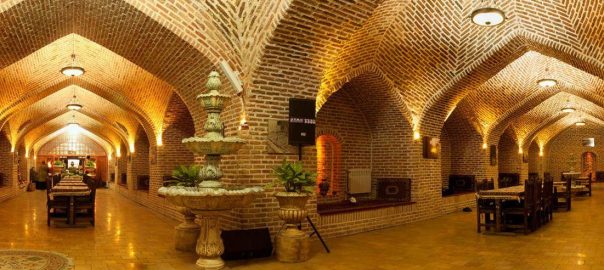
By Arghavan Shamsara : The Grand Bazaar of Tabriz in the northwestern Iranian city of Tabriz is known as the largest roofed Bazaar in the world and the oldest one in the Middle East.
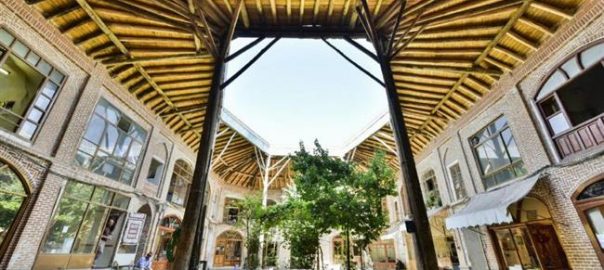
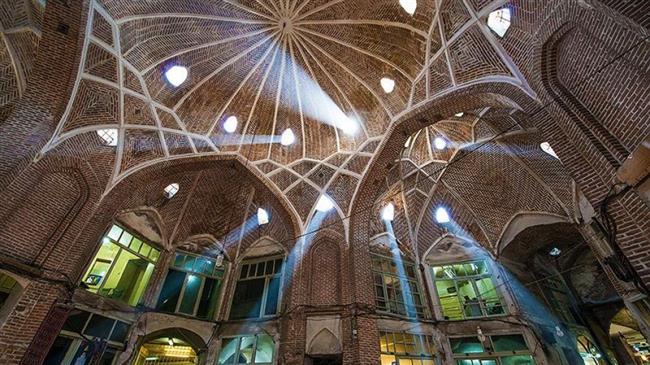
The file photo shows a view of Timcheh Amir in the Grand Bazaar of Tabriz in the northwestern Iranian city of Tabriz.
For centuries, the endless labyrinthine of architectural marvels combined with colorful charm of traditional goods and scent of oriental spices has allured visitors of the bazaar.
Located at the center of Tabriz, the complex was one of the most important international trade hubs between the 12th and 18th centuries and it still serves as the economic heart of northwestern Iran.
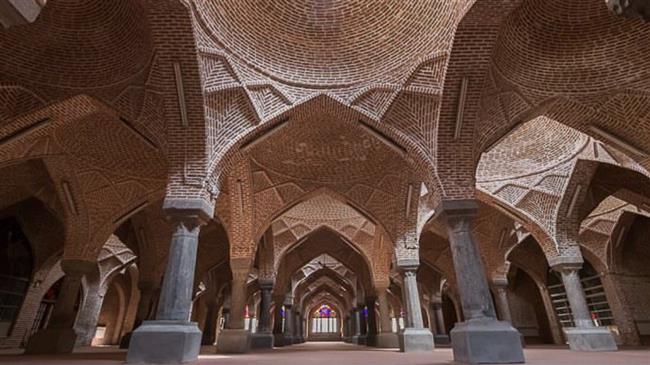
The file photo shows a view of the historic Jameh Mosque of Tabriz to the west of the Grand Bazaar of Tabriz in northwestern Iran.
Many world explorers and writers throughout the history, including Marco Polo, Yaqut al-Hamawi and Jean Chardin, have lauded the glory of Tabriz Bazaar as a remarkable part of their adventures.
In 2010, the UNESCO declared Tabriz Bazaar as a World Heritage Site.
As it was located on the Silk Road, thousands of caravans from different Asian, African and European countries passed though Tabriz bazaar on a daily basis, making it one of the world’s most flourishing commercial hubs over centuries.
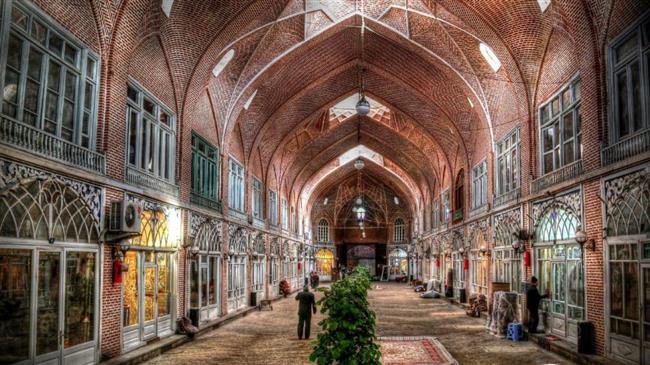
The file photo shows a view of Timcheh Mozaffarieh in the Grand Bazaar of Tabriz in the northwestern Iranian city of Tabriz.
Tabriz bazaar saw its most glorious days in the 16th century, when Tabriz became the capital city of the Safavid kingdom, but the city lost status as a capital in the 17th century.
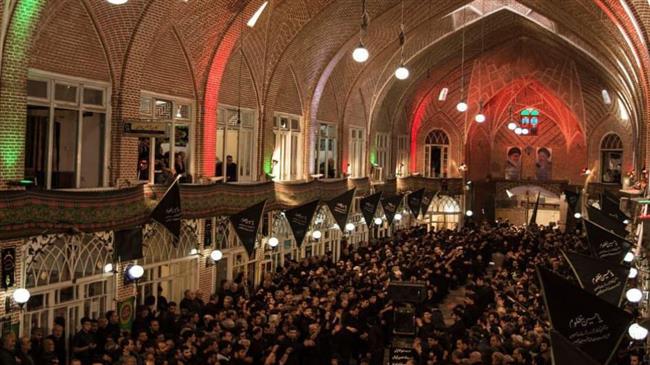
The file photo shows a view of mourning ceremony on the Day of Ashura, the martyrdom anniversary of third Shia leader Imam Hussein, at the Grand Bazaar of Tabriz.
The bazaar, however, still remained flourishing. In 19th century, trade volume at Tabriz bazaar constituted over 25 percent of Iran’s business transactions, passing even higher than that of the capital city of Tehran.
The complex was not built at one phase and different parts were added to bazaar by different architects at several stages.
The bazaar reaches the historic Jameh Mosque of Tabriz to the west, the provincial governor palace to the east and Mehraneh River to the north.
The one-square-kilometer trade center consists of 5,500 stores selling the products of over 40 types of professions, 60 timchehs (sub-bazaars) and saras (small caravansaries), 30 mosques, 20 alleys and sub-bazaars, five baths, 12 schools and five museums.
Similar to many other Middle Eastern bazaars, Tabriz Bazaar was a key commercial center for religious minorities, with Armenians and Georgians owning a major part of businesses and conducting important transactions with European and Central Asian merchants.
The bazaar was destroyed as a result of several massive earthquakes, but it was reconstructed afterwards. In the latest case in 1780, the bazaar was completely destroyed by a huge earthquake and was rebuilt flowingly.
In 2,000, the Cultural Heritage Organization of Iran began a renovation project for the bazaar in cooperation with the shop owners. The project won the Aga Khan Award for Architecture in 2013.
The masterfully-designed high vaults and domes of the structure decorated with intricate brickworks and tileworks have turned the complex into an outstanding masterpiece in oriental architecture.
The complex consists of several sub-bazaars or timchehs. The most important and luxurious part of Tabriz Bazaar is Amir Bazaar, also known as Timcheh Amir, where shop exclusively sell gold and jewelry. The section has the largest dome in the entire bazaar.
Another important section is Mozaffarieh Bazaar, also known as Timcheh Mozaffarieh, for sale of exquisite Persian carpets. The most beautiful architectural design in the complex belongs to this section.
Other sub-bazaars are dedicated for the sale of a variety of other handicrafts, foodstuff and household items.
The majority of timchehs and saras consist of three-floor buildings where the first floor is used as the warehouse, the second floor as the business office and third floor as the resting space.
Apart from its economic status, Tabriz Bazaar has also been a hub of key social and political developments in the Iranian history, including Iranian Constitutional Revolution in the beginning of the 20th century and Islamic Revolution in 1979.
The file photo shows a view of mourning ceremony on the Day of Ashura, the martyrdom anniversary of third Shia leader Imam Hussein, at the Grand Bazaar of Tabriz.
It is also a center for holding important religious ceremonies, including Day of Ashura, the martyrdom anniversary of third Shia leader Imam Hussein, when merchants cease trading 10 days in advance to hold different mourning ceremonies and assemblies at the venue.
The iconic complex still continues to wield influence over different cultural, social, economic and political arenas in Iran and it is considered as an outstanding example for coexistence of diverse cultures and a model for constructive interaction among different social strata. / Press tv /
T he short film “Like a Good Kid” by Arian Vazir-Daftari is to be screened at the 29th Sao Paulo International Short Film Festival, Brazil, August 22-September 2. It is the story of 24-year-old Sara who is supposed to babysit Matin, a 6-year-old boy, while his mother works. A series of events leads her to steal from the house. The cast includes Negar Abedi, Shadi Karamroudi, Yazdan Kokabi-Saba. The film has been screened at the Cinéfondation in the 71th Cannes Film Festival in France, ISNA reported on its Persian website. Another movie “La Vallée Heureuse,” shot in Iran by Swiss director Fisnik Maxhuni, is also selected for the festival. Set in the remote areas near the Caspian Sea in northern Iran, it narrates the story of a young boy searching for a mythical stone buried in the Caspian Sea. The stone is presumably the key to eternal happiness, and on his journey the boy comes across people who are like him, searching for the stone. Sao Paulo International Short Film Festival is one of the world’s largest and traditional events dedicated to short films since 1990.
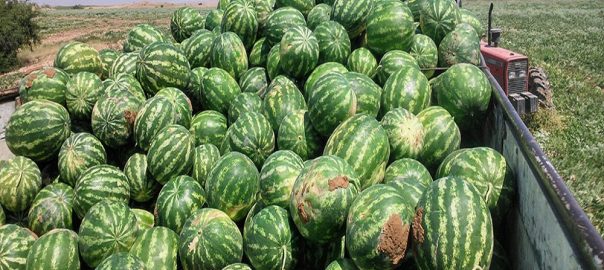
Iran exported 519,790 tons of watermelon worth $95.46 million during the first three months of the current Iranian year (March 21-June 21), Financial Tribune’s data analysis based on the Islamic Republic of Iran Customs Administration’s latest report indicates.
Iraq, the UAE, Afghanistan, Turkey, Russia, Qatar and Oman were the biggest customers of Iranian watermelons during the period under review. / Financial tribune /
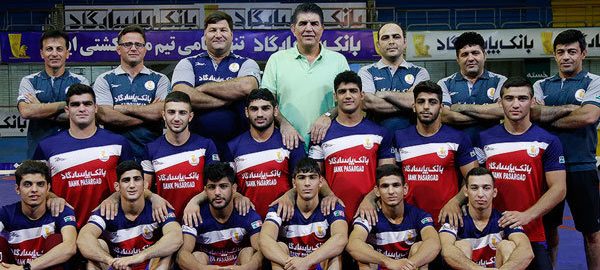
The National Iranian junior Greco-Roman wrestling team won the title today at the Asian Championships with 6 gold, 3 silver and one bronze medals.
Asian Championships was held in New Delhi, India on July 17-18.
At the end of the competitions, Iranian representatives Pouya Naserpour, Bahram Marouf Khani, Amin Kavianinejad, Hossein Forouzandeh, Mohammad Hadi Saroey and Amin Mirzazadeh at 55, 63, 72, 82, 87 and 130 kilograms, respectively, snatched 6 gold medals, while Ali Reza Nejati, Shayan Afifi and Vahid Dadkhah won the 3 silver medals at the 60, 77 and 97 kg categories, respectively.
Meanwhile, Sajjad Iman Talab collected Iran’s only bronze medal at 67kg.
The Iranian young wrestlers were crowned with 225 points, followed by national teams of Kazakhstan and Kyrgyzstan with 147 and 135 points, respectively./ Mehr news /
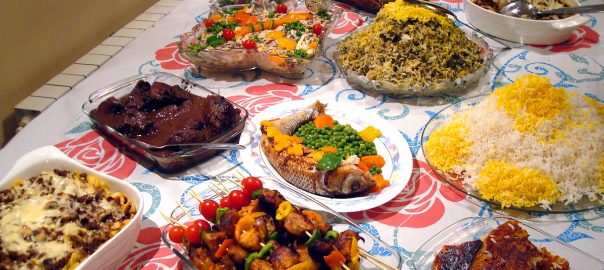
A food festival is scheduled to be held in parallel with a tourism exhibition in early September in Mashhad, Khorasan Razavi Province, to explore gastronomic delights of the religious tourism hub.
“Mashhad’s international fairgrounds will host the festival from September 2 to 6, alongside an international exhibition of tourism and related industries,” Yousef Bidkhori, a deputy head of the provincial office of Iran’s Cultural Heritage, Handicrafts and Tourism Organization, said.
“The festival aims, among other things, to promote the restaurants that serve local cuisine, typically a distinguished feature of popular tourist cities, as well as the Iranian culinary culture and traditional dishes, as the most exotic Iranian products,” he was quoted by CHTN as saying on Monday.
It is intended as a platform to display and introduce the local cuisine, food souvenirs and the products of domestic food companies and will also feature food-related rituals, expert debates and cooking contests, the tourism official said. / Financial tribune /
According to the latest report of World Intellectual Property Organization (WIPO) for ranking countries in the global indicator of innovation, Islamic Republic of Iran moved up 10 steps in 2018.
Accordingly, Islamic Republic of Iran upgraded its rank from 75 in 2017 to 65 in 2018, showing a considerable hike.
The report put Iran’s ranking in the global indicator of innovation in 2015 at 106.
The global indicator of innovation is the name of a report that is released by the World Intellectual Property Organization (WIPO) every year.
The country owes its considerable growth to various dimensions such as outputs of knowledge, technology and creativity.
Undoubtedly, ecosystem of innovation and entrepreneurship and also development of active startups in various economic sectors have had salient and outstanding role in promoting considerable growth of country in this sector.
It is interesting to know that Iran’s ranking in Innovation Efficiency Ratio has hit from 56 in 2017 to 11 in 2018, showing a significant jump.
Moreover, Iran stood at 16th rank among 34 countries in the world in terms of upper-middle-income countries. / Mehr news /
As an ignored but high-potential province in terms of tourism, Alborz is gradually receiving officials’ attention in keeping with a drive to develop the industry Absorbing Iranian and foreign investors can help elevate the province’s position in tourism
The historical Shah Abbasi caravansary sitting in Karaj, Alborz Province, opened to the general public on Monday during a ceremony attended by government officials.
The building was restored by Touring and Automobile Club of Iran at a cost of 30 billion rials ($0.7 million) to help the province find a position in the tourism industry as well as generate jobs for locals, IRNA reported.
Speaking at the opening ceremony, Ramin Afshari, director of TACI, underlined the historical value of the structure, adding that it is capable of turning into the province’s tourism hub.
“The complex has created jobs for over 100 people,” he said, hoping that the doors of the caravansary will always remain open to enthusiasts. / Financial tribune /