All posts by islam

All foreign nationals in Iran receive free COVID-19 treatment

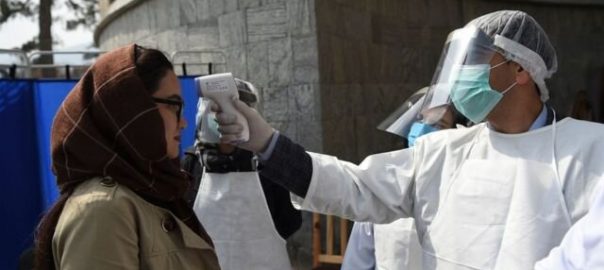
All foreign nationals infected with coronavirus receive medical treatment free of charge in Iran, deputy director for infectious diseases management department of the Ministry of Health has stated.

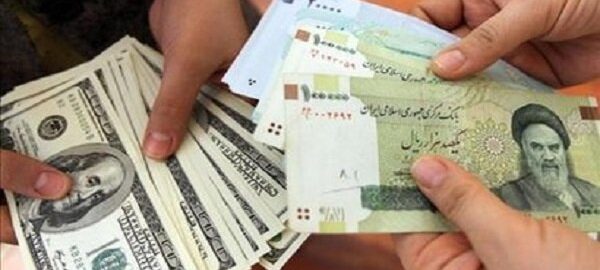
So far, at least 4 trillion rials (nearly $95 million at the official rate of 42,000 rials) have been spent only for the treatment of registered foreign nationals, Shahnam Arshi stated.

He went on to say that all health care services for refugees in Iran are free of charge and are also covered by the UNHCR.

It should also be noted that over a period of time, about 20 percent of COVID-19 patients in Mashhad hospitals were Afghan nationals who were treated free of charge, he added.

No foreign national has been charged for coronavirus testing or treatment, he said, highlighting, this is a service that is not done for free in many countries but has been done in the last 6 months for the treatment of foreign nationals in Iran.

There is no difference between documented and undocumented foreign nationals in the treatment of infectious diseases because if undocumented foreign nationals who are in Iran are not treated, they can easily spread the disease among others, so all foreign nationals residing in the country are covered by COVID-19 health services and other infectious and contagious diseases, he explained.

Iran is host to one of the largest and most protracted urban refugee situations in the world and has provided asylum to refugees for four decades.

The latest official government statistics in 2014, there are 951,142 Afghan refugees and 28,268 Iraqi refugees living in Iran. Many of the refugees living in Iran are the second and third generation, according to the United Nations High Commissioner for Refugees (UNHCR).

About 97 percent of refugees live in urban and semi-urban areas, while 3 percent are residing in 20 refugee resorts run by the UNHCR’s main government counterpart.

In addition to Afghan refugees, there are about 2.5 million Afghans living in Iran, including those having a passport and undocumented Afghans. 450,000 Afghan who did not have identity cards or birth certificates have received Iranian visas that allow them to live, work or study in the country.

Iran ramped up its production of essential medical equipment, and independent entrepreneurs – refugees included – have redirected their efforts towards contributing to the national COVID-19 response.

Undocumented Afghans who have access to free primary health services and similarly free COVID-19 related testing, treatment, and hospitalization, just like nationals.

In Iran, UNHCR is seeking $16.2 million for its COVID-19 emergency, while requires an additional $98.7 million to support Iran in maintaining and sustaining its commendable inclusive refugee policies, under the umbrella of the Solutions Strategy for Afghan Refugees (SSAR). /T.T/
 

16th Resistance International Film Festival deadline extended

The submission deadline for movies willing to participate in the 16th Resistance International Film Festival has been extended for 14 days.

According to the festival’s Public Relations and Information Center, films willing to participate in the 2020 edition can submit their applications up to Aug 31.

The 16th International Resistance Film Festival will be held on September 21st to 27th, coinciding with the Sacred Defense Week covering the sections “Defenders of Health” and 21st to 27th November in sections “Main Competition”, “Resistance Prominent Martyr – Special Section”, “Best Film Competition in Absolute Sense” and” Narrations of Pen – Scriptwriting Competition. ”

In the meantime, the movies willing to attend in the second phase of the festival can submit their applications up to Oct 21. MNA/

Iranian Knowledge-based firms export $800m products

According to Iran’s Customs Administration, the export of 400 Iranian Knowledge-based firms amounted to more than $800 million during the last Iranian year.

The Director-General of the Office of International Business Development Ruhollah Estiri announced that during the last Iranian year (ended on March 20, 2020), 400 Iranian knowledge-based firms exported products worth $800 million.

The mentioned products are mainly in the fields of content production, application development, software development, as well as scientific and technological research in the field of IT, he stated.

According to Estiri, out of 5,000 knowledge-based firms, 1,500 operate in the field of Information Technology.

Also, a thousand out of this total number have the potential and the capacity to export products to foreign countries.

The official also reported that these products are mostly exported to Iraq, Russia, Afghanistan, and Syria and in the current year, some Persian Gulf countries, Austria, and even China are included in the special program for exporting IT products.

MNA/

50 properties on UNESCO’s world heritage tentative list

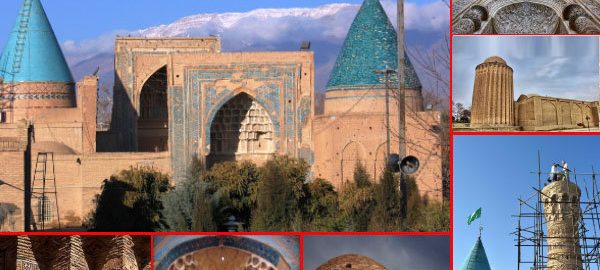
50 Iranian historical sites and monuments are included in the UNESCO’s world heritage tentative list, Deputy minister of cultural heritage said, visiting historical and cultural monuments in Bastam City, Shahroud, Semnan.

Referring to the value of ancient historical sites and monuments, Mohammad Hassan Talebian said on Tuesday: “They are the foundations of tourism industry development in the country”.

A tentative list is an inventory of those properties which each country intends to consider for nomination in the world heritage list.

Countries are encouraged to submit their tentative lists of properties that they consider to be cultural and/or natural heritage of outstanding universal value.

According to Talebian, among the properties included in Iran’s tentative list are Bastam and Kharaghan as well as Persian Caravanserai, many of which are in Semnan province.

The case for Bastam and Kharghan includes the complex of Sheikh Bayazid Bastami, the chief mosque, the towered dome of Kashaneh and a part of old wall of the city.

The complex of Sheikh Bayazid Bastami comprises the grave of Sheikh Bayazid Bastami, one of the five elevated Sufis of the world. For the same reason, from 19th century onward, several important properties have been constructed around it. The oldest property of the complex dates back to 8th and 9th centuries AD.

The authenticity and integrity have been kept for one thousand year. Scientifically, the properties have been confirmed through excavations and renovations.

The complex of Sheikh Bayazid Bastami can be compared with other religious complexes in the Islamic world but its remarkable issue is that it has had a regular trend of development through one thousand year.

The caravanserais are one of the most important form of Persian architecture that emerged and created cause of routes development and needs related to the travel’s demands and requirements.

In the file submitted to UNESCO, there are 25 caravanserais, from all over Iran, which are selected from hundreds of caravanserais.

As Iran historically is located between the main ancient civilizations, the historical roads are playing a critical role in Persian civilization. From the beginning of the history to the current time, the role of Iran as a bridge has encouraged the rulers and people to always care about roads and related structures as one of the main financial income resources. For example, Silk Road is one of this long lasting corridors which played an important role in Persian Empire during the history.

The historical roads have had several elements related to their functions. Bridges, checkpoints, castles bazaars and specifically caravanserais as a main element of historical road in Iran, were not only a simple place for travelers to rest and keeping safe their belongs, also were a meeting point for travelers, merchants, scientists, and many other scholars who wanted to exchange knowledge and ideas, as well as discover new civilizations.

Caravanserais are usually a place that provides safety for Caravans and travelers against natural risks like rain, snow, storms and floods, or from danger of robbers in the roads. That’s why the structure of caravanserais is like a castle and good fortified. From a simple enclosure building at the first prototypes, to the highly decorated ones at the middle centuries or the very fortified types of it, are the evidence of progress, improvement and evolution of this kind of buildings.

The most characteristic element of Persian caravanserai is the central courtyard, this design is very functional and it’s the result of evolution. The central court allows the best form of fortification and provides four rows of rooms around the yard. On the back of rooms there are four halls for animals and stores.

Carvanserais are from unique examples of Iranian architecture that in each historical period and in different parts of the Iran, significant examples have remained which can be considered as architectural masterpieces. MNA/

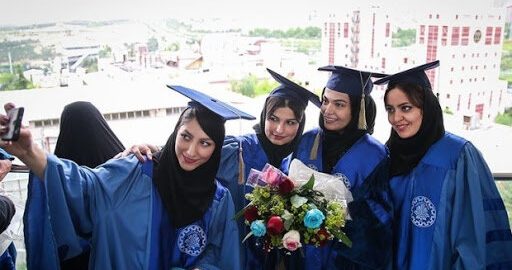
Iran ranks first for top universities among Islamic countries

Iran ranks first in terms of the number of universities in the region and among Islamic countries, according to Shanghai Ranking’s Academic Ranking of World Universities (ARWU) 2020, ISNA reported.

Starting from 2003, ARWU has been presenting the world top universities annually based on a set of objective indicators and third-party data. ARWU has been recognized as the precursor of global university rankings and the most trustworthy league table.

ARWU adopts six objective indicators to rank world universities, including the number of alumni and staff winning Nobel Prizes and Fields Medals, the number of articles published in journals of Nature and Science, the number of Highly Cited Researchers and articles indexed in Science Citation Index – Expanded and Social Sciences Citation Index based on data in the Web of Science, and per capita performance. More than 2000 universities are ranked by ARWU every year and the best 1000 universities are published.

Shanghai Ranking is a fully independent organization dedicating to research on higher education intelligence and consultation, which has been the official publisher of the Academic Ranking of World Universities since 2009.

The Shanghai rankings 2020 shows the top 1,000 universities in the world, with Harvard and Stanford universities in the United States and Cambridge University in the United Kingdom ranking first to third, respectively.

In the meantime, 12 universities from Iran have been listed; it should be noted that the presence of Iranian universities in this ranking system was the first time with a university (University of Tehran) in 2014, Mohammad Javad Dehghani, head of Islamic World Science Citation Center (ISC) said.

The University of Gilan has been ranked in this ranking for the first time and also the universities of Shiraz and Tabriz have improved their rankings compared to 2019, he added.

In the 2020 ranking, the University of Tehran, similar to the 2019 ranking, was ranked among the top 400 universities in the world by gaining the rank of 301-400 and became the first university in Iran.

He went on to say that Amirkabir University of Technology, Sharif University of Technology, Tarbiat Modares University of Medical Sciences, and Tehran University of Medical Sciences are in the range of 501-600 and have jointly ranked 2 to 5 among the universities of the country.

Shahid Beheshti University of Medical Sciences and Shiraz University are in the range of 70-800 and have ranked 6-7 in Iran, respectively. In fact, Shiraz University has been promoted by 200 steps compared to the previous year, he stated.

Ferdowsi University of Mashhad and the University of Tabriz are in the range of 900-801 and have ranked 8-9, while Iran University of Science and Technology, Isfahan University of Technology, and Gilan University are in the range of 1000-901 and came 10-12, respectively, he highlighted.

The ranking shows that in 2020, Iranian universities have improved their quality.

In the 2020 Shanghai Rankings, Iran with 12 universities, Turkey with 11 universities, Malaysia, and Egypt with 5 universities, Saudi Arabia and Pakistan with four universities and Tunisia, Lebanon, Qatar with one university were among the top 1000 universities in the world, he explained.

According to the number of attendees, Iran ranks first among Islamic countries, he concluded. /T.T/

IRIB prepares new religious TV series for Muharram, Safar

Islamic Republic of Iran Broadcasting (IRIB) has prepared three new religious TV series to entertain people during the lunar months of Muharram and Safar, which are observed every year with rituals for the martyrdom anniversary of Imam Hussein (AS) and his companions.

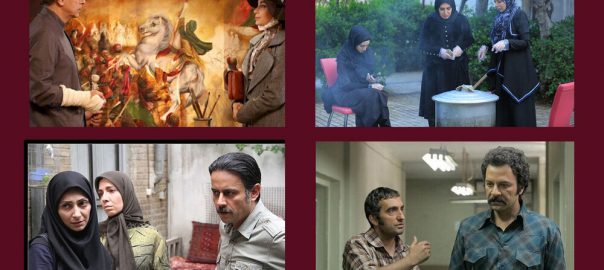
“Warm Earth” by Saeid Nematollah will be aired on Channel 3 and the team is working hard to complete the project in the hard days of battling with coronavirus.

This is the first time Nematollah is directing a TV series. He is mostly famous for his specific style of writing for several TV series aired previously such as “Dear Brother”, “Motherly,” “Wound” and “Mania” on different occasions like Muharram and Ramadan.

He is now the writer and director of the “Warm Earth”.

Alireza Khamseh, Marjan Shirmohammadi, Asghar Hemmat, Kamran Tafti, Maral Farjad and Shiva Ebrahimi are among the main members of the cast.

The series narrates the story of two brothers who have not heard news of one another for years, however, the elder brother who is in his last hours of life decides to meet his younger brother to make his will, which will put a big challenge into the younger brother’s life.

“Najla” is the second series by Sima Films, a film production studio affiliated with IRIB.

It will also be aired on channel 3. The series currently under production is about a love story related to Ashura and Imam Hussein (AS).

Ashura is the 10th day of Muharram, the day upon which Imam Hussein (AS) and his companions were martyred in Karbala in 680 CE as a result of their valiant stand against the Umayyad dynasty.

Azita Hajian, Hessam Manzur, Hedayat Hashemi, Sirus Hemmati and Sogol Tahmasbi are starring in this series.

“Land and Lady” by Saeid Soltani, famous for directing the TV series “After the Rain”, will narrate a historical love story dating back to the Pahlavi period.

The main cast of the series are Behnam Tashakkor, Fariba Motakhasses, Masud Rayegan, Mehdi Ahmadi and Diba Zahedi.

“Intrusive”, a miniseries previously aired on Channel 1 in Ramadan, will be aired again in Muharram.

The story centers on two friends, Aslan and Reza, who used to be rivals in wrestling, but several events have changed their paths.

Behrang Alavi, Ali Ansarian, Nassim Adabi, Rambod Shekarabi and Rahim Noruzi have acted in the series.

Several other channels also have plans to air some of their previous productions during Muharram.

Photo: This combination photo shows the TV series to be aired on IRIB TV channels during the months of Muharram and Safar. /T.T/

Iran to partake at Women Futsal World Tournament

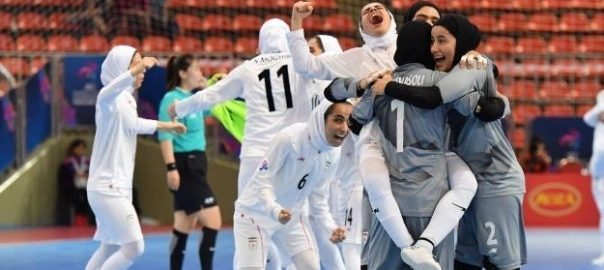
The Football Federation of the Islamic Republic of Iran (FFIRI) has accepted to send Iran’s women futsal team to the Women Futsal World Tournament.

The competition is scheduled to be held in Brazil in December but will likely be postponed due to coronavirus.

Iranian women, two-time Asian champions, have participated in the prestigious tournament three times so far.

Iran and Japan will be Asian’s representatives in the tournament.

The Women’s Futsal World Tournament is an international women’s futsal competition for national teams, organized by national associations and the World Futsal Association.

The first edition took place in 2010 in Spain and was won by Brazil. The tournament has known no other winners besides Brazil, after the country’s victories in the first six editions. /T.T/

VP Sattari unveils 3 artificial intelligence system

The Vice President for Science and Technology, Sorena Sattari has unveiled three artificial intelligence system, namely ‘Saha’, ‘Sahab’ and ‘Hooshio’ on Sunday.

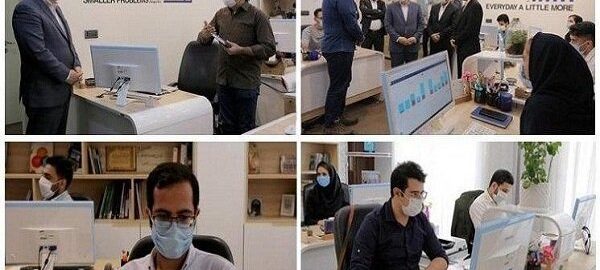
During a visit to a knowledge-based company, the Vice President for Science and Technology unveiled three artificial intelligence systems, namely in-person authentication system using artificial intelligence (SAHA), first Marketplace in the filed of artificial intelligence (SAHAB) and comprehensive content database in the field of artificial intelligence (HOOSHIO).

“Artificial intelligence is countries’ domain of power and authority in the near future and guarantees their national security,” said Sattari.

“Iran has the largest startups in the region in various fields of ICT and biotechnology,” he added, saying, “Efforts to develop artificial intelligence have begun in the country with investment in this area and are continuing in earnest.”

“Iran ranks 9th in the world in terms of scientific articles and prestigious journals,” Sattari said.

He noted, “This knowledge-based company is one of the big companies in this field in the country, whose products in the field of artificial intelligence can be exported and should be given more support.” MNA/

Foreign investments in Iran triples over past year: official

Aboalfazl Koodehi reported that despite the most severe sanctions against the country, the volume of foreign investment in Iran has tripled in the current year in comparison to the same period last year.

Hailing the positive approaches of foreign investors to Iran, Director General of Organization for Investment Economic and Technical Assistance of Iran said in a video conference on Wednesday that despite the most severe sanctions against the country, the volume of foreign investment in Iran has tripled in the current year in comparison to the same period last year.

At the last meeting of the Iranian foreign investment board, some licenses were issued for 45 investment projects that 32 of which were new, and the rest was aimed at developing the investments, he added.

According to this official, the investment volume of these projects reaches $ 1.6 billion from different countries of the world, they are being implemented in the 12 provinces.

Foreign investments are being carried out in the sectors of services, mines, auto industry, petrochemical and chemical products as well as foodstuff industries.

MNA/