All posts by islam

Iran oil export doing well despite US economic war

Condemning the US and the Zionists’ economic war against Iran, the Iranian Oil Minister asserted that the country, as one of the largest exporters of oil products in the world, is doing well in petrochemical products exports.

Speaking in Iranian Parliament’s open session on Tuesday, Bijan Zangane gave a report over the performance of the Ministry of Oil and its development programs, stating, “Increasing the production capacity of the joint oil and gas fields, avoiding crude sales, expanding gas supply, increasing gas exports, supporting domestic manufacturing and knowledge-based firms, as well as countering oil sanctions are among the programs on our agenda.”

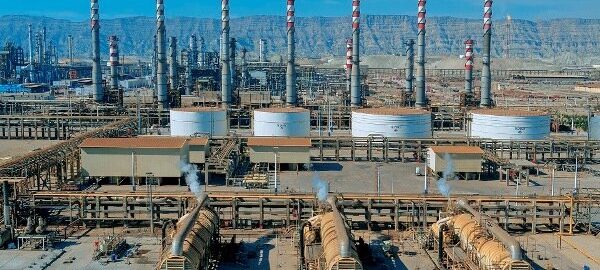
Hailing the increase in production capacity of South Pars gas field in recent years, he said, “In 2005, the production in South Pars gas field was 140 million cubic meters that the amount hit 280 million cubic meters in 2015, and in the current year it has reached 700 million cubic meters.”

Referring to petrochemicals increase in order to avoiding crude sale, Zangane added that, “We had been able to increase the production of petrochemicals from 12 million tons in 1996 to 66 million tons in 2019 that the amount of which is expandable to about 100 million tons in 2021.”

Also, petrochemical products hit about $2 billion in 1996 that the rate of which jumped to $11 billion in 2013 and about $15 billion in 2019, he added.

Elsewhere in his remark, Zangane pointed out that Iran’s exports of oil products have doubled since 2005, however, there had been problems and restrictions due to the sanctions imposed by some foreign countries.

Criticizing the United States and the Zionists efforts in imposing a full-scale economic war against the Iranian nation in all dimensions, Oil Minister asserted “As one of the largest exporters of oil products in the World, We are doing well in the fields of petrochemical exports.”

The Gore-Jask pipeline is one of the solutions to circumvent sanctions, he said and added, and “This pipeline will be completed by the end of the current year ending in March 20, that through of which about one million barrels of crude oil will be exported.”

MNA/

Pars-1 remote-sensing satellite passes final tests: ICT min.

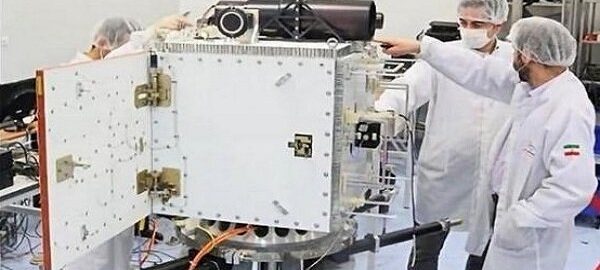
Iranian ICT minister announced that the final tests of the advanced remote-sensing satellite have been completed at the Iranian Space Research Center and will be delivered to the Iranian Space Agency next week.

Iranian Minister of Communications and Information Technology (ICT) Mohammad Javad Azari Jahromi made the announcement on Monday at the opening ceremony of the exhibition of “Localization of advanced equipment of the National Information Network” which was held in the Research Institute for Information and Communication Technology.

“Pars-1” satellite is the most advanced remote-sensing satellite ever built in the country, he said, adding that the final tests of the satellite have been completed at the Iranian Space Research Center and will be delivered to the Iranian Space Agency next week.

He noted that after this project, the researchers of Iranian Space Research Center will work on “Nahid-2” telecommunications satellite project.

The Iranian Space Agency has plans to launch a number of satellites including Pars-1, Pars-2, Zafar-2 and Nahid-2. They will orbit 500 kilometers above the earth.

Iran unveils homegrown dual-fuel locomotive engine

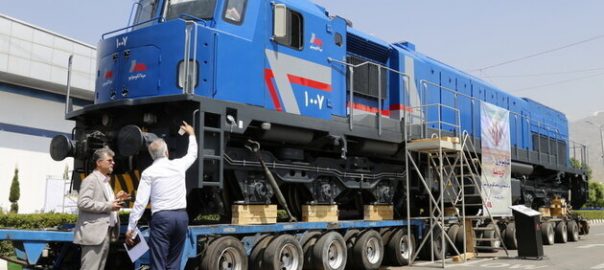
Iran Heavy Diesel Manufacturing Company (DESA) unveiled the country’s first dual-fuel locomotive engine in a ceremony on Sunday, the Transport and Urban Development Ministry’s portal reported.

The unveiling ceremony of the 4,000-horsepower heavy engine was attended by the Head of the Islamic Republic of Iran Railways (known as RAI) Saeed Rasouli.

Speaking in the ceremony, Rasouli said that in the past few years, the quantitative and qualitative development of the country’s railways has intensified and several provinces, including Kermanshah, Hamedan, Urmia, and Gilan, have been connected to the country’s rail network.

“We have been able to provide opportunities for investment making in the rail industry by offering support packages. The move has prompted numerous requests from the private sector for investment making in this industry, some of which are in progress and some are at the stage of signing agreements and contracts,” the official said.

He stated that if the required funding is provided, RAI would be able to put 1,000 kilometers of new railways into operation by the end of the current government’s incumbency.

The official stressed that the manufacturing of this engine is a significant success for the country’s rail industry and would play a significant role in reducing the industry’s reliance on foreign sources.

Back in June 2019, Iran’s Transport Minister Mohammad Eslami had unveiled an Iranian-made freight locomotive on the sidelines of the 7th International Exhibition of Rail Transportation, Related Industries, and Equipment, dubbed RAILEXPO 2019.

The development of rail transport infrastructure is crucial for sustainable development and economic growth in any country, and Iran has been heavily focusing on expanding its railway infrastructure in recent years.

In 2018, during the same exhibition, Iran unveiled the first-ever Iranian-made locomotive engine.

Currently, Iran has over 13,000 kilometers of railway laid and based on the country’s Sixth National Five-Year Development Plan (2016-2021), the railway network is due to expand to more than 16,400 kilometers. /T.T/

Home-grown transplant medicine saves $20m annually

A knowledge-based company has succeeded to save up to $20 million annually by domestic production of a drug needed for organ transplantation, according to the Vice Presidency for Science and Technology.

The domestic medicine, called Iminoral, is meeting 95 percent of the country’s need and is prescribed to patients who have had a transplant, and it is responsible for suppressing the body’s immune system so that the patient’s body does not reject the transplanted organ.

The annual production and sales value of this product in three doses of 25, 50, and 100 mg is over 600 billion rials (about $14 million at the official rate of 42,000 rials) per year.

Iminoral is 40 percent cheaper than similar foreign samples, however, in several tests, its high quality has been approved.

With the support of the Vice Presidency for Science and Technology and the Innovation and Prosperity Fund, the necessary facilities for the development of production lines for this company have been approved.

Mohammad Reza Shanehsaz, head of the Food and Drug Administration said in January that the Iranian pharmaceutical industry and scientists are capable of producing any kind of medicine over a two-year period.

Iran also produced drugs confirmed to be effective in the coronavirus treatment, including, Remdesivir, Tocilizumab.

Health Minister Saeed Namaki said that some 97 percent of the whole medicine consumed in the country is produced domestically and only 3 percent is imported.

Sourena Sattari Vice President for Science and Technology also said that “Iran plays a leading role in the field of biotechnology in the region, with the production of 24 biotech medicine. /T.T/

Makran coast holds potential to gain UNESCO tag

The natural and historical attractions of the Makran coastal strip in southern Iran hold the potential to be registered on the UNESCO World Heritage list.

Being home to some unique attractions such as Darak village, Martian Mountains, pristine beaches of Chabahar and sacred fig trees makes Makran coast a top tourist destination for domestic and foreign travelers, said Seyyed Hadi Ahmadi Ruini the director of the ministry’s office for preservation and restoration of historic buildings, textures and sites, IRNA reported on Saturday.

Inviting tourists to travel to the region and enjoy its noteworthy attractions, he also noted that Makran coast is unique not only in the country but also in the world, however, its tourism infrastructure needs to be provided to attract more travelers.

To get to that point, historical buildings in the region are to be restored, and some of them will be ceded to the private sector for better maintenance and preservation, he added.

Located in the southern part of the Sistan-Balouchestan province, Makran is a semi-desert coastal strip along the coast of the Gulf of Oman.

The narrow coastal plain rises rapidly into several mountain ranges. Of the 1,000 kilometers coastline, around 750 kilometers is in Pakistan. Makran is very sparsely inhabited, with much of the population concentrated in a string of small ports including Chabahar, Gwatar, Jiwani, Jask, Sirik, Gwadar, Pasni, Ormara, and many smaller fishing villages.

Shahid Beheshti Port, which is Iran’s only oceanic port, is the main port of the country on the Makran coast.

Darak village and Martian Mountains, commonly known as Miniature Mountains, which are located on the Makran coast, are also among the top tourist destinations in the region that eye to gain a UNESCO tag as well.

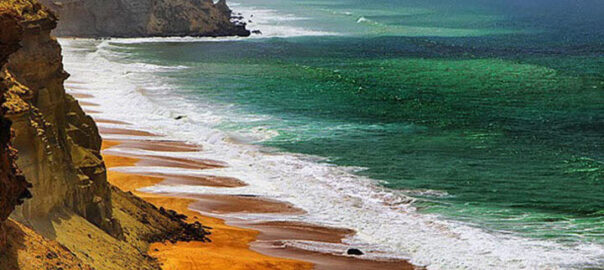
Located between the two important port cities of Chabahar and Bandar Abbas, Darak is one of the few places in the world where the sea and the desert meet. Darak or Darag in the local language means settling along the sea.

The beach and the amazing village, along with the Oman Sea, are tourist destinations where sand dunes, palm trees, and blue sea in a frame together create fantastic scenery.

Hiking, swimming, and photography are among the best activities tourists could enjoy while traveling to Darak Beach. It is known for its extraordinary beaches and has a pristine shoreline.

Mars or Martian Mountains, also known as “Koohaye Merikhi” in Persian, are a type of badlands stretched out parallel to the Gulf of Oman. Their current shape results from millions of years of erosion by wind and water. The height of the mountains varies between five to over 100 meters.

Locals named them Martian Mountains since it seemed as if aliens – in this case, people from Mars – built them; with almost no vegetation, their curvy scenery stands in strong contrast with the landscape around.

For decades, Sistan-Baluchestan used to be shunned by potential foreign travelers though it is home to several distinctive archaeological sites and natural attractions, including two UNESCO World Heritage sites of Shahr-e-Soukhteh (Burnt City) and Lut Desert, shared with Kerman Province. /T.T/

Supreme Leader slams French magazine’s blasphemy to Prophet Mohammad (PBUH)

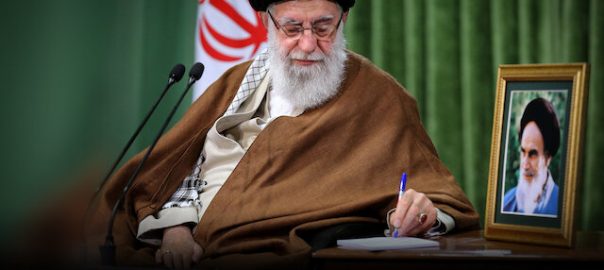
The following is the full text of a statement issued on September 8, 2020, by Ayatollah Khamenei, the Supreme Leader of the Islamic Revolution, in response to insulting comments made by a French weekly against the Holy Prophet of Islam.

In the Name of Him, the Exalted One

The grave and unforgivable sin committed by a French weekly in insulting the luminous and holy personality of the Great Messenger of God (God’s greetings be upon him and his household) revealed, once more, the hostility and malicious grudge harbored by the political and cultural organizations in the west against Islam and the Muslim community. The excuse of ‘freedom of expression’ made by some French politicians in order not to condemn this grave crime is completely unacceptable, wrong and demagogic. It is the deeply anti-Islamic policies of the Zionists and arrogant powers that are behind these hostile moves which emerge every now and then. This move made at this point in time might also serve another motive: diverting the minds and attention of nations and governments in West Asia away from the evil schemes that the U.S. and the Zionist regime have hatched for the region. While maintaining their vigilance on the issues of this crucial region, Muslim nations – in particular West Asian countries – should never forget the hostilities of western politicians and leaders against Islam and Muslims.

“Allah has full power and control over His affairs;” [The Holy Quran, 12: 21].

Sayyid Ali Khamenei

September 8, 2020

A biosphere reserve 180 times more valuable than average land

The Tang-e-Sayad and Sabzkuh Biosphere Reserve is located in the southwestern Chaharmahal-Bakhtiari province. It is estimated that each hectare of the area is 180 times more valuable than average land in Iran in terms of richness of plants and wildlife diversity.

Land subsidence, geological activities, and melting ice caps have formed several wetlands in the area inhabited by rare fauna such as the wild cat (Felis silvestris) and lebetine viper (Vipera lebetina). Research shows that 22 fish species, including the Pike barb (Esox niger) and mesopotamian catfish (Silurus triostegus) are found in the Karun River, which runs through the proposed area.

During the cold season bushlands in the area welcome migratory birds such as the white stork (Ciconia ciconia) and greater flamingo (Phoenicopterus roseus), according to the UNESCO website.

The presence of several rivers and springs in the proposed site has led to an increase in the development of agriculture and animal husbandry. Local handicrafts such as carpets, felt, dhurrie rugs, and folk festivals also offer tourism development potential in the area.

The main landscape of the reserve is highly distinctive in terms of the height and density of its plant coverage. According to research conducted in the area, every hectare is 180 times more valuable than average land in Iran in terms of richness of plants and wildlife diversity.

The region is also mountainous with waterfalls, wetlands, and abundant springs, which function as a permanent basin for the Karun River, the biggest river in Iran.

Various oak species cover the highlands while wild pistachio and almond cover the lower lands. Lote, walnut, and pear trees are also scattered about the reserve. Depending on the habitat conditions, oak-mastic and other combinations of other tree or shrub species, such as hackberry, hawthorn, and Arjan, exist alone or in groups constituting the forest areas. More than 450 plant species can be found in the reserve.

The variety of ecosystems creates a valuable fauna population. These include 27 mammal species such as the Syrian brown bear (Ursus arctos syriacus) and striped hyena (Hyaena hyaena), 147 bird species including the greater flamingo (Phoenicopterus roseus) and white stork (Ciconia ciconia), 26 reptile and amphibian species such as the snake-eyed lizard (Ophisops elegans), and 24 fish species including the mesopotamian catfish (Silurus triostegus).

The Choghakhor Wetlands were designated a Ramsar Wetland Site.

There are 669 biosphere reserves in 120 countries. Since 1960, Iran has been a pioneer member of Man and Biosphere Committee (MAB) and has already 10 registered Biosphere reserves that cover important protected areas such as Touran, Arjan and Parishan, Urumiyeh, and Miankaleh. All of these sites cover important biodiversity, wetlands, and forests altogether.

During the 27th MAB ICC meeting in Paris in June 2015, Sabzkuh and Tang-e Sayyad and Hamoun Biosphere Reserves were formally registered as 11th and 12th Biosphere reserves in Iran. /T.T/


‘Mining sector able to bring $20b of annual income’

Iranian acting minister of industry, mining, and trade said that the mining sector has the potential and capability to create $20 billion of annual revenue for the country, IRNA reported.

Saying that of the total $41.4 billion of non-oil exports in the past Iranian calendar year (ended on March 19), about $10 billion was the share of the mining sector, Jafar Sarqeini underscored that the figure can be doubled.

Minerals and mining projects constitute the main part of the 200 major industrial, mining, and trade projects, which are planned to be inaugurated across the country by the Iranian calendar year of 1400 (begins on March 20, 2021).

According to Deputy Industry, Mining, and Trade Minister Saeed Zarandi, the said projects are going to be implemented under a new program called “Persistent Production-Effective Employment-Sustainable Exports”.

As reported, some 1.69 quadrillion rials (about $40.23 billion) has been invested in the mentioned projects that are going to create job opportunities for 41,000 people.

In terms of the number of projects, Kerman Province with 26 projects and in terms of the volume of investment, Khuzestan Province with nearly 360 trillion rials (about $8.57 billion) have the largest share of the said projects in the country, Zarandi said.

He noted that the said projects, which are characterized by factors like completing the industry’s value chain, reducing imports, being export-oriented, using technology, and creating jobs, have been selected as national projects.

In the current Iranian calendar year which has been named the year of “Surge in Production” by the Leader of the Islamic Revolution of Iran Seyed Ali Khamenei, the government is determined to support domestic production and promote the country’s non-oil exports.

The “Persistent Production-Effective Employment-Sustainable Exports” program has been defined by the Industry, Mining, and Trade Ministry in line with the government’s new strategies for developing the country’s infrastructure in order to realize the “Surge in Production” motto.  /T.T/