All posts by islam

Movies from Iran line up for Taos Shortz Film Fest

Nineteen movies by Iranian filmmakers will be screened at the Taos Shortz Film Fest in the United States. Due to the pandemic, the 2020 edition of the festival was postponed indefinitely, however, it was never was organized.

Consequently, the organizers have decided to combine the 14th and 15th editions, which will be held online.

The Taos Shortz Film Fest, the longest continually running film festival in New Mexico, will be held for 22 days from March 19.

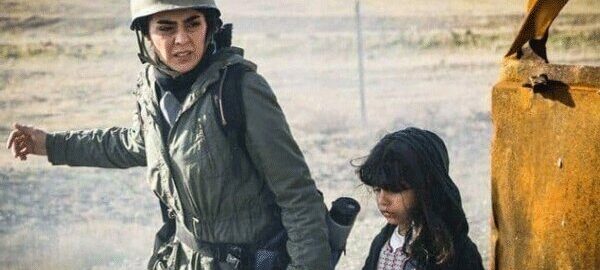
“Doll” by Nasrin Golreyhan is a highlight of the Iranian lineup. It is about a woman journalist who finds a child on the battlefield and is forced to leave and abandon her.

“A Roofless House” by Shayan Shahverdi about two young adults who learn about each other through an unexpected evening.

“Forbidden to See Us Scream in Tehran” by Farbod Ardebili is also competing in the festival.

The film tells the story of the frontwoman for an Iranian death metal band, who risks everything as she plots to call the cops on her own underground concert in the hopes that the raid will help her secure her asylum in another country.

“Haunt” by Siamak Kashefazar has also been selected to be screened at the festival. It is about Reza and Tuba, a young couple that owns a house mortgaged with a bank. Reza enters a gambling game to pay the bank installments, but he lost his wife without knowing it. Now, he comes back home and understands the depth of the tragedy and looks for a way to escape and run away from gamblers, but it’s too late and they are behind the door. Tuba realizes the facts, little by little.

“You’re Still Here” by Katayun Parmar and Mohammad Ruhbakhsh will also compete in the event. When the relationship of a young couple is on the verge of collapsing in the face of one man’s blindness, the only thing that will save them is their common past.

“Inner Self” by Mohammad Hormozi, “Ava” by Sasan Karimi, “Even an Hour Later” by Parviz Shojaei, “Sfumato” by Amir-Ali Mirderikvand “The Granddaughter” by Mohsen Habibi and Mostafa Daryadar, “The Rotation” by Hazhir As’adi, “Our Out of Five” by Bahar Tofiqi and “Past Continuous” by Shiva Taheri are also on the lineup. /T.T/

 

Eco-lodge units inaugurated in northern Iran

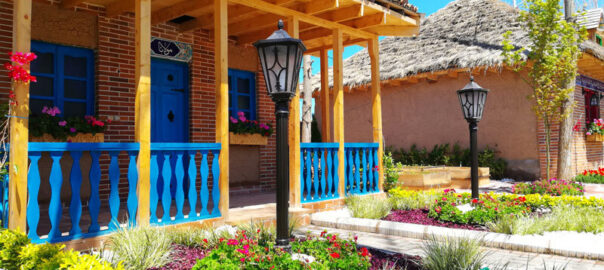
A total of 21 eco-lodge units have recently been inaugurated in the northern province of Gilan, a local official announced on Sunday.

A budget of 600 billion rials ($14.2 million at the official exchange rate of 42,000 rials per dollar) has been allocated to the construction of the eco-lodges, which are expected to develop tourism in the region, Reza Hassanpour said.

Establishing these eco-lodge units is estimated to generate 100 job opportunities directly for the locals, the official added.

He also noted that 10 more eco-lodges are scheduled to come on stream by the end of the current Iranian year (March 20).

In 2019, Gilan was selected as the first province to start the country’s comprehensive tourism plan, which is being developed under the auspices of the United Nations World Tourism Organization (UNWTO). The comprehensive plan is aimed to serve as a roadmap to guide tourists from all over the globe to achieve a sustainable and competitive tourism market.

Bounded by the Caspian Sea and the Republic of Azerbaijan on the north, Gilan, in the far past, was within the sphere of influence of the successive Achaemenid, Seleucid, Parthian, and Sassanid empires that ruled Iran until the 7th century CE.

The tourism ministry has set a target to help build 2,000 eco-lodges by 2021, believing such guest houses could cater to sustainable development and job creation in the countryside and rural areas. Experts say each eco-lodge unit generates jobs for seven to eight people on average so that the scheme could create 160,000 jobs.

The culturally-diverse country never disappoints visitors when it comes to eco-tourism, sightseeing, and even tribal tourism as it is home to many regional people including ones with Turk and Arab elements in addition to the Kurds, Baloch, Bakhtyari, Lurs, and other smaller minorities such as Armenians, Assyrians, Jews, and others. /T.T/

Iran can hold 20% share of neighboring states’ market: TPOI

Chief of Trade Promotion Organization of Iran (TPOI) pointed to $1,100 billion worth of market of neighboring states and said that Iran is able to hold 20 percent share of neighboring states’ market in products’ export terms.

With the studies made in this regard, Iran’s neighboring states enjoy the capacity of $1,100 billion worth of non-oil products to be imported to these countries, so that Iran can play a very constructive and important role in this lucrative market.

Speaking at the 7th Annual Conference of Resistance Economy on Wed., Hamid Zadboum pointed to the export of products to neighboring countries and reiterated that Iran’s neighboring states have the capacity of importing $1,100 billion worth of products.

At the order of Leader of the Islamic Revolution in the year named after ‘Surge in Production’, Iran should hold 20 percent share of neighboring countries’ market, so that Iran’s neighboring countries can yield up to $200 million worth of foreign currency.

He put Iran’s export of non-oil products to neighboring state in the past years at between $44 and $45 billion, so that the country enjoys high potential to increase the aforementioned rate.

MA/

Ancient petroglyphs discovered in western Iran

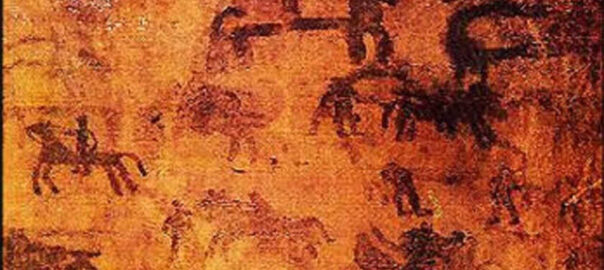
Another cluster of ancient petroglyphs has recently been discovered in a barren plain in Lorestan province, western Iran.

“The petroglyphs, which bear carved symbols and figures in the two colors of black and ocher, were discovered during an architectural survey conducted in Chegeni county of Lorestan province,” the provincial tourism chief, Seyyed Amin Qasemi, announced on Monday.

“The drawings include animal, human, and plant motifs as well as scenes of hunting and horseback riding,” the official said.

The Islamic Republic is seeking an integrated UNESCO recognition for millennia-old petroglyphs scattered across the country.

Iran will put forward clusters of its millennia-old petroglyphs—located in Khomein county of Markazi province, and the ones dotted in the provinces of Isfahan and Lorestan–as a candidate for inclusion in UNESCO’S World Heritage list.

Teymareh petroglyphs, which are located in Khomein county, have been estimated to be carved in a period spanning from 40,000 to 4,000 years ago, providing insights into past eras and cultures both by tools utilized for carving and themes being carved.

Last year, a prehistorical petroglyph, which bears Pahlavi script written by ordinary people of the time, was found during an archaeological survey in the Teymareh region of central Iran.

“This is the sixth petroglyph, engraved with Pahlavi script, which has so far been found in the highlands of Teymareh. And the petroglyph is estimated to date back to 2,200 years ago,” according to Iranian archaeologist Mohammad Nasserifard.

Nasserifard had earlier proposed a bold hypothesis on a variety of petroglyphs that are scarred in the region, saying “some prehistorical residents of the Iranian plateau migrated to the Americas.” His assumption is based on evidence from similarities between the petroglyphs and cave painting symbols in central Iran and the ones found in the Americas.

“After years of exploring ancient paintings inside Iran’s caves and mountains and other parts of the globe, amazing achievements have been made in this regard,” Nasserifard said.

“Appearance similarities, artistic styles, and uniform themes of ancient petroglyphs and cave paintings of this land (Iran) reveal many missing links in human history and arts one of which is the resemblance of ancient artifacts in Iran with ones found in the American continent.”

In March 2020, a team of entomologists and archaeologists concluded that a previously-founded petroglyph showcases a six-limbed creature with the head and arms of a praying mantis. The rare 14-centimeter rock carving was first spotted in the Teymareh rock art site during surveys between 2017 and 2018, but could not be identified due to its unusual shape.

International experts Jan Brouwer and Gus van Veen have examined the Teymareh site estimating its carvings were made 40,000-4,000 years ago. Prehistoric rock art provides insights into past eras and cultures as archaeologists classify the tools for the carvings by specific eras Incising tools include flint, metal, or thigh bones of hunted prey. /T.T/

Coronavirus: Carpet Museum of Iran reopens to visitors

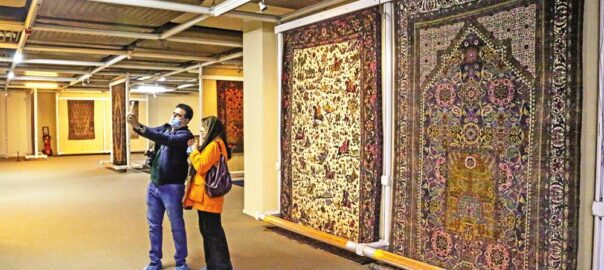
After months of closure due to coronavirus, the Carpet Museum of Iran in downtown Tehran once again opened its doors to visitors on Wednesday.

Tens of individuals, researchers, and holidaymakers sized the opportunity to tour the museum, which is chockfull of magnificent, rare, and historical rugs, carpets, kilims, and pictorial rugs.

Persian carpets are sought after internationally for their delicate designs and their good quality. Among Persian carpets, particularly those of the classic period, the medallion may represent an open lotus blossom with 16 petals as seen from above, a complex star form, or a quatrefoil with pointed lobes.

Medallion carpet is any floor covering on which the decoration is dominated by a single symmetrical centerpiece, such as a star-shaped, circular, quatrefoil, or octagonal figure.

The name, however, is sometimes also given to a carpet on which the decoration consists of several forms of this kind or even of rows of medallion figures. /T.T/

“Cocoon and Butterfly” named best at Roshd Intl. Film Festival

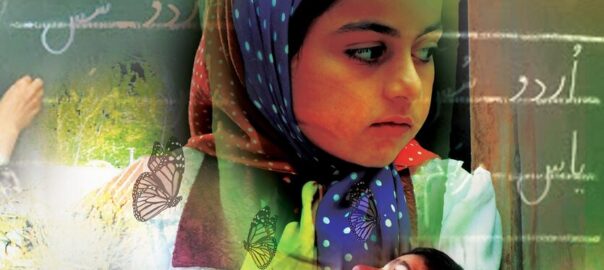
“The Cocoon and Butterfly” was crowned best at the 50th Roshd International Film Festival, receiving the gold award of the Iranian festival, which promotes films on educational topics for children.

The film tells the story of Parvaneh, a seven-year-old girl who lives with her father in a northern Iranian village, where she lost her mother in a fire several years earlier. Her leg was also injured in the fire and her father doesn’t let her go to school since it is a long distance from their home. He also doesn’t allow anyone to teach Parvaneh even basic literacy. However, Yavar, a boy in their neighborhood, decides to teach her literacy furtively.

Directed by Mohammad Salehinejad, the film also won the Golden Butterfly for best feature film at the 33rd International Film Festival for Children and Youth in Tehran last October.

“Chor: The Bicycle”, a drama film directed by Indian filmmaker Khanjan Kishore Nath and produced by Sanjive Narain, won the silver award of the Roshd festival.

The gold award for best animated film went to “The Eleventh Step” by Maryam Kashkulinia from Iran.

“The Eleventh Step” is about a little lion cub, born in a zoo. He lives in a cage that is only ten steps long. On the eleventh step, he bangs his head against the bars, but one day the zookeeper leaves the cage door open.

“Autumn Winds, Spring Winds and Two Doves” by Sadeq Javadi won the silver award in this section.

The movie produced at the Institute for Intellectual Development of Children and Young Adults (IIDCYA) is about a boy who sets out on an arduous journey to his friend. A dove and a horse help him reach his destination.

“The Beginning” by Indian filmmaker Sandeep Kumar Verma was selected as best short at the festival. It’s a journey of a kid, set in the mystical mountains of the Himalayas to learn where his grandfather has gone after he died and what happens after death.

Photo: A poster for “The Cocoon and Butterfly” by Mohammad Salehinejad. /T.T/

Caravanserai to host travelers once again following decades of being prison

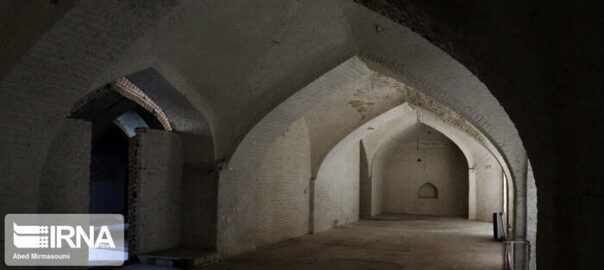
A Safavid era (1501-1736) caravanserai in the north-central city of Semnan was finally handed over to the city’s municipality after being used as a prison for over 40 years.

The Shah-Abbasi caravanserai, which was inscribed on the National Heritage list in 1973, is planned to be repurposed to a cultural center after being fully restored, IRNA reported on Monday.

The monument was set free after the demolition of the surrounding fences and high walls, which was took place after obtaining the necessary permits and transferring inmates to a new prison, the official explained.

The mud-brick structure is named after Shah Abbas the Great (r. 1588 – 1629), who ordered the construction of such roadside inns across the country.

Extensions of the last few years and the parts that damage the original building are first removed under the supervision of cultural heritage experts, then the parts in need of restoration will undergo some rehabilitation works, IRNA quoted Semnan’s mayor Mohammad Nazem-Razavi as saying.

However, the interior of the caravanserai is expected to be ready for people to visit in the New Year’s holidays (starts on March 20), he added.

Last August Cultural Heritage, Tourism, and Handicrafts Minister Ali-Asghar Mounesan announced that Semnan Municipality is ready to purchase the historical monument and turn it into a tourist complex. He also noted that using a historical structure as a prison is not that interesting and turning it into a cultural center could boost tourism in the region and attract more travelers.

Caravanserai is a compound word combining “caravan” with “Sara”. The first stand for a group of travelers and Sara means the building. They often had massive portals supported by elevated load-bearing walls. Guest rooms were constructed around the courtyard and stables behind them with doors in the corners of the yard.

Iran’s earliest caravanserais were built during the Achaemenid era (550 -330 BC). For many travelers to Iran, staying in or even visiting a centuries-old caravanserai can be a wide experience as they have an opportunity to feel the past, a time travel back into a forgotten age. /T.T/

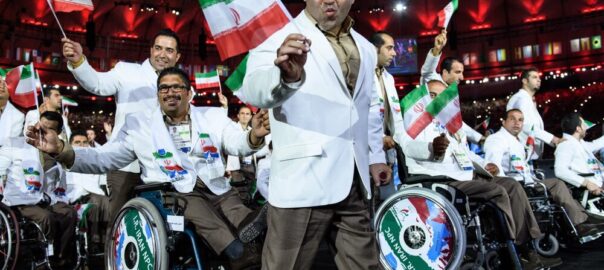
Iran to send 50 Para athletes to Tokyo: Chef de Mission

Iran’s chef de mission for the Tokyo Paralympic Games Hadi Rezaei says that a total of 50 Para athletes have earned their quota places for the Games so far but it’s not the final list.

Iran sent a record 110 athletes to Rio 2016, returning eight golds, nine silvers and seven bronzes to finish 15th in the medals table.

Speaking during a webinar ran by Iran’s National Paralympic Committee (NPC), Rezaei, who won gold medals in sitting volleyball at Seoul 1988, Barcelona 1992 and Atlanta 1996 as a player, said that they are going to send nine sports to the prestigious competition.

Iran will compete in athletics, archery, sitting volleyball, wheelchair basketball, taekwondo, rowing, judo, shooting and powerlifting at next year’s Paralympics.

“We are preparing for the Paralympic Games and will participate in the warm-up tournaments but we would rather take part in the high-level events,” Rezaei said.

“Two male taekwondo practitioners have so far won their place in the Games but there is a chance we send a female to Tokyo. In shooting, three female shooters have booked their place so far. We will also send a female rower to the Games,” he added.

“In archery, four male and one female will partake at the competition and in Judo we are going to send two practitioners to Tokyo but it could be increased to three,” the Iran sitting volleyball head coach went on to say.

“Six powerlifters as well as nine Para athletes will be sent to Tokyo. Two sitting volleyball and wheelchair basketball teams consisting of 24 athletes will partake in the Games,” Rezaei concluded.

About 4,400 competitors from more than 160 countries were due to head to the Japanese capital for the Games this summer before it was postponed to 2021 due to the coronavirus pandemic. /T.T/


Car manufacturing expected to rise 50% in H2

Iranian Industry, Mining, and Trade Minister Alireza Razm Hosseini has said that the country’s automobile production is going to increase by 50 percent in the second half of the current Iranian calendar year (September 22, 2020-March 20, 2021) and the prices of this product will decrease.

Speaking in a meeting with the members of the parliament’s Industries and Mines Committee, the official said: “Immediately after I took office in the Industry Ministry, we started implementing a program to increase car production, and despite the problems that the country’s industries are facing, this program is well underway.”

“Recently, also a good financial package has been provided to support automakers in collaboration with the Central Bank of Iran (CBI),” Razm Hosseini was quoted by IRIB.

He further noted that the car prices are following a downward trend and the Industry Ministry’s policy is to make the car market competitive and eliminate intermediaries between producers and consumers.

Pointing to the 23-percent increase in the country’s car production in the first half of the current year (March 20-September 21, 2020), Razm Hosseini said hopefully by the yearend a growth of 50 percent will be achieved.

According to the data released by the Ministry of Industry, Mining, and Trade, car manufacturing in Iran rose 23.4 percent during the first six months of the current year compared to the same period of time in the past year.

Based on the mentioned data, 468,699 vehicles were manufactured during the mentioned six months.

Three major Iranian carmakers, namely Iran Khodro Company (IKCO), SAIPA Group, and Pars Khodro, manufactured 863,263 vehicles during the past Iranian calendar year (ended on March 19, 2020). /T.T/

Tourism projects worth $71.4m to be inaugurated in Bushehr

A total of eight tourism-related projects, worth three trillion rials (about $71.4 million at the official exchange rate of 42,000 rials per dollar) are scheduled to come on stream in southwestern Bushehr province.

President Hassan Rouhani, and Cultural Heritage, Tourism, and Handicrafts Minister Ali-Asghar Mounesan are scheduled to inaugurate the projects via a video conference by the end of this week, the provincial tourism chief has announced.

The projects will help create 275 job opportunities for the locals directly. Moreover, they will be adding 400 rooms and 1088 beds to the hospitality sector of the province, Mohammad-Hossein Arastuzadeh said on Sunday.

Last April, the official announced that the tourism sector of the province is ready to jumpstart after the coronavirus crisis ends. He also stressed that the province needs innovative plans and programs to attract more tourists and travelers to its tourist attractions and historical sites.

With over 6,000 years of history and significant monuments from the Elamite, Achaemenid, Parthian, and Sassanid eras, Bushehr Province is one of Iran’s most important historical centers.

Besides its cultural heritage, beautiful beaches and lush palm groves make it an attractive destination for world travelers.

The historical and architectural monuments of Bushehr include Islamic buildings like mosques and praying centers, mansions, old towers, castles, as well as gardens.

When it comes to cultural attractions, there are many historical mounds in Bushehr including Tall-e Khandaq with Sassanid architectural style, Tall-e Marv located near an Achaemenid Palace, and Qajar era Malek al-Tojar Mansion. Qajar era Kazeruni Mansion, which has been inscribed on the World Heritage List, is another attraction that world travelers love to see among various ancient sites. /T.T/