All posts by islam

819 idle industrial units revived in 7 months

The acting head of Iran Small Industries and Industrial Parks Organization (ISIPO) announced that 819 idle industrial units have been revived in the country during the first seven months of the current Iranian calendar year (March 20-October 21).

Asghar Mosaheb said that reviving the mentioned units has created jobs for 14,458 persons.

The official also announced that ISIPO plans to revive 2,000 idle industrial units throughout the country by the end of the current Iranian year (March 19, 2021).

He said the targeted figure for the mentioned seven-month period was 1,500 units, but the figure was increased in line with the objectives of “Surge in Production”, which is the motto of this year.

Preventing from the inactive status of the industrial units is another major plan of ISIPO, the official reiterated and mentioned lack of liquidity, problems in terms of supplying raw materials and machinery, and absence of market as the main reasons making the units inactive.

ISIPO’s Previous Head Mohsen Salehinia has said that providing liquidity is the main issue for many of the country’s production units, so based on the arrangements made, these units can receive part of their needed liquidity through bank facilities.

“Currently, the share of the country’s production and industrial units in receiving bank facilities is about 31 percent and it is necessary to allocate a larger share of banking facilities to the country’s production and industry,” he added.

Given the position of production in the country’s economy and employment, and the fact that production units are facing lack of liquidity to supply raw materials and equipment, it is necessary to increase their share of bank facilities up to at least 40 percent, Salehinia stressed.

He further said: “Despite all the limitations, we are currently witnessing an increase in production in some units, for example those active in the field of home appliances; also, according to the plans made and by solving the problems in the way of the production and industrial units, we will realize the motto of “Surge in Production” by the end of this year.”

Strengthening domestic production to achieve self-reliance is the most important program that Iran is following up in its industry sector in a bid to nullify the effects of the U.S. sanctions on its economy.

To this end, the current Iranian calendar year has been named the year of “Surge in Production”, and all governmental bodies as well as the private sector are moving in line with the materialization of this motto.

Regarding its significant role in the realization of the mentioned goal, the Industry, Mining and Trade Ministry has already defined its main programs for supporting the domestic production in the current year.

The ministry’s seven main axes of the surge in production are going to be pursued under 40 major programs.

In this regard, the development of industrial parks and supporting the units located in these areas is one of the major programs underway by the ministry.

While this program is being seriously pursued, the lack of necessary infrastructure in the industrial parks is impeding their development, therefore, the creation of needed infrastructure in the industrial parks has been put on the agenda. /MNA/


133 countries in intl. sections of Resistance film fest.

Head of the Public Relations and Information Centre of the 16th Resistance International Film Festival, Seyyed Ahad Mikaeilzadeh, said so far over 133 countries have participated in the international section of the event.

“Amid the spread of Coronavirus and the imposed sanctions against Iran, so far 4,151 films from 133 countries have been submitted to the secretariat of the festival,” he said.
Mikaeilzadeh reiterated that the festival has played an active role in informing the event in other countries.

He added that due to the spread of the Covid-19 we had no choice but to hold the festival in the online format.

Mikaeilzadeh noted that holding the festival in an online format is considered as an opportunity to utilize the current limitation to hold the event in a proper manner.

Mikaeilzadeh said the last deadline for submitting the works to the second part of this cinematic event is October 21, 2020.

He added that some 200 international works are vying in different sections of the festival, adding that the sections including “Resistance Prominent Martyr”, “Narrations of Pen” and “Health Defenders” were warmly welcomed in the festival.

He said the festival has been designed in the way that the jury members could reach the works in online format and the films would be displayed via IRIB and several platforms.

Mikaeilzadeh said due to the spread of Coronavirus the cultural transactions have become limited temporarily, but undoubtedly the good works would be reflected and seen in the world.

The second part of the festival is covering “Main Competition”, “Resistance Prominent Martyr – Special Section”, “Best Film Competition in Absolute Sense” and” Narrations of Pen – Scriptwriting Competition.

Presided by Mahdi Azimi Mirabadi, the second section of the festival will be held from 21-27 November 2020.

MNA/

Iran to produce COVID-19 rapid antigen diagnostic test kits

CEO of a domestic knowledge-based company said that coronavirus antigen rapid test kits will be produced at the company by the next month.

Speaking in an interview with Mehr news agency on Sat., Dr. Vahid Younesi Chief Executive of a knowledge-based company producing COVID-19 rapid test kits reiterated that coronavirus rapid diagnostic kits based on antigen is one of the kits that will be produced at this company.

Once the license is obtained, these kits (coronavirus rapid antigen diagnostic test kits) will be produced, he added.

These coronavirus rapid tests are not for personal use, rather, these kits can be used mainly in health centers, health houses and hospitals, he said, reiterating, “Personal user cannot use diagnostic tests and must be used in relevant centers.”

Elsewhere in his remarks, he drew a comparison between Iranian and Chinese coronavirus rapid diagnostic test kits and added, “Chinese-made COVID-19 rapid test kits are not worth diagnosing since these kits are based on antibody but Iranian-made coronavirus diagnostic test kits are based on ‘antigen’ that is able to diagnose the disease in the shortest time possible.”

He once again pointed out that these kits will be produced latest by next month which are able to diagnose the coronavirus disease within 15 minutes.

Dr. Younesi pointed to the production capacity of coronavirus rapid test kits at his company and added, “This company is able to produce between 2 and 3 million COVID-19 rapid test kits in each month which can meet the domestic needs to these kits.”  / MNA/

33rd ICFF award winners announced

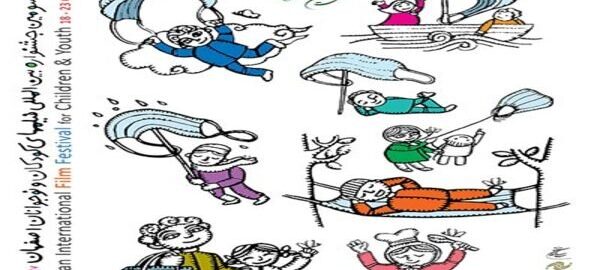
The Winners of the 33rd International Film Festival for Children and Youth in different sections were announced and awarded in a ceremony held at Tehran’s Book Garden.

According to the 33rd ICFF Public Relations Office, the winners of the 33rd International Film Festival for Children and Youth in different sections were announced and awarded in a ceremony held at Tehran’s Book Garden.

International Section Awards:

CIFEJ Special Award, received by Ralf Kukula and Matthias Bruhn for “Fritzi (A Revolutionary Tale)”

Golden Butterfly and Diploma of Honor in Animated Short Film Section, received by Maryam Kashkoulinia for “The Eleventh Step”

Golden Butterfly and Diploma of Honor in Short Fiction Film Section, received by Abdenoure Ziane for “Summer Fasting”

Golden Butterfly and Diploma of Honor in Technical Achievement Section, received by Abbas Askari for “Loopetou”

Golden Butterfly and Diploma of Honor for Best Acting, received by Rouhollah Zamani for his role in “The Sun”

Golden Butterfly and Diploma of Honor for Best Screenplay, received by Arvind Sivakumaran and Vijay K. Patel from India for writing “The Other Side of the River”

Golden Butterfly and Diploma of Honor for Best Directing, received by Majid Majidi for “The Sun”

Golden Butterfly and Diploma of Honor for Best Picture, received by Majid Majidi and Amir Banan for “The Sun”

Special Jury Award, received by Fereydoun Najafi for “Wolf Cubs of Apple Valley”

Special Young Jury Award, received by Ralf Kukula and Matthias Bruhn for “Fritzi (A Revolutionary Tale)”

Special Awards:

UNICEF Section Award, to “After the Incident” directed by Pouria Heidari and produced by Shahab Hosseini

Corona-Narrative Section Special Award, to Mohammad MehdiFekrian for the great care he showed regarding healthcare workers and heroes and for directing the short “The Last Visit”

Special Director’s Award, to Roghayyeh Tavakkoli for paying attention to resistance culture and her tangible interpretation of that in the film “Mehran”

Special Director’s Award, to “Loopetou” producer, Mohammad-Hossein Sadeghi for being innovative in business and boosting the motion picture industry

Zaven Ghokasian Section:

Zaven Ghokasian Award went to Majid Majidi for “The Sun”

Web Series Section:

Diploma of Honor to Ali Derakhshi for the series “COVID-19”

Behnam Mohammadi Award:

Golden Butterfly, received by “Mehran” director, RoghayyehTavakkoli, for her appreciative look at Iranian soldiers’ sacrifices throughout the Imposed War

National Section Awards:

Golden Butterfly for Best Animated Short Film, to MaryamKashkoulinia for “The Eleventh Step”

Golden Butterfly for Best Short Fiction Film, to Reza Nejati fordirecting “The Driver”

Golden Butterfly for Best Feature Film, to Mohammad Salehinejad for directing “Cocoon and Butterfly”

Golden Butterfly for Best Technical / Artistic Achievement, to Keivan Moghaddam for the Scenic Design of “The Sun”

Golden Butterfly for Best Acting, to Mohammadreza Alivar for his role in “Wolf Cubs of Apple Valley”

Golden Butterfly for Best Screenplay, to Fereydoun Najafi for writing “Wolf Cubs of Apple Valley”

Golden Butterfly for Best Directing, to Majid Majidi for “The Sun”

Golden Butterfly for Best Picture, received by Majid Barzegar(producer) for “Wolf Cubs of Apple Valley”

Special Jury Award, to Mahin Javaherian for directing “Ba’le”

Special Young Jury Award, to Nadereh Torkamani for “The Playful” /MNA/

Asbads, the windy pride of Nashtifan

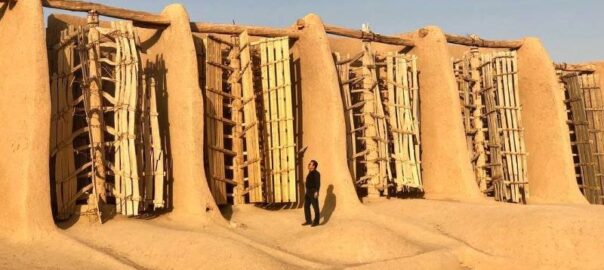
In the tiny village of Nashtifan in northeastern Iran, one may feel an ancient magic inherited from preceding generations, a traditional technique to harness the wind power.

Made of clay, wood, and straw, the windmills, locally known as “Asbads”, are perched on a cliff overlooking the village, milling grain for an estimated 1,000 years there. They also bear testimony to the human being’s adaption with nature by transforming environmental obstacles into opportunities.

The windy pride of Nashtifan, the structures are doted on by an amiable custodian named Ali Mohammad Etebari, who estimates that parts of the earthen windmills are 1,000 years old.

“If I don’t look after them, the youngsters will come and spoil it and break everything,” Etebari said in an interview with the International Wood Culture Society in 2015.

Honored as a Living Human Treasure, Etebari has dedicated his life to keep the windmills spinning by the hard work of daily inspections and maintenance.

“I was a driver and I’ve been looking after this for the last 28 years,” he said.

“It’s the pure, clean air that makes the windmills rotate—the life-giving air that everyone can breathe.”

Asbad development took place due to strong and continuous 120-day winds, which annually sweeps through the east and southeast of the Iranian Plateau from late May to late September.

UNESCO says Asbad is a smart technique to grind grains, a technique which goes back to ancient times when the people living in the eastern parts of Iran, in an attempt to adapt themselves to nature and transform environmental obstacles into opportunities, managed to invent it.

Meanwhile, the Encyclopedia Britannica says the earliest known references to windmills are to a Persian millwright in 644 CE and windmills in Seistan [Sistan], Iran, in 915 CE.

In the early second millennium, some Eastern and Western states acquired the technology of making mills from Persia, though the prototype design constantly underwent amendments in the course of time.

The Ministry of Cultural Heritage, Tourism and Handicrafts has almost completed preparations for a chain of ancient vertical-axis windmills for possibly becoming a UNESCO World Heritage. Such vertical-axis windmills can also be found in Sistan-Baluchestan and South Khorasan provinces.

The sad part of the story is an unclear future for the windmills. Without due attention, the Asbads may fall into disrepair, maybe due to different beliefs and tastes of the younger generation. / T.T/

National Day of Hafez Shirazi

This year October 11 is honored as Hafez Day in Iran to commemorate Shams al-Din Mohammad Hafez-e Shirazi, better known as ‘Hafez’, the 14th-century lyric poet of Persian classical literature.

Shams al-Din Mohammad was born sometime between the years 1310-1337, in Shiraz, in Fars province, the city which is known as the city of love, poetry, and civilization.

He memorized the Holy Quran by listening to his father’s recitations at an early age, thus he is called ‘Hafez’ (which literally means ‘one who has memorized’ [the Holy Quran]).

Hafez is regarded as the most influential Persian poets of all time. It can be said that he is one of the most beloved poets among Persians.

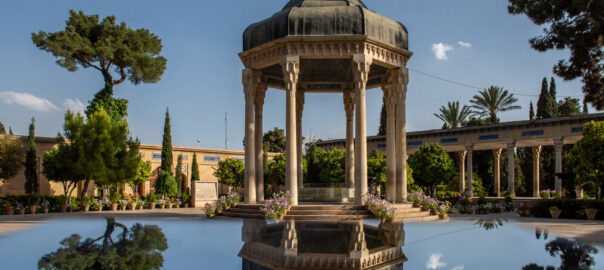
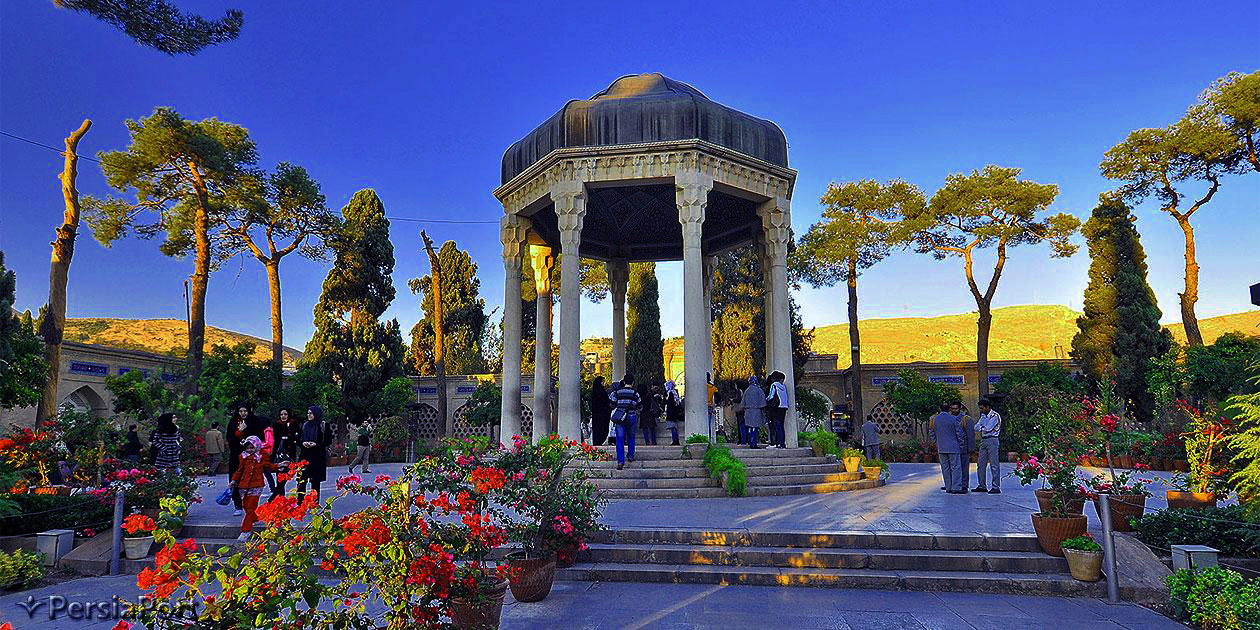
The Tomb of Hafez, commonly known as Hāfezieh

The great poet is primarily remembered for his lyrical poetry written in ghazals, a difficult and uniquely Persian verse-form. Prior to Hafez, ghazals were primarily used to write songs celebrating earthly pleasure. He revolutionized the form by utilizing the stock symbol of pleasure as a metaphor for spiritual experience. In so doing, Hafez elevated his short, simple verses to the level of high art. A devoted Sufi, Hafez’s poetry advocated abandoning all restraints and preconceptions so as to come into direct contact with the spiritual realm.

His poems use love as a metaphor for the kind of transcendental passion felt by the devout in search of the divine.

There is no definitive version of his collected works (or divan); editions vary from 573 to 994 poems. However, since the 1940s a sustained attempt has been made by some Iranian scholars to authenticate Hafez’s works and remove errors introduced by later copyists and censors.

Here is this first Ghazal of Hafez’s Divan as translated by Ali Salami in his book titled ‘The Selected Poems of Hafiz’ published in 2016:

As a result of his mystical and profoundly transcendent subject-matter, Hafez has become an inspiration for poets of all cultures. In Iran, even though his works are nearly 700 years old, Hafez continues to be immensely popular.

Iranian families usually have a Divan of Hafez in their house, and when they get together during the Nowruz (New Year) or Yalda night, they open the Divan to a random page and read the poem on it, which they believe to be an indication of things that will happen in the future.

The world-renowned vocalist Sharam Nazeri performing Hafez’s poem in his concert in Paris.

Many Iranian composers have composed pieces inspired by or based upon Hafez’s poems. Among Iranian singers, the late maestro Mohammad-Reza Shajarian, vocalist Sharam Nazeri, and the late singer Iraj Bastami performed one of his famous poems with music by Parviz Meshkatian.

Hafez’s poems have been translated into different languages and his art of poetry has been appreciated by many knowledgeable figures.

Hafez’s poems were translated into English by William Jones in 1771 and they influenced Western writers and philosophers such as Ralph Waldo Emerson and Goethe.

Ralph Waldo Emerson, one of America’s best-known and best-loved 19th-century figures, translated some 700 lines of Persian poetry, nearly half of them from the work of the Sufi poet, Hafez. Emerson discovered a close affinity between the views of the Sufi poets of Iran and his own thinking. Comparing Hafiz with some leading Western poets, Emerson pointed out Hafiz’s more mystical attitude towards nature. He wrote: “Hafiz is the prince of Persian poets, and in his extraordinary gift adds to some o the attributes of Pindar, Ansacreon, Horace, and Burns the insight of a mystic, that sometimes affords a deeper glance at Nature than belongs to either of those bards. He accounts for all topics with an easy audacity.”

The German poet and philosopher, Johann Wolfgang von Goethe (1749–1832), came across a translation of Hafez when he was about 65 years old. He wouldn’t have written the prestigious West-Eastern Divan without being inspired by Hafez.

Some assert that Hafez “remains the most untranslatable of all Persian poets because the meaning of his verses is so perfectly molded with the formal expression of the Persian language with its particular prosody, symbolic imagery, and music that it is hardly possible to disentangle the meaning in order to express it in another language and medium.”

Hafez died in 1390 at the age of 69. Twenty years after his death, a tomb, the Hafezieh, was erected to honor Hafez in the Musalla Gardens in Shiraz. The current mausoleum was designed by André Godard, a French archeologist, and architect, in the late 1930s, and the tomb is raised up on a dais amidst rose gardens, water channels, and orange trees.

His tomb has remained a popular tourist destination, with millions of Persians and other visitors making the pilgrimage to Hafez’s tomb each year.

This year under the pandemic, the commemoration ceremony of Hafez will be held online. On the occasion of the Hafez Day, Hassan Bolkhari, the director of the Iranian Society of Cultural Works and Luminaries, will be making a speech about the popular Persian poet in an online program, which will be available on the Instagram page of the society. / MNA /

Reported by Haniyeh Sadat Jafariyeh


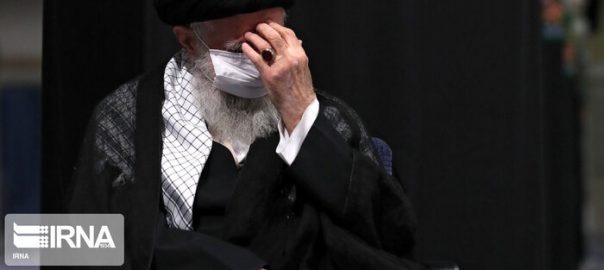
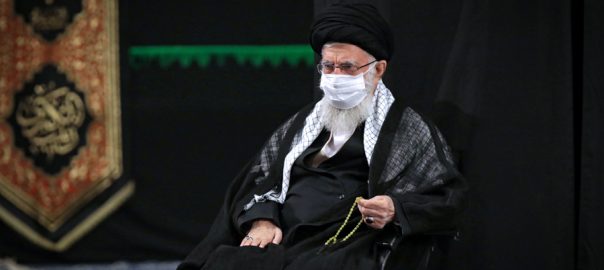
Leader mourns Arbaeen in person

Supreme Leader of the Islamic Revolution Ayatollah Seyyed Ali Khamenei attended Imam Khomeini Mosque on Thursday to mourn Arbaeen in person avoiding public reception.

The ceremony is being held without crowd and under the health protocols set by national anti-coronavirus headquarters.

Arbaeen marks the 40th day after the martyrdom anniversary of Imam Hussein (AS), the third Imam of Prophet Mohammad (PBUH) Infallible Household.

The Arbaeen procession is one of the largest religious ceremony being held in Iraq every year, but, Iranian Government called it off this year due to the pandemic which has killed over one million people worldwide since its outbreak in December, 2019. IRNA

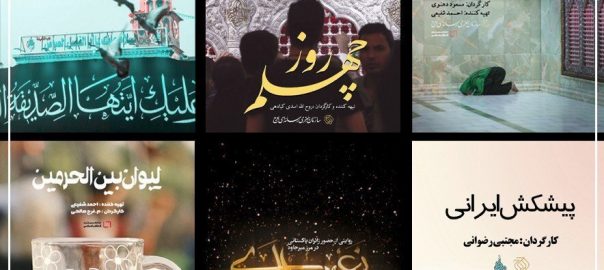
Owj releases package of docs on Arbaeen pilgrimage

The Owj Arts and Media Organization, a major institution that produces revolutionary works in art and cinema, has released a package of its documentaries on the annual pilgrimage of Arbaeen in Iraq.

Iranians and Shia Muslims from other countries embark on a journey to the Iraqi city of Karbala to observe the day of Arbaeen at the holy shrines of Imam Hussein (AS), the third Imam of the Shia, and his brother, Hazrat Abbas (AS).

However, the borders are closed this year due to the spike in coronavirus, and the Arbaeen ritual will be held only with Iraqi nationals at home.

Arbaeen marks the end of the 40-day mourning period following the martyrdom of the Imam and his loyal companions on Ashura.

The package includes “Guest”, “Iranian Gift”, “Glass of Bain ul-Harmain”, “Fortieth Day”, “From Caracas to Karbala” and “A Heidari Yell”.

“Guest” by Masud Dehnavi poetically narrates the arrival of the Iranian pilgrims to the city of Mehran on the western Iranian border in Ilam Province and how they prepare to begin their marching towards the city of Karbala in Iraq where the holy shrines of Imam Hussein (AS), the third Imam of the Shia, and his brother, Hazrat Abbas (AS), are located.

Director Mojtaba Rezvani depicts the group of Khariolahbab in his documentary “Iranian Gift” where the group sings Arabic songs throughout the way from Najaf to Karbala for the Iraqi pilgrims.

The documentary “Glass of Bain ul-Harmain” by Faraj Salehi narrates the story of a glass, which likes to be used by the pilgrims for drinking water, but one day it is broken, and then several events happen to the glass.

“Fortieth Day” by Ruhollah Asadi narrates the memoirs of those from Latin America who have returned from the annual pilgrimage to Iraq.

Also directed by Asadi, “From Caracas to Karbala” narrates the story of a Venezuelan diplomat who attends the pilgrimage in Iraq and talks about his experiences.

“A Heidari Yell” by Ali Momeni shows a group of Pakistani pilgrims who go through hardship to arrive at the Iran-Iraq border in Mirjaveh, Sistan Baluchestan Province, and then walk towards Karbala. It depicts the love of the pilgrims and the efforts made by the Iranians who serve these pilgrims at the borders.

Iraq will not allow foreign pilgrims to visit the country for the Arbaeen ceremony due to the coronavirus pandemic. This year Arbaeen falls on October 8./T.T/

Ayatollah Khamenei to attend Arbaeen mourning ceremonies on Thursday

Concurrent with Arbaeen ceremonies, which marks forty days after Imam Hussein (PBUH) and his true companions were martyred in Kabala Battlefield, Leader of Islamic Revolution will attend Arbaeen mourning ceremonies on Oct. 8.

This year, Arbaeen mourning ceremonies will be held without participation of people due to the spread of coronavirus, COVID-19, in accordance with the guidelines as instructed by the National Coronavirus Combat and Prevention Headquarters.

Arbaeen mourning ceremonies will be held in the presence of Leader of the Islamic Revolution Ayatollah Seyyed Ali Khamenei which will start at 10:00 am on Thursday Oct. 08.

It should be noted that Arbaeen mourning ceremonies will be broadcast live from IRIB TV Network Channels and social media networks. Enthusiasts can also log on the website of the Leader at the following address: KHAMENEI.IR to watch the ceremonies live./ ABNA/

Iran, Azerbaijan keen on boosting agricultural coop.

Referring to the several meetings between Iran and Azerbaijan presidents, Azeri Minister expressed hope that the strategic cooperation between these two neighbors expand in the agricultural fields.

A videoconference held between Iranian Minister of Agriculture Kazem Khavazi and Inam Karimov the Minister of Agriculture of the Republic of Azerbaijan.

In this meeting, Khavazi expressed Iran’s readiness to expand cooperation with Azerbaijan, in scientific fields as well as the fields of greenhouse crop development, introducing various cultivars, especially rice and cotton, embryo transfer and genetic material especially cattle and buffalo embryos, breeding measures in the field of cereals, and sericulture.

Inam Karimov, also, for his part hailed the strategic relations of Iran and Azerbaijan in terms of having common borders and noted that agriculture is one of the fields in countries’ strategic relations.

Stating that the presidents of Iran and Azerbaijan have met each other 13 times so far, he expressed hope that the agricultural cooperation between these two neighbors continues.

Pointing out that Azerbaijan and Iran have some cooperation in the field of agricultural equipment, he said, “I hope that in the near future Iranian companies and Iranian production equipment enter the Azerbaijani markets.”

According to Karimov, agricultural products like fruits, summer vegetables are the most traded products of the two countries.

MNA/