All posts by islam

Kish Island ready to host Qatar World Cup spectators

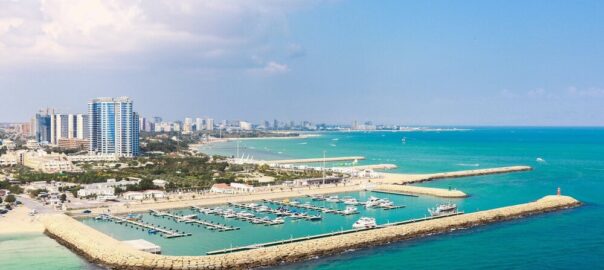
The Iranian island of Kish in the Persian Gulf is ready to host Qatar World Cup spectators as well as participating teams, the head of the Association of Kish Hoteliers, has announced.

The proximity of Kish to Qatar and the lower cost of staying on this island make it possible for spectators and teams to stay here during the World Cup, which will be held from November 21 to December 18, 2022, ISNA quoted Masihollah Safa as saying on Monday.

Due to the large leap taken by the Iranian national football team to participate in the World Cup, there is a need to increase the capacity of accommodation and reception services on Kish Island, the official explained.

Therefore 4,000 rooms are being prepared to accommodate Iranians and foreigners attending the World Cup, he added.

The goal is to increase accommodation capacity and standards on Kish until the World Cup to provide at least Iranian travelers with reasonable prices and a far better experience than Qatar, he noted.

It’s important to have foreign travelers and teams in Kish, but our priority is Iranian travelers, he mentioned.

Back in October, the deputy tourism minister Ali-Asghar Shalbafian announced that Iran should benefit from the 2022 World Cup as a considerable opportunity to promote its distinctive travel attractions.

“With the World Cup being held in a neighboring country, Iran can benefit from this important event, which if carefully planned, can bring significant wins for various sectors, especially the tourism industry in the country,” he noted.

The geographical position of Iran and its unique tourist attractions make it a potential destination for the World Cup spectators, the official added.

Therefore, proper policy-making and management in collaboration with the private sector can pave the way for the widespread use of this event, he noted.

Increasing the number of flights between Iran and Qatar during the event as well as showcasing and introducing distinctive tourist attractions of the country to the spectators at this event is on the agenda of the tourism ministry, he explained.

Back in September, Cultural Heritage, Tourism, and Handicrafts Minister Ezzatollah Zarghami announced the issuance of tourist visas and the flow of foreign tourists to Iran would resume as per President Ebrahim Raisi’s order following 19 months of suspension.

However, now that the tourist visas are once again being issued to cultivate good grounds of hope for travel insiders.

Months of steep recession has taken its toll. Many travel insiders, hoteliers, and tour operators have faced big dilemmas such as bankruptcy, unemployment, debts, and the prospects of not being competitive on the international level.

Some experts believe Iran is still somehow “unknown” for many potential travelers due to Western “media war”. Several estimates have been released so far on the extent of the tourism-related losses incurred by the pandemic. Only months into the outbreak, Zarghami’s predecessor, Ali-Asghar Mounesan, lamented that the number of foreign travelers to Iran was drastically plunged due to the pandemic.

“Tourism of the country was growing before the corona [outbreak], its revenues reached $11.7 billion in 2019, which accounted for 2.8% of GDP, nearing the average share of tourism in the world GDP, which was 3.2 percent,” Mounesan said. He added 8.7 million foreign nationals visited Iran during the [Iranian] year (1398), adding that Iran was ranked as the second fastest-growing country in tourism based on data compiled by the World Tourism Organization.

Experts expect Iran to achieve a tourism boom after coronavirus contained, believing its impact would be temporary and short-lived for a country that ranked the third fastest-growing tourism destination in 2019.

The Islamic Republic expects to reap a bonanza from its numerous tourist spots such as bazaars, museums, mosques, bridges, bathhouses, madrasas, mausoleums, churches, towers, and mansions, of which 26 are inscribed on the UNESCO World Heritage list. Under the 2025 Tourism Vision Plan, Iran aims to increase the number of tourist arrivals from 4.8 million in 2014 to 20 million in 2025.

A peek into Kish Island

Amongst the Persian Gulf islands, Kish is the more luxurious and developed. Except for its unique nature such as waters and shallow beaches, the tourist attractions of this charming island are due to its rich historical background as well as kind and hospitable people.

The pristine and beautiful nature, the meeting of land and sea, the clear sky, the pleasant air, and the pleasurable reverberation of the waves create such a sense of calm that one cannot even distinguish between imagination and reality.

Nowadays, about one million foreign and domestic tourists travel to the island every year and it is one of the most popular tourist destinations in Iran as it has magnificent attractions such as Kariz Underground City, Harireh Ancient City, Marjan Beach, Bird Garden, Ocean theme park, and Grand Recreational Pier./ T.T/
 

Iran joins club of producers of 3D woven glass composites

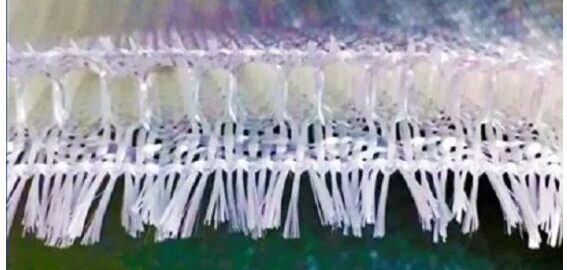
An Iranian knowledge-based company has helped Iran to join the club of five countries that produce 3D woven glass composites used in the construction industry.

According to the Vice Presidency for Science and Technology, an Iranian knowledge-based company has helped Iran to join the club of five countries that produce 3D woven glass composites used in the construction industry.

These high-tech fabrics, which are only produced in a few industrialized countries, used to be imported from overseas into Iran before.

According to the report, it took over a decade for the Iranian knowledge-based company to succeed in producing the advanced material.

The 3D woven glass composites are used in construction, transportation, road industries, as well as water and sewage industry, oil and petrochemical industry, construction of composite sheds, temporary shelters, other structures and their reinforcement, industrial greenhouses, civil engineering and urban facilities, among others. /MNA/


Gilan handicrafts export jump fivefold despite obstacles

Exports of handicrafts from the northern province of Gilan have increased fivefold despite challenges such as harsh sanctions and the outbreak of coronavirus, the deputy provincial tourism chief has announced.

According to official statistics, Gilan province exported $1.7 million worth of handicraft products during the Iranian year 1398 (March 2019-March 2020), excluding suitcase trade (allowed for duty-free and tax-free transfers), Farzad Farshidi said on Saturday.

During 1399 (March 2020-March 2021), Gilan’s export of handicrafts reached $9.5 million, representing a fivefold increase in the export of handicrafts, the official added.

Efforts were made by the province’s cultural heritage department last year to utilize the capacity of non-governmental organizations and other cultural stakeholders to create the infrastructure for the production and sale of handicraft products in Gilan, he noted.

The participation and identification, as well as the training and promotion of design, packaging, and commercialization processes have been going on for some time now, he explained.

Back in October, the tourism ministry announced that Iran exported $47 million worth of handicrafts in the first three months of the current Iranian calendar year (March 21-July 21).

Exports in these three months totaled $47 million with an approximate weight of 20163 tons.

Most of the handicrafts were mainly exported to Afghanistan, Pakistan, Iraq, and Singapore.

The country also exported $530 million worth of handicrafts, weighing 112,554 tons, during the past calendar year 1399 (ended March 21).

Of the figure, some $322 million worth of handicrafts were exported officially through customs, and about $207 million was earned via suitcase trade (allowed for customs-free and tax-free transfer) through various provinces.

Wooden furniture, copper utensils, and glassware were among the main handicrafts exported to Iraq, Oman, Afghanistan, Pakistan, and Azerbaijan last year.

With 14 entries, Iran ranks first globally for the number of cities and villages registered by the World Crafts Council, as China with seven entries, Chile with four, and India with three ones come next.

Iran’s ceramics, pottery vessels, handwoven cloths as well as personal ornamentations with precious and semi-precious gemstones are traditionally exported to Iraq, Afghanistan, Germany, the U.S., the UK, and other countries. T.T/

Iran move up in FIFA ranking

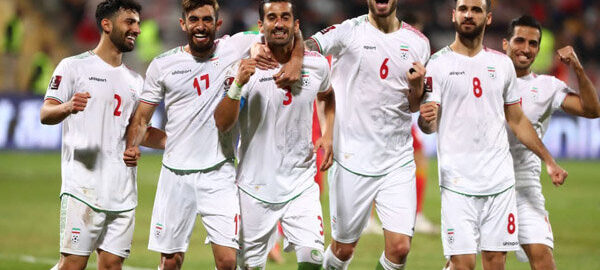
Iran national football team moved up one place to 21st in the latest FIFA ranking released on Friday. Dragan Skocic’s defeated Lebanon and Syria last week and need just one win to book their place in the 2022 FIFA World Cup.

Iran are the best Asian team in the ranking, followed by Japan (26th), South Korea (33rd), and Australia 35th).

Belgium remain in the top of the updated list, followed by Brazil and France. The next FIFA World Ranking will be published on Dec. 23, 2021. / T.T/

Iran to vaccinate refugees against coronavirus

Refugees in Iran will be vaccinated in cooperation with international organizations, Mehdi Mahmoudi, the director of the bureau for aliens and foreign immigrants at the Ministry of Interior, has announced.

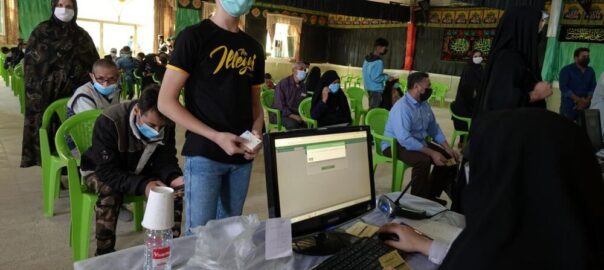
Due to the importance of vaccinating refugees and foreign nationals to prevent transmission, Iran holding numerous meetings with international institutions, after obtaining the necessary permits from the Ministry of Health, was able to receive the first consignment of COVID-19 vaccine, amounting to 1.6 million doses through COVAX facility.

Over 1.6 million doses of vaccine delivered to Iran through COVAX facility for refugees. Iran is one of the countries affected by the pandemic that has been able to widely implement vaccination programs in recent months and vaccinate refugees living in the country at the same time as Iranian nationals.

Iran has always been a major supporter of refugees and displaced persons, and the provision of services to asylum seekers for four consecutive decades is a testament to this.

Without any discrimination, Iran has provided various services to a large number of refugees and foreign immigrants in the fields of education, health, treatment, livelihood, vocational training, and employment, with minimal assistance from the international community.

World’s fourth-largest refugee community

Iran is hosting the world’s fourth-largest refugee community. The country has generously hosted approximately 1 million refugees for the past 30 years. The majority, which mainly came from Afghanistan and Iraq, live in urban areas. Approximately 31,000 of the most vulnerable refugees live in 20 settlements located throughout the country.

Based on the latest statistics, over 3 million Afghans are living in Iran – some 780,000 Afghan refugees, over 2 million undocumented Afghans, and another 600,000 Afghan passport-holders with Iranian visas.

However, in light of the pandemic, all refugees, even those undocumented, benefited from access to free primary health services and free COVID-19 related testing, treatment, and hospitalization, just like Iranian nationals.

The same happened for the vaccination when the country has generously considered refugees over the age of 75 for vaccination against coronavirus.

In order to support the refugees living in the country, the seventh phase of the health insurance plan will cover 120,000 vulnerable refugees through a memorandum of understanding signed between the Health Insurance Organization and the United Nations High Commissioner for Refugees.

In Iran, UNHCR is seeking $16.2 million for its COVID-19 emergency, while requires an additional $98.7 million to support Iran in maintaining and sustaining its commendable inclusive refugee policies, under the umbrella of the Solutions Strategy for Afghan Refugees (SSAR). /T.T/


Imam Mosque restoration enters final stage

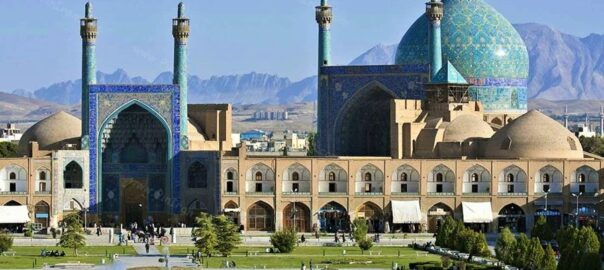
A masterpiece of Islamic architecture, Imam Mosque has entered its final stage of restoration, more than ten years since work began.

Imam Mosque, which is impressive because of its sheer size and incredible decorations, stands tall at the southern end of UNESCO-registered Naghsh-e Jahan Sq. (Imam Square) in Isfahan, central Iran.

“In the most optimistic case, the restoration of the dome of the Imam Mosque will be completed within the next month,” ILNA quoted the director of the UNESCO site as saying on Friday.

“At present, portions 15th and 16th (of the floral dome) are being restored at the same time, and about two to three (square) meters have remained,” Fariba Khatabakhsh said.

“Moreover, the scaffolding will be opened after a final inspection of the dome is carried out.”

Elsewhere in her remarks, the official said that restoration of Sheikh Lotfollah Mosque’s iconic dome has been stopped due to the death of one of its old hand restorers due to corobavirus infection.

Restoration of the creamy dome has been one of the most challenging and controversial renewals in the field of cultural heritage.“We are consulting with several other masters to continue work. . . but we have not yet found the right person so far.”

Consequently, the restoration of the dome has come to a standstill till a qualified master is hired, the official added.

Restoration of the creamy dome has been one of the most challenging and controversial renewals in the field of cultural heritage to some extent that almost every stage of it has been attacked by some critics and cultural heritage enthusiasts.

The criticism has involved various aspects from the variation in coloration, and the method used to reinstall the restored tiles or the newly-made replicas to a phenomenon that snow did not cover some restored parts of the dome.

A very scenic huge entrance portal leads visitors to Imam Mosque whose courtyard walls feature sunken porches framed by seven-colored tiles of deep blue and yellow. Each iwan leads into a vaulted sanctuary covered with particularly fine floral motifs on a blue background. Some visitors say each part of the Imam Mosque is a masterpiece that leaves a lasting impression.

On the other side of the square stands the very delicate Sheikh Lotfollah Mosque. Constructed between 1603 and 1619 during the reign of Shah Abbas I, the mosque was dedicated to the ruler’s father-in-law, Sheikh Lotfollah, a revered Lebanese scholar of Islam who was invited to Isfahan to oversee the king’s mosque (now the Imam Mosque).

The exterior panels boast collections of arabesques and floral designs that have become a signature motif of the masterpiece. The portal itself contains some stalactite-type stone carving used to decorate doorways and window recesses with rich concentrations of blue and yellow motifs. Inside the sanctuary, there are thousands of mosaics that adorn the walls and its extraordinarily gorgeous ceiling that features a series of shrinking, yellow motifs, itself a masterpiece of design. Photography is allowed but using a flash is not.

Half the world?

Soaked in a rich history, Isfahan was once a crossroad of international trade and diplomacy in Iran and now it is one of Iran’s top tourist destinations for good reasons.

It is filled with many architectural wonders such as unmatched Islamic buildings, bazaars, museums, Persian gardens, and tree-lined boulevards. It’s a city for walking, getting lost in its mazing bazaars, dozing in beautiful gardens, and meeting people.

Isfahan is renowned not only for the abundance of great historical bridges but also for its ‘life-giving river’, the Zayandeh-Rood, which has long bestowed the city an original beauty and fertility.

The city has long been nicknamed as Nesf-e-Jahan which is translated into “half the world”; meaning seeing it is relevant to see half the world. In its heyday, it was also one of the largest cities in the region with a population of nearly one million.

The cool blue tiles of Isfahan’s Islamic buildings, and the city’s majestic bridges, contrast perfectly with the encircling hot, dry Iranian countryside.

Imam Square is hemmed on four sides by magnificent buildings: to the east, the Sheikh Lotfollah Mosque; to the west, the palace of Ali Qapu; to the north, the portico of Qeysarieh; and to the south, the eminent Imam Mosque.

“The square was at the heart of the Safavid capital’s culture, economy, religion, social power, government, and politics. Its vast sandy esplanade was used for celebrations, promenades, and public executions, for playing polo and for assembling troops,” according to the UNESCO website.

Right at the northern limit of the Imam Square, one will find “Qeysarieh Gate”, which leads to the unique and unforgettable “Grand Bazaar of Isfahan”. This vaulted marketplace is one of the largest and most labyrinthine bazaars in the country. Shops offering handicrafts, souvenirs, jewelry, silverware, traditional ceramics, and authentic Persian carpets.

Modern Isfahan is now home to some heavy industry, including steel factories and a nuclear facility on its outskirts, however, its inner core wants to be preserved as a priceless gem. The city is also home to a gigantic, professional, and state-of-the-art healthcare city, which is a major destination in the realm of medical tourism. / T.T/


“Psycho” to vie at Italian film festival

Iranian short film ‘Psycho’ by Mostafa Davtalab will take part in the international film festival in Italy dubbed as “Corti da Sogni – Antonio Ricci”.

Written and directed by Iranian filmmaker Mostafa Davtalab, the Iranian short film “Psycho” has made it to International Festival “Corti da Sogni – Antonio Ricci” in Italy.

This Italian festival is scheduled to be held from November 22 to 24, 2021.

“Psycho” will compete with 10 other films in the international short film section of the festival.

The short film tells the story of a young woman that takes her husband to a Psychiatric hospital. Her husband, Psycho, who is suffering from an acute mental illness, engages a verbal conflict with a driver.

Psycho’ previously has been also taken part in the competition section of the 24th edition of Johns Hopkins Film Festival in the US, the 13th edition of Islantilla Cinefórum International Festival, as well as, being screened at the ‘Tehran’ International Short Film Festival. /MNA/

34th Children, Youth Filmfest natl. section nominees annouced

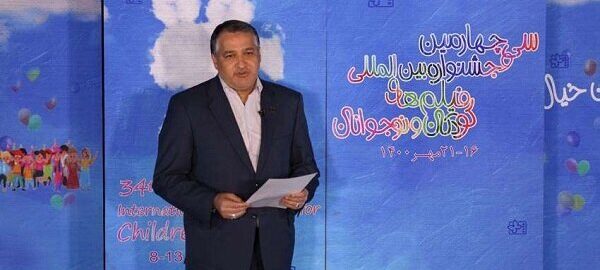
The Director of Iran’s 34th International Film Festival for Children and Youth, Alireza Tabesh, announced the list of this national section nominated films.

As reported by the festival’s news headquarters, after holding a voting session, the jury announced the nominees as follows:

Corona Diaries

-“Home” by Hossein Zahedi

-“Life Space” by Ilia Ramezai

-” What Corona Did to Us and What We Did with It? By Iliad Mahshidi, Miad Mahshidi, Saedeh Kastvani

-“A Crowned Virus” by Parsa Mohammadi

Web-Series

-“Ashmachz” by Faryad Bayat

-“A Digital Mistake” by Faryad Bayat

-” Pash Mesh” by Azad Sadeqi

Short Animated Films Competition

-“ID” by Fahimeh Qobadi

-“Autumn Winds, Spring Winds and Two Birds” by Sadeq Javadi

-“Past” by Hamid Mohammadi

Short Fiction Films Competition

-“The Winner” by Ali Keivan

-“Trees of Valiasr Street or Impression” by Emad Hosseini-Fard

-“The Second Floor Operation” by Mohammad Hossein Tafreshi

-“I am Samir” by Matin Rokn

-“Vadiar” by Marjan Khosravi

Feature Films Competition

-“Reporter” by Ebrahim Forozesh

-“The Secret of Castle” by Karim Renasian

-“The Sweeper” by Amin Shojaei

Nominees of Iran National Completion

-“Sea Sons” by Behrouz Neshan

-“Lipar” by Saeed Khani

-“Between the Rocks” by Mohammad Ahmadi

Best Director”

-Afshin Hashemi and Hossein Qasemi Jami for “Sea Boys”

-Hossein Rigi for “Lipar”

– Mokhtar Abdollahi for “Between the Rocks”

Best Script

-Afshin Hashemi and Hossein Qasemi Jami for “Sea Boys”

– Hossein Rigi and Hessam Rarahmand for “Lipar”

-“Bam Bala” for Amir Mohammad Abdi

The 34th International Film Festival for Children and Youth opened on October 8, 2021, in collaboration with the Iranian Cinema Organization, Farabi Cinematic Foundation, and Isfahan Municipality. The festival will be wrapped up on Oct 13.

MNA/

A Letter from Iranian Children to the Children of the World

We, Iranian Kids, say hello to all Kids from all over the world. We are the ones who are the sweetness of life as grownups say. The ones who wish us to be always happy and nothing blemish our dreams.However, our world gets blemished when grownups do not pay attention to us. Then, our smiles get tarnished.

We love all and we want no fight and war among people and countries in the world.We love peace. We love kindness and happiness. We love gifting and getting gifted. We love smiling at each other. We love peace and friendship. We want all to look alike with smiling faces.

Why we must be sacrificed because grownups are in war ?We detest words like anger, enmity, crying, war and fight. We even do not want to write these words in our dictations. Whenever we see hungry kids in the world, we hate eating food. We want all kids to be happy all over the world .We want them to have clothes, food, and enjoy themselves. We want all children go to school and have education. We want grownups listen to our words.

We are willing to have grownups draw paintings with the theme of reconciliation and friendship.We are kids and we would like to tell grownups if you are wish us to believe that you love us be kind and in good terms with each other.If you love us ,throw away all your guns and listen to us.

We love the world to be a place where we can sing happily. We want grownups not to do things that make our eyes wet and break our hearts. Grownups must keep in mind that if they are going to build a happy world for kids, they must be kind to each other like us.
We love those who love kids and spend time on them. We pray for all grownups to have the kind God as their friend so that they would help us.
Hoping for joyful livinghood with joyful childhood.

A Letter from Iranian Children to the Children of the World