All posts by islam

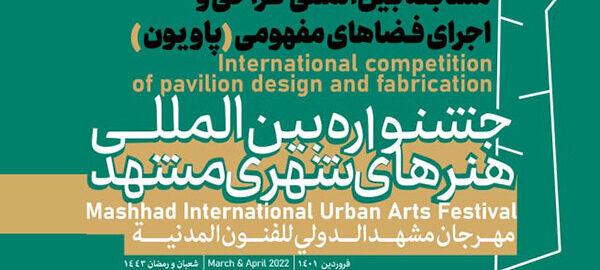
Call for works in Mashhad International Urban Arts Festival

In the 14th year of the “Mashhad International Urban Arts Festival” in addition to domestic works of art, it has also hosted international works of art, which begins a new chapter in the artistic manifestations of this metropolis.

Mashhad is a city locate in the northeast of Iran and one of the most important cities in the West Asian region. A city measuring ​​351 square kilometers and having a total population of three and a half million is formed 12 centuries ago when Imam Reza (A.S.), the eighth Shia Imam, was buried there. It is now one of the most important pilgrimage cities in the world annually receiving 30 million pilgrims. Among Persian-speaking countries, Mashhad is the pioneer of culture and literature, and was called the cultural capital of the Islamic world in 2017.

Providing services for the huge numbers of pilgrims of the holy shrine of Imam Reza (peace be upon Him) in Mashhad by its locals has an ancient history and is filled with memories. It is due to the fact that the necessities of pilgrims hosting have always been an important part of the concerns of urban management in this city. Thus, paying attention to the beauty of public places and using the capacity of art for adding meaning and visual quality to the city led to a series of annual festivals since 2008. “Mashhad Urban Arts Festival” has been turning the city space into a large exhibition of works by Iranian artists such as sculptors, architects, graphic designers, painters, etc. for 13 years during the happy days of Nowruz creating a part of the contemporary memories of Mashhad. Now, in the fourteenth year holding the festival, hosting international works of art is to be added to past experiences and it would start a new chapter in urban arts manifestations in “the Metropolis of Munificence and Blessing”.

Call for works in Mashhad International Urban Arts Festival

Conceptual and visual structure of works

The Mashhad International Urban Art Festival will host works that deal with the concepts of “Munificence” and “Blessing” in the form of a pavilion for placing in public places of this city. The works of the festival should express one of the two concepts in the external theme and narrate an example of the main themes in the inner layer and confront the audience with a “story” of a specific “subject”.

It is worthwhile to present the story and the subject in an interactive way and to use the capacity of all kinds of visual methods, visual and auditory tools or new technologies.

In order to get the artists more informed about the accepted conceptual and visual structure, two following appendices will be published on the festival website by November 27.

Appendix number one explains the content concepts and introduce a number of related subjects.

Appendix number two includes the visual and geographical information about city places having the capability for installing works. /T.T/

For more details please click here
pdf

Iran’s Solhipour claims gold at 2021 World Para Powerlifting

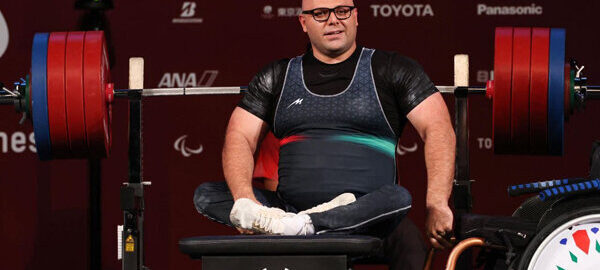
Hamed Solhipour seized Iran’s first gold at the 2021 World Para Powerlifting Championships underway in Tbilisi, Georgia on Saturday.

With an impressive drive for 225kg, Solhipour retained his crown in the men’s up to 97kg to win back-to-back titles.

“I’m very happy and delighted”, commented Solhipour. “And I think I deserve this medal.”

Consistency was key for Egypt’s Hany Abdelhady. The African champion was the only athlete to complete three successful lifts and the last one bagged him silver (223kg).

A courageous lift of 220kg in the third round saw Jordan’s Mutaz Aljuneidi leapfrog his way onto the podium to win bronze.

Iran’s Amir Jafari in the men’s up to 65kg and Rouhollah Rostami in the men’s up to 80kg had previously won two silver medals.

The tournament is one of the compulsory tournaments to qualify for the 2024 Summer Paralympics in Paris, France. /T.T/

Iranian knowledge-based goods to be produced in 7 countries

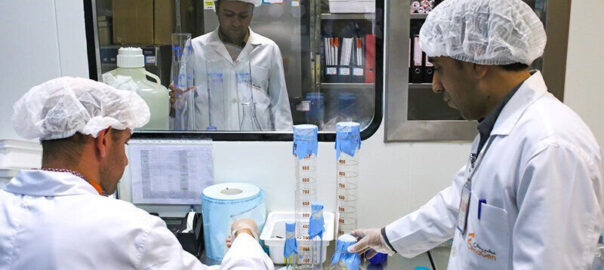
Iran will launch production lines of knowledge-based products in seven countries, namely Turkey, Armenia, Afghanistan, Bosnia and Herzegovina, Syria, Iraq, and Kenya, Marzieh Shaverdi, the manager of the Innovation and Prosperity Fund, has said.

The export support package for knowledge-based companies includes empowering, networking, and financing, IRNA quoted Shaverdi as saying on Saturday.

Export empowerment includes training and consulting, providing export standards and licenses, and intellectual property, she explained.

The Vice Presidency for Science and Technology will provide special support to facilitate export for knowledge-based companies with quality products over the next 6 months.

Due to the necessity of Iran’s presence in the global technology markets and the high capability of knowledge-based and creative companies, the Vice Presidency for Science and Technology stepped into the field to pave the way for the presence in the global market, Mehdi Ghalehnoei, an official with the Vice Presidency, said in October.

To this end, it has developed and implemented programs, policies, and support packages related to the development of export, planning to attract foreign investment, eliciting the participation of Iranians abroad, and connecting domestic capabilities to the global market are among the actions taken in this regard.

Exporting technological products of Iranian knowledge-based companies is one of the important and key programs of the Vice Presidency for Science and Technology, and in this regard, three houses of innovation and technology were inaugurated in Kenya, China and Syria.

And countries like Turkey, Iraq, Afghanistan, and Pakistan are set to host innovation houses in the near future.

Ghalehnoei said in February that last year, knowledge-based companies gained about $800 million in revenue from export, and this year it seems to reach up to $2 billion.

“Africa, neighboring countries, Southeast Asia and Eurasia are our export target priorities, and we hope to create Iranian innovation and technology in all these areas,” he added.

Iranian knowledge-based firms

The Innovation and Prosperity Fund affiliated with the Vice Presidency of Science and Technology has earmarked a sum of 170 trillion rials (nearly $4 billion at the official rate of 42,000 rials) to support knowledge-based companies over the past 4 years.

The Vice Presidency for Science and Technology has paved the way for research and production of technological products by supporting 7,000 projects over the past 8 years.

There are currently 6,263 knowledge-based companies operating in the country, offering advanced products and services in various fields of technology to domestic and foreign markets, and some of them have entered international markets, Siavash Maleki, deputy head of the Fund stated.

The fields of aircraft maintenance, steel, pharmaceuticals, and medical equipment, oil, and gas are among the sectors that researchers in technology companies have engaged in, leading to import reduction. /T.T/

Iran ranks 13th worldwide in artificial intelligence

Iran is in 13th place among the top countries in artificial intelligence by the total number of publications, according to the Nature Index database.

The Nature Index is a database of author affiliations and institutional relationships. The index tracks contributions to research articles published in 82 high-quality natural science journals, chosen by an independent group of researchers.

The Nature Index provides absolute and fractional counts of article publication at the institutional and national level and, as such, is an indicator of global high-quality research output and collaboration. The database is compiled by Nature Research.

The 2020 version of SCImago ranks Iran as 15th in the world and first in West Asia in the field of artificial intelligence. In the field of Nature Intelligence 2020, this database lists the top 100 institutions, 25 growing institutions, top 25 countries/territories in artificial intelligence, top 100 academic institutions, top 10 health care institutions, top 10 NPOs/NGOs, top 10 governmental institutions, top 5 companies, top 100 research organizations, 25 growing research organizations, and top 25 countries in artificial intelligence.

In the table of top 25 countries/territories in artificial intelligence (dimensional data), which is ranked based on the total number of publications from 2015 to 2019, the first place belongs to China with 318,534 scientific publications and 13th rank belongs to Iran with 30,221 scientific publications.

Also in the table of top research organizations in the field of artificial intelligence (dimensional data), the University of Tehran is ranked 59 among the top 100 institutions.

Iranian universities in artificial intelligence

The SCImago ranking database at the University of Granada, Spain, ranks countries and universities based on the number of scholarly articles from higher education institutions in the Scopus database. This ranking uses three indicators of research, innovation, and society in combination.

In the 2020 version of SCImago, the subject of artificial intelligence is a subcategory of computer science, which ranks Iran as 15th in the world and first in West Asia.

Also, in cognitive sciences as a subset of psychology, which is one of the disciplines related to artificial intelligence, Iran ranks 36th in the world and third in West Asia.

In electrical and electronic engineering, which has a part of artificial intelligence, Iran is ranked 15th in the world and first in West Asia.

Another of the most important global rankings that can show the position of Iranian universities in computer science, artificial intelligence, software, and robotics is the global ranking of computer science or Computer Science Rankings (CSRankings). In this ranking, researchers’ articles are displayed with their Google Scholar profiles.

In fact, CSRankings is a measurement-based ranking of the top computer science institutes around the world. This ranking categorizes universities in different regions of the world and shows only the top 50 universities in the whole world. This ranking examines the metrics of each university between 2011 and 2021.

Sharif University of Technology, IPM Institute for Research in Fundamental Sciences, and Iran University of Science and Technology were placed among the top 100 institutions in Asia, according to the CSRankings. /T.T/


Discover subterranean watermills in oasis city

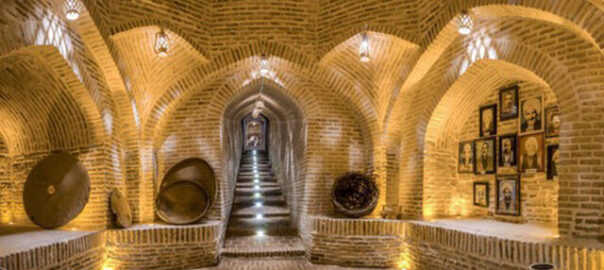
On the margins of a harsh desert in central Iran, lies the ancient city of Meybod, which has long been home to underground watermills.

According to available data, Meybod embraces 22 historical watermills some of which have been or are to be restored while some are forgotten over time.

The double stone watermill of Mohammad-Abad is an exemplar hydraulic structure created at a depth of 40 meters on a qanat corridor. It used to supply all flour requirements of the neighboring villages. The mill nears a village of the same name, some 50 km away from Yazd.

The watermills as their names imply were connected to river flows, springs, qanats, or other water sources usually through man-made ditched canals.

They were typically constructed following the then design requirements for instance they featured dome-shaped roofs with high-enough vestibules to allow camels or other livestock to move back and forth with ease to convey grains or flour.

Iran is situated in an arid and semi-arid region where, due to the inequitable distribution of surface water, its people have been enduring extreme hardship to meet water demands for millennia.

Construction of dams, qanats (underground aqueducts), cisterns, and yakhchals (ice houses) date back to the ancient times in Iran to counter fluctuation of yearly seasonal streams and ensure to have better conditions for utilization of water.

According to UNESCO, Meybod is a remarkable example of the viability and transmission of human beings’ collective thoughts from different generations to the present one.

“What is significant in the city of Meybod is the regularity in city planning. The anatomy and spatial structure of the city show original plans which conform with the old Iranian city planning.”

A couple of years ago, the Ministry of Cultural Heritage, Handicrafts, and Tourism Organization commenced documentation of an ancient chain of vertical-axis windmills, which can be found in various corners of the country. / T.T/


Tehran announces readiness to host 10th World Tourism Conf.

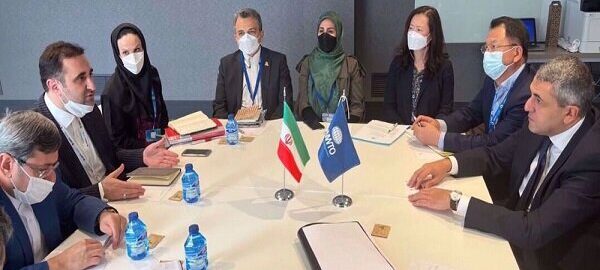
Mayor of Tehran announced Tehran Municipality’s readiness to host the 10th World Tourism Conference.In a letter to the Secretary-General of the World Tourism Organization (UNWTO) Zurab Pololikashvili, Alireza Zakani announced that Tehran Municipality is ready to host the 10th World Tourism Conference.

During the meeting held a meeting on Tuesday with UNWTO Secretary-General Zurab Pololikashvili in Spain’s capital of Madrid, which is hosting the 24th session of the agency’s General Assembly, Iranian Ambassador to Madrid Hassan Qashqavi submitted Zakani’s letter to the UNWTO chief.

Meanwhile, Iran’s Deputy Minister of Cultural Heritage, Tourism and Handicrafts Ali Asghar Shalbafian, who was also present in the meeting, outlined Tehran’s latest plans to develop its tourism industry, saying the country’s new administration attaches special significance to this sector. /MNA/


Iranian para-powerlifter wins silver medal at Tbilisi c’ships

Iranian Para powerlifter Amir Jafari Arangeh collected a silver medal at the 2021 World Para Powerlifting Championships on Wednesday.

Amir Jafari Arangeh, Para powerlifter from Iran finished in second place after lifting 192kg weight. An Algerian athlete Hocine Bettir won the gold medal when he managed to lift the 194kg.

The bronze medal went to Thomas Kure of Nigeria who lifted a weight of 190kg. The 2021 World Para Powerlifting Championships was held in Tbilisi, Georgia from Nov. 27 to Dec. 5.

The medal winners in the Tbilisi competitions will book their place in the 2024 Summer Paralympics in Paris, France. /MNA/


3 Iranian films to be screened in Saudi festival

Two feature and a documentary films from Iran’s cinema will be screened at the first edition of the Red Sea International Film Festival in Saudi Arabia.

Four years after Saudi Arabia lifted a 35-year ban on cinemas, the first edition of the Red Sea International Film Festival will be held in Jeddah on December 6-15, 2021.

Iranian feature film “Hit the Road” directed by Panah Panahi will be screened at the competition section of the event and another Iranian feature film “A Hero” directed by Asghar Farhadi and documentary film “Radiograph of a Family” by Firouzeh Khosravani will vie at the Festival Favourites section. / ISNA/


Foreign tourists should buy COVID insurance

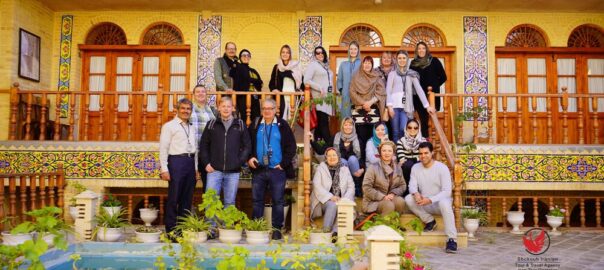
In addition to a mandatory negative PCR test certificate, international travelers visiting Iran should buy coronavirus insurance, a tourism official announced on Thursday.

“Foreign tourists must buy coronavirus insurance from authorized companies when entering the country, and if they suffer from the pandemic in Iran, they will be provided with a place and treatment for 14 days,” Esmaeil Barat said, IRNA reported.

In addition to providing proof of vaccination or a negative PCR, inbound passengers must have coronavirus insurance, which differs from the routine insurance coverage purchased by all tourists before the coronavirus era, the official explained.

Home to countless cultural and natural travel destinations, Iran achieved good growth in attracting foreign tourists over the past couple of years but the epidemic shut down its tourism, as in many other countries, Barat said.

Iranian Tour Operators Director Ebrahim Pourfaraj said earlier this month that the restoration of tourism flow to the country is very important for Iranian tour operators and travel insiders. “At the moment, we are not thinking about revenues, but we are looking for the beginning of the tourist flow to the country and renew our links [with international fellows],” Pourfaraj said.

His comments came after months of steep recession triggered by massive coronavirus restrictions which led many travel insiders, hoteliers, and tour operators towards bankruptcy, unemployment, debts, and the prospects of not being competitive on the international level.

As mentioned by Pourfaraj, Iran has made its best to maintain contact with global tourism markets and companies that worked with Iran in the past, especially since virtual communication and meetings have thrived.

“Following the resumption of the tourist visa, visitors from Russia and France have traveled to Iran and we are currently expecting a smaller number of tourists in Iran due to the current situation in the world,” he explained.

Last November, the World Tourism Organization announced that international tourist arrivals to Iran plunged 72% during the first eight months of 2020 when compared to 2019, highlighting the severe impact of COVID-19 as the main factor.

Even before the pandemic, Iran’s tourism was already grappling with some challenges, on top of those Western “media propaganda” aimed at scaring potential travelers away from the Islamic Republic. Some experts believe Iran is still somehow “unknown” for many potential travelers due to such a “media war”. They, however, consider bright prospects for the tourism sector of the country if it vigorously pursues comprehensive strategies to counter U.S.-led propaganda and strict sanctions, yet does its best to loosen tough travel regulations.

Iran is potentially a booming destination for travelers seeking cultural attractions, breathtaking sceneries, and numerous UNESCO-registered sites. Under the 2025 Tourism Vision Plan, Iran aims to increase the number of tourist arrivals from 4.8 million in 2014 to 20 million in 2025. /T.T/

Iranian docs honored at IDFA

Iranian movies “Makeup Artist” and “Water, Wind, Dust, Bread” were honored at the International Documentary Film Festival Amsterdam (IDFA) on Thursday.

“Makeup Artist” by Jafar Najafi won the FIPRESCI Award, the organizers announced on Friday.

“Water, Wind, Dust, Bread” by Mehdi Zamanpur Kiasari received a special mention in the IDFA Competition for Youth Documentary.

“Makeup Artist”, the winner of the Award of Excellence at the Yamagata International Documentary Film Festival in Japan, is about Mina, a makeup artist who is determined to realize her dreams. She not only refuses to succumb to her husband and mother-in-law’s fierce opposition but also paves her own path and pushes forward along it. Gradually, it looks as if the people and world around her are starting to change.

“Water, Wind, Dust, Bread” tells the story of 11-year-old Abolfazl who lives with his family in an oasis in the Iranian desert. He picks dates, tends to his family’s cows, does his homework, and has fun with his best friend Setayesh.

The camera quietly observes their friendship as they swing between the date palms or climb the windswept rocks around the oasis. Abolfazl’s mother bakes fresh bread, and tourists come to her guesthouse for the serene atmosphere.

But life in the oasis is not entirely idyllic. Although Abolfazl lives with a physical disability, it is Setayesh who faces an even bigger hurdle. She is one of the 40,000 children in Iran who don’t have a birth certificate, and as a result, she can’t go to school.

“Mr. Landsbergis” a co-production of Lithuania and Netherlands by Sergei Loznitsa won the IDFA Award for Best Film in the international section of the festival.

The IDFA Award for Best Directing in the International Competition went to Diem Ha Le for “Children of the Mist” from Vietnam.

“Handbook” a co-production of Germany and Belarus by Pavel Mozhar won the IDFA Award for Best Short Documentary, while a special mention in this section went to “Wolf Whispers” by Chloé Belloc from France.

“I Am Trying to Remember” by Iranian director Pegah Ahangarani had its world premiere in the short documentary section of the festival, while “Tonight’s Homework” by Ashkan Nejati went on screen at Luminous Section.

In “I Am Trying to Remember”, Pegah talks about a man named Gholam, who is always present at her family gatherings. Gholam films these everyday scenes with his own camera. At the time, Pegah can’t imagine what the purpose of these films might be, but she’s happy to pose before the lens of this family friend, who she’s certainly very fond of.

It is as if Pegah, the film’s director, and chief protagonist, is reading from a children’s book; as if we are looking over her shoulder at Gholam’s films of the family and the old photos. The large family radiates great warmth as we see them shoveling snow or just sitting around at home.

“Tonight’s Homework” has been made based on Abbas Kiarostami’s 1989 “Homework”.

In “Homework”, Kiarostami put questions to students at a public school: questions about homework, punishments, and dreams of the future. The result was a portrait of the generation that grew up during the Iran-Iraq war, trapped by uncertainty and a rigid upbringing.

Now, some 30 years later, directors Nejati and Nematollahi repeat Kiarostami’s questions and come to the conclusion that the school system and society itself have changed dramatically. The gulf between rich and poor has grown far wider, and that has become evident in the schools. Parents, many of whom are illiterate, are unable to help their young ones, or otherwise too busy with their careers to supervise homework. Any sense of interest or guidance is absent.

Two now-adult subjects of Kiarostami’s film agree that there’s something fundamentally wrong with the way responsibilities get dumped on the shoulders of teachers. The only thing that’s unchanged is the way the children reply in the approved manner—yes, of course, they’ve done their homework.

The 34th edition of IDFA will be running in the Dutch capital until Sunday. /T.T/