All posts by islam

Iran to expand agricultural co-op with intl. organizations

Director-general of the Iranian Agricultural Ministry’s International Affairs Office has said the ministry is going to expand cooperation with specialized international organizations through United Nations Development Programme (UNDP).

As IRNA reported, the UNDP representatives held a meeting and a workshop at the place of the Iranian Agricultural Ministry on Monday to explore the capacities and potentials for mutual cooperation.

“The United Nations Development Programme workshop and the joint meeting with the UNDP representatives have provided an opportunity for us to expand our cooperation with specialized international organizations,” Alimorad Sarafrazi said at the meeting.

“The Agriculture Ministry’s priorities for cooperation with international organizations will be in areas like drought resilience, contract farming, smart agriculture, as well as reforming the structure and improving agricultural businesses in rural areas with an emphasis on women’s occupations,” he noted. / T.T/


New Islamic Civilization and Its Importance

According to some Muslim scholars, civilization refers to the establishment of order and coordination in the relationships between the people of society in a way that would eradicate destructive clashes to be replaced by a move towards human perfection such that people’s social life would result in the flourishment of their constructive talents and intuitions.

Foundations of Islamic Civilization

1- Monotheism and Faith in God Almighty

Belief in God Almighty is an indispensable part of man’s being to which the Holy Quran has referred as Fitrah (innate nature), 30:30. As rightly stated by the Supreme Leader of the Islamic Revolution, belief and true faith in God Almighty is the focal point of the Islamic Civilization. According to him the main features of faith in God Almighty comprise spirituality and morality which emphasizesuch values as “sincerity, sacrifice, reliance on God, and faith in yourself and society. Morality entails observing virtues such as benevolence, forgiveness, assisting the needy, truthfulness, courage, humbleness, self-confidence, etc.”

2- Quran-based Foundation

The foundation of Islamic civilization is based on divine laws and commandments, which are defined and described in the Holy Quran, and no Islamic civilization would take place in the absence of this foundation. Again as elaborated by the Supreme Leader “the Islamic Ummah should achieve the civilizational status described by the Holy Quran. The main and common feature of this civilization is man’s access to all the material and spiritual capacities that God Almighty has provided in the world with the aim of man’s salvation and transcendence.

3- Science-Oriented Advancement

In the opinion of the Supreme Leader of the Islamic Revolution, the value of knowledge and science is a function of spirituality. This is because science sans spirituality would bring about what the Western civilization is facing today; a civilization that has managed to achieve great successes through complicated scientific methods, but has suffered the greatest losses in terms of spirituality. The emphasis on spirituality is due to the fact that advancement in science results in power, which if left alone, would lead to corruption and unscrupulousness. However, when governed by spirituality, science can cause salvation and be at the service of humanity. A clear example of misuse of scientific advancement is the inhuman nuclear bombardment and massacre of the people of Hiroshima and Nagasaki by the United States of America during the course of World War II.

The Main Characteristics of the New Islamic Civilization

The characteristics of the Islamic civilization are important issues that have not been overlooked by Ayatollah Khamenei. In his opinion, the most important characteristics of the Islamic civilization comprise strong faith, knowledge, progress, dignity, justice, the power of confronting global arrogance, ethics and morality, and constant struggle against any form of injustice and oppression. In other words, the Supreme Leader of the Revolution believes that the Islamic civilization can present the human world with such qualities as true knowledge, belief, lofty ethical values, and value-based progress, which can result in the eradication of corrupt values that have been spreading in the world through false propaganda.

It seems in the view of the Supreme Leader the characteristics of a civilization reflect upon the lifestyle of the people of society, which is determined by their inclinations and the way of their thinking, and civilization-building is a process that requires a school of thought and an ideology that cater to man’s innate needs and are based on proper reason knowledge and mentality, making it possible for him to make to arrive at proper decisions.

The Ultimate Objective of the New Islamic Civilization

A glance at the views of Grand Ayatollah Khamenei would reveal that in his view the Islamic civilization should enter the scene and come up with a new thought for the elimination of any form of discrimination in society; something that all divine prophets endeavored for and guided people towards the divine straight path.

The complete formation of the Islamic civilization will only take place after the reappearance of the awaited Imam, relieving humanity from all forms of injustice and directing it towards the divine path. From among the other objectives of Islamic civilization mentioned by the Supreme leader reference may be made to availing all material and non-material human capacities, people’s governance, laws derived from the Quranic teachings, avoidance of mental petrification, everyone, and knowledge-based efforts in different areas. The Supreme Leader considers comprehensive progress as an element of the new Islamic civilization and has defined the objective of the Islamic Revolution and the Iranian nation as the establishment of a new Islamic civilization. In his own words: “We can establish the new Islamic Civilization and make a world that would be replete with spirituality and would move forward with the help of divine guidance and spirituality”.

It should be noted that in the view of Grand Ayatollah Khamenei the Islamic civilization refers to an atmosphere in which man can grow both materially and spiritually and reach a stage of perfection for which he has been created by God Almighty and live a fruitful and honorable life and be powerful in building a world where everyone can grow as per the qualities described.

The Challenges before the New Islamic Civilization

As rightly explained and elaborated by the Supreme Leader of the Islamic Revolution the most important challenge before the Islamic civilization is falling into the trap of following the Western culture and being deceived by theirworldly welfare. In his words: “The people who are enchanted by the Western culture and lifestyle think that they can provide for their growth by following in the footsteps of West; a thought that is very naïve. Some people are after material power and God Almighty, religion and ethical values are of no importance to them. These are some of the outstanding challenges faced by the Islamic civilization”. In other words, from the point of view of Ayatollah Khamenei petrification and revelry and carelessness in thoughts and action as well as love for comfort and luxury, at any cost, are some of the other challenges before the new Islamic civilization.


Concluding Remarks

The revival of the Islamic civilization and the establishment of the new Islamic civilization calls for a common identity. The phenomenon of the Islamic Revolution of Iran made the achievement of this requirement possible and revealed that the process of civilization-building requires time and patience. Moreover, the most important characteristics of the new Islamic civilization,which call for a lot of efforts include monotheism and belief in God Almighty, and giving importance to knowledge alongside spirituality with the aim of avoiding the deviated path of the Western civilization. It is also to be noted that the attainment of the ultimate objective of the new Islamic civilization is only possible through following the divine teachings of the religion of Islam, absolute servitude towards God Almighty, and following His commands and decrees with regards to worldly affairs.

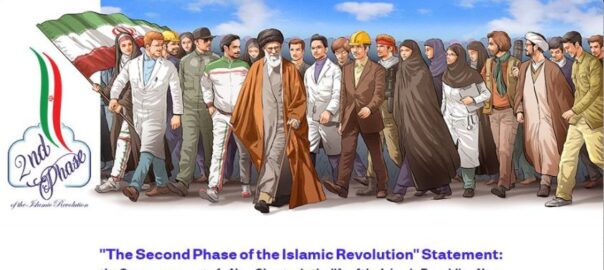
A Glance at the International Dimensions of the Second Phase of the Islamic Revolution of Iran

The statement on the second phase of the Islamic Revolution of Iran is a document that throwslight on the future horizon of this Revolution in the next forty years.

The Islamic Revolution of Iran took place at a time when religion hadlost its social dimension and no scholar and/or elite believed that religions could, anymore, play a role in the formation of a political system. This mentality may have been caused by the experience of Western societies about the failureof the Church in the medieval eras.However, the victory of the Islamic Revolution of Iran, which took place with the discourse of political Islam in the year 1979, invalidated such assumptions of the time and proved that religion and worldlyaffairs are not necessarily two separate issues.

Keeping in view the fact that the Islamic Revolution of Iran negated all the existing theories about the incapability of religious teachings in getting involved in the political affairs of society it is essential to have a glance at the international dimension of this Revolution, which have so far been neglected and, therefore, need to be elaborated.

Unlike in the early years of its advent, when the Islamic Revolution and its thoughts wereconsideredto beof great danger by the dominating world powers, it is now recognized as a regional power,which can play an important rolein the world politics and the stances adopted towards this revolution reflects upon its importance.

By introducing a new discourse, the Islamic Revolution of Iran challenged the political discourses of the East and the West of the time and introduced a new intellectual atmosphereand horizon to the world. The ups and downs faced by the Islamic Revolution during the last forty years prompted the Supreme Leader of the Revolution to issue a strategic statement with regards to the second phaseof the Revolution by wisely taking into considerationthe regional and international developments.

Taking into consideration the points raised by the Supreme Leader of the Islamic Revolution the international dimensions of his statement on the second phase of the Revolution, this Revolution has given rise to a“New Islamic Civilization”.

According to the points raised in the statement, the new Islamic civilization will have the following characteristics, which are of global importance:

  1. A) Cultural Dimensions: Comprising self-esteem, change in the lifestyle, a greater role for the youths, giving importance to morality, innovative cultural discourse. One of the fundamental requirements of social development is culture. This is because the very existence and identity of every society are dependent on its culture. Thus, in the absence of an appropriate trend in culture-building, no real cultural development would be possible for any society. Being based on the teachings of Islam, which emphasizes spirituality and morality, the culture of the Iranian society has been defined by its Supreme Leader as under:

“Spirituality means emphasizing spiritual values, such as sincerity, sacrifice, reliance on God, and faith in yourself and society. Morality entails observing virtues such as benevolence, forgiveness, assisting the needy, truthfulness, courage, humbleness, self-confidence, and other good characteristics. Spirituality and moralityare important values and the main needs of the society in directing every movement as well as individual and social activities. Their existence makes life a paradise even in the face of material shortages, whereas their absence, makes life helleven if materially rich.The growth of spiritual perception and moral conscience in society brings about more blessings.”

  1. B) Political Dimensions: Comprising the rule of law, Jihadi-oriented model of management of affairs, revolutionary system, strength, ontological-oriented value system. Following the victory of the Revolution the foreign policy of Iran underwent major changes in the sense that from being dependent on the Western block led by the United States of America it adopted the policy of “neither East, nor West” as the very foundation of its foreign policy. Based on this policy the Islamic Republic of Iran decided to neither tolerate any form of foreign hegemony nor adopt any hegemonic stand against any other nations. In the words of the Supreme Leader, Ayatollah Seyyed Ali Khamenei:

“The magnificent and glorious epitome of rising against the bullies, thugs, and arrogant powers of the world – led by the criminal and warmongering U.S.A. – grew more prominent day after day. During all these forty years, Iran and the Iranians – particularly the youth of this land – have been known as never surrendering and always safeguarding the Revolution, its divine magnificence, and its pride against arrogant, haughty states. The hegemonic powers of the world, which have lived on trespassing the independence of other countries and plundering their vital interests in order to fulfill their evil intentions, have confessed to their weakness in the face of the Islamic and Revolutionary Iran.”

  1. C) Economic Dimensions: Comprising resistance-oriented economics, an instrumental approach to the economy, serious struggle against corruption. In spite of all the unfair economic sanctions against the Iranian nation, based on the teachings of Islam the Muslim nation of Iran has been able to withstand all the economic pressures in a dignified manner. By the same token, the Islamic Republic of Iran has managed to become reasonably advanced with regard to different sectors of the economy. i.e., agriculture, industry, and service. The Supreme Leader of the Islamic Revolution’s comment on this issue is:

“The Islamic Revolution showed us the way out of the weak, dependent, and corrupt economy of the Pahlavi era. However, feeble performances have posed internal and external challenges to the country’s economy. The external challenges include the enemy’s sanctions and temptations that would be rendered less effective or even ineffective if the internal challenges are resolved. The internal challenges consist of structural defects and managerial weaknesses.”

  1. D) Scientific Dimensions: Comprising research-oriented scientific activities for the overall advancement of the country in different industrial, agricultural, and services sectors. As rightly described by the Supreme Leader:

“Our achievements in science and technology – which have put us in the 16th place among more than 200 countries in the world, have surprised world observers and in some sensitive and new fields has promoted us to the first ranks – happened while the country was under financial and scientific sanctions. In spite of having to swim against the tide made by the enemy, we have made great records, and this is a great blessing, for which one needs to thank God day and night.”

A review of the above-mentioned points reveals that from the viewpoints of the Islamic Revolution of Iran and the discourse it stands for, human society requires to be multidimensional and adopt each of these dimensions in order to gainsalvation. The important point to note is that these points apply to all human societies irrespective of their religion.

What is important to note is that the Islamic Revolution linked governance and politics to religions andreligious principles as well as servitude and obedience to God Almighty. By introducing a new discourse, the Islamic Revolution of Iran confronted the world of thought and discourse with a new horizon and challenged the political discourses of East and West at that time. What this new discourse presented to the oppressed people of the world was that it is possible to traverse the path of progress by being dependent on their own abilities and resources and without undergoing the policies dictated by the hegemonic powers.

To conclude it needs to be emphasized that the Islamic Revolution of Iran has introduced a new doctrine and discourse to the world, which should be researched upon by taking into consideration the progress made by the Islamic Republic of Iran in the last 42 years, in spite of all the unfair and unjustified stances (including eight years of imposed war through the Iraqi Ba’athist regime in the early years of the Revolution) against it by the hegemonic powers. Today the Islamic Republic of Iran is a power to reckon with in every respect both in the region and at the international level.

Iran sitting volleyball nominated for 2021 Paralympic Awards

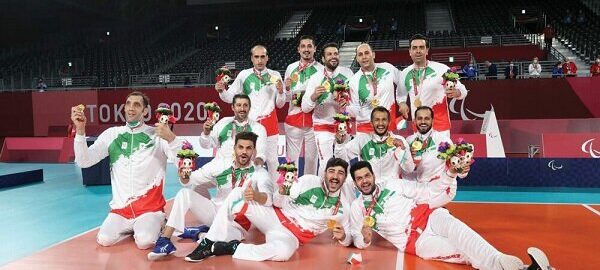
The International Paralympic Committee has nominated the Iranian men’s sitting volleyball team for the 2021 Paralympic Sport Awards.

The International Paralympic Committee (IPC) announced the nominees for the 2021 Paralympic Sport Awards recently.

The IPC has nominated the Iranian national sitting volleyball team as one of the three nominees for the title of the best team this year.

Iran has crowned men’s sitting volleyball champions for a record seventh time after overcoming the RPC. Tokyo 2020 marked the first time since Atlanta 1996 that the gold medal match was not between the Asian team and Bosnia & Herzegovina, according to the paralympic website.

The Great Britain Wheelchair Rugby and USA Women’s Sitting Volleyball are the other two teams that are shortlisted for the 2021 Paralympic Sport Awards.

The winners will be announced across the following categories: Best Female, Best Male, Best Team, Best Female Debut, Best Male Debut and Best Official. /MNA/


Car manufacturing rises 4.7% in 8 months yr/yr

Car manufacturing in Iran has risen 4.7 percent during the first eight months of the current Iranian calendar year (March 21-November 21), as compared to the same period of time in the past year.

According to the data released by the Industry, Mining, and Trade Ministry, Iranian carmakers manufactured 651,408 vehicles in the eight-month period of this year, while the figure was 622,144 in the same time span of the previous year.

During the said eight months, IKCO manufactured 319,710 vehicles, which was 0.1 percent less than the output in the same time span of the previous year.

SAIPA manufactured 283,593 vehicles in the mentioned period. Production by this automaker rose 6.2 percent in comparison to the previous year’s same time span.

Deputy Industry, Mining, and Trade Minister Mehdi Sadeqi Niaraki has said the country’s car output is expected to increase by 50 percent in the next Iranian calendar year (starts on March 21, 2022).

“Private carmakers are trying to increase their output,” Sadeqi Niaraki said.

Noting that the annual demand for automobiles is about 1.5 million in the country, the official noted: “Production of one million vehicles is forecast for the current year, and we expect a growth of about 50 percent for the next year, and automakers are also proposing all kinds of facilities and sale options.”

Meanwhile, Industry, Mining and Trade Minister Seyyed Reza Fatemi Amin has said that his ministry has a two-year plan for the auto industry based on which this industry will undergo serious changes and improve significantly.

“We must strengthen competition, improve management and economic mechanisms, and increase production in the auto industry in order to succeed in our plans,” Fatemi Amin said.

“Our plan is to produce 1.6 million vehicles next year (begins in March 2022), which will increase to three million units in [the Iranian calendar year] 1404 (begins in March 2025), and 30 percent of the production, equivalent to about one million units, should be sent to export markets,” he added.

Iran’s major carmakers had manufactured 900,714 vehicles in the previous year (ended on March 20), which was 4.3 percent more than the figure of its preceding year.

According to Codal data, during the past year, IKCO manufactured 480,338 vehicles, which was 21.9 percent more than the output in its preceding year, which was 393,812 vehicles.

SAIPA manufactured 317,321 vehicles, with a 12.6-percent fall from 363,379 vehicles manufactured in 1398. And Pars Khodro manufactured 103,055 vehicles in the past year, showing a 2.8-percent drop from the output of its previous year, which was 106,072 vehicles.

Iranian Industry, Mining, and Trade Ministry’s programs for the current Iranian calendar year show that the manufacturing of 1.2 million cars has been put on the agenda.

Iran currently stands in 20th place among the world’s top automobile manufacturers producing 821,060 vehicles by the end of 2019, according to the Organisation Internationale des Constructeurs d’Automobiles (OICA). /T.T/


Iran’s Pourrahnama takes gold at World Para Taekwondo Championships

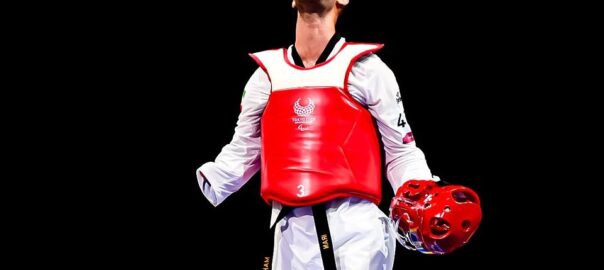
Mehdi Pourrahnama from Iran won a gold medal in the -70kg K44 of the 2021 World Para Taekwondo Championships on Sunday. He defeated Turkey’s Fatih Celik 34-5 in the final.

The event will offer athletes major rankings points in their bids to qualify for Paris 2024. The competition brought 264 athletes from 41 nations together in Istanbul, Turkey.

It is the third time Turkey is hosting Para Taekwondo’s biggest event, following the Samsun 2015 and Antalya 2019.

Istanbul 2021 has become the second-biggest Para Taekwondo event of all-time. The 2019 World Championships featured 333 athletes from 66 countries, although the event included the Poomsae discipline – which will not be included at Istanbul 2021.

Due to travel restrictions related to COVID-19 and the Omicron variant, at least four teams namely, Afghanistan, Ghana, Japan, and Morocco withdrew from the competition. /T.T/

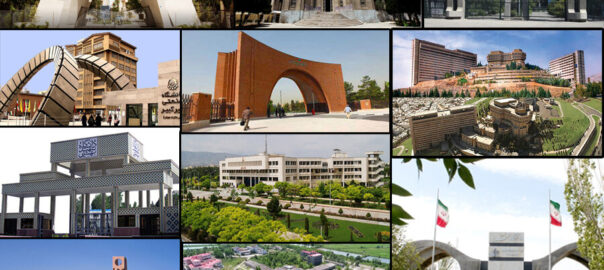
51 Iranian universities in ISC world rankings

A total of 51 universities from Iran have been listed in the Islamic World University Rankings 2021 announced by the Islamic World Science Citation Center (ISC).

ISC is the third internationally accredited citation center established in Iran based on a resolution adopted in 2008 by the 4th Meeting of the Islamic Ministers of Higher Education (ICMHESR) in Baku, the capital of the Republic of Azerbaijan, to index, evaluate and publish scientific productions in Islamic countries.

In “ISC world university rankings by subject” includes 4 major criteria of Education, Research, International Activity, and Innovation.

In the 2021 ranking, 2,300 universities from 107 countries and 6 continents are present, of which 51 universities are from Iran. Meanwhile, 46 universities from Iran participated in the ISC 2020 global ranking, ISC head Mohammad Javad Dehqani said.

Some 2,300 universities from 107 countries are listed in the ranking, 51 of which are from Iran. University of Tehran (401-450) is in the first place, Tehran University of Medical Sciences (451-500) is in the second place, Shahid Beheshti University of Medical Sciences, Sharif University of Technology, and Tarbiat Modares University (601-700) placed jointly in the third place.

Amir Kabir University of Technology, Isfahan University of Technology, Iran University of Medical Sciences, Mashhad University of Medical Sciences, Shiraz University, Ferdowsi University of Mashhad, Iran University of Science, and Technology are among the top universities in this ranking.

In order to rank Islamic World Universities, the most important criteria are research (60 percent), innovation (15 percent), education (10 percent), and international activities (15 percent), he also explained.

Among 57 Islamic countries, a total of 303 universities from 27 are included in the ranking system, he said, noting, Turkey with 82 universities and Iran with 51 are ranked among the top 10 universities of the list.

Referring to other Islamic countries in terms of the number of universities in the ranking, he stated that Malaysia (26 universities), Egypt and Saudi Arabia (21 universities), Indonesia (20 universities), Pakistan (19 universities), Morocco (9 universities) were in the list.

Among the top universities in Islamic countries, Saudi Arabia got the best rank of 139, followed by Egypt, Malaysia, and Iran.

Iranian universities making progress

Most recently, fifteen universities from Iran have been listed among the best institutions worldwide, by the U.S. News and World Report Best Global Universities rankings 2022.

Also, the Quacquarelli Symonds (QS) Graduate Employability Rankings 2022 list has been released, which included three Iranian universities out of a total of 550 institutes worldwide that highlighted graduate employment processes.

Some 41 Iranian universities in engineering sciences and 12 universities in computer sciences have made a place among the top 1,188 universities in the world with the announcement of Higher Education World University Rankings 2022 by subject.

It also has introduced 59 Iranian universities among the top institutions in World University Rankings 2022.

The THE Education Young University Rankings 2021 listed 26 Iranian institutions among the world’s best universities that are 50 years old or younger.

Moreover, some 34 Iranian universities and institutions were listed among the top 1,000 in the world, according to Shanghai Ranking’s Academic Ranking of World Universities (ARWU) 2021. /T.T/


Iranian town to boost medical tourism

Local authorities plan to boost medical tourism in Gachsaran town, southwestern Kohgiluyeh and Boyer-Ahmad province, the provincial tourism chief has said.

Infrastructure has been provided in Gachsaran to facilitate the development of health tourism, Majid Safai announced on Saturday.

“There is a strong capacity for the development of the tourism industry, especially health tourism, in the city because of the airport and its fast air access to medical facilities and equipment,” the official explained.

Citing an example, the official reminded of a special hospital dedicated to mothers and children which offeres quality servives to domestic and foreign patients.

During the coronavirus outbreak, 350 foreign tourists received visas to use the medical services provided by the hospital mentioned, he noted.

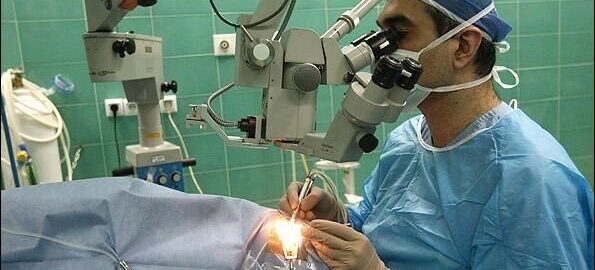
Many domestic experts believe that medical tourism in Iran is a win-win opportunity both for the country and foreign patients, as they are offered affordable yet quality treatment services and the country gains considerable foreign currency.

Iran is one of the major destinations for health tourism in the region, and patients with 55 different nationalities, mostly from neighboring countries including Iraq, Kuwait, Bahrain, Qatar, Saudi Arabia, Oman, Pakistan, Afghanistan, Tajikistan, and Turkmenistan are seeking to use Iran’s services and facilities in this field.

The Islamic Republic has set its goals to exceed its yearly medical travelers to around 2 million in the Iranian calendar year 1404. /T.T/


Iran women’s basketball team move up at FIBA ranking

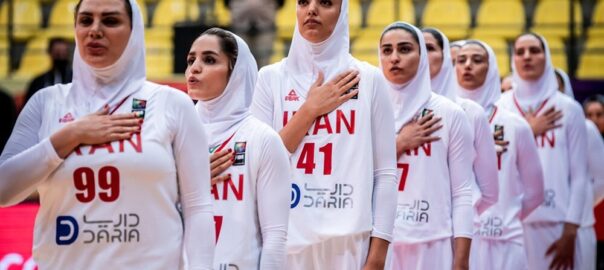
Iran’s women’s basketball team moved up two spots to 78th in the latest FIBA ranking released on Monday. Following participation in the FIBA Women’s Asia Cup Division B in Amman, Jordan in November, the Persians climbed in the ranking.

Some of the most impressive leaps were made by participants of the Division B, as winners Lebanon moved up the rankings eight places and into the top 50 at No. 45, while Indonesia catapulted skywards 13 places to No. 61 after finishing third.

Syria returned to the competition for the first time in 35 years and some positive results have seen them lift 16 places to No. 76. Similarly, event hosts Jordan made a return after a 26-year absence and have rocketed up 43 places to No. 81 after making it to the Final against Lebanon. T.T

London Short Film Festival picks movies by Iranian filmmakers

Three Iranian filmmakers will be competing in the London Short Film Festival. “Barter” by Ziba Karamali and Emad Arad, “The Sea” by Sahra Ramezanian and “I Have Sinned a Rapturous Sin” by Maryam Tafakory will be screened in different sections of the festival, which will take place in London from January 14 to 23.

“Barter” has been selected to be screened in the New Shorts: Disconnected Conversations category.

“Barter” is about Parsa, a 13-year-old boy who is trying to hide a secret from his father. The film depicts a dramatic situation in a family, and how people change when their interests are at stake.

“The Sea” will compete in the New Shorts: Lo-Budget Mayhem section. In this movie, some guys are planning to go on a trip but…

“I Have Sinned a Rapturous Sin” has been selected for the F(r)ictions section. What cures women of sexual promiscuity? Eating lettuce, of course, at least according to one clergyman advising women on how to control their lust, as seen in Tafakkori’s film.

Tafakkori also competes in the UK Competition: Coloring Outside the Lines with “Irani Bag”.

Using excerpts of films produced between 1990 and 2018, “Irani Bag” is a split-screen video essay questioning the innocence of bags in Iranian cinema.

Founded in 2003, the London Short Film Festival (LSFF) is a BAFTA-qualifying, internationally regarded independent short film festival.

Each January, the LSFF hosts ten days of short form, conversation and multidisciplinary curation. It presents between 250-500 British and international films in each edition, collaboratively programmed down from 5000+ open submissions, alongside special events and an industrious offering of workshops, panels and discussion for filmmakers and workers.

The LSFF exists to spotlight a multiplicity of filmmakers, visual artists and creatives across intersections and with a commitment to peripheral voices. The festival’s programming seeks to situate the contemporary in dialogue with its history and the world at large. / T.T/