All posts by islam

Rarely-seen Quran manuscripts unveiled at Tehran museum

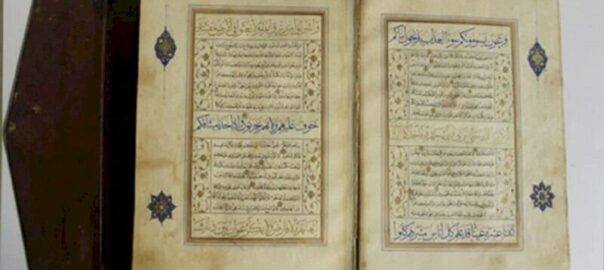
Two rarely-seen copies of the Holy Quran have been put on show at the Reza Abbasi Museum in Tehran.

The manuscripts, dating back to the 16th and 17th centuries, are on display for the first time, the director of the museum has said.

The two manuscripts are illuminated and written in Naskh and Thuluth, Nahid Najafi Khalaj explained on Friday.

The museum continues to display these exquisite Qurans until further notice, she added.

The earliest Quran manuscripts were produced in the mid-to-late 7th century CE (1st century Hijrah), although it is difficult to be precise about their date because ancient copies from this period have not survived intact and exist only in fragments.

Experts say the importance of these fragments cannot be overestimated as they provide the only available evidence for the early development of the written recording of the Quran text.

Named after one of the greatest artists of the Safavid era, Reza Abbasi Museum embraces several permanent exhibition halls, each dedicated to an epoch of Iranian arts and history.

The museum’s treasure trove contains artifacts made of baked clay, metal, and stone from prehistoric times to pottery and metal objects, textile and lacquer paintings, manuscripts, and jewelry belonging to the Islamic period. The displays are set according to the time interval from the 7th millennium BC to the early 20th century.  /T.T/

“Imagine” to compete in Cannes Critics’ Week

Iranian drama “Imagine” will be competing in the 61st edition of La Semaine de la Critique – Cannes Critics’ Week.

Directed by Ali Behrad, the film follows a daydreaming cab driver who falls in love with a woman he can’t have, leading to a series of encounters, filled with mystery and playful moments.

Organized by the French Union of Film Critics, Critics’ Week will be held in Cannes from May 18 to 26 during the Cannes Film Festival.

Ten other movies will be screened in the feature films competition of the event, which will begin by screening “When You Finish Saving the World” by Jesse Eisenberg from the United States of America.

This emotional comedy, also written by Eisenberg, reveals a funny and sharply perceptive portrait of a mother and son who may seem at odds but who are more alike than either would care to admit.

The event will end with “Next Sohee” by Korean director Jung July.

Sohee is a high school student focusing on job training education. Hoping for a good job, Sohee starts job training at a subcontracted call center, but she faces enormous pressure from the greedy company. It is too hard for the high school student to bear this situation and it leads to her death. Detective Oh Yu-jin, who has something in common with Sohee, is placed in charge of this case. She starts to trace through events to reveal the causes of her death.

Thirteen short films, including “Amo” by Emmanuel Gras from France and “Hideous” by Yann Gonzalez from the (UK), will also be showcased.

Earlier last week, the 75th Cannes Film Festival unveiled its official lineup comprising Iranian director Saeid Rustai’s drama “Leila’s Brothers” starring Taraneh Alidoosti and Payman Maadi. /T.T/

Iranian freestylers take three gold in Asian C’ships

Iranian freestyle wrestlers claimed three gold medals in the 2022 Asian Wrestling Championships on Saturday.

Rahman Amouzad Khalili defeated Indian Bajrang Bajrang 3-1 in the final match of 65kg.

In the 79kg weight class, Ali Savadkouhi defeated Baliyan Gourav from India 9-9 and won Iran’s second gold medal.

Mohammadhossein Askari Mohammadian defeated Mongolian Batzul Ulziisaikhan 11-0 in the final match of the 97kg.

The 2022 Asian Wrestling Championships are the 35th edition of Asian Wrestling Championships of combined events, and take place from April 19 to 24 in Ulaanbaatar, Mongolia. /T.T/


Steel ingot exports increase 25% in a year

Iran’s export of steel ingots increased 25 percent in the past Iranian calendar year 1400 (ended on March 20), from its preceding year, Iranian Mines and Mining Industries Development and Renovation Organization (IMIDRO) has announced.

The IMIDRO’s data put the country’s annual steel ingot exports at 7.678 million tons in the past year, and at 6.162 million tons in its previous year.

The Iranian Steel industry has been constantly developing over the past years against all the pressures and obstacles created by outside forces like the U.S. sanctions and the coronavirus outbreak that has severely affected the performance of the world’s top producers.

Iran’s crude steel production increased by 11.8 percent in the first two months of 2022 when the production by the world’s top 64 steelmakers declined by 5.5 percent, according to the World Steel Association (WSA)’s latest report.

Iran was ranked first among the world’s top steel producers in terms of production growth, followed by India, Germany, Russia, and the United States.

Based on the report, Iran produced 5.3 million tons of crude steel during the mentioned two months.

The country’s crude steel production in February stood at 2.5 million tons which was also 3.7 percent higher than the same month in 2021.

According to the World Steel Association, similar to the past two years, Iran has maintained its 10th place among the world’s top steel producers, after countries like China, India, Japan, and Russia.

The country is expected to climb to seventh place among the world’s top steel producers by the Iranian calendar year 1404 (March 2025). /MNA/


International Quds Day and the Liberation of Palestine

On 7th August 1979, the late Imam Khomeini (ra) said: “I call on all Muslims and Muslim governments to unite in order to get the hands of this occupier (Israel) and its supporters off Palestine and call on all Muslims around the world to name the last Friday of Ramadan month as the ‘Quds day’ and declare the international solidarity of Muslims in supporting legal rights of (Palestinian) Muslims.” This day represents the global support for the Palestinians as well as other oppressed people.

Observed through processions, conferences, and rallies by nations, human rights activists, and civil organizations, this insightful declaration of the Imam evidently received borderless acceptance.

Zionism, as a movement, was developed in the late 1800s to unite Jews and resulted in the forceful creation of an illegal and illegitimate state of Israel in place of Palestine; then occupied by only 5% of Jewish inhabitants, after World War II, promulgated and recognized by Western powers in 1948.

Nine centuries ago, while Christian Crusaders were burning Jerusalem’s Jews alive in their synagogue, it was the Muslim Saladin who kindly brought back Jews to Jerusalem and settles them along with the Muslim majority of the region. And 800 years later, this was how the Muslims were paid back for their past kindness to the Jews within the UN headquarters in Flushing Meadow, New York.

America was the main negotiator and chief architect of all road maps regarding the domination of Palestinians by Israel or what others ignorantly refer to as incessant Middle East conflict. The most important questions arising now are: “Were there any tangible achievements made in the over seven decades of peace talks? Is there any hope for the future of Palestinians?

The other side of the conflict reveals the gainful arms trade for American and other European manufacturers.

Many people thought that the Arab League was formed in 1945 with the aim of strengthening ties among member states and, therefore, could coordinate their policies and protect their common interests. But what were the achievements of the League? To what extent did the League and its sister Palestinian Liberation Organization (PLO) could achieve their stated objectives?

The question is how could the Arab League and PLO, established on the basis of Arabism or Nationalism, lead to the emancipation of Palestine while the same Nationalism was used to establish Israel in the usurped Palestinian territories? Thus, there remains no doubt that the International Quds Day is the only measure that could ensure the liberation of Quds; the third holiest mosque and the first Qibla of Muslims.

Unity of Muslim nations is, in fact, the main theme of the message of Imam Khomeini and the ultimate hope for the liberation of Palestine and other world oppressed people of the world. George Curzon, the British Secretary of state for foreign affairs, 1911-1921 said “we must put an end to anything which brings about Islamic unity between the sons of the Muslims. As we have already succeeded in finishing off the caliphate, so we must ensure that there will never arise again unity for the Muslims, whether it be intellectual or cultural unity”. That is the reason that the Supreme Leader of the Islamic Revolution of Iran, Ayatollah Sayyed Ali Khamenei, maintains that ISIS clearly serves the American interest in the Middle East by sowing the seeds of discord and divisions in the region. This is in spite of the fact that the Holy Qur’an says: “And hold fast, all together, by the rope which Allah (stretches out for you), and be not divided among yourselves” (Chapter 3, Verse 103).

In a borderless sympathy, the International Quds Day is the day to sympathize with and support Palestinians and other oppressed people and to condemn oppression and injustice regardless of all odds. The late Imam bitterly debunked apartheid and helped Nelson Mandela in the fight against it. On the other hand, Mandela said: “the independence of South Africa was incomplete without the freedom of Palestine”. And on his first visit to Tehran after release from long imprisonment, he appreciated the fatherly role of the Imam and Iran’s historic support. Late Hugo Chavez observed the day where he would be seen at the forefront of the events among other protesters in his country.

Ignoring the atrocities going on in the illegally occupied Palestinian territory, the Saudis and their allies have been involved in a military campaign against Yemen since 2015; a deliberate aggression by the richest and most influential Muslim Arab nation against the poorest and closest neighbor. The consequence of the aggression in Yemen is what the united nation described as the worst humanitarian crisis in contemporary history.

It is imperative to acknowledge the effort by the people wishing peace to reign and justice to prevail all over the world. As emphasized by the Imam “the Quds Day is a universal day. It is not an exclusive day for Quds itself. It is a day for the oppressed to rise and stand up against the arrogant.”

The world is well aware of the continuous military and financial support of the United States of America and its allies to Israel and their incessant interference in the region disrupting the security and wellbeing of its people. This exposes the lies of the so-called developed nations who claim leading positions in the protection and promotion of fundamental human rights across the world. What a double stand!

Let us not forget that Israel was created by terrorism and has been continuously resorting to terrorism and oppression for its survival.

While sympathizing with the Palestinians on this day, all justice-seeking and concerned individuals and organizations condemn the unending brutalities and atrocities against the people of Palestinian and Yemen on International Quds Day.

The Role of the World Quds Day and Imam Khomeini’s Initiative in Consolidating Unity among the Muslim Ummah and Defending the Al-Aqsa Mosque

The decades-old crisis surrounding Palestine has not only imposed its negative impacts on the Palestinian geographical territory and the West Asian region but has also badly affected the entire Islamic world and other world nations.

Using its influence over the hegemonic powers, Zionism has been trying to create this view in the world public opinion that the mentioned crisis is restricted to the occupied territories. But the late Imam Khomeini, founder of the Islamic Republic of Iran, made it clear that such a plot by the Zionist Israeli regime was a global arrogance.

The establishment of the military regime of Israel in Palestine by the West was aimed at preventing the emergence of any new Islamic civilization by escalating tensions, insecurity, and disputes in the region. Following the plot for the establishment of Israel and occupation of Palestine and the creation of the Zionist regime, the Islamic world has been involved in continuous tensions that have inflicted heavy losses on regional nations.

The U.S. has been making a grant of $4 billion to Israel annually and if we look at the Zionist regime’s damages to the entire region, we admire Imam Khomeini’s wise and accurate view which called the Zionist regime a “cancerous tumor” and it was for this reason that he initiated the World Quds Day as an effort on the part of the Muslim nations to remove this tumor.

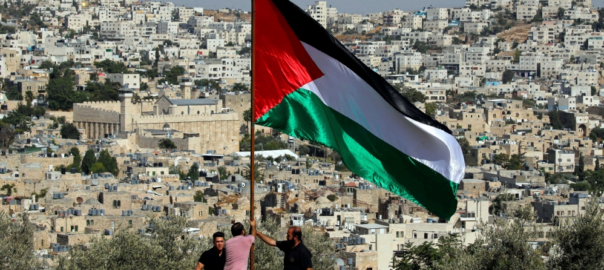
Imam Khomeini, a magnificent leader of the oppressed people around the world in the twentieth century, has announced the World Quds Day on the last Friday of the holy month of Ramadan. Following his announcement people all over the world, irrespective of their sects and religions, cast and creeds, welcomed the instance and came out of their houses and mosques after Friday prayer and gathered in the streets to show their solidarity with the oppressed people of Palestine and also showed their will to defend the Al-Aqsa Mosque, the third most sacred place after Makkah and Medina.

The World Quds Day is not only a message to Zionism and imperialism that Palestinians are not alone and their rights would not be deprived anymore but this occasion is also a unique show of Muslim unity and the concept of Ummah. When both Shias and Sunnis chant slogans against the illegal occupation of Muslim land, it shows that the plot of division among the Ummah has failed and the conspiracy against the unity of Muslims by internal and external forces foiled. No leader of the Muslim world before Imam Khomeini talked so bluntly about the Palestinian cause.

The late Imam talked about Palestinian before Islamic Revolution and his vision was very clear about this issue. That is why just after the success of the Islamic Revolution he announced the World Quds Day. Today when we see that World Quds Day is being observed around the world even in the western country, this is, in fact, the success of the vision of Imam Khomeini. When we see that some Muslim states create hurdles or try to malign the gatherings of oppressed people we can easily understand that this is according to the agenda of Zionism. Sometimes marchers of Quds Day pay a heavy price for supporting the Palestinian cause. This is the impact of the vision of Imam Khomeini who motivated the entire Muslim world with his wisdom. The current political situation in the Middle East shows that Israel is the weakest country in the region despite the heavy cache of arms and continuous support of the United States.  Imam Khomeini once mentioned that: “The issue of Quds is not a private or personal issue. It is neither the exclusive problem of one country nor a present-day problem of all Muslims. Rather, it is a phenomenon concerning all monotheists and faithful people of all ages – past, present, and future.

As Imam Khomeini wished, the World Quds Day will ultimately unite the entire oppressed people worldwide to form a global movement to settle international disputes. In fact, Imam Khomeini, via initiating the World Quds Day, offered the people around the globe to think about a world without Zionism, without colonialism, and without hegemonic powers. The growing mystery behind opposing Israel and honoring the World Quds Day has its roots in the deep pleasure of thinking about a world without Israel and arrogant powers.

Israel and the Muslim World

By Professor Khurshid Ahmad

Immaculate is He who carried His servant on a journey by night from the Sacred Mosque to the Farthest Mosque whose environs We have blessed, that We might show him some of Our signs. Indeed, He is the All-hearing, the All-seeing. (Surah Al-Isra’: 1)

The Foundations of the Legitimacy of a State

The question of recognizing a country relates to international law, diplomacy, and trade. It is not necessary for every country to recognize each and every country, or to establish diplomatic or trade relations with it. This issue is mainly related to two aspects: first, whether the country with which relations are under consideration is a legitimate and sovereign entity; and second, whether it is in the national interests of a country to establish diplomatic and trade relations with it.

From a purely legal perspective, to recognize a country is to accept it as a legitimate entity. According to international law, a country should meet four conditions for this:

  1. Defined geographic borders,
  2. Population,
  3. Sovereignty, and

Thus, a country or area that is under the control of some other force cannot be recognized as sovereign as it lacks legitimacy.

The Status of Israel

The case of Israel is altogether different from other countries. The Palestinian land was not the original habitat of Israelis, who entered it 1,300 years BC and occupied it after 200 years of battles. They were twice moved out of the land. Romans expelled them completely from Palestine in 135 CE. In the history of 6,000 years, Israelis’ stay was just about four to five hundred years in Northern Palestine and about eight to nine hundred years in the South, whereas Arabs have been living for 2,500 years in the Northern and for 2,000 years in the Southern areas.

Divine Pledge or Myth?

Zionists base their claim on the Palestinian land on a so-called Divine pledge in the Bible. This is no more than a myth. Based on this make-believe imaginary right, Europe’s rich and politically ambitious Jews launched a Zionist movement towards the end of the 19th century and by pitching Arabs and Turks against each other, they got a foothold in this land during the times of the British mandate. Thus, the goal of establishing the Jewish state of Israel was realized apparently under a UN General Assembly resolution on 14 May 1948, but in reality by the use of military might, forceful expulsion of Palestinians, and genocide.

In 1914, just 3,000 Jewish families were living in Palestine and their number could only reach 56,000, despite the large-scale emigration of Jews to Palestine, after the First World War, whereas there were 644,000 Palestinian living there at that time. When the state was formed with the use of force, bloodshed, and oppression, Jews held just 5.6 percent of the Palestinian land and barely constituted 33 percent of Palestine’s population. It is worth mentioning here that the Jewish population had increased ten-fold as Jews from 80 countries of the world had been settled here for over a period of 30 years while Palestinians were being expelled and their towns were being destroyed.

Through the UN resolution, 56 percent of the Palestinian land was presented to Jews on a platter while the remaining 44 percent was sanctioned to the independent State of Palestine. However, Israel’s extremist groups occupied 78 percent of the land when it was still the year 1948 and this was followed by the occupation of what was to remain as Palestine, including Eastern Jerusalem, in 1967.

A ‘Stolen’ Land

We do not intend to narrate the whole tragic episode, we want to highlight the historical fact that Israel is not a real and natural State coming into existence on the basis of the right of self-determination of the people of the region. Rather, it is a ‘stolen’ land and a state that has come into being by expelling the original inhabitants from their lands and settling the colonizers from outside. Without understanding the genesis of this State, it is impossible to know its position in the region. Israel is not a Middle Eastern State, it is the outcome of colonizing power’s domination and suppression and it is a state that is devoid of legitimacy under international law.

Occupation by Force- UN Charter Violated

Israel’s Jews were not the original inhabitants of the region – nor are they to this date. They were collected from all over the world and were settled there by expelling the original inhabitants with sheer use of force and under the umbrella of a colonial power. Then, the United Nations was used for giving it legitimacy.

Israel is the only country in the world that has come into being on the basis of the UN General Assembly’s resolution in utter violation of the UN Charter according to which people of a region can achieve freedom only by exercising their free will and their right of self-determination. Since Arabs were 66 percent of Palestine’s population, the UN refused to opt for a plebiscite in connivance with the US and Britain and instead passed a resolution for Palestine’s division and the establishment of two states.

Even the manner in which this was done is quite questionable. The vote in the General Assembly was twice deferred due to lack of majority as only 30 of the then 56 members favored it, 13 opposed it and 13 remained neutral. By deferring the vote twice and employing pressure and money, the US and the Zionist lobby forced three neutral countries (Haiti, Philippines, Liberia, which all were under the United States’ influence) to vote for the resolution. Hence, this resolution was adopted by committing three violations of the UN Charter:

  1. a) Decision about a country’s future without a plebiscite,
  2. b) Deferment of the vote two times, and
  3. c) Obtaining three countries’ consent ‘under duress’

No Specified Borders

Israel is the only state, per se, the borders of which are not yet defined. It got 56 percent of the Palestinian land in the wake of the UN resolution, which was enhanced to 78 percent through military aggression in 1967. After the 1967 war, directives for its retreat to pre-war positions were issued through UN resolutions 242 and 383, which were repeated in more than 20 other resolutions, but Israel refused to heed these calls.

Expansionist Agenda

It should be clearly understood that Israel’s ideological basis is founded on ‘expanding boundaries’, which is but another name for imperialism and a threat to the whole region. Israel and its entire leadership have never kept the matter a secret and have openly declared that “Greater Israel” is their goal. Ben Gurion had said in 1948:

“The Achilles heel of the Arab coalition is Lebanon. Muslim supremacy in this country is artificial and can easily be overthrown. A Christian State ought to be set up there, with its southern frontier on the Litani.  We would sign a treaty of alliance with this state.  Thus when we have broken the strength of the Arab Legion and bombed Amman, we could wipe out Tran Jordan; after that Syria would fall. And if Egypt dared to make war on us, we would bomb Port Said, Alexandria, and Cairo. We should thus end the war and would have but paid to Egypt, Assyria, and Chaldea on behalf of our ancestors”. (Ben Gurion diary, May 21, 1948)

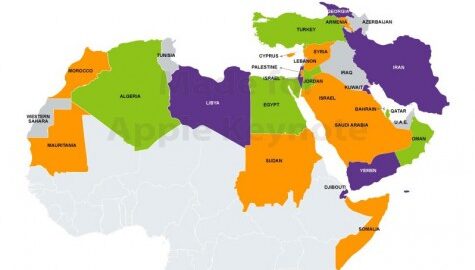
“Before this, at Versailles Peace Conference in 1919, World Zionist Organization had presented a map of its proposed Jewish State. According to this map, the areas that Israel wants to occupy include Egypt up to the Niles, the whole of Jordan, the whole of Syria, the whole of Lebanon, a big portion of Iraq, the Southern region of Turkey, and the upper Hijaz up to Madina Munawwarah”. (My Diary at the Conference of Paris with Documents, D.H. Miller, Vol. 5, p 17)

Addressing the Israeli parliament Knesset in 1982, just three years after the Camp David Accords, Israeli Prime Minister Manaehan Begin had clearly said:

“By rights, the northern border of the Land of Israel ought to include the Golan Heights.  That it was not included following the break-up of the Ottoman Empire in 1918 and the establishment of Britain’s mandate over Palestine was due to the arbitrariness of colonial rulers in an era that has passed, never to return. We are not bound by this arbitrariness.”

“Palestine is a territory whose chief geographical feature is this; that the river Jordan does not delineate its frontier but flows through its center”. (Vladimir Jabotinsky, at the 16th Zionist Congress in 1929)

“Take the American Declaration of Independence for instance.  It contains no mention of the territorial limits. We are not obliged to state the limits of our state”. (Ben Gurion’s Diary, May 14, 1948)

“To maintain the status quo will not do.  We have to set up a dynamic state bent upon expansion.” (Ben Gurion in Rebirth and Destiny of Israel, The Philosophical Press, New York, 1954).

“During the last 100 years, our people have been in a process of building up the country and the nation, of expansion, of getting additional Jews and additional settlements in order to expand the borders here. Let no Jew say that the process has ended. Let no Jew say that we are near the end of the road”. (Moshe Dayan in Ma’ariv, July 7, 1968)

Israel’s Defense Minister Moshe Dayan had said in an interview with the Times:

“Our fathers had reached the frontiers which were recognized in the Partition Plan. Our generation reached the frontiers of 1949. Now the Six-Day generation has managed to reach Suez, Jordan, and the Golan Heights. This is not the end.”

So, such is the case of the so-called state of Israel. Is there still any doubt about the fact that by its nature Israel is not a legitimate state but a colonialist power?

A Racist State

The matter does not stop here. Israel is not just a colonial and expansionist State; it is also a racist one.

Weizman, leader of the World Zionist Organization and first President of Israel, ridiculing the democratic principle of majority and minority in the wake of the Balfour Declaration, had contemptuously declared that Jews were “qualitatively” better than the “native” Arabs. He had said:

“The democratic principle reckons with the relative numerical strength, and the brutal numbers operate against us for there are five Arabs to one Jew…This system does not take into account the fact that there is a fundamental qualitative difference between Jews and Arabs. The present system tends to level down the Jew politically to the status of a native.”

When Einstein asked him what would become of Arabs if Palestine was given to Jews, Weizman shrugged:

“What Arabs? They are hardly of any consequence.”

The first Israeli Prime Minister Professor Ben Zion Dinur once wrote:

“In our country, there is room only for the Jews.  We shall say to the Arabs: Get Out! If they do not agree, if they resist, we shall drain them out by force.” (Quoted by Roger Garudy, The Case of Israel: A Study of Political Zionism, London, 1983, p 38)

It is for such views that Arabs do not have the rights of second and third grade citizens in Israel, while under the Law of Return every Jew living in any corner of the world has the racial right to Israeli citizenship. The law that the Israeli parliament has recently passed – the repeal of which has been demanded by the UN Human Rights Commission – holds that if an Arab man living on the West Bank in Palestinian marries an Arab woman living in Israel, the couple would have no right to live in Israel.

In his charge sheet against Israel, renowned French scholar Roger Garudy maintains: The Zionist state of Israel possesses no legitimacy – historical, Biblical or juridical – in the place where it has been established. Nor does it possess any moral legitimacy. This state sprung from a false ideology and from a series of acts of violence and terrorism and was created by an illegal decision by the United Nations Organization (dominated at the time by the Western powers). The Zionist State of Israel is simply one state among the rest, without any halo or privilege, or sacred character. (Roger Garudy; The case of Israel: A Study of Political Zionism, London, 1983, pp157-158)

Islamic Viewpoint

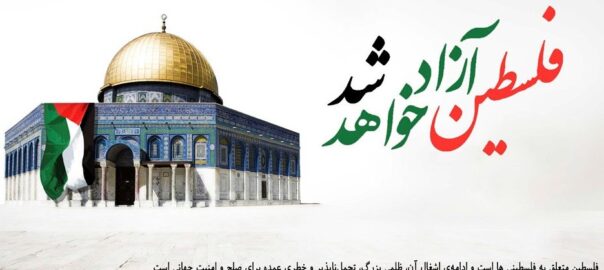
The issue of Israel’s recognition is not just about recognizing or not recognizing a State. The land of Palestine is important not only for Palestinians or Arabs; it is an important sacred site for all Muslims. Al-Qudus is a place of sanctity for Muslims where there are Masjid Al-Aqsa and the Dome of the Rock. For, it being the first Qibla for Muslims, it is the most sacred place after Masjid Al-Haram in Mecca and Masjid Al-Nabawi in Medina.

Source: http://www.victorynewsmagazine.com

Iran Army unveils new achievements

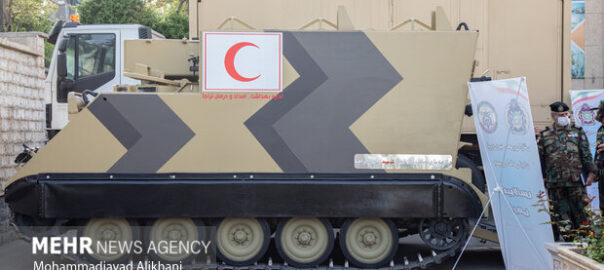
The Islamic Republic of Iran Army in a ceremony unveiled some new achievements.In a ceremony held on Sunday morning in the presence of Army Commander Major General Seyyed Abdolrahim Mousavi, Deputy Chief of the Iranian Army for Coordination Affairs Rear Admiral Habibollah Sayyari and other top military officials, some new achievements of the Army were unveiled.

Super heavy trailer trucks, optimized super heavy vehicles capable of carrying 100 tons and 60 tons, various wards of the mobile hospital including laboratory, surgery room, radiology, ICU, and armored ambulance capable of carrying 6 injured were unveiled during the ceremony.

Speaking at the ceremony, Gen. Mousavi said, “In recent years, the army ground forces upgraded combat capabilities in the field of military missions and civilian aid. The army and the armed forces of the country will stand strong against any threat that targets Iran.” /MNA/

‘Orthodontics’ praised at Filmfest Dresden in Germany

Iranian short flick ‘Orthodontics’ has been praised at the Filmfest Dresden in Germany.Directed by Mohammadreza Mayghani, the short film has been appreciated at Germany’s Filmfest Dresden which was held on April 5-10.

‘Orthodontics’ focuses on the life of a teenager and the way her appearance influences her relationship with her friends, family, and society.

Maryam Hosseini, Yas Farkhondeh, Arezou Ali, Mehdi Sadr and Yasamin Ebrahimi are the actors of the film.

The short flick has previously participated in the Sundance Film Festival in the US, the Leeds International Film Festival in the UK, the Curtocircuito International Film Festival in Spain, the International Short Film Week Regensburg in Germany and the Short Films Competition at the Cannes Film Festival in France.

Filmfest Dresden is an international short film festival since 1989 based in Dresden, Germany. The focus of the competition is on short feature films and animated films. /MNA/