All posts by islam

Ancient petroglyphs discovered in northwest Iran

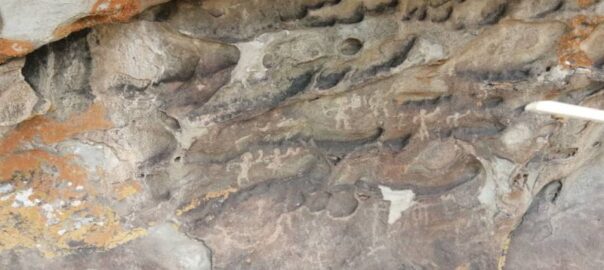
Tens of rock-carved petroglyphs have recently been discovered in Varzeqan county, East Azarbaijan province, northwest Iran, the provincial tourism chief has said.

As a result of the previous studies and evidence about some historical rock carvings in Varzeqan, a specialized team composed of archaeologists and experts from the county’s Cultural Heritage, Tourism, and Handicrafts department visited and identified tens of petroglyphs, Ahmad Hamzehzadeh explained on Wednesday.

According to the relative and early chronology of these petroglyphs, they date from prehistorical times, the official added.

In order to complete the information on these petroglyphs, the experts have specially undertaken research and study, he noted.

Soaked in history and culture for millennia, Tabriz, the capital of East Azarbaijan embraces several historical and religious sites, including the Jameh Mosque of Tabriz and Arg of Tabriz, and UNESCO-registered Tabriz Historic Bazaar Complex to name a few. The city became the capital of the Mongol Il-Khan Mahmud Gazan (1295–1304) and his successor. Timur (Tamerlane), a Turkic conqueror, took it in 1392. Some decades later the Kara Koyunlu Turkmen made it their capital, it was when the famous Blue Mosque was built in Tabriz.

The city retained its administrative status under the Safavid dynasty until 1548 when Shah Tahmasp I relocated his capital westward to Qazvin. During the next two centuries, Tabriz changed hands several times between Persia and Ottoman Empire. During World War I, the city was temporarily occupied by Turkish and then Soviet troops. /T.T/


Intl. scientific festival announces winners

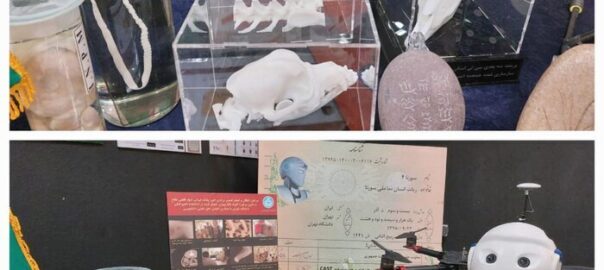
The 14th International Festival of Movement, aiming to introduce the top scientific achievements of students, announced winners at the closing ceremony on Tuesday.

This year, students from 63 countries participated in this international festival.

The Netherlands, Spain, the United States, Poland, France, Syria, Pakistan, Canada, Brazil, and Malaysia attended the event virtually. Held annually, the festival also aims to attract students to participate in scientific activities, identify outstanding scientific students, transfer experiences and synergies between scientific associations, strengthen the relationship between society and industry and focus on solving the country’s issues, strengthen interdisciplinary activities, and get acquainted with companies and owners of industries and the increase of scientific interactions.

In 2008, the first edition of the event with the title “National Festival of Movement” was hosted by the University of Tehran.

The projects will be judged and evaluated in 13 sections and a special section; including 53 inventions, 337 top associations, 32 dynamic associations, 218 creative activities, 73 entrepreneurship projects, 56 books, 147 digital content, 121 competitions, 303 publications, 35 top universities, 10 unions of top scientific associations, 4 journals, 307 international works and 98 works in the special section of the festival on the subject of corona and post-corona, resilient economics and environment.

In this regard, over 60 countries have submitted their works, which include 1894 cases, to the Secretariat. Associations from Nepal, Mauritius, India, Ukraine, Iraq, etc. participated in the festival in person. Other countries such as the Netherlands, Spain, the United States, Poland, France, Syria, Pakistan, Canada, Brazil, Malaysia, etc. also followed the event virtually.

The first to third selected projects will receive cash prizes and all the worthy and selected groups honored at the closing ceremony of the festival. /T.T/

F-14 rejoins Iranian air fleet after overhaul

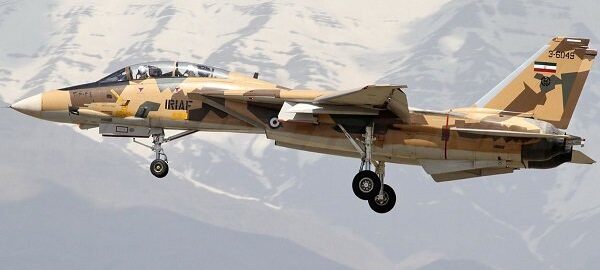
An American-made F-14 tomcat that has been overhauled by Iranian military technical experts at Shahid Babaei Airbase in Isfahan Province, joined the air fleet of Iran Army Air force again on Sunday.

According to Army’s Public Relations Department on Sunday, experts and technical staff at Shahid Babaei Airbase in Isfahan have overhauled a F-14 Tomcat fighter, which had been grounded for several years.

The F-14 fighter jets were bought by the US-backed regime of Shah before the 1979 revolution in Iran.

Speaking at the unveiling ceremony on Sunday, Brigadier General Hamid Vahedi, Commander of the Air Force of the Islamic Republic of Iran said this achievement was gained through indigenous knowledge and 39,000 man-hours of constant efforts by Shahid Babaei Airbase military technical experts.

The successfully-overhauled warplane rejoined the Iranian Army air corps after a final test on Sunday. /MNA/

Iran, Qatar to increase health co-op in World Cup

Iranian Health Minister Bahram Einollahi and his Qatari counterpart Hanan Mohamed Al Kuwari discussed ways to strengthen cooperation during the 2022 World Cup, ISNA reported on Tuesday.

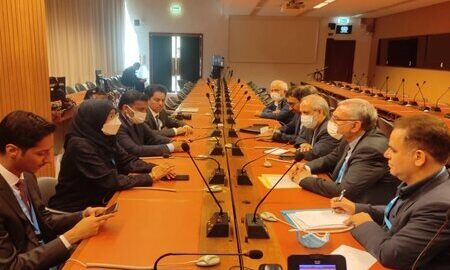
Iran-Qatar relations in the field of health have been favorable for a long time and there are axes to strengthen joint cooperation between the two countries, Einollahi said on the sidelines of the 75th World Health Assembly in Geneva.

Investing in the field of health and expanding scientific cooperation between the two countries, such as holding scientific congresses, exchanging professors and students, awarding scholarships, and exchanging information on various issues in the field of health, especially non-communicable diseases can strengthen both countries’ health system.

Al Kuwari also called for the expansion of interactions between the two countries in the field of health and stressed the exchange of achievements of the two countries’ health systems.

The 2022 FIFA World Cup is scheduled to be the 22nd running of the FIFA World Cup competition, the quadrennial international men’s football championship, which is scheduled to take place in Qatar from November 21 to December 18. /T.T/

Iranian women come 1st in Alysh wrestling Asian c’ships

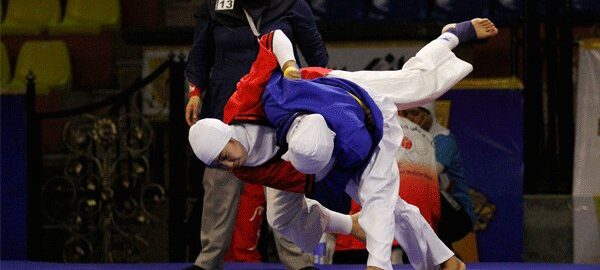
The Iranian women on Sunday became the champions of the Alysh Asian Championships in Kyrgyzstan. The Iranian team participated in the Alysh Asian Championships in Kyrgyzstan with 6 representatives.

At the end of the competition on Sunday, the Iranian women’s national team won a gold medal, four silver medals and a bronze medal to stand at the top.

Also in the men’s competition, Iran took part with 6 wrestlers and finished by winning only a bronze medal. /MNA/

Iranian short to compete at U.S. film festival

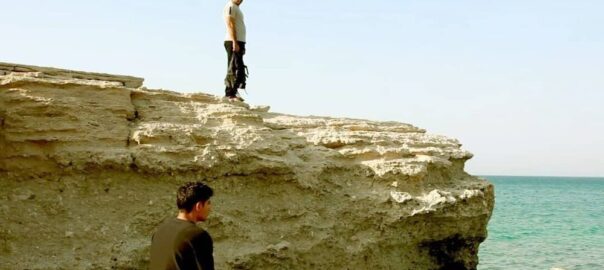
Iranian short film “On the Beach” by Abolhassan Keyvan will go on screen at Manhattan Film Festival, Honaronline reported on Monday.

The film tells the story of a young man whose fiancé has migrated abroad and the man has been waiting for her on the beach for days. His brother visits him every day, brings him food and water, and sometimes blames him for his condition.

Manhattan Film Festival will be held in New York from June 9 to 23./T.T/

Conditions improve for foreign nationals studying in Iran

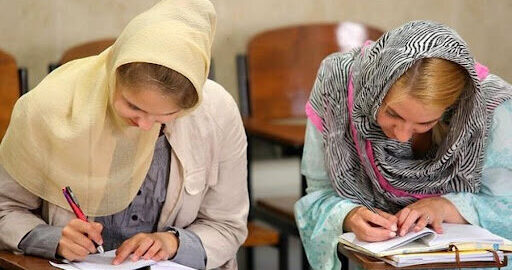
Health insurance coverage, longer residency, shorter visa processing time, and awarding exemplary students are among the conditions provided for foreign nationals studying in Iran, the deputy minister of science for foreign affairs, has stated.

The residency is currently extended for one year, but for the first time, some international students have been granted long-term residency based on the length of their education, ISNA quoted Jafar Razeqi as saying on Saturday.

One of the most important problems for non-Iranian students, especially in recent months, was the visa processing time, which took time due to problems at the host university and administrative processes in different parts of the organization, but now this time has been reduced by one third, he noted.

This year, a ceremony will be held to honor the best foreign students. Non-Iranian students who have learned Persian can also defend their dissertation in this language, he further said.

Some 57,675 foreign nationals from 133 countries are studying in Iranian universities.

“We have corresponded with all host universities of international students to cover these students with “health insurance”, which will pay 70 to 90 percent of the treatment costs as well as 100 percent of the medical cost.

Another plan of the ministry is to provide dormitories to married students,” he explained.

Foreign students

Some 57,675 foreign nationals from 133 countries are studying in Iranian universities, 30,600 of whom are studying in universities affiliated with the Ministry of Science, while 25,000 others are receiving education at Azad University and about 2,000 in medical universities.

Currently, foreign nationals constitute 1.64 percent of the country’s student population, which is about 0.14 percent higher than the goal set by the Sixth Five-Year National Development Plan (2016-2021), Mohammad Javad Salmanpour, the deputy head of the Organization for Student Affairs, said in April.

Twenty-five percent of the foreign students studying in Iranian universities are Afghan nationals, he added.

Afghan students attend Iranian universities in three ways; some enter the university by participating in the national entrance exam of Iran, and some others receive admission from universities that have non-Iranian student licenses. The third group also attended the country’s universities through scholarships, he explained.

Many of the Afghan students are studying master’s and Ph.D. courses in Iranian universities, he added, IRNA reported.

On May 7, Abolfazl Kamali, the deputy education minister said some 527,000 foreign students are studying in schools nationwide, the majority are Afghans and the rest are from Bangladesh, Pakistan, Iraq, and other countries.

There are also 22 special schools for foreign nationals across the country, IRNA quoted Kamali as saying.

Pointing out that 10,000 foreign students are studying in the special schools, he said that they study according to the Iranian education system.

Iran spends about 20 trillion rials (nearly $77 million) every year on the education of foreign national students residing in the country, according to data released by the education ministry. /T.T/

Iran on par with developed countries in children’s health

Many diseases have been eradicated through mass vaccination programs in Iran, and the children’s health is equal to that of developed countries, deputy health minister Kamal Heydari, has said.

He made the remarks on the occasion of World Immunization Week 2022, celebrated annually in the last week of April.

With the efforts of all officials and those involved in the development of vaccination, many diseases that were once considered a serious threat to the people’s health have now been eliminated, and the health of Iranian children is at the level of developed countries and in some indicators are exceeding the region and the world, he explained.

Concerns about the spread of measles in the country are growing as the Afghan population grows. Eradication of diseases such as rubella, measles, and polio in Iran has been approved by the World Health Organization, he noted, expressing concern over the outbreak of these diseases in some neighboring countries including, Pakistan and Afghanistan.

Therefore, everyone should pay attention to vaccination coverage and include their children in the full coverage of vaccines that are offered in health centers.

Concerns about the spread of measles in the country are growing as the Afghan population grows, so the measles vaccination operation for non-Iranian people, including Afghans, was put on the agenda and implemented, he noted.

Measles mostly infects children under the age of 10, and all families need to get their children vaccinated between the ages of 12 to 18 months, he said, adding that vaccination will be free of charge.

The measles vaccination program in Iran started in 1984 when 34 percent of the population was vaccinated in the first year and 90 to 95 percent of the population after 6 years. Also in 2003, 33 million people were vaccinated with a national program to eradicate measles in the country.

Then it was managed to minimize the measles incidence rate in three years and increase vaccination coverage to 95 to 98 percent. In 2019, the World Health Organization approved the elimination of measles and rubella in Iran.

Some 64 percent of the infected people are Afghans, 3 percent are Pakistanis and the rest are Iranians. The disease causes severe symptoms in people with malnutrition, including blindness, pneumonia, and brain infection.

The disease is much more contagious than coronavirus, and kills one to five percent of the patients,” Zahraei said on May 9.

World Immunization Week

World Immunization Week 2022, celebrated from April 24 to 30, aims to highlight the collective action needed and to promote the use of vaccines to protect people of all ages against disease.

‘Long Life for All – Vaccines, in the pursuit of a long life well lived’ is the theme of this year.

WHO works with countries across the globe to raise awareness of the value of vaccines and immunization and ensures that governments obtain the necessary guidance and technical support to implement high-quality immunization programs. The ultimate goal of World Immunization Week is for more people – and their communities – to be protected from vaccine-preventable diseases. /T.T/


Employment development through nanotechnology

Unemployment of university graduates is one of the most important social issues in the country, which can be overcome with the help of knowledge-based nanotechnology companies.

The issue of employment is one of the most basic needs of every society so increasing employment and reducing unemployment are considered the main indicators of development.

Given the vital role of a specialized and educated workforce in the process of economic, social, and cultural development, and also considering that a huge amount of budget is spent annually on training costs, if the specialized and educated workforce is not used in jobs related to their fields of study, on the one hand, we have wasted costs and on the other hand, we have provided the emergence of frictional unemployment and migration in the society.

The Nanotechnology Innovation Council has started cooperation with the Ministry of Cooperatives, Labor, and Social Welfare to create employment by using the power of knowledge-based companies in this field to eliminate unemployment and prevent the migration of graduates.

Following this agreement, nano-companies that have the potential to produce nano-industrial and semi-industrial products will be supported.

Nanotech products are being produced and marketed in more than 15 industrial fields based on domestic technologies and are being exported to 49 countries. Saeed Sarkar, the secretary of the Nanotechnology Innovation Council, said that one of the reasons and weaknesses that lead to the emigration of the elites is that these people do not find jobs that fit their specialty in the country so they choose migration.

Referring to two types of elite migration, he explained that one is geographical migration in which the elites cannot find jobs; and some people have graduated but are engaged in fields other than their own specialization and occupations, which is also a cause of migration.

In the past, unfortunately, the employment was thought to be in charge of labor or rural employment, and as a result, the quantity of employment was the priority, not the quality, he lamented.

Fortunately, the ministry of labor now has a new approach to job creation, which is to support specialized employment, to consider both the quantity and quality of employment, he noted.

With the cooperation of the Ministry, we intend to create conditions by granting low-interest loans that companies can be the source of creating specialized employment by developing their work, creativity, and innovation, he said, expressing hope to extend this model to other areas of technology.

There are 350 companies that have products in the market and their products are commercialized, in the country, so these firms are eligible to receive loans to create specialized employment, however, startup companies, research, and development companies that have a nano product in the path of production and commercialization are not included, he added.

One of the industries that have experienced good growth in Iran in recent years, proving the country’s scientific development, is the nanotechnology industry, a subject area that has brought Iran to the world’s fourth place.

Currently, nanotech products are produced and marketed in more than 15 industrial fields based on domestic technologies and are being exported to 49 countries from five continents.

Over the current year (ending March 20, 2023), the total sale of Iranian nanoproducts has been equal to 115 trillion rials (nearly $425 million).

The expansion of nanotechnology export programs in recent years and the establishment of bases for exporting nanoproducts to China, India, Indonesia, Syria, Turkey, and Iraq have provided the opportunity for the entry of Iranian nanotechnology goods, and equipment, and services into global markets.

Some 42 percent of the products in this field are related to construction, more than 17 percent to the field of oil, gas, and petrochemicals, 13 percent to the field of automobiles, and over 10 percent to the field of optoelectronic.

Some 270 companies are active in the nanotechnology field and it is predicted that their revenue will reach up to 80 trillion rials (nearly $310 million), Vice President for Science and Technology, Sourena Sattari, announced.

Iran improves in nanotechnology

Iran’s ranking in nanotechnology articles citation in 2019 has significantly improved compared to 2018, as it moved 26 levels higher, according to the StatNano’s statistics collected from the WoS database.

Based on a report Nanotechnology Publications report, Iran ranked 38 worldwide for the average number of times the nano-articles have been cited in the Journal Citation Reports in 2019, while in 2018, it was placed 64.
Iran ranked 4th for the highest number of nano-article publications.

Knowledge-based ecosystem

Today, the country’s knowledge-based ecosystem accounts for more than 3 percent of GDP. And the figure is projected to reach 5 percent, however, the main goal is to step toward a 10 percent share in GDP, Sattari told Fars on February 13.

The share of knowledge-based companies in the country’s economy has exceeded 9 quadrillion rials (about $34 billion), and since 2019, it has experienced a growth of more than 450 percent, he stated.

There are currently 6,263 knowledge-based companies operating in the country, offering advanced products and services in various fields of technology to domestic and foreign markets, and some of them have entered international markets, Siavash Maleki, deputy head of the Fund, stated.

The fields of aircraft maintenance, steel, pharmaceuticals, medical equipment, oil, and gas are among the sectors that researchers in technology companies have engaged in, leading to import reduction. /T.T/

Japanese tourists visit Iran after two-year slump in arrivals

A group of Japanese tourists have traveled to Iran after a two-year standstill due to the COVID-19 pandemic which ground the entire tourism sector to a halt worldwide.

Individual Japanese tourists have visited Iran on business trips or for seeing family or friends since the Iranian calendar month of Aban (falling from October 23 to November 21), said Seyyed Abbas-Ali Emamieh, the secretary of the consortium of incoming tours from Korea and Japan at the Association of Air Transport and Tourist Agencies of Iran (AATTAI).

And group tours from Japan are also resuming after a two-year pause due to the coronavirus pandemic, added Emamieh.

Japanese tourists’ journey starts from northeastern province of Golestan which includes visits to Miankaleh peninsula and Ashooradeh Island, Emamieh said, noting, “We decided to start off with nature tours” due to the unstable conditions brought about by the pandemic and restrictions imposed to slow the spread of the virus.

Emamieh said that the Japanese tourists are scheduled to visit provinces of Semnan, Mazandaran and Gilan, but did not provide any information on how long the journey lasts or when it has started.

He added that so far Japanese tourism sector has embarked on nature-based outbound tours, saying that such tours will set the scene for attracting other incoming tourists to Iran in the near future.

Mentioning the Gold week (a collection of four national holidays within seven days) in Japan which starts from April 29 to May 5, he said that travel activity is normally anticipated to peak during this holiday in Japan, however, as re-entry to Japan is still very cumbersome due to the COVID-19 restrictions, the number of oversea trips remains low.

Nonetheless, as travel restrictions are easing in Europe, Japan is expected to follow suit and is hoped to reopen to leisure travelers in summer, he said, adding, it is predicted that Japan will first lift COVID-19-related travel bans for neighboring countries with lower confirmed coronavirus cases and eliminate the bans for other countries as well after assessing the conditions.

“In anticipation of resuming accepting foreign tourists, Iranian travel agencies have planned tours to Japan in September,” the tourism official said.

Commenting on Iran’s pandemic-related travel restrictions, Emamieh said that to avoid confusing travelers who plan to visit Iran, it is best not to keep changing COVID entry rules and remove restrictions gradually.

“Near the end of the last [Iranian calendar] year (February 20-March 20) it was announced that travelers only need vaccine certificates to travel to Iran, however, the restrictions intensified again entailing a negative PCR test as well,” he said, noting, such policies will affect the travel plans.

According to the United Nations World Tourism Organization (UNWTO), impact assessment of the covid-19 outbreak on international tourism experienced a 4% increase in 2021, 15 million more international tourist arrivals (overnight visitors) compared to 2020 (415 million versus 400 million).

However, international arrivals were still 72% below the pre-pandemic year of 2019, according to preliminary estimates. This follows on from 2020, the worst year on record for tourism, when international arrivals decreased by 73%.

The report adds that the pace of recovery remains slow and uneven across world regions due to varying degrees of mobility restrictions, vaccination rates and traveler confidence. /MNA/