All posts by islam

Iran wins 2 gold, 1 silver medals in Taekwondo C’ships

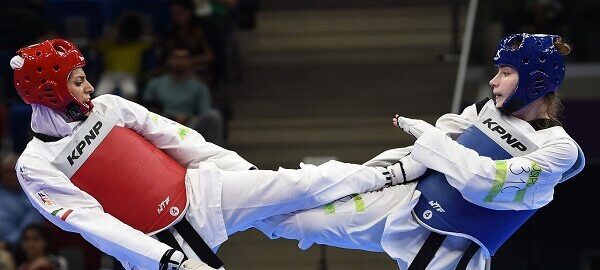
Iranian taekwondokas win 3 medals including 2 golds and 1 silver in Asian Taekwondo Championships underway in South Korea.

On the third day of the Asian Taekwondo Championships, Iranian athlete Zahra Pour-Esmaeil at -73 kg defeated her opponents from Jordan and South Korea to make it into the final match. She won the gold medal by beating the Kazakh taekwondoka 2-0.

Akram Khodabandeh also won over her Syrian and Chinese opponents to gain another medal for Iran.

Also, in the quarter-final and semi-final matches, Alireza Nad-Alian defeated his opponents from Qatar and Afghanistan and made it to the finals. Losing the finals to a Chinese taekwondoka, Nad-Alian was placed second and won a silver medal.

On the second day of the 25th Asian Taekwondo Championship, four Iranian representatives in both men’s and women’s divisions gained a silver medal each after they all lost to their opponents in the final matches. /MNA/

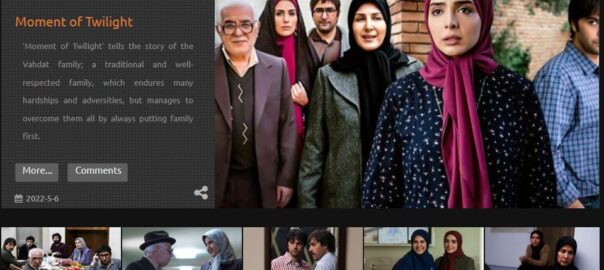
Iranian TV Series Moment of Twilight

‘Moment of Twilight’ tells the story of the Vahdat family; a traditional and well-respected family, which endures many hardships and adversities, but manages to overcome them all by always putting family first.  to watch the  Trailer Please Click here

https://en.ifilmtv.tv/Series/Content/38985


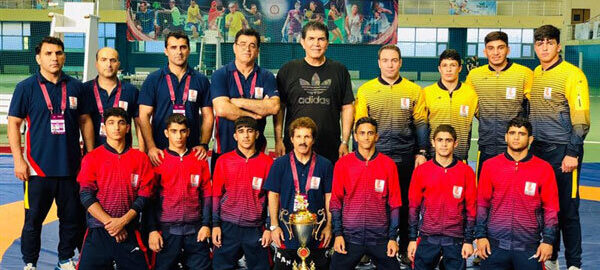
Iran’s U-17 Greco-Roman wrestlers become Asia vice champion

Iran’s U-17 Greco-Roman junior wrestling team finished the Asian Championships with 2 gold, 4 silver and 2 bronze to become vice-champions.

Iran’s U-17 Greco-Roman junior wrestling team won a gold medal and a silver on the final day of the Asian Championships, finishing the competition in the second place with 2 gold, 4 silver and 2 bronze in total.

The competitions were held in Bishkek, Kyrgyzstan.

Kyrgyzstan won the championship with 182 points and Kazakhstan stood in third place with 170 after Iran with 174 points. /MNA/

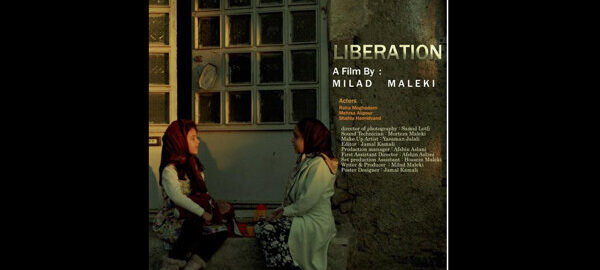
‘Liberation’ to vie at German film festival

Directed by the Iranian filmmaker Milad Maleki, the short film “Liberation” is scheduled to be screened at LUCAS (International Festival for Young Film Lovers) in Germany.

The synopsis of Maleki’s short film read, “The little girls are playing when an adult lady suddenly enters their childish privacy and brings them back to their real bitter life.”

The 45th LUCAS – International Festival for Young Film Lovers will take place in Frankfurt and the Rhein-Main region, Germany, from Oct 6 to 13, 2022.

Being organized by DFF – Deutsches Filminstitut & Filmmuseum e.V., the festival is open to a wide range of fiction, documentary, animation, experimental and hybrid films. / MNA/

Iranian university tops world’s list for good health and well-being

Iran University of Medical Sciences has ranked the world’s leading university for contributing to delivering the UN’s Sustainable Development Goal of good health and well-being.

The 2022 edition of the Times Higher Education Impact Rankings, based on universities’ contributions to delivering the UN’s Sustainable Development Goals (SDGs), show that universities worldwide are seizing the moment to double down on a long tradition of public service of delivering sustainable social and economic impact for their communities and society at large.

Based on a series of more than 100 metrics and over 200 measurements, covering universities’ teaching, research, outreach into the community, and the stewardship of their own resources, the rankings show universities from all over the world delivering real impact across all 17 SDGs – whether that’s Western University in Canada leading efforts to help eradicate poverty (SDG 1) or the University of Witwatersrand in South Africa leading on work to provide decent work and economic growth (SDG 8) or Fudan University in China heading up the table of universities’ contribution to delivering affordable, clean energy (SDG 7).

Iran University of Medical Sciences also won the seventh rank in the field of Quality Education. Among more than 1,400 universities from 106 countries, 17 different universities from 14 countries top one of the 17 individual rankings for each SDG – a diverse global community ready to hold itself accountable for the delivery of the global goals, sharing data, and benchmarking progress.

During the last four years, Iran University of Medical Sciences has been the first and top university in West Asia (the Middle East) in this ranking.

In the Times Impact Rankings 2022, Iran University of Medical Sciences, in addition to gaining the top rank in the Health and Wellbeing Index, won the seventh rank in the field of Quality Education.

Academic quality

Most recently, fifty-eight universities from Iran were listed among the top universities in Asia, according to the 2022 Asia University Rankings of the Times Higher Education.

The 2022 edition of the Times Higher Education Impact Rankings, based on universities’ contributions to delivering the UN’s Sustainable Development Goals (SDGs), listed 27 Iranian universities.

The Webometrics Ranking of World Universities 2022 has ranked 694 Iranian institutions among 30,000 top universities across the world.

Also, 59 Iranian universities have been listed among the top 3,000 institutions in the world in terms of academic quality, according to the 2021-2022 report released by University Ranking by Academic Performance (URAP).

The Quacquarelli Symonds (QS) Graduate Employability Rankings 2022 list has been released, which included three Iranian universities out of a total of 550 institutes worldwide that highlighted graduate employment processes.

Meanwhile, 41 Iranian universities in engineering sciences and 12 universities in computer sciences have made a place among the top 1,188 universities in the world with the announcement of Higher Education World University Rankings 2022 by subject.

It also has introduced 59 Iranian universities among the top institutions in World University Rankings 2022.

The THE Education Young University Rankings 2021 listed 26 Iranian institutions among the world’s best universities that are 50 years old or younger.

Moreover, 34 Iranian universities and institutions were listed among the top 1,000 in the world, according to Shanghai Ranking’s Academic Ranking of World Universities (ARWU) 2021. /T.T/

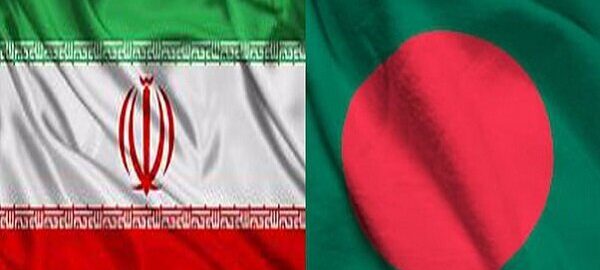
Bangladesh envoy urges importing mining products from Iran

Bangladesh Ambassador to Iran Gousal Azam Sarker has called for importing mining products and cotton from the North Khorasan province of Iran.

Bangladesh envoy made the remarks in a meeting with the officials of the Chamber of Commerce, Industries, Mines and Agriculture in North Khorasan province on Saturday.

Bangladesh’s construction and textile sector are developing very fast, Gousal Azam Sarker said, adding that the areas need to supply raw materials and mining products, which the Iranian province enjoys the capacity to meet those demands.

The province also has a proper capacity for export in the mining, urea, and aluminium industries, he underlined.

He also said that the drug and herbal medicine industry in his country is developing while the North Khorasan province can meet his country’s needs in that field as well.

The exchange of private sector investors between the two states can introduce capacities properly, he said, adding that joint cooperation should be carried out in that regard.

The Bangladeshi ambassador started his trip to the northeastern Iranian province on Saturday and in addition to meeting with the members of the Chamber of Commerce, Industries, Mines and Agriculture in the province, he will pay visits to the industrial and manufacturing units in that province.  /MNA/

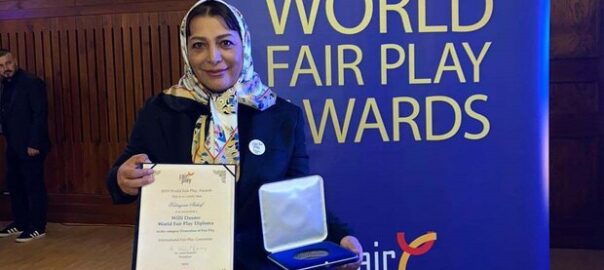
Iranian female referee gets World Fair Play Award

The Vice-President of Iran’s Canoeing Federation has received the World Fair Play Award. Thanks to her accomplishments in promoting fair plays, Katayoun Ashraf has got the award.

Ashraf was nominated for the award for her success in the development of women’s sailing sports with the 2017 Women’s Sports Development project, elite selection, and training of teenagers and sailing coaches, holding the Asian Junior and Youth Championships, and officiating the 2019 and 2021 Slalom World Championships.  /MNA/

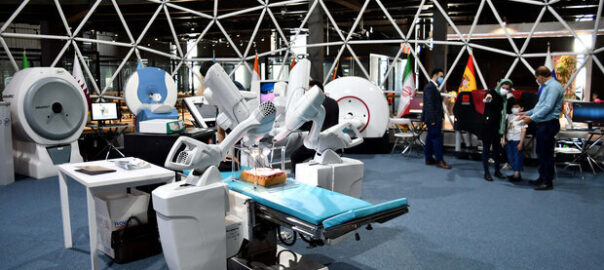
Iranian knowledge-based products hit markets in 70 countries

Iranian knowledge-based companies marketed their products in 70 countries, and in some global markets have overtaken European and American companies, Siavash Maleki, deputy head of the Innovation and Prosperity Fund, has said.

In the last two days, the number of knowledge-based companies has exceeded 6,800, he stated, emphasizing that half of them is active in the field of electronics and electricity.

Last year, knowledge-based companies gained about $800 million in revenue from export, and in the current year (started March 21), it seems to reach over $1 billion, he noted.

These knowledge-based companies have now found their export markets in 70 countries around the world. In some markets, they have been able to overtake European and American companies, he emphasized.

Leader of the Islamic Revolution Ayatollah Seyyed Ali Khamenei designated the current Iranian year as “The Year of Production: Knowledge-Based and Job-Creating”.Today, the country’s knowledge-based ecosystem accounts for more than 3 percent of GDP, he also said.

Exporting technological products of Iranian knowledge-based companies is one of the important and key programs of the vice presidency for science and technology, and in this regard, the Iranian houses of innovation have been set up in several countries to develop the global market for knowledge-based products.

These centers have already been set up in countries such as Russia, Turkey, China, Syria, Kenya, Armenia, and Iraq.

Knowledge-based companies

Due to the necessity of Iran’s presence in the global technology markets and the high capability of knowledge-based and creative companies, the Vice Presidency for Science and Technology stepped into the field to pave the way for its presence in the global market.

To this end, it has developed and implemented programs, policies, and support packages related to the development of export, planning to attract foreign investment, eliciting the participation of Iranians abroad, and connecting domestic capabilities to the global market are among the actions taken in this regard.

Leader of the Islamic Revolution Ayatollah Seyyed Ali Khamenei designated the current Iranian year as “The Year of Production: Knowledge-Based and Job-Creating”.

A plan for strengthening knowledge-based companies is on the agenda, raising hope for reducing obstacles on the path to development.

The Leader has called on all Iranians, including citizens and government officials, to work hard to boost knowledge-based production and create new jobs.

Today, the country’s knowledge-based ecosystem accounts for more than 3 percent of GDP. And the figure is projected to reach 5 percent, however, the main goal is to step toward a 10 percent share in GDP, Vice President for Science and Technology, Sourena Sattari told Fars on February 13.

The share of knowledge-based companies in the country’s economy has exceeded 9 quadrillion rials (about $34 billion), and since 2019, it has experienced a growth of more than 450 percent, he stated.

There are currently 6,263 knowledge-based companies operating in the country, offering advanced products and services in various fields of technology to domestic and foreign markets, and some of them have entered international markets, Siavash Maleki, deputy head of the Fund, stated.

The fields of aircraft maintenance, steel, pharmaceuticals, medical equipment, oil, and gas are among the sectors that researchers in technology companies have engaged in, leading to import reduction. /T.T/

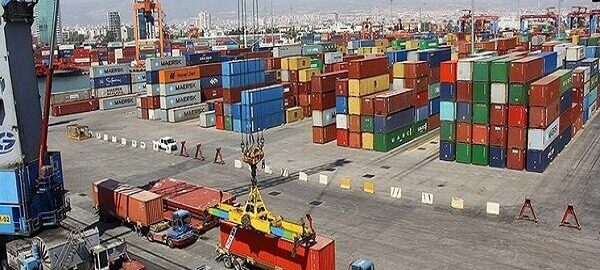
Iran export to Turkmenistan at 79% growth: IRICA

A spokesman for Islamic Republic of Iran Customs Administration (IRICA) said that over 1,014,000 tons of non-oil goods, valued at $300 million, were exchanged between Iran and Turkmenistan during the current administration.

Seyyed Rouhollah Latifi stated that Iran’s export of products to Turkmenistan registered a significant 79.4 percent growth since the 13th government assumed office in August 2021.

He put Iran’s non-oil trade with this country since the outset of the current administration i.e. from August 23, 2021, to May 21, 2022, at 1,014,474 tons, valued at $299,728,535, showing a 22.4 and 79.4 percent hike in weight and value respectively as compared to the same period of last year.

The export share of Iranian goods from this non-oil trade hit 987,755 tons, valued at $276,637,000, recording a 16 and 89 percent growth in weight and value respectively, Latifi added.

He pointed to Iran’s import of products from Turkmenistan and said that the country imported 35,719 tons of products, valued at $23,091,486, from Turkmenistan in the same period, showing a 16 and 89 percent hike in weight and value respectively.

Dairies, agricultural and horticultural products, fresh fruits and vegetables, dried nuts, foodstuff, confections and chocolate, construction materials, minerals, detergents, cosmetics, industries lubricants, bitumen, oil derivatives, petrochemical products, home appliances, clothing and handicrafts were of the main products exported from Iran to Turkmenistan in this period, IRICA spokesman added /MNA/


Rosewater festival to be held in Kerman

A rosewater distillation festival, commonly known as “Golab-giri”, is planned to be held in the city of Lalezar, the southern province of Kerman, on Friday, the provincial tourism chief has said.

Performing traditional music, playing local games, and displaying and selling handicrafts will be parts of the festival, CHTN quoted Fereydun Faali as saying on Wednesday.

Organizing this festival will create a suitable cultural environment as well as economic benefits for the region, the official added.

He also noted that the eco-lodge units of the area are ready to host tourists and the festival’s visitors.

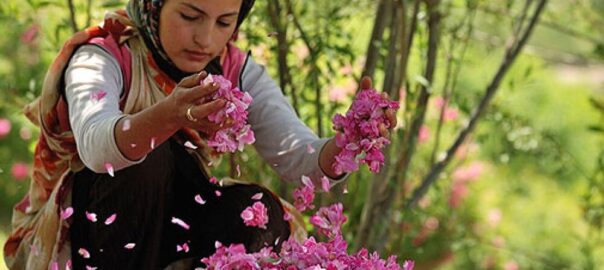
Golab or rosewater is obtained from a particular kind of Rose, known as Mohammadi roses in Iran. Harvesting flowers seems to be the most important part of the process. They should be picked from dawn through morning very carefully. The petals are put into massive copper pots and boiled, and then the extracted water is kept in special bottles. The longest the distillation is, the better will be the quality of the rosewater.

Golab is used nationwide in diverse traditional dishes to flavor them or consumed as a religious perfume as well. The holy month of Ramadan is one of the bestselling months for the product.

The distillation of flowers and herbs has a deep history in Iran. Many believe traditionally distilled rosewater is of higher quality than that produced in factories probably due to shorter time intervals between the harvest and distillation practices.

Harvesting damask rose flowers is somewhat intensive work. It is mostly performed from dawn through the morning. Delay in harvesting or transport to distillery results in decreased essential oil quantity and quality.

To extract the rosewater people first amass their petals to put them into the massive copper pots. Then the pots are put on traditional ovens made from bricks, stones, and mud.

Almost every 30 Kg of rose petals plus 80 liters of water is poured into each pot that is connected to metal pipes for the steam moving through to obtain the hydrosol. The waste of distillation is used for feeding livestock or composting.

The big and sprawling Kerman province has been a cultural melting pot since antiquity, blending Persians with subcontinental tribe dwellers. It is home to myriad historical sites and scenic landscapes such as Bazaar-e Sartasari, Jabalieh Dome, Ganjali Khan Bathhouse, Malek Jameh Mosque, and Shahdad Desert to name a few.

Kerman province is bounded by the provinces of Fars on the west, Yazd on the north, South Khorasan on the northeast, Sistan-Baluchestan on the east, and Hormozgan on the south. It includes the southern part of the central Iranian desert, the Dasht-e Lut. /T.T/