All posts by islam

3 Iranian referees to officiate at Asian Taekwondo Champs

Three Iranian referees will officiate at the upcoming Asian Taekwondo tournaments, the Asian Taekwondo Union announced. Marjan Teimouri, Hafez Mahdavi, and Abdul Hamid Beshagh will officiate at the events.

The referees will officiate in Kyorugi style at the 25th round of the Asian Championships and both Kyorugi and Poomsae styles in the 7th edition of the championships in South Korea from 23-27 June. /MNA/

Knowledge-based firms achievements fair in Tehran

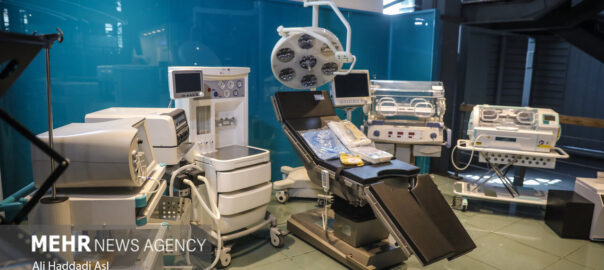
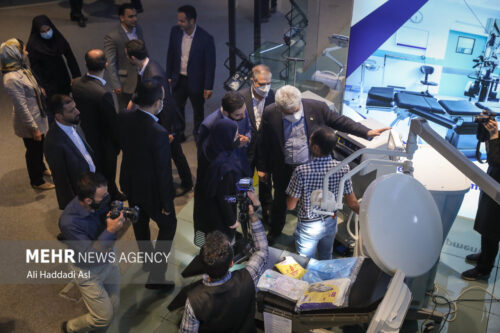
An exhibition kicked off at Tehran Permanent International Fairgrounds which showcases the Iranian knowledge-based companies’ products in the fields of veterinary and poultry as well as ground aquaculture farming.

The Iranian agriculture minister Seyed Javad Sadati Nejad and the Vice President for Science and Technology Sorena Sattari were attending the opening ceremony.

Iranian actor ‘Farrokhnezhad’ awarded at Amsterdam Septimius

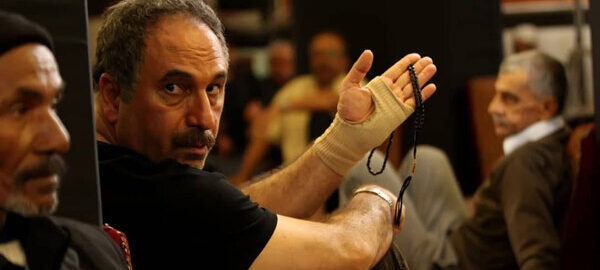
Iranian actor Hamid Farrokhnezhad won the prize of best actor in the Asian sector of Septimius awards for the film “Major”.

Directed by the Iranian filmmaker Ehsan Abdipour, ‘Major’ tells the story of a man in Bushehr who feels responsible for his son for the first time in several years.

Akbar Odood, Iraj Saghiri, Arash Maleki, Forough Ghajabagli, Ramtin Balef, Hamid Baghaki, Abbas Bak, Gholamreza Farjzade, Asghar Javadi, Hossein Ghofli, Abbas Javadi, Dariush Gharibzade are the others casts of Abidpour’s film.

The Septimius Awards was held on the 6-7th of June 2022 in the Netherlands’ Amsterdam.

The event is a prestigious award ceremony, with a strong emphasis on discovering and encouraging new independent talent, supporting visionary films, and bringing together all elements of film-making and storytelling, which includes fiction, non-fiction, animation, television series, and scripts. It showcases a wide range of genres from Drama to Documentary. / MNA/

Iran, Iraq sign MoU on tourism cooperation

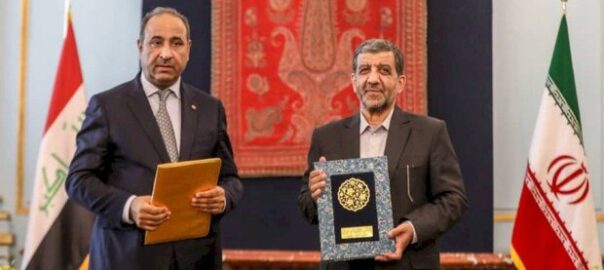
Iran and Iraq signed a memorandum of understanding on tourism cooperation. According to the General Directorate of Public Relations and Information, the signing ceremony of the Memorandum of Understanding between the Ministry of Heritage, Culture and Tourism and Handicrafts of the Islamic Republic of Iran and the Ministry of Culture, Tourism and Ancient Heritage of the Republic of Iraq was held on Monday.

Welcoming the Iraqi Minister, Zarghami said, “I am pleased that an academic with a scientific background has accepted this responsibility, and I am confident that cultural and tourism relations between Iran and Iraq will be established better than before.”

Zarghami described the MoU as facilitating cultural and tourism relations between the two countries.

He described the cultural heritage and tourism, which is a joint mission of the two sides, as having a high potential for integration and cohesion between the two nations.

According to the memorandum, the two sides have announced their readiness to provide visa facilities for tourists from the two countries, as well as the exchange of laws, instructions and banking facilities in the field of tourism investment and investment in infrastructure projects, including hotel construction.

The MoU is valid for two years and will be automatically renewable unless one of the parties expresses its intention to terminate it to the other party in a written message through diplomatic channels three months before the expiration date.  /MNA/

100 student couples get married

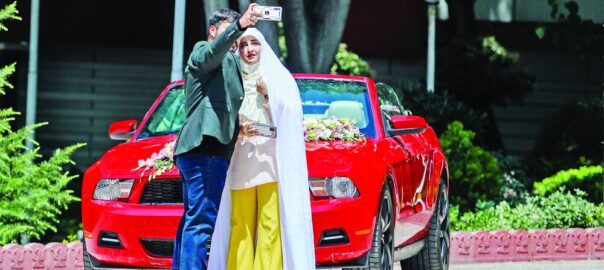
One hundred university student couples got married in a mass wedding ceremony held in Tehran on Sunday. The decline in the marriage rate, followed by a dramatic decrease in childbearing, has sounded the alarm of the aging population, an issue that has forced government officials to enact legislation to support the population growth and the youth. /T.T/

Four countries import Iranian nanocosmetics

An Iranian company has used nanoparticles in cosmetic products and has succeeded in exporting them to four countries of Lebanon, Iraq, Afghanistan, and Kuwait.

The industry has three different segments personal care, cosmeceutical, and make-up, and nanotechnology has entered all three segments.

The use of nanotechnology in this industry is usually done for three purposes treatment, quality improvement of current products, and prevention of negative effects (such as sun rays).

Nano liposomes are used in the production of toothpaste, deodorants, anti-wrinkle, and lightening creams, which are being produced by this company.

Nanotech products

Currently, nanotech products are produced and marketed in more than 15 industrial fields based on domestic technologies and are being exported to 49 countries from five continents.

Bases for exporting nanoproducts to China, India, Indonesia, Syria, Turkey, and Iraq have been set up in recent years. Over the past year (ended March 20), the total sale of Iranian nanoproducts has been equal to 115 trillion rials (nearly $425 million).

The expansion of nanotechnology export programs in recent years and the establishment of bases for exporting nanoproducts to China, India, Indonesia, Syria, Turkey, and Iraq have provided the opportunity for the entry of Iranian nanotechnology goods, equipment, and services into global markets.

Some 42 percent of the products in this field are related to construction, more than 17 percent to the field of oil, gas, and petrochemicals, 13 percent to the field of automobiles, and over 10 percent to the field of optoelectronic.

Some 270 companies are active in the nanotechnology field and it is predicted that their revenue will reach up to 80 trillion rials (nearly $310 million), Vice President for Science and Technology, Sourena Sattari, announced.

Iran improves in nanotechnology

Iran’s ranking in nanotechnology articles citation in 2019 has significantly improved compared to 2018, as it moved 26 levels higher, according to the StatNano’s statistics collected from the WoS database.

Based on a report Nanotechnology Publications report, Iran ranked 38 worldwide for the average number of times the nano-articles have been cited in the Journal Citation Reports in 2019, while in 2018, it was placed 64.

Iran ranked 4th for the highest number of nano-article publications. /T.T/


Iranian village hosts rosewater festival

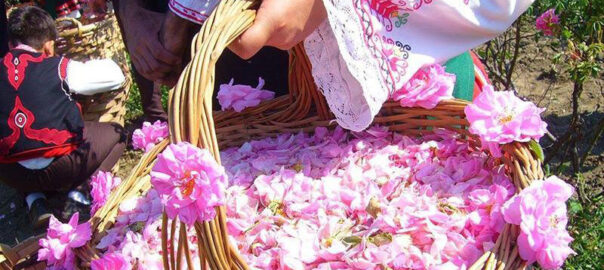
A rosewater distillation festival, commonly known as “Golab-giri”, was held in Nalbandan village, west-central Zanjan province on Friday, a local tourism chief has said.

Performing local games, displaying handicrafts, and selling herbal beverages were parts of the festival, CHTN quoted Masoumeh Shiri as saying on Saturday.

To introduce the capacity of rural tourism and especially in lesser-known areas, the festival served to familiarize people and tourists with the harvesting and cultivating of rose flowers, she noted.

The festival also aimed at introducing and promoting the tourism potential of the region, the official added.

Golab or rosewater is obtained from a particular kind of rose, known as Mohammadi roses in Iran. Harvesting flowers seems to be the most important part of the process. They should be picked from dawn through morning very carefully. The petals are put into massive copper pots and boiled, and then the extracted water is kept in special bottles. The longest the distillation is, the better will be the quality of the rosewater.

Golab is used nationwide in diverse traditional dishes to flavor them or consumed as a religious perfume as well. The holy month of Ramadan, which started yesterday, is one of the bestselling months for the product.

The distillation of flowers and herbs has a deep history in Iran. Many believe traditionally distilled rosewater is of higher quality than that produced in factories probably due to shorter time intervals between the harvest and distillation practices.

Zanjan is one of the cities founded by Sassanid King Ardashir I (180-242 CE). The province makes a base for wider explorations with the architectural wonder of Soltaniyeh, the subterranean delights of the Katale-Khor caves, colorful mountains, and the UNESCO-registered Takht-e Soleiman ruins are nearby. /T.T/

Intl. medical visits to Fars province hits record high

The number of international travelers who received medical services in Fars province’s hospitals hits a record high during the first two months of the current Iranian calendar year, the province’s deputy governor-general has said.

The number of medical travelers to Fars jumped 250 percent and 550 percent respectively in Farvardin (Mar. 21-Apr. 20) and Ordibehesht (Apr.21-May 21) in comparison to the same months last year, IRNA quoted Mohammad Farrokhzadeh as saying on Sunday.

“It is an unprecedented record of its kind,” the official said.

Iran is known in the world as an affordable destination for health tourism and the government is making a great effort to attract more health tourists in the years to come. Many believe that medical tourism in the Islamic Republic is a win-win opportunity both for the country and foreign patients, as they are offered affordable yet quality treatment services and the country gains considerable foreign currency.

According to statistics, hospitals of Fars province admitted 10,500 foreign medical travelers and received some 5,000 international outpatients last year (ended Mar. 20), Farrokhzadeh said.

Referring to comparative admissions, the deputy governor-general noted 148 foreign patients were stayed in hospitals during Farvardin last year (1400) while the number reached 367 in the same month this year (1401), which shows a 250 percent growth.

“Fars hospitals admitted 183 foreign patients in Ordibehesht last year while the number hits 1003 in the same month this year.”

About one million medical tourists, mainly from the neighboring countries, arrive in Iran annually, Mohammadreza Tarjoman who presides over the Health Ministry’s tourism office said in April. A selection of 200 Iranian medical centers have permission to accept foreign patients, he added.

Experts believe that medical tourism in Iran is a win-win opportunity both for the country and foreign patients, as they are offered affordable yet quality treatment services and the country gains considerable foreign currency.

Amid Iran’s trump cards are the presence of credible surgeons and physicians, cutting-edge medical technologies, high-tech medicine and diverse specializations, super affordable procedures, and finally its hospitable people.

Iranian hospitals offer a wide variety of medical services such as eye surgeries and services, cardiovascular surgeries especially pediatric heart surgery, bone marrow transplantation, gynecologic and obstetric surgery, oncologic services, cerebrospinal surgery, orthopedic surgery (total knee & total hip replacement, etc.), and urologic surgery, and so many other services.

The Islamic Republic has set goals to exceed its yearly medical travelers to around two million in [calendar year] 1404 (March 2025-March 2026). /T.T/


Iranian wrestlers rank 1st in Italian Cup

Iranian Greco-Roman wrestlers have ranked first in the Italian tournament held in Sassari City Matteo Pellicone Memorial, Italy.

The athletes have bagged seven gold, two silver, and one bronze medal in the event.

The sixth training camp of the Greco-Roman youth wrestling team kicked off on June 3 and will be underway until June 14. /MNA/

Iranian village hosts rosewater festival

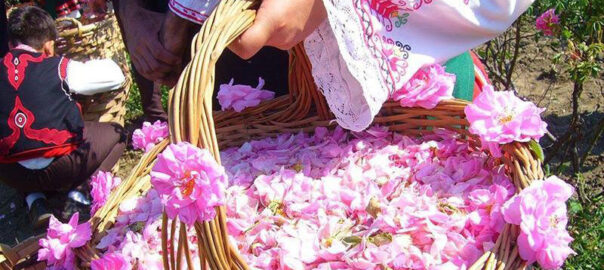
A rosewater distillation festival, commonly known as “Golab-giri”, was held in Nalbandan village, west-central Zanjan province on Friday, a local tourism chief has said.

Performing local games, displaying handicrafts, and selling herbal beverages were parts of the festival, CHTN quoted Masoumeh Shiri as saying on Saturday.

To introduce the capacity of rural tourism and especially in lesser-known areas, the festival served to familiarize people and tourists with the harvesting and cultivating of rose flowers, she noted.

The festival also aimed at introducing and promoting the tourism potential of the region, the official added.

Golab or rosewater is obtained from a particular kind of rose, known as Mohammadi roses in Iran. Harvesting flowers seems to be the most important part of the process. They should be picked from dawn through morning very carefully. The petals are put into massive copper pots and boiled, and then the extracted water is kept in special bottles. The longest the distillation is, the better will be the quality of the rosewater.

Golab is used nationwide in diverse traditional dishes to flavor them or consumed as a religious perfume as well. The holy month of Ramadan, which started yesterday, is one of the bestselling months for the product.

The distillation of flowers and herbs has a deep history in Iran. Many believe traditionally distilled rosewater is of higher quality than that produced in factories probably due to shorter time intervals between the harvest and distillation practices.

Zanjan is one of the cities founded by Sassanid King Ardashir I (180-242 CE). The province makes a base for wider explorations with the architectural wonder of Soltaniyeh, the subterranean delights of the Katale-Khor caves, colorful mountains, and the UNESCO-registered Takht-e Soleiman ruins are nearby./ T.T/