All posts by islam

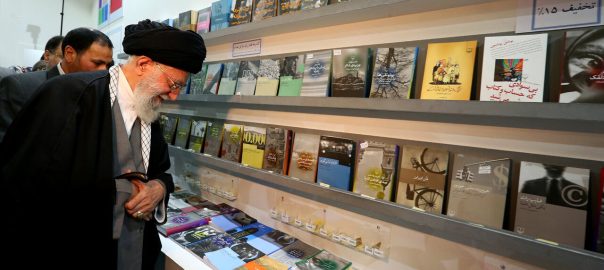
Leader of the Islamic Revolution martyred in cowardly Israeli-American aggression

Leader of the Islamic Revolution, Ayatollah Seyyed Ali Khamenei, has been martyred in the American-Israeli aggression against the Islamic Republic of Iran.

His martyrdom was announced in the wee hours of Sunday morning.

Ayatollah Khamenei’s residence in Tehran was targeted on Saturday morning, in which many of his family members, including his daughter, son-in-law, daughter-in-law and grandchild were also martyred.

In a statement following the announcement of the martyrdom of Ayatollah Khamenei, the Islamic Revolution Guards Corps (IRGC) said the Iranian nation has lost a great leader, “one who, in purity of spirit, strength of faith, prudence in affairs, courage against the arrogant powers, and striving in the path of God, was unparalleled in his era.”

“His martyrdom at the hands of the most wretched terrorists and executioners of humanity is a sign of the righteousness of this great leader and the acceptance of his sincere services,” read the statement.

IRGC said the martyrdom in the path of Islam and great Iran “is a sign of victory and drawing closer to the goal; yet with the martyrdom and migration unto God of Imam Khamenei (may God be pleased with him), his path and legacy will not be halted, but will continue with strength and grandeur.”

“This martyrdom will make our nation more resolute in continuing the luminous path of the beloved Imam Khamenei,” the statement noted.

“The criminal and terrorist act of the wicked governments of America and the Zionist regime constitutes a clear violation of religious, moral, legal, and customary principles; therefore, the hand of vengeance of the Iranian nation, for severe, decisive, and regret-inducing punishment of the killers of the Imam of the Ummah, will not release them.

IRGC vowed to “powerfully continue the path” of the martyred leader in “defending the precious legacy of this great figure, standing firm against internal and external conspiracies and delivering instructive punishment to aggressors against the Islamic homeland.”

Press TV

Antonio Manicone parts ways with Iran football team

TEHRAN – Italian coach Antonio Manicone has ended his cooperation with the Iran national football team.

Manicone, who served as an assistant to head coach Amir Ghalenoei, decided to part ways with the national team.

The Italian coach joined Pisa SC earlier this month and is now working there as an assistant coach. His contract with the club runs until the end of the summer of 2027. Pisa currently sit 19th in Serie A with 15 points.

Manicone had joined the Iran national football team in June 2023 and, after approximately two years and nine months, has now concluded his tenure with the Football Federation of Iran.

Italian assistant coach Antonio Gagliardi, who was appointed as first assistant in November, and Romanian goalkeeping coach Alin Dincă remain the foreign members of the national team’s coaching staff.

Tehran Times

Iran, Lebanon ties deep-rooted in cultural bonds: Pezeshkian

TEHRAN, Feb. 25 (MNA) – Iranian President Masoud Pezeshkian has said that relations between Iran and Lebanon extend far beyond politics and deep rooted in cultural, historical, and emotional bonds between the two countries.

He made the comments on Tuesday at the credential ceremony of Lebanon’s newly-appointed ambassador to Tehran Ahmad Sweidan, highlighting that that the two nations have consistently stood by one another through both difficult and prosperous times.

The Iranian president said Tehran closely follows developments in Lebanon and sincerely hopes the Lebanese people can live in peace and stability.

President Pezeshkian described the Israeli regime as the main source of instability in Lebanon and the wider region, citing repeated attacks and expansionist policies as threats to regional security.

He stressed that Iran’s position on such actions is clear and firmly based on defending the rights of regional nations.

The president reaffirmed Tehran’s readiness to expand cooperation with Arab and Islamic countries, particularly Lebanon, and highlighted the ambassador’s role in strengthening bilateral ties.

Lebanon’s Ambassador Sweidan, for his part, conveyed greetings from Lebanese leaders, and described the Iran-Lebanon relations as strong, resilient, and steadily expanding despite external pressures.

MNA

Iran-US deal within reach if diplomacy prioritized

TEHRAN, Feb. 25 (MNA) – Iranian Foreign Minister Abbas Araghchi says reaching a nuclear deal with the US is possible provided that diplomacy is given priority.

In a message posted on X, Araghchi wrote that Iran will restart negotiations with the United States in Geneva based on understandings formed in the previous round of talks.

He said Tehran is entering the discussions with a determination to achieve a fair and equitable deal—in the shortest possible time.

“Pillared on the understandings forged in the previous round, Iran will resume talks with the U.S. in Geneva with a determination to achieve a fair and equitable deal—in the shortest possible time,” he said.

“Our fundamental convictions are crystal clear: Iran will under no circumstances ever develop a nuclear weapon; neither will we Iranians ever forgo our right to harness the dividends of peaceful nuclear technology for our people,” Araghchi added.

He further noted, “We have a historic opportunity to strike an unprecedented agreement that addresses mutual concerns and achieves mutual interests. A deal is within reach, but only if diplomacy is given priority.”

“We have proven that we will stop at nothing to guard our sovereignty with courage. We bring the same courage to the negotiating table, where we will pursue a peaceful resolution to any differences,” he concluded.

MNA

Iran is not like any other West Asian country, Turkish researcher says

TEHRAN — Iran is not at all like any other country in the West Asia. People are very civil, calm, kind, and cultured. Even in the smallest villages, when they realize you are a foreigner, they treat you with complete respect.

Saying the above remarks to Miras Aria, Berna Khorshidi who is a Turkish globetrotter and cultural researcher, added: “Iran was the only country where I did not feel like a stranger,”.

Khorshidi, who has lived and traveled in Iranian cities and villages for years, emphasized: “Entering Iran was the end of my media fantasies. Iran is a country where culture is alive, flowing, and present in the texture of people’s daily lives; a land that must be seen, touched, and known for its past.”

Khorshidi, who has gained a deep experience of the cultural life of this land during her three years of residence and travel in Iran, described Iran as another world in a narrative analysis of her observations. A world that, according to her, is significantly different from the common media stereotypes.

She said about her first encounter with Iranian society: “My arrival in Iran was the end of years of the image that the media and the Internet had created of this country.”

Emphasizing the role of people in shaping the true image of Iran, the Turkish traveler stated that the hospitality of Iranians is not a slogan, it is a lived reality.

Khorshidi, who pursued her university studies in Persian literature, said about her connection with the Persian language: “When I chose Persian literature for my studies, I became fascinated with this language. I consider Persian to be the most beautiful language in the world and I speak it with pride and read its texts.”

Referring to the interest of a part of Turkish society in Persian culture and language, she added: “There are also serious enthusiasts of Persian in Turkey, and this capacity can help deepen the cultural ties between the two countries.”

On her travels to the provinces and different ethnic groups of Iran, Khorshidi spoke of a multi-layered experience and emphasized: “I felt a deep sense of closeness with the Turkmen people. You could see the common roots in the behavior and gaze of the people.”

She described South Khorasan as mysterious and different and said: “It was as if I had entered another world.”

Khorshidi also said about Sistan-Baluchestan province: “In one village, I saw that everything was in the hands of women. These cultural contrasts were very interesting and thought-provoking for me.”

According to her, Khuzestan and southern Iran, especially Qeshm island, are examples of the intertwining of cultures: The warmth of the southern people is exemplary. Iran is a country that every time you see it, it feels like the first time.

The cultural researcher said about one of the behavioral characteristics of Iranians: “For Turks, compliments are very strange; they are both beautiful and sometimes confusing. You don’t know if they are a real invitation or a compliment. But this very characteristic is one of the most complex and at the same time most beautiful social behaviors of Iranians.”

Referring to her presence in various Iranian rituals, Khorshidi stated: “I participated in  Muharram mourning,  Zoroastrian rituals, and the Zar ritual in the south. Each one opened a new window to Iranian culture for me.”

She considered the ritual diversity a sign of Iran’s historical depth and cultural diversity and added that Iran should be understood through its rituals.

Comparing the lifestyles in Iran and Turkey, she said: “Iranians have preserved their culture with seriousness. In Turkey, we have gone towards Westernization and have lost some of our traditions, but in Iran you can still see local clothes in the cities. Culture is present in everyday life here.”

Regarding her Iranian culinary experience, Khorshidi stated: “Currently, I cook mostly Iranian dishes. I didn’t like Ghormeh Sabzi (herb stew) at first, but I love Tahchin (Persian rice cake) and Gheymeh Nesar (Qazvin local food). I don’t even cook Turkish food anymore; Iranian food has become a part of my life.”

She considered the UNESCO-listed Shushtar Historical Hydraulic System to be the most amazing place among the historical monuments of Iran and said: “That was one of my most important historical experiences. It is strange that such an important monument is rarely introduced.”

Khorshidi considered the architecture of the Safavid era to be the most inspiring historical era for her and said: “Wherever I saw Safavid architecture in Isfahan, I would sit and watch. Isfahan is a city that should be seen with open eyes and a calm heart.”

She also mentioned the influence of Iranian history on her personal outlook and stated: “Cyrus the Great is an inspiring figure for me. I consider him a symbol of humanity and justice.”

Khorshid emphasized the cultural closeness between Iran and Turkey and said: “Many regions of Iran are still unknown to the Turks.” If these capacities are properly introduced, many tourists will be attracted from Turkey.

She called Iranian handicrafts advanced and diverse and added: “Termeh is the most attractive to me, because of its elegance and silkiness. Copperwork and calligraphy are also valuable because of their natural colors. Iran is a country where art flows in its veins.”

The cultural researcher concluded by advising: “Before traveling to Iran, study a little about its history and culture. If you come without knowing it, you will miss out on a lot.”

Tehran Times

Latest issue of Iran National Museum Journal now available

TEHRAN – Jebrael Nokandeh, director-general of the National Museum of Iran, said on Sunday that the latest edition of the museum’s journal, which is published every six months, has been released.

Highlighting the publication’s strong reception within academic circles, he noted: “The National Museum’s Biannual Journal has published nearly eighty articles in the fields of archaeology and museology to date, recording over forty thousand downloads so far.”

Emphasizing the museum’s standing as the country’s oldest and most significant repository of archaeological national heritage, Nokandeh stated: “The National Museum of Iran serves both as a repository for historical artifacts and as a platform for research, helping introduce various aspects of Iranian culture and civilization to the academic community at home and internationally.”

He added that with this approach, the journal has provided a platform for publishing new research findings based on objects and collections housed in this museum, as well as other museums and archaeological sites. He then pointed to the high number of article downloads, viewing this reception as an indicator of the journal’s scientific standing and influence among domestic and international researchers.

According to him, the new issue of this journal (Issue 6-7) contains a collection of 19 diverse articles, each dedicated to an aspect of archaeological, historical, artistic, and cultural heritage conservation studies. These articles, resulting from meticulous research by Iranian and international scholars, introduce newly discovered artifacts or reinterpret lesser-known collections, opening new horizons for understanding Iran’s culture and civilization from prehistoric to Islamic times.

Nokandeh went on to introduce some of the prominent articles in this issue, stating: “In the prehistoric section, a study of the lithics from Ali Tappeh Cave in Mazandaran offers a fresh perspective on the Caspian Mesolithic and its connection with Central Asia. Additionally, a reassessment of the lithic collection from Ganj Dareh in Kermanshah reveals new aspects of technological developments during the Neolithic period.”

Regarding an article related to the prehistory of Khorramabad in Lorestan, he said: “Given the inscription of the prehistoric sites of Khorramabad Valley on the UNESCO World Heritage List this year, the publication of unpublished data from previous surveys and excavations in this issue—including pottery from the Chalcolithic and Bronze Ages from the survey of Judith Berman and Frank Hole at the National Museum—gains double significance. It paves the way for a more comprehensive understanding of the valley’s cultural sequence and its role in regional interactions.”

He also referred to another significant article about the “Shahdad Standard,” dedicated to the introduction and 3-D documentation of this unique example of Bronze Age metalwork from the margin of the Lut Desert. In the historical period section, various articles have been published, including the identification and behavior study of animals based on footprints preserved on the bricks of Chogha Zanbil, and a re-reading of the Marvdasht silver bowl with a recently deciphered Linear Elamite inscription. The Islamic period section of this journal is enriched with articles such as an analysis of the coins of Al-Mu’tamid ‘ala-llah from the Susa excavations, the introduction of the stone bust of Bologhān Khātūn from the Dash Kasan (Soltaniyeh) site, a study of the robe of victory (Jāmeh-ye Fath) of Shah Abbas the Great from the perspective of the science of letters and numbers (Jafr/Abjad), and an examination of the artistic style of Hassan Ali Vaziri based on his painting preserved in the National Museum of Iran’s library.

In conclusion, the Director of the National Museum of Iran expressed hope that this diverse and valuable collection would be an effective step towards further introducing the treasures of the National Museum of Iran and pave the way for future research by scholars and enthusiasts of the country’s cultural heritage.

Tehran Times

Tar Halva: Traditional Iranian Ramadan dessert

TEHRAN, Feb. 22 (MNA) – During the holy month of Ramadan, Tar Halva, one of the traditional and popular desserts of Shiraz, reappears on Iftar tables.

As Ramadan arrives in southern Iran, the atmosphere shifts. In the historic city of Shiraz, the scent of fresh bread, dates, and homemade sweets fills homes before sunset. Among the many foods prepared for iftar, one traditional sweet continues to hold a special place on the table: Tar Halva.

Tar Halva has long been a staple of iftar tables in Shiraz. Made from wheat flour, natural syrups, and oil, the sweet is valued for its energy-boosting properties and what locals describe as its “warming” nature — qualities considered beneficial after a full day of fasting.

Despite the growing popularity of modern desserts and industrial sweets, Tar Halva has retained its place in Ramadan traditions.

More than just a sweet dish, Tar Halva forms part of the collective memory of Ramadan in Iran’s Shiraz — recalling family gatherings before the sunset call to prayer, when households would break their fast with simple, homemade foods.

Tar Halva: Traditional Iranian Ramadan dessert

Mohammad Ramazani-Pour, a veteran Shirazi cook who prepares Tar Halva each Ramadan, says the essence of the sweet lies not only in its ingredients but in the process.

“Before it is a food, it is patience,” he explains.

The preparation begins with high-quality, sifted wheat flour. The flour is poured into a large pot or pan and toasted slowly over gentle heat. This stage is critical: the flour must not burn but gradually lose its raw aroma and turn a light golden-cream color.

Continuous stirring is essential. According to traditional wisdom, if the cook’s arm does not tire, the Tar Halva will not turn out properly.

Once the flour reaches the correct color, oil is added gradually while stirring continues to prevent clumping. Some use animal fat, others liquid oil, and some a combination of both.

The sweetness comes from strained grape syrup or date syrup, which is incorporated slowly. At this stage, the mixture darkens, and its aroma intensifies. Spices such as saffron and cardamom are added at the end to preserve their fragrance.

The sweet is ready when it thickens and begins to pull away from the sides of the pot — neither too soft nor too firm.

Tar Halva: Traditional Iranian Ramadan dessert

From a food science perspective, Tar Halva aligns with the nutritional needs of fasting.

Zahra Mohammadi-Nia, a senior food industry specialist, describes it as a simple yet purposeful snack suited to Ramadan. The toasted wheat flour not only improves flavor but also enhances digestibility. Gentle heat partially alters the starch structure, making it more accessible while removing the raw taste — a factor that significantly influences final quality.

Grape or date syrup serves as a natural source of simple, easily absorbed sugars. After hours of fasting, these sugars help restore lost energy quickly.

Unlike many sweets that contain refined sugars, artificial colors, and preservatives, homemade Tar Halva contains no additives. When prepared hygienically and with controlled amounts of oil and syrup, it can be considered a more natural alternative to processed desserts.

Moderate fat content also contributes to satiety and helps prevent rapid blood sugar drops.

Tar Halva: Traditional Iranian Ramadan dessert

The continued presence of Tar Halva on Ramadan tables reflects more than taste preference. It signals the preservation of culinary heritage at a time when processed foods dominate many markets.

MNA

Lipar Wetland: Iran’s rare pink lake you must visit

Most lakes and oceans around the world share familiar shades of blue and green. But in southeastern Iran, visitors encounter something rare — a naturally pink wetland.

Located near the coastal city of Chabahar, the Lipar Wetland stands out as one of Iran’s most unique natural attractions. Its soft pink color has turned it into a growing destination for domestic and international travelers.

Instead of asking why lakes are blue, visitors here often ask: How can water turn pink? And when is the best time to see it?

The name “Lipar” refers to the plain where the wetland is formed. In the local Baluchi language, Lipar describes the meeting point of river water and sea water, which is exactly how this wetland was created.

Lipar is a saline wetland located on an alluvial plain with an approximate area of 14 square kilometers. Its formation is influenced by rainfall, seasonal floods, and marine conditions. Human infrastructure, including the coastal road between Chabahar and Gawater, has also affected its current structure.

Importantly, the wetland is not permanently filled with water. Its existence depends heavily on monsoon rains and environmental conditions.

Lipar Wetland: Iran’s rare pink lake you must visit

Why is the Lipar Wetland’s water pink?

The Pink Wetland of Chabahar gets its color from natural biological processes.

The pink hue is primarily caused by the presence of phytoplankton and ecological interactions within the water. Around 90% of the plankton species in the wetland are plant-based microorganisms.

Several factors contribute to the color:

High concentrations of organic and mineral materials carried by rivers

Seasonal marine currents influenced by monsoon winds

Rapid growth of phytoplankton populations

Plankton levels increase from mid-June to September and typically reach their peak around December. During these periods, the pink color becomes more visible.

The water is saline, which supports this ecological process.

Lipar Wetland: Iran’s rare pink lake you must visit

When is the best time to visit Lipar Wetland?

Lipar Wetland is most visually striking during:

February

March

April

September

October

In these months, water levels and plankton density combine to produce the clearest pink appearance.

Summer is generally not ideal due to high temperatures and reduced water levels.

In favorable rainfall years, the wetland may retain sufficient water for approximately three to four months at best.

Therefore, the optimal visiting window is from mid-winter through spring — when both water presence and color intensity align.

Lipar Wetland: Iran’s rare pink lake you must visit

How to reach Lipar Wetland

Address:

Near the village of Ramin, 15 km east of Chabahar, along the coastal road between Chabahar and Gawater

Province: Sistan and Baluchestan, Iran

Access is typically through Ramin Village, connected via the coastal highway.

The contrast between pink water and blue sky at the Lipar Wetland creates a surreal visual effect — a scene that once seemed possible only in imagination or animated films. Today, travelers no longer need to visit fantasy worlds to see such colors.

Travel to southeastern Iran offers access to rare ecological phenomena combined with nearby attractions such as mini-mountain formations and other natural sites in the Chabahar region. Exploring Lipar Wetland means experiencing one of the world’s few naturally pink aquatic ecosystems — hidden yet accessible.

MNA

Iran closely monitoring US actions, ready for any scenario

TEHRAN, Feb. 23 (MNA) – President Masoud Pezeshkian says that the Islamic Republic of Iran is closely monitoring any movements by the United States and is prepared for any scenario that might happen.

Masoud Pezeshkian, President of the Islamic Republic of Iran, stated that while recent negotiations with the United States have included practical proposal exchanges and encouraging signals, Tehran continues to closely monitor the actions of the American side.

In a post written in English on the social media platform X, Pezeshkian reaffirmed Iran’s commitment to regional peace and stability, while emphasizing preparedness for all possible scenarios.

“Iran is committed to peace and stability in the region. Recent negotiations involved the exchange of practical proposals and yielded encouraging signals. However, we continue to closely monitor U.S. actions and have made all necessary preparations for any potential scenario,” Pezeshkian wrote.

According to an announcement by the foreign minister of Oman, Tehran and Washington are set to hold the third round of indirect nuclear negotiations in Geneva, the capital of Switzerland, on Thursday.

Pezeshkian’s remarks highlight Tehran’s dual-track approach of engaging in diplomacy while maintaining vigilance regarding Washington’s conduct.

MNA

Ramadan offers great opportunity to raise awareness on environmental protection

TEHRAN – Highlighting the need to strengthen self-improvement, increase social responsibility and contentment, the fasting month of Ramadan provides a great opportunity to raise public awareness, build a more sustainable culture, and take effective steps towards environmental protection.

The holy month educates people about the significance of conserving natural resources such as water and food. Reducing energy and resource consumption within this month can serve as a model for a more sustainable behavior throughout the year, IRIB reported.

Ramadan offers the chance to practice simplicity and contentment in life, an approach that lowers consumerism and helps abandon wastefulness. Reducing food and other resources’ waste will benefit the environment.

Ramadan enables individuals to empathize with those in need, developing a sense of responsibility that can be expanded to include the environment as well.  The month can promote participation in charitable activities committed to conserving nature; for example, planting trees or cleaning up a neighborhood.

The Holly Quran has repeatedly referred to the environment as a sign of God’s power and wisdom. The month opens up the door to reflect more on these verses, which can change the attitude of people towards the environment and encourage them to respect nature.

The month provides the chance to rethink one’s lifestyle and kick unhealthy habits. The changes involve reducing plastic consumption, utilizing renewable energies, minimizing environmental pollutants, and encouraging people to use public transportation or ride their bikes.

Moreover, mosques and religious centers can hold educational programs on the importance of protecting environment including soil, water, and air, during the month.

Tehran Times