All posts by islam

At 44th World Chess Olympiad: Shadi Paridar awarded as best female chess trainer in world

Iranian chess trainer Shadi Paridar was awarded as the best female chess trainer at the FIDE 44th World Chess Olympiad in Chennai, India.

During a ceremony held by the World Chess Federation in Chennai of India, 13 women were honored in various fields of chess.

In this ceremony, the prominent Iranian chess player Shadi Paridar was awarded as the best female chess trainer by the 44th World Chess Olympiad.

Shadi Paridar holds the title of Woman Grandmaster (WGM), who won the Iranian Women Chess Championship four times. She won the Asian Under-16 Girls’ Championship in 2002 in Tehran.

She played for Iran in the Women’s Chess Olympiads of 2002, 2004, 2006, 2008, and 2010, and in the Women’s Asian Team Chess Championships of 1995, 2003, 2005, 2008, and 2009.

The FIDE 44th World Chess Olympiad is taking place from 28th July 2022 to 10th August 2022 in Chennai.

Around 2000 participants from over 180 countries are battling it out for the top prize in the competition. / MNA/

Iranian cyclist wins silver medal in ISG

Iranian cyclist Behnam Arian won the silver medal in the Konya 2021 Islamic Solidarity Games (ISG), Turkey.

Iran’s Behnam Arian finished in 2nd place in the ISG tournament which was held in Konya, south of Ankara in Turkey’s Central Anatolia region.

The cycling tournament in Konya concluded with UAE, Iran, and Kazakhstani taking the first three top spots.

The Konya 2021 Islamic Solidarity Games (ISG) got underway this week starting with cycling competitions on August 5 which was the first among 7 other competitions before the opening ceremony on August 9.

The event, which was previously scheduled to take place between 20-29 August 2021, was postponed to August 2022 by ISSF in May 2021, due to the COVID-19 pandemic situation in the participating countries. /MNA/

Iran’s Rezaei takes gold at 2022 World Taekwondo Junior Championships

Matin Rezaei of Iran won a gold medal in the 2022 World Taekwondo Junior Championships on Friday.

He defeated Uzbekistan’s Nazarali Nazarov in the final match of the men’s -63kg.

Sogand Shiri in the women’s -42kg, Abolfazl Zandi in the men’s -48kg and Mobina Nematzadeh in the women’s 49kg had previously won three gold medals in the event.

More than 1,250 athletes from 90 countries plus a refugee team compete in Sofia, Bulgaria during the World Championships. /T.T/

3,000-year-old earthenware discovered in southern Iran

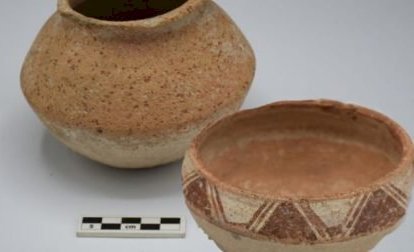
Local people in a southern Iranian village have accidentally discovered two pieces of earthenware, estimated to date from the Proto-Elamite period, some 3,000 years ago.

The relics were unearthed when people were digging the ground to install curbs for a sidewalk in the village of Golmakan, Marvdasht county.

“According to cultural heritage experts, the clay objects date from the Old Elam (Banash),” CHTN quoted Marvdasht’s tourism chief, Mohammad-Taqi Qalenoei, as saying on Wednesday.

“These objects comprise a clay bowl with geometric designs in the form of a triangle on the edge with a height of about 10 cm, and a simple pot, which was probably used to store spices and special liquids, “ the official explained.

Having a rich history, Marvdasht has been settled for a long time during various eras, including the Elamite, Achaemenid, Sassanid, and Islamic periods… and it embraces important archaeological sites such as Persepolis, Naqsh-e Rostam, Naqsh-e Rajab, Tal-e Bakun, Mian Roud, and Ashkeft Gavi to name a few, he said.

According to Iranica, the archeological use of the term Elam is based on a loose unity recognizable in the material cultures of the period 3400-525 BC. Elamite culture can be traced in Susa, which is situated in Khuzestan, in Anshan of Fars, and sites in adjacent areas of the Zagros mountains, particularly in the modern provinces of Lorestan, Kordestan, and Kerman.

Experts believe that Elam was distinct from the contemporary civilizations of Sumer and the Indus valley in the episodic cultural and political integration of large expanses of geographically diverse territory. The lines of communication between Susa and Anshan, the largest cities of Elam, as well as with other, more distant mountain regions, were limited in number and generally difficult, owing to the rugged topography.

Proto-Elamite (Susa III/Banesh) period, ca. 3400/3200-2800 BC was characterized by a distinctive assemblage of artifacts and an artistic style distributed from Lorestan in the west to Kerman in the east.

Furthermore, the establishment of a city at Anshan during the Proto-Elamite period and smaller outposts at Tepe Sialk and Tepe Yahya in the eastern highlands suggest that the foundations of the union between lowland and highland regions characteristic of later Elam were first laid in the late 4th millennium.

The ecosystem of the Marvdasht plain, which was once the seat of power for the Achaemenid Persian Empire (c. 550 – 330 BC), has been one of the most important factors in the creation and development of several thousand years of civilization in this region. That is why the remains of different settlements and cultures have been discovered during many excavations carried out in ancient hills and historical sites of the plain, cultural heritage expert Hamid Fadaei says.

The ancient region, known as Pars (Fars), or Persis, was the heart of the Achaemenid Empire founded by Cyrus the Great and had its capital at Pasargadae. Darius I the Great moved the capital to nearby Persepolis in the late 6th or early 5th century BC. Alexander the Great defeated the Achaemenian army at Arbela in 331 and burned Persepolis, apparently as revenge on the Persians, because it seems the Persian King Xerxes had burnt the Greek City of Athens around 150 years earlier.

Persis became part of the Seleucid kingdom in 312 after Alexander’s death. The Parthian empire (247 BC– 224 CE) of the Arsacids (corresponding roughly to the modern Khorasan in Iran) replaced the Seleucids’ rule in the Persis during 170–138 BC. The Sasanid Empire (224 CE–651) had its capital at Istkhr. Not until the 18th century, under the Zand dynasty (1750–79) of southern Iran, did Fars again become the heart of an empire, with its capital at Shiraz. /T.T/


Iranian films line up for Moscow documentary festival

Six Iranian films will compete in the Moscow International Documentary Film Festival – Doker.

“Isatis”, “Water, Wind, Dust & Bread”, “Slow and Sluggish”, “Unrest”, “Fika & Fidan” and “Huntsman” will be screened in different sections of the festival, which will take place in the Russian capital from August 15 to 28.

“Isatis”, a documentary by Alireza Dehqan about one man’s journey to the desert in central Iran, will be the closing film of the festival. It will be competing in the Doker Kids category.

Isatis is the first adobe city and the second historical city in the world. Water, wind, soil and fire narrate the story of this thousands-year-old city. The water story is narrated by the people who built aqueducts in Isatis, a town in the heart of the desert. The story of the wind is narrated by the city of wind catchers from the people who conquered the wind to survive in a hot and dry city. The story of the soil is narrated by people who constructed the world’s oldest adobe city. The story of the sacred fire is related from Zoroastrian masters to huge factories. The story of the kind dialogue between religions and the scent of faith is also told. The secret to perfection and peaceful permanence can be found only in harmony with nature.

The winner of a special mention from the 2021 IDFA jury, “Water, Wind, Dust, Bread” will be screened in the Doker Short Competition.

Director Mehdi Zamanpur Kiasari brings a poetic story about the life of Abolfazl, an 11-year-old boy who is missing both hands. Despite his disability, Abolfazl lives a full life with his family and friend Setayesh in a palm orchard near the Afghan-Iranian border, where foreign visitors often head for eco-tourism. He and his eight-year-old friend, Setayesh, belong to a group of stateless children living in the remote border area of Iran, and having no birth certificate poses a major disadvantage for their future.

The section also features “Unrest” directed by Mohammad-Sadeq Esmaeili. It is about a 14-year-old teenager who runs away from the house of his addicted father who forces him to live in an orphanage. Now he is trying hard to find his absent mother just for the first time. Additionally, he does not have an ID card and this is causing many problems in his daily life.

“Slow and Sluggish” by Delavar Doostanian tells the story of a pair of snails living peacefully on a beautiful plain but they decide to return to their hometown. One of them enters the city, goes into a house of characters and also faces deadly accidents on the way.

Doostanian’s “Fika & Fidan” and “Huntsman” will also be shown in the Doker Kids category.

“Fika & Fidan” is about a cat named Fidan who was rescued as a kitten by a girl and eventually lives in peace, but with the arrival of a cat named Fika he becomes stressed and acts violently against her.

“Huntsman” follows an agama reptile from the lizard family that falls in love with a female agama and starts a family. They live in peace with their child in nature until a predator enters their territory causing fatalities for them. /T.T/

Iran highly advanced in power plant industry

Iranian Energy Ministry’s Spokesman for the electricity sector Mostafa Rajabi Mashhadi has said Iran is highly advanced in manufacturing thermal power plants and is ready to export the knowledge for constructing such power plants to regional countries.

“Iran has high capabilities in constructing thermal power plants, which is a great privilege,” Rajabi Mashhadi said on Thursday in an interview with IRNA.

He noted that Iranian-made thermal power plants are of different types and with different cycles, with high performance and low consumption.

The electricity industry spokesman further reiterated that MAPNA Group is one of the major constructors of such power plants in Iran, which has thus far established a large number of such power plants both in Iran and abroad.

Rajabi Mashhadi said that this high expertise could be used in many of Iran’s neighboring countries. /T.T/

Relief Foundation to build 32,000 housing units for deprived

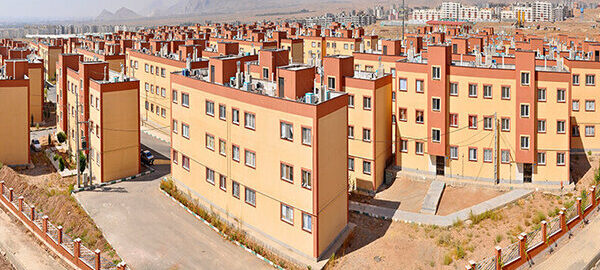
The Imam Khomeini Relief Foundation will construct 32,000 housing units for the deprived rural residents by the end of the current [Iranian calendar] year (March 21, 2023).

A total of 25 trillion rials (nearly $92 million) has been proposed to provide housing for the underprivileged in the budget bill for the next [Iranian calendar] year (starting March 21), Seyed Morteza Bakhtiari, head of the Foundation said.

The construction of 360,000 housing units has been entrusted to the Imam Khomeini Relief Foundation under the “national housing plan”, of which 120,000 will be built in villages and 240,000 units in cities.

Pointing to the memorandum of understanding between the Relief Foundation and Mostazafan Foundation of Islamic Revolution for the construction of 10,000 housing units by the end of this year, he noted that If these are provided by the end of the year, the construction of 10,000 new houses will begin.

Also, 40,000 housing units will be built with the cooperation of the Basij, he further announced.

The Imam Khomeini Relief Foundation has constructed 6,576 housing units and delivered them to financially-struggling rural residents over the first six months of the current [Iranian calendar] year (March 21-September 23, 2021).

The Foundation also plans to build 360,000 housing units over the next four years.

The project will start next year and 90,000 houses will be built for the deprived annually, 60,000 of which will be built in cities and 30,000 in villages./T.T/

Russia’s space agency to launch Iranian satellite into orbit

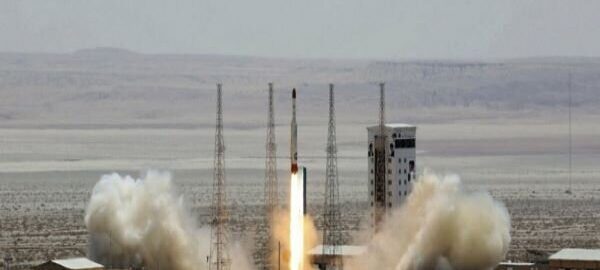
A Russian space agency announced on Wednesday that it will launch Iran’s Khayyam satellite into space.

Russia will launch a satellite on behalf of Iran into space in August. 9, the Roscosmos space agency said on Wednesday, Reuters reported.

The aircraft, a remote sensing satellite called “Khayyam” will be sent into orbit by Soyuz rocket, Roscosmos said.

The State Space Corporation “Roscosmos” is a state corporation of the Russian Federation responsible for space flights, cosmonautics programs, and aerospace research. /MNA/

Iran claims two golds at 2022 World Taekwondo Junior Championships

Iranian taekwondo practitioners won two gold medals in the second day of the 2022 World Taekwondo Junior Championships.

Abolfazl Zandi defeated Pornpawit Toruen from Thailand in the men’s -48kg. Zandi won the first round 15-12 and finished the second round with a commanding score of 25-12.

Mobina Nematzadeh and Thailand’s Kamonchanok Seeken delivered the last of the finals as they faced each other in the women’s -49kg. Nematzadeh put on a dominant display in the first round as she scored 9 points without conceding any. In the second round Seeken did manage to get on the scoreboard but it was not enough and Nematzadeh won the round 8-1 to win the match.

Sogand Shiri of Iran in the women’s -42kg had won a gold in the first day, while Parnia Salmani claimed a silver in the women’s -44kg.

More than 1,250 athletes from 90 countries plus a refugee team compete in Sofia, Bulgaria during the World Championships. /T.T/

Women hold 42% share of charity foundation’s job-creating plans

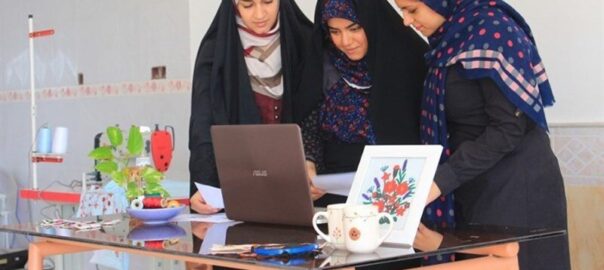
Some 42 percent of job-creating plans launched by Barekat Charity Foundation are related to women entrepreneurs, Mohammad Torkamaneh, the CEO of the Foundation, said on Wednesday.

Barekat Foundation has put the priority on breadwinners and vulnerable women for implementing its job-creating plans, IRNA quoted Torkamaneh as saying.

To date, 203,000 job-creating plans have been implemented in less developed areas of the country, creating jobs for 610,000 persons directly and indirectly.

From a total of 203,000 society-based job-creating plans which have been so far launched across rural and less developed areas of the country, 42 percent, equaling 85,000 plans, have been allocated to women entrepreneurs, he explained.
To date, 203,000 job-creating plans have been implemented in less developed areas of the country, creating jobs for 610,000 persons, directly and indirectly, he added.

Some 23 trillion rials (about $75 million) have been invested in launching the plans, he noted.

Barekat Charity Foundation, affiliated with the Headquarters for Executing the Order of the Imam, was established in 2007. Socio-economic empowerment of communities by encouraging entrepreneurship prioritizing breadwinner women, developing infrastructures such as water supply and power grids, building roads, constructing schools and increasing educational spaces, promoting health for all, and granting non-repayable loans and insurance, especially in less developed areas and regions most affected by natural disasters are of the priorities of the charity foundation.

In June, Torkamaneh said building more than 8,000 houses, 200 schools, 200 mosques, cultural and religious centers, as well as 30 health centers, implementing 700 water supply projects, and reviving 600 qanats are on the agenda. /T.T/