All posts by islam

500 knowledge-based companies operating in free trade zones

Some 500 knowledge-based companies are active in the fields of agriculture, industry, mechanical devices, medical equipment, and ICT in free zones, the secretary of the Supreme Council of Free and Special Economic Zones, has said.

Currently, there are 33 special economic zones operating throughout the country, IRNA quoted Saeed Mohammad as saying on Sunday.

A memorandum of cooperation was signed between the Vice Presidency for Science and Technology and the Supreme Council of Free and Special Economic Zones in line with the development of the innovation ecosystem in the free zones and export.

There are seven active free zones in Iran including Kish, Qeshm, Chabahar, Anzali, Aras, Arvand, and Maku.

Leader of the Islamic Revolution Ayatollah Seyyed Ali Khamenei designated the current Iranian year as “The Year of Production: Knowledge-Based and Job-Creating”.

So, over 7,000 knowledge-based and 1,600 creative companies have so far been registered and started operations. Strengthening knowledge-based companies are on the agenda, raising hope for reducing obstacles on the path to development.

The Leader has called on all Iranians, including citizens and government officials, to work hard to boost knowledge-based production and create new jobs.

So, over 7,000 knowledge-based and 1,600 creative companies have so far been registered and started operations.

The fields of biotechnology, agriculture, food industries, chemical technologies aircraft maintenance, steel, gas, pharmaceuticals, medical equipment and medicine, oil, electronics and telecommunications, information technology, and computer software are among the sectors that researchers in technology companies have engaged in.

Today, the country’s knowledge-based ecosystem accounts for more than 3 percent of GDP. And the figure is projected to reach 5 percent, however, the main goal is to step toward a 10 percent share in GDP, Vice President for Science and Technology, Sourena Sattari told Fars on February 13.

The share of knowledge-based companies in the country’s economy has exceeded 9 quadrillion rials (about $34 billion), and since 2019, it has experienced a growth of more than 450 percent, he stated.

The fields of aircraft maintenance, steel, pharmaceuticals, medical equipment, oil, and gas are among the sectors that researchers in technology companies have engaged in, leading to import reduction. /T.T/
Iran win Asian Men’s U20 Volleyball Championship for seventh time

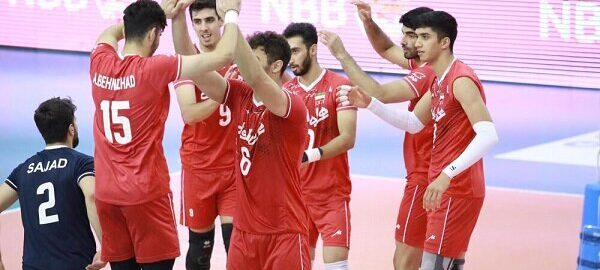
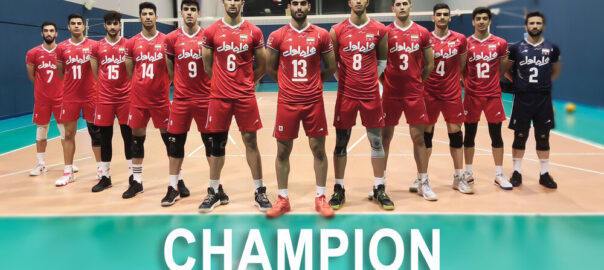
Iran became the most decorated volleyball team in the Asian Men’s U20 Volleyball Championship after defeated India 3-1 (25-12, 25-19, 22-25, 25-15) in the final match Monday night.

Iran have claimed the title seven times, one time more than South Korea.

South Korea also claimed the bronze medal with a 3-0 win over Thailand.

Iran and India will represent Asia in the 2023 FIVB Volleyball Men’s U21 World Championship as the top two teams.

The 2022 Asian Men’s U20 Volleyball Championship is the 21st edition of the Asian Men’s U20 Volleyball Championship, a biennial international volleyball tournament organized by the Asian Volleyball Confederation (AVC) with Bahrain Volleyball Association (BVA).

The tournament was held from Aug. 22 to 29 in Riffa, Bahrain. /T.T/

Iran’s “green gold” bound to shine again in global markets

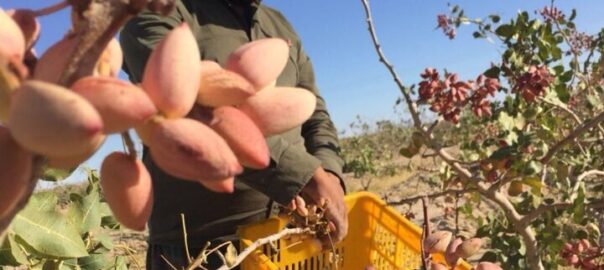
Although Iran is mostly known for its vast hydrocarbon resources, there are some other precious products that people all around the world put the Iranian brand on and appreciate greatly, one of such products is Iranian “green gold” or pistachio.

Cultivation of pistachios in Iran dates back to the Achaemenid period or the fifth century B.C; Like the great dynasty, the Islamic Republic was the world’s unrivaled, leading producer of pistachios for a long time, with southeastern Kerman province being the hub of production for so-called green gold.

The country’s reign over the pistachio market, however, ended in 2012, as the United States for the first time became the largest producer and exporter of pistachios because of the production decline in Iran, mainly due to water shortages and also because of the lack of access to modern technologies and using traditional methods of agriculture.

Over the past decade, climate change has caused severe drought in Iran, leading to 85 percent of the country being classified as arid or semi-arid. The decline in annual average rainfall and shortage of surface water has forced farmers to dig more wells to pump water from underground reserves. Nearly half of the 750,000 wells dug in Iranian farms are illegal, which indicates why the unconstrained use of underground water in agriculture is the main source of water waste in the country.

The situation is the same in Kerman province, which accounts for 70 percent of Iran’s pistachio production. As announced by Hossein Rezaei, the secretary-general of the Iran Pistachio Association (IPA), the production of pistachio in Iran fell by 70,000 tons in the previous Iranian calendar year (ended on March 20) to hover around 150,000 tons.

Hossein Rezaei said that the current year’s sprouts have also been destroyed by climate change, and this year it is difficult to keep the market, so government support is required.

According to the official, the country’s pistachio farmers are expected to produce only 135,000 tons of the nut in the current year.

In addition to the negative impacts of climate change, the Iranian pistachio industry has also been affected by western sanctions; although the industry has not been directly targeted, sales of pistachios to foreign markets, including Europe, have been hindered because of the banking and shipping restrictions imposed as part of the punitive measures.

Despite the domestic hurdles and foreign challenges, Iran is still among the top global producers and exporters of pistachios. After relinquishing the top ranking to the United States in 2012, it regained it in 2015 as a result of better access to international markets due to the removal of sanctions and a drop in U.S. production.

Iran and the United States together account for 70-80 percent of global pistachio production and have been competing for the top spot as both the biggest producer and exporter over the past several years. Also, recently Turkey, Australia, and Spain have also increased production and have joined the export market.

In an effort to maintain the country’s distinguished position in the global pistachio market, several plans have been formulated by the Iranian government to support the industry mainly by focusing on the reduction of the impact of the drought.

In August 2020, Iran’s Trade Promotion Organization (TPO) held a pistachio export desk meeting to investigate the challenges and barriers in the way of the country’s pistachio exports.

The government is also encouraging water conservation by allocating bank facilities to farmers to help them buy modern irrigation equipment to replace traditional systems.

Many experts believe that developing farms in regions with better soil and water resources, along with using modern cultivation methods and new types of pistachios with higher resistance to failure and disease would be the best way to regain Iran’s crown in the pistachio market.

Other than the above-mentioned measures, experts and scholars also say Iran could increase its exports by removing customs duty restrictions, providing support to exporters for long-term contracts, and establishing banking enterprises to connect producers and exporters.

With the Iranian government successfully moving toward reducing its reliance on oil revenues in recent years, it is expected to dedicate a good deal of attention and resources to other sectors including the pistachio industry to maintain its lion’s share of the global market. / T.T/

Minister outlines plans to accelerate maritime tourism growth

There would be an acceleration in the development of maritime tourism, Iran’s Cultural Heritage, Tourism, and Handicrafts Minister Ezzatollah Zarghami has said.

Fuel subsidies will be allocated to cruise ships, which will lead to a reduction in sea travel costs and a rise in maritime tourism, the minister said on Sunday.

Zarghami made the remarks during a meeting with Iranian cruise ship owners, IRNA reported.

With this subsidy, fuel consumption for a cruise with 1000 passengers will be reduced from 600 billion rials ($2 million) to 500 million rials ($1,700), he explained.

Over the past couple of years, the Islamic Republic has made various efforts to exploit maritime tourism potential by developing hospitality infrastructures, diversifying sea routes, and drawing private sector investors along its vast southern coasts.

Prosperous maritime tourism could help the country to meet its ambitious target of attracting 20 million annual tourists by 2025. It also keeps an eye on tourism developments in the Caspian Sea in the north.

Back in February, the Ministry of Tourism and the Ministry of Transport and Urban Development signed a memorandum of understanding (MOU) to develop maritime tourism and make the best use of its potential on the southern and northern coasts of the country.

Promoting the culture of using the sea as a tool to increase social vitality, developing coastal activities in the form of environmentally friendly plans and programs, and creating the necessary grounds for cooperation and exchange of knowledge and information was also among the topics of the agreement. /T.T/

Iran’s 5-month non-oil exports increase 21%

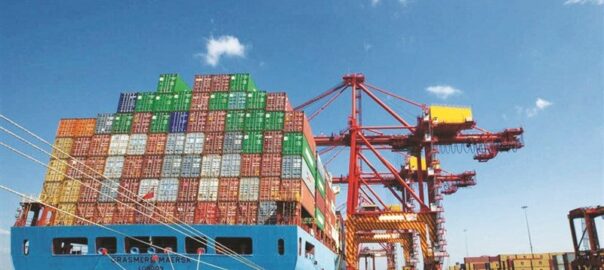
The value of Iran’s non-oil exports reached $20.924 billion in the first five months of the current Iranian calendar year (March 21-August 22), up 21 percent compared to the last year’s same period, the head of the Islamic Republic of Iran Customs Administration (IRICA) announced.

According to Alireza Moghadasi, Iran exported 44 million tons of non-oil commodities in the mentioned five months which was 3.5 percent less than the figure for the previous year’s same period, IRNA reported.

Meanwhile, some 14 million tons of goods valued at $21.665 billion were imported into the country, indicating a 19-percent rise in terms of value compared to the last year’s same time span, he said.

The weight of the imported goods declined by 8.5 percent, year on year, the official added.

In total, the Islamic Republic traded about 58 million tons of non-oil goods worth $42.589 billion with its trade partners in the first five months of the current Iranian calendar year, up about 23 percent in terms of value.

Iran’s top export destinations during this period were China, Iraq, United Arab Emirates (UAE), Turkey, and India, according to Moghadasi.

Liquid propane, methanol, liquefied natural gas, polyethylene, iron, and steel ingots were among the top exported items in the said five months.

The country’s top five sources of imports during these five months were the UAE, China, Turkey, India, and Russia.

As previously announced by Moghadasi, the value of Iran’s non-oil trade rose 38 percent in the past Iranian calendar year 1400, as compared to the previous year.

Moghadasi put the country’s non-oil trade at 162 million tons worth $100 billion in the past year.

He said that Iran exported 122 million tons of non-oil products worth $48 billion in the previous year, which was $14 billion (41 percent) more than the figure for the preceding year.

The country’s non-oil trade record in 1400 was reached while the toughest sanctions were imposed on Iran, but thanks to God and the efforts of entrepreneurs, producers, and the cooperation of foreign trade-related organizations, a historical record was achieved in the past year which was unprecedented in recent decades, the official has underlined. /T.T/

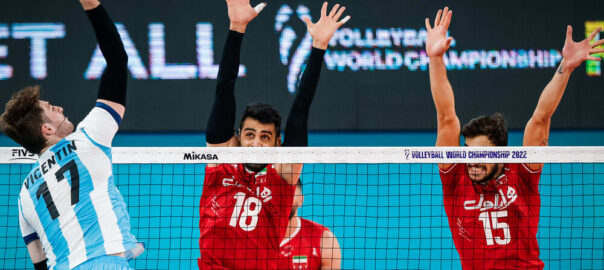
Iran edge Argentina in a thrilling five-set match in FIVB World Championship

Iran edged Argentina 3-2 (22-25, 30-28, 25-18, 32-34, 21-19) in their opening Pool F match of the 2022 FIVB Volleyball Men’s World Championship Saturday night.

Milad Ebadipour led Iran with 21 points while Conte Facundo earned 20 points for Argentina.

Iran are scheduled to meet Egypt and the Netherlands on Monday and Wednesday, respectively.

The competition has brought 24 competing teams in six pools of four, playing in a single round-robin format from Aug. 26 to Sept. 11.

The top two nations in each pool and the four best third-placed teams will qualify for the elimination round. /T.T/

Iran ease past India at 2022 Asian Men U20 Volleyball C’ship

Iran eased past India in straight sets (25-20, 25-10, 25-19) in the 2022 Asian Men’s U20 Volleyball Championship on Wednesday.

Iran, who have already defeated Japan in Pool B, booked their place in quarterfinals round and will play their next rivals on Friday.

The 2022 Asian Men’s U20 Volleyball Championship is the 21st edition of the Asian Men’s U20 Volleyball Championship, a biennial international volleyball tournament organized by the Asian Volleyball Confederation (AVC) with Bahrain Volleyball Association (BVA).

The tournament is being held in Riffa, Bahrain from Aug. 22 to 29.

This tournament serves as qualification tournament for 2023 FIVB Volleyball Men’s U21 World Championship. The top two teams will book their places at the World Championship. /MNA/

Iran to launch several satellites into space by end of year

Hailing Iran’s achievement in the field of the space program, the Iranian Defense Minister said that several satellites and satellite carriers are scheduled to be launched into space by end of the Iranian calendar year.

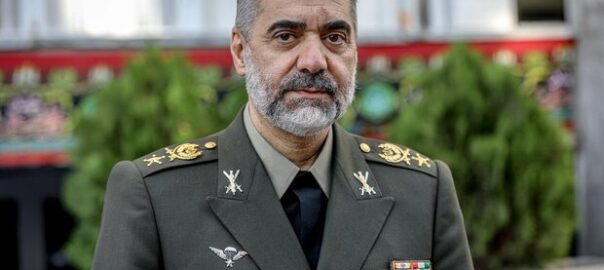
Iran’s Minister of Defense Brigadier-General Mohammad Reza Ashtiani made the remarks on Monday night on the occasion of Government Week (August 24-30).

General Ashtiani touched upon Iran’s achievement in the field of air defense and space program, saying, “Iran can respond to enemy threats with appropriate air defense missiles and radar equipment.”

“We are planning to achieve such equipment and weapons that give us complete assurance that no one can threaten the country and implement their threats,” Iranian Defense Minister stressed

He also noted that Iran acts in such a way that its measures are in the direction of peace, security, and stability in the region.

Elsewhere in his remarks, Ashtiani said that the Islamic Republic of Iran tries to cooperate with its neighbors in joint exercises. /MNA/

‘Shahin’ to go on screen at Intl. police Arts Festival

The Iranian film ‘Shahin’ by Salar Tehrani is scheduled to take part at International Police Arts Festival.

The 26th edition of the International Police Arts Festival (IPAAF) will take place on September 5 – 11, 2022, in Italy and the Iranian film will be screened at this edition of the festival.

‘Shahin’ depicts the story of the life of a policeman and his wife.

The cast includes Gelareh Abbasi, Alireza Kamali-Nejad, Mehran Ranjbar, Bahar Nouhian, Ehsan Amani, and Farzin Mohaddes.

Earlier in January 2021, Shahin participates at the ‘The I AM Film Festival’ in London.

/ MNA/