All posts by islam

Silk weaving traditions gain UNESCO status

Sericulture and traditional production of silk for weaving has gained UNESCO status jointly for Iran, Afghanistan, Azerbaijan, Turkey, Tajikistan, Turkmenistan, and Uzbekistan.

The inscription secured approval at the 17th session of the Intangible Cultural Heritage Committee of the United Nations Educational, Scientific, and Cultural Organization (UNESCO) held in the Moroccan capital of Rabat on Wednesday.

In sericulture and the traditional production of silk for weaving, farmers care for the silkworms through their entire lifecycle, growing the mulberry trees that provide leaves upon which the worms feed and produce silkworm eggs.

As mentioned by the UN cultural body, the fibers are reeled from the cocoons, spun into silk threads, cleaned, and dyed. The threads are then used to create various types of craft products, including fabrics, carpets, rugs, and curtains.

Silk products are highly valued by all social and cultural classes, and people use them for special occasions such as weddings, funerals, and family gatherings. Deeply rooted in the traditions of the Great Silk Road, the practice is an expression of cultural identity and centuries-old traditions. It is also viewed as a symbol of social cohesion, as the silk trade contributed to the exchange of culture and science within and across the countries concerned.

Iran has long been home to silk makers, mainly in the regions of Gilan and Khorasan. For more than three millennia, silk thread produced in Iran has been used to make clothing fabric and for weaving Persian rugs.

The Silk Road was a well-connected network of routes that, according to ancient maps, began in China and passed through central Asia before ending in Syria. It served as an important trade route connecting the Mediterranean Sea and China. /T.T/

Houses to be built for 160,000 people with disabilities

Some 160,000 housing units will be provided to people with disabilities over the next three years, the head of the Welfare Organization has said.

Currently, 160,000 people with disabilities in the country cannot afford a residential unit, so the provision of housing for this community is on agenda, IRNA quoted Ali-Mohammad Ghaderi as saying on Saturday.

The Welfare Organization had previously announced that a memorandum of understanding for the construction of 4,000 housing units for a family with two disabled children had been signed with Mostazafan Foundation.

According to Ghaderi, 2,500 housing units out of a total of 14,300 have so far been completed, and 3,300 others will also be completed in the near future.

According to the statistics of the Welfare Organization, there are 1,710,475 disabled people in Iran.

President Ebrahim Raisi urged all institutions to support persons with disabilities in the commemoration ceremony of the International Day of Persons with Disabilities, which was held on Friday in Tehran.

Law on rights of persons with disabilities

Majlis [the Iranian parliament] approved both general outlines and details of a bill on the rights of persons with disabilities in January 2018. Development of disability-friendly cities, free transportation, health insurance, free education, job creation, housing loans, and fewer working hours are some of the articles of the law.

Since the approval of the law, education for students with disabilities has been provided in Azad universities, subsidies for patients with spinal cord injury as well as disability care centers have been increased, in addition to residential units for families having members with disabilities.

Asghar Shirzadi, chairman of the board of the Iranian association of the disabled, said in December 2020 that it still seems that the related organizations are not very willing to implement the law.

According to the national document on improving accessibility in cities for persons with disabilities, fifty-five cities, five villages, and three metropolitan areas should be considered as pilots until the Iranian calendar year 1402 (March 2023-March 2024).

The national document includes a five-year action plan which analyzes the country’s weaknesses and strengths in being accessible for the people physically challenged, with the participation of representatives of the country’s responsible bodies and NGOs.

The document describes strategies and plans to construct all buildings accessible to people with disabilities, and the country’s headquarters for increasing the cities’ accessibilities will follow up the strategies and regulations. /T.T/

Iranian rowers win five medals at Asian championships

Iranian rowers claimed five medals at the 2022 Asian Rowing Championships underway in Ban Chang, Thailand.

Iran’s Nazanin Malaei won a gold medal in the women’s single sculls. Yu Wen of China and Kazakhstan’s Svetlana Germanovich won silver and bronze, respectively.

In the women’s double sculls, Mahsa Javar and Nazanin Malaei claimed a gold, followed by China and Vietnam.

Shakiba Voghoufi, Kimia Zareei, Zeinab Norouzi and Maryam Omidi Parsa also bagged a bronze at the women’s lightweight quadruple sculls. Gold and Silver medals went to Vietnam and Thailand.

Amir Hossein Mahmoudpour won a bronze medal at the men’s single sculls. Chan Chi Fung of Hong Kong and Thailand’s Prem Nampratueng bagged a gold and a silver medal, respectively.

Hamidreza Rezvani and Shirzad Ghaderi also took a bronze at the men’s double sculls. Indonesia and India won gold and silver, respectively./ T.T/

“Zari” named best short doc at Russian student festival

“Zari” by Iranian director Arman Qolipur Dashtaki has been selected as best short documentary at the 42nd VGIK International Student Festival in Moscow, Russia.

Qolipur, a student at the Art University of Isfahan, follows Zari, a rural woman who lives in Western Iran. When she was at the age of 11, her parents forced her to marry a 25-year-old man – the beginning of her challenging life. She is different from other rural women as she drives a pickup truck and distributes gas cylinders to 16,000 villagers.

The VGIK festival is supported by the Ministry of Culture of the Russian Federation, the Presidential Grants Fund, and the National Fund of Right Holders.

“Don’t Breathe” by Iranian director Milad Nasim-Sobhan won a special diploma from the professional jury “for professional skills in cinematography”.

Nasim-Sobhan is from the University of Arts.

The story of the film is set in a fantasy world. To exert more tyranny and suppression, the ruling power has done something to its dissenters that they exhale smoke when they breathe, and the agents must take into custody such people wherever they find them. Unaware of the law, a man meets one of the dissidents and it changes the course of his life, until he decides to immigrate to a better land with the dissident for a better life.

The Grand Prix was given to “Bebia, Babua, Anzorik, Me and Mom” by Raul Geydarov from Russia.

The best short fiction film prize went to “The Horse from Heaven” by Maharshi Kashyap and Satyajit Ray from the Film and Television Institute, India.

“The Visionary” by Russian director Vsevolod Bulavkin won the best short animation film prize.

The VGIK student festival’s main goal is the recognition and encouragement of young talents. The winners of the early editions are now among the iconic figures of the film industry world. Among them are Andrei Konchalovsky, Andrei Tarkovsky, Vasily Shukshin, Nikita Mikhalkov, Vadim Abdrashitov, Pyotr Buslov, Boris Akopov and Alexander Khant.

The festival is held in two stages, the first of which was organized from October 17 to 28, and the second stage was held from November 14 to 18.

Films by students from Great Britain, Italy, USA, France, Germany, China, Brazil, Argentina and several other countries were presented during the festival./T.T/

Universities of Tehran, Sharif on h-index list

The University of Tehran University, with a score of 189, and the Sharif University of Technology, with a score of 179, are among the top universities in the Hirsch Index released by Web of Science.

The h-index was developed by J.E. Hirsch and published in Proceedings of the National Academy of Sciences of the United States of America in 2005, which reflects the productivity of authors based on their publication and citation records.

It is based on a list of publications ranked in descending order by the Times Cited. The value of h is equal to the number of papers (N) in the list that has N or more citations. This metric is useful because it discounts the disproportionate weight of highly cited papers or papers that have not yet been cited.

The h-index reflects the productivity of authors based on their publication and citation records.There are 58 Iranian universities on the list, among which, Tehran University and the Sharif University of Technology placed first and second, followed by Tarbiat Modares University.

The index shows the quality of scientific outputs and research productivity at the level of universities and research and technology institutions of the country.

Also, according to the 2022 list of Highly Cited Researchers revealed by Clarivate, 12 Iranian researchers are among the most cited researchers.

Earlier in November, the Essential Science Indicators (ESI) database listed 841 Iranian researchers among the top one percent of most cited researchers in the world.

The highest number of researchers were included in the engineering category amounting to 229 scientists, followed by clinical medicine with 140, and the multidisciplinary category with 150 people.

On October 26, Stanford University listed 1,870 Iranian researchers among the top 2 percent of the most-cited scientists in the world, which has grown significantly compared to past years.

Despite U.S. sanctions, the international activities of Iranian scientists have increased year by year, so that more than 35 percent of Iranian articles in Scopus have been multi-national projects, the deputy science minister, Peyman Salehi, has said.

Science diplomacy is the use of scientific collaborations among nations to address common problems and build constructive international partnerships.

In 2021, Iranian scientists published more than 77,000 scientific articles in the Scopus database, ranking 15th worldwide.

The country also ranked 15th and 16th in the world in terms of scientific references. /T.T/

Iran return to top Asia in latest FIFA ranking

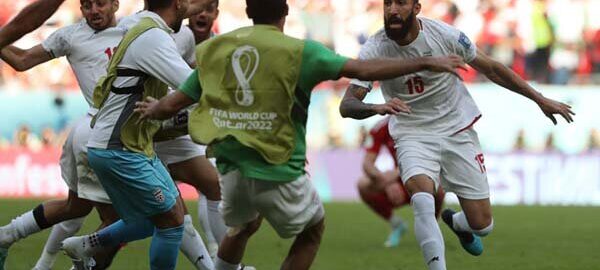
The national Iranian men’s football team have returned to the top of Asia after beating Wales. After the defeat against England in the first match in the Qatar World Cup, Iran national Iranian men’s football team ranked 26 in the FIFA rankings but after the team won their second world cup match against Wales, they returned to the top of Asia followed by Japan.

Iran were 26 after the heavy defeat against England while now rank 20 again and the best team in Asia while Japan now ranking 24.

The Japanese team lost to Costa Rica in their second match despite their previous win against Germany in their first world cup game.

Brazil remain top of the world rankings followed by Belgium, Argentina and France. /MNA/

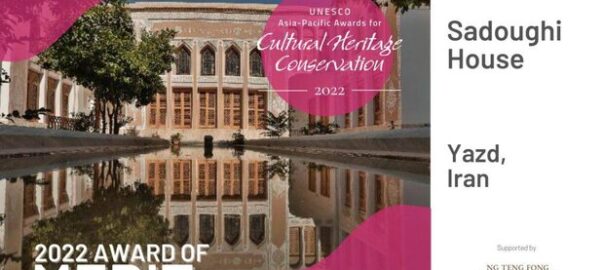
Iran’s Sadoughi House, Zarch Qanat win 2022 UNESCO awards

UNESCO announces Yazd’s Sadoughi House and Zarch Qanat as the winner of awards in Cultural Heritage Conservation. This award, under the title of Award of Merit, was handed over to Yazd’s Sedoughi House in a ceremony in Thailand due to the repair and restoration of this house which dates back to the Qajar era.

Iran’s Sadoughi House, Zarch Qanat win 2022 UNESCO awards
Sadoughi historical house
Sadoughi historical house which ages more than 300 years was mended a while back and now is called the cultural house of Shahid Sadoughi.

Iran’s Sadoughi House, Zarch Qanat win 2022 UNESCO awards
Zarch Qanat
Zarch Qanat also located in Yazd was another winner in the section of awards of distinction.

Dating back to the pre-Islamic Era of ~3,000 years ago in Iran, the Zarch Qanat is the oldest one in the world. The Zarch Qanat is the life-giving artery of Zarch City in Yazd. It was this qanat that made the area habitable by providing the desert-crucial element of water to the people and farmers.

13 projects from 6 countries – Afghanistan, China, India, Iran, Nepal, and Thailand – have been acknowledged for awards by an international jury in this year’s Awards program. Jury deliberations were carried out in November 2022, when members reviewed a total of 50 entries from 11 countries across the Asia-Pacific region. The complete list of 2022 awarded projects comprises:

Award of Excellence
Chhatrapati Shivaji Maharaj Vastu Sangrahalaya Museum, Mumbai, India

Award of Distinction
Stepwells of Golconda, Hyderabad, India
Zarch Qanat, Yazd, Iran
Neilson Hays Library, Bangkok, Thailand

Award of Merit
Topdara Stupa, Charikar, Afghanistan
Nantian Buddhist Temple, Fujian, China
Domakonda Fort, Telangana, India
Byculla Station, Mumbai, India
Sadoughi House, Yazd, Iran
25 Chivas in Kathmandu, Nepal

Special Recognition for Sustainable Development
West Guizhou Lilong Neighborhood, Shanghai, China

Award for New Design in Heritage Contexts
M30 Integrated Infrastructure for Power Supply and Waste Collection, Macao SAR, China
Xiaoxihu Block, Nanjing, China

/MNA/

‘The Painter of Fish’ wins two awards at Filminute Festival

Iranian short film ‘The Painter of Fish’ by Asghar Besharati won two awards at the Filminute 2022 in the UK.

Directed by Asghar Besharati, the short film in its latest presence in the international film festivals has been screened at the Filminute 2022 which was held on Oct. 15 – Nov. 15.

The short piece has managed to win the Jury and Audience awards of the festival.

The film has been praised by the jury due to its unique filming, poetic narration, simplicity and attracting the attention of the audience to the details of everyday life.

The 60-second film depicts the apparent contrast between human domination over nature and hope for art. It has been produced to attract the audience’s attention to environmental issues and the necessity of conserving marine reserves for future generations.

Filminute is an international one-minute film festival that challenges filmmakers, writers, animators, artists, designers, and creative producers to develop and submit the world’s best one-minute films. /MNA/

Iran’s exports to Qatar up 30% in current year: spox

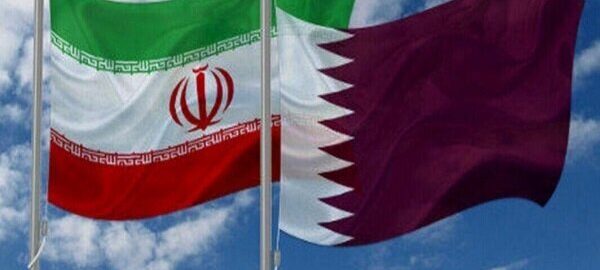
The Iranian Ministry of Industry, Mine and Trade’s spokesman said that the country’s exports to neighboring Qatar in one month registered a 30 perent hike as compared to the same period of last year.

Omid Ghalibaf said that the trade relations between the two countries of Iran and Qatar are on the right track and Iran exported semi-finished steel products, types of glasses, shrimp, greenhouse tomatoes, white cement, chocolate, and pastries, and also various types of cereals in the first seven months of the current year (March 21-Oct. 22), showing a 100 percent hike as compared to the last year’s corresponding period.

According to the latest statistics, Iran’s export of products to neighboring Qatar registered a 30 percent hike in the Iranian month of Mehr (Sept. 23 – Oct. 22) as compared to the same period of last year.

Sending a new commercial envoy to Doha, setting up a trade center in Doha, and organizing a specialized exhibition are the most important measures taken for the development of trade ties between Iran and Qatar, he added. /MNA/

12 Iranian researchers among world’s most cited

According to the 2022 list of Highly Cited Researchers revealed by Clarivate, 12 Iranian researchers are among the most cited researchers.

The exceptional individuals designated Highly Cited Researchers 2022 have published multiple highly cited papers, ranking in the top 1% by citations for field and year over the last decade. Of all the world’s researchers, they are one in 1,000.

The analysts use both quantitative and qualitative analysis to identify influential individuals from around the globe and across many research fields. This year, 6,938 scientists and social scientists from nearly 70 countries were recognized.

In the previous edition of the highly cited researchers list, 15 researchers were from Iranian institutions, but in the 2022 edition, 12 Iranian researchers have been included.

The analysts use both quantitative and qualitative analysis to identify influential individuals from around the globe.About 40 percent of the highly cited researchers are affiliated with American institutions (2764 researchers). China is in second place with 1169 researchers, and England (579 researchers), Germany (369 researchers), and Australia (337 researchers) are also in the next positions.

Harvard University is the most frequent institution in the 2022 list with 233 researchers.

Earlier in November, the Essential Science Indicators (ESI) database listed 841 Iranian researchers among the top one percent of most cited researchers in the world.

The highest number of researchers were included in the engineering category amounting to 229 scientists, followed by clinical medicine with 140, and the multidisciplinary category with 150 people.

On October 26, Stanford University listed 1,870 Iranian researchers among the top 2 percent of the most-cited scientists in the world, which has grown significantly compared to past years.

Despite U.S. sanctions, the international activities of Iranian scientists have increased year by year, so that more than 35 percent of Iranian articles in Scopus have been multi-national projects, the deputy science minister, Peyman Salehi, has said.

Science diplomacy is the use of scientific collaborations among nations to address common problems and build constructive international partnerships.

In 2021, Iranian scientists published more than 77,000 scientific articles in the Scopus database, ranking 15th worldwide.

The country also ranked 15th and 16th in the world in terms of scientific references. /T.T/