All posts by islam

Over 50 overseas reciters, memorizers to attend Iran’s Intl. Quran Competition 2023

Over 50 reciters and memorizers from across the globe will participate in the 39th edition of Iran’s International Quran Competition.

The reciters and memorizers have been selected from among those who applied from among 80 countries, the director of the Quran Affairs Center of the State Endowment and Charity Affairs Organization, Hamid Majidimehr, said in a press conference on Sunday.

The number of countries of those who applied for the competition has increased from 70 over the past eight years to 80 in 2023, he said and noted, “This upsurge is significant for the country’s international diplomacy.”

The organizers of the 35th edition of the Quran competition in 2018 said that over 300 reciters and memorizers from 83 countries would participate in the event.

Majidimehr said that the participants have been selected with contributions from the embassies of Iran across the world, and added, “The 2023 competition has been arranged in a way that the entries have deservedly been selected for the contest.”

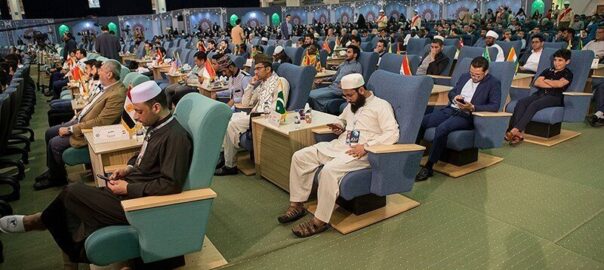
The competition will be organized at Tehran’s Islamic Summit Conference Hall in early March 2023.

The International Quran Competition is organized by the State Endowment and Charity Affairs Organization annually two weeks before Ramadan.

The Quran Channel of the Islamic Republic of Iran Broadcasting records recitations every year to air during the fasting month.

Due to the new coronavirus epidemic in the country, the 2020 International Quran Competition was postponed and the pandemic forced the 2021 competition to go online. /T.T/

Iranian female scientist selected UNCCD member

Tayebeh Mesbahzadeh, associate professor at the University of Tehran, was selected as a member of the Science-Policy Interface of the United Nations Convention to Combat Desertification (UNCCD).

The UNCCD Science-Policy Interface (SPI) was established at COP11 in 2013. The SPI works to translate scientific findings and assessments into policy-relevant recommendations.

This includes collaboration with different scientific panels and bodies. It consists of globally selected independent scientists, regionally nominated independent scientists, policymakers (CST bureau members), and observers.

Mesbahzadeh is the first Iranian member of the UNCCD Science-Policy Interface.

The United Nations Convention to Combat Desertification in Those Countries Experiencing Serious Drought and/or Desertification, particularly in Africa (UNCCD) is a Convention to combat desertification and mitigate the effects of drought through national action programs that incorporate long-term strategies supported by international cooperation and partnership arrangements.

The Convention, the only convention stemming from a direct recommendation of the Rio Conference’s Agenda 21, was adopted in Paris, France, on 17 June 1994 and entered into force in December 1996. It is the only internationally legally binding framework set up to address the problem of desertification. /T.T/

Yalda Night, celebration of longest night of year

Every year, on 30 Azar in the Iranian calendar that falls on December 21 this year, Iranians celebrate the arrival of winter, the renewal of the sun, and the victory of light over darkness on Yalda Night.

An ancient Iranian festival that basically celebrates the coming of the winter solstice and the longest night of the year for centuries is Yalda Night (or Shab-e Yalda; also, Shab-e Chelleh). It refers to a time between the sunset of autumn’s last day (the 30th of Azar in the Iranian calendar equal to the 21st of December) and the sunrise of the first day of winter (the 1st of Dey in the Iranian calendar equal to the 22nd of December).
It is considered as one of the holy nights and one of the most important festivities in ancient Iran and officially entered the official calendar of the ancient Iranians from 502 BC during the time of Darius I, commonly known as Darius the Great.

Yalda Night, both before and after Islam, has a special place in Iranian culture and has always been considered a motivation for gathering close and distant relatives. The festivities that take place on this night are an ancient tradition.

Since days get longer and nights to get shorter in winter, Iranians celebrate the last night of autumn as the renewal of the sun and the victory of light over darkness.
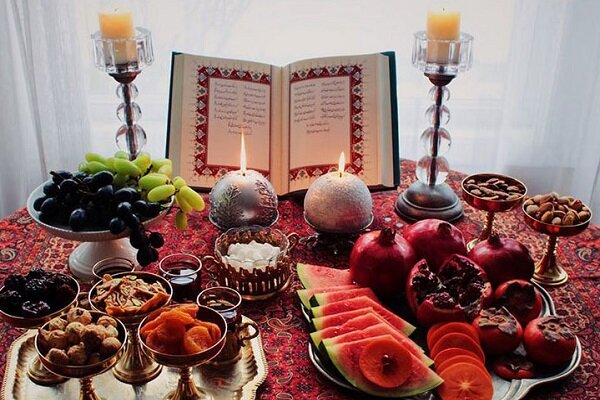
Yalda night is a long-standing tradition that has long been considered important by Iranians. In ancient times, darkness was considered a sign of the devil, so on in the night of Yalda, which is the longest night of the year, the Iranians lit fires to protect themselves from evil forces due to the light of fires.

Like Iran, Central Asian countries, including Afghanistan, Uzbekistan, Turkmenistan, Tajikistan and some Caucasian states like Azerbaijan and Armenia, and some parts of Pakistan, India, and Kashmir which share the same tradition, celebrate Yalda Night.

Iranians’ traditions and customs on Yalda night are different from other countries. On the eve of Yalda Night, indescribable passion arises among Iranian families as they want to prepare themselves for this night.
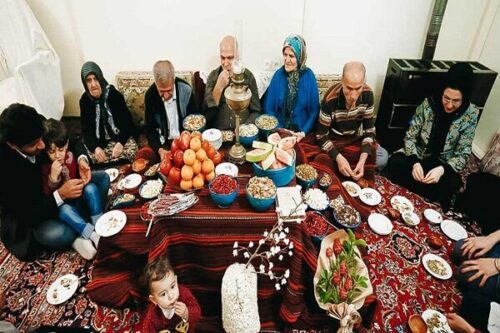

A family sits on the floor around the Korsi during the ‘Yalda Night’ celebration
Yalda Night customs have not changed much over time.

If we review the history of Yalda, we can find that in ancient times people used to gather around the fire and celebrate the night. Around the past thirty or forty years, Iranians used to sit around a Korsi (a type of low table found in Iran, with a heater underneath it, and blankets thrown over it), and nowadays, people are using heaters and other kinds of heating devices in their houses. Yalda is now celebrated by Iranians in a form of an overnight family gathering.

On Yalda Night, people gather in groups of friends or relatives usually at the home of grandparents or the elderly to celebrate the longest night of the year. As storytelling is an entertaining tradition of Yalda Night, the elders entertain the others by telling them tales and anecdotes.

Reading Shahnameh and poems from Divan-e-Hafiz is the other Iranian tradition in this ancient Iranian festival. Each of the members of a family or a group of friends makes a wish-while keeping it a secret- and randomly opens the Divan-e-Hafiz; then the eldest member of the family or friends reads the randomly selected poem loudly. Since the poem is believed to be the interpretation of the wish and the way it would come true, it is fun to interpret the poem and guess the wishes others make.
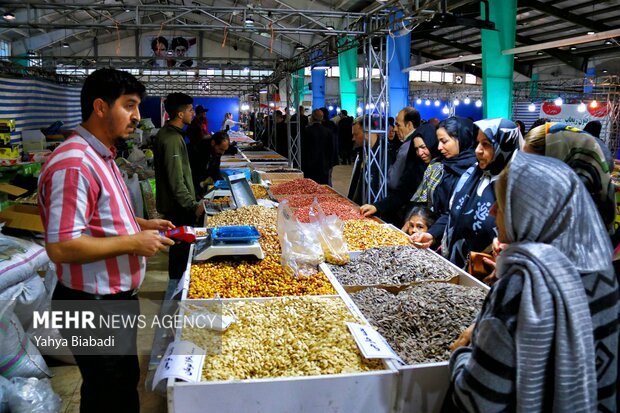
People in Kermanshah province of Iran getting ready for ‘Yalda Night’
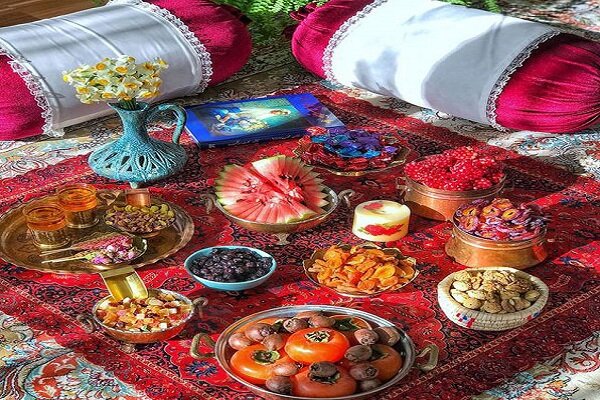
One of the most attractive rituals of Yalda night is its food, fruits, and snacks.

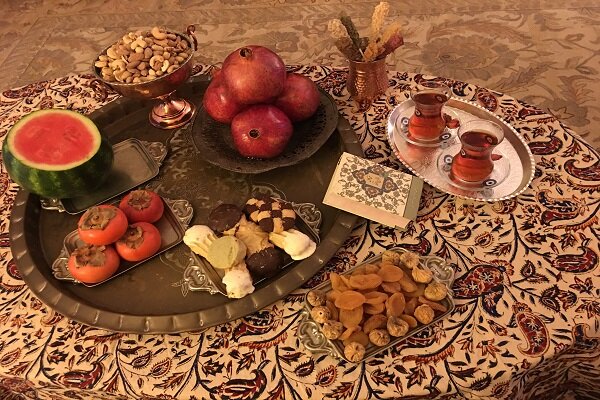
Iranian families usually prepare a sumptuous dinner as well as buy nuts and a variety of fruits, most commonly watermelon and pomegranate. Every city and culture considers special food to celebrate Yalda night.

Fruits, especially red fruits play important role in Yalda’s delicious part. The red color of these fruits is a symbol of the sun.
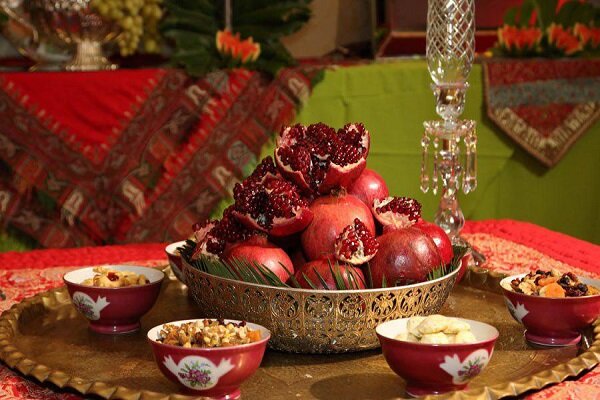
Pomegranate main fruit of ‘Yalda Night’

Pomegranate is the main fruit of Yalda Night. The ancients considered pomegranate to be the fruit of fertility and blessing. Pomegranate is also considered as a symbol of happiness and the sun because of its red color. It has been known as a sacred fruit since ancient times.

Watermelon, like pomegranate, is a special fruit for Yalda Night. But isn’t it weird to eat watermelon on a cold day?

We all know that watermelon is a summer fruit; so watermelon, in addition to its red color, is a symbol of the sun and reminiscent of summer heat. It was believed that if they eat some watermelon this night, they will be safe from cold and disease throughout the winter.

Other Yalda fruits include autumn fruits. Fruits such as oranges and citrus fruits, apples, persimmons, pears, and even pumpkins were also used in Yalda Night.

On this night, snacks and nuts for Yalda night are more important than dinner. Nuts such as pistachios, walnuts, almonds, and hazelnuts are the main components of nuts for Yalda night. Dried figs and berries are also can be seen among the delicious part of this night.
Yalda Night ritual is held in different cities of Iran based on the city’s culture and geography, each of which has its own charms; However, some of them have been forgotten and only a memory of them remains.

An old custom still rehearsed in eastern parts of the country (Khorasan) is the preparation and consumption of “Kaf”, which is a sort of sweet that looks like foam. Another custom of specific parts of Iran and Khorasan on the night of Chelleh is related to young engaged couples.

Another ceremony that was held this night in Khorasan was the ceremony of Shahnameh, where elders of the party were engaged in songwriting and reading Shahnameh.

In Tabriz, street musicians known as “Ashiq” walk around neighborhoods while singing, playing music, and telling legends and stories.

The beauty of Yalda in the Lorestan Area starts right after the sunset when young people would go on the neighbors’ rooftops and start singing the “Shov-e Avval-e Qāreh” song, where they would hang a scarf from the rooftop of the neighbor’s house, asking them for treats.
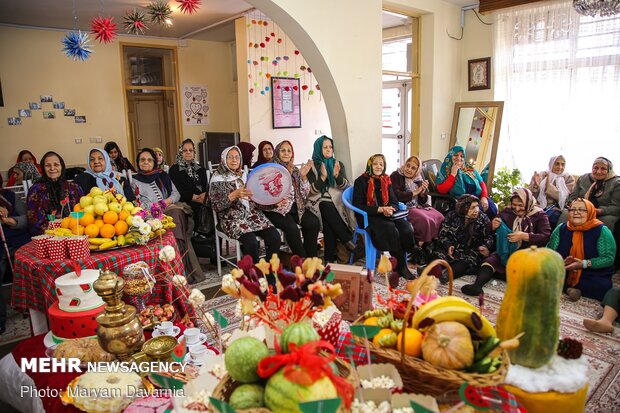

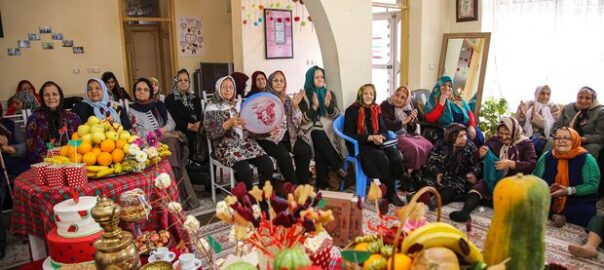
‘Yalda’ celebration ceremony in Day Care Center in Bojnourd
Zanjan is among the few places where ‘Korsi’ has still practical usage; and wherever there is a Korsi, there will be a memorable gathering. On Yalda, local people serve their own local sweets including the famous window-shaped pastries and baklava.

In Sanandaj, the capital of Kordestan Province, dolma and sangak bread is prepared for Yalda. Each year, as agreed between the families, the ceremony takes place in a different house.

As Yalda Night and its traditions are so interesting, it was officially added to Iran’s List of National Treasures during a special ceremony in 2008.

This year, due to the global epidemic of coronavirus, a different situation prevails for all families on Yalda night.

In this regard, the authorities have asked the people to hold the ceremony differently this year and to refrain from going to each other’s houses in order to prevent further transmission of the coronavirus.

Iranian people have been also advised to stay at their homes and celebrate this ritual virtually this year through voice and video calls. /MNA/

45 Iranian institutions among world’s greenest

Forty-five universities of Iran have been listed among the top 1,000 green institutions worldwide, according to the University of Indonesia Green Metric overall ranking 2022.

The UI GreenMetric World University Ranking is an initiative of Universitas Indonesia which is being launched in 2010. Current criteria being used to rank universities were not giving credit to those that were making efforts to reduce their carbon footprint and thus help combat global climate change.

The universities are ranked based on setting and infrastructure, energy and climate change, waste and water management, transportation, and education worldwide.So, the world’s green universities are ranked according to six deciding factors contributing to sustainability including setting and infrastructure, energy and climate change, waste and water management, transportation, and education worldwide.

None of the Iranian universities are among the top 100 intuitions of the list, however, the University of Zanjan is ranked 107, and tops the Iranian universities. Kashan University of Medical Sciences with a rank of 156 and the University of Kashan ranking 163 are placed second and third among the national institutions.

According to the 2022 “Greenmetric” report, Wageningen University & Research is the greenest institution in the world with the highest score, followed by Nottingham Trent University, the University of Nottingham, and the University of Groningen.

In 2021, a total of 42 universities from Iran have been listed among 1,000 green institutions worldwide.

In 2020, two universities of Zanjan and Kashan were listed among the top 100 green institutes, while, in 2021, only the University of Zanjan remained among the top 100.

Performance in 2022

According to the latest edition of the best global universities ranking released by U. S. News, 52 Iranian institutions were ranked among the best institutions worldwide.

Fifty-eight universities from Iran were listed among the top universities in Asia, according to the 2022 Asia University Rankings of the Times Higher Education.

The 2022 edition of the Times Higher Education Impact Rankings, based on universities’ contributions to delivering the UN’s Sustainable Development Goals (SDGs), listed 27 Iranian universities.

The Webometrics Ranking of World Universities 2022 has ranked 694 Iranian institutions among 30,000 top universities across the world.

Also, 59 Iranian universities have been listed among the top 3,000 institutions in the world in terms of academic quality, according to the 2021-2022 report released by University Ranking by Academic Performance (URAP).

The Quacquarelli Symonds (QS) Graduate Employability Rankings 2022 list has been released, which included three Iranian universities out of a total of 550 institutes worldwide that highlighted graduate employment processes./T.T/

Iranian nanotechnology products target 48 countries

Iranian nanotechnology companies exported their products to 48 countries around the world over the past Iranian calendar year (March 2021-March 2022), IRNA reported on Tuesday.

Last year, the exported products made a revenue of $62m, which shows an increase of 53 percent compared to the year before.

Among the 48 countries of export destinations, Turkey and Iraq are the most important hosts of Iran-made nanotechnological products, which brought a profit of $10 million.

The exported products made a revenue of $62m, which shows an increase of 53 percent compared to the year before.Other customers of Iranian nanotech products include Russia, India, Kazakhstan, America, England, Mongolia, Pakistan, etc.

The development of the nanotechnology market is one of the main goals of the Vice Presidency for Science and Technology, as expanding the export market and discovering new foreign markets will contribute to the sustainability of nanotechnology companies.

Experts emphasize that export can be considered the best indicator to present the interactions and exchanges of a country with the world and the strength in the production and service sector. In addition, financial exchanges and foreign currency are the main outcomes of export which lead to the survival of countries in the world.

The nano industry is one of the technological fields that has processed growth and development in Iran, so that, the introduction of these quality products to the world is a necessity.

Iran Nanotechnology Innovation Council has been implementing plans to strengthen the nano sector over the past few years.

Some 270 companies are active in the nanotechnology field and it is predicted that their revenue will reach up to 80 trillion rials (nearly $310 million), the former Vice President for Science and Technology, Sourena Sattari, said.

National document on nanotech development

On November 28, President Ebrahim Raisi declared to implement the “National Document for the Development of Nano Science and Technology”.

Consisting of 7 articles, the ten-year document aims to train human resources and provide infrastructure for the development and commercialization of technology. Priority industrial areas are water and environment, energy, agriculture, health, and construction.

In this document, Iran was targeted to be among the top 15 nanotechnology countries in the world and aimed to generate wealth and improve people’s lives.

In order to continue the nanotechnology progress, the upcoming national document has been compiled with new goals and approaches such as being a reference in science and technology, industrialization, maximum impact of nanotechnology in priority industrial areas, and entry of nano products into the global markets and the promotion of people’s lives.

By 2033, the advancements of nanotechnology in Iran will improve the quality of life and the production of wealth. The country moves towards global authority in science and nanotechnology by producing innovative products while having a stable place in the market of other countries. /T.T/

Iranian movies line up for Dhaka festival

Over a dozen of Iranian movies will be screened at the 21st Dhaka International Film Festival, which will take place in the Bangladeshi capital from January 14 to 22.

Six films from the lineup, including “Forbidden Womanhood” by Maryam Zahirimehr and “The Last Snow” by Amir-Hossein Asgari, will be showcased in the Asian Film Competition.

“Forbidden Womanhood” follows Mahi, a 12-year-old girl who brings dishonor to her family and village, because her mother withholds the truth about sex.

“The Last Snow” is about Yousef, a successful and committed veterinarian who lives in a village. His daughter’s friend, Khorshid, disappears. It is not clear what exactly happened to Khorshid; all the villagers look for her sympathetically until a secret is revealed.

“No Prior Appointment” by Behruz Shoeibi, “Motherless” by Morteza Fatemi, “The Apple Day” by Mahmud Ghaffari and “Life & Life” by Ali Qavitan will also compete in this category.

The Cinema of the World section will also screen eight movies by Iranian filmmakers.

Among the films are “The Opposition” Amir-Abbas Rabiei, “Sniper” by Ali Ghaffari and “Song of the Wind” by Sudabeh Beizai.

This section also features “With the Wind” by Mohammad Tabarsa, “A Childless Village” by Reza Jamali, “Wind of Change” by Abbas Rafei, “The Wind That Shakes the Sugar Canes” Ebrahim Ashrafpur and “Mamma Makhmal” by Amir-Hossein Khalilzadeh.

“Urgent Cut Off” by Maryam Bahrololumi has been selected to be screened in the Woman Filmmaker category, while “Surviving Fortress” by Farshad Fadaian will be competing in the Spiritual Film section.

The Children’s Film competition will screen “Between the Cliffs” by Mokhtar Abdollahi, “Ziba’s Wish” by Ali Qavitan, “Ticket” by Morteza Rahimi and “Water, Wind, Dust, Bread” by Mehdi Zamanpur Kiasari.

“Typesetter” by Nasim Forugh will be screened in the Short and Independent category. /T.T/

‘Adjustment’ wins at Barcelona Human Rights Film Festival

Iranian short film “Adjustment” directed by Mehrdad Hassani has been selected as the best movie at the Barcelona Human Rights Film Festival. Produced by Hassan Mohammadi, the short piece narrates the story of ‘Shahrokh’, a 9-year-old effeminate boy humiliated and pushed away by his family and friends, who makes up his mind to assume a new identity and comes out to the people of his village. Having been through a series of ordeals, Shahrokh, dressed in girl’s clothes, shows up at school and confronts his classmates.

The film has previously won the Grand Prix at the Busan International Short Film Festival in South Korea.

Mansour Nassiri, Fatemeh Moradi, Maryam Goldouz, and Jamshid Bahadori are among the cast of the film.

The Human Rights Film Festival, with the central headquarter in Barcelona, is the oldest independent Human Rights Film Festival and one of the most important festivals on Human Rights in all of Spain and one of Spain’s most important and widely internationally established festival on Human Rights. /MNA/


Four countries welcome Iranian medical equipment

Four countries signed memorandums of understanding, announcing their readiness for buying Iranian-made medical equipment at the 4th National and the 15th International Reverse Expo, which was held in Tehran on December 10-13.

Representatives from Uzbekistan, Armenia, Turkey, and Bosnia signed 40 memorandums of understanding with Iranian knowledge-based companies during the 3-day event.

In addition to the international sector, government agencies such as the Ministry of Energy, Ministry of Industry, Mining and Trade have also presented their technological needs, in general, 600 technological needs were announced.

The TESTA exhibition is held internationally with the aim of using the capacity of universities, research institutes, parks, and knowledge-based companies to meet the needs of research and technology, and is host to delegations from five countries, Venezuela, Armenia, Uzbekistan, Iraq, and Afghanistan.

Iranian knowledge-based companies marketed 70 countries

Iranian knowledge-based companies marketed their products in 70 countries, and in some global markets have overtaken European and American companies, Siavash Maleki, deputy head of the Innovation and Prosperity Fund, said.

Iranian companies producing medical equipment export their products to 54 countries across the world.In the last two days, the number of knowledge-based companies has exceeded 6,800, he stated, emphasizing that half of them are active in the field of electronics and electricity.

Last year, knowledge-based companies gained about $800 million in revenue from export, and in the current year (started March 21), it seems to reach over $1 billion, he noted.

Medical equipment global market share

Iran holds a share of one percent (about $5 billion) in the global market for medical equipment of approximately $500 billion, but the country has the potential to increase the share, according to the statistics of the Ministry of Health.

In 2018, the National Medical Device Directorate reported that the Iranian medical equipment market was worth $2.5 billion, 30 percent of which belonged to over 1,000 domestic firms.

On a global scale, 56 percent of 500,000 medical equipment items available in the world market have Iranian versions. In pharmaceuticals, around 70 percent of Iran’s $4.5 billion markets are domestic products and, in 2018, 97 percent of pharmaceuticals consumed in the country were manufactured locally.

In 2018, 67 percent of the active pharmaceutical ingredients (APIs) used to produce drugs in Iran were made locally.

A total of 227 knowledge-based firms are supplying medical equipment for health centers across the country, according to the Vice Presidency for Science and Technology.

Iranian companies producing medical equipment export their products to 54 countries across the world. /T.T/

Despite sanctions, Iran gets $34b of oil revenue in 7 months: EIA

U.S. Energy Information Administration (EIA) in a recent report has put Iran’s oil revenues earned in the first seven months of 2022 at $34 billion, only five billion less than Iran’s total oil revenue in 2021.

Based on the EIA report, Iran’s average monthly income from oil sales in January-July has been $4.85 billion, 49 percent more than the average monthly income in the previous year which was $3.25 billion.

Iran’s oil revenue in the said seven months is twice the whole income in 2020, indicating that the impacts of the U.S. sanctions against Iran are weakening.

Iran earned $17 billion in oil revenue in 2020 and $39 billion in 2021, and according to EIA, the Islamic Republic’s oil revenue will reach $58 billion in 2022.

EIA has put the total oil income of 13 OPEC members in the mentioned months at $500 billion.

Based on the report, OPEC’s income in the first seven months of this year is only $70 billion less than the $570 billion recorded for this organization in the previous year. The members of the organization sold $500 billion of oil in January-July 2022.

Iran has been ramping up its oil production and exports over the past year as the country has been implementing new strategies to overcome U.S. sanctions.

The Islamic Republic’s oil revenues increased by eight times in the first five months of the current Iranian calendar year (March 21-August 22) with respect to the same period of the previous year, according to official statistics.

Earlier in November, Iranian Oil Minister Javad Oji said the country reached the highest record of oil, gas condensate, and petrochemical exports since 2017 (when the U.S. started re-imposing sanctions on Iran’s oil industry) in the eighth Iranian calendar month of Aban (October 23-November 21).

“Iran’s oil industry is now at the forefront of the economic war and the toughest sanctions have been imposed on this industry,” he said, noting that the industry has thrived despite the mentioned pressures. / T.T/


Persian Yalda night gains place on World Cultural Heritage list

Yalda night (Shab-e Chelleh), one of the most celebrated Persian traditional events which marks the longest night of the year, made it onto the United Nation’s cultural heritage list on Wednesday.

Yalda/Chella was added as the new inscription on UNESCO’s list of intangible cultural heritage jointly for Iran and Afghanistan, adding another chapter in the age-old friendship between two ancient neighboring civilizations.

The decision was taken in the Moroccan capital of Rabat on Wednesday where the 17th session of the Intangible Cultural Heritage Committee of the United Nations Educational, Scientific and Cultural Organization (UNESCO) was held.

According to the UN cultural body, the ancient feast refers to a traditional celebration of the sun and the warmth of life. Practiced in Iran and Afghanistan, the event takes place on the last night of autumn, when families gather at the houses of elders and sit around a table adorned with a series of symbolic objects and foods: a lamp to symbolize light, water to represent cleanliness, and red fruits such as pomegranates, watermelons, beetroots, jujube and grapes to symbolize warmth.

Broth, sweets, dried fruits and nuts that are used specifically for the occasion are also set on the table and consumed during the gathering. Activities range from reciting poetry and storytelling to playing games and music and giving gifts to new in-laws, brides and children. The event celebrates cultural identity, nature, respect for women, friendship, hospitality, cultural diversity and peaceful coexistence. It is transmitted informally within families, although radio and television programs, publications, social media and educational materials have also played an important role in transmitting the practice in recent years. Events, conferences, trainings, workshops and awareness-raising activities carried out by research centers, NGOs, cultural organizations and educational institutes have also had a significant impact on the proper transmission of the element to future generations.

On that graceful night the winter chill is vanquished and the warmth of love embraces the entire family. It’s a time for pleasant family reunions that entails laughter, merriment and good cheer. Hearts move closer to one another in the company of loved ones on Yalda.

The last evening of autumn and the beginning of winter is a ceremonious, auspicious time for Iranians and lovers of Iranian traditions everywhere on earth. Though it is not even an official holiday, Yalda still stands head and shoulders above some other ancient traditions. By the way, television and radio programs fully cater to it by airing special programs. The reason is that it revolves around the rich, genuine Persian traditions. That’s why families are still eager to seize the moment and become fully engaged, putting their cell phones and other distractions aside.

Of all the ancient Persian festivals, only two are celebrated by Iranians worldwide — Yalda Night (the birth of a new sun) and Noruz or Persian New Year (the birth of a new day). Nationally called “Shab-e Yalda” or “Shab-e-Chelleh”, it literally means the night of the forty. This refers to the first forty days of winter that are often the coldest and toughest to bear.

The story of Yalda may perhaps be interpreted as a tale of courage and effort during darkness, a triumph of light and human warmth that ultimately causes the spring to bloom in hearts.

People on Yalda Night are usually served with fresh fruits and colorful Ajil (a mixture of dry fruits, seeds and nuts) in floral bowls. To Iranians, fruits are reminders of abundance in summer. Watermelon and pomegranates, as symbols of bounty, are the traditional fresh fruits of this night. It is believed that eating watermelon before the arrival of winter can immunize the body against illness.

Following a hot dinner, many people often recite poetry, narrate stories, chant, play musical instruments or just chat cozily until midnight or so.

Facts to know

– Yalda Night is celebrated on the last day of Azar (the last month of autumn in the Iranian calendar year) and before the first day of Dey (the first month of winter).

– Watermelon and pomegranate are amongst the most characteristic features of Yalda Night so that a few days prior to Yalda, their prices usually soar.

– Yalda, though not very common, is a female Persian name.

– In the ancient Iranian calendar, winter is divided into two parts, Chelleh Bozorg (literary meaning the bigger forty) from 22nd of December to 30th of January and Chelleh Koochak (the smaller forty), which starts from 30th January to 10th of March.

– The word Yalda, meaning birth, was imported from Syriac into the Persian language by the Syriac Christians.

– Narratives say that Yalda Night marks the birth of winter and the eventual triumph of the sun as the days grow longer.

– Ancient Iranians assumed Naneh Sarma begins to descend on earth by Yalda Night. Literally meaning “coldness grandma”, Naneh Sarma is a folklore character who brings in the cold of winter but also the promises of spring ahead. /T.T/