All posts by islam

Iranian woman Mehboodi makes history at Asian Arm Wrestling Championship

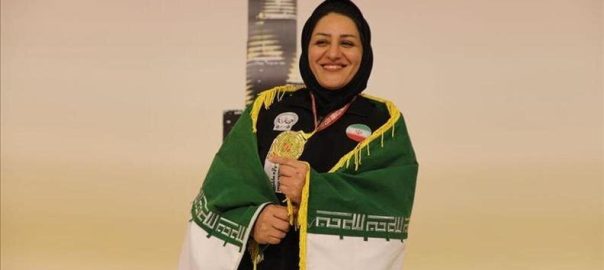
Roya Mehboodi claimed a gold medal in the 21st edition of the Asian Arm Wrestling Championship. She won a gold medal in the 90kg senior women left hand.

“I dedicate my gold medal to all Iranian women. This is the result of incredible patience and hard work,” Mehboodi said.

Over 500 athletes representing 16 countries are in the fray at the Asian Arm Wrestling Championship, which kicked off in Ajman, the UAE.

The event is being organized by the Emirates Body Building and Fitness Federation under the auspices of the Asian Arm Wrestling Federation (AAF) and will conclude on May 3. /T.T/

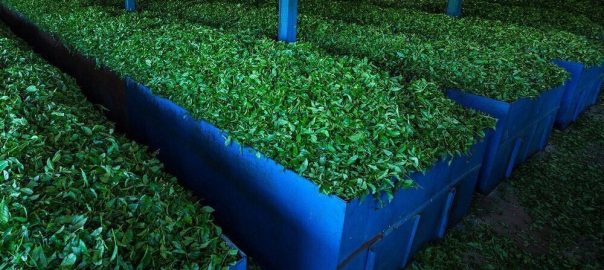
Annual tea export rises 34.8%

The value of Iran’s tea export rose 34.8 percent in the past Iranian calendar year 1401 (ended on March 20), according to the data released by the Islamic Republic of Iran Customs Administration (IRICA).

Based on the IRICA data, Iran exported tea worth $44.2 billion to 26 countries in the past year.Iran also imported tea valued at $665 million from 10 countries in the previous year, showing 45.9 percent growth year on year.

About 100,000 tons of tea are consumed in Iran every year. Last year, about 26,000 tons of tea were produced in the country, of which about 10,000 tons (38 percent) were exported due to the received production subsidy and reasonable price.

Among the problems of the country’s tea industry, it can be referred to the development of modern irrigation network, increasing the mechanization factor, and facilities for modernizing factories and processing and branding machines, which can be solved through investment making./T.T/

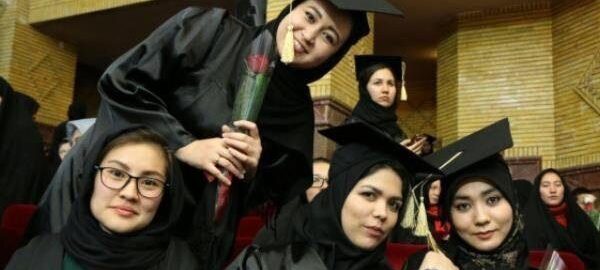
Over 40,000 Afghans studying in Iranian universities

More than 40,000 Afghan students are currently studying in Iranian universities, Vahid Haddadi-Asl, the Iranian deputy science minister for international affairs, has said.

There are no limitations for admitting Afghan students in Iran, ISNA quoted Haddadi-Asl as saying.

Every foreign student who enters the country must have a passport or an official identity card, he said, adding that the Ministry of Science has announced that if these documents approved by the Ministry of Interior and the Ministry of Foreign Affairs are not available for foreign students, it is not possible for them to study.

Many Afghan students are interested to continue online studying in Iran, he noted.

In December 2022, MP Mehdi Esmaeili said in the wake of the Taliban’s move to suspend education for girls, Iran is ready to host Afghan girl university students.

In line with philanthropic values, if the Afghan government does not reconsider its decision, the Islamic Republic of Iran will accept Afghan female students, ISNA quoted Esmaeili as saying.
Iran has spent more than $352 million in the current school year that started on September 23 on the education of Afghan students.

Over 670,000 students of Afghan nationality are studying in Iran, and the cost of educating these students is more than $352 million, IRNA reported.

In the current school year, $17 million of international aid and $335.631 million dollars from internal sources have been spent on the education of Afghan nationals.

However, international organizations have paid less than 3.9 percent of the cost of education for Afghan students in Iran in the last two years.

Leader of the Islamic Revolution Ayatollah Seyyed Ali Khamenei issued a decree in May 2015 that allows all foreign nationals, even those who have no identification and are living in Iran illegally, to attend schools in the country.

Relying on moral and Islamic principles, the government of the Islamic Republic of Iran has created equal conditions in benefiting from educational opportunities for Afghan students.

In the previous school year, some 556,000 Afghan students studied in Iranian schools.

Afghan students are currently studying in 6,000 schools across Iran, of which 88 schools are being built with the participation of international organizations.

The Ministry of Interior has announced to the Ministry of Education a list of 200,000 Afghan children who have the conditions to study in Iranian schools, Ali Hamedi, an official with the Education Ministry, said in November 2022.

The Ministry of Education has the capacity and potential to provide them with educational conditions and facilities equal to other Iranian students, he added.

The literacy rate among refugees has increased significantly in recent decades. So that the literacy rate of Afghan immigrants in Iran is higher than the number of literate people in Afghanistan, according to a report published in June 2022 by the research center of the Iranian Parliament (Majlis).

Iran is home to over 800,000 registered refugees and some 2.6 million undocumented Afghans. Today, more than 500,000 Afghan children- including undocumented Afghans and those who have newly arrived in Iran following the Taliban-takeover-are benefitting from Iran’s inclusive education policies, one of the most progressive in the world.

Many of the refugees living in Iran are second and third-generation, according to the UNHCR.

Iran is among the 15 successful countries in attracting international university students, according to Mohammad Javad Salmanpour, the deputy head of the Organization for Student Affairs.

Iran has the ability and capacity to have more than 250,000 foreign students by 2026, he stated.

These students are studying in different fields of science, research and technology, health and medical education, and also in the fields of humanities, Islamic sciences, Persian language, and literature, law, fundamentals of Islamic law, management fields, economics, psychology, social sciences, as well as engineering, agricultural sciences, animal sciences, and basic sciences. /T.T/

Iranian documentary to go on screen at Austrian film festival

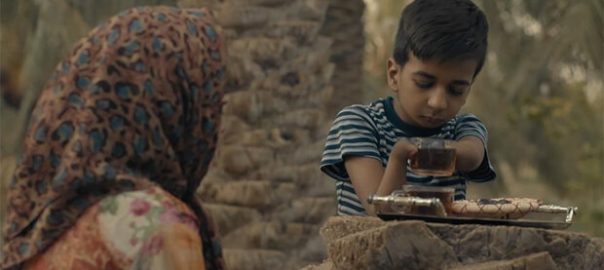
The Iranian documentary “Water, Wind, Dust, Bread” directed by Mehdi Zamanpour Kiasri will take part in Ethnocineca- International Documentary Film Festival Vienna.

The 25-minute documentary ‘Water, Wind, Dust, Bread’, which took more than a year to produce, is a delicate narrative of the life of two children named ‘Abolfazl’ and ‘Setayesh’ who experience a different life.

The documentary has been previously screened at the 18th edition of ZagrebDox, the International Documentary Film Festival and the 24th edition of the Thessaloniki Documentary Festival in Greece, a special screening section of the 15th Miradasdoc International Film Festival in Spain and the 19th edition of the Millennium Film Festival in Poland.

The 17th edition of Austria’s Ethnocineca will be held on 4-11 May 2023 in Vienna. As Austria’s biggest film festival for documentary cinema and ethnographic film, Ethnocineca is dedicated to diverse realities of human life. /MNA/

Iran retains world ranking for scientific publications

According to data released by Scopus, Iran published 78,225 scientific articles in this database in 2022. Accordingly, Iran is ranked 15th in the world in terms of publication of scientific works for the fourth consecutive year.

Scopus data in 2022 shows that Iran ranks first among countries in the region in terms of the number of scientific publications.

A review of Scopus data from 2014 to 2022 shows that Iran has always been the first among the countries in the region in terms of the number of publications and has been able to maintain this position.

In total, 3,950,305 works have been indexed in the Scopus. China, with 1,016,311 works, is the source of about 25 percent of the world’s scientific publications and has the first place in this regard.

The United States, India, England, and Germany are also in the second to fifth place.

According to the data of the Scopus index, the Tehran University of Medical Sciences has the largest share in Iran’s scientific publications by publishing more than 6,800 works.

In total, nearly half of Iran’s scientific publications in 2022 have been published by 10 universities in the country.

Meanwhile, the latest data from the Web of Science in 2022 shows that Iran ranks second among countries in the region after Turkey.

Since 2017, Iran ranked first in the region in terms of the number of publications in the WOS index, but in 2022, after 5 years, it has lost the first place in the region.

Reviewing the changes in Iran’s ranking in the last six years in the Web of Science index shows that in 2017, Iran ranked 17th in this index and maintained this rank until 2019.

In 2020, Iran’s rank increased by two places to 15, but in the last two years this rank was lost and in 2022 it returned to 17.

This is the first time that Iran’s scientific ranking in terms of the number of publications in the Web of Science has decreased for two consecutive years.

International citation indexes include Web of Science, Thomson Reuters Journal Citation Reports, Web of Knowledge, and Scopus.

According to the latest statistics of the Ministry of Science, Research and Technology, 1,452 scientific journals are being published in the country.

Out of all the mentioned journals, 289 are indexed in the Scopus database and 67 journals are indexed in the Web of Science database, IRNA reported.

Ayatollah Ali Khamenei, the Leader of the Islamic Revolution, has said that the West exerted pressures on Iran in order to isolate it but their efforts in this regard backfired.

He described making progress under economic siege and the most severe pressures possible as indicative of the Iranian nation’s bright performance.

“The U.S. said the economic pressures they’ve put on Iran are unprecedented in history. Despite all their lies, they were true to this,” the Leader added.

Ayatollah Khamenei made the remarks during a speech on March 21 at the holy shrine of Imam Reza on the occasion of the New Iranian year.

He named the Persian New Year the year of “Inflation Control, and Growth in Production.”

The Leader highlighted the progress made in science and technology and Iran’s ranking among the top countries of the world in fields such as Nano and Biotechnology, health, aerospace, nuclear, defense, infrastructure, medical centers, and oil refineries “With regard to foreign relations, the West’s efforts to isolate Iran have failed,” he said.

Since the administration of President Ebrahim Raisi took office in August 2021, more than 45 scientific and research journals have been indexed by Scopus, the deputy health minister Younes Panahi has said.

The growth in Scopus-indexed publications has been unprecedented, he said, adding that before the administration took office, 135 publications had been indexed by Scopus, while the figure is currently 180.

In 2021, a number of 27,800 articles have been registered by medical science researchers of the country in the Scopus database, he added.

Over the past year, 18 articles published by Iranian researchers have been cited by Scopus International Citation Database, compared with a total of 101 during the past 40 years, the deputy science minister Peyman Salehi said in September 2022.

The share of Iranian articles with international participation has had significant growth of 209 percent during an eight-year period (2013-2020), becoming the Islamic world’s leading country in science diplomacy, according to the Scopus International Citation Database. /T.T/

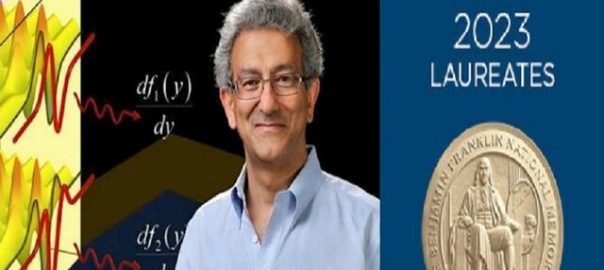
Iranian scientist Engheta receives Benjamin Franklin Medal

Iranian scientist who is a professor of electrical and systems at Pennsylvania University in the United States has received his prestigious Benjamin Franklin award in a ceremony in Philadelphia.

Engheta was selected as a 2023 recipient of the Benjamin Franklin Medal, one of the world’s oldest science and technology awards.

Engheta received his Benjamin Franklin medal during a ceremony held by the Franklin Institute Awards Ceremony in Philadelphia, United States on Friday afternoon.

Engheta, H. Nedwill Ramsey Professor in Electrical and Systems Engineering, was among nine outstanding individuals recognized with Benjamin Franklin Medals this year for their achievements in extraordinary scientific, engineering and business leadership.

He was awarded for his advances in engineering and physics, according to the website of the University of Pennsylvania.

MNA

700-year-old complex in Tabriz to gain former glory

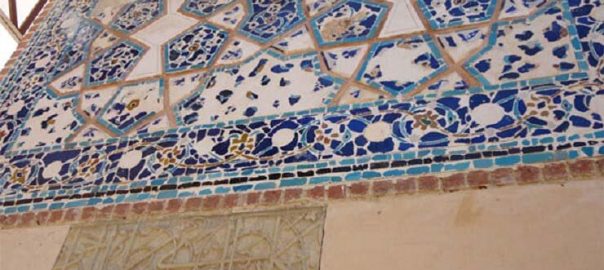
The 700-year-old Hassan Padeshah complex, which is located in the historical city of Tabriz, East Azarbaijan province, has undergone some rehabilitation works, the deputy provincial tourism chief has said.

Several parts of the complex have been undergoing restorations for some time, and resuming the work will return the complex to its former glory, Vahid Navadad explained on Saturday.

To implement this landmark project, the provincial department of cultural heritage is utilizing all its technical, administrative, and credit resources, the official added.

Considering the historical significance of this complex, the project is being closely supervised by cultural heritage experts and experienced restorers, he noted.

As a result of the need for specialized and technical research due to its high cultural significance, the restoration project has taken so long, he mentioned.

During the Turkmen and Safavid eras when Tabriz was the capital of Iran, this complex played a significant role in the governmental spheres, therefore, permits are required for the restoration of its remains after extensive research and studies, as well as technical and expert measures, he stated.

Located in Tabriz, the capital of East Azarbaijan province, the 160 thousand square meter complex of Hassan Padeshah, meaning ‘Hasan the King’, is among the outstanding works left over from the glorious time of the Aq Qoyunlu Dynasty.

The complex comprises a mosque, a madrasa, a bathhouse, and a massive forum covering some twofold that of UNESCO-registered Imam Square in Isfahan.

As a result of certain factors and events such as floods and earthquakes and historical indifference, the complex carries only a small portion of its past historical greatness.

Like many cities in Iran, Tabriz has a long and rich history but saw many of its historic buildings destroyed by invaders or earthquakes. Tabriz became the capital of the Mongol Il-Khan Mahmud Gazan (1295–1304) and his successor. Timur (Tamerlane), a Turkic conqueror, took it in 1392. Some decades later, the Kara Koyunlu Turkmen made it their capital. It was when the famous Blue Mosque was built in the ancient city.

The city retained its administrative status under the Safavid dynasty until 1548 when Shah Tahmasp I relocated his capital westward to Qazvin. During the next two centuries, Tabriz changed hands several times between Persia and the Ottoman Empire. During World War I, the city was temporarily occupied by Turkish and then Soviet troops.

Downtown Tabriz is very walkable, and the people are also extremely friendly, something not particularly common in big cities. /T.T/

Zlin festival picks “The Lovely Sky”, “Katvoman”

“The Lovely Sky” and “Katvoman”, two shorts by Iranian directors, have been selected to be screened at the 63rd Zlin Film Festival. Written and directed by Amir Mehran, “The Lovely Sky” has been produced at the Institute for Intellectual Development of Children and Young Adults – Kanoon.

It will compete in the animation category of the festival, which will take place in the Czech city of Zlin from June 1 to 7.

The film follows an impatient fighter pilot who bombs cities every day. He returns to his little girl every night after completing his mission. The girl loves to fly, but the father doesn’t fulfill his daughter’s dream because of the bitter memory of his wife’s death. The war is getting closer every day. One day an incident changes their lives, forever.

“The Lovely Sky” won the best animation prize at the 2022 Roshd International Film Festival in Tehran.

“Katvoman”, a co-production of Iran and India, has been selected to be screened at the Zlin Dog section, which presents a selection of student fiction, animation and documentary work from all over the world.

Directed by Hadi Sheibani, the short drama won the award for best fiction at the 2022 Festival International du Film Amateur de Kelibia – FIFAK in Tunisia.

The film shows a mom and her son playing dressed up as Batman and Catwoman before dad returns for dinner. Through the play, the child discovers a difficult truth about his parents.

The Zlin Film Festival is an active member of the European Children’s Film Association. The festival organizes an extensive supporting, professional and charitable program.

Iranian filmmakers have always been frequent visitors to the festival.

Iranian director Majid Majidi’s child labor drama “Sun Children” won the Golden Slipper for best feature film in the junior category of the 2021 edition of the festival. / T.T/

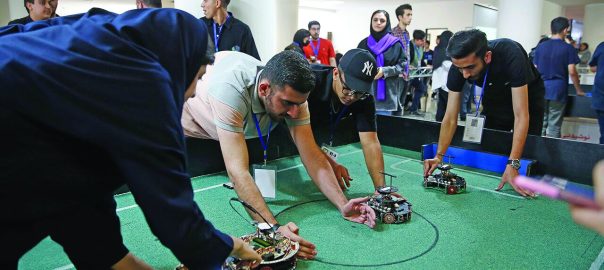
RoboCup IranOpen 2023 held in Tehran

Students from Iran and six other countries took part in the 17th edition of international robotics competitions (RoboCup IranOpen 2023) which was held at the Islamic Azad University from April 26-28.

Egypt, China, Afghanistan, Brazil, Russia, and Germany were the foreign guests that competed with Iranian teams in the fields related to robotics such as artificial intelligence and programming. / T.T/

Knowledge-based companies rise 90% year on year

The number of knowledge-based companies reached 8,368 in the past Iranian calendar year that ended on March 20, an increase of 90 percent compared to a year earlier.

According to the Vice Presidency for Science and Technology, about 750 new knowledge-based companies were launched in the year 1400 (March 2021-March 2022), while in the year 1401 (March 2022-March 2023) some 1,400 companies were launched, IRNA reported.

The companies are mainly active in the fields of “biotechnology, agriculture and food industries”, “pharmaceuticals and medicine”, “chemical materials and products” and “machinery and equipment”.

Other fields of activity include “medical devices and equipment”, “electricity and electronics, photonics, telecommunications”, “information technology and computer software”, “commercialization services” and “humanities”.

The Innovation and Prosperity Fund has paid a total of 27.8 trillion rials (nearly $55 million) to support knowledge-based companies over the last [Iranian calendar] year, IRNA reported.

In line with the law enforced on May 24, 2022, knowledge-based production is a priority of the government so the plan for promoting knowledge-based products has progressed well so far.

Leader of the Islamic Revolution Ayatollah Seyyed Ali Khamenei designated the current Iranian calendar year, which started on March 21, 2022, as the year of “Production: Knowledge-Based and Job-Creating.”

Over the past couple of years, the concept of a ‘knowledge-based company’ has changed to a ‘knowledge-based society’, meaning that supporting knowledge-based companies will lead to many social and economic advantages for the public.

The Leader reemphasized the importance of boosting domestic production, as he had done in past years, saying the reason he placed so much emphasis on production was “because it boosts economic growth, it creates employment, it reduces inflation, it increases per capita income and it improves public welfare.”

To this end, the Vice Presidency for Science and Technology has executed and supported several projects toward the goal of boosting knowledge-based production.

Moreover, the development of an innovation ecosystem is on the agenda, according to which 65 houses of innovation have been set up across the country.

The country’s progressing process of development has accelerated with the emphasis on the formation of the technology and innovation ecosystem and the approval of laws for supporting knowledge-based companies and boosting Iran-made products.

Today, we are witnessing the positive effects of adopting the approach in the economy, culture, and daily life of people.

the Vice Presidency for Science, Technology, and Knowledge-Based Economy has reported that the sales of knowledge-based companies in the fiscal year 1400 (March 2021-March 2022) hit 4,000 trillion rials (about $8 billion) compared to the fiscal year 1399, an increase of 86 percent year on year.

Improving the scientific level of society, achieving high global rankings in the number of scientific articles, references, and patenting, reducing the illiteracy rate, and increasing the number of university courses and students are only a part of the achievements after the victory of the Islamic Revolution. /T.T/