All posts by islam

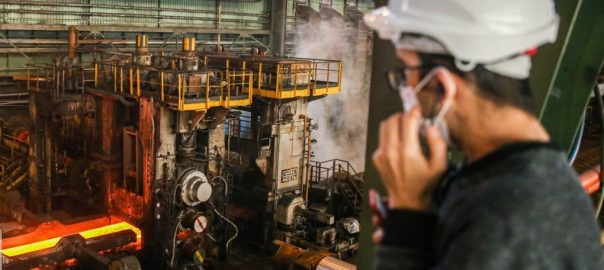
Iran’s annual steel production rises 8.5%

Production of steel in Iran increased by 8.5 percent in the previous Iranian calendar year 1401 (ended on March 20), as compared to the preceding year, an official with the Iranian Steel Producers Association (ISPA) said.

According to Vahid Yaghoubi, the country’s steel production reached 30.4 million tons in the previous year, while the output stood at 28 million tons in the year 1400, IRIB reported.

The official noted that steel production in the country also increased by 10.5 percent in the first three months of the current calendar year (March 21-June 21) as compared to the same quarter in the previous year.

Yaghoubi estimated Iran’s steel production to reach 32 million tons in the current year.

As recently announced by the World Steel Association (WSA), Iran is ranked eighth among the world’s top steel-producing countries in the first six months of 2023.

Production of crude steel in Iran reached 16.1 million tons during the mentioned six months, registering a 4.8 percent increase year on year, according to WSA data.

The Islamic Republic stood at 10th place among the world’s biggest steel producers in the first half of 2022.

Iran’s monthly crude steel output stood at 3.2 million tons in June, indicating an increase of 17.4 percent compared to the figure for June 2022. The world’s producers managed to produce 158.8 million tons of steel in the said month to register a 0.1-percent drop year on year.

The Iranian steel industry has been constantly developing over the past years against all the pressures and obstacles created by outside forces like the U.S. sanctions and the coronavirus outbreak that has severely affected the performance of the world’s top producers.

Back in February, the WSA reported that Iran’s crude steel production increased by eight percent in 2022 when the production by the world’s top 64 steelmakers declined by 4.2 percent.

Iran was ranked first among the world’s top steel producers in terms of production growth in the previous year. / T.T/

Iran holds 4.9% share of world’s nanotech articles

In 2022, the number of articles indexed in the Web of Science (WoS) by Iran was 11,473, equivalent to 4.9 percent of the total WoS-based nanotechnology articles in the world.

The country secured its fourth place among the top 20 countries in this field, ISNA reported.

According to the report, the number of articles published by Iranian scholars rose from eight in 2000 to 11,473 in 2022.

Some 32 percent of the Iranian articles were jointly written by other countries, mainly China, the United States, Turkey, Iraq, and Canada.

China, with a total of 22,995 published articles, ranked first, followed by India, the United States, Iran, and South Korea, according to StatNano website.

In 2022, about 8.7 percent of all WoS-indexed articles were related to nanotechnology. Five Islamic countries including Iran, Saudi Arabia, Egypt, Turkey, and Pakistan were among the 20 leading countries.

Nanotechnology growth

The nanotechnology sector is a prime example of success in Iran, an arena consisting of expert and program-oriented human resources with significant goals that shines like a jewel in the innovation and technology ecosystem of the country.

With the support of talented academicians and knowledge-based companies, the nanotechnology sector has indigenized many technologies to solve the main challenges of the country in various areas, including industry.

It is noteworthy that before the establishment of the national headquarters for nanotechnology development in 2000, the country ranked 58th in the world and 6th in the Middle East with publishing just eight articles.

The expansion of exports in recent years and the creation of bases in China, India, Indonesia, Syria, Turkey, and Iraq have provided a platform for the entry of Iran’s nanotechnology goods, equipment, and services into the world markets.

So far, Iranian nanotechnology products have been exported to 49 countries from five continents. The sale of nanotechnology equipment in the past Iranian calendar year (March 2021-March 2022) grew by about 59 percent.

On November 28, 2022, President Ebrahim Raisi declared to implement the national document for promoting the application of nanotechnology.

Consisting of 7 articles, the ten-year document aims to train human resources and provide infrastructure for the development and commercialization of technology. Priority industrial areas are water and environment, energy, agriculture, health, and construction.

In this document, Iran was targeted to be among the top 15 nanotechnology countries in the world and aimed to generate wealth and improve people’s lives. /T.T/

Iranian oil exports to China triple despite sanctions

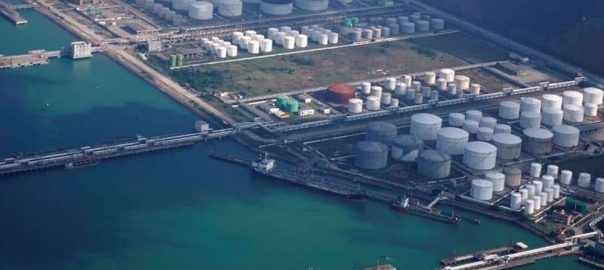
Iran’s oil shipments to China have more than tripled over the past three years despite the U.S. sanctions on the country and the increase in Russia’s shipments to the Asian country, data released by data analytics firm Kepler showed.

Based on the mentioned data, Iranian crude exports to its major trade partner have been hovering around one million barrels per day (bpd) in 2023, while the figure was roughly 325,000 bpd in 2020.

The Islamic Republic’s oil shipments to China have been following an upward trend since 2019 so that in 2021 the exports reached 585,000 bpd and in 2022 the figure stood at 766,000 bpd.

Also, the International Energy Agency (IEA) in a recent report titled “Oil 2023” confirmed Iran’s daily export of one million barrels of oil to China, saying: “Despite severe financial restrictions, Iran managed to increase its crude oil production by about 140,000 barrels per day in 2022 to an average of 2.5 million barrels per day. It seems that Tehran has maintained its crude sales to China, which has been around one million barrels per day since the third quarter of last year.”

According to official data, Iranian oil production also increased in the current year so that in May the country’s oil output reached 2.9 bpd, 350,000 bpd more than in 2022.

Back in April, Bloomberg reported that “Chinese private refineries are buying more Iranian oil despite the rising competition for supplies from Russia.”

“So-called teapots are prioritizing the flows, with Russian supplies getting more pricey as mainstream buyers such as state-owned Chinese refiners and Indian processors take a greater share,” the report read.

In March, China’s imports of Iranian crude and condensate jumped 20 percent month-on-month to 800,000 barrels a day, and are on track to extend gains in coming months, Emma Li, an analyst with data intelligence firm Vortexa Ltd told Bloomberg that month.

While Iranian oil has long been sanctioned by the US, refiners in China have proved to be a consistent outlet.

Most Iranian oil used to go to state-owned refineries but “the private refiners in Shandong especially are now running the show,” said Homayoun Falakshahi, senior crude oil analyst at Kpler.

Earlier this year, Iranian President Ebrahim Raisi said that the oil and gas sector experienced a growth of nine percent in the past Iranian calendar year 1401 (ended on March 20).

Oil Minister Javad Oji has also said recently that a new record high will be reached in the country’s oil export in the current Iranian calendar year.

Despite the negative impacts of the U.S. sanctions, Iran has been ramping up its oil production and exports over the past few months.

In his remarks in November 2022, President Raisi highlighted the failure of the enemy’s policy of maximum pressure, saying the country’s oil export has reached the pre-sanction levels.

Back in January, the U.S. Energy Information Administration (EIA) in a report put Iran’s average oil production in 2022 at 2.54 million bpd, 140,000 bpd more than the previous year.

Iran’s oil production in 2021 was about 2.4 million bpd. / T.T/

Iran U23 team win 2023 CAFA Futsal Cup

Iran U23 team claimed the title of the 2023 CAFA Futsal Cup on Sunday. The young Persians defeated Tajikistan 1-0 to register their fourth win in the tournament.

Ali Akrami scored the solitary goal of the match. Iran lost to Turkmenistan 2-1 in their opening match but defeated Kyrgyzstan 1-0, Afghanistan 5-1 and Uzbekistan 5-0 in their following matches.

Tajikistan, Iran, Uzbekistan, Kyrgyzstan, Afghanistan and Turkmenistan competed in the tournament.

The round-robin tournament was held in Dushanbe, Tajikistan from July 23 to 30.

The winning team was determined by the number of points scored. / T.T/

Melbourne Intl. Film Festival picks films from Iran

Five Iranian films will go on screen at the 71st edition of Melbourne International Film Festival, which will be held in the Australian city from August 3 to 20. “Subtraction”, “Terrestrial Verses” and “No Bears” will go on screen in the main section of the festival.

Directed by Mani Haqiqi, “Subtraction” follows driving instructor Farzaneh, when she spots her husband on the streets of Tehran, even though he is supposed to be out of town on a business trip, she naturally suspects the worst. Following him, Farzaneh’s fears are seemingly confirmed when she sees him visiting another woman. With that woman’s husband also suspecting something is awry, the situation erupts into violence. Yet, all is not quite what it seems.

Taraneh Alidoosti and Navid Mohammadzadeh deliver compelling, psychologically driven performances in Haqiqi’s highly anticipated follow-up to his black comedy “Pig”.

“Terrestrial Verses” by Ali Asgari begins with a controversy over the naming of an infant and moves through stories of everyday people facing off against the system, from a frustrated, politically censored filmmaker to a teenage girl who – in one of the film’s most daring episodes – confronts her school after being caught with a boy on a motorcycle.

“No Bears” by Jafar Panahi is a docudrama about a Turkish couple who are procuring fake passports to cross the border into Europe.

“Mast-del” by Maryam Tafakori and “48 Hours” by Azadeh Musavi will also be screened in the short films section of the festival. /T.T/

Some 240 hospitals ready to accept medical tourists

Health Minister Bahram Einollahi has said about 240 hospitals in the country are ready to accept medical tourists.  Last year (March 2022-March 2023), around 1,200 medical tourists received health services in Iran, he said, adding that people from neighboring countries used to travel to Iran for health services, IRIB reported.

“Gradually, as familiarity with Iran’s level of progress in the field of health services increased, the number of medical tourists increased because they trusted the Iranian medical science,” Einollahi highlighted.

So far, some 240 hospitals have received International Patients Department (IPD) permits, he added.

“We are planning to send health attachés to the countries where the number of visits by medical tourists to Iran is high.”

On July 16, Einollahi said, “We have negotiated with the Ministry of Foreign Affairs regarding the appointment of health attachés in the embassies of some countries with whom we cooperate in the fields of medicine, medical equipment, science and technology, and exchange of professors and students.”

“Health attachés are appointed in six countries in the first phase, including South American and African countries. We are also following up on dispatching health attachés in neighboring countries,” IRNA quoted Einollahi as saying on Saturday.

In this line, the first health attaché will be sent to Iraq by the next two weeks, he noted.

“The issue of medical tourism is very important. Therefore, countries that have extensive relations with us in the field of health diplomacy will be given the top priority.”

President Ebrahim Raisi has said the Islamic Republic is a suitable destination for medical tourism.

Highlighting the country’s great strides in medical and health sciences, Raisi said patients in many neighboring countries prefer to visit Iran for treatment than travel to Europe.

This is due to the lower cost and high level of expertise in Iran, Raisi said, Press TV reported./T.T/

‘Abu Mahdi’ cruise missiles join Army, IRGC navies

Indigenous ‘Abu Mahdi’ naval cruise missiles joined the naval fleets of the Iran Army and Islamic Revolutionary Guard Corps (IRGC) on Tuesday.

In a ceremony held on Tuesday morning in the presence of Iran’s Defense Minister Brigadier General Mohammad Reza Ashtiani, IRGC Navy Commander Alireza Tangsiri and Deputy Commander of the Iranian Army Navy Admiral Hamzeh Ali Kaviani, Abu Mahdi naval cruise missile which has been developed by military experts at Aerospace Industries Organization (AIO), joined the navies of the country’s Army and IRGC.

The missile has been named after the former deputy head of Iraq’s Popular Mobilization Units who was assassinated along with top Iranian anti-terror commander Lieutenant General Qassem Soleimani in a US drone strike ordered by former President Donald Trump near the Baghdad International Airport in early January 2020.

It is said to have a range of over one thousand kilometers, and can destroy any designated target. The missile is also capable to be launched by diverse types of sea, land and air platforms towards targets.

The missile can pass over natural and artificial barriers, as well as the enemy’s radar and defense systems and strike designated targets from different directions.

Due to the incorporation of highly destructive explosive materials in its warhead, Abu Mahdi can destroy all types of ships, frigates, and destroyers.

It can be fired from the depths of the Iranian soil toward moving targets in the sea using an advanced integrated navigation system and a powerful propulsion system.

Abu Mahdi is the first long-range naval cruise missile in Iran that uses dual-mode active and passive seekers.

The technology enables the missile to counter the enemy’s electronic warfare and increases its stealth capabilities when approaching the target and hitting it. All this happens with the enemy not having noticed the missile and missing the opportunity to give a timely response.

Its launcher can load and fire missiles in the shortest possible time and can launch several projectiles in quick succession and from different directions toward a specific target, with the missiles hitting the designated target all at once.

The missile can be fired from all types of mobile and fixed launch pads, and its navigation system is capable of updating the target’s final position during the cruise.

The Iranian defense minister said the indigenous Abu Mahdi missile will increase the country’s naval defense range by several times.

Speaking at the ceremony, Brigadier General Mohammad Reza Ashtiani said that the missile, with a range of 1,000 kilometers, enjoys pinpoint accuracy and very high destruction power, can cross geographical barriers and cruise at low altitudes, is radar-evading and can counter the enemy’s electronic warfare, and employs artificial intelligence in its flight path design software.

“With the mass production of Abu Mahdi missile, we will be able to fire at the enemy’s moving targets in the sea from the depths of the Iranian soil and entirely hidden places at the maximum operating pace, and completely destroy the enemy’s ships, frigates and destroyers,” he said.

Commander of the IRGC Navy Rear Admiral Alireza Tangsiri said one of the main features of the new missile is keeping the enemy away from the Iranian coasts and rendering its aircraft carriers useless.

He explained that if an Iranian military vessel sails 1,000 kilometers offshore and launches an Abu Mahdi missile, the enemy’s aircraft carrier will have to retreat at least 1,000 kilometers further away to evade the long-range naval cruise missile.

“This means that the fighter jets on board that aircraft carrier will be rendered useless,” he said.

“We can fire the Abu Mahdi missile from deep inside the country. The missile has a dual seeker and performs successfully against the enemy’s electronic warfare,” the general said.

Iranian military experts and engineers have in recent years made remarkable breakthroughs in manufacturing a broad range of indigenous equipment, making the armed forces self-sufficient.

Iranian officials have repeatedly underscored that the country will not hesitate to strengthen its military capabilities, including its missile power, which are entirely meant for defense, and that Iran’s defense capabilities will be never subject to negotiations.

MNA/

Twelve medical science universities on Leiden ranking

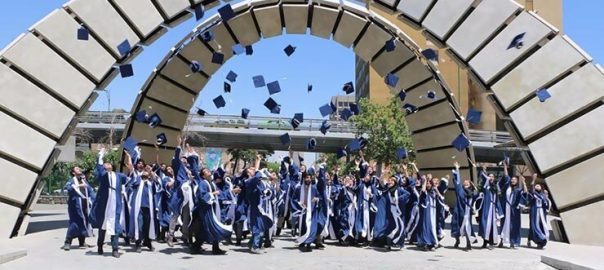
Twelve universities of medical sciences from Iran are on the Leiden ranking 2023 list.From among 72 universities of medical science in the country, 12 universities are on the Leiden list. Tehran, Shahid Beheshti, and Tabriz universities rank first to third among the Iranian universities, IRNA reported.

In Total, 46 Iranian universities are among the 1,411 top universities in the world.

Last year, 44 universities from Iran were listed in this ranking.

Among Islamic countries, Iran ranks first, followed by Turkey and Egypt with 36 and 13 universities respectively, ISNA reported.

The CWTS Leiden Ranking 2023 offers important insights into the scientific performance of over 1400 major universities worldwide. Select your preferred indicators, generate results, and explore the performance of universities.

The Leiden Ranking provides indicators of scientific impact, collaboration, open-access publishing, and gender diversity. Size matters when comparing universities: performance can be viewed from an absolute or a relative perspective (e.g., the number versus the percentage of highly cited publications).

Compared with other university rankings, the Leiden Ranking offers more advanced bibliometric indicators. The underlying methodology is richly documented. The Leiden Ranking provides information exclusively about the research done at universities.

Research is represented in publications, and carefully collected data about these publications forms the basis for the Leiden Ranking. This basis also ensures the independence of the Leiden Ranking, since there is no reliance on data submitted by the universities themselves.

Recently, the 20th edition of the QS World University Rankings (2024) has placed seven Iranian universities among the world’s top institutes, compared with six universities in 2023.

The Ranking features 1,500 institutions across 104 locations and is the only ranking of its kind to emphasize employability and sustainability.

The number of top Iranian universities and research institutes in the Essential Science Indicators (ESI) database has increased from 112 last year (March 2022-March 2023) to 115 this year, the Islamic World Science Citation Center (ISC) has reported.

The number of top Iranian universities and research institutes in this database has increased from 112 last year to 115 this year.

The Times Higher Education (THE) World University Rankings 2023 has placed 65 Iranian universities among the top Asian institutions.

The Times Higher Education Asia University Rankings 2023 use the same 13 performance indicators as the Times Higher Education World University Rankings, but they are recalibrated to reflect the attributes of Asia’s institutions.

The universities are judged across all their core missions – teaching, research, knowledge transfer, and international outlook – to provide the most comprehensive and balanced comparisons available.

In the 2023 edition of the Times Higher Education’s Asian University Ranking System, the names of 928 institutions from 36 Asian countries are included in the final list. In the previous edition of this ranking system, 58 universities from Iran were among the top institutions in Asia, IRNA reported. /T.T/

Iran’s annual tourism revenues at $6.2 bn: Official

A deputy head of the Iranian tourism ministry (MCTH) says Iran’s annual tourism revenues have reached $6.2 billion, adding that tourism is becoming a major source of earning hard currency for the country.

Citing figures from the World Travel & Tourism Council (WTTC) on Thursday, Ali Asghar Shalbafian did not elaborate if the annual revenue figure was related to 2022 or to the calendar year to late March 2023.

Speaking at a ceremony in the tourist hub of Tabriz in northwest Iran, Shalbafian said tourism revenues had reached levels to equal more than 10% of Iran’s annual non-oil export revenues.

He said, however, that Iran had invested some 3,650 trillion rials ($7.3 billion) in recent years to boost its tourism infrastructure, adding that some 360 trillion rials had been spent in Tabriz and cities around it which are normally frequented by tourists from the Republic of Azerbaijan and countries in the Caucasus region.

MCTH figures show tourists arrivals to Iran reached a record of 4.230 million in the six months to September 2022 when a spell of unrest in the country caused a drop in the number of arrivals.

Tourism activity rebounded in Iran in the quarter to late June as the country received 1.4 million foreign visitors over the period, according to the MCTH.

Tourism has become a focus of Iran’s efforts to diversify its economy away from crude revenues in recent years.

The policy is meant to offset the impacts of US sanctions on the Iranian oil sector while it is also aimed at creating more jobs for the country’s youth.

Recent reports show that the Iranian government is seeking to expand its visa waiver program to cover visitors from more than 60 new countries. /MNA/

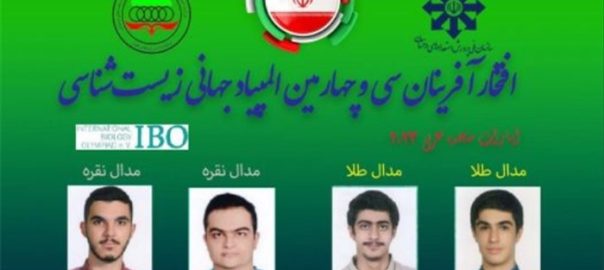
Iranian students grab four medals at IBO 2023

Iranian students grabbed two gold and two silver medals at the 34th edition of the International Biology Olympiad (IBO) held in the United Arab Emirates from July 3-11.

The IBO 2023 hosted 293 students from 76 countries.Arman Forqani and Ali Qasemloui won the gold medals, while Kiyarash Behboudi and Aidin Naziri-Fard won the silver medals.

In the 33rd International Biology Olympiad, Iran’s team was ranked first in the world by winning four gold medals.

The IBO 2022 was held in Armenia and attended by 65 countries.

Thanks to the achievement, Saman Hosseinkhani of Iran was selected as a member of the International Biology Olympiad (IBO) Steering Committee, which represents the IBO association legally and manages its daily affairs.

Previously, Iranian students won 2 silver and 3 bronze medals in the International Physics Olympiad 2022, held online from July 11 to 14 and hosted by Switzerland, and won three gold medals and three silver medals, ranking 8th in the International Mathematical Olympiad, which was held in Oslo, Norway.

Over the past Iranian calendar year, which ended on March 20, Iranian students won seven gold medals, 11 silver medals, and nine bronze medals at different international Olympiads.

According to the Ministry of Education, Iranian students have won 192 gold medals, 371 silver medals, and 204 bronze medals since 2005, IRNA reported.

Recently, Iranian students grabbed two gold and two silver medals at the 54th International Chemistry Olympiad (IChO) which was held in Tianjin, China, on July 10.

Mohammad-Hossein Barekati and Iliya Kahvand won the gold medals, while Amir-Hossein Razavi and Amir-Mohammad Hosseini snatched the silver medals.

The International Chemistry Olympiad (IChO) is an annual competition for the world’s most talented chemistry students at the secondary school level.

All participants are ranked based on their individual scores and no official team scores are given. Gold medals are awarded to the top 12% of students, silver medals are awarded to the next 22% of students, and bronze medals are awarded to the next 32% of students.

Attended by 83 countries, the 54th International Chemistry Olympiad was held with the slogan of ‘Change, Creation, Fusion’. /T.T/