All posts by islam

Iran’s exports hit new record high $45 bn during 10 months

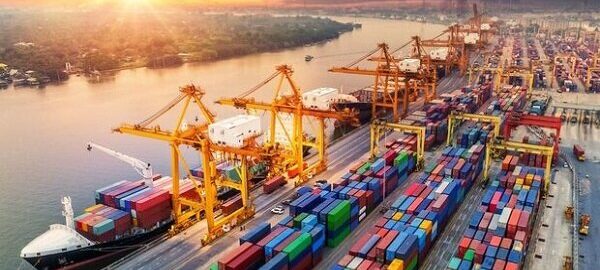
Head of the Islamic Republic of Iran Customs Administration (IRICA) Mohammad Rezvani-Far said on Wednesday that Iran’s non-oil export reached 103 million tons worth $45.3 billion.

Iran’s non-oil export (excluding crude oil export) stood at 103 million tons worth $45.3 billion during the first ten months of the current Iranian year (March 21-Jan. 20), registering a 2.9 % and 17.6% year-on-year rise in weight and value respectively, Rezvani-Far said.

The exports mainly included natural gas with $6.8 million, he added.

The main destinations for the Iranian exported goods were the China, Iraq, Turkey, UAE, and India, he further noted.

He said that a total of 31 million tons of goods worth $48.5 million were imported from the country which shows a 7.6 % and 16.8% year-on-year fall in weight and value respectively,

Foreign transit during the first ten months of the current Iranian year (March 21-Jan. 20), registering 11 million tons which shows a 7.4% rise compared with the corresponding period of last year, he underlined. /MNA/

Iranian animation ‘Home’ wins at Argentina’s FICA

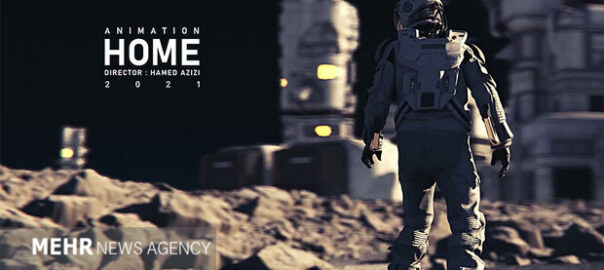
Directed by Hamed Azizi, the animation “Home” was chosen as the best short film at the Festival Internacional de Cine Austral (FICA) in Argentina.

The genre of Azizi’s one-minute-long animation is drama and science fiction and it is about environmental protection.

“So far so close, everyone is looking to return to their originality, and their hearts rest at home. Protect your home,” the synopsis of “Home” reads.

“Home” was previously nominated and awarded at other international film festivals as well.

The Austral International Film Festival, based in the province of Córdoba, Argentina, is proposed as a space for reflection for sustainable, socially and economically conscious audiovisual production. /MNA/

Iran’s “Motherless”, “Life & Life” win top awards at Dhaka film festival

Iranian drama “Motherless” was named best film while “Life & Life” garnered the best director award for Iranian filmmaker Ali Qavitan at the 21st Dhaka International Film Festival, the organizers announced on Sunday.

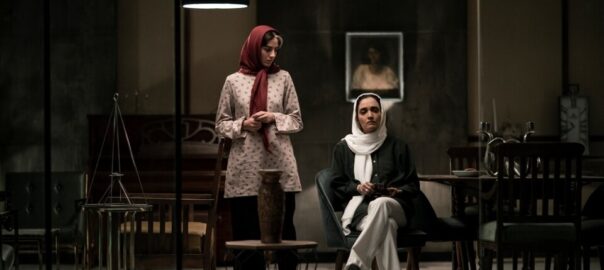
Written and directed by Seyyed Morteza Fatemi, “Motherless” is about an educated, middle-aged couple, Amir-Ali and Marjan, who lead a quiet life. When Marjan insists on renting a womb and a surrogate mother enters their life, unintentionally they go through different tests and face moral dilemmas.

IRIMAGE handles the international sales of the film starring Amir Aqai, Mitra Hajjar and Pejman Jamshidi.

Also written by Qavitan, “Life & Life” follows a teacher who is concerned about the students who have not attended online classes during the COVID-19 pandemic. She decides to visit them. She buckles her four-year-old daughter into the car and takes off for the students’ houses. Her goal for this trip is to look in on the students, but she has another purpose. She tells her daughter about her own life, and the girl begins to understand the world as she meets other people.

Written by Anik Dutta, “The Undefeated” from India won the award for best screenplay.

This film directed by Anik Dutta is a tribute to master filmmaker Satyajit Ray in his birth centenary and it’s inspired by the story behind the making of Ray’s iconic film “Pather Panchali”.

The award for best actor went to Ikkei Watanabe for his role in the Japanese film “Marriage Counselor” by Naoki Maeda.

Ketaki Narayan was picked as best actress for her role in “Hawk’s Muffin” by Indian director Krishnendu Kalesh.

The best children’s film Badal Rahman award was given to “Martin and the Magical Forest”, a co-production from Czech, Slovakia and Germany by Petr Oukropec.

In the Women Filmmakers Section, “Listen” by Maria Douza from Greece was selected as best feature film.

In this film, financial upheaval forces Valmira, a 16-year-old deaf girl, to leave her progressive Athens school and return to her father’s struggling island where she is confronted by the danger of prejudice and intolerance, most shockingly — her own./T.T/

Frozen falls rare but still appealing

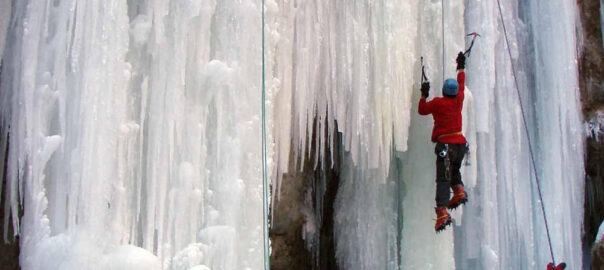
Even though a frozen fall by definition is no longer a waterfall, many of them, like Abshar-e Akhlamad in northeast Iran, still hold appeal for ardent tourists.

Situated in a village of the same name some 85 kilometers from Mashhad in Khorasan Razavi province, Akhlamad waterfall is about 40 meters high. Fossils and mineral deposits in its pond testify that the cascade has a very long history.

The waterfall entirely freezes during the harsh winters when it presents magnificent natural views on the one hand and offers a challenge to rock climbers, on the other hand.

According to some sources, Abshar-e Akhlamad supposedly dates from the Late Jurassic. It boasts enormous amounts of pouring water during the first few months of the year as a result of the intense downpours.

Visitors may stay for a couple of hours, unwinding while taking in the fresh air in a setting known for its abundant apple and cherry trees.

Despite the country’s ongoing struggles to preserve reliable sources of water, Iran is home to many beautiful falls and cascades. Although they are not among the highest, wildest, or heaviest waterfalls in the world, what makes them remarkable is that they are located in a region with a climate that primarily consists of arid and semiarid ranges.

Therefore, a waterfall with a strong flow would be rather eye-catching and worthwhile for some time for the vast majority of local and even some foreign travelers.

Over 300 waterfalls can be found on the Iranian plateau; some of the most well-known include Margoon in the province of Fars, Rayen in the province of Kerman, Latun in the province of Gilan, Piran in the province of Kermanshah, and Akhlamad in the province of Khorasan Razavi./T.T/

24% of foreign students studying in state-run universities

Twenty-four percent of foreign students in Iran are studying in state-run universities, the deputy science minister has said.

More than 94,000 foreign students are studying in the country, and 24 percent of them, equaling 27,000, are studying in state-run universities, IRNA quoted Hasham Dadashpour as saying.

Attracting foreign students is among the priorities of the science ministry, he said, adding that president [Ebrahim Raisi] has emphasized the need for attracting foreign students.

All the universities across the country should be prepared to attract foreign students, Dadashpour stressed.

The Planning and Budget Organization is of the opinion that the higher education sector should help the national economy by attracting foreign students.

For the time being, 107 universities are authorized to enroll foreign students. Some 56,000 Iraqi students, 33,000 Afghan students, and 5,000 students from other countries are studying in Iranian universities, he concluded.

In December 2022, Dadashpour said the number of foreign students will double in Iranian universities in the next three years.

Universities should increase their interactions and scientific exchanges in order to attract international students and accelerate internationalization in the region and the world, he highlighted.

Iranian universities achieved good ranks at the global level and based on the evaluations of the world’s most prestigious institutions so that there is the capacity to attract international students, he said.

He mentioned holding the cultural and sports Olympiad for international students as a way to make them more aware of Iran’s capabilities, ISNA reported.

By the next three years, the number of foreign students from 120 countries will increase by two times in the universities of the country, he predicted.

Iran is among the 15 successful countries in attracting international students, according to Mohammad Javad Salmanpour, the deputy head of the Organization for Student Affairs.

The education of foreign students in Iran has grown significantly compared to previous years, even last year, it has doubled, he said.

However, it is far from the desired position; Because Iranian universities have higher capacities in all respects than the universities of regional or European countries, he noted.

Iran has the ability and capacity to have more than 250,000 foreign students by 2026, he stated.

These students are studying in different fields of science, research and technology, health and medical education, and also in the fields of humanities, Islamic sciences, Persian language and literature, law, fundamentals of Islamic law, management fields, economics, psychology, social sciences, as well as engineering, agricultural sciences, animal sciences, and basic sciences.

Health insurance coverage, longer residency, shorter visa processing time, and awarding exemplary students are among the conditions provided for foreign nationals studying in Iran, Jafar Razeqi, the deputy minister of science for foreign student affairs, has stated.

The residency is currently extended for one year, but for the first time, some international students have been granted long-term residency based on the length of their education.

One of the most important problems for non-Iranian students, especially in recent months, was the visa processing time, which took time due to problems at the host university and administrative processes in different parts of the organization, but now this time has been reduced by one third, he noted.  /T.T/

Martyr Soleimani satellite constellation to be put into orbit

The Spokesman of the Iranian space agency announced that the construction of the Martyr Soleimani satellite constellation will be implemented with the participation of knowledge-based firms.

The Iranian Space Agency has named one of the country’s most important space projects after the name of Lt. Gen. Qassem Soleimani in order to honor this eminent martyr, Hossein Dalirian tweeted on Tuesday.

The Iranian Space Agency plans to implement the Martyr Soleimani project with the participation of knowledge-based companies, Dalirian said.

He also called on knowledge-based companies, that are experts in designing and manufacturing satellites and ground equipment, to participate in the implementation of this project.

Martyr Soleimani Satellite constellation will become a basic infrastructure for the country in the future, he noted.

A satellite constellation is a group of artificial satellites working together as a system.

Providing Internet of Things service for the Iranian people is one of the most important missions of the Martyr Soleimani Satellite constellation, according to the spokesman of the Iranian space agency.

The Internet of Things is used in various fields such as smart farming, transportation, monitoring of power transmission lines, environmental issues, as well as monitoring leakage of oil and gas pipelines, he said./MNA/

Health sector sees 29% growth in budget

The national budget bill for the next Iranian calendar year 1402, which starts on March 21, has increased the health sector’s budget by 29 percent compared to the current year’s budget.

The bill has proposed a budget of 2,730 trillion rials (about $6.8 billion) for the Ministry of Health, IRNA reported.

The administration has also proposed 690 trillion rials (about $1.7 billion) as subsidies to provide medicine by health industries.

President Ebrahim Raisi submitted the administration’s draft of the national budget bill for the next Iranian calendar year 1402, which starts on March 21, to the Majlis on Wednesday.

The proposed budget amounted to about 52.616 quadrillion rials (about $131 billion), with a 40 percent rise from the current year’s budget.

The president mentioned stable economic growth, people’s livelihood, observing justice, and efficiency of the government system as the main approaches of the budget bill and stated: “In this bill, the establishment of a progress and justice fund in all provinces is foreseen so that the development credits of the provinces are paid systematically.”

Iran has one of the strongest health systems in the region and this opportunity should be used optimally in the field of health diplomacy, Health Minister Bahram Einoullahi has said.

In October 2021, World Health Organization (WHO) representative to Iran Jaffar Hussain, said that Iran’s health system can be a model for other countries in the region, especially in the field of health and the use of valuable forces such as healthcare providers.

They have also played an effective role in improving life expectancy, reducing the death of pregnant women, improving the health status and disease index in the last 40 years, etc.

The World Health Organization believes that the improvement of health indicators in the villages of Iran and the reduction of the gap between the health indicators in rural and urban areas are due to the activity of health care providers.

In June 2021, Ahmed al-Mandhari, the World Health Organization director for Eastern Mediterranean Region, said the Islamic Republic of Iran is a role model for primary health care.

For the past four decades, its PHC network has aimed to ensure that people have timely access to affordable, accessible, and acceptable essential health services, he explained.

As many as 1,693 knowledge-based companies are active in the field of health, Younes Panahi, the deputy minister of health for research and technology, has said. /T.T/

Movies from Iran to compete in Big Sky documentary festival

Five Iranian movies will compete in the Big Sky Documentary Film Festival, which will take place from February 17 to 26 in Missoula, Montana.

“Kak Iraj” by Jamshid Farajvand, “Water, Wind, Dust, Bread” by Mehdi Zamanpur Kiasari, “Adam and Eve” by Saeed Taji Farouky, “The Dream of a Horse” by Marjan Khosravi and “Giselou” by Mohammad-Sadeq Esmaeili will be screened in different sections of the festival.

The short documentary “Kak Iraj” is about the part gardener and part artist, Kak Iraj, who makes all his tools from discarded materials. Living off the grid in a house made of stone, dirt, and old televisions he scours the land for useful detritus to maintain his impressive garden. Following him over the shifting seasons of a year Kak Iraj examines an unconventional lifestyle in a desolate and remote region of Iran.

“Water, Wind, Dust, Bread” follows two children Abolfazl and Setayesh in a remote border region of Iran as they play, work, study and struggle to support themselves.

“Adam and Eve” tells the story of a woman who seeks a divorce from her husband when his dishonesty comes to light. As she attempts to start her own farm and build her own home away from him she struggles with the strict divorce laws in Iran.

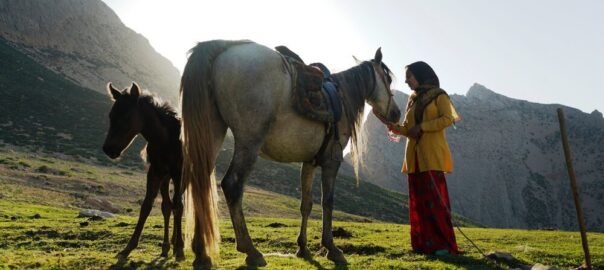
In “The Dream of a Horse”, Shahnaz, the oldest daughter of a nomad family, loves writing and her stories are inspired by her lifestyle. Her father wants to marry her off to better the family’s condition, but Shahnaz wants to pursue bigger dreams.

“Giselou” is about Zahra, whose husband abandoned her and her children 5 years ago. In order to acquire her children’s birth certificates and finalize her divorce, she is forced to go looking for her husband in Afghanistan. This film follows Zahra on a brave and harrowing journey to gain independence and secure a future for her children.

“Rooted in the heart of the mountain west, the Big Sky Film Institute nurtures and elevates non-fiction films that have the power to transform our world, our culture, our youth and ourselves,” the organizers of the Big Sky festival said. /T.T/

Overseas troupes line up for Fajr theater festival

Ten troupes from across the world will perform during the 41st Fajr International Theater Festival, which opened in Tehran on Saturday. Iraqi director Mohammad Moayyed’s troupe performed “Mercy Shot” twice at the Main Hall of the City Theater Complex on the opening day.

Two more performances have also been arranged for Sunday at the same place.

Another Iraqi troupe with director Javad Asadi will take “Amal” on stage at Molavi Hall on Monday.

Spanish director Txema Muñoz will stage “Lumière” (“Light”) at the Chaharsu Hall of the complex on January 26.

Waiting has never been so much fun. As if it were a silent movie, Muñoz wishes for the train to arrive. When it comes, his imagination goes beyond the station he is in. A light bulb, a jacket and his backpack transport him to a magical, endearing and comical place.

A stage adaptation of Italian poet Dante Alighieri’s “The Divine Comedy” will be directed by Hafiz Khalifa from Tunisia.

The play will go on stage at Vahdat Hall on January 27.

The narrative takes as its literal subject the state of the soul after death. It presents an image of divine justice meted out as due punishment or reward, and describes Dante’s travels through hell, purgatory and heaven. Allegorically, the poem presents the soul’s journey towards God, beginning with the recognition and rejection of sin, followed by the penitent Christian life, which is then followed by the soul’s ascent to God.

Omani director Yousuf Al-Bulushi is competing at the festival with “Henna Pestle”, which will be performed at Bahdat Hall on January 28.

At the same date, Nazerzadeh Kermani Hall at the Iranshahr Theater Complex will host Jordanian director Ayad Al-Rimoni for his play “Naqoura Train”. His troupe will give one more performance the next day.

Armenian director Ara Yernjakyan, the founder and artistic director of the Yerevan State Chamber Theater, has been invited to stage William Shakespeare’s “Hamlet” at the Main Hall of the City Theater Complex on January 29.

Russian writer Nikolay Mikhaylovich Karamzin’s 1792 story “Bednaya Liza” (“Poor Liza”), about a village girl who commits suicide after a tragic love affair, will be directed by his renowned compatriot Mark Rozovsky.

The most celebrated work of the Russian sentimental school will be staged at Vahdat Hall on January 30.

“Apátridas” (“Stateless”), a multimedia play divided into two monologues written by Carina Casuscelli will be staged by Brazilian director Lenerson Polonini at the Main Hall of the City Theater Complex on the same date.

It is based on female and male characters from fragments of Greek myths and tragedies.

The festival will end with an adaptation of Nikolay Gogol’s short story “The Overcoat” (“Shinel”) by a Russian troupe at the City Theater Complex on January 31.

Published in 1842, “The Overcoat” is perhaps the best-known and most influential short fiction in all of Russian literature.

Gogol’s story of government clerk Akaky Akakiyevich Bashmachkin combines a careful eye for detail with biting social satire on the banal evil of bureaucracy. /T.T/

Tehran hosts First International Congress for Women of Influence

The First International Congress for Women of Influence was held in Tehran on Friday with female guests including wives of heads of state, ministers, vice presidents, and parliamentarians from Burkina Faso, Kyrgyzstan, Serbia, Guinea, Niger, Nigeria, Sri Lanka, Syria, Turkmenistan, and Armenia.

‘Women of influence’ showcase achievements

An exhibition showcasing the achievements of successful Iranian women was held on Friday on the sidelines of the First International Congress for Women of Influence.

In this exhibition, the achievements of Iranian women entrepreneurs in various fields such as electricity and electronics, medical equipment, technology, innovation centers, and home businesses were on display.

In this regard, 900 female CEOs of knowledge-based companies have been identified, 100 of them were selected as the best in the field of science and technology, and finally, the top 50 participated in this exhibition, ISNA reported.

Guests from 28 countries, including Sri Lanka, Australia, Japan, China, Thailand, Pakistan, Cameroon, Serbia, Bosnia and Herzegovina, Sweden, Austria, Kazakhstan, and Canada visited the exhibition.

It should be noted that the congress for women of influence was held for the first time this year at both national and international levels. Its national level was held on Tuesday, January 17, and its international level was held on Friday, January 20.

The event aimed to appreciate women of influence, support and help them grow, and promote their creativity and ideas.

Women in various sectors, including science, research, innovation, economy, healthcare, art, photography, painting, society and environment, law, and media participated in the congress.

Valuable experiences

Addressing the congress on Thursday, President Ebrahim Raisi said: “I hope that the women present in this meeting will be able to use the valuable experiences that the Islamic Republic of Iran gained after the Islamic Revolution in the field of women’s rights and attention to women in society.”

Fortunately, more than 30 percent of university professors, more than 34 percent of experts in the field of medicine and healthcare, almost 60 percent of the capacity of scientific and academic centers, as well as 30 percent of managerial positions belong to women in the country, Raisi added.

Also, the number of Iranian women who gain championships in various domestic and international sports fields is more than ever, he noted.

The president also pointed to the influential role of Iranian women in the economy and entrepreneurship, saying: “We believe that women can be effective in various scientific, economic, political, cultural, social and sports fields alongside men.”

Referring to the fact that despite claims, women’s rights are violated in many cases in Western countries, Raisi said that according to the statistics, many women are killed by the police in these countries every year just for the crime of demanding their rights.

“The reason why today the Islamic Republic of Iran is angered by these countries is because it has presented a new way of life by preserving the principles and values of the women of the society who have been able to reach high cultural, political, social and sports peaks.”

In the Islamic Republic of Iran, we have always emphasized in the laws and regulations related to women that the protection of women’s rights and the issue of family formation should be given special attention, he stressed.

Decadent Western culture

The Leader of the Islamic Revolution, Ayatollah Seyed Ali Khamenei, met with a group of prominent Iranian women on January 4, castigating the “decadent Western culture” and its crimes against women.

“On the issue of women, our stance towards the hypocritical Western claimants is a position of demand, not the defense. There was a time many years ago, when a number of students at a university asked me, ‘What do you have to say for yourself in defense of such and such a case?’ I told them, ‘I don’t have a defense. I have an attack.’ That is how it is with the issue of women. The world is to blame. When I say ‘the world’ I mean the Western world, Western philosophy, and the existing Western culture. Of course, [what I am talking about] is the modernized West. I am not concerned about the historical West.”

Ayatollah Khamenei then pointed to Islam’s view toward women. He said, “Unlike the deeply patriarchal Western capitalist system, in Islam, both men and women are prominent and have legal, intellectual, theoretical, and practical privileges. But the Westerners untruthfully attribute their inherent patriarchy to Islam.”

Plans to empower women

The National Headquarters for Women and Family Affairs has approved six plans to support families and empower women and improve their status in society.

The formation of a loan guarantee fund for women heads of households was one of the plans of the National Headquarters for Women and Family Affairs.

Due to the fact that many female breadwinners could not use business loans due to the lack of a guarantor, the fund was established to help them.

According to official statistics, there are 3.5 million female heads of households, but according to unofficial statistics, the figure reaches more than 6 million.

A plan is entitled ‘Upgrading the structure of the vice president and advisors related to the vice presidency for women and families.’

The national budget bill for the next Iranian calendar year 1402, which starts on March 21, has increased the budget for women’s affairs by over 50 percent compared to the current year’s budget.

Some 580 billion rials (about $1.5 million) have been proposed by the budget bill for the next year compared with 320 billion rials (about $800,000) for the current year. /T.T/