All posts by islam

Iran exporting helicopter pieces to friendly, allied states

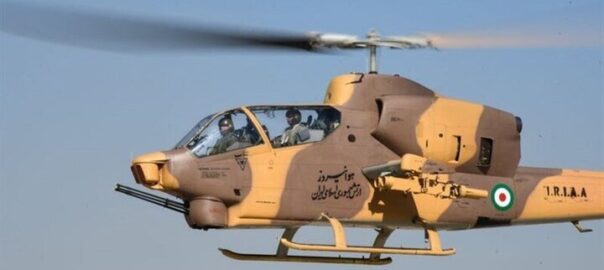
Saying that Iran overcame the sanctions successfully, the Head of the Iran Aviation Industries Organization (IAIO) said that Iran exports the required pieces for producing helicopters to other friendly and allied countries.

Speaking in an interview with Mehr News Agency, Second Brigadier General Afshin Khajeh Fard said that Iran enjoys one of the most diverse helicopter fleets in the world, having a variety of eastern, western, and European helicopters.

Saying that Iran is not dependent on foreign countries in this field, Khajeh Fard noted, “Fortunately, we have overcome the sanctions and today we also export and provide engineering services to other friendly and allied countries.”

“For many years, Iran Aviation Industries Organization, in cooperation with knowledge-based companies, has been able to produce the required pieces equal to global standards for producing all kinds of helicopters,” he added. /MNA/

Iranian reciter Amir-Hossein Rahmati tops at Intl. Quran Competition in Tehran

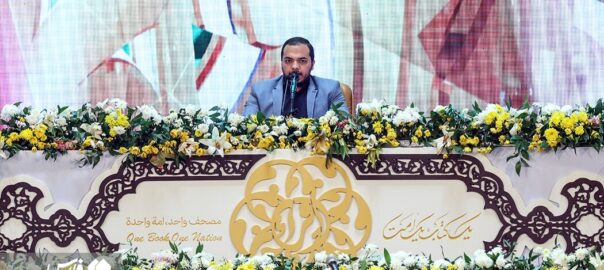
Iranian reciter Amir-Hossein Rahmati has won first prize at the 39th edition of Iran’s International Quran Competition. He received his prize from President Ebrahim Raisi during the closing ceremony of the competition on Wednesday evening at Tehran’s Islamic Summit Conference Hall.

Seyyed Amir Hashemi from Afghanistan was selected as runner-up and Abdullah Fikri from Indonesia won third prize in the reciting section.

Rahmati has been awarded in several other international and Iranian competitions.

He won the first prize at the 6th International Quran Competition for School Students in 2019. He also took first place at the 44th edition of Iran’s Nationwide Quran Competition in 2021.

Mohammad-Javad Javari from Iran took first place in the tarteel competition of the 39th International Quran Competition.

Mohammad Yar from Kyrgyzstan and Ismail Hamdan from Lebanon won the runner-up prize and third prize in this section respectively.

First prize in the memorizing category was also given to Iranian reciter Sina Tabbakhi. The runner-up and third prizes went to Abd al-Alim Abd al-Rahim from Kenya and Sheikh Mahmud Hassan from Bangladesh.

In the women’s memorizing competition, first prize was given to Amina Ibrahim from Ghana. Hajar Mehralian from Iran and Nasrin Khalidi from Algeria won second and third prizes.

First prize in the women’s tarteel competition was given to Fahimeh Asgharzadeh from Iran.

Layla Afara from Lebanon and Amaneh Shirzad from Afghanistan won second and third prizes.

In order to support the local currency, he noted that the winners will be awarded cash in rials, the standard unit of money in Iran.

Top winners in different categories are awarded 1.5 billion rials (over $2,800 based on Iran’s free-market exchange rate: $1 = 530,000 rials).

Runners-up received cash prizes of 1.2 billion rials and third-place winners were awarded cash prizes of 900 million rials.

Fifty-two reciters and memorizers from across the world participated in the competition, which ran with the motto “One Book, One Ummah” for four days. /T.T/

Iran’s annual export to India rises 60%

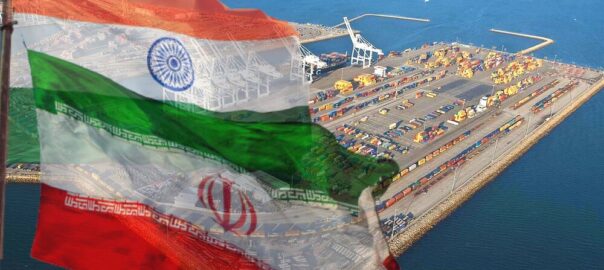
The value of Iran’s export to India increased by 60 percent in 2022 as compared to the preceding year, according to the data released by the Indian Ministry of Commerce and Industry.

The Indian ministry put the worth of Iran’s exports to India at $653 million in 2022, while the figure was $409 million in 2021, IRNA reported.

As reported, petroleum products have been the major goods imported by India from Iran in the said months.

According to the mentioned data, the value of trade between Iran and India reached $2.5 billion in 2022, rising 48 percent from $1.693 billion in 2021.

During January-December 2022, India’s export to Iran also increased by 44 percent to stand at $1.847 billion, while the figure was $1.284 billion in 2021.

Rice was India’s major product exported to Iran in the said period during which the country shipped $1.098 billion worth of rice to the Islamic Republic.

In late May 2022, the Iranian ambassador to India said that Iran and India are trying to diversify the channels of payments to expand bilateral trade.

In an exclusive interview with Financial Express Online, Ali Chegeni said, “We are trying to diversify the channels of payments and accordingly wish to extend and expand an already existing mechanism in order to cover all of the goods and services including all of the non-oil goods and to achieve this”.

During the past two years, because of Covid restrictions, we pursue the issue via virtual dialogues and currently, our officials are following the matter through the exchange of delegations, the envoy stated at the time.

“We want to develop our economic and trade relations beyond energy and petrochemical products. because, due to the complementarity of Iran and India’s economies, an extensive range of non-oil trade exists between the two sides including trade on goods and services, investment, tourism, education, and … which may pave the way for multiplying our economic relations ten times more than current relations in mid and long terms”, Chegeni said. /T.T/

Quake inflicts no harm to historical sites in Fars

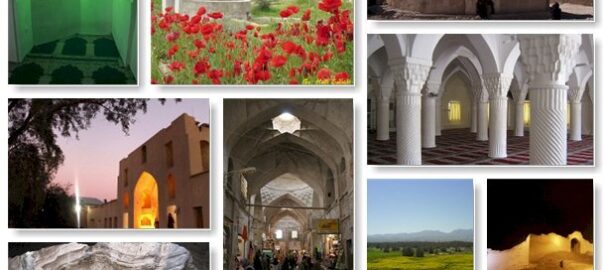
A medium-sized 5.3 magnitude earthquake that struck southern province of Fars on Wednesday morning caused no damage to historical sites across the province, the provincial tourism chief has said.

Based on field visits conducted by the cultural heritage experts, no serious damage to historical relics and monuments has been reported so far, Seyyed Moayyed Mohsen-Nejad explained.

However, experts are on standby to inspect the possible harms to historical sites and aging structures of the province, he added.

Iran sits on top of major tectonic plates and experiences frequent seismic activity. A 7.3-magnitude quake in the western province of Kermanshah killed 620 people in November 2017.

In 2003, a 6.6-magnitude quake destroyed the ancient mud-brick city of Bam in the southeast Kerman province, killing at least 31,000 people.

Iran’s deadliest was a 7.4-magnitude quake in 1990 that killed 40,000 people, injured 300,000 others, and left half a million homeless across the northern town of Rudbar.

The ancient region of Fars, also spelled Pars, or Persis, was the heart of the Achaemenian Empire (ca. 550–330 BC), which was founded by Cyrus the Great and had its capital at Pasargadae. Darius I the Great moved the capital to nearby Persepolis in the late 6th or early 5th century BC.

Its capital city, Shiraz, is home to some of the country’s most magnificent buildings and sights. Increasingly, it draws more and more foreign and domestic sightseers flocking into this provincial capital which was the literary capital of Persia during the Zand dynasty from 1751 to 1794. /T.T/

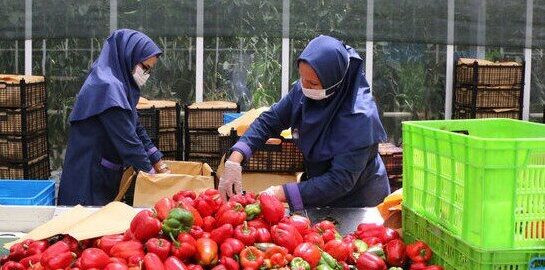
Export of agricultural products to China rises 5 folds

Iranian Agriculture Minister Javad Sadati-Nejad said the export of agricultural products to China has increased by fivefold in the first 10 months of the current Iranian calendar year (March 21, 2022-January 20, 2023), as compared to the previous year’s same period, IRNA reported on Wednesday.

Sadati-Nejad, who accompanied President Raisi on his recent visit to China, said earlier that the Chinese president is interested in Iranian agricultural, food, and dairy products, and such products can conquer China’s one-billion markets more than ever.

Speaking to IRNA on February 15, the minister referred to signing a number of cooperation documents in the agriculture field with China, adding, “Today three agriculture documents were signed with China, two of which is about exporting Iranian dairy products to China and one is on exporting apples to that country.” /T.T/

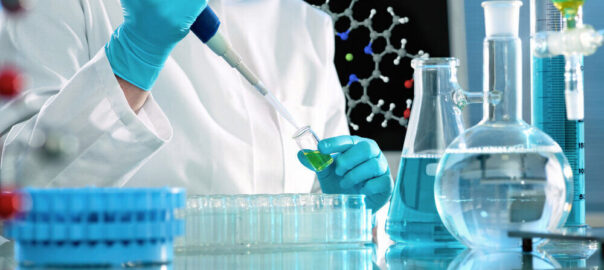
Biotechnology saves $1.8b in healthcare sector

The secretary general of the Biotechnology Development Headquarters has said about $1.8 billion have been saved as a result of biotechnological activities in the field of medicine.

“Efforts in the ecosystem of technology and innovation are so great that every year we see a decrease in spending foreign exchange and an increase in domestic production in the field of medicine and treatment,’ ISNA quoted Mostafa Qanei as saying.

Products that have been manufactured with the help of indigenized biotechnology have met domestic needs, he added.

“Currently, about 800 knowledge-based companies are operating in the field of biotechnology, and we are trying to increase this number qualitatively and quantitatively by increasing support,” Qanei highlighted.

In January, Qanei said the U.S. sanctions have impeded the country’s ability to acquire a targeted 3 percent share of the global biotechnology market.

Iran is an advanced and developed country in the field of biotechnology and home to outstanding technologists, he added.

“We could easily increase Iran’s share of the global biological market to three percent,” he said.

Considering that Iran has 1 percent of the world’s population, we aimed to gain 3 percent of the world’s biotechnology market, but the sanctions did not allow us to become a good actor in the field of biotechnology at the international level.

The Secretary of Biotechnology Development Headquarters considered financial exchanges to be the main problem in this field.

“In recent years, we have tried to realize this plan, and technologists and knowledge-based companies have also taken steps in this direction, and good successes have been achieved, but we are far from reaching the desired point,” he noted.

Currently, around 30 types of biotech medicines are produced in the country in addition to kits, vaccines, and blood products. Also, 80 percent of biotechnology pharmaceutical items are domestically produced.

Biotechnology today is widespread in all fields and is no longer limited to biomedical drugs so it has replaced injured limbs.

The Vice Presidency for Science and Technology is set to achieve a 3 percent share of the global biotechnology market.

In May 2021, the Biotechnology Development Council launched 129 production projects with the aim of saving up to $1.44 billion in foreign currency.

Iran is ranked 12th in the world and first in West Asia in terms of biotechnology, as 9.5 percent of the income of knowledge-based companies and more than 60 percent of their exports are related to biotechnology.

Foreign exchange savings of $1 billion per year by producing 22 biopharmaceuticals, gaining the first rank in biotechnology products and vaccines in West Asia, and the presence among the top five biotechnology producers in Asia are among the country’s achievements, Qanei said in October 2020.

So far, 27 biotechnology medicines, 12 vaccine projects, 90 pharmaceutical raw materials, and 55 projects in agriculture and food security have been implemented in order to gain a 3 percent market share and biotechnology assistance to the development of the economy, he explained. /T.T/

Iranian woman skier Beyrami makes history at World Championships

Iranian woman skier Samaneh Beyrami Baher secured her place in the women’s 5km individual final race in freestyle technique at the Cross-Country Skiing World Championships underway in Planica, Slovenia.

She crossed the finish line with a time of 16:12.4 and came eighth.

Beyrami is the first Iranian woman skier to compete in the final.

Brazilian skier Jaqueline Mourao took home first place at the qualification race with a total time of 14:42.0. /T.T/

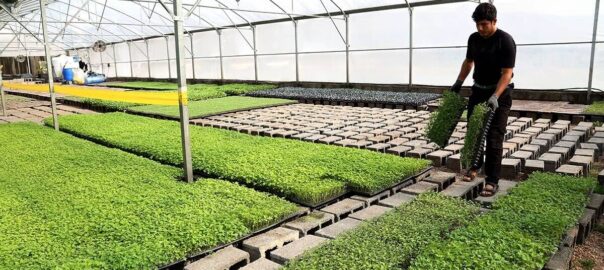
Medicinal plants sector creates over 5,500 jobs

More than 5,500 jobs have been created so far by the medicinal plants sector in the current Iranian calendar year that ends on March 20.

Since the beginning of the year, a total of 1,835 projects have been launched in the field of medicinal plants, which have created over 5,500 direct and indirect job opportunities, IRNA reported.

The projects have been implemented in 258 cities and 188 villages nationwide.

Iran ranks fourth worldwide in the production of science in the field of traditional medicine, and the remarkable achievement will improve in the coming years, Nafiseh Hosseini Yekta, the director of the health ministry’s Persian medicine office, has announced.

Over 17,000 books have so far been published about Persian traditional medicine, which has been recognized by the World Health Organization, she noted.

Iranian traditional medicine strongly focuses on prioritizing health maintenance and disease prevention over treatment.

It is one of the most ancient forms of traditional medicine. It is grounded in the concept of four senses of humor: phlegm (Balgham), blood (Dam), yellow bile (Safra’), and black bile (Sauda’). The concept of the four senses of humor is based on the teachings of Rhazes and Avicenna in an elaborate medical system.

So far, about 30,000 plant species have been identified in the world, with Iran’s share of about 8,000 species which is more than the whole of species found in Europe.

The per capita consumption of medicinal plants in Iran is about one kilogram of dried plants, in other words, 83,000 tons of medicinal plants worth 1.2 trillion rials (around $4 million) are consumed in the country, while in Europe this amount is 900 grams and in the United States is 2.5 kilograms.

The 6th National Festival and Exhibition of Medicinal Plants, Natural Products, and Iranian Traditional Medicine was held in Tehran on November 1 to 4, 2022.

The event introduced technological and scientific achievements of knowledge-based and creative companies in the field of medicinal plants.

It also created a reliable bridge between people who are active in the ecosystem of medicinal plants and traditional medicine.

It hosted knowledge-based companies, investors, research and technology funds, creative and innovation houses, banks, and venture capital funds in order to provide a path for development in the country.

More than 70 creative companies and a number of innovative houses presented their capabilities and products at the festival. /T.T/

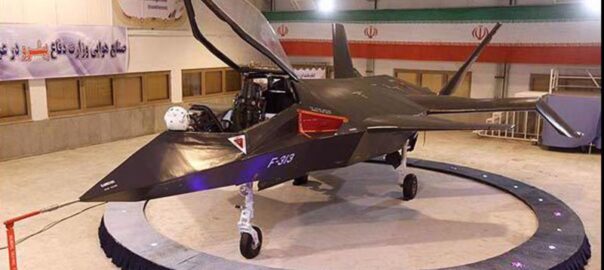
Iranian Fighter Jet to Become Unmanned Aircraft

An Iranian Defense Ministry official unveiled plans to turn the homegrown stealth fighter jet “Qaher (Conqueror)” into a pilotless warplane.
The managing director of the Iran Aviation Industries Organization (IAIO), a subsidiary of the Defense Ministry, announced in a televised interview on Saturday that the Qaher fighter jet project has reached full maturity in technologies.

General Afshin Khajefard said the Defense Ministry is working on the diversity of the final product, adding that the Qaher fighter jet is going to emerge as a pilotless aircraft.

A series of versions of Qaher will be unveiled in the middle of the next Iranian year, which will begin on March 21, he added.

The general noted that the Defense Ministry has made modifications to the Qaher fighter jet to adapt it for the utilities of two military units.

Khajefard also stated that Iran has begun to develop electric airplanes and is going to test two prototypes next year.

Iran has fully gained the technical know-how to manufacture electric drones, but the production of manned electric planes requires more research and development, he added.

The general also highlighted Iran’s progress in the production of firefighting drones, saying two representatives from foreign countries have purchased this Iranian drone.

The Iranian fighter jet Qaher-313 was unveiled in February 2013. The single-seat stealth fighter jet can take off and land on short runways.

Iranian military experts and technicians have in recent years made great headways in manufacturing a broad range of indigenous equipment, making the armed forces self-sufficient in the arms sphere. /T.T/

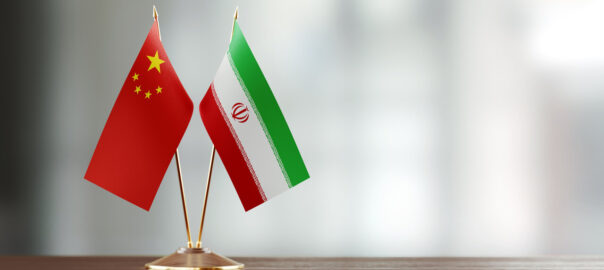
Iran to open trade center in China by late March

Head of the Iran-China Joint Chamber of Commerce said Iran is to open a trade center in China by the end of the current Iranian calendar year (March 20), IRIB reported.

According to Majid-Reza Hariri, the center is going to be launched with the aim of pursuing the implementation of the recent agreements and deals signed between the two countries.

Pointing to the conclusion of numerous business agreements between Iranian and Chinese companies during the recent visit of President Ebrahim Raisi to China, Hariri said: “In order to follow up on contracts and develop business relations, an office will be established in China which will also work to facilitate the presence of Chinese businessmen in Iran.”

China has remained Iran’s largest trading partner for 10 consecutive years as of 2022, according to the Chinese Ministry of Commerce.

“China-Iran trade totaled $15.8 billion in 2022, up seven percent, year on year,” Shu Jueting, a spokesperson for China’s Commerce Ministry, told a press conference on Thursday.

“During President Raisi’s visit to China, the two countries exchanged in-depth views on promoting bilateral economic and trade relations and reached a series of positive results,” Shu said.

“In the next step, we will work with our Iran counterpart to implement the important consensus reached by the two heads of state in the economic and trade fields, deepen pragmatic cooperation in trade and other fields, import more Iranian high-quality products, and continue to carry out cooperation in building the Belt and Road Initiative.”

The spokesperson said China would strengthen multilateral cooperation between the two countries and inject new growth impetus into deepening the China-Iran comprehensive strategic partnership.

Heading a high-ranking delegation, Iran’s President Ebrahim Raisi was on a three-day state visit to China starting Feb. 14.

During President Raisi’s visit to China, Tehran, and Beijing signed a number of bilateral cooperation documents in the fields of agriculture, trade, tourism, environmental protection, health, disaster relief, culture, and sports.

The documents include agreements in the field of transportation and industry worth $12 billion and $3.5 billion, respectively, the agreements cover various joint projects like the high-speed rail link between Tehran and Mashhad, and investment in the Imam Khomeini Airport City.

Investment in Iran’s southeastern Mokran Coast and the purchase of Iranian oil are also mentioned in the documents.

Raisi’s visit serves as an example of the high level of mutual trust between China and Iran, as well as a milestone for bilateral ties.

Hariri had earlier said that considering the opportunities presented by the two countries’ 25-year strategic agreement, the trade between Iran and China can be increased three-fold.

“In the worst conditions created by sanctions, our trade with the Chinese reached about 24 billion dollars, and we can increase this figure by at least three times, Hariri said.

Member of the International Relations and Trade Development Committee of the Iranian House of Industry, Mining, and Trade Ruhollah Latifi has also said that China was Iran’s top trade partner in the first 10 months of the current Iranian calendar year (March 21, 2022-January 20, 2023) with 29.2 million tons of goods worth $25.3 billion being exchanged between the two sides. /T.T/