All posts by islam

New TV Channel on Fashion & Clothing in Iran

A local TV channel ‘Lebas TV’ will be launched to coincide with the 5th edition of the Fajr International Fashion and Clothing Festival (March 8 to 12). ‘Lebas’ literally means clothing in Persian.

Organized by officials of the state-owned IRIB, including Farshid Mahmoudi, Shahin Araqi, Mohammad Salimi and Hadi Robati, the channel will operate as ‘a fashion and clothing medium’ sharing designer apparel and related information, Honaronline reported.

The Ministry of Culture and Islamic Guidance has granted permission to the National Foundation of Fashion and Clothing (NFFC) to manage the channel.

“The broadcasts will adhere to Iranian-Islamic norms, yet they will share many items from today’s world fashion channels,” said an official.  Programs titled ‘Wearing Smart’, ‘Iranian Fashion’, ‘The Clothes Story’, ‘World Fashion’, ‘Outfit No.1’, ‘Design,’ ‘Behind the Scene and The Stage’, are among those being prepared for broadcast.

In Outfit No.1, the styles of a particular social group, like artists, politicians and surgeons, with information about their specific outfit styles, will be shown. Design is a 30-minute show, presenting a step by step description of fashion designing, and Behind the Scene will present the latest news on official events in the apparel sector.

World Fashion covers global fashion events, mostly focused on men’s wear.

‘Outfit Consultation’, is expected by the organizers to be warmly received by the viewers, as it will bring a popular figure face to face with a fashion designer, who will recommend what to wear.

In addition, there is another program, titled ‘Dresser’, which presents photos and videos of important fashion events. Each month, several brands, fashion houses and designers will be introduced, promoting interaction between the apparel industry and the clientele.

Salimi, a TV presenter emphasized that a TV broadcast should cater to the preferences of the audiences.”The Fajr fashion festival as a group, tries to expand interaction with various sections of the society and to assess their opinion of the clothing industry so as to incorporate their views in the channel’s programs.”

If Iran’s fashion industry is to develop, then fashion expos should be regularly held.  “A noticeable measure by the NFFC is holding fashion expos in various provinces and not just in Tehran.”

Iranian-Islamic fashion should be extended to the international arena. The collaboration of ethnic groups, who wear Kurdish, Lurish and Balouch styles of clothing, is important in this regard.

Twenty-two guilds and associations will take part in the festival, which seeks to present Iranian-Islamic patterns. The festival will be held at Tehran’s Vahdat Hall.

/financialtribune.com/

100-strong Iranian trade delegation to visit Iraq soon

Rajeh Saber Abboud al-Mousavi, the Iraqi ambassador to Iran, said Iran would dispatch a large trade delegation of over 100 members to Iraq in the near future.

As far as the two sides are eager to raise the volume of trade, Abboud al-Mousavi said, the travel of Iranian delegation is likely to bring positive results, the Tasnim news agency quoted him as saying.

Iraq was the 2nd leading importer of Iranian non-oil goods in the previous Iranian calendar year, which ended on March 20, 2015, according to the Iran Customs Administration.

Iran exported $6.182 billion of non-oil goods to Iraq and imported $60.369 million of non-oil goods from the country.

Last February, Iranian Finance and Economic Affairs Minister Ali Tayyebnia said Iran and Iraq seek to increase their bilateral trade from currently $12 billion to $20 billion.

He added that Iran has fertile grounds for trade cooperation with Iraq, particularly in the field of exporting technical and engineering services.    /Tehrantimes/

11-month car manufacturing exceeds 878,000 in Iran

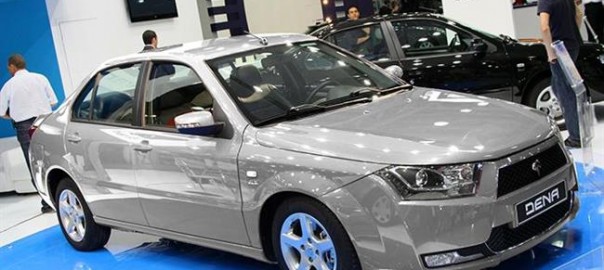
Iranian carmakers manufactured 878,644 vehicles in the first 11 months of the current Iranian calendar year (March 21, 2015- February 19, 2016).

The country produced 96,508 vehicles in the Iranian eleventh month of Bahman(January 20-February 19), the Tasnim news agency reported on Sunday.

The carmakers manufactured 1.13 million vehicles in the past Iranian calendar year, which ended on March 20, 2015, showing 53 percent growth compared to its preceding year.

The automobile industry, the biggest non-oil sector of the Iranian economy, constituting around 10 percent of gross domestic product (GDP), boomed over the decade ending in 2011 due to government support and the dearth of international competitors in the domestic market.

Latest data shows that Iran ranks 18th on the list of the world’s top auto manufacturers.

In January 2016, following a report by the U.N. International Atomic Energy Agency (IAEA) certifying that Tehran has met all its obligations under the nuclear deal with world powers, most of the UN, U.S. and EU sanctions on Iran were lifted.

In the same month, PSA Peugeot Citroen and Iran’s largest carmaker, Iran-Khodro Company (IKCO) signed a joint venture agreement to produce latest-generation vehicles in Iran.

Based on the agreement between Peugeot and IKCO up to €400 million over the next five years will be invested in manufacturing cars in Iran, according to IKCO’s news website, and the investment will contribute to facilitate the development of a competitive manufacturing base for producing, launching and marketing Peugeot 208, 2008 and 301 models, fitted with latest-generation engines.

/tehrantimes /
Iran’s economy grows 7% in 9 months: official

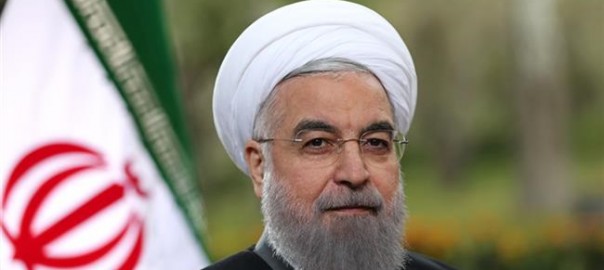
Iranian economy experienced seven percent growth in the first nine months of the current Iranian calendar year (March 21-Decemebr 21, 2015), according to Iran’s Management and Planning Organization Director Mohammad-Baqer Nobakht.

The official said: “While economic growth requires investment making, we did not have any income rather than the limited oil revenues; therefore although the growth has been low, it is considerable compared to the past”, the Tasnim news agency reported on Sunday.

On February 20, Iranian Finance and Economic Affairs Minister Ali Tayyebnia said that removal of the West-led sanctions against Iran’s economy provides many opportunities for the country to achieve sustainable economic growth.

The country’s budget plan for the next Iranian calendar year (which will start on March 20) has envisaged five percent economic growth.

On February 23, Tayyebnia mentioned achieving an economic growth of eight percent as one of the main objectives of the country’s Sixth Five-Year Socio-Economic Development Plan, which ends in 2021.

In its January 2016 Global Economic Prospects report with the theme of Spillovers amid Weak Growth, the World Bank forecasted Iran’s gross domestic product (GDP) will grow by 5.8 percent in 2016 and by 6.7 percent in 2017.

The report said Iran’s economy expanded by 1.9 percent in 2015.

The World Bank also said Iran’s nuclear agreement opens the door for reintegration of the country into the global economy and the reinvigoration of its oil, natural gas, and automotive sectors. In this regard, renewed optimism about the potential of the Iranian economy has already generated a flurry of investment interest by foreign companies.

/ tehran times /

Cafe Bazaar on 28 Million Phones

Cafe Bazaar, Iran’s most popular local Android app store, announced over the Iranian weekend (Thursday-Friday) that its app has now been installed on over 28 million Android devices. Speaking in a news conference, Hesam Armandehi, the local app store’s CEO, noted the growth in the application’s revenue has grown 120% over the past 12-month period (ending March 19), according to the press release released to local technology site, Techrasa. The CEO noted that the uptake in installations of the app was largely due to the growth in 3G LTE, a mobile communications standard. The emergence of 3G as a competitor to regular WiFi signals is part of a growing trend by the operators to offer more competitive services.
Armandehi announced the group’s upcoming Panjshanbeh (Thursday in Farsi) Bazaar, which will allow the company to meet many of the local app developers who work in Tehran and surrounding cities. The event, the second such event, is an annual gathering of mobile app developers from the Islamic Republic and is the largest of any kind in the country.

/financialtribune.com/

Iranian banks are now connected to SWIFT

According to the CEO of the Bank of Industry and Mine, Iranian banks are now connected to SWIFT, the Society for Worldwide Interbank Financial Telecommunication. Ali Ashraf Afkhami, said that SWIFT is now open to Iranian banks, Bourse Press reported. In 2012, SWIFT cut off Iranian banks subjected to EU sanctions over Iran’s nuclear energy program, shutting down a major avenue of doing business with the outside world. However, Iranian banks, their overseas branches and affiliates were officially removed from SWIFT’s sanctions list on January 17 after Iran’s nuclear accord with the six world powers came into effect. Afkham added that although Iranian banks could open LCs on the first day of the implementation of the nuclear deal, they had to resort to the traditional method for opening LCs because they had access only to the pre-sanctions’ passwords for LCs. “Even though reconnecting to SWIFT took almost three weeks, it is now ‘routinely’ processing transactions for Iranian banks.”

/financialtribune.com/

Iran’s gas condensate output up 20% in 11 months

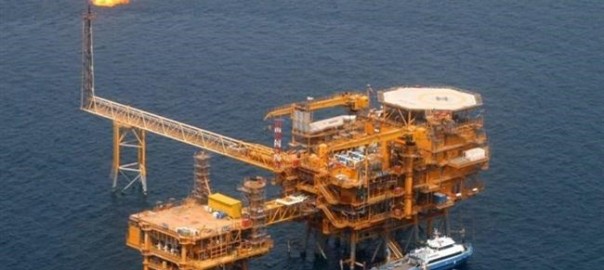
The production of gas condensate in Iran rose 20 percent in the first eleven months of the current Iranian calendar year (March 21, 2015-February 19, 2016), compared to the same period of time in the past year, said Abdulhossein Samari, the operations manager of the National Iranian Gas Company (NIGC).

The production of Gas condensate, a light form of crude oil produced in association with natural gas, reached around 234 million barrels in the 11-month period, the Islamic Republic of Iran Broadcasting (IRIB) reported on Saturday.

During the mentioned time, Samari said, the output of sulfur also jumped seven percent in comparison with the last year’s figure which stood at 917,000 tons.

According to him, Iran produced over 21.251 million barrels of liquefied petroleum gas (LPG) during the period, showing a 35 percent growth relative to the last year’s record.

In the 11-month time span, the official added, the gas refining capacity surged seven percent to 162.5 billion cubic meters.

Iran aims to nearly double gas production to reach one billion cubic meters per day in less than two and a half years.

With its 34 trillion cubic meters of natural gas, Iran has the biggest gas reserves in the world.

The country intends to enhance gas production by increasing foreign and domestic investment, especially in its South Pars gas field.   /Tehran Times/

Iran’s Anti-Drug Efforts to Benefit World

Iran’s top human rights official said all countries will benefit from the Islamic Republic’s efforts against drug trafficking.

“Iran takes into consideration all the adverse consequences of drug trafficking”, Mohammad Javad Larijani, secretary-general of Iran’s High Council for Human Rights, said in a meeting with Zeid Ra’ad Al-Hussein, the UN high commissioner for human rights, in the Swiss city of Geneva on Friday, according to Press TV.

“The battle against drug smugglers is a serious issue in Iran that should be heeded at an international level because the whole world will in practice benefit from the fight,” Larijani said.

Despite high economic and human costs, the Islamic Republic has been actively fighting drug trafficking over the past three decades.

Iran has spent more than $700 million to seal the borders and prevent the transit of narcotics destined for European, Arab and Central Asian countries. The war on drug trade originating from Afghanistan has claimed the lives of nearly 4,000 Iranian police officers over the past 34 years.

In December 2015, Interior Minister Abdolreza Rahmani Fazli and the United Nations Office on Drugs and Crime Executive Director Yury Fedotov signed an agreement in the Austrian capital Vienna to fight the flow of narcotics into Iran from neighboring countries, mainly Afghanistan.

Iran, which has a 900-kilometer border with Afghanistan, has been used as the main conduit for smuggling Afghan drugs to drug kingpins in Europe.

Larijani said Iran and the UNHCHR have always maintained positive cooperation and called for enhanced mutual interaction.

Front Line

Hussein said Iran lies on the frontline of the fight against the scourge of drugs.

He expressed his keenness to pay a visit to Iran and hold talks with judicial and human rights officials of the country.

The UN human rights chief regretted the the deplorable situation in the Middle East and the consequences of war and violence in the region.

Hussein said the UN plans to examine problems created for refugees, mainly Muslims from Middle East states, and to protect the rights of refugees and minorities in Europe.

Thousands of refugees, mostly fleeing war and poverty in the Middle East, are trapped in Greece, which has been the main gateway for refugees into wealthier European states.

The exodus has prompted several EU states and Balkan countries to impose restrictions on their borders.

The United Nations and other world organizations say the refugee crisis in Europe is quickly turning into a humanitarian disaster, calling for the implementation of a relocation plan for thousands of stranded refugees.

/financialtribune.com/