All posts by islam

VP puts emphasis on women’s role in resistance economy

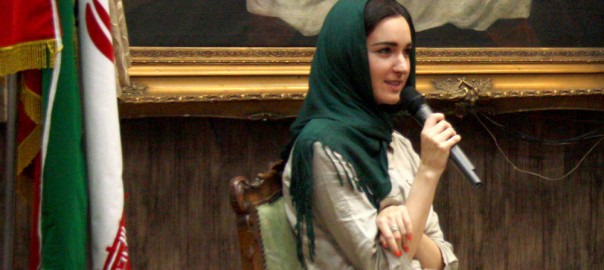
The vice president in women and family affairs, Shahindokht Molaverdi, here on Monday put emphasis on utilizing women’s capacities in implementing and promoting resistance economy.

Supreme Leader Ayatollah Ali Khamenei in an official decree in February 2014 called on the government to secure the utilization of the country’s resources, struggle to promote a knowledge-based economy, take efforts to increase energy consumption efficiency and boost domestic production as the requirements for the materialization of the resistance economy.

The department of women and family affairs has made immediate efforts in solving urgent problems of women in the previous years, Molaverdi said, adding, “several agreements have been signed in this regard.”

“We hope that the current year (1395, beginning March 20), to be the year of fulfilling the promised cooperation between the department and other executive organizations,” she added.

We also hope for achieving outstanding goals in empowering women and children this year and the coming year, the vice president noted. / tehran times /

Shirdel to Help Elevate Sharjah Calligraphy Biennial

Iranian artist, Ramin Shirdel is preparing to partake in the 7th edition of Sharjah Calligraphy Biennial, slated for April 6 to June 6.

An artist who utilizes words as a base for his works, Shirdel was invited to participate in a sub-section of the event, showcasing his art in a solo exhibit, Honaronline reports.

“The solo shows are designed to elevate the level of the biennial and also cover contemporary artworks. That is why organizers invited many artists working with different materials and styles to attend,” Shirdel said.

Shirdel will show his works along with artists including Richard Niessen from the Netherlands, El Seed from France, Ian Burns from United States, Abdulrahman Nugamshi from Saudi Arabia and others from South Africa, Egypt, Poland, United Kingdom, Bahrain, Canada, China, Lebanon and Finland.

In the artist’s words, “a dream, an image, a poem, a lyric, a landscape or a dialogue” in everyday life can spark his imagination. Such inspirations, combined with formal considerations of space, merge into an individualized style that takes into account the simultaneity of lived experiences that the artist renders through his mixed media artworks. “Working in assemblage creates a sense of dimensionality that alludes to built forms while allowing signifiers of language to come alive as tangible signs.”

Sharjah Calligraphy Biennial in the UAE is seen as one of the important events in the region. It aims at revealing the power of the letter in bringing cultures together. It is an art that reflects the spirit of the place and the existence.

The event is a celebration of Arabic calligraphy and its creators, and aims to make the world realize the beauty and authenticity of the Arabic letter. It introduces the features of Islamic civilization, as it is a major form of artistic expression in Islamic cultures, especially and particularly in religious contexts.

Born in Tehran, Shirdel, 34, holds a master’s degree in architecture from University of Tehran. He is a multi-disciplinary artist who works in different mediums of art. He is also an award-winning architect who has designed several local and international projects.

His art has been exhibited in solo and group exhibitions at local galleries in Tehran. His works are housed in private collections throughout the Middle East, Europe and the United States.


/financialtribune.com/

Iranian Cultural Offices Celebrate Persian New Year

Iranian cultural offices in different cities around the world celebrated the ancient festivities of Nowruz.

According to the public relations office of the Islamic Culture and Relations Organization (ICRO), the word Nowruz itself literally means “new day” in the Persian language and the festivity marks the beginning of the solar year as well as the New Year on the Iranian national calendars, and has fallen on March 21 this year.

Iranian cultural offices in different cities and countries including Sweden, Armenia, Germany, Spain, Italy, Iraq, Bangladesh, Azerbaijan, Bosnia, Bulgaria, France, Kazakhstan, Georgia, Malaysia, Tajikistan (Khujand, Dushanbe), Pakistan (Lahore, Islamabad, Quetta), Moscow, Turkey (Istanbul, Ankara, Erzurum) and other centers celebrated the Nowruz festival for Iranians abroad by holding different spiritual and happy programs.
The Nowruz festival celebrates the rebirth of nature. This reawakening symbolizes the triumph of good over the evil forces of darkness, which are represented by winter. Nowruz is the point when the oppressive presence of the cold winter finally begins to recede with the commencement of the lively and hopeful spring.

IMG_1786_264100

IMG_1942_264096


IMG_1865_264080

1_264040

alman_214143

aragh_214146

bako_214147 (1)

baneladesh_214148

bolgharestan_214149

bosni_214150

espaniya_214151

faranche_214152

ghazaghestan_214153

gojestan_214154

italiya_214155

karachi_214156    pakestan-lahor_214161  soed_214512  tajikestan1_214162  torkiyehankara_214165

torkiyeh-arzrom_214166

torkiyah-estanbol_214164

tajikestan_214179

khojand_214157

pakestan-koviteh_214160

rosiyeh_214163

armanestabn_214510


Iran says Shell cleared all debts

An Iranian official said on Sunday that the global energy giant Royal Dutch Shell has cleared all outstanding payments from previous oil sales and other related deals.

The announcement was made by Ali-Asqar Hendi, the head of the Debts Settlement Committee of the Ministry of Petroleum of Iran.

Hendi had previously said that Shell owes Iran over $2 billion.

The company had in early March announced that it had paid €1.77 billion (£1.4 billion) it owed the National Iranian Oil Company (NIOC), settling debts after sanctions against the country were lifted in January.

The outstanding debt to Iran was a result of Iranian oil deliveries which Shell had been unable to pay for due to sanctions, Reuters reported on 7 March.

The Anglo-Dutch company resumed talks with Tehran on the debt after most Western sanctions were lifted in January. The payments were made over the next few weeks after the removal of the sanctions in euros as dollar transactions are still under US sanctions, Reuters added.

Analysts believe that the move will now allow Shell to access the Iranian oil market. This is because the NIOC has been working to recover its debt, as a precondition to start exporting oil to Shell.

Shell, along with its European peers, has already showed a keen interest to return to the Iranian oil and gas projects. The Anglo-Dutch oil giant alongside BP, Total, and Statoil, sent a delegation to Tehran in November last year, to explore opportunities in the upstream sector of the country.

The company was involved in the development of Iran’s Soroush and Norouz oil fields in Persian Gulf waters.  It was also planning to develop a gas liquefaction project called Persian LNG in Iran’s South Pars energy zone. However, it later cancelled its plans to that effect as a result of the sanctions.

The sanctions – that were lifted in January – for multiple years imposed tight limits on Iran’s financial transactions with the world.  They also prevented companies from investing in the country’s energy projects among other restrictions. / Press tv /

Iranians celebrate national Women’s Day

Iranians are celebrating the national Women’s Day to honor the birth anniversary of Prophet Muhammad’s daughter Hazrat Fatemeh Zahra (PBUH).

Every year, people in Iran commemorate the national Women’s Day and Mother’s Day on the 20th day of the lunar Islamic month of Jamadi al-Thani, which marks the birthday anniversary of Hazrat Fatemeh Zahra.

Hazrat Fatemeh was the wife of Imam Ali (PBUH), the first Imam of Shia Muslims, and is referred to as a role model for all Muslim women.

Many Iranians take the occasion of this holiday to thank and honor their mothers, grandmothers, wives and sisters and to spend more time with them. They pay tribute to them by giving them gifts.

/ press tv/

Iran must boost defense capabilities: Ayatollah Khamenei

Leader of the Islamic Revolution Ayatollah Seyyed Ali Khamenei has stressed the strengthening of Iran’s defense capabilities in the face of enemy threats.

Ayatollah Khamenei made the remarks in a meeting with eulogists on the occasion of the birth anniversary of Prophet Muhammad’s daughter Hazrat Fatemeh Zahra (PBUH) on Wednesday.

Ayatollah Khamenei noted that Iran needs to have boosted its defensive military capabilities in order to strengthen its position in potential negotiations.

“If the Islamic establishment seeks technology and negotiations but does not have defensive power, it will have to back down in the face of any petty country that threatens [it],” the Leader said, wrote Presstv.

“That they say the future of the world is one of negotiation and not one of missiles… if that is said out of ignorance, well it is ignorance, but if it’s said knowingly, it is treason,” Ayatollah Khamenei said.

“The Islamic Republic must use all tools,” the Leader said, adding, “I am not opposed to political dialog, not with everyone of course. I am fine with political dialog on the level of global issues. These are times of both missiles and negotiations”.

Ayatollah Khamenei’s remarks come as the United States and some of their European allies are seeking a meeting at the United Nations Security Council (UNSC) on Iran’s recent missile tests, which they claim were carried out in defiance of a UNSC resolution.

In a letter to UN Secretary General Ban Ki-moon and Spain’s UN Ambassador Roman Oyarzun Marchesi, the US, Britain, France, and Germany have reportedly called for discussions on an “appropriate response” by the UNSC to Iran’s missile tests.

In their joint letter, the four countries claimed that the missiles used in Iran’s recent tests were “inherently capable of delivering nuclear weapons” and were “inconsistent with” and “in defiance of” UNSC Resolution 2231 adopted last July to endorse a nuclear agreement between Iran and the P5+1 group of countries.

Resolution 2231, which endorses the Joint Comprehensive Plan of Action (JCPOA) — the Iran-P5+1 agreement — provides for the termination of the provisions of previous Security Council resolutions over the Iranian nuclear program.

On March 9, Iran’s Islamic Revolution Guards Corps (IRGC) successfully test-fired two ballistic missiles as part of measures to assess IRGC capabilities. The missiles, dubbed Qadr-H and Qadr-F, were fired during large-scale drills code-named Eqtedar-e-Velayat. Iran fired another ballistic missile dubbed Qiam from silo-based launchers in different locations across the country on March 8.

Iran argues its missiles are defensive and designed to carry conventional explosives only. The US, Britain, France, and Germany were, along with China and Russia, members of the P5+1, which reached the nuclear deal with Iran after some 22 months of negotiations. Iran and the six other countries started implementing the deal on January 16.  / Iran Daily /

Iran’s trade balance turns positive over ‘lower’ imports

New data by the Islamic Republic of Iran Customs Administration (IRICA) shows ‘unprecedented’ surplus in the country’s foreign trade over the past Iranian calendar year (ended March 19).

The latest customs figures reveal the country registered a trade surplus of USD 0.916 billion in the 12-month period ending over a week ago.

Iran’s balance of trade (BoT) turned positive with its exports tallying USD 42.415 billion, compared with USD 41.499 billion worth of imports, IRNA reported Monday, citing official data.

Although IRICA figures show a drop of more than 16% in exports, they register a ‘record low’ volume in imports, 22.53%, compared to the previous year, hence marking an unprecedented score on the trade balance sheet.

IRICA said Iran spent more than 12 billion dollars less on foreign commodities last year, in comparison to the previous Iranian calendar year.

Gas condensate, oil and petrochemical products constituted the major part of Iranian exports, while maize for cattle feed, wheat and rice were among the chief imports, the report added.

China, Iraq, the United Arab Emirates (UAE), Afghanistan and India purchased more Iranian goods than other countries last year, while a fair share of Iranian imports came from China, the UAE and South Korea.

Earlier this month, the Statistical Center of Iran announced that the Iranian economy grew 0.7 percent in the first nine months of the past Iranian calendar year.

The center said in a report that the agriculture sector listed a growth of 3.2 percent while industries and services experienced negative growths of 1.2 and 0.3 percent respectively.

Iran’s economy has seen a slow but steady growth after last July’s agreement with UN Security Council members plus Germany over Tehran’s nuclear program, which saw the effective removal of sanctions against the country earlier this year.

Back in January, the World Bank predicted a major growth rate of 5.8 percent for the Iranian economy in 2016.

The bank said Iran’s economic growth would be specifically encouraged by a surge in its oil production. It said Iran’s crude output will increase by an estimated 0.5–0.7 million barrels per day (mbd) in 2016 up from the 2015 level of 2.8 mbd. / press tv/

Iran, Austria sign $2b deal

Iran said it has signed a basic agreement with Austria to promote mutual cooperation with the country in multiple industrial fields.

The agreement that has been reportedly signed on Thursday between the chambers of commerce of the two countries could have a collected value of above $2 billion, Press TV reported.

It comprises eight documents that envisage broader cooperation in several areas including the automobile sector, the steel industry, the pharmaceutical field and the engineering services.

The current level of trade between Iran and Austria stands at around $300 million. Officials from both countries announced last year that a serious plan has been devised to boost mutual trade to as high as $1 billion before 2020.

Austria’s President Heinz Fischer visited Iran last September for three days at the head of a 240-member delegation to discuss ways to further expand Tehran-Vienna relations. Fischer expected to host Iran’s President Hassan Rouhani this past week, but the trip was postponed by Tehran.

Officials in Vienna had earlier said business deals worth a total of €1 billion to €2 billion were expected to be signed during Rouhani’s visit.

“Every nation has to decide for itself about the safety and security of its head of state,” President Fischer said in a statement in reaction to the cancelation of the visit by his Iranian counterpart to Vienna.

“The quality of the relations with Iran won’t be touched by this delay and the cooperation in the realm of politics, business, culture and science will be continued in a comprehensive manner.”

/ Iran daily/

China president Iran nuclear deal proved diplomacy paying off

Chinese President Xi Jinping has hailed the landmark nuclear deal between Iran and the P5+1 as a “milestone,” saying the political breakthrough has provided inspiration for the settlement of other issues through diplomacy.

He made the comments during a meeting with leaders of the countries involved in nuclear talks with Iran — Russia, the US, the UK, France and Germany– on the sidelines of the fourth Nuclear Security Summit in Washington on Friday.

The meeting was also attended by EU foreign policy chief Federica Mogherini, who chaired the P5+1 states during the nuclear negotiations.

Xi further said the nuclear deal, called the Joint Comprehensive Plan of Action (JCPOA), proved that serious disputes can be resolved through dialogue and cooperation, calling for the full implementation of the accord reached between Tehran and the six world powers on July 14, 2015.

After the JCPOA went into effect on January 16, all nuclear-related sanctions imposed on Iran by the European Union, the Security Council and the US were lifted. Iran, in return, has put some limitations on its nuclear activities.

“We should stick to the political commitment and make sure the deal is implemented as it should have been,” said Xi, adding that any “external interference” should be eliminated.

The Chinese head of state also said Beijing has always been “an active participant, constructor and contributor” in the settlement of the Iranian nuclear issue.

“We stand ready to work with all related sides to push forward the implementation of the deal,” Xi stated.

He stressed the importance of strengthening the global security, saying that dialogue and negotiation should be the best choice in resolving key issues.

The Chinese leader said that “justice and equity should be the underlying principle for reaching any international agreement,” adding that “double standard” will lead nowhere.

This comes as the  Director General of the International Atomic Energy Agency (IAEA) confirmed on Friday Iran’s commitment to the nuclear agreement with the P5+1 group of countries, saying Tehran has even gone beyond its obligations under the accord.

IAEA Director General Yukiya Amano made the announcement on Friday after talks with leaders of China, Russia, the US, the UK, France, Germany and the European Union about the agency’s monitoring of Iran’s nuclear-related commitments under the nuclear deal called the Joint Comprehensive Plan of Action (JCPOA).

Iran “is implementing not just its safeguards agreement with the Agency, but also its Additional Protocol” to the Non-Proliferation Treaty (NPT), which allows for snap inspection of nuclear facilities, said Amano in a statement following his meetings that took place on the sidelines of the Nuclear Security Summit in Washington. / Iran daily /