All posts by islam

Iran needs 551 airplanes by next 9 years: minister

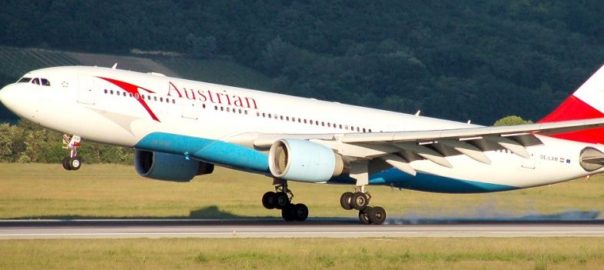
Iran’s air fleet needs 551 new airplanes by the Iranian calendar year 1404 (March 2025- March 2026), transport minister Abbas Akhoundi announced on Wednesday.


As IRNA quoted him, the Iranian air fleet includes 266 airplanes, 100 of which are grounded due to their old age.

“The average age of in-service airplanes in Iran is around 23 years and they should go out of service within a year according to international standards,” he added.

Following Iran’s nuclear deal with the world’s major powers and lifting of sanctions against the country, the Islamic Republic made renovation of its ageing air fleet one of its top priorities.

The first deal after the nuclear accord was signed in January with Airbus. The Iranian flag carrier, Iran Air, agreed to buy 118 jets worth $27 billion from Airbus.

Akhoundi announced on Tuesday that the agreement on purchasing Airbus planes will be concluded within the next three or four weeks.

Also, Boeing Co. said Tuesday it signed an agreement with Iran Air “expressing the airline’s intent” to buy its aircraft, marking the first major deal with an American company in the Islamic Republic following its landmark nuclear deal.

The Chicago-based manufacturer issued a statement to The Associated Press saying that it signed the agreement “under authorizations from the U.S. government following a determination that Iran had met its obligations under the nuclear accord reached last summer.” / Tehran times /

8 Iranian universities among top 200 Asian universities

Eight Iranian universities are among the top 200 universities in Asia, according to Times Higher Education’s 2016 ranking.

Sharif University of Technology, Iran University of Science and Technology, Isfahan University of Technology, and Amirkabir University of Technology are the Iranian universities are among the top 100 universities, Khabaronline reported.

Tehran University of Medical Sciences, Khaje Nasir Toosi University of Technology, University of Tehran, and Shahid Beheshti University are the universities the lower half of the table respectively.

Singapore leads the way in Times Higher Education’s 2016 ranking of the premier universities in Asia and is home to the best two universities in the continent for the first time, while China and Japan have the highest density of top institutions in the region each with 39 universities.

Taiwan and South Korea each with 24 universities, India with 16, Turkey with 11, Thailand with 7, Hong Kong each with 6, Malaysia with 4, Saudi Arabia with 3, Jordan, UAE, Pakistan, and Singapore each with 2, and finally Lebanon, Qatar, Oman, Bangladesh, Macao, and Indonesia each with 1 university are of the countries represented themselves in the Asia University Rankings.

The Times Higher Education World University Rankings are the only global performance tables that judge research-intensive universities across all their core missions: teaching, research, knowledge transfer and international outlook.

The Asia University Rankings use the same carefully calibrated performance indicators to provide the most comprehensive and balanced comparisons, trusted by students, academics, university leaders, industry and governments, but the weightings are specially recalibrated, based on feedback, to reflect the priorities of Asian institutions.

Teaching (the learning environment) with 25 percent, research (volume, income and reputation) with 30 percent, citations (research influence) with 30 percent, international outlook (staff, students and research) and industry income (knowledge transfer) each with 7.5 percent are the five performance indicators used to rank the universities.

/ Tehran times /

Single Digit Inflation After 26 Years

Headline inflation fell below 10% for the rolling year ending June 20, as the Central Bank of Iran’s monetary policy stance bore fruit.

Reducing inflation has been a primary goal of the government of President Hassan Rouhani whose efforts are paying off. The president now has a second feather to sport on his hat—the first was striking a historic deal with world powers over Tehran’s nuclear program.

This is the first time in 26 years that average inflation has fallen to a single digit, according to sources in the CBI. The last time was in 1990, when Iran was emerging from the carnage of the Iraq-imposed war.         


Urban consumer price index fell to 9.5% for the period, the latest report by the Statistical Center of Iran shows. Inflation in rural parts had already fallen below the 10% mark.

The CBI has yet to release its own report for the period, which may or may not confirm the SCI report. Statistics from the two organizations happen to deviate from each other up to two percentage points.

The government’s efforts to get its finances in order and the CBI’s monetary policy have been instrumental in curbing inflationary pressures. But some economists say near zero global inflation, coupled with recession in the Iranian economy that has hammered consumer spending, are the main reasons for the drop in CPI.

  Slow Recovery

Rouhani inherited a country in crisis. The economy was tanking while inflation was unchecked.

In the Iranian year ending March 20, 2014, when Rouhani took office, inflation was over 34% and the economy shrank nearly 6%. The rial had already lost 70% of its value during the currency crisis in the past two years, central bank data show.

Today, the rial is 10% stronger, while inflation is falling to historically low levels and growth is returning. Following the economic recovery experienced in 2014, the Iranian economy is estimated to have advanced at an annual growth rate of only 0.5% during the 2015 Iranian year, according to the World Bank.

However, recovery has been slower than expected.

“This performance came in spite of the signing of the Joint Comprehensive Plan of Action in July 2015 and the significant economic prospects it offered,” the World Bank reports.

Iranian banks have been ill-prepared for reconnecting with their global peers. Most are in a dire financial situation, with enough overdue debt to put their solvency in doubt.

Moreover, they have yet to get up to speed on international regulations and business practices.

On the other side of the isle, European and Asian banks remain reluctant to do business with such partners, given their fear of punishment from the US Office of Foreign Assets Control for breaking remaining US sanctions on grounds unrelated to Iran’s nuclear program.

Large swaths of the economy are in the hands of quasi-state organizations. Due to complex ownership structures, it is hard to determine whether you are violating sanctions when doing business. So, most Europeans are avoiding all the trouble for now.

A chain of expensive lawsuits into European banks in the past five years against sanctions violators has put them on guard.


/financialtribune.com/

Bangladeshi festival honors Iran’s “Valad”

“Valad”, Iranian filmmaker Amir-Abbas Rabiei’s short film about the savage Israeli bombardment of Gaza, has won the jury special award at the International Open Film Festival (IOFF), which was held in the Mirpur neighborhood of Dhaka, Bangladesh.

The story of the film is about a pregnant woman who is trapped under rubble after an Israeli bombardment of a hospital in Gaza.

The Arabic-language film was screened in the Film on Women section of the festival, which came to an end on June 14, Sureh Film, the producer of the movie, announced on Monday.

“Vallad” has recently won the award for best social short film at the Tracce Cinematografiche Film Fest in the Italian town Nettuno. / Tehran times /

Almost $600,000 raised on charity ceremony to free prisoners

Philanthropists and some high ranking officials made a 21-billion-rial (nearly $600,000) contribution to release prisoners committed involuntary crimes, Blood Money Organization director said.

The contributions were made over the 29th charity fund raising ceremony held in Tehran on Sunday arranged by Blood Money Organization with some MPs, judiciary and military officials in attendance, IRIB quoted Asadollah Jolaei as saying.

Some 12.34 billion rials (nearly $350,000) was collected over the ceremony and those who were invited to the event but couldn’t show up also sent their contributions which increased the final sum to 21 billion rials, Jolaei noted.

Additionally, Supreme Leader Ayatollah Seyyed Ali Khamenei, President Hassan Rouhani, Parliament Speaker Ali Larijani and Judiciary Chief Ayatollah Sadeq Larijani also made 3-billion-rial ($85,700), 2.5-billion-rial ($71,400), 500-milion-rial ($14,200), and 500-million-rial ($14,200) contributions respectively, he added.

He further explained that some 21,000 philanthropists made a 2.33-billion-rial ($66,500) contribution via their cellphones [by dialing a special number dedicated to charity fundraising activities].

It is customary for Iranians to hold special events to raise money for those who are imprisoned for involuntary crimes particularly in the month of Ramadan. ? / Tehran times /

Largest Theater Center to Open in Southeast Tehran

The construction of Iran’s largest professional theater center has been completed and will be inaugurated soon in Tehran.

Located in southeast part of the metropolis, Khavaran Professional Theater Center (also called Tehran Theater Campus) will address the shortage of cultural space as it will be host to theater performances, film screenings, concerts, exhibitions and workshops, said Alireza Jafari, managing director of Tehran Municipality Cultural Spaces Development Company.

In order to meet the needs of artists for a professional center and with emphasis on narrowing the social and cultural gap between the northern and southern parts of the rapidly expanding capital, the center was established and will become operational in summer, Honaronline reported.

It comprises a main theater hall with a capacity for 1000 people and four smaller ones of 150 seats for experimental plays. There is also a special hall for puppet shows which can accommodate 120 people. Designed according to world standards and equipped with the state-of-the art devices, including a moving six-meter deep stage, a side-by-side shooting system and professional projectors, the center can also host international events.

There is also a library, restaurant, shopping center and children’s playroom so that visitors can do more than just watch plays and make the most of their time.

Situated in District 15, (Kahavaran neighborhood), the theater center is built on 2,800 sq. m. in an area of 16,000 sq. m next to Khavaran Cultural House. Also, 3,500 sq. meters of open space is allocated to traditional and ethnic performances.

“Developing cultural spaces in the southern neighborhoods will help provide the youth with cultural activities and entertainment and keep them busy, and thus help in reducing social harm,” Jafari said.

He pointed to the construction of cultural centers in deprived areas, especially for the young people, to make the best of their leisure time so that they don’t get drawn to anti-social activities.

District 15 which covers the southeastern part of Tehran is inhabited mostly by working class families with low income and such centers can help them spend their leisure time on being culturally productive.

Currently, most of the theater halls (private or affiliated to the government) are located in central Tehran with a few scattered in eastern, western, and northern areas. The new center will surely play an important role in the development of culture and art among the residents.

Tehran Book Garden, Saba Experimental Theater Center and renovation of artists’ old houses are among the other projects of Tehran Municipality Cultural Spaces Development Company which will be completed by next March. / financialtribune.com /

Birth rate in Iranian cities much higher than villages

Based on the numbers and figures announced by National Organization for Civil Registration, since the beginning of the current Iranian year (March 20), birth rate in cities has been 3.5 times of birth rate in villages.

So far in the aforesaid amount of time 278,848 births occurred in the cities while 78,651 babies were given birth in the villages, Mehr news agency reported.

Another report indicated that the baby boys born in the same period outnumbers the baby girls by 2.3 percent more births as out of 357,492 births nationwide 183,036 are boys and 174,458 are girls.

Moreover, over the same amount of time 85,300 died of which 45,209 were men and the rest were women. 54,593 of the deaths reported in the cities and 30,709 passed away in the rural areas.

/ Tehran times /

Muslim family reunion in Ramadan

Ramadan is a time when families get together in the evening to break their fast.

Is it simply the practicalities of the concentration of the food at that time of the day which makes it a pragmatically sensible thing to do?

Or is there more to this ritual? Is the necessity of food the vehicle by which an environment is created for thinking beyond the ties of food?

Ramadan is undoubtedly a time when families are more focused on dining together.

The common physical hardship makes us as human beings come together – perhaps there is a lesson to be learned to implement within society.

The physical abstinence develops a culture where one is forced to think beyond the self and the needs of others; a time perhaps where the concept of self-sacrifice is etched in the spirituality of the individual for furthering the cause of a better humanity for all. / Press tv /

Iranian female karate fighter earns second spot at WKF Karate 1 rankings

Iranian karate fighter Hamideh Abbasali has been placed second in the latest edition of the World Karate Federation (WKF) Karate 1 rankings.

According to the rankings released by the largest international governing body of karate with over 130 member states, the 26-year-old Iranian sportswoman racked up 980 points to stand behind a representative from Switzerland.

Zabihollah Poursheib, Iran’s male karate fighter, claimed the third place with 840 points. On January 24, Abbasali clinched a bronze medal in the 20th edition of the Open de Paris – Karate Premier League in France.

She received a bye in the first round of women’s kumite over 68-kilogram contests at the Pierre de Coubertin Stadium in Paris. The Iranian athlete emerged victorious with a result of 2-0 in her first contest against the host nation’s Sofia Kloucha.

Abbasali then took down her Ecuadorian opponent Valeria Echever 4-0 in her march to the final competition, before losing to French athlete Anne Laure Florentin and settling for the third-place fight.

The Iranian sportswoman defeated Italian and Danish rivals in the next bouts, and won the bronze medal for Iran.

The 20th edition of the Open de Paris – Karate Premier League opened in the French capital on January 22, and finished on January 24.

Rouhani urges women to present socially active Muslim model

Iranian President Hassan Rouhani said on Tuesday that the Iranian women’s mission is to present to the world a model of socially active Muslim women.

In an Iftar party with women’s activists, he stated that the government is highly active in upholding women’s rights. He also said Iranian women have stood for their rights powerfully.

Attaching great importance to women’s role as mother, Rouhani added women can play important and active part in the society along with fulfilling their duties as mother.

Rouhani expressed hope that women would play more active role in the Iranian society. He also said that “moderation” has been the slogan of the current government.

Equality between men and women is one aspect of moderation, he added. Elsewhere, he noted that Iranian women have social, political, and economic rights and women’s participation in the society and doing activities do not run counter to their duties as mother and wife.

Finally, Rouhani said women’s presence and help are very important for the country’s development and even implementing the resistance economy.

Out of the 290 seats up for grabs in the February parliamentary elections in Iran, 17 were secured by women, a record in itself./ Tehran times/