All posts by islam

Tourism sector to create 130,000 jobs by March 2017: labor minister

Iran plans to generate about 130,000 jobs and career opportunities for its booming tourism industry throughout the rest of the country’s calendar year (March 20, 2017), Labor and Social Welfare Minister Ali Rabiei said on Thursday.

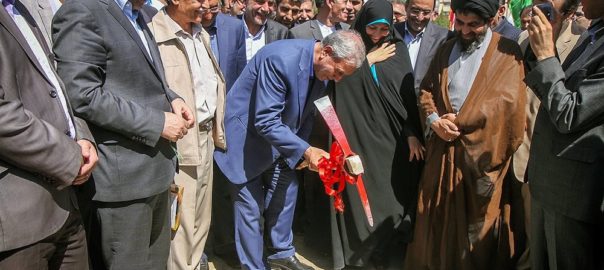
Rabiei made the remarks on the sidelines of a ceremony for breaking the ground on the first five-star Halal hotel in the country, set to be constructed in the historical city of Isfahan within three years.

“Empowering the tourism industry will lay the ground for improving the economy and also creating jobs in the country,” he added.

Earlier in August, the director of Iran’s Cultural Heritage, Tourism, and Handicrafts Organization, Masoud Soltanifar, announced that the country has the capacity to be a major destination for Muslim tourists and a center for the Halal tourism industry.

The official considered Muslims from across the globe as a pillar of strength for developing the industry.

A subcategory of traveling, Halal tourism is geared toward the specific needs of Muslim individuals who seek to abide by the Islamic rules. / Tehran times /

Iran to become strategic metal producer

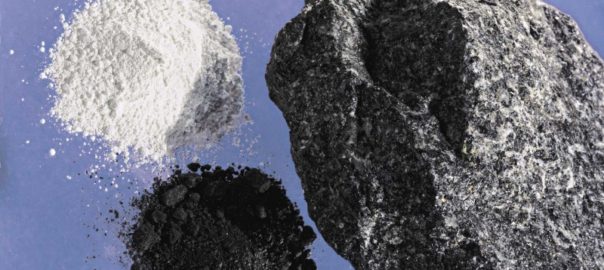
Iran’s first titanium production plant will be up and running in the next six months, the manager of the Kahnuj titanium pilot project says.

The plant with a capacity to produce 2 tonnes of titanium pigments per day is at the phase of equipment installation in Kahnuj in southeastern Kerman province, Morad Ali Manzari-Tavakolli was quoted as saying.

The project includes setting up two units with a capacity to produce 130,000 tonnes of titanium dioxide concentrate and 70,000 tonnes of titanium dioxide slag per year, he said.

Titanium dioxide is mainly used to produce titanium pigment, the most commonly used white pigment. It is used to add capacity to paper, paints and plastics.

Kahnuj is carried out jointly by Iran’s state-owned mines and metal holding company IMIDRO and Armenia’s EcoAtom in a scheme worth 2.04 million euros.

The “industrial” implementation of the Kahnuj titanium scheme is projected to cost $161 million which will come from selling so-called participation papers, Manzari-Tavakoli said.

The Kahnuj prospect is estimated to hold definite reserves of 150 million tones or probable deposits of some 400 million tonnes.

The operation of the Kahnuj plant will put Iran among an elite club of the few countries which produce titanium – a metal used in a range of high-tech manufacturing from military aircraft to artificial limbs. The country is currently a net importer of the material.

The main producers of titanium are China, Japan, Ukraine, Russia, Kazakhstan and the US.

Titanium is the strategic metal of the century, named after the powerful Titan gods in Greek mythology. Because of its strength, light weight and corrosion resistance, the metal is highly prized in aircraft manufacturing, with further applications in military, aerospace, marine industries, dental implants and industrial processes.

Iran’s other known titanium reserves are based in Anzali Lagoon in the Caspian Sea, which have attracted the attention of Japanese developers, according to Iranian media reports.

The Fanuj mine in Iran’s Sistan-Baluchestan is another base where a cluster of 30 deposits are each able to yield 1 million tonnes of titanium ore per year, according to head of the board of directors of Makran Steel Jamshid Jahanbakhsh Tehrani.

Iran needs more than $4.2 billion of investment over the next five years to bring the Fanuj prospect fully online, he said last December.

Mining investment

Iran’s potential for profit goes far beyond oil and gas, the reserves of which are the world’s largest combined. It possesses 7% of the world’s total mineral reserves worth about $700 billion but officials say this figure could rise to $1.4 trillion with new discoveries.

The country has more than 3,000 active mines — mostly privately owned — that contain copper, iron ore and heavy rare earth elements, according to the website mining.com.

The mining sector, however, is underdeveloped and accounts for less than one percent of the country’s gross domestic product (GDP).

After the lifting of sanctions, officials have unveiled plans for $29 billion of mining investment, about $15 billion of which is about to come from outside the country, for a number of projects ranging from steel to aluminum, copper, gold, rare earth elements and coal.

In February, Deputy Mine, Industry and Trade Minister Mehdi Karbasian said Iran’s mining sector had more than $10 billion of investment pledges by the Europeans and Chinese under its belt.

Italy’s Danieli signed a joint venture and agreed orders worth about 5.7 billion euros during President Hassan Rouhani’s tour of Europe then.

The Chinese are about to invest as much as 4 billion euros in Iran’s mining and mineral industry. A French aluminum company also signed a deal to invest in Iran when Rouhani visited Paris. / Press tv /

NAM an undeniable part of solutions for world challenges

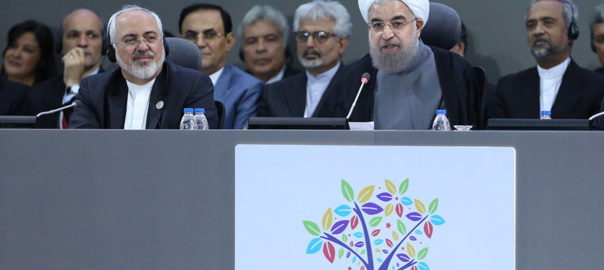
President Rouhani delivered a report on Iran’s activities and achievements during its 4-year presidency over Non-Aligned Movement and explained Iran’s stances and viewpoints towards the most important regional and international issues.

During the opening ceremony of the 17th NAM Summit that is being held in Venezuela’s Margarita Island, Dr Rouhani also said: “Members of our movement, more than any other time, are in need of solidarity, unity and coordination”.

Referring to regional challenges, President Rouhani continued: “The Islamic Republic of Iran considers talks and negotiations as the best solution to resolve global and regional conflicts”.

“The JCPOA is a new strategy and approach for positive and constructive engagement to resolve crises and challenges through peaceful means,” said Rouhani stating that Tehran welcomes political means to end crises in the war-stricken countries of the Middle East.

On Palestine and the Zionist regime’s occupying the Palestinian lands, he said: “The Islamic Republic of Iran, based on its religious beliefs and deserving national and human values, has always prioritized supporting the people and causes of Palestine and we believe that defending the rights of the people of Palestine is not limited to a particular race or religion but it is a humanitarian issue which is the obligation of us all”.

Below is the full text of President Rouhani’s speech at the 17th Summit of Non-Aligned Movement:

In the Name of God, the Most Compassionate, the Most Merciful

Honorable Heads of State and Government

Honorable Ministers

Ladies and Gentlemen

At the outset on behalf of the Government of the Islamic Republic of Iran, I would like to appreciate the people and Government of the Bolivarian Republic of Venezuela for the cordial hospitality extended to me and my delegation during the seventeenth summit meeting of the Non-Aligned Movement.

During the past four years that Iran was honored to assume the presidency of the Non-Aligned Movement, it utilized the capacities of our movement in combination with its own capabilities, to attain the noble goals of the movement and improve the efficiency of its subsidiaries. During this period, the Coordination Office, the Troika of NAM, its working groups in the United Nations and the Security and Peace Consolidation Council held more than 450 meetings in New York. The Non-Aligned Movement was also seriously involved in many other activities in the United Nations headquarters in Geneva, Vienna, the Hague as well as the UNESCO. The outcome of these meetings has been the declaration of the clear stances of the Non-Aligned Movement concerning important global issues such as disarmament, reforming the UN structure and maintaining peace and human rights.

We are all aware that the Non-Aligned Movement can realize its capabilities only when all the member states cooperate in promoting consolidation and improving efficacy. Therefore, in this period, many efforts have been made to enhance synergy, consolidate bonds and promote understanding among the Member States. Also, several rounds of serious negotiations were held with the North countries to transmit the message of the Non-Aligned Movement and strengthen our position. Similar negotiations were conducted between the NAM Troika and the European Union Troika. Such negotiations demonstrate our will to promote the goals and principles of the Non-Aligned Movement. All such activities have been included in detailed reports presented to this meeting.

Having assumed the presidency of the Non-Aligned Movement for four years, the Islamic Republic of Iran is now proud to hand over this grave responsibility to the friend country, Venezuela. I hope that with the efforts and commitments of Venezuelan officials to this important responsibility, we would experience another successful period with the support of all the Member States for the activities of the No-Aligned Movement. Without doubt, the approvals and outcome of this significant summit with the slogan of “peace, sovereignty and solidarity for development” are yet another important step towards the realization of the noble goals of our movement. Here, I deem it necessary to appreciate the positive and constructive contribution and cooperation of all the NAM Member States with the Islamic Republic of Iran during its presidency. Without the active cooperation and participation of all the Member States, particularly those states that assumed responsibilities of various mechanisms of our movement in different headquarters of the United Nations, the present achievements could have never been accomplished.

Distinguished Participants

This summit is convening at a time when peace is being threatened in all its aspects across the world and the national sovereignty of developing states is being constantly violated in various forms and methods. Members of our movement, more than any other time, are in need of solidarity, unity and coordination. The fact of the matter is that we as a group that constitute about two thirds of the United Nations members are now an undeniable part of solutions for the present challenges of the world.

What unfolds in the contemporary international order, is worrying if we adopt a realistic perspective. In today’s global relations, hegemonic and domineering inclinations are incontrovertible reality. Alignment towards military polarizations and blocks is another dominant feature in the mentality and behaviors of some of the players. Arms race, warmongering, intensification of conflicts and violence and interfering in the domestic affairs of developing nations by the holders of power and wealth, overtly or covertly, are only examples of such behavior which cannot be interpreted unless with the logic of hegemony-seeking and predominance.

Ladies and Gentlemen

It is noteworthy to mention that the main principles and goals of the Non-Aligned Movement have been designed and set in a manner considered by all countries as fundamental criteria which could guarantee the independence, territorial integrity and sovereignty of states and improve their national interests, good neighborliness and peace, security and stability at the global level. Many of the present critical challenges and serious crises can be settled in the most appropriate manner if we follow such goals and principles.

In the Islamic Republic of Iran, since the victory of the Islamic Revolution in 1979 which founded our foreign policy on the rejection of the West together with the East, we have been acting in compliance with the spirit of the Non-Aligned Movement. During these years, we have adhered to the belief that it is possible to engage with other countries and enter into constructive interaction with the world—a world that should represent its human-oriented and fair image in the same manner suggested by the causes of the Non-Aligned Movement—a world which should adapt itself with the dynamism of political developments.

As against the unreal fundamentalist images of Iran portrayed by propagandist and warmonger media, my country has never followed an approach to suggest its national interests collide with global interests. And our support for the world’s righteous movements does not mean confrontation with accepted and legitimate human values. Nor does it mean interference in the internal affairs of the others. Conversely, Iran’s discursive doctrine, originating from religious causes, is against imperialism and global trouble-making which is in accordance with the new intellectual developments and global freedom-seeking literature as well as the Charter of the United Nations. Causes such as independence, freedom, republicanism, democracy and self-determination through the ballot box are considered as not only religious and national but also global values.

In recent years, disappointing and unpleasant events for the people of Syria, Yemen, Iraq and Libya as the result of selfish and destructive competition among specific states have hurt the consciousness of people across the world, signaling the irresponsibility of the big powers towards avoidable wounds inflicted every day on innocent bodies. The world is aware that the Islamic Republic of Iran was the first country which warned against the global danger of Takfiri terrorism in Syria. While a number of irresponsible groups in the Middle East and the West were busy equipping and training Takfiri terrorists, Iran stood against Iraq and Syria to confront alone with one of the most brutal terrorist organizations of history. The hands of such groups and their financial and military supporters are spattered in blood which will never drain. It was like a historical satire when the brutal attacks of these groups spread outside Syria and supporters of Takfiri terrorists decided reluctantly to form an inefficient and hollow coalition against terrorism. This is while the global community has so far failed to restore the violated rights of the people of Palestine and end the occupation. Not only have big powers not helped alleviate these pains, but they are playing a notorious role in the escalation of violence, murder, war, poverty and displacement of millions of people in the developing states. All these events are indication of the fact that we should not pin our hope on big powers to achieve security, development and progress. Unfortunately, a small number of Non-Aligned Movement Member States have betrayed the primary principles of our movement and are playing a role in disrupting peace and interfering in the internal affairs of other Member States by accompanying the terrorists.

These misguided policies have had no outcome but destruction and historical dishonor for these countries and the terrorist groups supported by them. The divine tradition and historical experience recognize the reality that denying legitimate demands of nations would bring about nothing but enormous costs and dishonor.  Moreover, the aggressor powers and interventionists will have no option but to surrender against the demands of the nations.

I, on behalf of the noble people of Iran, proposed a resolution on the World Against Violence and Extremism to the United Nations General Assembly which resulted in the adoption by consensus of two resolutions in 2013 and 2015. In our belief, the fight against extremism and terrorism requires constructive and honest cooperation among all the members of the international community. On such a basis, I proposed to last year’s General Assembly of the United Nations the necessity of forming a “united front for the fight against extremism and violence”. The Non-Aligned Movement enjoys a large capacity for the advancement of such ideas within the framework of the United Nations.

Ladies and Gentlemen

The present challenges in various parts of the world should not make us oblivious to the issue of Palestine and its oppressed people. The people of Palestine remain deprived of the right to hold their own territory and state and return to their motherland. The oppression which is today suffered by the Palestinians epitomizes an institutionalized violence which cannot be described only by apartheid. The Zionist regime is trying to exploit the current developments in the Middle East especially the emergence and spread of terrorist and extremist groups such as Daesh in order to overshadow its crimes against the oppressed people of Palestine and other nations of the region. The Islamic Republic of Iran, based on its religious beliefs and deserving national and human values, has always prioritized supporting the people and causes of Palestine. We believe that defending the rights of the people of Palestine is not limited to a particular race or religion but it is a humanitarian issue which is the obligation of us all. We have not conditioned defending Palestinians on momentary developments or even some misguided policies. And we are proud that the Iranian nation and government have stood beside the oppressed and resistant people of Palestine in any circumstances.

Distinguished Participants

The pillars of the foreign policy of the Islamic Republic of Iran are founded on the policy of moderation, prudence and interaction to settle conflicts and differences and misunderstandings through dialogue and cooperation. On such a basis, despite the hostile measures and extensive political and economic pressures on my country under the excuse of the nuclear issue, the Islamic Republic of Iran emphasized right from the beginning on holding constructive negotiations. Ultimately, talks between Iran and the 5+1 group of countries resulted in the conclusion of the Joint Comprehensive Plan of Action (JCPOA). The widespread support offered to the peaceful nuclear program of Iran by the Non-Aligned Movement and its support for the nuclear negotiations played an effective role in guaranteeing the legitimate nuclear rights of Iran and other developing states.

Iran’s nuclear deal with the big powers is significant from various perspectives. The benefit and advantages of the recognition and enforcement of inalienable nuclear rights of Iran are not limited to Iran only but the resistance of Iranians against such pressures stopped a dangerous procedure in international arena to deprive other nations from their fundamental and legitimate rights to access nuclear energy for peaceful purposes. In addition, the constructive outcome of these negotiations represents the reality that long term and sophisticated crises can be handled only through talks, peaceful mechanisms and the adoption of a win-win approach. In fact, the JCPOA is not a sole political deal. In the current turbulent world in which the use of weapons and violence is prevalent, the JCPOA is a new strategy and approach for positive and constructive engagement to resolve crises and challenges through peaceful means. The JCPOA can mark a beginning for bilateral and multilateral cooperation among the countries for the advancement of peace and development the world over.

The Islamic Republic of Iran considers talks and negotiations as the best solution to resolve global and regional conflicts. Iran has in fact been a pioneer in engaging in dialogue and talks. We will consider positively any initiative at the regional level which is based on talks and negotiations to end the present conflicts and differences. No single country is able to create alone a new order in the region due to the nature of the problems in the Middle East region. Creating a new order in the region is only applicable through cooperation and the collective participation of all the neighbors.

We welcome political means to end crises in the war-stricken countries of the Middle East. National talks should be conducted without the interference of outside powers and with the participation of legitimate beneficiary groups. And ultimately, the ballot box should be determining the destiny of these countries. All governments in the region should feel sensitive towards the human catastrophes and destruction of the economic and social infrastructure throughout the whole region from Yemen to Iraq and Syria and stop supporting terrorists for political purposes. Any action against the terrorists should be taken in a manner that causes minimum damage to innocent people and civilians.

In conclusion, I once again announce the readiness of the Islamic Republic of Iran for more extensive and active cooperation with all the member states of the Non-Aligned Movement and particularly with the friend and brother country, Venezuela as the new rotating chair of the Non-Aligned Movement for the advancement of the goals and approvals of this meeting. / Tehran times /

Iranian para-archer Zahra Nemati wins Paralympic gold

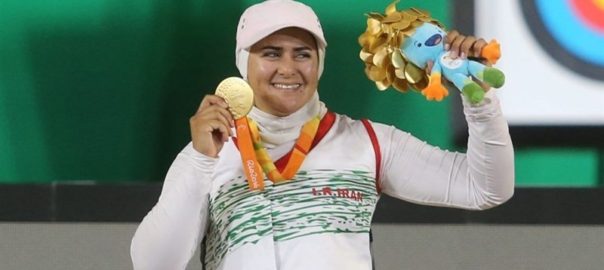
The Iranian archer, who competed at last month’s Olympic Games, won the women’s individual recurve open title.

ran won their second archery gold at Rio 2016 on Thursday (15 September), after Zahra Nemati claimed the women’s individual recurve open title.

The 31-year-old, who competed at last month’s Olympic Games, subsequently defeated South Korea’s Jang Moon Jo, Italy’s Elisabetta Mijno, South Korea’s Hwa Sook Lee and China’s silver medallist Chunyan Wu to claim the gold.

“There was just a feeling that I had that I knew I was going to win today,” Nemati said.

“That’s why I was very calm and relaxed. I just knew I could do it.

“The energy from the people around me, the spectators, the people who wanted me to win – all this energy affected me and that was what helped me. I’m very happy, I’m so happy. I’m so tired and all this work from the past two, three months has been weighing heavily on my shoulders.”

“The people of Brazil have been very kind to me during the Olympics and the Paralympics. They have been really nice and special the way they treated me. All I’ve been trying to do is use this energy, I’ve been getting from them to put it in my sport.”

Poland’s Milena Olszewska collected bronze.

Nemati’s teammate Rahimi Gholamreza had claimed the country’s first archery gold on 13 September, when he sealed the men’s individual recurve open title.

The archery competition is taking place in the Sambodromo, famous for hosting Rio’s annual carnival, and will continue this Friday with the women’s individual compound open and the men’s individual W1 events.

/ Tehran times /

Iranian cyclist Golbarnezhad dies following road crash at Paralympics

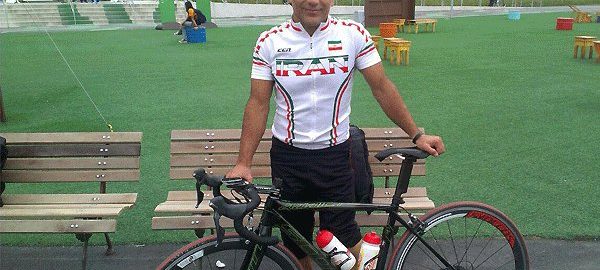
Bahman Golbarnezhad has died following a crash in the men’s C4/C5 road race at the Rio Paralympics in Pontal, Rio de Janeiro on Saturday.

Golbarnezhad from Shiraz was treated at the scene of the accident before being taken to a local hospital. He suffered a heart attack as he was being transferred to hospital and later died. He was 48.

Iran’s NPC announced the tragic news before the IPC issued a statement.

The IPC statement read: “It is with deep sadness and regret that the International Paralympic Committee (IPC) confirms the death of the Iranian Para cyclist Bahman Golbarnezhad following an accident in this morning’s (September 17) road race at the Rio 2016 Paralympic Games.

“Golbarnezhad, 48, was involved in a crash at around 1040 (1440BST) on the first section of the Grumari loop, a mountainous stretch of the course.

“The athlete received treatment at the scene and was in the process of being taken to the athlete hospital when he suffered a cardiac arrest.

“The ambulance then diverted to the nearby Unimed Rio Hospital in Barra where he passed away soon after arrival.”

The IPC statement added: “The athlete’s family who are in Iran was informed this afternoon and the Iranian team was brought together in the Athlete Village earlier this evening and told of the news.

“An investigation into the circumstances of the accident has been launched.”

The IPC said the Iranian flag has been lowered to half-mast in the athletes’ village.

The Paralympic flag will also be flown at half-mast in the Paralympic Village and at the Riocentro venue where Iran on Sunday play Bosnia and Herzegovina in the sitting volleyball gold medal match.

A moment of silence will be held during Sunday night’s closing ceremony. / Tehran times /

Tabriz carpet to convey message of peace and friendship

An exquisite Persian carpet currently being woven in the Iranian city of Tabriz is set to deliver the message of peace and friendship of the Iranian nation to people all around the world.

The carpet being woven by Hamid Kazemnia under the auspices of Iran’s Cultural Heritage, Tourism, and Handicrafts Organization will be unveiled at the 18th General Assembly of the World Crafts Council, which will be held in the city of Isfahan from September 24 to 27.

2211935

“The carpet will be complete with several symbolic knots to be tighten by high-ranking officials and attendees to the conference,” the CHTN quoted Morteza Abdar, the director of East Azarbaijan Cultural Heritage, Tourism, and Handicrafts Department, as saying on Saturday.

Being made of pure silk, the carpet interweaves symbols of the five continents with traditional Iranian designs and patterns such as mythical birds, he added.

Last year, the World Crafts Council picked Isfahan and Tabriz as world cities of handicrafts and carpets, respectively.

The non-profit organization seeks to promote fellowship and foster the economic development of member states through income-generating craft-related activities.

/ Tehran times /

Larijani praises Iranian Olympic medalists

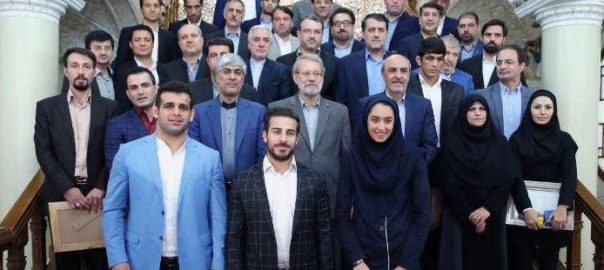
Iranian Parliament Speaker Ali Larijani has applauded achievements of honored Iranian athletes at Rio 2016 Olympics in a ceremony on Sunday.

The Iranian official has commended medal winners of Iranian medal winners in the 31st edition of Summer Olympic Games.

Iranian athletes exercised intensive competition with their all capabilities and achieved good success in some majors making the hearts of the people happy.

‘But, in some other fields, in spite of efforts and endeavors, no success was achieved, so it is necessary to get ready for the next events with appropriate planning and programming.’

The Iranian team ended the Summer Olympics in Rio de Janeiro ranking 25th in the standings, winning eight medals – three golds, one silver and four bronzes. / Tehran times /

Leader declares family policies under 16 paragraphs

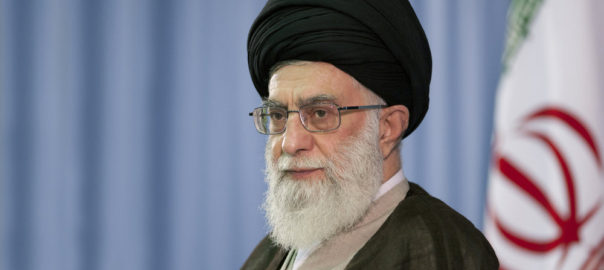
Supreme Leader of the Islamic Revolution Ayatollah Seyyed Ali Khamenei declared on Saturday general policies on family to the three branches of the government under 16 paragraphs, characterizing family as the “cornerstone of the Islamic society.”

“As the underlying entity and cornerstone of the Islamic society, family is the locus of growth, human sublimity, and the source of well-being, flourishing, prowess, and spiritual promotion for the country and the establishment…” the Leader stated.

In its push toward what the Leader termed a “family-based society,” the country should focus on the ensuing guidelines:

  1. Establishing a family-based society and reinforcing and strengthening family and its main functions on the basis of an Islamic model of family
  1. Considering family as a pivotal entity in regulations and laws, executive policies, and all educational, cultural, social, and economic systems, particularly the housing and urban development
  1. Highlighting the functions of family-mosque links to preserve and promote the Islamic and national identity as well as family and society
  1. Forming a nationwide movement to facilitate and disseminate successful marriage for girls and boys and all of those at marriage age through enforcing supportive policies and culture-making
  1. Strengthening family and promoting its social capital on the basis of fairness, satisfaction, friendship, and respect
  1. Offering and working out the Islamic model of family and boosting the Islamic-Iranian life style
  1. Revising, rectifying, and completing the judicial system and the relevant procedures in connection with family
  1. Creating a healthy environment and observing Islamic norms in relations between men and women
  1. Promoting living and economic conditions of families through empowering them to diminish future concerns about employment, marriage, and housing
  1. Organizing the counseling system of the country for offering services before and after forming a family and facilitating access to the services
  1. Strengthening and encouraging families to help the country to push forward with its goals and plans in all cultural, economic, political, and defensive sectors
  1. Supporting the dignity of connubiality, motherhood, house holding, paternal and economic roles of men, etc.
  1. Preventing social abnormalities and factors which loosen the foundations of family, particularly the issue of divorce
  1. Supporting female-headed single parents financially, economically, and culturally and encouraging them to re-marry
  1. Adopting supportive and encouraging mechanisms for honoring the old in families and boosting their physical and emotional cares
  1. Working out mechanisms to promote general well-being of families, particularly the fertility well-being and increasing birth rate in order to have a young, healthy, dynamic, and booming society / Tehran times /

Auction House Sells Carpets for $8.7m

A total of 21 Persian hand-woven carpets were sold out of the 33 presented at the auction with the highest bid of $4.3 million going to ‘Iranian Paradise,’ a 100 sq m exquisite carpet made by Kashmar weavers

The first Special Carpet Auction held by the National Auction House on Friday, August 26, at Tehran’s Khaneh-Hamayesh in north Tehran, generated $8.7 million.

The highest bid went to the carpet titled ‘Iranian Paradise’ made by weavers from Kashmar, Khorasan Razavi Province. It sold for $4.3 million, almost half of the total sales of the night.

One of the largest hand-woven carpets in the country, ‘Iranian Paradise’ is a 100 sqm rug, 10 meters by 10 meters, which took ten weavers 14 years to make. One of the most exquisite carpets in the world, it has 110 million knots and weighs about 180 kilograms.

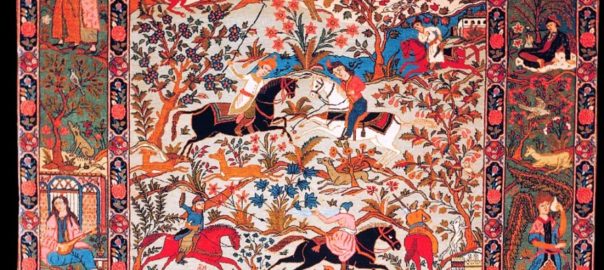
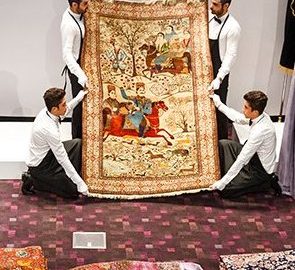
The ancient ‘Darab Battle’ carpet, made in Tehran almost 110 years ago was sold for $1.8 million followed by ‘Sultan Masoud’ from Tabriz, which fetched $570,000. Darab is one of the characters in Ferdowsi’s Shahnameh (Book of Kings) whose battle is depicted on the rug.

‘Bahram Gur Hunting’, dating back to 150 years ago, woven by Kashan artisans, and ‘Eight Cedars’, 150 years old from Tabriz, went under the hammer for $370,000 and $350,000 respectively. Bahram Gur was the 15th Sasanian King of Persia (420–438 AD). He is depicted on the rug riding a horse hunting for gazelles accompanied by a group of royal men and women.

Iranian actor and TV host Ahmad Najafi, 67, presented a selection of the 33 hand-woven Persian rugs, kilims (flat tapestry-woven carpets) and framed carpets for sale, IRNA reported.

The event, attended by veteran actors Jamshid Mashayekhi and Dariush Arjmand, actress Mahtab Keramati as well as the ambassadors of Turkey, Algeria and the UK to Tehran, saw the sale of 21 precious works of arts.

The other carpets were sold for less than $250,000 and the lowest bid went to ‘Negarestan’ from Qom which was sold for $1700.

The director of the auction, Zahra Mahmoudvand, said that the highest number of carpets for the auction came from the province of Kurdistan and the cities of Isfahan, Kerman, Kashan, Mashhad and Qom.

Following the previous auctions of fine arts including paintings, miniatures, calligraphies, leatherworks, handicrafts and antiques, the National Auction House organized the carpet auction which proved to be more successful than the previous rounds which had fetched $1 million.

Iran is home to one million carpet weavers. Handmade rugs are among Iran’s most important non-oil exports. More than $400 million worth of handmade carpets was exported in the last Iranian calendar year (ended March 19), which accounted for about 25% of the global handmade-rug market. More than 80% of the handmade carpets manufactured in Iran are exported.

/ Financial tribune /