The United Nations Children’s Fund (UNICEF) will financially support part of the expenses for the applicants and accepted nominees at the second Youth Filmmaking Olympiad in Iran.
The move is part of cooperation between the Ministry of Culture and Islamic Guidance and UNICEF.
In cooperation with Iran Youth Cinema Society and Farabi Cinematic Foundation, the second edition of Iran Youth Filmmaking Olympiad will be held as a part of the 31st International Film Festival for Children and Youth in central province of Isfahan.
In the meantime, Iran Youth Cinema Center is also seeking to pave the way for presence and cooperation of UNICEF in the Youth Filmmaking Olympiad in Iran.
The Olympiad comprises two sections of “film” and “script”.
The movies, with optional subjects, must last for three minutes and this section includes children and youth aged between 9 and 16.
The 31st edition of International Film Festival for Children and Youth is slated for August 30- September 5 in Isfahan Province.
Presided by Alireza Reza Dad, the 31st edition of International Film Festival for Children and Youth is slated for August 30- September 5 in Isfahan Province. / Mehr news /
Deputy Minister of Science, Research and Technology and Head of National Organization for Educational Testing Ebrahim Khodaei said that Islamic Republic of Iran was ranked 15th in the world in science production terms.
Country’s scientific production rank has experienced an ascending trend in the past two to three years, he maintained.
Speaking on Wednesday in the commemoration ceremony of 70th establishment anniversary of Tabriz University, he said, “since Iran accounts for one percent of total population share in the world, country’s scientific productions is equal to 1.88 percent of total scientific productions in the world.”
The country owes its scientific development and growth to the salient achievements of universities and higher education centers especially Tabriz University, he said, adding, “Tabriz University has managed to play an active role in the development of international cooperation and promotion of image of the Islamic Republic of Iran both in national and international arenas.”
He pointed to the salient specifications of Tabriz University in Azarbaijan land and territory and said, “this academic center has managed to play an important role in the development and promotion of higher education as the main pivot of development in the country.”
As the second old academic center in the country, Tabriz University is considered among one percent top universities in the world, he observed.
Turning to the credits and honors of Tabriz University, Khodaei reiterated, “some part of cultural bedrock of East Azarbaijan province, which has had an important role in the developments of the country, is indebted to Tabriz University.”
Presently, Tabriz University is ranked first in the region in science production terms, standing beside University of Tehran in terms of scientific growth.
In conclusion, Deputy Minister of Science, Research and Technology and Head of National Organization for Educational Testing Ebrahim Khodaei said that universities and academic centers in the nationwide are ready to help country to solve problems. / Mehr news /
Iranian ambassador to Yerevan and Armenian minister of education met Wed. to discuss future cooperation in the field of nanotechnology.
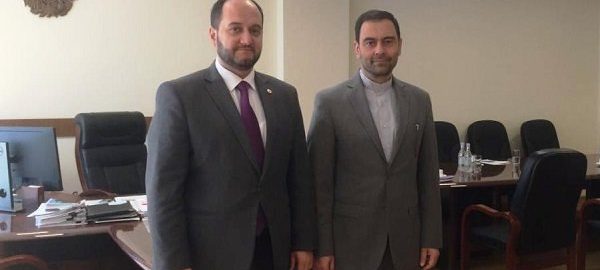
Iranian Ambassador to Yerevan Seyed Kazem Sajjadi met with Armenian Minister of Education and Science Arayik Harutyunyan on Wednesday to discuss future cooperation in the field of science and technology.
In the meeting, Kazem Sajjadi said that there has been dramatic progress in terms of cooperation between academic centers of the two countries, while saying “but cooperation on some areas such as new technologies and nanoscience has not been taken seriously, while Iran ranks fourth in the global ranking in the field of nanotechnology and has made huge progress in this area.”
Sajjadi continued “if the Armenian side is ready, Iranians can transfer to or teach these technologies in schools, universities and laboratories in Armenia.”
He also emphasized the need to implement the Memorandum of Understanding signed between the Ministry of Science, Research and Technology of Iran and the Ministry of Education and Science of Armenia, as well as the document signed during the fifteenth session of the Joint Commission between the two countries.
He invited Harutyunyan to visit Tehran in a bid to provide the ground for implementation of the bilateral agreements.
Arayik Harutyunyan, for his part, said that there are different areas for increasing bilateral cooperation, saying that the’ 2018 Love Revolution’ has increased the speed and quality of cooperation between Tehran and Yerevan.
Harutyunyan added “we are confident that we will see a dramatic advance in academic and academic relations in the near future.”
He described Iranian people and government as reliable friends that will stand with Armenian when it is faced with difficulties and hardship. / Mehr news /
Colza production in Iran since the beginning of the current Iranian year (started March 21) has reached 355,000 tons, which marks a 30-year high, the director of Agriculture Ministry’s “National Oilseed Project” said.
The government has purchased colza from local farmers at guaranteed prices. Previously, it was estimated that purchases would reach 320,000 tons by the end of the harvest season, which is coming to an end this week.
The Iranian government’s approach to control the local market for strategic crops is to purchase crops from farmers in bulk, store in reserves and then distribute them throughout the year. / financial tribune /
Over 1,800 tourism projects are currently underway across the country with an investment worth 430 trillion rials ($4.5 billion), heralding bright prospects for the industry, said the head of Iran’s Cultural Heritage, Handicrafts and Tourism Organization.
During his visit to the southern province of Fars on Tuesday, Ali Asghar Mounesan emphasized that efforts are aimed at “completing over 1200 projects by the end of the current administration’s term [2021],” CHTN reported.
Focusing on the global image of the historically rich region, Mounesan noted, “With a share of 17 trillion rials ($179 million) of the total investment, Fars will enjoy 177 new facilities which will add 5600 beds to the province’s lodging capacity.”
Reportedly, Fars is already able to accommodate over 17,000 visitors. /ft/
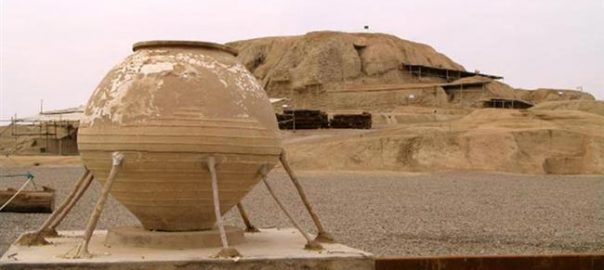
Arghavan Shamsara : With a history of nearly over 8,000 years, Tappe Sialk prehistoric site in Iran’s central city of Kashan in Esfahan Province is believed to be the probable birthplace of the world’s oldest civilization, oldest fixed settlement, oldest architecture, oldest ziggurat, oldest pottery kilns and oldest metal furnaces.
Following climate changes at the end of the seventh millennium BC, which led to formation of grasslands, the cave dwellers of the Iranian Plateau started living in plains, among which Tappe Sialk site is probably the oldest location discovered so far.
The entire Sialk civilization is thought to have originated from the pristine large water sources nearby which still exist.
A large number of farm animal bones discovered at the site suggest that the dwellers of Sialk were meat eaters of domesticated animals.
Artifacts excavated from the site, including some very fine painted potteries, are currently on display at the Louvre, he British Museum, the Metropolitan Museum of Art in New York, the National Museum of Iran and some others are at private collections.
The ancient site comprises two hills, nearly 600 meters apart, in the northern and southern sides. The northern mound is 25 meters high and the southern one is six meters high.
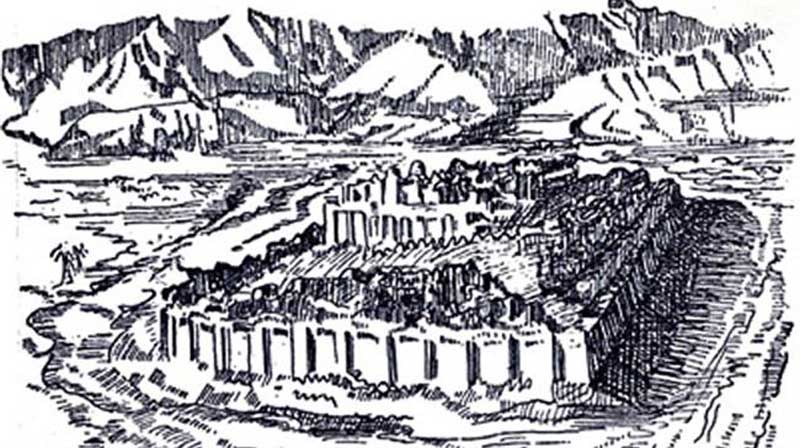
The file photo shows a reconstructed pictorial view of the Tappe Sialk prehistoric site in central Iranian city of Kashan.
Archeological investigations conducted during the 20th century have divided the history of the settlement into six cultural periods. The northern mound was made during the first and second periods.
During the first period rudimentary architecture emerged which included huts made of reed and covered with mud. The ceramic produced at the time was initially rather rough but its quality improved with the time.
In the second period, which dates back to nearly 5,500 BC, the residents were hunting, farming and herding.
Hand-made bricks were being used as the main construction material and the remains discovered from this period show signs of developing technology.
People started painting animals and plants as well as geometrical designs on their pottery for decorative purposes. They also started making small jewelry items using copper.
The third period started in 4,000 BC, when the dwellers moved from the northern mound to the southern side. During this era, the Iranians probably became the first people who invented pottery wheels which enabled them to produce more subtle shapes by clay.
They also heated ceramics in furnaces in which temperature could be controlled manually. Artistic designs on pottery works also became more intricate and paintings of humans were used as well.
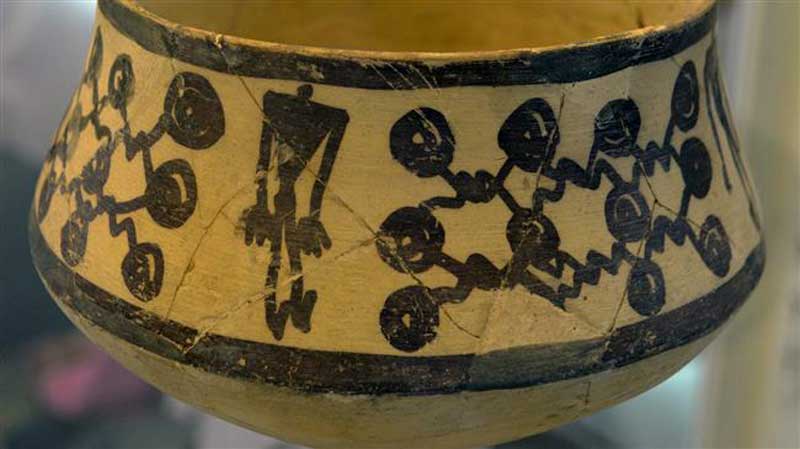
The file photo shows a pottery work discovered at the Tappe Sialk prehistoric site in central Iranian city of Kashan.
Cultivation of wheat and barley and commercial interactions based on the two agricultural products were also introduced by Iranians during this period.
Iranians also started production of silver from mines and manufactured silverware during this period.
Evidence shows that Tappe Sialk was an important hub of metal production in central Iran during the third and fourth periods of the settlement.
The fourth period of Sialk history started around 3,000 BC, when writing system was introduced. The settlement experienced a remarkable commercial boom at the time and its population grew significantly.
The ruins of what is considered to be the oldest Ziggurat in the world date back to this period.
After an abandonment of more than a millennium, the Sialk was reoccupied for two more periods. The archaeological remains of these two periods have been mainly discovered in the two necropolises, known as necropolis A and necropolis B.
The archeological discoveries of the fifth period, which started nearly 3,200 year ago, included weapons and other objects in bronze, as well as jewelry, and some iron items.
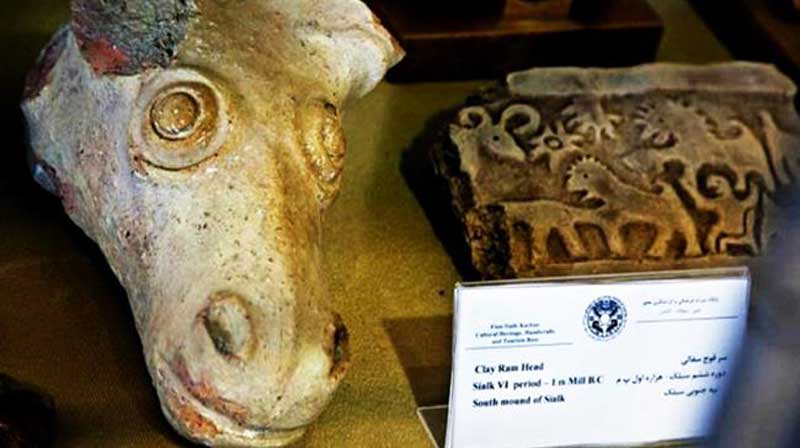
The file photo shows a clay ram head discovered at the Tappe Sialk prehistoric site in central Iranian city of Kashan.
The ceramic in this period was gray-black, or red, which were sometimes decorated with geometric patterns.
The new settlers who occupied the Sialk around 2,900 years ago built their homes on the ruins of the previous period, completely destroying the architectural remains of the former dwellers.
Considering the fact that Tappe Sialk can provide priceless information with regard to the history of human civilization, archeologists around the world have launched a campaign to preserve the site.
In a conference held in London this week, scholars and archeologists from different parts of the world decided to form a consultative committee to set up a digital data base and launch a website for Tappe Sialk. The scholars also decided to sum up their studies in the course of two future conferences in France and Germany.
Iranian short animation ‘Alphabet’ directed by Kianoush Abedi will go on screen at four international film festivals.
The 11th Iranian Film Festival in San Francisco, the 3rd edition of Slemani International Film Festival in Iraq, 2018 Revolution Me Film Festival in New York City and Alexandre Trauner Art/Film Festival in Hungary are four events that will screen Iranian short movie ‘Alphabet’.
The 6-minute animated piece narrates the story of people who have forgotten life and are separated from knowledge and truth. The animation depicts a nation that has forgotten the alphabet to life, cannot see, cannot hear, and cannot speak, but the words are waiting for them impatiently.
‘Alphabet’ has so far joined some international film events, winning a number of awards, including the best short film award at the 5th Sayulita Film Festival in Mexico, the Best Experimental and Animation award at the 6th Speechless Film Festival as well as the 15th Southside Film Festival in the US, and the 5th edition of Tripoli Film Festival in Lebanon. /MNA/
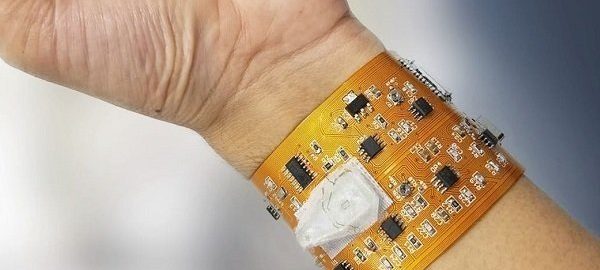
Researchers at Rutgers University-New Brunswick have developed a smart wristband that uses a biosensor technology to monitor personal health conditions.
The plastic wearable device can count particles and is expected to help in tracking the blood cells. It can be wirelessly connected to a smartphone, allowing the remote transfer of data.
This technology can be leveraged for watches and other wearable devices designed to monitor heart rates and physical activity.
The new wristband comprises a flexible circuit board and a biosensor with a channel, or pipe, embedded with gold electrodes.
A circuit is included to process electrical signals, along with a micro-controller to digitise data and a Bluetooth module to wirelessly transmit the data.
The device obtains blood samples via pinpricks, and the blood is fed through the channel and associated cells are counted. Blood cell counts help in disease diagnosis, such as low red blood cell counts indicate internal bleeding.
Rutgers University School of Engineering Electrical and Computer Engineering department assistant professor Mehdi Javanmard said “there’s a whole range of diseases where blood cell counts are very important.”
“Abnormally high or low white blood cell counts are indicators of certain cancers like leukaemia, for example.”
The smart wristband is expected to help is conducting quick blood tests in the field, offices and hospitals, avoiding the requirement for lab-based equipment that is considered costly and bulky. / Mehr news /
According to Web of Science, Iran ranks fourth in nanotechnology in the world by publishing 8,791 articles in the field.
As per the latest updates, Iran holds the fourth place above countries such as South Korea, Germany, Japan and France.
China with the staggering number of 56,648 articles tops the list while the United States and India came in second and third places respectively.
What is nanotechnology?
Generally, nanotechnology is a field of research and innovation concerned with building ‘things’ – materials and devices – on the scale of nanometer – one-billionth of a meter.
As Aznano describes, nanotechnology is hailed as having the potential to increase the efficiency of energy consumption, help clean the environment, and solve major health problems. It is said to be able to massively increase manufacturing production at significantly reduced costs. Nanotech advocates claim that products of nanotechnology will be smaller, cheaper, lighter yet more functional and require less energy and fewer raw materials to manufacture.
Nanotechnology in Iran
Iran’s first researches in this field started in 2000 and with publishing 9 articles, the country achieved the rank of 52 in that year.
The national nanotechnology development headquarters was established in 2005, with the aim of making policies, assessing achievements in field of nanotechnologies, raising public awareness about nanoscience, improving quality of life and creating lucrative markets.
Recognizing the great importance of nanotechnology, Iranians have had boosted researches in the field year on year.
There are 257 companies active in this field, 33 percent of which working on nanomaterials, ISNA reported on Tuesday.
These companies have manufactured 376 different products using the nontechnology, showing that this is a field with huge economic and practical advantages.
The reports also demonstrate that these products are being exported to 47 different countries. / Tehran times /
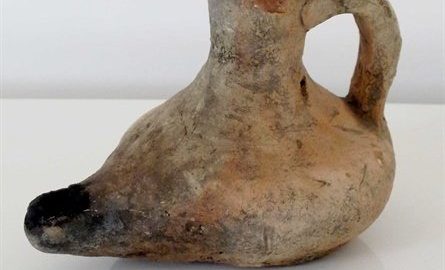
An 800-year-old clay oil lamp dating back to the Islamic Golden Age was accidentally discovered on Tuesday by construction crews digging a ditch in the city of Dandi, Zanjan province, Mehr reported.
“The beige-colored oil lamp which has a flat base and an 11-cm vertical handle was unearthed flawlessly during a construction work at Dandi’s Imam Square,” said Parastu Qasemi, a provincial cultural Heritage official.
“With regard to pottery fragments found nearby, the oil lamp is estimated to date a time between the Seljuk and Ilkhanid eras,” she added.
“A sooty part of the object implies that it is used… furthermore, some oily residues have been identified inside.”
Origins of the oil lamps go back to thousands of years ago and continues to this day, although not commonly anymore. They are often associated with stories in which rubbing an oil lamp would summon a genie dwelling in it. / Tehran times /