All posts by islam

‘Beloved’ wins six awards at intl. film festivals

Iranian documentary ‘Beloved’, directed by Yaser Talebi, has won six awards at international film festivals. Directed by Yaser Talebi, the Iranian documentary ‘Beloved’ has been awarded at six international film festivals as follow:

The Special Jury Award at the 22nd Religion Today Film Festival in Trento, Italy

The Best Cinematography Award at the Symi International Film Festival in Greece

The Best Film Award at the Nuovi Mondi Film Festival in Italy

The Special Jury Award at the Slemani International Film Festival in Sulaymaniyah, Iraqi Kurdistan

Best Documentary and Best Filming Award at Sole Luna Doc Film Festival in Italy

‘Beloved’ has been one of the most successful Iranian documentaries in the past year, taking part in several notable film festivals such as Hot Docs, IDFA, and Berlin.

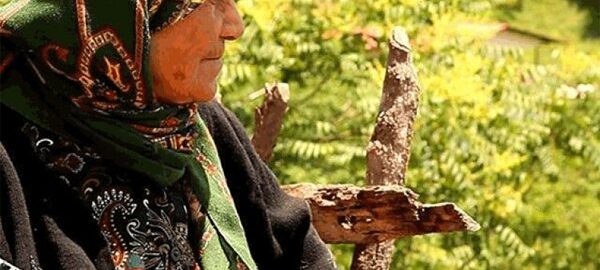
The film follows the life of an 80-year-old mother named Firouzeh who is fond of her isolated lifestyle in nature with her cows. The film shows her kind and loving character and demonstrates her bravery and strength tackling the hardship of life in the Alborz Mountains without the modern comforts of technology. She believes happiness lies in the simplicity of life.

The documentary recently received a Special Mention at the 67th Trento International Film Festival in Italy and a Special Mention at the 25th edition of Shanghai Television Festival in China, as well as the NETPAC Award at the 2019 Ulju Mountain Film Festival in South Korea.

It has also received the best feature documentary award and a diploma at the 15th Kazan International Muslim Film Festival in the Republic of Tatarstan. / MNA/
Iran’s renewable electricity generation capacity doubled

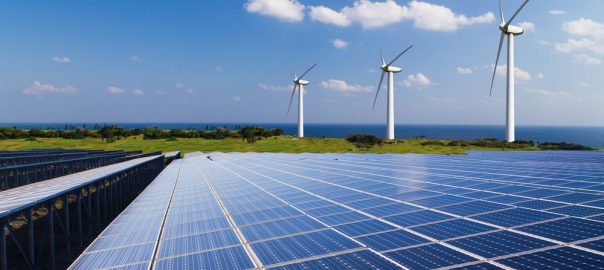
The capacity of generating electricity from renewable resources has reached 841 megawatts (MW) in Iran, nearly double the figure for the last year’s same period, IRNA reported, quoting an energy official.

Speaking in the opening ceremony of Iran’s 4th Renewable Energy Conference on Monday, Homayoun Haeri the deputy minister of energy for electricity affairs, said “The country’s renewable electricity generation capacity will rise to 1000 MW by the end of the current [Iranian calendar] year (March 19, 2020).”

He noted that Iran has good sources of renewable energy in addition to its huge fossil energy resources, adding that currently, 60,000 MW of wind energy potential has been identified across the country.

Haeri further stressed the growing role of renewable power plants in the country’s energy basket, saying “the country’s renewable power plants provided over 500 MW of electricity to the country’s power network during the peak consumption period in summer.”

Renewables, including hydropower, account for just six percent of energy generation, versus natural gas’ 90 percent share.

Overall, in the next five years, Iran is aiming for a 5,000 MW increase in renewable capacity to meet growing domestic demand and expand its presence in the regional electricity market.

According to Iran’s Renewable Energy and Energy Efficiency Organization (known as SATBA) the number of small scale solar power plants across the country which are used by households or small industries is being increased noticeably as Iranian households and small industries have embraced the new technology with open arms and investors also seem eager for more contribution in this area.

Back in February, Head of SATBA Seyed Mohammad Sadeqzadeh announced that Iran also plans to add electricity generated from renewable sources to the export backset. / T.T/

Discussion and cultural Program on Reputed Persian poet Hafez

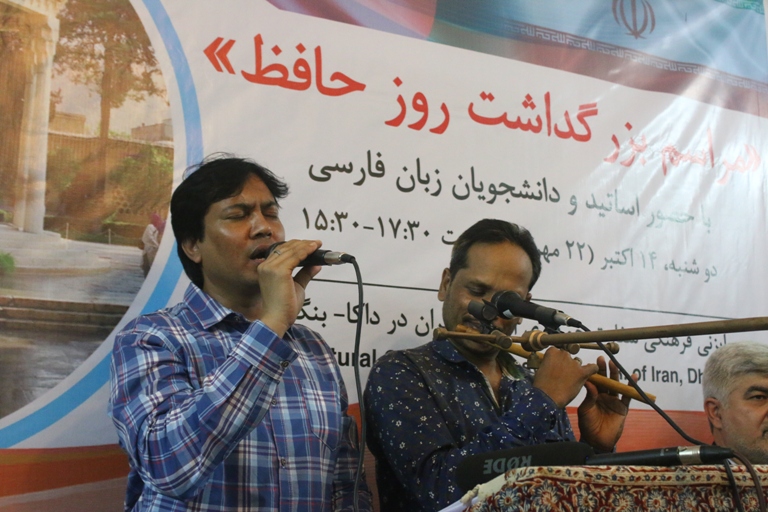
Reputed Persian poet Hafez Shams-ud-Din Muhammad Shirazi, or Poet Hafez, sent sweet to the Indian subcontinent 700 years ago and that sweet made many people of the region as sweet people.

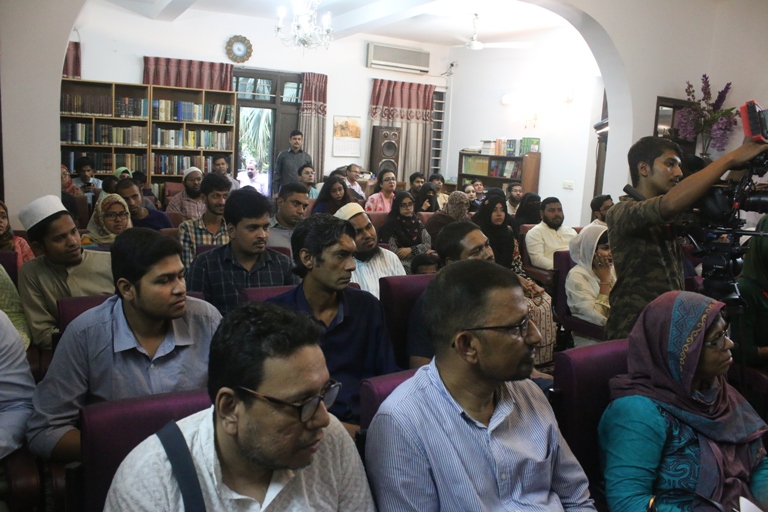
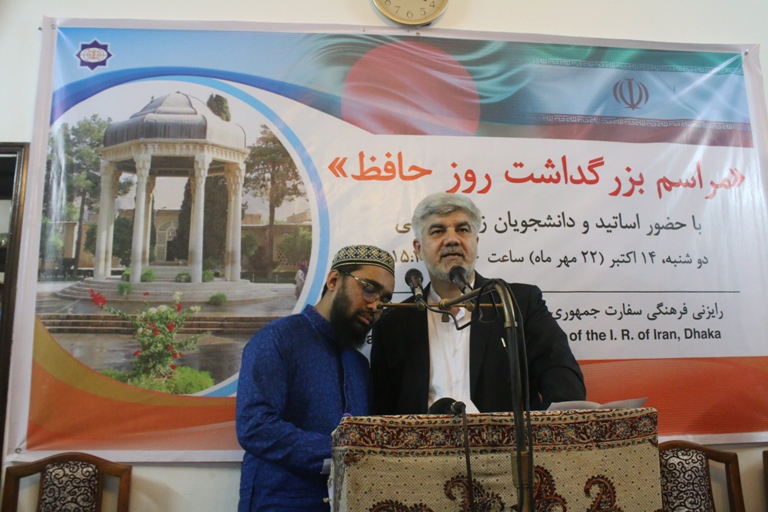
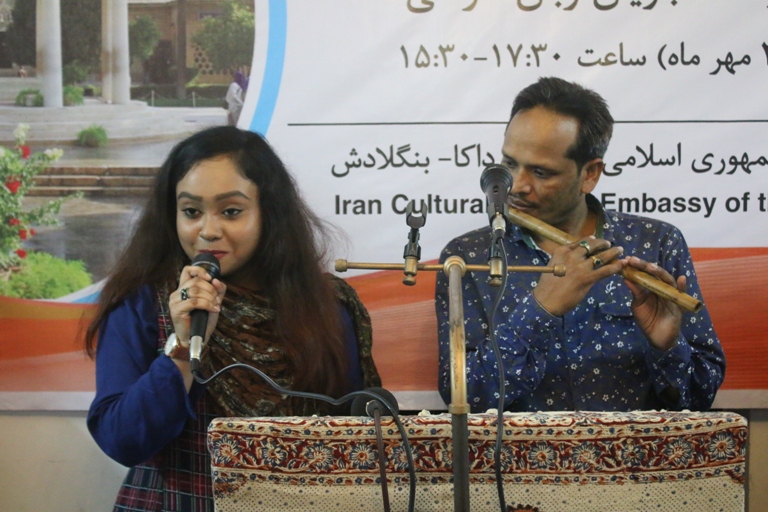
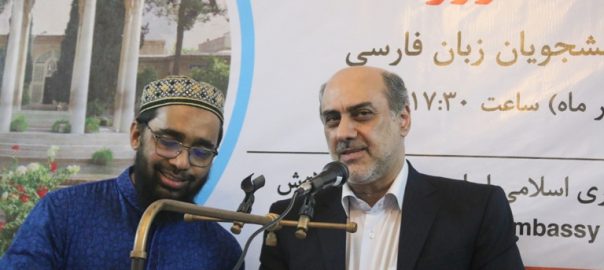
Iranian ambassador Mohammad Reza Nafar commented this while addressing a discussion meeting and cultural session in remembrance of Poet Hafez at Iranian Cultural Center in Dhaka on Monday evening.

Nafar termed the participation of Iranian and Bangladeshi people together in discussion on Poet Hafez as a matter of great pleasure for him.

He said that Poet Hafez had a great love to the then Bangla that prompted him to send sweet for the people of the region.

The passion between the two nations reflected through that sweet is still glittering. “Still a huge number of people of Bangladesh lure a great love in their heart for Persian culture and language.”

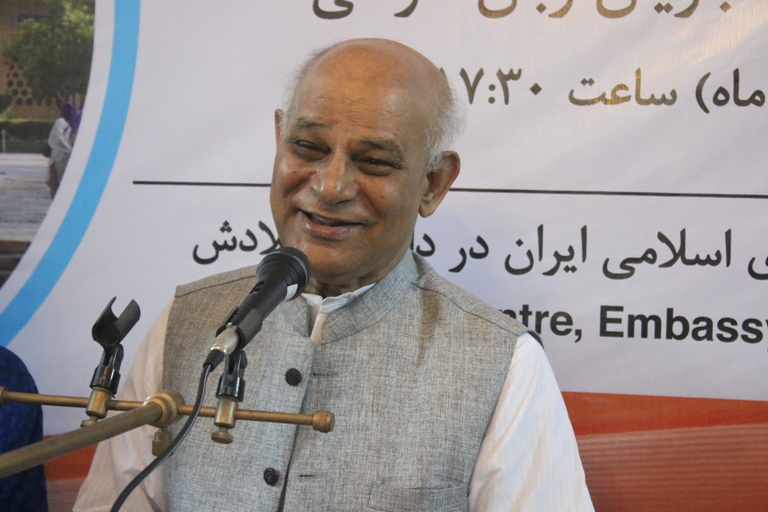
The program was attended by noted music director and former director general of Bangladesh Shilpakala Academy, Azad Rahman, as special guest.

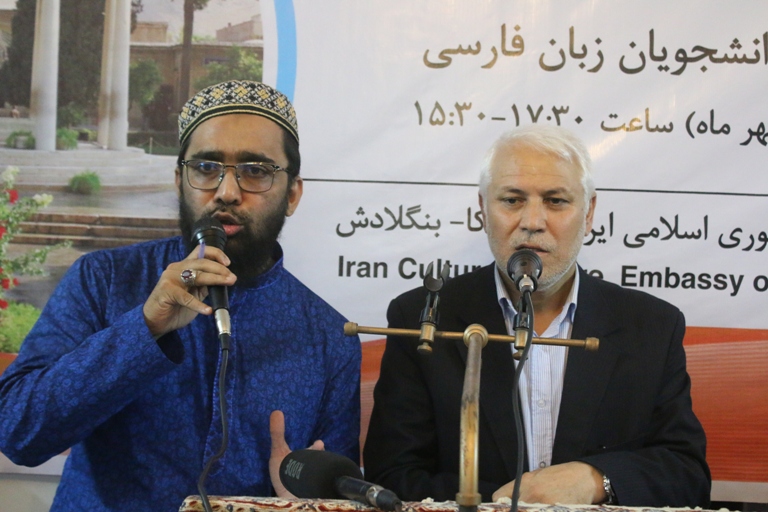
Cultural Counsellor of Iranian Cultural Center in Dhaka Syed Hasan Sehat presided over the program while visiting professor of the Persian Language and Literature Department at Dhaka University, Dr. Kazem Kahdui, was the keynote speaker.

Speakers at the program also discussed on different aspects of Poet Hafez’s poetry and songs based on the lessons of the Holy Quran.

Poet Hafez, also a great Hafez-e-Quran, had a deep relation with religious teachings bestowed by Allah in the Quran for the welfare of humankind.

Speakers added that in many cases Bangladeshi national poet Kazi Nazrul Islam followed the style of Poet Hafez in holding Islamic lessons in the inner heart of oneself not based on the speeches of others.

Syed Hasan Sehat added that Iran Cultural Center in Dhaka will arrange for special classes for those who are interested to learn about great Iranian poets like Hafez, Sadi, Ferdous, Omor and the like.

The great Iranian poet Hafez, however, born in 1315 and died in 1390. His great writings have been studied by millions of people across the world for the last 700 years and in course of time the appeal of his writings is broadening.

Value of Iran’s saffron export exceeds $78mn in five months

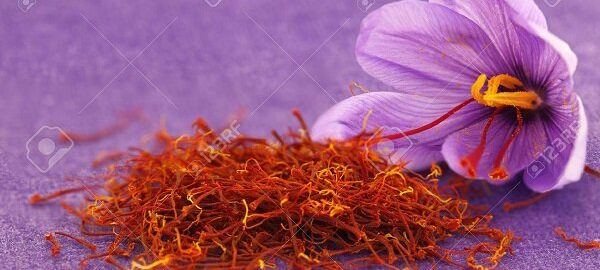
Adviser to the Ministry of Agriculture Hossein Zein’ali put the export value of saffron in the first five months of the current Iranian year (March 21 – August 21) at $78 million.

The Islamic Republic of Iran exported about 74 tons of saffron, valued at over $78 million, to target countries in the first five months of the current year.

He made the remarks on Wed. in an interview with IRNA and pointed to some claims about saffron price slump in the country due to the increased production of 100-ton saffron in current year as compared to a year earlier and added, “presently, more than 20 percent of exports value of horticultural sector of the country is caused by the export of saffron.”

Despite sanctions imposed on Iran, about 280 tons of saffron, valued at $351 million, was exported to other countries while the exports volume of saffron in 2011 hit about 122 tons at large.

Iran’s high-quality saffron was exported to over 40 countries in the world mainly to Spain, Vietnam, Qatar and the United Arab Emirates (UAE), he added.

There is no restriction for the export of saffron plants in a way that this product can be exported by merchants with different qualities, Zein’ali stated.

He pointed to the creation of value chain as one of the basic and fundamental moves taken in the field of saffron export and said, “Ministry of Agriculture tries to expand cultivation of this plant in different provinces of the country in such a way that the saffron produced in each province will be used or exported in the same province.”/MNA /

Large gas field discovered in southern Iran

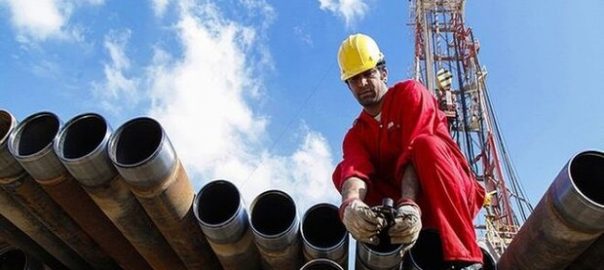
Iran has made an important offshore gas discovery in its southern region, according to a report on Wednesday.

The offshore field has been discovered 3,900 meters deep in the ground, and it is said to be capable of production for 16 years of gas consumption in capital Tehran.

Seyed Saleh Hendi, the exploration manager at the National Iranian Oil Company, confirmed the discovery of the gas field, saying “the field was discovered after one year of constant exploration in southern parts of Iran.”

Further details about the gas field will be soon disclosed by the CEO of the National Iranian Oil Company, according to the report. /MNA /

Iran among top countries in Nano field

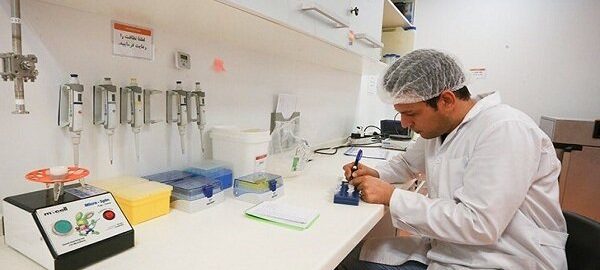
Iran has made significant advances in the field of high tech, especially nanotechnology so that it has been ranked the first in the Middle East and is among the top countries in the world in nanotechnology field in the last decade, the official said.

Vice President for Science and Technology Sorena Sattari said that Iran has a remarkable position among the top countries in the world in the fields of nanotechnology, biotechnology, and aerospace.

Referring to Iran’s authority in the field of pharmaceutical technologies, he noted that Iran currently produces 98 percent of the country’s needed medicines domestically.

VP Sattari mentioned that the number of Iranian knowledge-based companies currently exceeds 4,500 companies in the country, adding that Iran has the largest knowledge-based ecosystem in the region.

In this regard, the Deputy of Research and Technology of Payame Noor University Mohammad Ali Karimi said that Iran has good position in the field of nanotechnology, adding that it has made remarkable progress in the field of high technologies such as nanotechnology over the past decades and it has been ranked the first in the Middle East.

Fortunately, Iran is currently among the top 10 countries in the field of nanotechnology articles and scientific achievements, he added.

The Head of the Strategic Technologies Development Headquarter of Vice-Presidency for Science and Technology Esmaeel Ghaderi Far also said that Iran has made progress in the field of Nano based drug and even exported Nano drug products to other countries. /MNA/

Iran to launch new power plants with capacity of 3,800 MW: Official

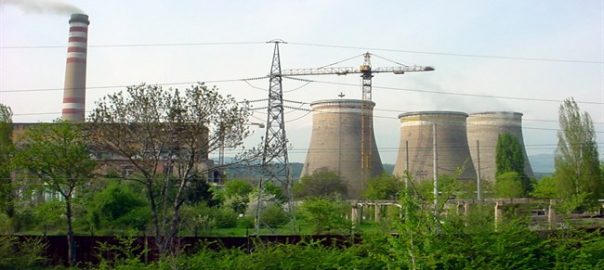
An official from Iran’s Ministry of Energy said the country would launch new power plants with a capacity of more than 3,800 megawatts (MW) until next summer.
“Based on the devised plans, 3,864 MW worth of new power plants will connect to the national electricity grid before the peak of the next summer,” Mohsen Tarztalab was quoted as saying by Press TV.

The announcement means that Iran could add some 34 terawatt hours (TWh) of electricity to its current production of above 300 TWh, as authorities seek to both increase exports to neighboring countries and increase stability of the domestic network over hot summer months.

He said the share of gas burnt in thermal power plants across Iran had topped 90 percent until March 2019, an increase of nearly 10 percent compared to the similar period three years ago.

The official said plans were in place to turn many of the current gas-fired power plants to combined cycle systems (one gas turbine followed by a steam turbine in sequence) to reach a target of 40-percent efficiency in production.

A report by the Ministry of Energy in August showed that electricity output in thermal power plants, which accounts for 80 percent of Iran’s total power generation, had surged by 8,991 megawatts, or 78 TWh in energy terms, over the past six years.

Iran’s total capacity of thermal power is around 550 TWh although government data shows generation hit a record high of 287 TWh last year. / Iran Daily /

Iran take three golds at Karate 1-Premier League

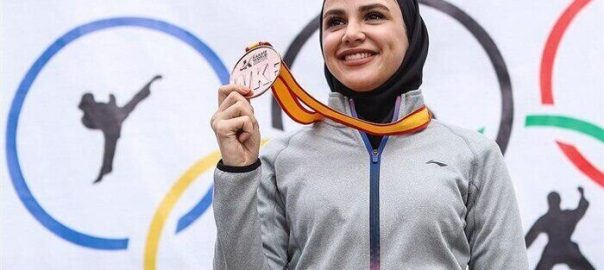
Iranian athletes won three gold medals, one silver and one bronze at the Karate 1 – Premier League Moscow on Sunday.Sara Bahmanyar defeated German karate competitor Shara Hubrich 1-0 in the final of the Female Kumite -50kg.

Rozita Alipour edged Haya Jumaa from Canada 1-0 in the Female Kumite -61kg final.

And Zabihollah Poorshab defeated Ryutaro Araga of Japan in the Male Kumite -84kg final to win Iran’s third gold in the competition.

Sajad Ganjzadeh also lost to Georgia’s Gogita Arkania 7-3 in the final of Male Kumite +84 and claimed a silver medal.

Earlier on the day, Bahman Asgari Ghoncheh from Iran had claimed a bronze medal at the Male Kumite -75kg by beating his Spanish opponent Rodrigo Ibanez 3-1.

Karate 1 – Premier League Moscow brought 642 competitors together from 85 countries in Moscow, Russia. / Tehran times /

Non-oil trade exceeds $42b in H1

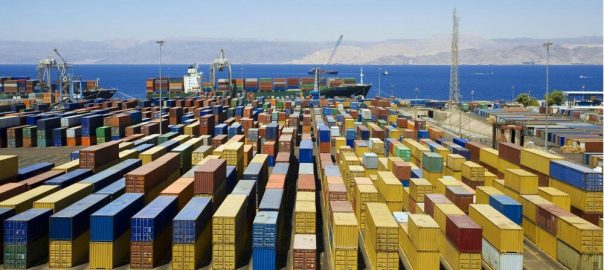
Iran’s value of non-oil trade with other countries stood at over $42 billion during the first half of the current Iranian calendar year (March 21-September 22), the head of Islamic Republic of Iran Customs Administration (IRICA) announced.

According to a report released by IRICA, the country exported 70 million tons of commoditized worth $20.948 billion and imported 16.5 million tons of products valued at $21.221 billion during the first half, IRNA reported on Sunday.

As reported, China, Iraq, Turkey, United Arab Emirates (UAE), and Afghanistan were the top five export destinations of Iranian products, while China, UAE, Turkey, India, and Germany were the five major exporters of goods to Iran in the first six months of the current year.

As previously announced by IRICA, the value of Iran’s non-oil exports stood at $44.3 billion in the previous Iranian year, while $42.6 billion worth of commodities were shipped into the country.

Iran shares border with fifteen countries, namely the United Arab Emirates, Iraq, Turkey, Afghanistan, Pakistan, Russia, Oman, Azerbaijan, Turkmenistan, Kuwait, Qatar, Kazakhstan, Armenia, Bahrain, and Saudi Arabia.

Based on the data published by Trade Promotion Organization of Iran (TPO), the value of trade with the neighboring countries stood at over $36.5 billion in the past Iranian calendar year, which is about 41 percent of the country’s total non-oil trade in the mentioned time span.

Iran plans to launch 15 mega export projects to identify more target markets, according to TPO former head.

Mohammadreza Modoudi said with the implementation of these projects, which mainly focus on the markets of neighboring countries, identifying professional trade and promoting export of non-oil commodities will be put on agenda, Mehr news agency reported.

The official further referred to the $1.7 billion positive trade balance in the country’s non-oil trade in the past Iranian calendar year (ended on March 20, 2019), and said this positive balance was achieved through cooperation with the private sector. / Tehran times /

Iran 2nd among world’s fastest growing tourist destinations

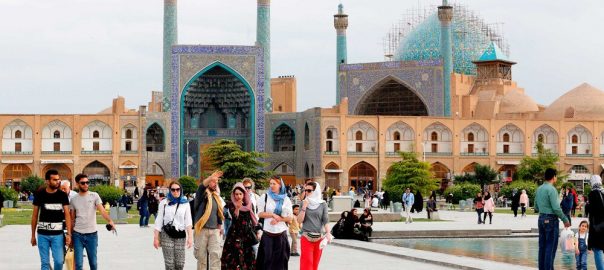
Iran has been introduced by United Nations World Tourism Organization as the world’s second fastest growing tourist destination in 2018, with 49.9 percent growth in arrivals year on year.

Surpassing rivals such as Egypt, Nepal, Georgia and South Korea, Iran was ranked the second after Ecuador, according to the UNWTO annual report which details the countries where tourism has grown the most, and where it has fallen the furthest.

“Here’s one that gladdens the heart. Iran’s numbers might still be small – 7.3 million visitors in 2018, compared with, say, France’s 89 million – but they’re increasing sharply. More and more people are being drawn to one of the world’s most misunderstood countries, which can only be a good thing. Get there now before everyone else does,” the Traveller reported.

In the ranking, Iran is followed by Egypt which its foreign arrivals were up 36 percent, Uganda with 31.9 percent, Nepal with 24 percent, Slovenia with 23 percent, Vietnam with 19.9 percent, Georgia with16.9 percent, and South Korea with 15.1 percent.

Iran welcomed some four million foreign nationals during the first five months of the current Iranian calendar year (March 21 – August 22), which shows 30 percent hike, compared with the same period last year, according to official data compiled by the Ministry of Cultural Heritage, Tourism and Handicrafts.

The Islamic Republic attracted 7.8 million foreign travelers during the last Iranian year, which shows 50 percent growth year on year, the ministry announced earlier in September.

The 2019 Travel Risk Map, which shows the risk level around the world, puts Iran among countries with “insignificant risk”, a category where the UK, Denmark, Switzerland, Norway, and Finland are placed in.

The country boasts hundreds of historical sites such as bazaars, museums, mosques, bridges, bathhouses, madrasas, mausoleums, churches, towers, and mansions, of which 22 being inscribed on the UNESCO World Heritage list

Under the 2025 Tourism Vision Plan, the country aims to increase the number of tourist arrivals from 4.8 million in 2014 to 20 million in 2025. / T.T/